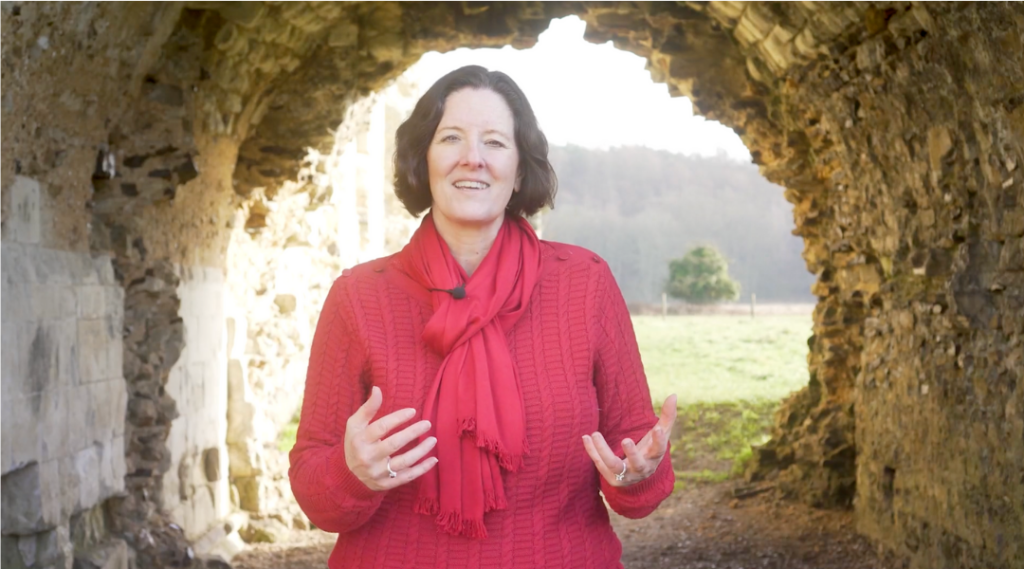
Jesus loved his friends, and taught them how to pray. This prayer may be so familiar to us that we skim over it, but we can slow down and ponder each phrase for encouragement, inspiration, and delight. Join me in the amazing ruins of Waverley Abbey, the first monastery in Britain, as I lead us through this prayer.
Let me know if you use this prayer exercise, and if you’re willing, how God met you. May praying the words Jesus prayed enrich your faith in him and love for others.
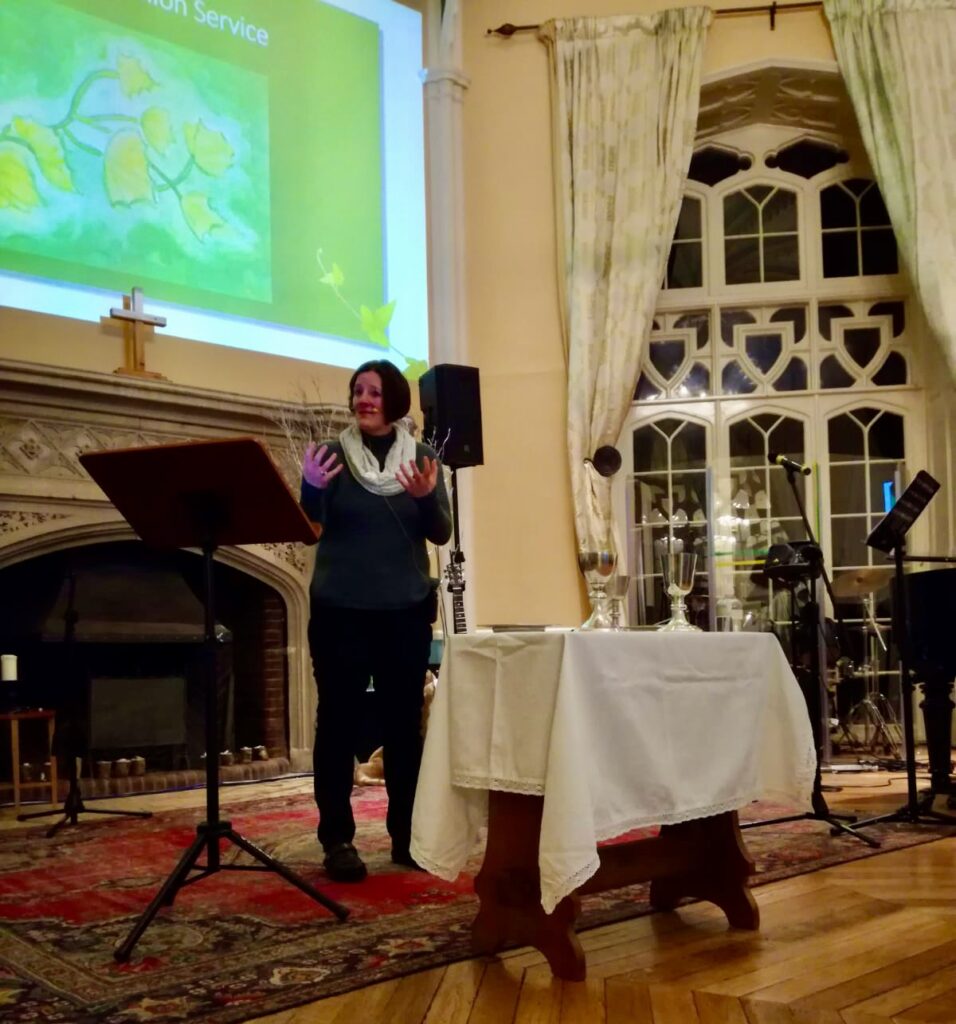
Not too long now and I’ll be in Devon leading a retreat at Lee Abbey (13-17 March)! We’re going to be delving into the gospel stories of Mary, Martha and Lazarus to experience how Jesus transformed them – and how through friendship with him he changes us.
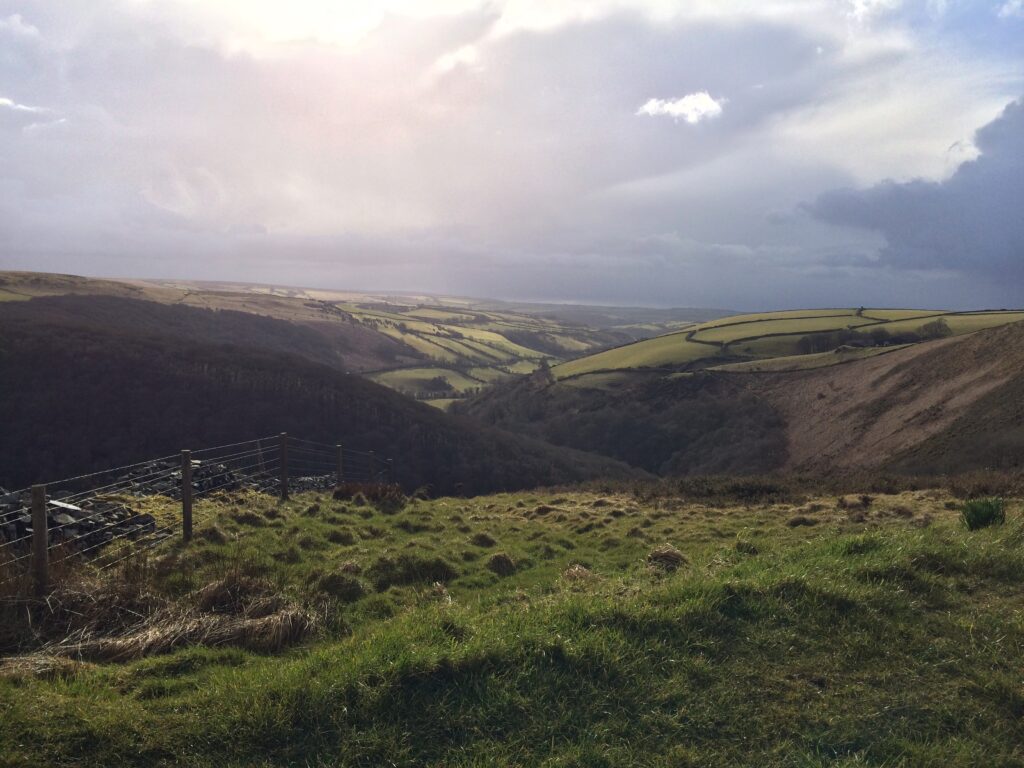
This is a very special place right on the coast, with plenty of time for coastal walks, a dip in the sea (!), explorations in the countryside, rest, fellowship and fun. I highly recommend it.
At £340, including all meals, it’s on the more affordable side of things (but yes, I know we’re in a cost-of-living crisis, and for many of you the flight to the UK would be very expensive!).
I received a question about Lent resources last week:
I am hoping to have a women’s Lent group and wondered if you could recommend a book to follow?
My answer:
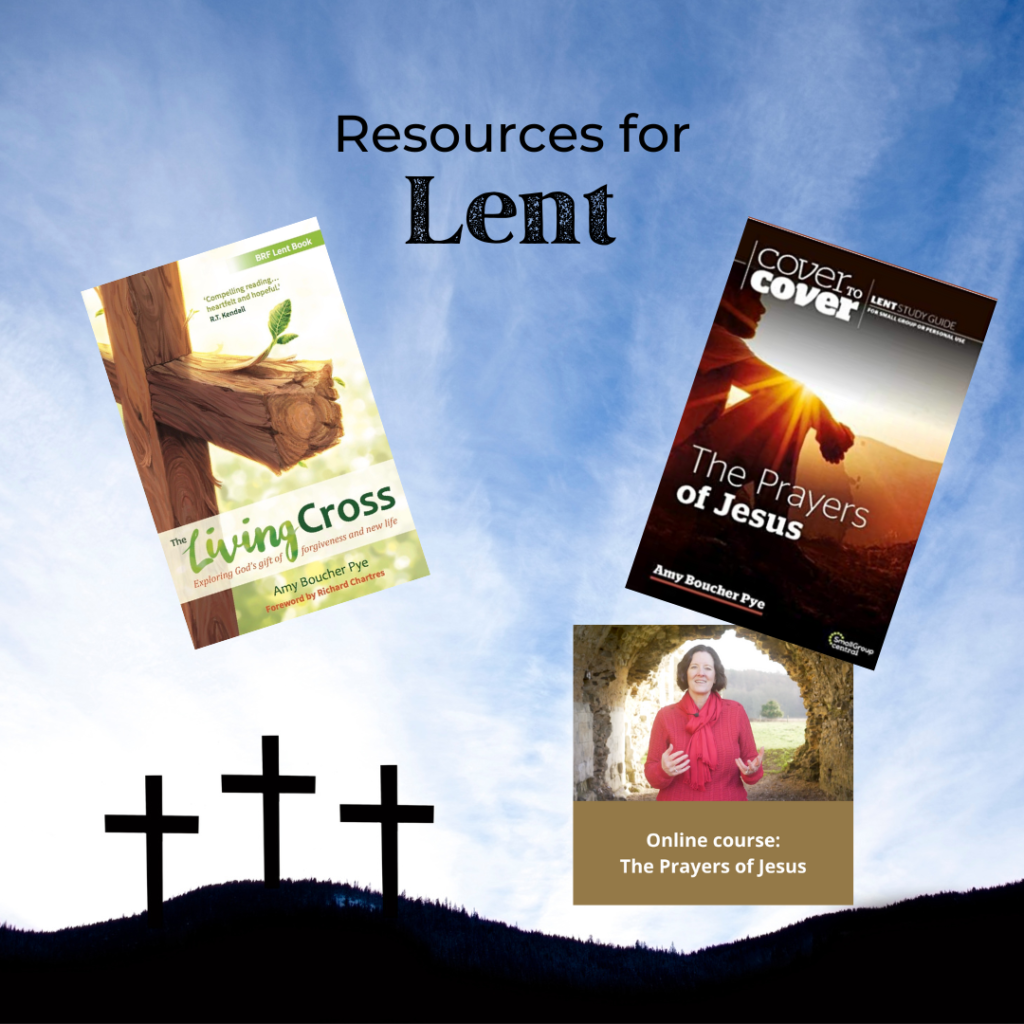
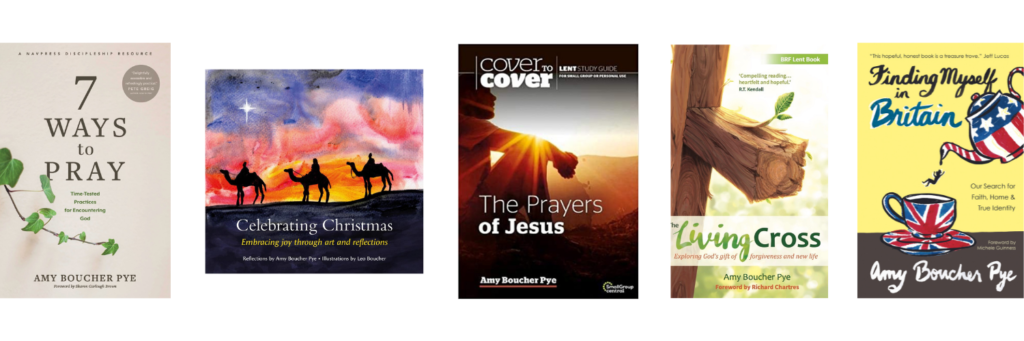
I wonder if your women’s group would like my little resource The Prayers of Jesus? It explores 6 of Jesus’ 7 prayers from the gospels, which is fab for Lent because as you know they culminate in Gethsemane and on the cross. I did a video series for it with introductions, a prayer exercise and a conversation with the very interesting Micha Jazz. There are meeting-starter ideas, the session content, discussion questions, and ideas for leading a prayer exercise. Perhaps this could be adaptable for your group? No worries if not. With the cost-of-living shooting upwards, the latest print run got expensive for a little paperback – £7.99, discounted.
For a Lent book if your group is happy to read a bit more, I love Walter Wangerin’s Reliving the Passion. (My review from years ago in Woman Alive is here.) Or my daily readings of The Living Cross, a through-the-Bible look at forgiveness.
Need ideas for how to have a good Lent? Here’s an article I wrote a few years ago.
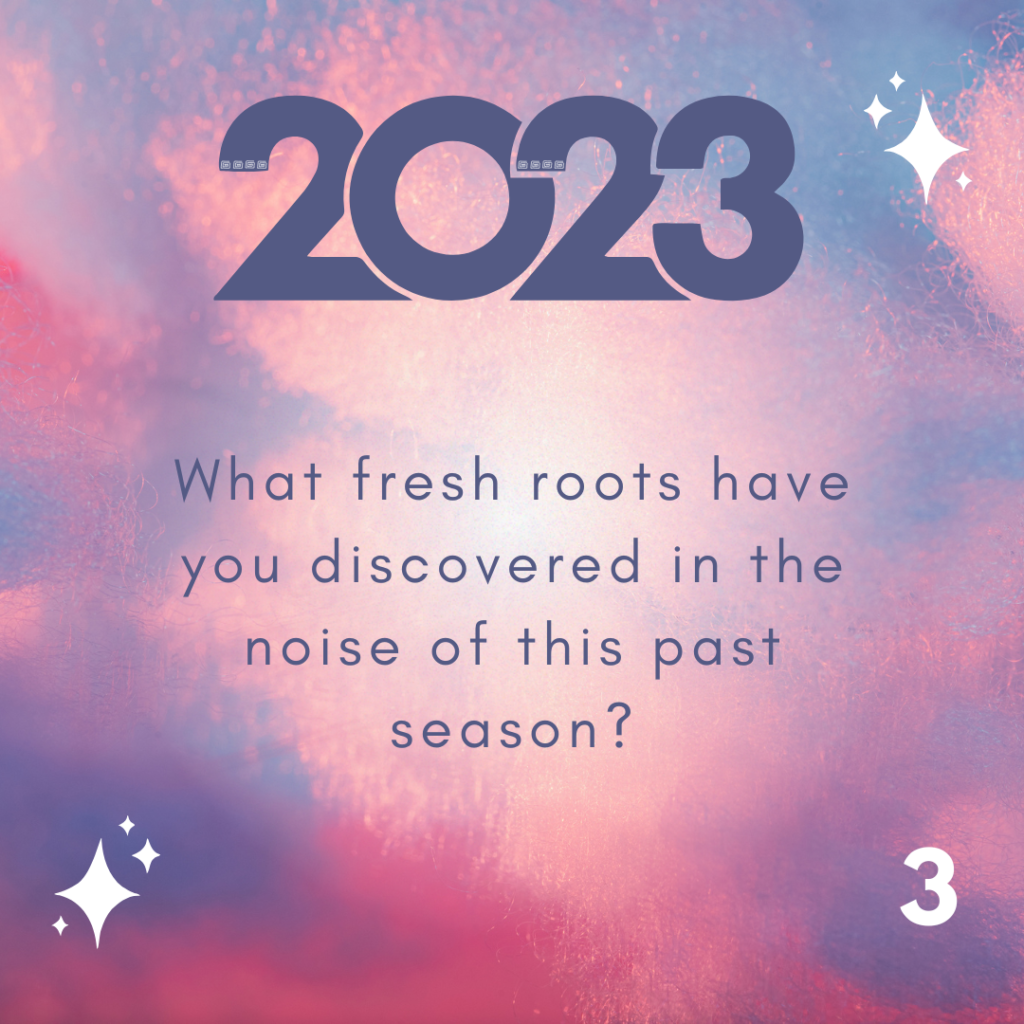
Happy new year! The prayer of examen is simply looking back to move forward with God. You might want to take some time this month to consider a few questions as we launch into the new year. I found these somewhere last year and engaged with them – I’m sorry that I didn’t note where that was!
Three questions to consider: 1. What have the storms of 2022 picked up and blown away for you? 2. How has 2022 anchored you more firmly? 3. What fresh roots have you discovered in the noise of this past season?
May you know joy and peace this Christmas. May you feel loved and known. May you find deep rest as you enter a season of celebration. And may you experience the invitation of the One who came to earth as a baby and now lives and dwells in those who follow him.
Happy Christmas!
Art from Celebrating Christmas: Embracing Joy through Art and Reflections by Amy Boucher Pye and Leo Boucher.
My first Christmas in England was marked with flashes of sadness as I missed being with my family in Minnesota. Although I was thrilled to be with my new husband, I wasn’t sure how this first Christmas apart from my loved ones across the Atlantic would be. When I made the expensive phone call, I felt even more gloom upon hearing their loving voices. I expressed my regret of not being with them at Christmas and my dad replied, ‘Amy, you longed to marry and now you have. It’s right that you’re there with Nicholas.’ He was wise and gentle, even if at that moment I struggled to listen.
Some years later, one Christmas morning I looked around the living room of a friend of a friend, wishing we were back in north London. Although our home there was decorated to the hilt, we were on England’s south coast because my husband was signed off from his work as a church minister. His mother’s death a couple of months before set off some family issues and brought about a stint of depression, meaning no shared Christmas with our church family. I felt like we were wandering in the wilderness, not knowing how long the mental-health issues will last or how the family stuff would work out.
Those two Christmases are the closest that I’ve experienced to having a ‘blue Christmas’. I’m aware, however, that the pain and heartache of others may be far more intense. For instance, your table might never again include that special someone sitting at it. Living in a world marred by sin, disease and death, we’ll all have a Christmas tinged with sadness at some point.
Some churches host a ‘longest night’ service (calling it that instead of ‘blue Christmas’ to get away from the associations with the Elvis Presley song), where people can celebrate Christmas without any forced jollity. Instead of having to bury their feelings of pain and anguish, they can express them to God through the reflective singing and prayers. Attending such a service doesn’t require a tragedy either; it can be an oasis of calm amid a too-busy time of parties, baking and gift exchanges.
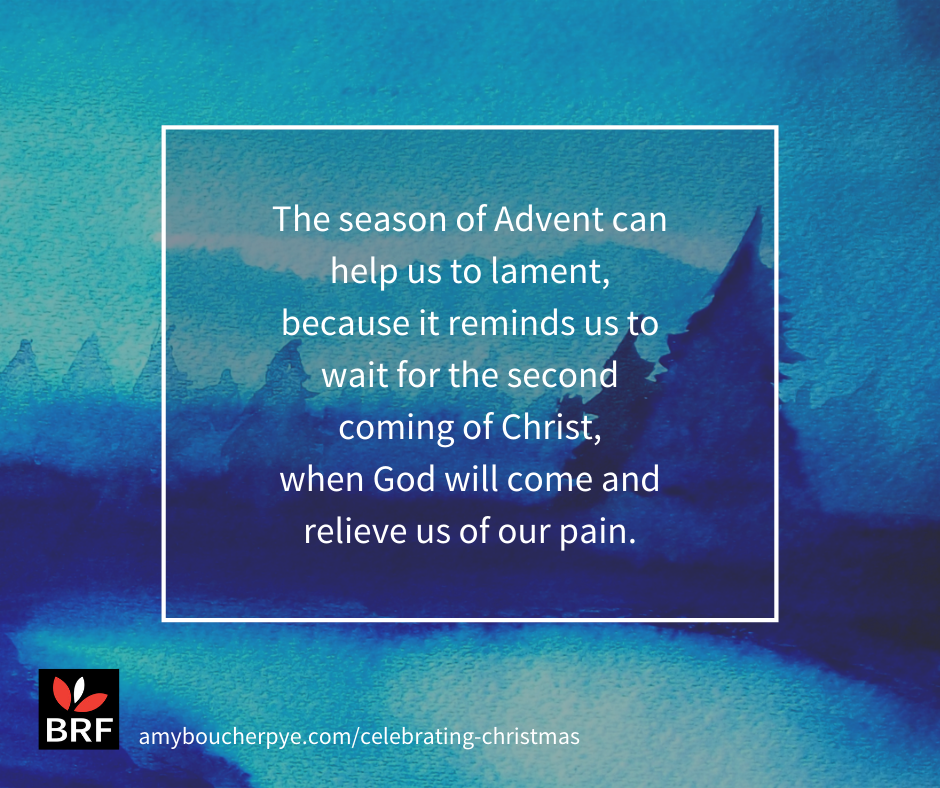
God welcomes the cries of lament from his people; indeed, Jesus wept angry tears at the tomb of Lazarus. The time of Advent can actually help us to lament, because it reminds us to wait for the second coming of Christ, when God will come and relieve us of our pain: ‘“He will wipe every tear from their eyes. There will be no more death” or mourning or crying or pain, for the old order of things has passed away’ (Revelation 21:4). Celebrating Christmas through tears can mean acknowledging that we hold the answer to our lament through the gift of Christ. Even as we wait for his coming again.
If you’re feeling low and broken this year, I pray you’ll find comfort and hope in the God who comes to brush away the tears from your eyes. As you release your pain to him, may you experience a deep sense of love, peace and even joy.
Loving Lord, how you must grieve at the pain we experience. Deal with us ever so mercifully and reveal your presence when we feel we’re lost or wandering. Bind up our wounds and give us the strength to worship as you renew our stores of hope. Amen.
This article is adapted from Celebrating Christmas: Embracing Joy through Art and Reflections by Amy Boucher Pye and Leo Boucher.
You can watch Amy on Sunday Night Live, talking about a Blue Christmas, starting at 9.35.
Books of 2022: Six endorsements for wonderful Christian books and six general-market recommendations. (Here are the round-ups from past years.)
I’ve read about 35 books this year, which is down by about 15 or 20 in a usual year. Two reasons for that – one is that after 16 years of running the Woman Alive Book club, I relinquished it to Claire Musters. Although I love reading widely, I realized that I needed to hand over the beloved book club to another host to guide it through the late teenaged years and beyond. My work as a writer, retreat leader, and spiritual director means that my focus is on areas of spiritual formation.
The second reason is that I’ve written two books this year (coming your way in 2023), and all of that writing has meant less time for reading. Something I aim to rectify next year!
I love reading fiction, and so I give you reviews of five novels that I loved. I’m not including my reviews that included lines such as these:
A sweet story if utterly predictable.
A light read that I picked up on a giveaway table at a supermarket.
6 Books I Endorsed
Christmas Changes Everything by Elisa Morgan
How can we, like the characters in the original nativity story, be changed by Christmas? With heart-warming and sometimes challenging stories, Elisa Morgan invites us to enter into the wonder of Christmas. We too can accept, yield, believe, wait, and rejoice—and be forever changed by our loving God. Don’t miss God’s life-changing invitation!
Brightest and Best: 31 Advent Devotions on Jesus by Philippa Wilson
Interweaving the wisdom and grace of her aptly termed Carolsville with the wonderous story of Jesus, Philippa Wilson in Brightest and Best sparks longing and love within us during the Advent and Christmas seasons. She welcomes us to share her deep love of the ‘little Lord Jesus’ – a mind-bending notion of the God who became Man. I commend it with joy.
God Isn’t Finished with You Yet by Catherine Campbell
Catherine opens up the world of the Bible in glorious shades and images as she brings alive the stories of six people. With grace and truth she shows how God didn’t give up on them – and how he doesn’t give up on us. I especially appreciate how she reaches our hearts through the narrative and our minds with her teaching. Read, ponder and savour this delightful, trustworthy and powerful book. You won’t regret it.
Streams in the Wasteland by Andrew Arndt
Andrew Arndt has made friends with the desert fathers and mothers, and he invites us to enjoy their friendship too. His winsome book reveals how their wisdom sheds light on the problems we face today. One to read, underline, ponder, and share.
Images of Grace by Amy Scott Robinson
A masterpiece in metaphor. In Images of Grace Amy opens the door for us to understand abstract concepts in concrete ways, ushering us into the presence of God. With engaging anecdotes and a winsome exploration of the biblical stories, she proves a helpful guide to not only sin and atonement but forgiveness and restoration. A book to return to again and again during Lent – I highly recommend it.
Prayer Starters by Suzie Eller
Struggling to find the words to chat with God? Suzie Eller’s Prayer Starters will give you ideas for ways to start up—and continue—this most life-affirming conversation. I especially appreciate the mini Bible studies. Enjoy!
6 General-Market Recommendations
I Am, I Am, I Am by Maggie O’Farrell
Utterly compelling memoir with the theme of near-life experiences. What, 17 of them? Hard to start reading a new chapter knowing her life would be threatened, even if I knew ultimately that she’d be all right – after all, she is alive. The last chapter on her daughter’s allergies was almost too much for me to read, as it chimed with me as an allergy parent. (But our kids’ experience isn’t anywhere on the level of hers.)
As always, her writing is exquisite. It gave me an insight into one of the characters in the book I read just before this one, Instructions for a Heatwave. As she detailed her experience of recovering from encephalitis, I thought of Aoife and how her extreme dyslexia meant she couldn’t read –and how she covered over her challenges in daily life.
One I might well read again.
Instructions for a Heatwave by Maggie O’Farrell
I loved this snapshot of life in Britain in 1976 during the heat wave – which was the heat wave to end all heat waves until we lived through the summer of 2022 (and following?). I read this book in a couple of sittings during the stifling heat, and her descriptions of the stultifying air were so apt.
The Riordan family is so compelling in each of the characters, although the father remains largely a mystery up to the end. I liked the varying first-person view throughout, and thought the novel ended on a hopeful note.
Simply wonderful.
Dinner at the Homesick Restaurant by Anne Tyler
A poignant look at a family abandoned by the husband/father and the lifelong effect on the relationships. Pearl, the mother, clearly isn’t an easy person to live with, and her three children each express their coping mechanisms in different ways. I found the way Cody, the eldest, treated his brother Ezra, sad and painful.
The title refers to the restaurant that Ezra runs, and his attempts to foster the family relations through enjoying a meal together – which always seem to end in some kind of argument.
A moving look at family life in all its messiness.
The Maid by Nita Prose
I really enjoyed this one. Celebrates a neurodivergent protagonist in a life-affirming way. Molly the maid lives to bring the rooms in the Regency Grand Hotel back to perfection. And she’s the maid who finds Mr Black “dead in his bed.” What follows is a delightful if at times heart-rending search for why he died, along with flashbacks from her past that shine a light on who she is today.
At times I could hardly bear to listen more, as I wanted to shield her from nefarious characters whom she trusted. In the end, a very satisfying story.
A friend called this Eleanor Oliphant meets Agatha Christie, and that’s not a bad summary.
Away with the Penguins by Hazel Prior
What a wonderful book. I’m glad more fiction features octogenarian protagonists. In her eighties, Veronica lives on the west coast of Scotland and one day her cleaner/helper unearths a locked box. With it Veronica descends into a lifetime of memories, which spur her into a journey of discovery – including a trip to Antarctica to visit the penguins.
I loved this story, with its themes of family, buried history, social class, poverty and wealth, climate change, and conservation. I did figure out a plotline before the ending, but it came about differently than I anticipated (but that’s only a minor quibble). Delightful and thought-provoking.
(I listened to it on Audible. The main narrator did a good job, but the female supporting narrator was a bit stilted at times, and it felt like she was reading a script.)
The Willoughby Close series by Kate Hewitt
Five books that I enjoyed. They manage to be light but deep, which doesn’t seem to make sense! I mean that in I easily got into the story, which felt like an escape to the English countryside, and each protagonist went through something deeply challenging and emotionally engaging.
Kate isn’t afraid to tackle tough issues but does so in a gracious way. Each book reveals a journey of change within the characters, which I appreciate. It’s also fun too to see characters from previous books – I like seeing their journey continued. I think that’s part of the reason why I keep buying the next book in the series.
I love the American holiday of Thanksgiving—a time set apart for family, friends, feasting, and turning our hearts toward gratitude. Living in the UK, we’ll host our gathering on Saturday, but we’re grateful to be able to go to the service at St. Paul’s Cathedral this morning to sing our praises to God and give him thanks in that glorious setting. How amazing to have this opportunity on a day that’s otherwise just a normal day in Britain.
I recently moaned in my newsletter how Black Friday is such a thing that we’ve imported here while not bringing in the wonderful holiday of Thanksgiving. Lots of my lovely community reminded me what I did know but had overlooked in the early-morning drafting of that missive—American Thanksgiving was modeled on the festival of Harvest. This holiday has been very important especially in rural communities, where farmers and people of all kinds come together in church to present their offerings of grain, fruit and other produce as a way to say thanks to God. You can read more about the origins of Thanksgiving in my first book, Finding Myself in Britain—an excerpt is here.
Wherever we are in the world, we can stop and give thanks. I suggested some ways to do so in my newsletter:
Set a timer for a couple of times a day and stop and give thanks for one or two things. Doing so will orient your outlook and help you feel more grateful; you’ll notice more good things as you go about your day.
Write a text, email, or good old-fashioned note expressing your thanks for someone. Be specific in naming how they’ve brought you joy or hope.
Go on a wonder walk, asking God to inspire you to be thankful. It helps if you can explore somewhere amazing, but even in a grimy city you’ll notice flashes of beauty—someone smiling, the note of birdsong, a flower or a snow-covered scene.
I pray you will find much to give thanks for!
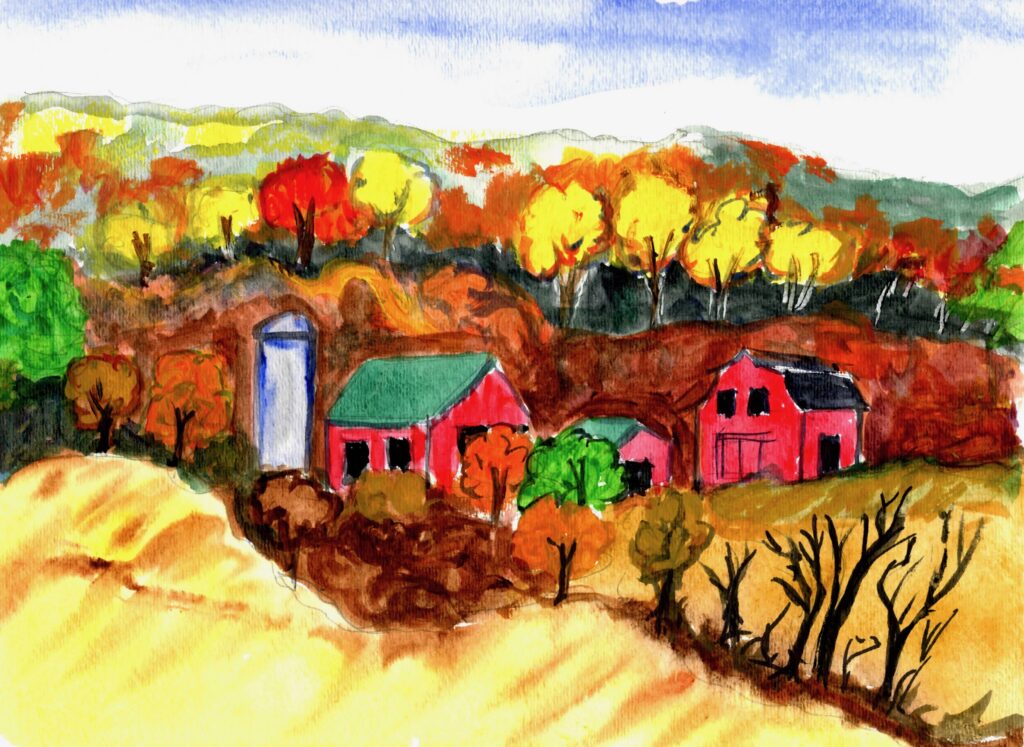
[Art by Leo Boucher. Used with permission; all rights reserved.]
I’ve got such a treat for you with Alison’s wonderful ponderings about prayer and life and shifting an outlook through a simple practice. I’ve written about the way of praying that is the examen, but Alison’s pared-down approach is one that I could incorporate into my life. Her vivid descriptions will capture your imagination; enjoy!
Sitting down to pray has always been a struggle for me, the world full of so many distractions, but what I longed for was a deepening faith, to be able to be still with God and increase my ability to love one another, (especially the ones I don’t even like!). I knew it was only prayer that could help me, so I spent many years searching out a way for me to pray that might open and grow my heart.
For me prayer has become my opportunity to actively participate in the universe by communicating with God. I notice something and as a continual action pass it over to God, whom I trust will bear witness and hold whatever it is I’ve past on in prayer. Perhaps I’ve noticed that the sky looks unbelievably beautiful this morning and how it gives the perfect backdrop for the starlings with their synchronised swooping and diving of the autumnal murmuration. Or I notice a lady in a green scarf who limps in the supermarket queue and looks like she’s having a difficult day, though I truly have no idea. Or maybe I’m just wowed by the welcome I receive when I went attend to a new church. Small things, things that might seem inconsequential in the scale of the whole of the universe, a beautiful smile, a voice choked with tears, a friend’s snazzy new jumper, but everything, everything matters.
I’ve noticed that the more I take notice of the world around me, the more aware I am of what I am blind to. My biases and prejudices; my lack of knowledge and understanding of so much that limits my world view. And whilst this way of praying has illuminated my own inability to grasp and understand so much, paradoxically I feel myself actively being drawn deeper in my relationship to God and the universe. For me, praying this way feels like it’s embedded in my being and part of who I am; no longer is it just a twice daily activity.
It all started with the Examen; I say Examen, but with a simplistic adaption. At the time my life was already complicated, and I wanted – needed – to be able to commit to a method of pray that I could stick with. I discovered that early morning worked for me to sit alone with a lit candle, in a space where I could reflect on my previous day. I used three headings to guide my self-reflection:
Consolation; what was wonderful,
Desolation, what wasn’t wonderful,
What else I noticed.
For each heading I would write without hesitation the mundane, the wow, the bitter.
At the time life was particularly bitter and I really needed to hold onto God as a source of strength. I’d write in a journal, splurging out across the pages what I found to be mundane, wow or the disappointments of my previous day. I noticed how easily I found it to repeatedly rant on about the same old ‘stuff.’ And I began to see things that I take for granted: a loving supportive family, the therapeutic nature of sharing laughter, the astonishing emerald colour of the grass this morning scattered with blobs of shimmering diamond drops of dew. Lately I often find myself being irreverent to the questions; my pencil easily and eagerly covers several pages in a very short time.
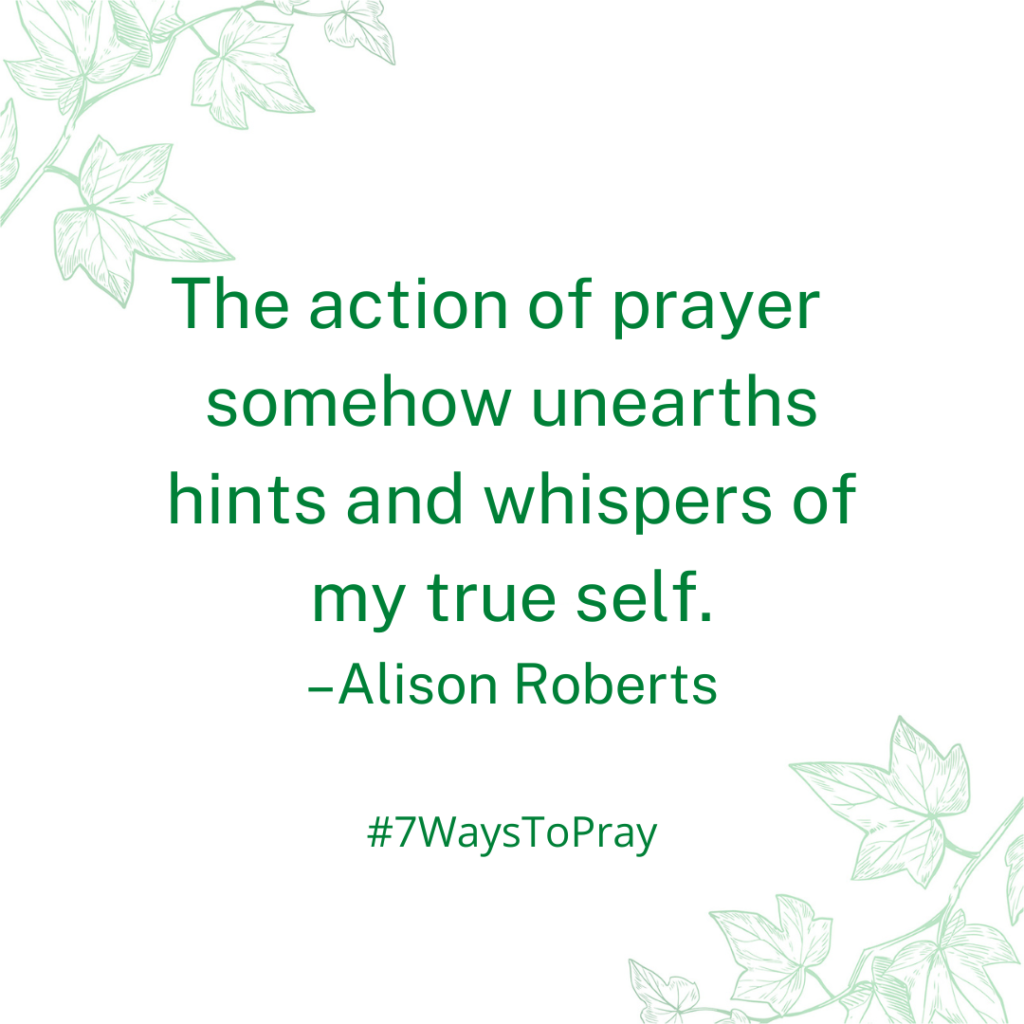
Praying this way in all humility feels like I’m emptying myself out before God. The action of prayer seems to unearth hints and whispers of my true self. The bad crazy bits and so much else that I’d much rather edit out all get included in my prayers. And I’ve noticed that the more I pray this way, my self-acceptance of both my limitations and my gifts grows. There may yet be simmerings of peace.
As a way of praying, I’ve found it’s highly addictive!
Alison Robertsis a wife, mum, grandmother, priest, spiritual director, dog owner and general lover of wild colour, people and places, who especially loves swimming in the sea in North Devon.
Order 7 Ways to Pray here for more ways to encounter God.Sign up for Amy’s monthly newsletter, including a prayer practice.