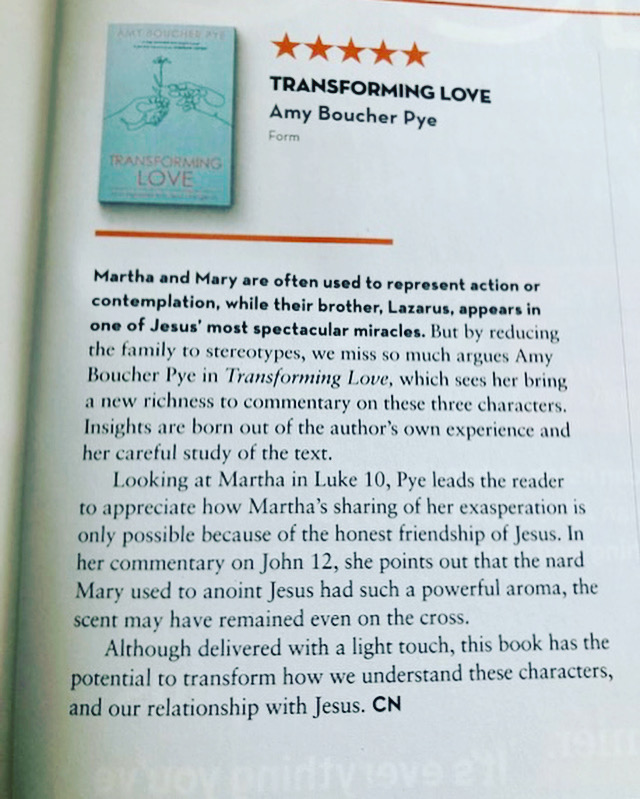
I love this review of Transforming Love! I mean, 5 stars, what’s not to be grateful for? “A new richness” to the story of Mary, Martha and Lazarus.
I also have received a 3 star review on a book from this very same mag, and thus I try not to rue the painful ones or get overly proud of the 5 star ones. Easier said than done, of course.
It’s a delight to hear of the deep friendship that Liz and Norman had in their marriage. Perhaps her reflections will lead you to pray for a married couple today?
I never quite let my husband forget his statement that I was wearing a red track suit when we met. I have never owned such a garment! I was happier with the husky voice he described… but I did have a cold at the time. Although I confess that in the early days he sulked when I beat him at Scrabble, and gave a hearty laugh when someone asked him if I was going to join him in the church choir.
Sadly this February I lost Norman to Alzheimer’s disease after 31 years of marriage and 32 years of friendship. Yes, he really was my best friend.
His funeral was an amazing testament to friendship. I was overcome by the 100-strong congregation of family, church family and friends, the messages from far and wide. Not to mention the rousing hymns.
These months on, old friends remain faithful and I am full of gratitude for their love and caring support. New friendships are emerging as I settle into my new life across the city. God is good!
I’d like to share with you Norman’s eulogy:
So many people have been saying recently what a great encourager Norman was. Eight months after we met at Scargill House, a Christian community in the Yorkshire Dales, we began to exchange letters. It was a tough time in my life and Norman’s encouragement shone through his words, off the paper and into my heart. This man is definitely worth investigating further.
A meeting at Betty’s in York introduced me to the high life… cucumber sandwiches without the crusts. An evening service at St Michael Le Belfrey and a hug exchanging the peace sealed our fate, and the rest as they say is history.
Fast forward some years to the Christian Cursillo weekend Norman led at Wydale Hall near Scarborough. Both a tremendous feat and blessing for him. Each weekend is named after a saint and Norman chose St Barnabas, the encourager. How fitting.
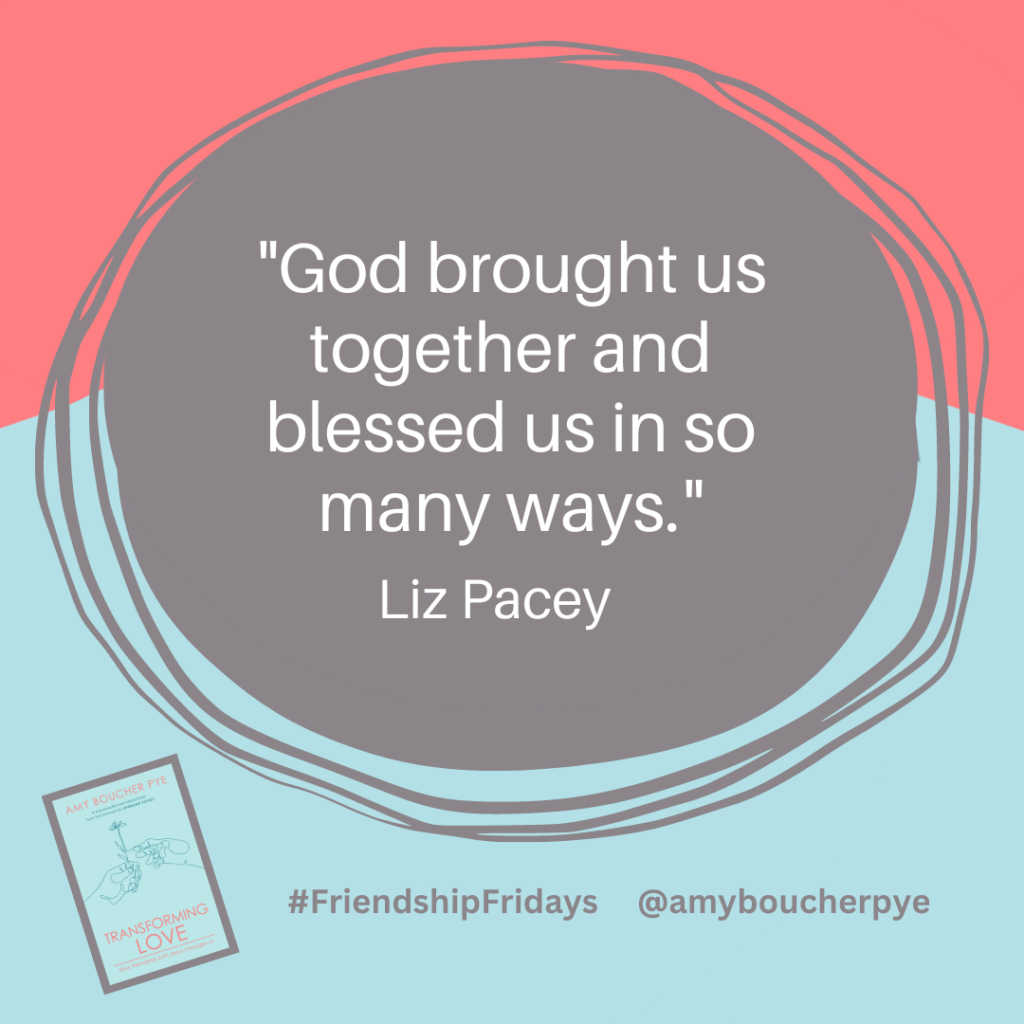
I count myself so privileged and blessed to have had so many wonderful years with this man who never stopped encouraging me, supporting me, and just being there for me. God brought us together and blessed us in so many ways. Rest in peace, my lovely Norman.
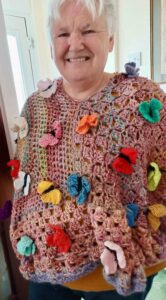
Liz Pacey: former nurse, midwife, home visitor for visually impaired. Freelance writer. Giver of talks to anyone who will listen. Compulsive knitter and crocheter with a keen interest in craft and spirituality.
Explore friendship with Jesus in Transforming Love. Find it – including a free copy of the introduction and first chapter – here.
Continuing the theme of taking a friend for a walk, which we explored last week, here’s Helen with a thought-provoking glimpse at a slice of life. Might you too enjoy a walk with this friend?
I went for a walk with an old friend. He was pleased to hear from me, and accepted my invitation immediately. It was a gorgeous day, and he let me choose where to go, seeming happy just to be with me. I chatted about this and that; he didn’t say much at all so I felt as if I needed to fill the gaps in the conversation; if he found my monologue tiring, he didn’t let on. He’s a good listener.
After a while, it became clear that the route I’d chosen was more difficult than anticipated. A couple of times I felt the welcome reassurance of my friend’s hand on my elbow. I was soon too out of breath to talk but he didn’t seem to mind. Funnily enough, it was on the way down that I nearly fell. Feeling more confident, I strode off ahead and quickly stumbled, but he cannot have been far behind as he kept me from injury. After that rush of adrenalin I stayed closer to my sure-footed friend for a while, but I kept forgetting.
My eyes fixed downward on the path, I almost missed gorgeous baby rabbits in the clearing, but my friend gently stopped me and pointed. He suggested we slow down a little, so we began walking side by side. He showed me such wonders – the palette of greens in the canopy against the clear summer sky; a pair of darting dragonflies; the gnarled bark of an ancient oak. Slowly I began to notice things myself; each time I paused my friend seemed delighted in my discovery.
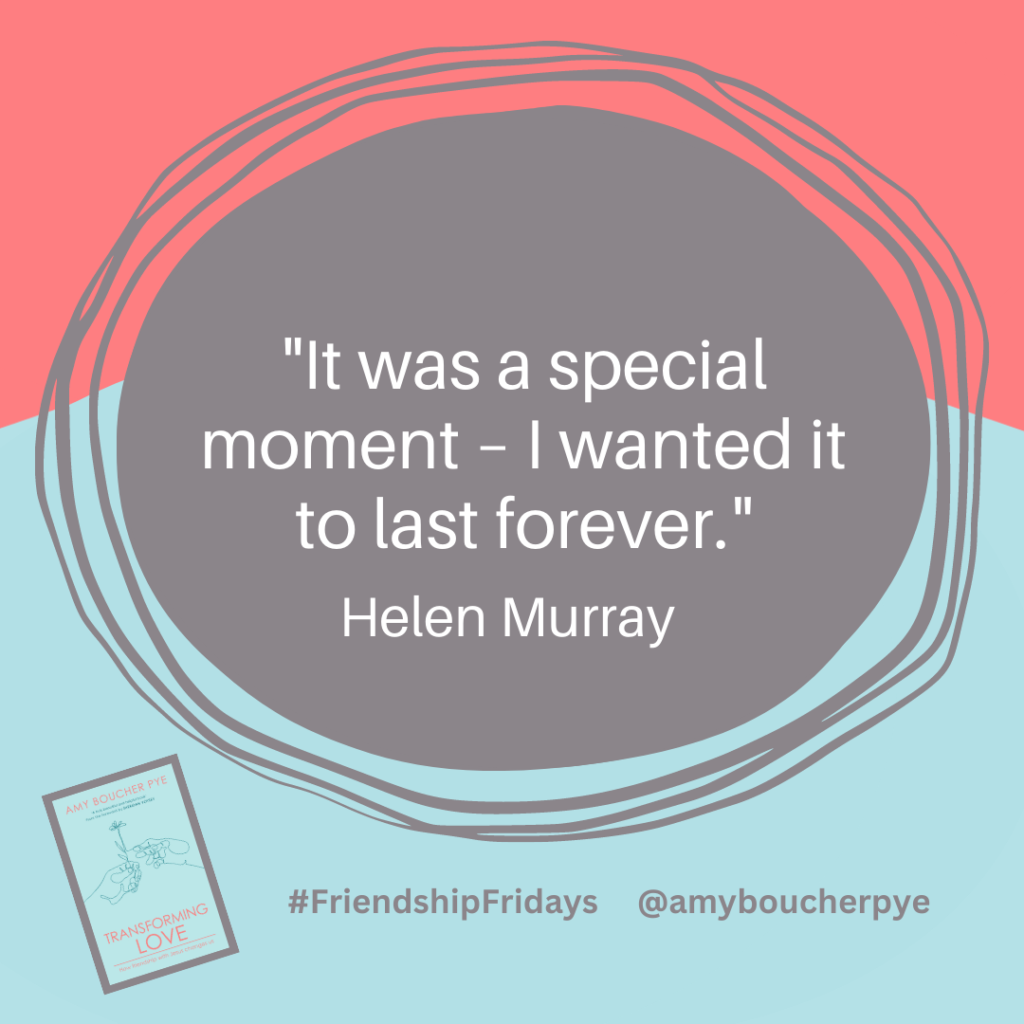
At length, we rested, and he surprised me with a cool bottle of water. He knew just what I needed! Slipping off my sandals to enjoy the soft grass, the sun on my face, I drank deeply and felt completely revived. It was a special moment – I wanted it to last forever…
…but time was moving on. It had been such a lovely afternoon that we agreed we must do it again soon. My friend seemed to have all the time in the world; it was I who was unable to find any free time in my diary. He seemed disappointed but I promised to get in touch as soon as I could. I left him leaning against a stile at the end of the path to the woods. When I turned to wave he smiled and lifted a hand, but his expression was unreadable. I put it out of my mind and hurried off to my prayer meeting.
Helen Murray lives in Derbyshire, UK, with her husband and two daughters. A prolific reader and journaller, she writes about life and faith and is has recently resumed work on her first novel.
Explore friendship with Jesus in Transforming Love. Find it – including a free copy of the introduction and first chapter – here.
I adore this post by Anne! How encouraging to think that we might accompany someone on a walk – through the Spirit, as she prays for and with us. Who might you take for a walk today?
One of my favourite ways to unwind is to walk the hills for a day; flask and sarnies in my rucksack and with my husband for company. There are periods in the walk, however, when I may invite others to join me; my three praying friends. Not literally I must add. We live hundreds of miles from each other! Rather, I picture them walking alongside me, first one then another, as if in conversation as I recall and respond to their needs and challenges, their hopes and celebrations. Mindful of God’s presence I then sense I am praying with them rather than for them; allowing space in my head and heart for the Holy Spirit to lead.
These praying friends are my Peter, James and John. They are with me, and I with them, to celebrate mountaintop experiences of God’s presence and provision. They are with me in my ‘Gardens of Gethsemane’; a stone’s throw away – just a click of our online prayer group – praying for me during life’s most awful moments, just as I pray through theirs. And they are with me in the life that lies between the highs and the lows. They are with me – in prayer – and I with them.
Our prayer friends may or may not be the same as our closest of friends, but all are equally cherished. Deborah Jenkins touched on this in her excellent blog in this series, saying, ‘We need different people to do different bits of life with’. Amy also refers to this in her book, Transforming Love, reminding us how Jesus enjoyed a deep bond with his disciples. But the nature of their friendship was different to that he shared with the Bethany siblings; a special place, Amy astutely observes, of intimate friendship. As for Peter, James and John, it was these three with whom Jesus shared divine revelation and affirmation on the Mount of Transfiguration. And it was these same three Jesus asked to stay close, to pray with Him through the ugliest darkness leading to His greatest act of all. Different friendships, but all of immense value.
Who might be your Peter, James and John? Thank God for them now. If you’ve yet to approach them to walk with you in prayer, how might you explore that?
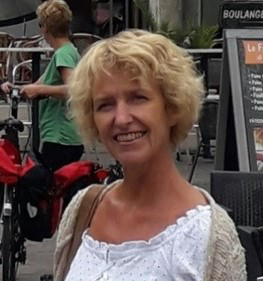
Anne LeTissier is an author, speaker and encourager with a passion to relate faith to everyday life. She does this in her life-application bible teaching through books, bible-study notes, articles, blogs, and speaking engagements; writing regularly for the global ministry of Our Daily Bread among other publications. Connect with Anne on her Facebook page or find out more at her website.
Explore friendship with Jesus in Transforming Love. Find it – including a free copy of the introduction and first chapter – here.
“It won’t be taken away from her.” These words of Jesus seemed to jump off of the page as I led an imaginative prayer exercise on the story of Mary and Martha in Luke 10:38–42, and I welcomed them to sink deeply into my heart and mind.
I’ve often related to Martha in the kitchen in this gospel story, so I was surprised to resonate with Mary sitting at the feet of Jesus too. As the scene unfolded in my imagination, I saw Jesus protect me against the older sister who burst into the room with heated indignation: “Jesus! Tell her to help me! I’m here doing all this work on my own!” I realised Jesus was defending my desire to sit at His feet, to soak in His love, to learn from Him.
Sharing a love for Biddy and Oswald Chambers, Michelle and I feel a sense of camaraderie – our friendship exemplifies what Michelle writes about as she details the friendship of two women who have shaped the devotional experience of so many. I recommend both devotional classics highly. Which kindred spirit of yours could you encourage today?
Friendships take many forms and shapes but they usually are based on a shared experience.
Lettie Cowman and Biddy Chambers’ long-distance friendship was two-fold: devotion to their late husbands and also to their glorious Lord—about whom they wanted everyone to know. Their friendship began at an American camp meeting—but grew closer when they became widows.
After accompanying her husband to Japan and founding a mission, Lettie sought encouraging readings to soothe Charles’ long dying years. In 1924, she turned those words into the devotional, Streams in the Desert.
That same year (perhaps because Lettie sent a copy of Streams), Biddy began compiling My Utmost for His Highest to honor Jesus. She wanted her husband’s insights available, believing Oswald to be “one to whose teaching men will return.”
The two women corresponded over the years but left no letters. Twelve copies of Oswald Chambers’ books—all personally signed—sat in Lettie Cowman’s library. Her address book included not only Biddy’s address but also that of missionaries trained by Oswald and Biddy Chambers.
Don’t all friends like to share fellow kindred spirits?
In addition, Lettie liked to visit friends while traveling in foreign lands. She sailed to England a dozen times during her lifetime, and a stop for tea and conversation in north London with Biddy would be pure pleasure.
Their devotionals, of course, are very different—reflecting themes specific to them both. Biddy used her years of short-handing Oswald’s messages to craft a devotional focused on Christ in many forms: through an individual’s discipleship, surrender, guidance, prayer, intersessions, and faithfulness.
Lettie, in contrast, compiled messages of encouragement, grief, prayer, and consolation, turning to the Bible and Christ for answers.
They both wrote from personal wisdom based on their long years of Bible study and sacrifice to the God they loved.
Who better could understand the publishing and personal pressures of decision-making without a husband, but with the Master of the Universe as their guide?
They may not have visited often, but through letters and books, Lettie and Biddy’s friendship suited and blessed them both.
“Your flight has been canceled.” The notification popped up on my phone during team-building sessions. I tried to stay focused on the intense conversations about our personality styles while wondering what new travel plans I would need to embrace. Knowing that my driving nature can get things done but can also alienate others, I wanted to be present in the meeting. I breathed a prayer, asking Jesus to help me.
When we had a break, I looked for alternative flights home and saw that I’d have to stay another night. The delay settled like the proverbial final straw breaking the camel’s back; I felt pushed and prodded, exhausted from jetlag, deadlines, and the canker sores that appeared from a lack of sleep. I managed to hold my emotions together, but when a colleague expressed loving concern for me, I couldn’t suppress my tears any longer. As I tried to stifle my sobs, she took me to a private room, listened to me with grace, gave me the space to recollect myself, and reminded me where I could visit the ladies’ room to ensure the remnants of my tears didn’t pepper my face. In those harried moments she emulated Jesus’ friendship to me. I knew that she was part of His answer to my earlier arrow prayer.
What a compelling look into how we can sit with the hard stuff of life, but not on our own – with our best Friend. I hope you’ll be encouraged by Michelle’s thoughtful approach to companions who have weaseled their way into her life:
Recently God has been teaching me to “make friends” with the rough stuff of this broken world – the fears, the worries, the trials, the sorrows, the annoyances. They are as much my constant companions as the beautiful people who surround me. And while I’ve always thanked God for my loved ones, I’m slowly learning to live the words of 1 Thessalonians 5:18:
“Rejoice always, pray continually, give thanks in all circumstances; for this is God’s will for you in Christ Jesus.”
As a follower and lover of Jesus, I’m called to give thanks in all circumstances, not just for what and who bring me joy and comfort. My mind knows this; it knows I can’t befriend life’s hardships on my own, through my own efforts. Since I know this cognitively, I thought I was already living this out – inviting God into and thanking Him for this inner circle of lifelong “pals” who teach me lessons only they can. But my growing fatigue and impatience give me away. They are clues to this truth – I have not included my best Friend in the collection of my companions of fear and worry and trials and sorrow and annoyance. Jesus told me that in this world, I could count on them! He also told me I could count on Him – His peace has overcome the world! (John 16:33) But my weariness and irritation let me know I’ve been holding on to my heavy burden – I haven’t made the exchange for His light one. I haven’t been truly counting on Him, but have been leaning on my own efforts to cope and manage and play nice.
In Jesus alone, through His Holy Spirit, I have the capacity and the space to walk with my inevitable, albeit unwanted, mates. Only with my best Friend in me and beside me can I welcome them and thank God for how they are transforming me into His image.
What’s true for me is true for you too. How can you welcome Jesus into the unwanted hardships in your life?
Michelle Vergara gratefully shares life with Derek, her husband of 32 years and Jared, her son of 25 years, both of whom make her laugh and help her daily to be who God intends her to be. She also enjoys the fun and joyous company of her 6 Italian brothers and sisters, nieces, and nephews. Michelle has worked for 36 years in education with children ages birth through college who are neurodiverse with developmental and learning differences. She currently works at Stowell Learning Center, a private cognitive educational program in Southern California. The children and families she has the privilege of working with always inspire her. Michelle enjoys her time with Jesus; spending time with her husband, son, and extended family; singing; reading (especially about health, wellness, nutrition, and the brain); writing; and spending as much time as possible at the beach.
Explore friendship with Jesus in Transforming Love. Find it – including a free copy of the introduction and first chapter – here.
We might experience pangs of jealousy when we read Sarah’s reflections on her close and intimate family, but if that’s the case for you, take heart in her conclusions at the end:
Eleven. I moved eleven times before the age of 25. Daddy was a pastor and his work took us to three states and nine different cities. Change was constant. The one thing more constant than change, however, was my siblings who went through all the relocations together.
There are more than a few of us—five to be exact. And with every move, our bond became stickier and stickier. We all understood what it meant to start a new school, attend a new church, make new friends. And we did all those things, but we also leaned heavily into each other on days when change was just too much to bear alone.
Fast-forward 20 years and you find us clinging to each other when our daddy passed away as we surrounded his bed. In the minutes before his funeral we laughed until we cried, because, for us, laughter—a gift Daddy freely gave—is life-giving. On that day we were laughing about his “river” dancing, which was so comically bad we called it the “polluted river” dance. I’m not sure the pastor was amused, but Mama smiled and said through tears, “I’m amazed by how much lighter grief seems when you’re not carrying it alone.”
And almost 10 years later these same people surrounded me at the funeral of my oldest child. And we leaned into each other and shared tear-filled hugs and life-giving laughter. And in the following days, weeks, and months, friends who stick by me like family showed up. A knock on the door. Cards in the mailbox. Delicious meals and gifts cards for more. Mopping floors and washing dishes. Sitting with me in my grief. My burden didn’t vaporize, but oh how much lighter I felt.
Proverbs 18:24: “Friends come and friends go, but a true friend sticks by you like family” (MSG).
My siblings and I are genetically related, but Scripture never mentions that as a prerequisite to true friendship. You know you have and are a true friend when you can lean into each other in hard times, laugh until you cry, weed gardens together, and simply sit with each other when there are no words. Not everyone has a close family of origin, but praise Jesus, shared genes are not required to be sticky like family.
Sarah De Mey, managing editor with Our Daily Bread Publishing, loves God and people . . . and books! When she’s not editing, you can find her going for breakfast (the best meal of the day) with her husband of 25 years, hanging out with her two teenagers and their friends (who call her Mama De Mey), gardening, and catching up on ‘80s and ‘90s reruns. Writers at every age and stage can connect with Sarah on Facebook at Editing Insiders with Janyre and Sarah.
Explore friendship with Jesus in Transforming Love. Find it – including a free copy of the introduction and first chapter – here.
May the mystery of God enfold us,
may the wisdom of God uphold us,
may the fragrance of God be around us,
may the brightness of God surround us,
may the wonder of God renew us,
may the loving of God flow through us,
may the peace of God deeply move us,
may the moving of God bring us peace.


Joy Cowley, Aotearoa, New Zealand as found in Geoffrey Duncan, compiler, A World of Blessing: Benedictions from every continent and many cultures (Norwich: Canterbury Press Norwich, 2000), p. 226.