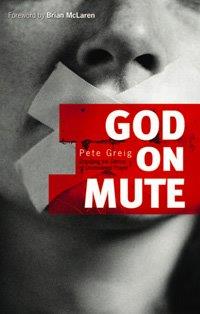
God on Mute: Engaging the Silence of Unanswered Prayer
Pete Greig (Survivor/Kingsway, ISBN 9781842913178)
Some years ago, my faith was seriously rocked when I thought God was telling me to move from one city to another, and then everything fell through with the move. I didn’t know what to believe. Was God out there? Did he care? Was he speaking to me? What was I hearing?
I would have loved to have been able to read God on Mute back then. Through God’s grace I was able to mature in my faith, but it was a long and lonely road to travel, filled with hurt, questions, doubts. Perhaps Pete’s book will shorten the path of others. I hope so; because of God’s seeming silence, many Christians lose their faith or allow it to be it watered down to an insipid state.
Pete Greig is a co-founder of the 24-7 Prayer movement, which has touched people around the world. He’s written about this prayer movement in another book, but this one is a profoundly personal yet deeply biblical exploration of unanswered prayer.
Just weeks after the birth of their second son, Pete’s wife Samie suffered a horrible seizure. After rushing her to the hospital, they learned that she had a tumor in her head the size of an orange. As Pete says, “Why, I wondered darkly, hadn’t my prayers made any notable difference when Samie and I needed God’s help more than ever before?” And, “Here I am, one of the leaders within a prayer movement … and (dare I admit it?) my deepest prayers are impotent…” (p. 38-39)
Pete searched for answers to the profound question of unanswered prayer, and determined that the book needed to be written that would fit between his wife’s “Reader’s Digest and a cappuccino.” God on Mute is the result of their years of prayers, searching, and reflection.
It’s been a few years since I read this book, and I’d love to read it again, slowly. First time round I was propelled by the story of Pete’s wife, Samie, as she discovered the brain tumor and her subsequent epilepsy. I was gripped by this human drama, especially as my brother has struggled with epilepsy nearly his whole life.
A book I will give to others and reread. It’s a treasure trove of wisdom which also poses the questions some are too afraid to raise.
This book has been out a few years; have you read it? What stories do you have of unanswered prayer?
“Heaven will be a grand reunion with people who might have become dear friends, had circumstances/geography/time not limited us.”
So said I to a woman I had only ever met once by email when interviewing her for the Woman Alive Book Club that I run. I had read her spiritual memoir and resonated deeply with her story, and when we exchanged emails I felt that instant knowing of someone who just gets you. Someone with whom you share similar loves and interests (God, books, culture…). Lest you fear I’m some strange stalker, she felt the connection too.
Have you had that experience of an instant soul friendship? Sometimes I’ve thought I should feel this almost inexplicable link with other people who are in similar life circumstances – whether we both work with words or are married to a clergyman or live as an ex-pat. But that’s not always the case. There’s that extra “something” with some other friendships that seems to bind our hearts and minds at a deeper level.
I’m finding it hard to write about these soul connections, because I don’t want to devalue the friendships I have with people who are different from me, who challenge me in ways that someone cut out of more similar cloth might not. Friendship is a gift in whatever its form or depth. Nor do we have time for endless numbers of friends either; we live within boundaries and limitations.
Which takes me back to my opening line about heaven. In heaven I reckon we’ll all have soul connections with each other. We won’t be limited by space or geography or time. We’ll know and be fully known. We’ll look into the eyes of our sisters and brothers and see all that is good and true and beautiful about them. How they are made in the image of God and how they reflect that beauty. And as we feast together – never over-indulging nor worrying about excess calories – we’ll rejoice in unity and communion and that mysterious one-with-God-and-each-otherness.
What about you? Have you had this experience of instantly knowing, at some sort of deep level, someone else?
As for God, his way is perfect: The Lord’s word is flawless; he shields all who take refuge in him. For who is God besides the Lord? And who is the Rock except our God? (Psalm 18:30–31, NIV)
I know I should have a picture of rocks from the Holy Land, but the rocks on the West Coast of Ireland speak to me deeply.
Today David again calls God the rock who provides him refuge. It may seem repetitious, but as Charles Spurgeon said in The Treasury of David, “Second thoughts upon God’s mercy should be and often are the best.”
As Moses was preparing the Israelites to go into the Promised Land, he sang a song about the Lord and uses very similar words to David’s: “He is the Rock, his works are perfect…” (Deuteronomy 32:4). Clearly God as the rock, sure foundation, and provider of refuge was an important image to our heroes in the faith.
In the desert lands of the Bible, rocks were a welcome sight as they would provide shade from the scorching heat of the sun. Underneath their cover the desert creatures and plants would flourish, and a weary traveler would find shelter, rest, and perhaps even a spring of water. Rocks were also the foundation to the fortresses that would provide safety from attacking troops.
The image of the rock is important in the New Testament too. Jesus says that those who put his teachings into practice are like “a wise man who built his house on the rock” (Matthew 7:24). Though the elements raged against it, it didn’t fall. And Jesus renamed Simon “Peter,” the Greek word for rock, saying, “and on this rock I will build my church” (Matthew 16:18).
God wants to be the foundation of our lives. He is filled with the strength that does not waver and a solidity that will not crack. As we look to him for help, he will provide shelter and refreshment. The need might be financial – negative equity on a mortgage or out-of-control fuel prices. The need might be emotional – for someone to love and be loved by. Or it might be physical – for healing and restoration. He will provide answers; perhaps not as we would, but according to his mercy and wisdom. For his way is perfect and his word is flawless.
Prayer: Lord God, you are the rock of our lives, a mighty fortress who never fails. We look to you for shelter, rest, and refreshment.
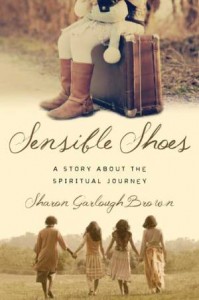
Sensible Shoes: A Story about the Spiritual Journey
bySharon Garlough Brown (IVP, 978-0830843053)
Some books come with a buzz. I don’t mean that reading them will cause an altered reality, but that people become so gripped and changed by these books that they want to share them with others – resulting in a buzz. Sensible Shoes is such a novel. I first heard of it on social networks, for Kathy Lee Gifford recommended it on one of the influential US talk shows. Intrigued that a book about the spiritual journey would receive such a big mention, I got myself a copy. From the promotional material I thought it was a how-to book about the spiritual disciplines, so I was pleasantly surprised when I found it was a novel.
The story charts the journey of four unlikely friends who bond through a spiritual formation course. Each woman is running from wounds of the past. Through their friendship and their engagement with spiritual practices such as lectio divina, praying with the labyrinth and imaginative prayer (Ignatian practices), they find peace. They also move into the adventures of a life partnering with God.
I could relate to each of the women’s struggles as those I’ve addressed in my own journey of faith. Such as Hannah, who tries to prove her worth to God by serving others unswervingly, to the point of exhaustion and ignoring her own needs. Or Mara, who, feeling rejected, turns to food for comfort. Or Meg, who battles a critical voice in her head. Or Charissa, who seeks perfection and loves a controlled environment.
One point that the author makes is that God often uses the irritants in our lives to wake us up to the issues we should face. As one of the spiritual directors says: “Remember, Charissa – the things that annoy, irritate, and disappoint us have just as much power to reveal the truth about ourselves as anything else. Learn to linger with what provokes you. You may just find the Spirit of God moving there” (p. 80). The prayer of examen, in which we look back at our day in the presence of God, can help us as we bring to mind those things or people that made our blood pressure rise. We can ask God to show us why we lost our temper – was it something physical like we were tired or hungry? Or something deeper, such as one of the deadly sins – pride, envy, anger and so on. When we’re transparent before God, he can bring his healing touch, filling the places that are yearning for love and affirmation. And he can lead us to repent, or spur us on to love our neighbor.
And Sensible Shoes? Although they could have called it something with a bit more zing, it’s a book I’ll keep recommending.
When I first moved to the UK, I felt so self-consciously American. Hyper aware of my accent, which immediately labeled me as foreign. Fifteen years later, I usually forget my “other” status, but sometimes – often when I’m out of London – someone will look at me with curiosity and ask me where I’m from.
“North London,” I’ll say somewhat cheekily, fully knowing that’s not what they mean. “But from the States originally.”
And again I’ll be jolted into an awareness of otherness. That sense of being a foreigner in a strange land. The longing for home, which God embedded into each of us, whether we live in an adopted country or not.
A few months ago I wrote a poem expressing some of these feelings of heavenly citizenship, and to Whom we ultimately belong.
You, Lord, keep my lamp burning; my God turns my darkness into light. With your help I can advance against a troop; with my God I can scale a wall. (Psalm 18:28–29, NIV)
As David recounts the works of God, he acknowledges that everything comes from the Lord – oil for his lamp, military help, strength to climb a wall. His song rises out of the many years of trusting God and seeing him deliver, whether it was when David defeated Goliath with God’s help, five stones and a sling, or when the Lord gave him a hiding place from Saul.
These testing times provided David with a choice; he could trust God to take him through the difficulties or blame him because things weren’t going to plan. As we’ve seen over the past Mondays, David wasn’t perfect, but he learned from his mistakes and sought after God. And after a lifetime of seeing God make good on his promises, he wants to attribute all the glory and honor to him.
Our Western world is so different from that of David’s. We have the conveniences of modern life such as travel, communication, and technology. With all of these things making our lives easier (but more complicated), we can be tempted to think that we control our lives. But if our hearts are tender towards God, we see that he is the source of all we have and do. Sometimes, however, we only turn to God as a last resort because of disaster, calamity, or sickness.
How can we follow David’s lead in attributing all the glory to the Lord? Perhaps it is in offering to God that misunderstanding with a friend. To seek his wisdom when our children go off the rails. To ask him to help us see that annoying person as he sees them. To say thank you when we complete a project, have a joyous time with a loved one, or make it to our destination safely.
God’s help is as present today as it was for David. As we trust in him moment by moment, we too will be able to say that he has provided for our needs and turned our darkness into light.
Prayer: “Yours, Lord, is the greatness and the power and the glory and the majesty and the splendor, for everything in heaven and earth is yours” (1 Chronicles 29:11).
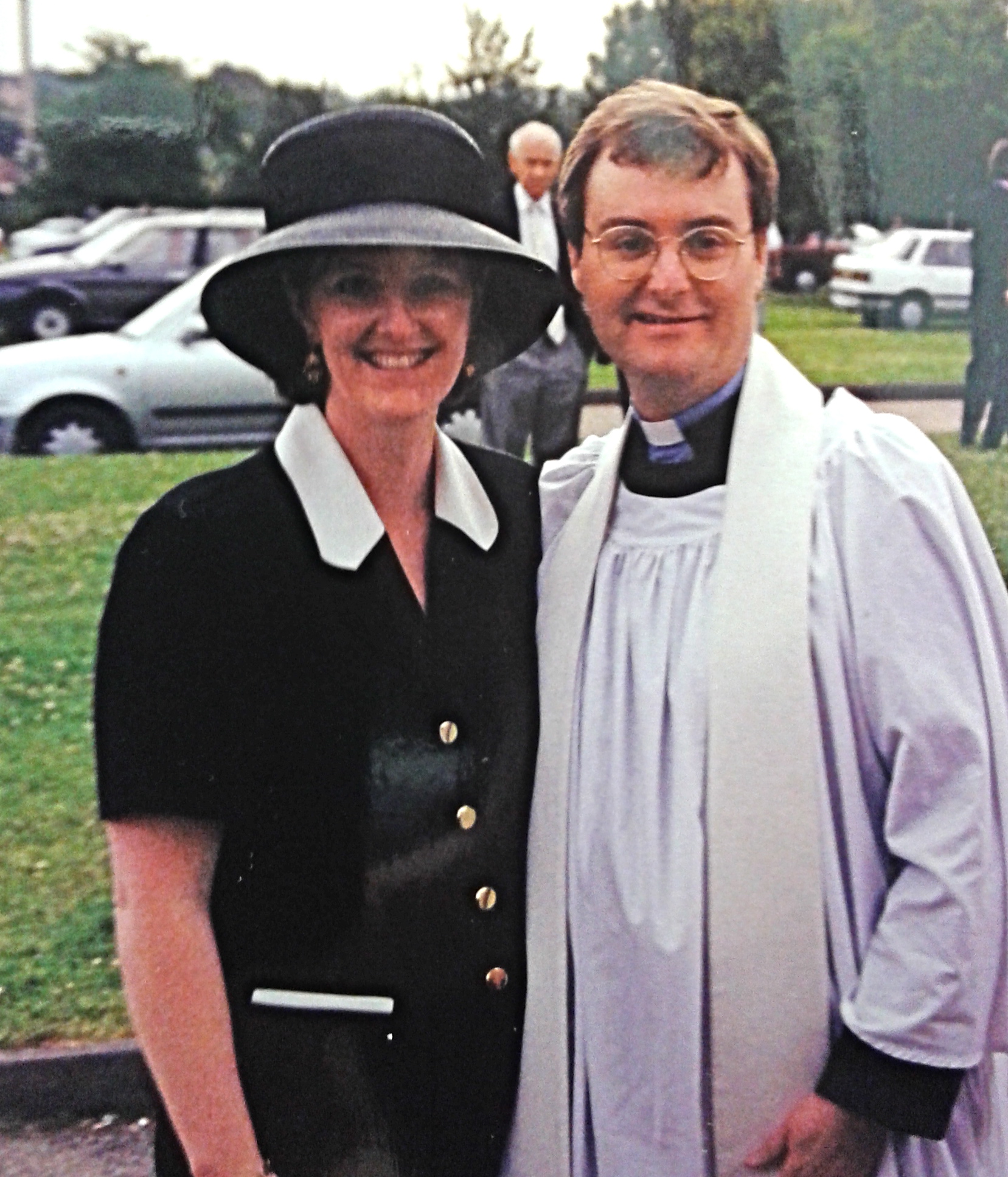
Nicholas’s priesting, which happens a year after being ordained a deacon (who knew it was so complicated?). I know, the hat; what was I thinking? Nice photobomb too.
Today my husband has been ordained a minister in the Church of England for 15 years. I remember the occasion so clearly as I sat in the cavernous Guildford Cathedral with his family and witnessed him making his promises to love, hono(u)r, and serve God and God’s people. As we drove back to Cambridge, I was keenly aware of him wearing his dog collar for the first time when we stopped at a rest stop – I felt like he was broadcasting, “Hey, I’m one of those crazy Christians!”
While Nicholas went on the pre-ordination retreat, I had stayed with some of his friends in Guildford and prepared for the post-ordination meal. This was my first experience of putting on a party for his friends and the church. I remember making salads; this lovely broccoli one was probably quite foreign to Brits then (at that time salads hadn’t reached the level of acceptance as they have now on these shores). A woman from his church, surveying the heaping buffet table, said what a good vicar’s wife I would make. Oh, how I cringed at that. I had hosted the party as a gift of love for my new husband, not out of duty or expectation. Couldn’t she see that?
I’ve learned many a thing through the years of sleeping with the vicar (or curate). Like gently elbow him if he’s snoring and he’ll turn over. Here are two things I offer from my experience as a VW (vicar’s wife) to other clergy spouses. If you’re part of a church, perhaps these points will help you see the minister and spouse (if applicable) in a new light.
Our first home in Surrey.
Be yourself
One of the first people I ever met in Britain was a lovely American who was married to a Brit who was also a vicar. She was originally from Wisconsin (I come from the next-door state, Minnesota). Ah the wealth of advice and love she showered me with. We shared great laughter too.
She told me how on her husband’s induction to his first church as vicar, she wore a T-shirt under her coat emblazoned with the slogan, “I don’t bake cakes!” She had a strong sense of self and was cheerfully and playfully taking on any hidden assumptions from her husband’s new flock.
Now I do bake cakes, and in particular I’m happy to whip up a batch of my famous brownies for church events. In typical convenience-oriented American style, I serve up the amazing Ghirardelli brownies. Yes, from a mix. One of my friends at church was rather crushed to realize I hadn’t made them from scratch!
But there are lots of ministries at the church I don’t feel called to. I believe that if I step into those roles out of sheer duty, I’ll deprive someone else of fulfilling their calling to serve (and I’ll probably have a stonking attitude). Of course there’s a balance here, and we need to pitch in at times when we don’t feel called when the need is great. And sometimes God calls us into areas we might previously have eschewed. For me, children’s ministry is one of those. I find the prospect daunting and deenergizing, as much as I love my kids. But our church needed leaders so I agreed and now find the times I lead the pre-teen group to be filled with joy and good discussion and fulfillment. I’m a better discipler than teacher-of-the-young, which illustrates my heading for this section, “Be yourself.”
Embrace your instant community
When a publishing colleague heard I was marrying Nicholas, he said from his previous experience as a pastor, “You’ll always have community.” Now that that can be a good thing but sometimes a harmful thing too. Yet his comment brought light and clarity to me as I approached the quick succession of churches that Nicholas had roles with in the first half-dozen years of his ordained life (two curacies and then his first vicarship, where we remain nine years later). My friend’s advice echoed the words from the book of Ruth that reverberated through my mind as we drove to Surrey for Nicholas’s first curacy: “Where you go I will go, and where you stay I will stay. Your people will be my people and your God my God” (Ruth 1:16, NIV). These were now my people – warts and all. And I was their people too – warts and all.
In my years as a VW I’ve witnessed episodes of the downside of community: backbiting, gossip, slander… It hasn’t been pretty at times and it can be excruciating to watch from the sidelines, feeling that all I can do is pray (which yes, I know is actually the biggest thing). Or having to gently disappoint people if they have expectations of me (which doesn’t happen often in our multicultural church in London). In Surrey during Nicholas’s first curacy I was working at HarperCollins. I was puzzled when one of the older ladies said to me during the refreshments after church, “I’m so looking forward to seeing you on Thursday!”
“I’m sorry; what do you mean?” I asked, trying to cover up my confusion.
“Nicholas is coming to our over-50s group.”
“Oh, I didn’t know,” I replied. “I work in London during the week so I’m not able to come.”
This photo of a church in the Costwolds illustrates how the church community can be at times. Sometimes with dark clouds; sometimes with fluffy ones; sometimes both at the same time.
Although there can be negatives, community has its upside too, such as my friend’s comment about the instant nature of the potential for relationships in a church. In each of the three churches where my husband has served, I’ve asked God to give me some friends. In Surrey my closest friends were of non-English nationality (not that I sought this out): Scottish, South African, and Irish. In Harrow, Nicholas and I were blessed to have friendships blossom with the two clergy couples and another couple in the church who are now mission partners in Moldova. Here in north London I enjoy a wealth of friends, especially with my female peers. These are the true riches that God bestows on his people.
Unsolicited advice
If you’re part of a church, here’s a bit of advice of how to love your clergy/clergy family (as applies).
Love them as individuals. They will fail at times and soar at others. Love makes it all better and easier.
Hold your criticism of the preacher’s sermon until during the week, and not right after the service when comments can feel more bruising.
If your minister is married, don’t assume the spouse knows everything going on in the church. If the minister is doing the job in the right way, the spouse won’t know the confidences.
Celebrate your church leader when appropriate. They need praise too.
Pray for them. As Alfred, Lord Tennyson, said, “More things are wrought by prayer than the world dreams of.”
And how about you? What advice would you give if you’re part of a clergy setup? If not, what have you observed if you’re part of a church?
“There’s a new company that’s selling books on the Internet. It’s one to watch,” said the man who would become the Motley Fool.
The year was 1993, and I was sitting in his living room, having enjoyed a bountiful feast made by his wife, with whom I was working on a project on the Classics. Being in my twenties and not thinking I should actually invest any of the disposable income that I had (which was more than I realized, of course), I let the advice roll by. Yep, you can guess the name of that company.
What would you tell your 20-year-old self, if you’re in your forties or higher? I posed the question on my Facebook wall yesterday, and got a mixture of funny and poignant responses.
Stripes on top and on the bottom?
Chose your life partner carefully
One of my friends wrote, “Don’t marry that guy. God gave you good instincts for a reason” and my heart went out to her. In my twenties I was saved from such a union, which surely would have ended in divorce – as much as I would strive to avoid divorce. I knew deep down that things weren’t right with us, but it took strong advice from my parents and my work colleagues for me to end the engagement. It seems once a couple is engaged, they are swept along in a current of planning and living, perhaps, on a realm of unreality. Well-meaning acquaintances ask, “When’s the wedding?” The woman in particular looks into tulle, beads, canapés, and flowers. That’s why my husband and I, when we help couples who are preparing to marry, counsel them to do the hard work of marriage preparation before the engagement. Then ending the relationship, if it isn’t right, isn’t such a public announcement. And the couple isn’t distracted by wedding planning.
I remember so clearly the advice given to me by one of my colleagues when I was engaged to the wrong man. He held his hands out, palms facing each other and about six inches apart. “Two people are like this,” he said. “When they marry, just by the sheer force of becoming married, they become like this,” he said, moving his hands about 12 inches apart. I was beginning to see that marriage wasn’t going to solve the core issues that my fiancé and I had, but would only exacerbate them. It took me several more months, but finally I ended the engagement. And several years later (thank you God) met the right guy.
God will redeem your brokenness
Another friend wrote, “Sometimes the hardest adjustments you will have to make will be the ones that end up giving you the most compassion for others – so try not to resent them so much. ” Again, wonderful advice. I’ve seen this so often in my life, how the things that feel so hard and excruciating and painful can be used by God in surprising ways.
Kara’s cabin. Epic.
Not to say that I welcomed, for instance, my close friend dying in a car crash when we were 19. But now I can see how all these years later, that core group of high-school friends has remained much closer than we probably would have had Sue not died. We go on trips together and those who live in the Twin Cities in Minnesota see each other regularly. Of course we’re not perfect and sometimes we have hurts to forgive and feelings to mend. But I would be a much poorer person without them in my life.
My parents just recounted how the day after their 50th wedding anniversary, they were called to comfort a grieving mother who had just lost her 20-year-old son to suicide. She said, “I wish I would have had parents like you growing up!” Their compassion has blossomed and multiplied over the years of challenges they faced (as I wrote in my blog). God redeems.
You are not fat!
One of my Facebook friends said this, and I totally agree. Ah, to have been able to love my body in my twenties and earlier, when I may not have been stick thin like some of my friends but wasn’t nearly the size I thought in my head. And to have that wonderful skin – now I would tell my 20-year-old self for sure to slather on the sunscreen and ban baby oil while tanning. Or better yet, stay out of the sun all together!
Yes, it’s Pac-Man, and yes, it was the 80s. See advice, “Don’t take yourself so seriously.”
The deeper issue is accepting how we’ve been made – our body shape, size, and features. I’m not sure if my positive reinforcement of my daughter’s beautiful body can speak over the din of society and her peers as she grows up (she’s six), but I’m going to try. We are beautifully and wonderfully made, something I think about when I read Melanie Reid’s moving Spinal Column, in which she tells about her life following breaking her neck and back when she fell from a horse. My thighs might be bigger than I would like, but they are strong and I can run and jump and walk. As Liz Curtis Higgs said when I heard her speak last week, we should wake up each morning and to the mirror say, “Ta-da!” For we are created in God’s image and are therefore gorgeous.
You can do it!
What else would I tell my younger self? A few random remarks:
Don’t take yourself so seriously.
Your worth is not allied to what you accomplish.
Write! You can do it!
Your sister will become one of your closest friends.
Would you please stop fretting over guys?
Lose the shoulder pads. It’s really not a good look for you.
Adventures await.
So what would you tell your 20-year-old self? Here’s a selection from my friends:
What are you so afraid of? Don’t be. What are you so proud of? Don’t be.
God wants you to rest, shrug off your mistakes, forgive yourself, and laugh a lot.
Don’t worry so much about the future or about what others think of you. Listen to God. The only thing certain is that things will not turn out how you expect!
You are not really busy until you have kids. So enjoy your adulthood pre-kids and do lots of late-night activities and fun travel.
“All his laws are before me; I have not turned away from his decrees. I have been blameless before him and have kept myself from sin. The Lord has rewarded me according to my righteousness, according to the cleanness of my hands in his sight. To the faithful you show yourself faithful, to the blameless you show yourself blameless, to the pure you show yourself pure, but to the devious you show yourself shrewd. You save the humble but bring low those whose eyes are haughty.” (Psalm 18:22–27, NIV)
As we read these verses (and verses 20–21 from last week, which you may have thought I was sidestepping), we might want to ask, “Excuse me, David? What about sleeping with Bathsheba and getting her husband killed? That’s blameless behavior?”
But his song seems to illustrate a more general principle, namely that if we follow God’s ways, he will protect and prosper us. After all, David suffered the consequences of his big mistake, just as we often endure trials when we turn from God’s commands.
We need to tread carefully here. For although God may allow suffering in response to our sins, sometimes things go amiss even though we’ve done no wrong, such as with Job or the man born blind (see John 9:3). And sometimes those who do evil still prosper. But generally I believe the principle holds true.
We can look to Psalm 1 for an affirmation of this truth. There we see the wicked who are like chaff whom the wind blows away. But those who delight in the law of the Lord “are like a tree planted by streams of water, which yields its fruit in season and whose leaf does not wither—whatever they do prospers” (v. 3).
So although David was not without sin, God still called him “a man after my own heart” (Acts 13:22). He made big mistakes, but came back time and again to seek the forgiveness and to be put on the right track. Like David, no matter what our sins are, we can be made righteous, clean, faithful, blameless, pure, and humble.
For prayer: “Create in me a clean heart, O God, and renew a right spirit within me. Cast me not away from your presence, and take not your Holy Spirit from me. Restore to me the joy of your salvation, and uphold me with a willing spirit” (Psalm 51:10–12, ESV).
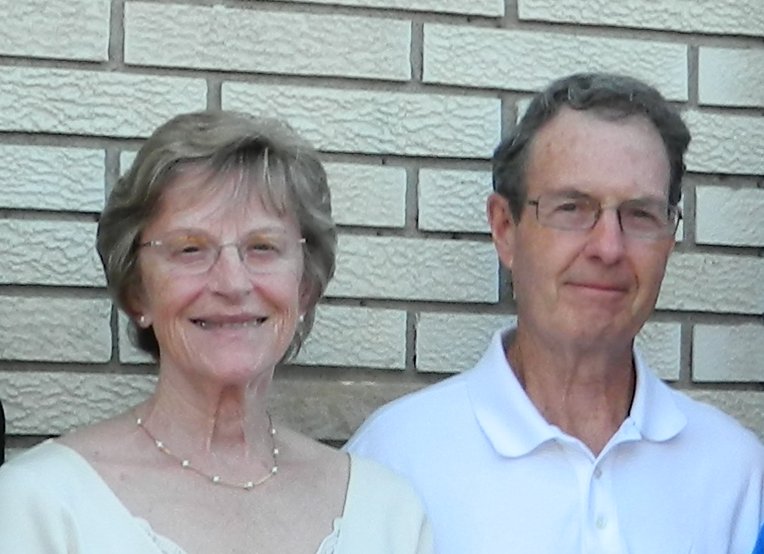
Today my parents celebrate their fiftieth wedding anniversary – five decades of loving each other and modeling that love to us in their quiet and understated way. I am so grateful for their commitment to each other and to us through the good and challenging times.
My mom and dad both grew up on farms in America’s Midwest, and both went to live in the Twin Cities of Minneapolis/St. Paul in the late fifties. My dad had left home when he was 17, for he wanted to be an artist. He worked hard to put himself through college, selling expensive cookware and sewing machines door to door and being a security guard during the night shift. My mom lived with a few other young women and was a good typist, so she got a job at Minnegasco (that sounds a funny name for a company now, doesn’t it?).
My dad became a different kind of artist, one who designed computer systems, than he might have thought as a child. Now that he has more time, he can pursue his visual art. Here’s a painting of my mother.
They met on a blind date that my dad’s friend Jerry arranged. At first my mom thought she had been paired with Jerry, but when my dad got into the back seat of the car with her she realized that he was her date. The evening must have gone well, for they went out for my dad’s birthday in October. After that my mom kept hoping he’d ask her out again so she could tell her work friends that she had a date for New Year’s Eve.
That first Christmas, my dad painted my mom a picture to give her as a present, and she gave him a sweater. How did she know his size? “I put my arms around him.”
They dated for three years before getting married, having such a long courtship because my dad had to do some national service, and wanted to get his degree and a job so that he could provide for his wife and any children they might have one day. Two years after they got married, they had my sister, then two years later me, then three years later my brother. Their family was complete.
But times haven’t always been easy for my parents, their love having to weather health-related storms. When my brother was three, he started to have seizures, which was terrifying for my parents to witness. Then he had such terrible stomach pains that he was operated on to see if he had an obstruction or cancer. He was diagnosed with Crohn’s disease, an inflammatory disease of the intestines, which is not common in children.
One of the favorite activities with Gramps is painting.
A grandma and granddaughter.
My brother was in the hospital for over a month, and although as a six-year-old I didn’t know it at the time, he was near death. He looked like a starving child from a developing nation, for his stomach was extended and he was so thin. But after our parish priest came to the hospital and prayed over him, he eventually got well.
But his seizures continued, and he was diagnosed with epilepsy. The seizures were the worst when he was a teenager, as his hormones were wreaking havoc on his body and his medication seemed to have no effect. My parents learned what it meant to be sleep-deprived as they cared for my brother during the night, taking shifts while trying to get enough sleep for the next day as my dad went off to work and my mom cared for us three kids.
Their faith sustained them. As my dad said, “Through these great challenges, our faith has kept us strong and in love in our marriage. We’ve been able to forgive each other and live one day at a time, when it would be easy to hide from life. Eventually we got to the place of not even worrying – we would think, ‘Have we done everything we can?’ If the answer was yes, then we would give it all to the Lord and not even worry.
“My favorite bit of poetry goes like this: ‘But every desire we have for God, and every prayer, is like the stroke of a carpenter’s plane, wearing down the boards of our wooden-hearted incredulity. And when the boards are quite thin, we will see that God has been there all along, waiting for us to break through.” (From That Man is You by Louis Evely, translated by Edmond Bonin, Paulist Press, 1964.)
Mom and Dad, I love you and celebrate your marriage.