Author: Amy Boucher Pye

  • Devotional of the week: Hebrews 12:1–3 (8 in series)

    Our Crown


    Therefore, since we are surrounded by such a great cloud of witnesses, let us throw off everything that hinders and the sin that so easily entangles. And let us run with perseverance the race marked out for us, fixing our eyes on Jesus, the pioneer and perfecter of faith. (Hebrews 12:1–3)
    OLYMPUS DIGITAL CAMERA
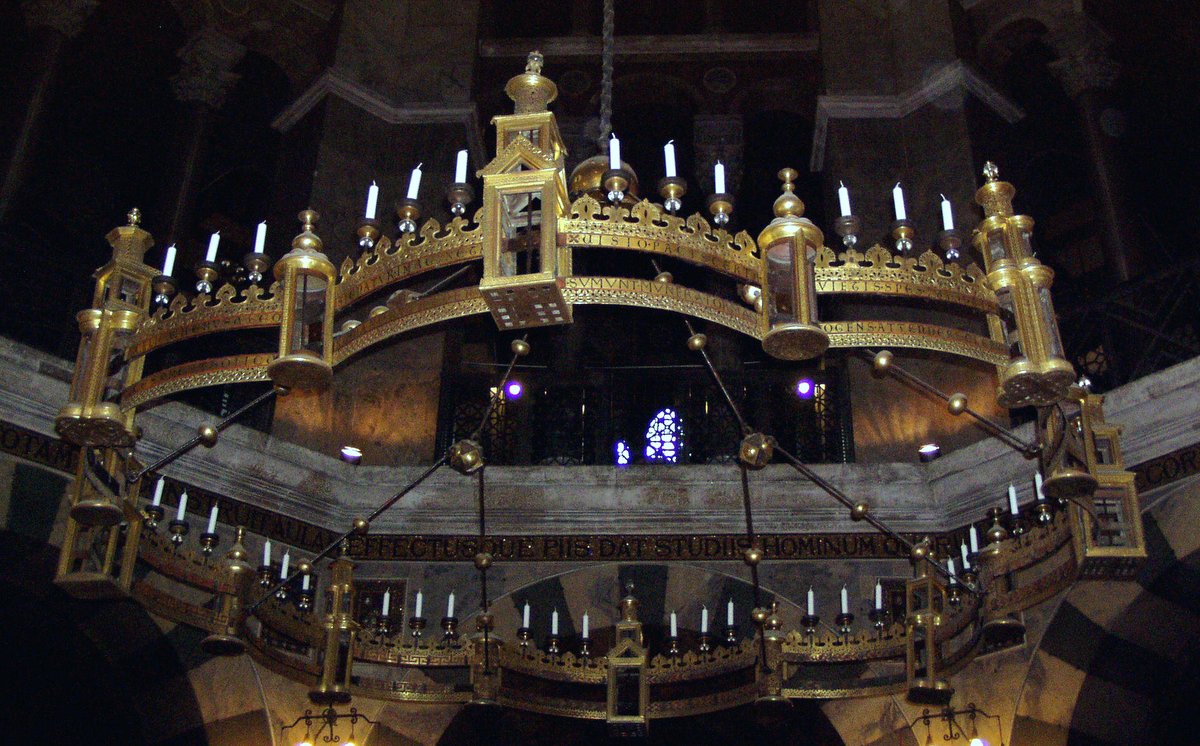
    The Carolingian octagon from Aachen Cathedral in Germany. A grand crown indeed, but must pale in comparison with the one that awaits us in heaven…

    By faith the saints lived and thrived. By faith they built an ark, made their home in a foreign land, bore a child in old age, left Egypt, passed through the Red Sea, made the walls of Jericho to tumble. All of this build up from Hebrews 11 – the rhetorical device of the “example list,” which ancient writers employed to call their listeners to action – leads to a great “therefore.”

    Therefore, says the writer to the Hebrews, let us run our race with perseverance as we fix our eyes on Jesus. He is the ultimate hero of our faith. He is the culmination of the amazing acts and supernatural feats. He endured the shame of the cross to draw us close to his Father, that we might enjoy a life of fruitfulness, joy, and peace.

    What race are you running? Perhaps you are young, and you haven’t yet made life-shaping choices – such as travels, marriage, a professional qualification. Maybe you are in midlife, with your path deeply cut in the earth but with many miles yet to traverse. Or perhaps you are nearing the end of your journey, looking back over a life that had its share of potholes but also buried treasure in the road as well.

    Wherever we are, may we slough off whatever is keeping us from running with joy and appropriate speed. In times of weariness may we look to Jesus to refresh us in body, mind, and spirit. In times of joy may we share our wonder and gratitude with him, the author and perfecter of our faith. And with the saints of old, may we too finish our race in a way to get the prize, the crown that lasts forever (see 1 Corinthians 9:24-25).


    For prayer and reflection: “And when the Chief Shepherd appears, you will receive the crown of glory that will never fade away.” (1 Peter 5:4)

     

  • Devotional of the week: Hebrews 11:32–40 (7 in series)

    Delayed gratification

    These were all commended for their faith, yet none of them received what had been promised, since God had planned something better for us so that only together with us would they be made perfect. (Hebrews 11:32–40)


    Suffering because of skin color. A statue to commemorate the people sold as slaves in Zanzibar, at what is now an Anglican Cathedral but used to be the site of a slave market.
    Suffering because of skin color. A statue to commemorate the people sold as slaves in Zanzibar, at what is now an Anglican Cathedral but used to be the site of a slave market.

    The writer to the Hebrews wraps up his discussion of the heroes of faith in this hodgepodge list of people, triumphs, and tragedies. Through faith they did some amazing feats, such as shutting the mouths of lions and quenching the fury of flames. But they also faced torture, chains, imprisonment, persecution, and mistreatment. And horrible deaths: by stoning, being sawn in two, by the sword.

    Not exactly a list of experiences we’re eager to embrace. Nor to advertise to people who are curious about the Christian faith. “Yes, become a Christian and you too could endure ridicule and maltreatment!” Sometimes instead we highlight only the amazing promises of God – that he will never leave us, that when we walk through the river the waves will not submerge us, that he loves us with an everlasting love.

    But because we live in a fallen world, which is not as God intended it, we may experience house fires and breast cancer. We may lose our jobs or our spouses to a roving eye and hand. God doesn’t cause these horrible experiences, but he allows them. Why? We just don’t know. At these times, perhaps more than ever, we need to cling to God’s faith-building promises while sinking back into his everlasting arms. And to know that God has something better for us planned, such as our home in heaven.

    None of these heroes – Abraham and Moses nor Gideon and David – received what they had been promised. But they welcomed it from a distance. May we who have the gift of the triune God – Father, Son, and Holy Spirit – live in a manner worthy of our callings. May God increase in us our faith, that we too may be heroes who welcome God’s promises, perhaps also at a distance.


    For prayer and reflection: “God wants you to understand that it is a life of faith, not a life of emotional enjoyment of his blessings…. Faith by its very nature must be tested and true.” Oswald Chambers


  • Am I Beautiful?

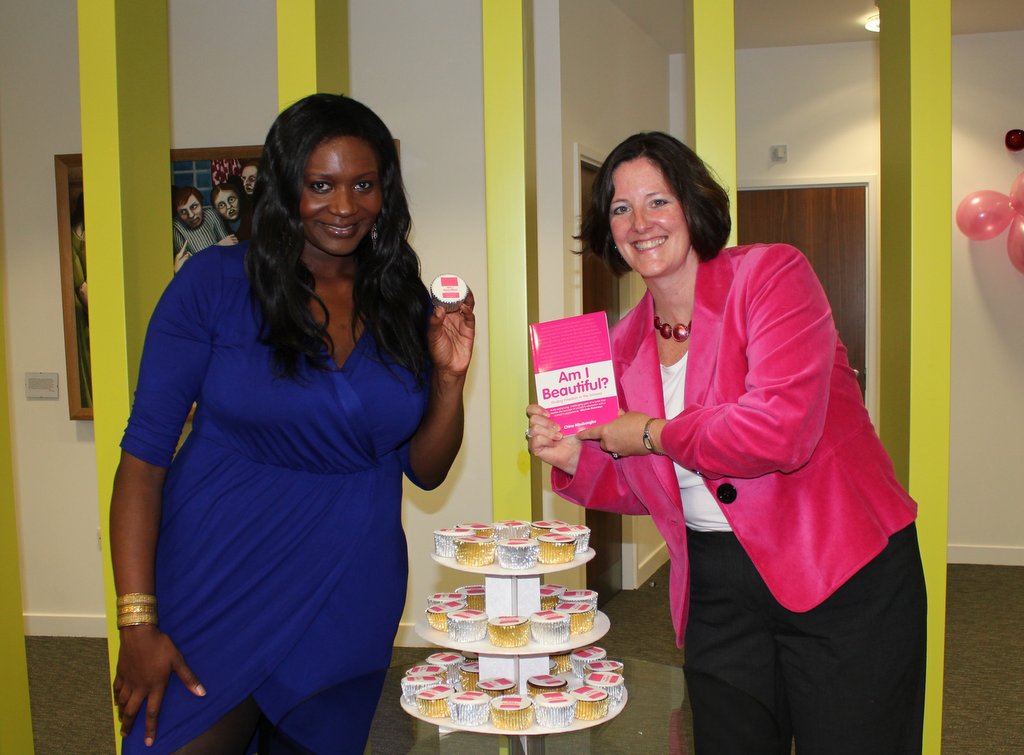
    We met in the ladies’ loo, an unplanned meeting that seemed appropriate, given the evening’s agenda. Author and editor stood under the harsh fluorescent lights, applying makeup and (in my case) moaning about having a bad-hair day. All the while appreciating the irony that we were worrying about our appearances while celebrating the launch of her new book on beauty, inside and out.

    AIB launch 007
    Author and editor. You can guess who is who!

    Chine Mbubaegbu has penned Am I Beautiful? from an achingly vulnerable place. She admitted last night, in our Q&A session, that her first draft originated from her journalist self. When Claire Musters and I, who edited her book (with Claire doing the lion’s share of the editing), received the first draft, we were… disappointed. Chine later admitted that she had hoped for a sort of Christian-Malcolm-Gladwell type of treatment on the subject of beauty – what is beauty, how Christian women deal with the world’s expectations and our own, and so on. But although her treatment was good, Claire and I wondered, where was the book’s heart beat? Where was the story lurking underneath the story?

    With some gentle (but painful) prodding, Chine reworked the book. Transformed it – in the hours between getting home from her day job before going out at night (ah to be in one’s 20s!). The result is a narrative that not only contains the voices of other women and theological reflections and social observation, but the gut-wrenching stories of a woman in her journey to come to terms with how her outside packaging, so to speak, affects her emotions, thoughts – and her soul.

    Last night, in echoes of the thought-provoking TED talk by Chimamanda Adichie, Chine told the story of her five-year-old self in primary school, drawing a self-portrait. She chose a yellow crayon for her hair and blue for her eyes. Only when one of her friends exclaimed, “That doesn’t look anything like you!” did she realize her folly. She, born in Nigeria, had black hair and brown eyes. The only girl with dark skin in her class, she felt an outcast. She didn’t realize her own beauty.

    Some of the crowd assembled to celebrate Chine's book.
    Some of the crowd assembled to celebrate Chine’s book.

    The evening was a smash, filled with bookstore people, friends and family of Chine, movers and shakers and bloggers and tweeters. I loved the Q&A session, and thought the last question was apposite, asked by a man: “I have one daughter and another who is going to be born any minute. How do I let them know that they are beautiful?”

    It’s a question I ask myself when raising my daughter. As Chine said, yes of course, tell them that they are beautiful, but praise them too for being clever and kind and for working hard and for being loving and… I know some people make it a practice not to tell little girls that they are cute – because so often that can be our only reaction. I wonder if as long as we praise them for a myriad of things, including that they are beautiful could act as a deposit against the tirade of society’s (and their peers’) assessment that they are found wanting. What do you think?

    I end with the final question I asked Chine during our Q&A: “How do you answer the question in the title of the book?”

  • Soaring on the wings of the wind

    The irony isn’t lost on me, that to retreat next week I’m cramming as much as I can into this week. All the while wondering if I’ll get it all done, and if I do, whether I’ll be so washed out come Monday that I’ll not be good for anything.

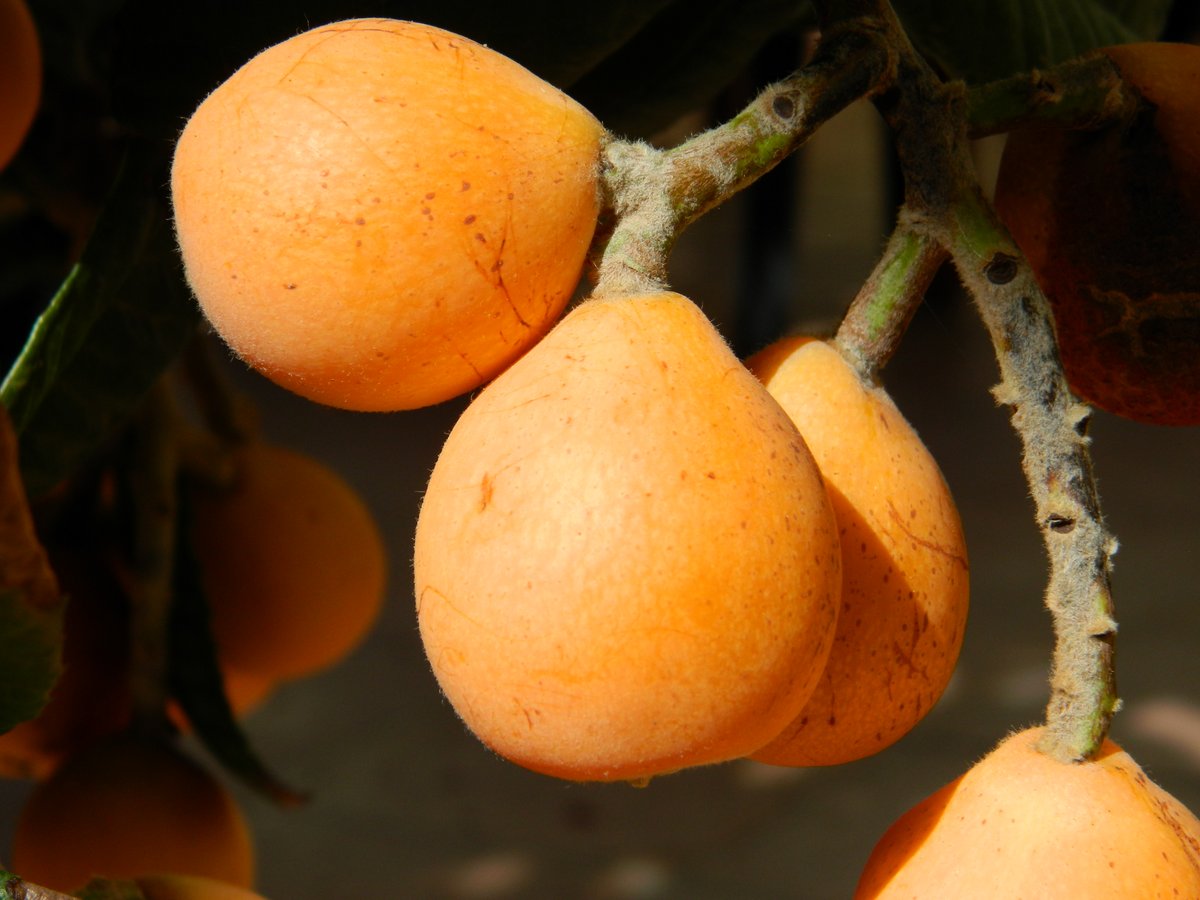
    Some of the lush fruits of the earth at El Palmeral.
    Some of the lush fruits of the earth at El Palmeral.

    The venue is the amazing El Palmeral near Elche in Spain, and our topic is Adventures in Prayer. I have the benefit of having led a similar retreat last year, but I also know that God will have something different and special for this year’s guests, and I want to be open to how he wants to move and work and reveal himself.

    An image that came to me this morning as I woke early, things buzzing around my mind, has partly been inspired by a visit of Liz Babbs last spring. She came on the day of my daughter’s yeargroup’s assembly – a very big deal for a six-year-old. So Liz was a wonderful sport and joined in the audience with me, cheering along CutiePyeGirl as she said her sole line (“A ladybird! A red, spotted ladybird, sitting in the grass!”) and also latching onto the concept of the symmetrical butterfly. This image of the butterfly has been profound for Liz this summer, and she even found amazing butterfly-inspired gifts for the kids recently.

    DSCN7827So when pondering and praying this morning, I had a butterfly come fluttering through my mind’s eye. I felt how butterflies reflect God’s glory, each side in synch with the other. So too is God in synch with us – gently leading us and coaxing us off the ground, that our wings might soar in the way he intended them to. All the while, we might be feeling fear and anxiety, but soon we leave the ground and experience the wind rushing around us through the freedom of flight.

    The retreat preparations, launch of Chine Mbubaegbu’s fabulous book tomorrow night, and magazine deadlines, of course, are still on the menu. But I’m moving forward with my face aimed upward, looking to the sky, hoping to glimpse the wings of the wind to carry me onward.

    Do you fly?

  • Devotional of the week: Hebrews 11:20-31 (6 in series)

    Invisible One


    By faith [Moses] left Egypt, not fearing the king’s anger; he persevered because he saw him who is invisible. By faith he kept the Passover and the application of blood, so that the destroyer of the firstborn would not touch the firstborn of Israel. (Hebrews 11:20-31)

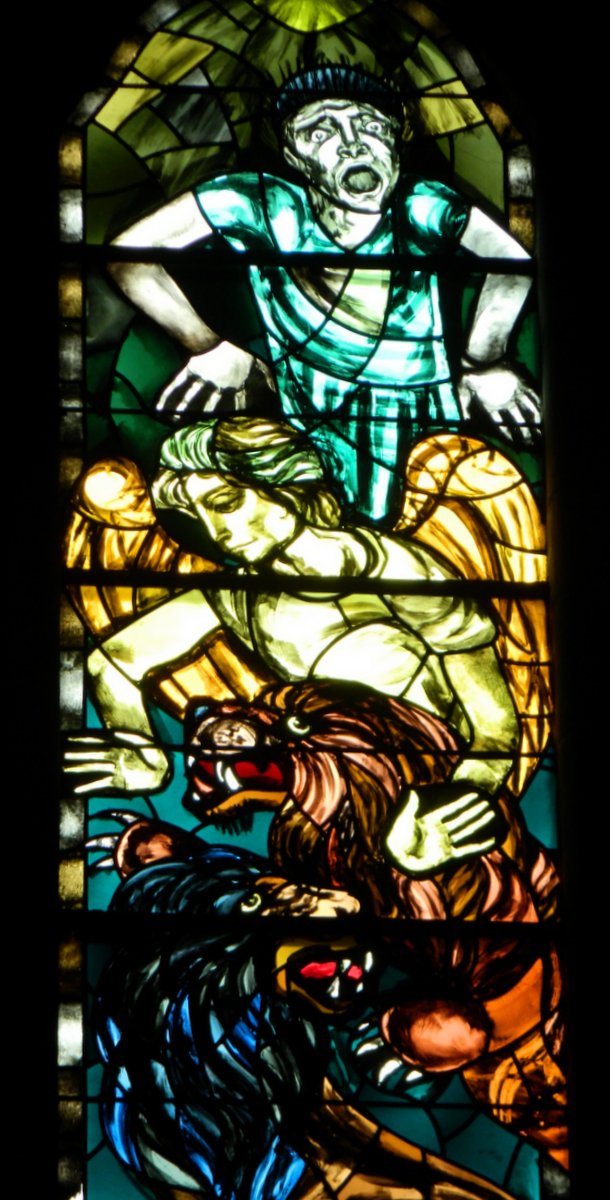
    A stained-glass window from Galway Cathedral, depicting some of the unseen realm.
    A stained-glass window from Galway Cathedral, depicting some of the unseen realm.

    A couple of years ago I was praying with a friend, whose father died not long before. She told me how her sister and mother visited a medium and had “called up” her father. Being fairly new in her faith, my friend was unsure whether this was really her father or not.

    She and I spoke about the unseen realm, and how Satan uses his powers to make otherwise unexplainable things happen. I warned that things like mediums and horoscopes are his tool. Having edited a book about a woman who nearly committed suicide after being embroiled in the occult, I told my friend of the dark power of these tools, but also of our God’s ultimate victory. (And I know I’m being controversial in making such statements…)

    Our passage today reminds us of God’s power in the unseen realm. When God first called Moses to be his leader, Moses was reticent and fearful, saying that Pharaoh wouldn’t listen to him.  Over time, Moses’ faith was built strong and firm as he witnessed God’s faithfulness through plague after plague on the Egyptians, when Pharaoh wouldn’t let the Israelites go. Finally by the time of this tenth plague of the firstborn, Moses knew without a doubt that God was real, even though Moses couldn’t see him.

    I sometimes wonder why God had to send so many plagues, especially when he kept hardening Pharaoh’s heart time after time. Maybe it was partly to show Moses that he was faithful and in control. To hone Moses’ leadership skills and teach him to follow God so that he could in turn lead God’s people.

    My friend’s father loved Jesus, so one day she will be reunited with him in heaven. May she, like Moses, persevere because she sees the one who is invisible. And may our eyes be open to see his face this day.


    Have you come in contact with things of the occult? Consider how you can know when spiritual practices are from God or from the evil one.

  • Stuff, stuff, and more stuff

    “How much stuff does a person need?” The question keeps rolling through my mind, a massaged version of the title of Leo Tolstoy’s short story, “How Much Land Does a Man Need?” (in which the zinger at the end is, only six by six, for a casket). I’ve been pondering this question as I reenter life in Britain following a five-week holiday in the States.

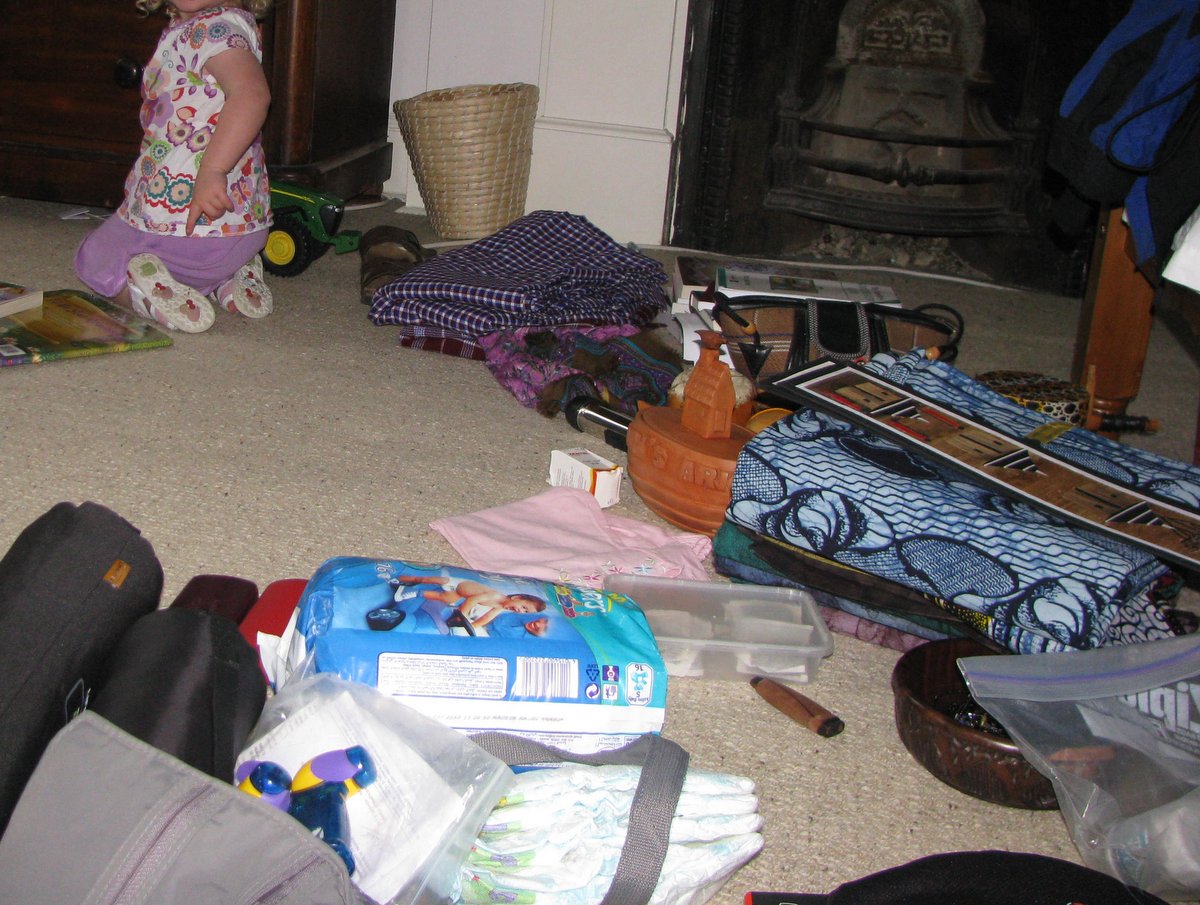
    IMG_1797-001
    Unpacking after our trip to Tanzania in 2009. Some pretty cool stuff here – but it’s still stuff.

    Admittedly, I amass stuff in the States. Things are generally cheaper and I have my favorite brands, even after a decade and a half of living here. So holidays (vacations) include consumerism: power shopping on my own; a relational trip to the Mall of America with my sister and mother; those stress-filled journeys to Target with excitable children. I gather my Tazo Chai tea bags (I know – seriously? bringing tea back to the UK?), Kashi cereal (although I’m weaning myself off of it), MBT shoes, and clothes for the kids in the next sizes up.

    I sometimes think of how I appear an indulgent parent when my kids and I shop when Stateside, for we often choose birthday and Christmas presents together and I say yes more than no. Part of me enjoys being able to say yes, yes, yes to all those kid requests once or twice a year.

    But all that stuff needs packing and transporting back home. This last trip we were verily bulging, at the weight limit with our suitcases and with our four carryons packed to the gills. After the long trip, we were home at last. Suitcases dumped on the floor to be unpacked; stuff to be sorted and divvied up and put away. I ignored it for two days and focused on the garden instead, telling myself that I needed to spend time in the sun to more quickly overcome jetlag when a big part of me couldn’t face all that stuff.

    How much stuff does a person need? Could I give up my US power shopping trips and accept that I’ll pay more in the UK? Or even more radical, how about embracing a simpler life? Fewer clothes and possessions. Using up what we have. Being content.

    When I read blogs and books about simplicity by someone like Pen Wilcock, the idea certainly appeals. Her publisher husband has given away thousands of books, something I would have a hard time doing.

    Small steps, right? What one thing could you and I embrace to lead a more simple life?

    How much stuff do you need?


  • When life changes in a moment… why?

    A couple of weeks ago I posted about my family’s near accident, giving thanks that they walked away unscathed. The post has been in the back of my mind as I think about mothers losing children through car accidents or disease; about sisters living life without their brothers; about families disrupted from a cycle of seemingly neverending surgeries. Just last night I heard about a friend who seems to be following Job’s journey rather too closely lately. Battles at his church left him bruised but not broken; disease left him scarred but not out for the count; now there’s another ghastly wrinkle I don’t even want to hint at it. Why, God?

    WhyIt just doesn’t seem fair. Sometimes we witness what appears to be a miracle of saving grace, but at other times the split second matters and life changes in an instant, ushering in tears, anguish, questions, and pain. Does God intervene in the one instant yet hold back his hand at the other? If we say that he’s involved in those miracles, does that mean he’s also involved in the accidents and disease and personal losses?

    I saw a friend over the summer whose sibling died a few months ago, in the prime of her life. When I questioned him whether he asks the “why” questions, he said he didn’t. He believes in the fall of the world, and so why are we surprised when bad stuff happens? The world is not as God made it; sin entered in and so people die and governments are corrupt and people fail each other and lie, cheat, and steal.

    I believe that, but if it was my sister dying, I’m guessing I would ask why. Yet I think of another friend whose spouse and child died in the space of a decade, and who faced/faces physical challenges with another child. When talking about her journey and God, she said, “Where else do I have to go but to him?”

    That comment made me stop and ponder.

    One who thought about the why’s and why nots died a decade ago, Rob Lacey. I still miss him. I called him my “dream author,” for he delivered great content on time that sold. And he was just such fun to work with (on The Word on the Street and The Liberator). We talked about his next book as “the health story.” But we didn’t know then that his wife Sandra and friend Steve would be writing it after he went to perform in glory.

    Rob with his lovely colleague Elin Kelly, signing books at Spring Harvest, 2004
    Rob with his lovely colleague Elin Kelly, signing books at Spring Harvest, 2004

    Rob’s poem “Why Me?” comes on page 196 of their book, People Like Us, and I include it here with Sandra Harnisch-Lacey’s gracious permission. He wrote it after he had an all-clear of no cancer in October 2002. (None of us knew that the cancer would come back three years later.)


    Why Me?

     
    Thanks, Emmanuel. Thank God with us. I’m well!
     
    But why me? Not him? Why me? Not them?
     
    It’s not ’cos I memorised the whole of Job.
    O wore an anointed prayer shawl.
    Or a special hospital robe.
    It’s not ’cos we cried ‘Mercy’! a million times.
    It’s not ’cos I wrote a hundred prayers with rhymes.
    It’s not ’cos my wife deserves me.
    Puts the sign ‘reserved’ on me.
    It’s not ’cos my son needs me.
    Twin tower workers were parents too.
    It’s not ’cos we’ve hung on.
    It’s just that God pulled us through.
     
    So is it ‘because I’m worth it’?
    Well, I am, I’m worth everything to God.
    But so was Jacqueline du Pré,
    So was Eva Cassidy.
     
    So why? And when?
    Was it already planned right back then?
    Or did God shuffle and shift?
    And watch all our prayers lift up past his eyes?
    And did he hear our cries?
    And did they all add up to Abraham- or Moses-size?
    When they dared to do diplomacy with God?
    Did we, together, negotiate with God?
    We’ll never see the subplots,
    The alternative scenes,
    Until we get to heaven, read the script
    And work out what it means.
    There’s no recipe for what God gives free.
    There’s no ace to play for grace.
     
    It’s not that I toughed it out with cameras up my nether regions,
    Tubes pushed through my back,
    Needles in my failing veins,
    Platinum pumped through every track.
    It’s none of that.
    It’s not that I kept a certain attitude,
    When interviewed.
    I’m no more clued than you.
    I could’ve interceded for the lion with my name on it,
    Been compliant with my giant.
    I could’ve driven into Jerusalem on a clapped-out Robin Reliant.
    And still, it might have been,
    That I would die.
    And we might have no idea why.
    Would that have been God’s will?
    Or is it God’s plan never to fill an empty grave?
    Or does He save each one of us?
    So how come some still die?
    And why this?
    Why that?
    And with answers so shy
    What’s the point in asking ‘why’?
     
    So I won’t try to work out why.
    I won’t sweat to work it through.
    For now, Rob, just face it,
    God’s mercy is focused down on you.
    So leave your questions lying there
    You might pick them up again.
    Leave your lopsided, left heavy, rational, rigorous brain
    Just give God his fame.
    The always different, ever the same.
    Live up your voice and yell…
    Thank Emmanuel, thank God with us. I’m well.

    Rob Lacey, October 2002


    With Rob, I’ll put the “why’s” aside and focus on God’s great mercy, which he pours out on our lives, day by day. Sometimes he allows bad stuff to happen, but he never stops loving us or rooting for us.

    With Rob, I’ll give God his fame, the One who is always different but ever the same.

    How about you?

  • Devotional of the week: Hebrews 11:13–19 (5 in series)

    Our biggest test


    By faith Abraham, when God tested him, offered Isaac as a sacrifice. He who had embraced the promises was about to sacrifice his one and only son, even though God had said to him, “It is through Isaac that your offspring will be reckoned.” (Hebrews 11:13–19)

    DSCN4699-001
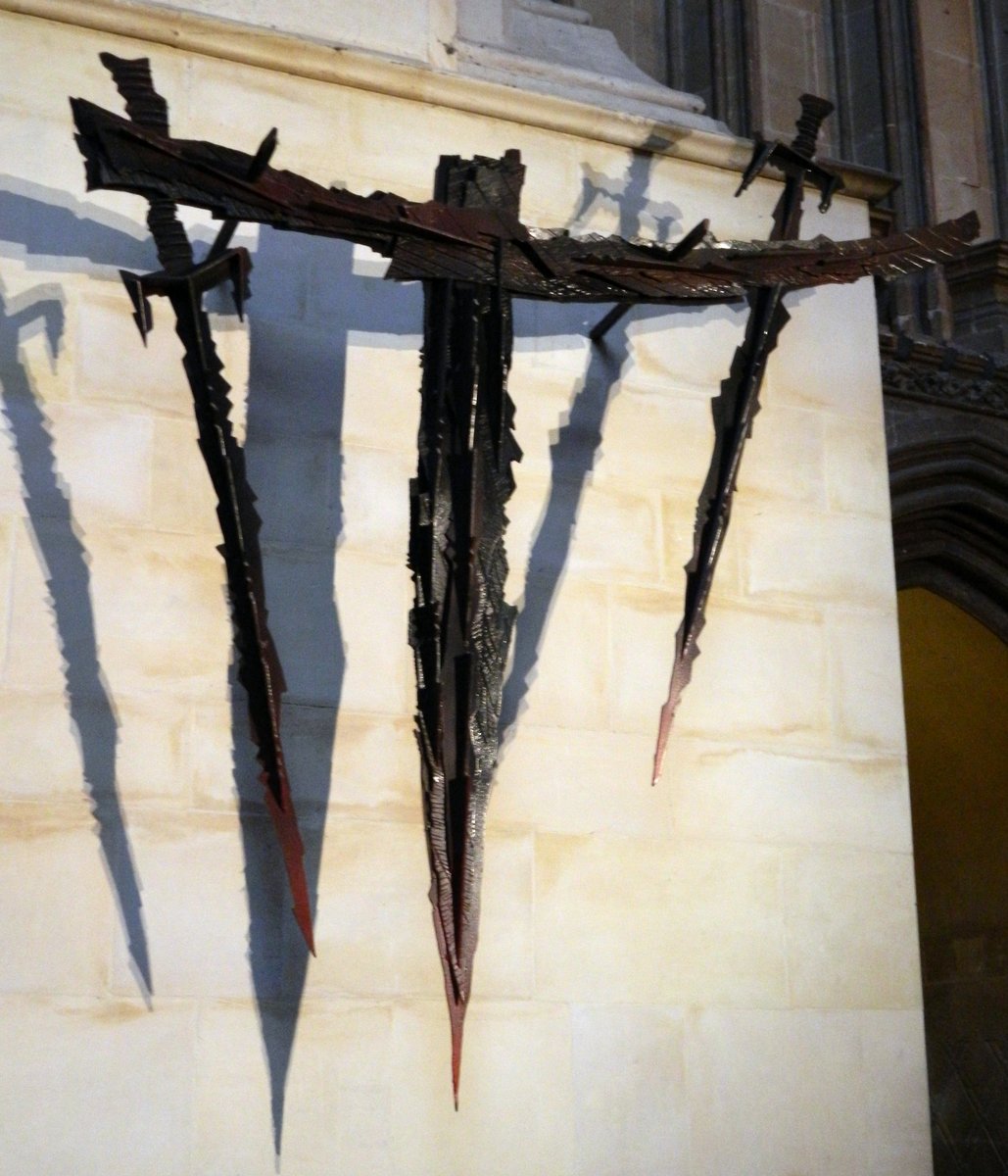
    A cross from Canterbury Cathedral, marking the spot where Thomas Becket was murdered. Makes me wonder what sort of implement Abraham held over Isaac. His son was saved, but the Father God’s was not.


    Our passage in Hebrews doesn’t gloss over the challenges that the heroes of the faith endured. One of the most moving is Abraham’s test in relinquishing his firstborn son, Isaac. Here God seems to be asking the impossible of Abraham – to sacrifice what Abraham thought fulfilled God’s promises. Abraham couldn’t conceive of how God would rectify matters, but went ahead in building the altar and arranging the wood, and even in binding up Isaac. What fear father and son must have felt when Abraham drew back his knife in obedience.

    But God didn’t make Abraham follow through, promising instead that Abraham would have as many descendents as the stars in the sky or the sand on the seashore. By faith Abraham passed God’s test, having followed God for many years. He had learned how to obey God’s instructions, even when he didn’t understand why or how God would make things right.

    What about us? Have we learned how to discern God’s voice that we might obey with a willing heart, like Abraham did? What’s our greatest point of need? We might be praying for a wayward child. We might long to marry or have children or grandchildren. We might yearn for some strong and healthy friendships. We might be hoping for a home that will bring peace and refreshment to our family and visitors. We might be seeking paid employment that employs our passions and our gifts.

    In all these things God wants to meet our needs, “according to his glorious riches in Christ Jesus” (Philippians 4:19). He might test us to hone our listening skills, that we may hear his voice more clearly. But he will never fail us – he who sacrificed his only son that we might live.


    Father God, you didn’t stop your son being slain on the altar, a worthy sacrifice for our sins. Thank you.

  • Devotional of the week: Hebrews 11:8–12 (4 in series)

    Strangers and foreigners


    By faith Abraham, when called to go to a place he would later receive as his inheritance, obeyed and went, even though he did not know where he was going. By faith he made his home in the promised land like a stranger in a foreign country… (Hebrews 11:8–12)

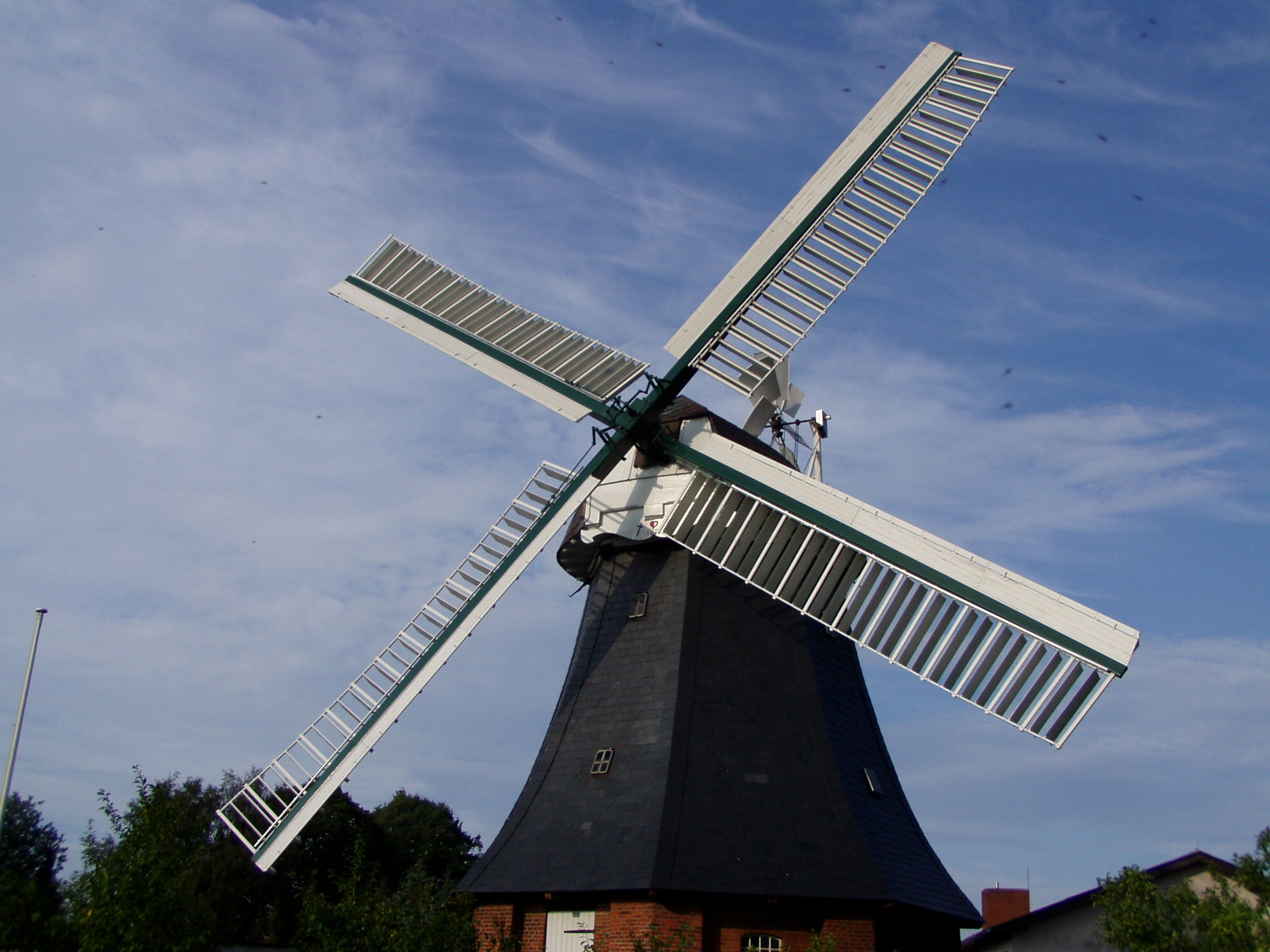
    My great-grandfather was a pilgrim to a strange land. In 1898 he left Germany for America, having to renounce his German citizenship. This windmill was built in the village he lived in before he was born, which we visited in 2006.
    My great-grandfather was a pilgrim to a strange land. In 1898 he left Germany for America, having to renounce his German citizenship. This windmill was built in the village he lived in before he left, which we visited in 2006.


    A closeup from the windmill - faith, hope, and love.
    A closeup from the windmill – faith, hope, and love.


    One US Independence Day, I was ending a silent retreat at an Anglican convent before traveling back to Washington, DC to watch the fireworks by the Lincoln Memorial. While on retreat God had impressed on my heart the story of Abraham, especially from these verses in the book of Hebrews. Here was one who left his home and became a stranger living in a foreign land.

    I felt like the Lord was speaking to me through Abraham’s story. For I had been asking God to confirm whether it was right to marry the Englishman I had been dating. I sensed that the marriage was right, but I was starting to see that it would not be without cost. I also caught the irony – as I was celebrating our nation’s independence from the British, I was also affirming that eventually I would become a subject of the Queen.

    Abraham obeyed and went, not knowing where he was going. For me, in my excitement to marry my beau, I hadn’t considered that I might have to obey God in this union. For although I had visited the UK, I didn’t know where we would be living. I would not have guessed that we would move three times in our first five years. Or of the crushing homesickness that I would feel for my family. I didn’t know it then, but by faith I too would need to make my home in this promised land.

    And though the UK is now home, I often with Abraham long for the heavenly city. When I’m missing my American people or links, I try to cast my mind on the city where there will be no more mourning or crying or pain, where we will live in amazing unity and joy. Come, Lord Jesus.


    Father God, we often feel like strangers here on earth, whether in the country of our birth or another. Take this dissonance and use it for your glory.


  • Devotional of the week: Hebrews 11:4–7 (3 in series)

    Holy fear

    By faith Noah, when warned about things not yet seen, in holy fear built an ark to save his family. By his faith he condemned the world and became heir of the righteousness that is in keeping with faith. (Hebrews 11:4–7, TNIV)


    DSCN0382
    St Michael defeating Satan, a sculpture at Coventry Cathedral

    The unknown writer of the book of Hebrews was warning his readers, who were Jewish converts to Christianity, not to give up on their new faith. The first flowering of their enthusiasm had died down, and now they were wondering if the sometimes hard life of faith was worth the slog. Yes, says the writer resoundingly.

    Just look at Noah, he says. Here’s a man who acted in holy fear, obeying God’s instructions. The flood was far away, and yet Noah endured the whispering campaigns of the townspeople who thought he had gone crazy or was weirdly overzealous for his faith. Noah kept on building, gathering the materials and then the animals for the great escape. By obeying – by an active exercise of faith – he became an heir of righteousness. That is, he and his family inherited the good things that God had set aside for them.

    Holy fear – just two words, but they seem to shout out from this passage. Often today we don’t think of holy fear when we think of God, as we join our children in singing that “Jesus is my best friend” or when we see God as the lover of our souls. I don’t want to dismiss intimacy with God through these and other expressions, but rather to hold them in tension with a holy reverence for the God who is without blemish or impurity. When we worship God in his holiness, we bow down in humility and offer up our hearts to him in obedience.

    Today may we fall on our knees before God, literally or figuratively. Though his holiness could consume us, yet he beckons us onto holy ground, drawing us near. May his purity fill and transform us this day.


    Think and pray over Genesis 6:9: “Noah was a righteous man, blameless among the people of his time, and he walked faithfully with God.”

    DSCN0388DSCN0387 new