Author: Amy Boucher Pye

  • Avoiding danger – lessons from the past

    Something was coming toward our car. I held tightly to the steering wheel, trying to see what it was as the wipers cleared enough of a spot on the windshield for me to see through. Suddenly, “Bam!” I kept the car on track, praying silently as we drove on the motorway in the dark.

    “What was that?” asked CutiePyeGirl from the back seat.

    “I think it was a bucket or something,” I replied.

    “Why did you hit it?”

    “I… I had to. Can I tell you later?” I asked, wanting to concentrate, focusing all my energy on the road and wanting to get us safely to our destination. When after what felt like hours, but was actually only about twenty minutes, we arrived and I turned the car off, I breathed a sigh of relief. “Thank you, Lord,” I thought.

    IMG_1998I don’t like driving in the best of circumstances, but give me a British motorway with crazy drivers, in the dark, with rain and wind and the defogger blasting away, and I’m definitely out of my comfort zone. But as I thought about holding firm to the wheel last night, after the fact, I remembered in a flash being a new driver on a sunny day in Minnesota. I was driving with my dad and we had just passed our church on the busy Victoria Street. Seeing a mother duck and her ducklings starting to cross the road, I swerved.

    Alarmed, my dad grabbed the wheel and kept our car going straight. “Kill the ducks rather than hitting another car,” he said. We didn’t hit the cute creatures, but his advice was sound, and I’ve always remembered it. Perhaps his words so lodged in my subconscious that I remembered them last night, keeping going straight and not swerving into the next lane.

    Ever think about how little incidents of the past might have prepared you for something later in life, like staying on the straight and narrow path?

  • Interview with Max Lucado

    I love books and reading, and in running the Woman Alive Book Club I get to interview some great authors. Here’s an uncut interview with the legendary writer Max Lucado.

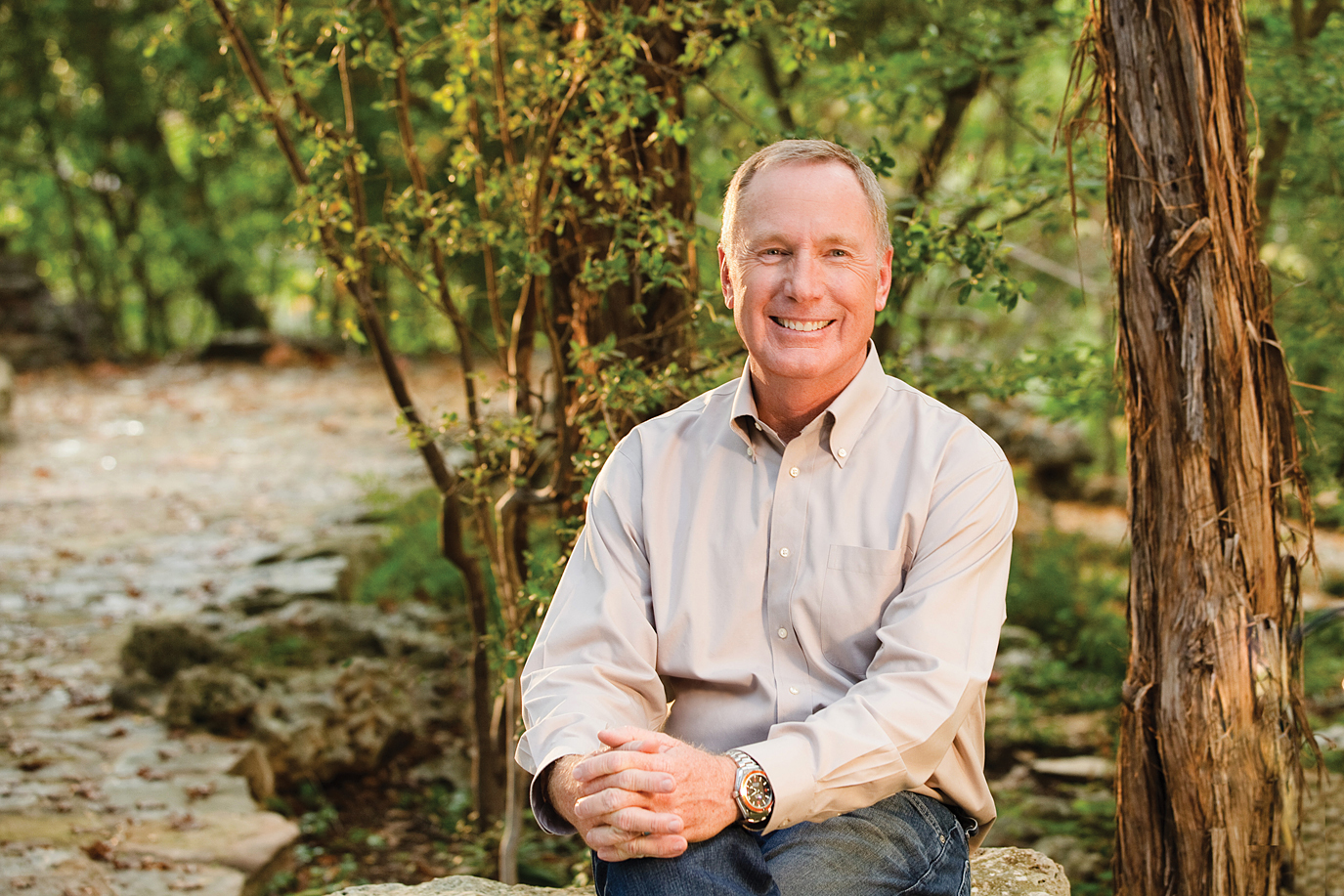
    Lucado_750_WPGABP: Writing seems to just flow out of you. Is that true? Or do you ever hit a writer’s block?

    ML: It’s as not as true as people might assume, but on the other hand, I’ve never hit a writer’s block and so the bad news is that I find writing to be very difficult. It takes a lot work; it’s agonizing and challenging. Some days I hate it! But the good news is that all these years God has provided and I’ll just put forth the least amount of effort he seems to bless it with a rewarding thought.


    ABP: How do you stay humble, being dubbed America’s Pastor and with over 100 million products sold?

    ML: I don’t know if I always do! I wrestle with humility or lack thereof. I can tend to put myself first. Even though I’ve written a book called, It’s Not About Me, there are many times I think it is! And so I don’t think I deserve a high grade for humility, and I’m not sure how you measure someone’s humility anyway. You know that story about the boy who got the badge for being most humble and then he got it taken away because he wore it!


    ABP: Can you share any stories of how your children’s books have changed lives?

    ML: The book You Are Special has in my life provided the most rewarding story. Specifically the distribution of this book in China. There is a ministry called “You Are Special China” and it exists just to distribute that story among orphanages and schools in all the provinces in China. And they send back some wonderful stories. One in particular regards a school for the deaf. As they were being read this story, the story tells them that they were made by God and that God has a special place for them. The person who shared the story said that he heard the children start to wail. Start to cry. Because they’d never been told that before. And it touched such a deep, deep longing in their hearts. I wish I could have been there to see those kids with this particular response to that book.


    ABP: When you’re in glory, how would you like to be remembered?

    ML: Hmm. I think what brings me the most joy is that my three daughters all walk with God. When I first got into ministry, a good friend said, “Don’t sacrifice your family on the altar of Christian service.” And through the years I have seen how that could happen because ministry has its unique demand and stresses and many children and marriages suffer because of ministry. But I’m over 30 years into this ministry stuff (started in 1979) and my marriage has never been stronger and my children are all walking with the Lord. And for that I am most grateful.


    ABP: Besides the Bible, what books have influenced you most?  Are there specific books you turn to in a crisis?

    ML: I’ve always got a lot of encouragement from the writings of John Stott. I feel like he had such a grip on Scripture. His is not the writing that I necessarily turn to for inspiration but more for careful dissection of Scripture. Of all the writers, I’ve really enjoyed him. There’s another commentary, another writer by the name of Dale Bruner. And he’s written commentaries on Matthew and John, and there’s just something about the way he studies that I find inspiring. Again they aren’t inspirational books. You won’t find them on the lower level of a bookstore, but for people who are serious about getting into a Bible study, I’ve often recommended those two writers.


    Max Lucado is an author, pastor, minister and dad. With more than 100 million products in print, he is one of America’s most widely read authors. He and his wife, Denalyn, live in San Antonio, Texas, where he serves the Oak Hills Church.

  • Devotional of the week: A royal diadem

    “The nations will see your vindication, and all kings your glory; you will be called by a new name that the mouth of the Lord will bestow. You will be a crown of splendor in the Lord’s hand, a royal diadem in the hand of your God. No longer will they call you Deserted, or name your land Desolate. But you will be called Hephzibah,and your land Beulah; for the Lord will take delight in you, and your land will be married. As a young man marries a young woman, so will your Builder marry you; as a bridegroom rejoices over his bride, so will your God rejoice over you” (Isaiah 62:2–5 NIV).

    Photo credit: found on flickr by archer11.
    Photo credit: found on flickr by archer11.

    We might feel uncomfortable applying the language of the prophet Isaiah to our lives, and men in particular might struggle to call themselves a royal diadem or the bride of Christ. But as CS Lewis said, God is so masculine that we are all feminine in response to him. And so male or female, we can ask God to reveal how his loving words from centuries ago can speak into our spirits and souls today.

    Being a crown of splendor in the Lord’s hand makes me think of Jesus on the cross, wearing his crown of thorns. He who could take the place of the righteous king yet endured pain for our sakes. So that we too can be sons and daughters of the King, wearing a jewel-encrusted crown as bestowed by our heavenly Father.

    No longer do we have to endure desolate lives of emptiness. For God reassures his people that he dwells with us and delights in us. He who has created us – the Builder – who has set our foundations into place, will rejoice over us even as a bridegroom on his wedding day.

    Living out of the new self entails embracing our identity as the beloved. Our new name reflects joy, rejoicing, delight, and love. What name could you claim today?

    For reflection: “‘Come, I will show you the bride, the wife of the Lamb’… It shone with the glory of God, and its brilliance was like that of a very precious jewel, like a jasper, clear as crystal” (Revelation 21:9, 11).


  • An interview with a favorite author, Conrad Gempf

    ConradImageI got to know Conrad Gempf back when I worked for Zondervan, publishing fantastic UK authors. Although Conrad’s not a “UK author,” even though he got branded as such. He’s an American (from Jersey!) who has lived here a lot longer than I have. And I’m happy to report that he’s not lost his Yankee accent. He’s wry; he’s observant; he’s funny; he’s caring. All around a great guy. We’ve spent a couple of Thanksgivings together as families; his cranberry nut bread is to write home about.

    Professionally I love working with him because he’s got the ability to communicate the deep truths of the gospel in a clear, succinct and witty way. He’s an academic but doesn’t live in any ivory tower. After a few years of not working together, last year we, through Authentic Media, got to produce his fabulous book on the Apostle Paul: How to Like Paul Again. I can’t recommend it highly enough.

    Here’s a short interview with him focused on his reading interests (he’s the one who, many years ago, put me on to Malcolm Gladwell):


    Some Christians of my generation can’t believe anyone wouldn’t like Paul. But many, perhaps most, of my students have real trouble with him, particularly with his views – or what they think are his views – about gender issues and other “hot potato” topics. But it’s short-sighted to decide whether to like someone by whether they agree with you, or what they can do for you. Probably all of us have one or two people that we love to bits even though they hold some pretty dumb opinions. You really want to make such decisions on the basis of a person’s underlying integrity and values and motives.

    I’ve written popular-level books about Jesus, and now on Paul. My next project will probably be a more academic piece. One of the areas I’m interested in is in Jesus’ predictions about the End Times, a hotly debated area in my field. If it goes well, perhaps there would be room for a popular-level book on the same subject. Because Paul often uses “armour of God” imagery when he’s talking about End Times, a title I’m considering is: The End of the Universe: What to Wear.

    One of the characteristics I most want my writing to display is that I take Him seriously but don’t take myself seriously. I’ve actually learned a lot from comedy writers – how to emphasize the profound and cosmic by placing it with not just the ordinary but with the particular. Woody Allen once said he believed in a Deity who was in control of the universe except for certain parts of New Jersey. So my books about the New Testament bring in examples like John Deere tractors, Clark Kent, and a World War I aeroplane called a Nieuport 27. Even if you don’t know these names, the use of something so particular can be humorous. And if, by chance, you do know, well, author and reader share a warm private chuckle.

    I count a variety of authors as influences and favorites. Some are obvious choices, like CS Lewis, who writes so simply but with boundless intelligence and imagination. How I long to be like that! But I’ve also been fascinated by the writing styles of Raymond Chandler, Woody Allen, Malcolm Gladwell, Aaron Sorkin, Robert Farrar Capon, and Abraham Joshua Heschel. What a lively conversation a room full of them would be!

    I think I’ve used a different word processor for every major project I’ve written. The first chapters of my PhD thesis at Aberdeen were written on a word processor I programmed myself and the files were stored on cassette tapes! Lately, I enjoy writing on my iPhone with a small flat Apple keyboard on a simple word processor called WriteRoom. On the Mac itself, Scrivener is wonderful.

    I’m often asked why an author who is as ‘into’ technology as I am doesn’t make use of tools like Facebook. My answer may sound familiar. I think it’s short-sighted to align yourself with companies and services based solely on what they can do for you. I really want to make such decisions on the basis of a company’s or service’s underlying integrity and values and motives.

    Conrad Gempf is a Christian, husband, father, writer, teacher, speaker, introvert and idealist. His latest book is How To Like Paul Again: The Apostle You Never Knew. His website is gempf.com.

  • What fills your Ordinary Time?

    Why do so many people not like January? Something to do with grey days and dreariness, after all that excess?

    I’ve always loved January; it’s the month of my birthday and our wedding anniversary. And I love getting back into routine after the hyper-activities of December.

    DSCN9117

    I didn’t do so well last December. I felt like I was on an amusement-park ride, racing toward the finish as we hurled toward Christmas Eve. Cookies to bake; feasts to cook for; presents to buy; work to engage with. I crashed about 11pm on Christmas Eve, fighting shivers and a sore throat while trying to tidy up from one feast before the traditional English Christmas Day lunch the next. Next year – must do better.

    So the routine of January is one I embrace. An empty house on a Monday morning, me sitting in a sunny study, taking time to write or catch up on emails – what’s not to like? Okay, so my group-exercise classes – from which I disappeared for about, oh, eight years, but which now I’m again loving so much – are overly crowded with resolution-makers, but no doubt they will return to normality in a month or so.

    This time of getting back to routine is called, according to the liturgical calendars, Ordinary Time. We’re not feasting; we’re not fasting. But the term doesn’t imply that life is just ordinary – how could that be, when Christ himself dwells in and among us? Rather it comes from the Latin word ordinalis, which simply refers to numbers in a series. Our weeks are numbered. (With thanks to About.com for this definition.)

    If our weeks are numbered, how does that change how we live? How can we open our eyes to Christ’s presence in those whom we meet? Maybe I should spend less time with social networking and more time in creative pursuits. In activities that bring fruitfulness and love.

    How do you view January? Like it or loathe it? What joys and challenges fill your “ordinary time”?

  • Devotional of the week: Are we one or the other?

    When pride comes, then comes disgrace, but with humility comes wisdom… Whoever derides their neighbour has no sense, but the one who has understanding holds their tongue. A gossip betrays a confidence, but a trustworthy person keeps a secret… A wicked person earns deceptive wages, but the one who sows righteousness reaps a sure reward. Truly the righteous attain life, but whoever pursues evil finds death… A generous person will prosper; whoever refreshes others will be refreshed… Whoever brings ruin on their family will inherit only wind, and the fool will be servant to the wise. (Proverbs 11:2, 12–13, 18–19, 25, 29)


    "Tension" by erix! as found on flickr.
    “Tension” by erix! as found on flickr.

    In this chapter of Proverbs the sage gives a contrasting picture between the wicked and the wise. The former fall into pride and disgrace, while the latter find refreshment and righteousness. Those who seek evil will experience ruin, deception, betrayal, and ultimately death. Whereas the righteous will be humble, prosperous, and will find life.

    Reading these sayings of opposites can lead us to think that we are one or the other – wicked or wise. We can despair that we will always be beholden to our sin nature and we’ll never find victory over temptation or addictions. Or we can puff ourselves up, thinking with pride that we have this spiritual life sussed and conquered – we have arrived. Whereas the truth probably lies in the tension of the “already but not yet.” As Christians we’ve been redeemed by Jesus’ sacrifice but we’re not yet fully transformed. We still fall into sinful patterns of behaving. Yet as we live empowered by the Holy Spirit, we can enjoy more freedom and more grace to become increasingly like the righteous whom we see in these proverbs.

    Humility; holding one’s tongue; wisdom; keeping confidences; sowing righteousness; pursuing life; displaying generosity; bringing refreshment… all characteristics of the new self. Why not join me in asking God to help us live out these qualities this day, this month, and this year?

    Prayer: Triune God, I know that on my own I quickly fall into patterns of the old self. Come and live in and through me, that I might reveal your love, generosity and grace to those whom I meet.


  • Book reviews – Waking Up in Heaven and Kisses from Katie

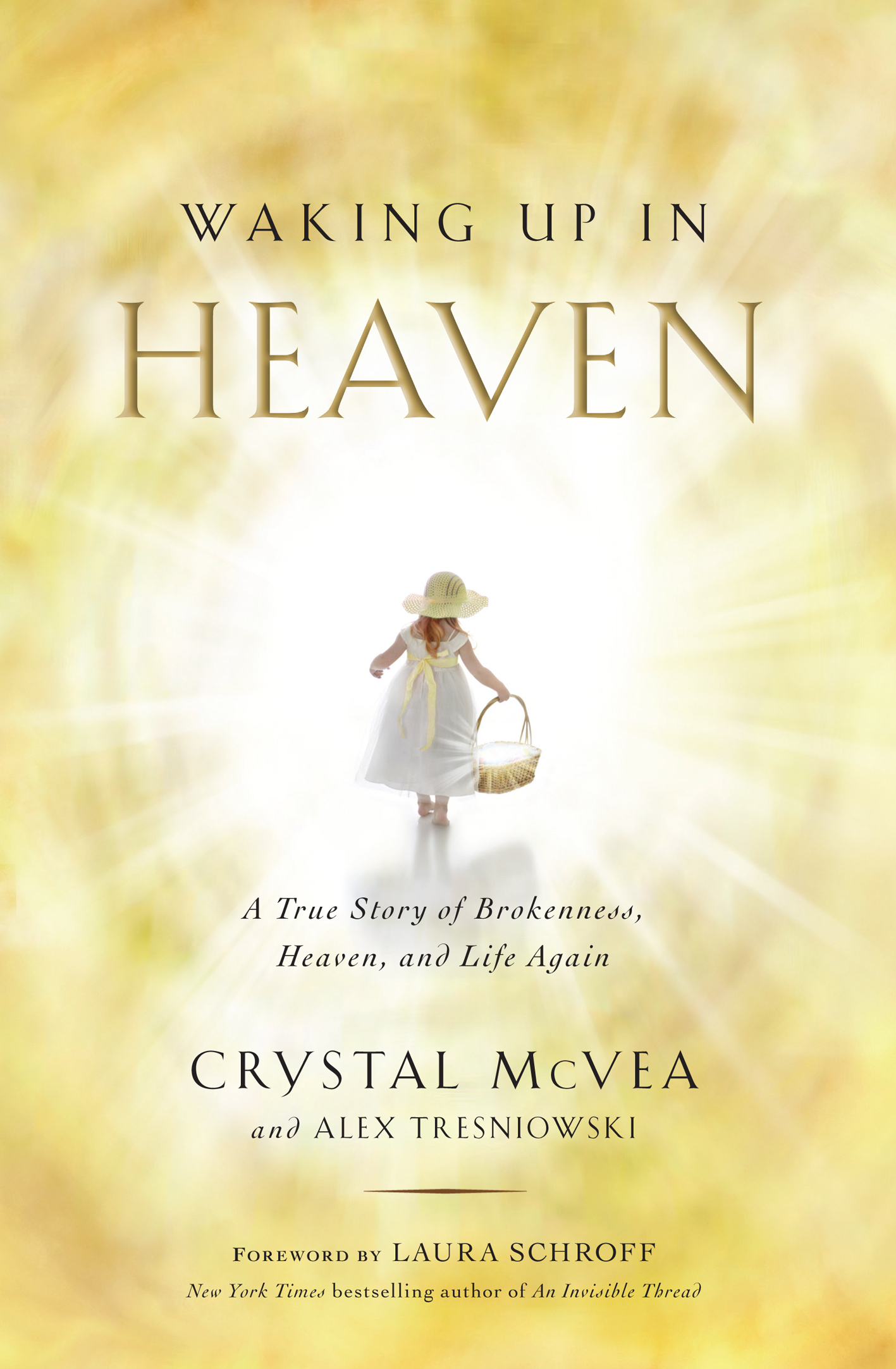
    I love reading Christian biographies; they remind me that God can do amazing things in and through his people. Here are two books that chronicle two remarkable women, which I came across in my publishing work with Authentic Media (we secured the Commonwealth rights for them). The first is a story of someone who dies and spends time in heaven. When I first heard that yet another heaven book had appeared, I was skeptical. But I started reading Waking Up in Heaven and was gripped, for Crystal’s life has been filled with drama even without the otherworldly journey.

    9781780781136As a young child Crystal suffered repeated sexual abuse, and could never feel clean – she got baptized four times as a teenager in her quest to slough off the old self. She got pregnant at seventeen and had the baby, but at nineteen had an abortion. Married at twenty but divorced after six months when she found out he was a drug addict. But when at last she found a really good guy to marry, and her life seemed sorted, she fell into a deep depression. Why? She didn’t feel worthy of her husband and his love (rooted out of the feelings of shame and self-hatred that she had endured all her life). And that’s when she died for nine minutes and experienced a life-changing transformation in heaven… You’ll have to read it to find out more!

    I should mention another heaven book: Dr. Mary Neal’s To Heaven and Back. She’s an orthopedic surgeon, and her prose is not chatty like Crystal’s, but her scientific medical stance makes for a compelling read.

    9781780780894Another life-changing journey is that of Katie Davis. In her year before going to university, she went on a shortterm mission trip to Uganda. She fell in love with the people and the place, and knew that God was calling her to return there. But how would her family and her boyfriend react? At first she left the comfortable surroundings of her home in America for a year to immerse herself in Uganda; the plan was then to return to her life – her family, her boyfriend, her studies. But as the time drew to a close, she knew she had to stay. And she had to begin a family made up of one parent and otherwise destitute orphans.

    In the years since, Katie has settled in Uganda and is in the process of adopting thirteen girls. A crazy path in the eyes of the world has been her following the call of Jesus. Radical obedience and the sharing and receiving God’s love.

    What stories of God’s transforming love are you reading?


    Publishing info: Waking Up in Heaven, Crystal McVea and Alex Tresniowski (Authentic, ISBN 9781780781136) and Kisses from Katie, Katie Davis and Ben Clark (Authentic, ISBN 9781780780894)

  • New year; new word?

    Have you chosen a word for the year yet? This movement seems to be catching on, which doesn’t surprise me. It’s a simple but powerful idea (read my review of the book behind it here). One word is something we can remember and return to throughout the year. The word can inspire or encourage us; motivate and challenge us.

    Some of my friends have been choosing their words: outward, recharge, joy, abundance. Rich words that speak to the individual’s creativity and circumstances. But me? Although I’ve been mulling over ideas, nothing has struck me yet. The page is blank.

    I also like to choose a verse from Scripture for the year, and have been waiting to see if the Lord prompts one to me. Again, I’m not sure. One has come up two or three times, but it’s such an obvious verse that I’m questioning whether it’s actually the right one. Yep, I think I might be overthinking things…

    2014 newBut one beginning-of-the-year practice has borne fruit, as I’ve read through my 2013 spiritual journals and noted highlights from each month. My “word” for last year was flourish, and as I looked back over my journals – my conversations with God – I can see glimpses of growth, joy, peace, and contentment.

    I love reading through journals because they instantly transport me back to the sights and smells of the moment. I had forgotten how leveled I was in February with flu, which took weeks for me to recover from. Or the times of waiting – one issue was before me five long weeks, during which I had to let go or go crazy (I finally let go). The journals also brought alive again our five-week trip to the States this summer, including our epic road trip. I relived the enriching conversations with friends and family from whom we are usually separated by a large body of water.

    So as I wait for a word and a verse, I give thanks for God’s goodness in all the days of 2013. How about you? Have you chosen a word? Made resolutions? What do you hope for in 2014?

  • Devotional of the week – The New Self

    photo by vividBreeze, as found on flickr
    photo by vividBreeze, as found on flickr

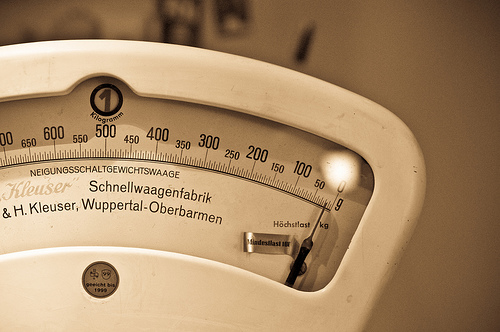
    January strikes a cold note in the hearts of many. After the excesses of December with its celebrations and feasts, the new year dawns and we wonder if we’d rather just stay under the covers. We drag ourselves to what in an image-obsessed culture might be the ultimate reality check – the scale – and see what sort of havoc our overindulgence has wreaked. “It’s time for new resolutions!” we cry, horrified at the number appearing below us.Our biblical readings to start 2014 fit well with new beginnings, for we will examine the theme of our old and new selves – how at conversion we leave behind the old and embrace the new identity that is being formed in Christ. Of course, we could explore this theme at any time of the year, for the new birth is foundational to our lives as redeemed people. But looking at it now may help us to infuse any New Year’s resolutions with the riches of spiritual depth we find in the Bible. For as we shed the old self and put on the new, living empowered by the triune God, we are able to leave behind our former ways of life, perhaps those invaded by bitterness, anger, hurt or rage. When we put on our new self, our lives will show forth the fruits of the Spirit – love, joy, peace, patience, kindness, goodness, faithfulness, gentleness and self-control.

    Our readings come from the Old Testament and the New, starting at the beginning in the Garden of Eden, where the choices of our first parents effected the need for a New Adam – namely Jesus Christ. We move through some of the prophets and see how they called the Israelites to have a new name and a new heart. Then we engage with Jesus and the teachings of the early church. The apostle Paul especially writes on the new birth and life that we can enjoy after we submit ourselves to God. He who was changed so radically on the road to Damascus writes with a passion and urgency that exceeds any bland New Year’s resolution. For if we put to death what used to cling to our earthly nature, we will move forward in the freedom of light and life.

    Dead in Adam; alive in Christ

    “You will not certainly die,” the serpent said to the woman. “For God knows that when you eat from it your eyes will be opened, and you will be like God, knowing good and evil.” When the woman saw that the fruit of the tree was good for food and pleasing to the eye, and also desirable for gaining wisdom, she took some and ate it. She also gave some to her husband, who was with her, and he ate it. Then the eyes of both of them were opened, and they realized they were naked. (Genesis 3:4–7, NIV)

    Adam and Eve. Photo by Svetlana Byaka, as found on flikr
    Adam and Eve. Photo by Svetlana Byaka, as found on flikr

    As I deliberated about where to start our thematic look at old self/new self, I realized the obvious, that our best jumping-off point is at the fall of humanity. For here in the Garden of Eden is where we first experienced the need for a new self. When Adam and Eve disobeyed God’s instructions, instead following the serpent’s tempting invitation to come and eat, they introduced sin into the world and into our hearts. No longer would we walk freely, without shame. Now men would be governed by the need to work and women would pine for their husbands.

    But the triune God in his graciousness doesn’t leave us in the garden, hopeless and helpless. He covers their (and our) shame not only practically – with garments of skin – but spiritually through Jesus’ death on the cross. We are born fallen through the effects of our first parents’ disobedience, but we can be redeemed by the New Adam who was the perfect sacrifice. As the Apostle Paul said in his first letter to the Corinthians, “For as in Adam all die, so in Christ all will be made alive” (1 Corinthians 15:22).

    We may be making resolutions as we’ve entered 2014. But true and lasting change comes through living in Christ. As he dwells in us through his Holy Spirit, he will help us to leave behind our sinful patterns of behavior and travel a more fruitful path of new life.

    Prayer: Father, Son and Holy Spirit, we dedicate our lives in 2014 to your glory. Help us to shed the old and embrace the new. (We wouldn’t mind losing a few pounds/kilos too.)

  • What’s your word? A book review for the new year

    Are you a list person? Do this; do that; scratch it off your list. Lists can focus the mind, but sometimes we create lists to foster (or manufacture) spiritual growth. Change this; read that; be that person. And yet we aren’t made to respond to such dictates, as if we were robots. Love, rather than guilt, is a better inducer of change.

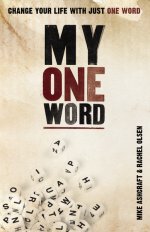
    9780310318774My One Word is a brilliant seemingly easy approach to spiritual growth, and a way to lose the lists and effect real change. Before God, choose one word for the year. The word will be “the lens through which you examine your heart and mind for an entire year” (p. 24). It will best reflect what you hope God will do in and through you. Say you choose trust. That’s the word you bring to mind when you receive the shattering news that you’ve lost your job. Or when you send off your teenage daughter on an overnight visit with her friend. Or when your grandson needs a medical procedure. Or when you move out of your comfort zone and visit the neighbour you suspect is hurting. Choosing one word becomes the way to change our outlook and behaviour, especially when we pray through it and seek it (or the principles behind it) in Scripture.

    When I first read this book last January, I loved the idea. After praying for a few weeks, a word reverberated through my being: flourish, with a verse to go along with it: Isaiah 55:10–11 (“As the rain and the snow come down from heaven, and do not return to it without watering the earth and making it bud and flourish, so that it yields seed for the sower and bread for the eater, so is my word that goes out from my mouth: It will not return to me empty, but will accomplish what I desire and achieve the purpose for which I sent it”). But I questioned that I got the word right. It seemed a bit cheeky to choose such a wonderful word. Yet I couldn’t get away from the idea that this was to be my word for the year.

    But I didn’t put into place the many helpful suggestions the authors give about how we can own our word and incorporate it into our daily lives – I didn’t slap it on my computer monitor, for instance, or stick it up on the fridge. After a month or so I forgot about it. And only when I was leafing through my stacks of review books did I realize I’d let this drop. So a few months later, I started to follow through on my earlier good intentions. And as I look back at 2013, I do see flourishing and growth: the joy of friendships. The love of family. Stretching and enriching work. Finally joining a gym and loving group exercise. The close presence of God through it all.

    What might your word be for the coming year? According to the authors, the ten most-chosen words are: trust, patience, love, discipline, focus, faith, surrender, peace, listen, and joy. All rich and wonderful words, but no doubt God will have just the right one for you.

    I invite you to read this encouraging and often moving book and to join me in choosing just one word. May God transform our hearts and minds through the work of his Spirit.


    My One Word: Change Your Life with Just One Word. Mike Ashcraft & Rachel Olsen (Zondervan, ISBN 978-0310318774)