Author: Amy Boucher Pye

  • Devotional of the week: Hebrews 11:8–12 (4 in series)

    Strangers and foreigners


    By faith Abraham, when called to go to a place he would later receive as his inheritance, obeyed and went, even though he did not know where he was going. By faith he made his home in the promised land like a stranger in a foreign country… (Hebrews 11:8–12)

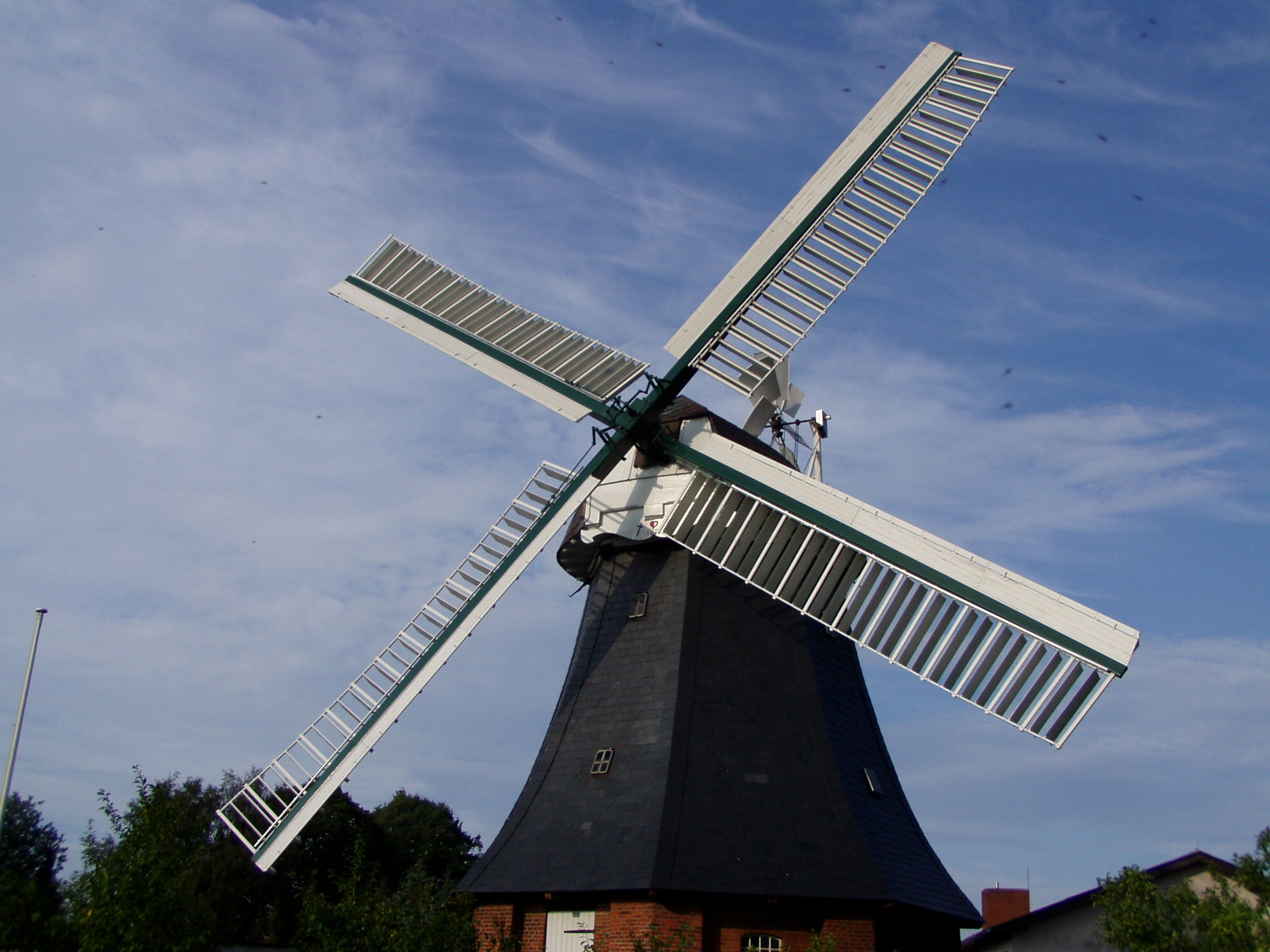
    My great-grandfather was a pilgrim to a strange land. In 1898 he left Germany for America, having to renounce his German citizenship. This windmill was built in the village he lived in before he was born, which we visited in 2006.
    My great-grandfather was a pilgrim to a strange land. In 1898 he left Germany for America, having to renounce his German citizenship. This windmill was built in the village he lived in before he left, which we visited in 2006.


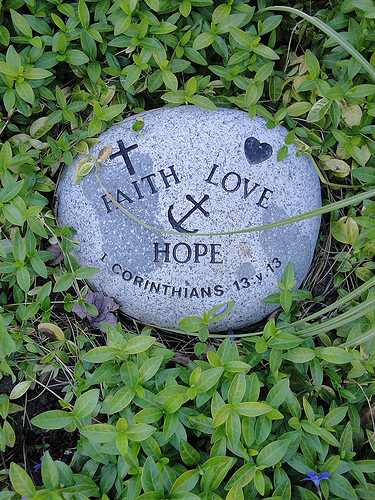
    A closeup from the windmill - faith, hope, and love.
    A closeup from the windmill – faith, hope, and love.


    One US Independence Day, I was ending a silent retreat at an Anglican convent before traveling back to Washington, DC to watch the fireworks by the Lincoln Memorial. While on retreat God had impressed on my heart the story of Abraham, especially from these verses in the book of Hebrews. Here was one who left his home and became a stranger living in a foreign land.

    I felt like the Lord was speaking to me through Abraham’s story. For I had been asking God to confirm whether it was right to marry the Englishman I had been dating. I sensed that the marriage was right, but I was starting to see that it would not be without cost. I also caught the irony – as I was celebrating our nation’s independence from the British, I was also affirming that eventually I would become a subject of the Queen.

    Abraham obeyed and went, not knowing where he was going. For me, in my excitement to marry my beau, I hadn’t considered that I might have to obey God in this union. For although I had visited the UK, I didn’t know where we would be living. I would not have guessed that we would move three times in our first five years. Or of the crushing homesickness that I would feel for my family. I didn’t know it then, but by faith I too would need to make my home in this promised land.

    And though the UK is now home, I often with Abraham long for the heavenly city. When I’m missing my American people or links, I try to cast my mind on the city where there will be no more mourning or crying or pain, where we will live in amazing unity and joy. Come, Lord Jesus.


    Father God, we often feel like strangers here on earth, whether in the country of our birth or another. Take this dissonance and use it for your glory.


  • Devotional of the week: Hebrews 11:4–7 (3 in series)

    Holy fear

    By faith Noah, when warned about things not yet seen, in holy fear built an ark to save his family. By his faith he condemned the world and became heir of the righteousness that is in keeping with faith. (Hebrews 11:4–7, TNIV)


    DSCN0382
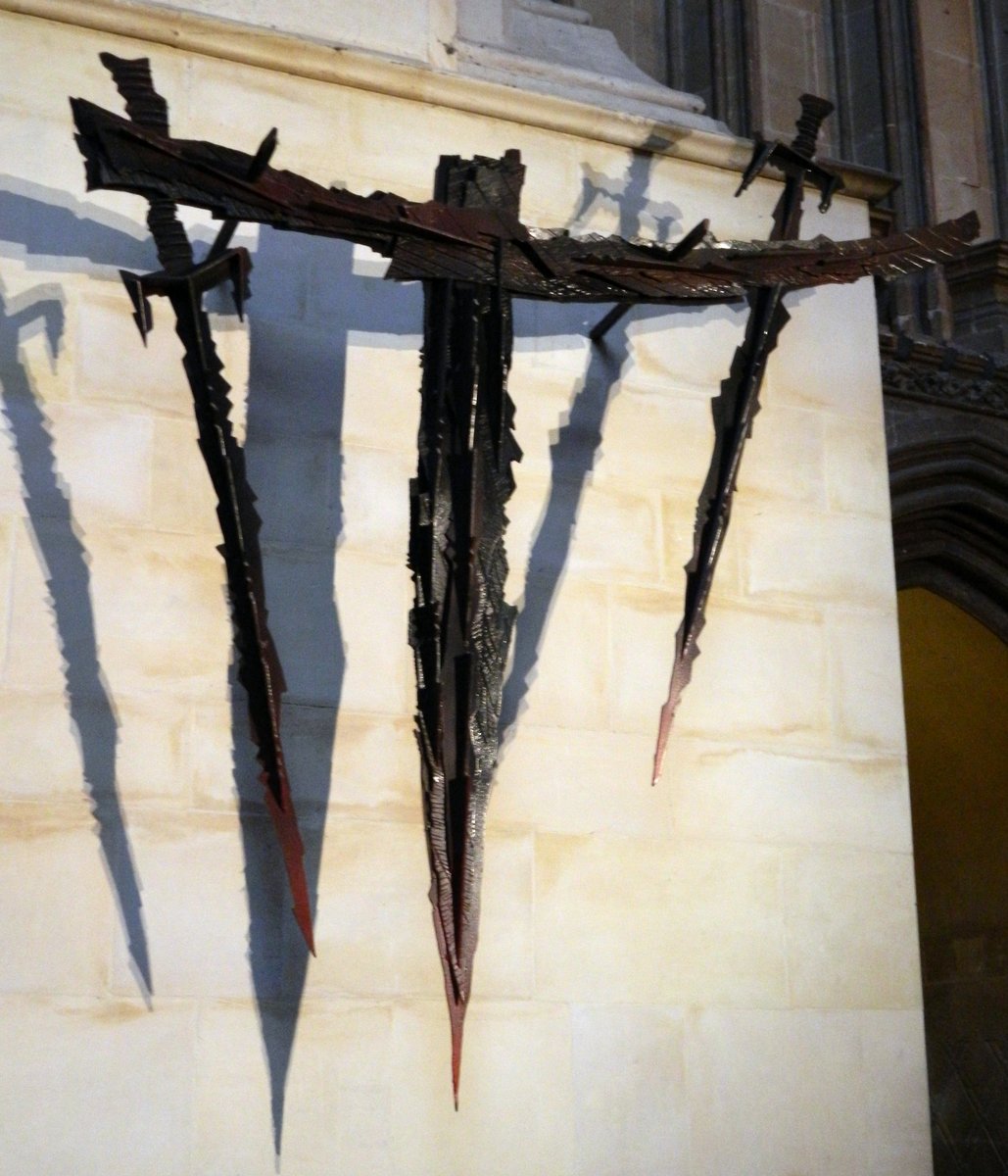
    St Michael defeating Satan, a sculpture at Coventry Cathedral

    The unknown writer of the book of Hebrews was warning his readers, who were Jewish converts to Christianity, not to give up on their new faith. The first flowering of their enthusiasm had died down, and now they were wondering if the sometimes hard life of faith was worth the slog. Yes, says the writer resoundingly.

    Just look at Noah, he says. Here’s a man who acted in holy fear, obeying God’s instructions. The flood was far away, and yet Noah endured the whispering campaigns of the townspeople who thought he had gone crazy or was weirdly overzealous for his faith. Noah kept on building, gathering the materials and then the animals for the great escape. By obeying – by an active exercise of faith – he became an heir of righteousness. That is, he and his family inherited the good things that God had set aside for them.

    Holy fear – just two words, but they seem to shout out from this passage. Often today we don’t think of holy fear when we think of God, as we join our children in singing that “Jesus is my best friend” or when we see God as the lover of our souls. I don’t want to dismiss intimacy with God through these and other expressions, but rather to hold them in tension with a holy reverence for the God who is without blemish or impurity. When we worship God in his holiness, we bow down in humility and offer up our hearts to him in obedience.

    Today may we fall on our knees before God, literally or figuratively. Though his holiness could consume us, yet he beckons us onto holy ground, drawing us near. May his purity fill and transform us this day.


    Think and pray over Genesis 6:9: “Noah was a righteous man, blameless among the people of his time, and he walked faithfully with God.”

    DSCN0388DSCN0387 new

  • Devotional of the week: Hebrews 11:1–3 (2 in series)

    By faith

    “Now faith is confidence in what we hope for and assurance about what we do not see. This is what the ancients were commended for.” (Hebrews 11:1–3, NIV)

    Photo by runran as found on Flickr
    Photo by runran as found on Flickr

    By faith Abel… By faith Enoch… By faith Noah… By faith Abraham… By faith Sarah… Hebrews 11 is chock-full of ordinary people who believed that God would do what he promised. They are therefore known as the heroes of our faith.

    We live in their shadows, which can be intimidating. We might think, “I’m just a mother trying to get through the day without shouting my head off at my kids.” Or, “I’m older and can’t find work; I’m not sure if God will provide a job for me, much less ask me to perform some amazing act of faith.” Or, “My biggest accomplishment today will be loving my cranky parent, who is not ageing gracefully.” How can we who aren’t escaping death or building an ark or becoming the father of nations also be heroes of the faith?

    The answer is simple, but not easy – by faith. By believing that God loves us and wants the best for us. By holding an active confidence in him as the One who provides us not only with jewels and fine linen to wear, but living water to slake our thirst and bread that truly satisfies. By knowing that God presides at the center of the unseen realm, which is greater than our physical world.

    And so by faith we can shoot up an arrow prayer to God, asking him to reign in our tongues when we’re about to spew angry words at our children. We can look to him for the strength to keep hunting down that elusive job, knowing that in his time he will provide. And to ask him to show us our parent as he sees them, drawing forth the real person who may be cowering in fear and uncertainty.

    By faith, your name here…


    Lord Jesus, I often feel like I’m hiding in the corner, lacking faith. Fill me with your grace and love, that I might believe in your promises.


  • When life changes in a moment – or not

    A second can change everything.

    Yesterday my husband and kids were meeting me at my parents’ home for dinner. They arrived in a jumble, the story spilling out of my children in fragments before Nicholas was able to park the car and come into the house:

    PyelotSon: “An idiot/jerk almost hit us!” he said with a nervous giggle. (Sidenote: Yes, he’s picked up those derogatory terms from a couple of my times at the wheel.)

    CutiePyeGirl: “We almost crashed!”

    1194984910785474358stop_sign_miguel_s_nchez_.svg.med

    The chatter continued, and it took us some unraveling to figure out the chain of events when Nicholas walked in a moment later, shaking with adrenaline. He filled in the details in rapid succession: They were driving along the straight stretch before turning into my parents’ driveway when an oncoming car drifted into their lane. Nicholas honked (UK: hooted) the horn and the probable-young-person-who-was-texting reacted quickly, because he or she drove around my family – he/she moved onto the sidewalk/grass on the passenger’s side of my family’s borrowed van – to avert a head-on collision.

    In this instance, we were saved. We were mercifully and miraculously saved from what could have been a life-taking or life-altering crash. I have my family intact, and the thought has kept me from sleeping as I recount the what-if’s, thinking about hospitals or funeral homes and write-offs of borrowed vehicles.

    But we aren’t always kept from harm in this fallen world, for every day some form of sin, disease, or injustice seeps into our lives. I don’t know why God cushioned my family yesterday when other families lose sons and daughters, wives and husbands, mothers and fathers to accidents or cancer or abuse. But I’m grateful. I give thanks, mindful of the fragility of life, when a second can change everything.

    Today I return thanks to God for saving me and mine. I want to be like the leper who returned to thank Jesus for healing him. The gift of the present moment feels all the more precious, the morning after the night before that didn’t change our lives forever.

  • Twentysomething choices

    My niece is turning 20 soon, that wonderful decade of exploring identity, building relationships, entering into the world of independence and adulthood. It can be a time of searching and experimentation; a time of solidifying who we are. My smart and hard-working niece has known since she was 10 that she wanted to pursue a career in medicine, but when I was in college, I was a bit lost about what I wanted to do with my life. I knew I like words and writing. And I had enjoyed my dad’s computing, when as kids he would bring home a console and plug it into the phone for it to speak to the mainframe at Pillsbury, where he worked.

    Which way to turn? The way ahead, or that little cobbled trail to the right?
    Which way to turn? The way ahead, or that little cobbled trail to the right?

    So when I was wondering what to pursue at college, he encouraged me to be a technical writer. I signed up for some computer courses – Basic, Pascal, Fortran, and Cobol. I did okay at first, but when I got to Fortran I started to struggle. I went to see my professor when I was flailing around with the latest assignment. His words brought instant clarity: “You know Amy, I don’t think that writing code is something you really want to be doing in your free time.”

    He was right, and I felt relief in dropping the computer-science minor. But I don’t regret the classes in Cobol or even my political-science major that I later embraced. I find it funny that I studied poli sci, for I’m not a news junky or a politico (as my husband, who has these proclivities, will fully attest). But God used and redeemed my choices of studies at college – my political-science major meant that I went to Washington, DC, for a semester, which turned into ten years of amazing, challenging, eye-opening experiences. My internship including working for a fabulous British Christian writer. Who knew I would later live in Britain, writing and working in Christian publishing?

    So to those such as my niece who are moving into the next stage of life, I offer you blessings from a fellow pilgrim. Whether you have your path charted out or whether you aren’t sure which way to turn, may you feel freedom in taking the next step. May you feel the Father’s hand in yours, never constricting but always encouraging. May you experience joy in the journey.

    If you’re well past your twenties, let me ask you this: How did your experiences of that decade shape your life?

  • Devotional of the week – Hebrews 11 (1 in series)

    Faith in Action

    Having delved into Psalm 18 over the past weeks, next I’d like to look at Hebrews 11, which I believe is one of the great passages in the Bible. It’s the long list of people from the Old Testament whom the writer to the Hebrews commends as heroes of the faith. These were people who believed that God would do what he promised. And so they obeyed, all the while risking ridicule, leaving their homelands, wandering in deserts, and experiencing miracles.

    heroAt the heart, they held to promises from God, whom they couldn’t see. They knew that the spiritual realm is real, even if unseen. And this faith, this confidence, spurred them on to great things. Accomplishments they never would have imagined before God led them and sparked the ideas in their minds.

    We might feel overawed by this list of bravery and victory. But the writer to the Hebrews wants us to be encouraged and filled with faith, just as they were. They didn’t belong to a more holy class of people; for instance, in fear Abraham passed off his wife as his sister; Moses killed an Egyptian in anger; David slept with another man’s wife and had the husband killed. But the writer to the Hebrews doesn’t mention any of these failings. Instead he focuses on what they achieved, hand-in-hand with God.

    And this list of amazing ancients crescendos in the ultimate hero – Jesus. He is the “pioneer and perfecter” of our faith (12:2). He endured the cross that we might be free from bondage to sin. And so, says the unknown writer to this group of Jewish converts, don’t give up on your faith. Keep running the race. Throw off the things that are pulling you down and making you want to give up.

    So too for us. Are we tired and weary, tempted to believe the lies of the evil one that God doesn’t care for us or that he can’t really make a difference in our lives? Perhaps we don’t believe that God truly loves us. Or maybe our lives haven’t gone the way we had hoped.

    But as we see in this passage in Hebrews, we’ve got a “cloud of witnesses’”(12:1) surrounding us, cheering us on. And not only the ancients, but angels and even Jesus himself. Let’s run the race with perseverance. And with joy.


    Prayer: Lord God, we fall and we fail. And yet, we see how you can use and redeem people deemed failures by the standards of the world. Build our faith today, that we might be heroes. Amen.


  • Becoming ourselves – Agnes Sanford

    I love hearing about heroes of the faith, especially those who might be overlooked today. One is Agnes Sanford, a pioneer in the healing-prayer movement in the twentieth century. Before she died at the age of eighty-four in 1982, Newsweek magazine hailed her as one of six people who shaped religious thought in the twentieth century. But before God used her so powerfully, she had to work through a painful journey of self-discovery and acceptance.

    Agnes Sanford photoAgnes grew up in China, the daughter of missionaries. Her struggle to release her true self came when she was living in the States, married to a pastor. Her husband Ted had been raised in a clergy household, and Agnes loved his parents, especially his mother. At first, Agnes modeled the role of minister’s wife on her mother-in-law, but doing so brought forth a crisis of identity:

    I had determined to make myself exactly like Ted’s mother, whom I adored. I would then be, I felt, the kind of wife that he liked. Therefore, I completely denied my original nature and devoted every moment to fruitless endeavor. And so I reached the depths because I was doing violence to my own soul. (Sealed Orders, p. 106).

    She thought she should be the perfect host and companion to Ted in his ministry. But in doing so, she was denying the deeply creative part of herself that wanted to give birth to new life, whether through writing, prayer, painting, or other artistic ventures. The false self was keeping her true self from thriving:

    My wounds were too deep to be healed so easily. And what were those wounds? If anyone had asked me at the time, I would have said, first of all, that the real part of me was simply not living, the creative one who longed, not only for children, but also for the children of the mind to be brought forth.

    The basic trouble was that I had forgotten whence I came, and I did not know the sealed orders with which I had been sent to this earth. I sensed my thwarted creativity. I wanted to be a writer, and I could not, for all of my time and thought and attention was upon being a wife and mother.

    … At this time I came very near to the deepest depths and could easily have drowned in them…. I could no longer see beauty. And when one can no longer see beauty, one can no longer see God. (pp. 101-102)

    After a long struggle, Agnes sought counsel with a neighboring minister, knowing she needed to find a way out of the strangling depression. He brought clarity where she had been covered by a suffocating cloud:

    “Don’t you see you have been trying to be a square peg in a round hole? To make yourself into something you are not?”

    … “But nobody will like me if I am myself!” I cried. “Not Ted nor his family nor the parish nor anybody!”

    “They won’t have you, unless you let yourself be yourself,” said Hollis. (p. 111)

    With this, Agnes began to throw off the cloak of the ill-fitting clothes. Ted’s mother may have been created to fulfill the role of the “perfect minister’s wife,” but that garment didn’t fit Agnes. She would only be the best wife for Ted – and his parish – when she was living out of her redeemed self, that creative person whom God had called her to be.

    God sent his healing, but he wanted her to be involved as well: “I find that God will heal us up to the point of our being able to think and to pray and to reason, and from then on, while He still helps us, we must nevertheless fight the battles of life ourselves. I was becoming a new person: the original person whom I was born to be. And this was the exact opposite of the person whom I had tried for some six years to make myself – a perfect minister’s wife.” (p. 118)

    As Agnes stepped into her new clothes, she became that person. A writer, a painter, a woman devoted to prayer for people and the earth. And the world will never be the same because she flung off her rags and put on her royal robe, tailored just for her.

    Do you have a new set of clothes just waiting for you to don?


  • Devotional of the week: Psalm 18:46–50

    The Lord lives!

    The Lord lives! Praise be to my Rock! Exalted be God my Saviour! He is the God who avenges me, who subdues nations under me, who saves me from my enemies. You exalted me above my foes; from violent people you rescued me. Therefore I will praise you, Lord, among the nations; I will sing the praises of your name. He gives his king great victories; he shows unfailing love to his anointed, to David and to his descendants forever. (Psalm 18:46–50, NIV)


    "Christus" by Karlheinz Oswald, 1998 in Mainz Cathedral, Germany. I was unexpectedly moved by this sculpture when we visited in 2006.
    “Christus” by Karlheinz Oswald, 1998 in Mainz Cathedral, Germany. I was taken with this sculpture when we visited in 2006.

    As we come to the end of our journey through Psalm 18 (and thank you for joining me over the past Mondays), David sings forth praise to the God his Rock who has saved him. This psalm, like so many others, prefigures Christ our Lord, for he without sin can sing it like no other.

    Some Christians pray through this psalm as they remember Jesus’ trial before Pilate, his death and resurrection. They think about the cords of death entangling and confronting him (verses 4–5). They see God’s anger at the death of his beloved as he made the earth quake and shook the foundations of the earth (verses 7–15). They praise the Lord Jesus for his purity and lack of sin (verses 20–27). They lift their spirits in worship at the victory of Jesus over the gates of hell and death as he vanquished the enemy (verses 32–45). And they proclaim his kingdom as they join him in songs of praise to the living Lord who is their rock and savior (verses 46–50).

    As we conclude, let us join our voices in praise to the God who loves us. Let us thank him who created us, the Lord Jesus who died to save us, the Holy Spirit who fills us with his cleansing, purifying presence. He is our rock and foundation; he shields us from our enemies; he provides us a refuge of shade and protection. We know that though the rivers might wash over us, he reaches down from on high and takes hold of us, drawing us out of deep waters. He brings us to a spacious place where we can flourish and grow. Praise his holy and wonderful name!


    Prayer: You, Lord, are perfect, and you help us in all that we do. We will sing praises to your name, our rock and salvation. The Lord lives!

  • Just say no

    url
    “Uncle John” in his study. I got to meet him there once, when we were talking about the third edition of “Issues Facing Christians Today” (when I worked at Zondervan).

    Two years ago the world-famous theologian, pastor, author, and visionary, John RW Stott, died on 27 July 2011. I remember joining nearly two thousand others in St Paul’s Cathedral at his memorial service: archbishops and bishops were there; former churchwardens and vicars galore; scholars and publishers and laypeople. But missing were his wife, children and grandchildren – for he never married. Rather throughout his life he focused on fulfilling his calling with a laser-like focus. He said no to becoming a bishop; he said no to marriage; he said no to many good and worthy projects – articles, books, organizations – that would have distracted him from what he believed God was calling him to do. (And such was his personal discipline that he also always said no to seconds on food. Hmm; I could learn from that one!)

    That morning before I went to the memorial service, I received an invitation to write a book for a respected American Christian publisher – a publisher with whom I would love to work. In an economic climate where publishing contracts can be like hidden treasure, I was thrilled to be considered. The project would be fun but the deadline a killer – just eight weeks hence. I dreamed and thought and pondered and prayed. But sitting in St Paul’s Cathedral, taking in the throngs of people changed through the witness of one man’s commitment and focus, I realized that I had to Just Say No. I was torn, for in saying yes I would finally be a published author. But what would be the cost?

    A frazzled life in the coming days and weeks. A husband and children wondering where their wife and mother disappeared. Less sleep. Less prayer. Less fun with girlfriends. Less exercise and more eating of the wrong things.

    YRPJsr
    Created by Nicki, www.keepcalmstudio.com.

    The hidden but bigger cost, however, would come from not doing what I know I need to tackle. Namely finishing of the draft of my book – the memoir of how I looked for love and acceptance in men, and finally found my identity in God. Of how I’ve learned to turn off the talk fuelled by self-hatred and to listen instead to the One who created me and loves me.

    What’s your calling? Who has God made you to be? Perhaps you’ve already sussed what drains or energizes you. If not, or if you get muddled and sometimes say yes to things you shouldn’t – as I do – join me in slowing down and listening to God’s whisper. Saying no might mean that later, for something better, you can Just Say Yes.

    Is God asking you to say no – or yes? Is he inviting you to a new adventure that he’d love for you to embark on with him? Does he want you just to slow down? What are you sensing?


  • The things we love

    2013-07-24 11.06All the talk of royal babies has got me thinking about the beloved cuddly toys of childhood. Do you still have a favorite stuffed animal? I do; my bear with its sewed-up neck peeks out in my study, more a thing of sentiment than of love these days. It’s old, musty, and is marked with paint. Its head won’t stay upright because I used to clutch it to me, throttling it close, neck in my arms. I keep as a reminder of childhood love.

    PyelotBoy’s first favorite animal was Quackers. We had several, for fear of losing one. Indeed, when my dad took him and the duck for a walk, they lost Quackers. Thankfully we had another one that was easily exchanged.2013-07-24 11.09

    But soon PyelotBoy knew which was the real Quackers, and no other one could substitute. The Quackers he loved had a “poor eye,” which was fitting, for PyelotBoy had a poor eye too, one that had to be strengthened through patching the other eye and eventually surgery.

    Then Quackers lost some of his appeal when Freddy the Frog came onto the scene. Given to him by American friends, this frog was everything for awhile. Then he lost interest. And PyelotBoy has grown out of stuffed animals now, with Quackers and Freddy shoved into a corner of a wardrobe. When I catch sight of them, I smile and feel a rush of love, thinking of my sweet boy who is growing up so quickly.

    But the two items that I see regularly around the house are Fleece and Baby Elmo. When I look at them, I feel that same swell of love and affection. For they are CutiePyeGirl’s favorite things. They have traveled to the States countless times, and have been to Ireland and Wales and Spain and many a place in England. Only one time were they left behind, when we spent a couple of days at our friends’ house outside of London. The first night was tough, but CutiePyeGirl coped.

    I have to admit I fail to see the extent of Baby Elmo’s appeal. As a creature he’s not the most attractive with his big plastic head and wizened body. I have to be careful when handing him to CutiePyeGirl, for his head is hard and could hurt her. Fleece, in contrast, is all soft and cuddly, and has become a character in her eyes. It’s grown from the skin of a sheep to something that almost has its own living characteristics.2013-07-24 11.10

    If our house was on fire and everyone was safe, I would definitely grab Quackers, Freddy, Fleece, and Baby Elmo. I’m grateful for the way the children have loved them. Our children aren’t royalty – they probably wouldn’t even qualify by marriage, being half Yankee-Doodles – but they certainly are a prince and princess to us. And to the King, to whom they are direct descendants.

    What was your favorite cuddly toy?