Author: Amy Boucher Pye

  • Stuff – how much do we need?

    Her headstone is black and unassuming, not what I expected. In life she prized beauty; on my editing trips she’d treat me to haircuts, pedicures, and fabulous new clothes. Her homes exuded warmth and style – and a bit of glitz. But now her space is just a small plot, next to her husband, in-laws, and son.

    I know she’s not confined to earth, for she’s dancing in her Father’s mansions, loving Beauty in his fullest form. But as I looked at her grave, I thought about her gorgeous possessions (which I hasten to add, she shared so generously with me and many), now dispersed or sold.

    DSCN2549We all get reduced to a grave or an urn in the end, so how much stuff do we need? We buy stuff; we pack it; we move it from one room to the next; we give it away; we disregard it; we treasure it. We can spend much of our energy worrying about our stuff or arranging for it to be cleaned, fixed, or disposed.

    I ponder Jesus’ admonition not to store up treasures on earth, where moths and rust will destroy and thieves will break in and steal, but to store up treasures in heaven (Matthew 6:19–21). I think about how through giving and relentless evangelism my beautiful author stored up more treasures in heaven than on earth, which is mind-boggling considering her financial worth. I look at my stuff: my purchases while in the States, schlepped back in bulging suitcases; my favorite books and clothes, some dog-eared and worn; the photos and heirlooms I would grab in a fire. And I ask myself, where am I storing up my treasures?

    How much stuff do you need?

  • Devotional of the week: A new heart and a new spirit

    “It is not for your sake, people of Israel, that I am going to do these things, but for the sake of my holy name, which you have profaned among the nations where you have gone… I will sprinkle clean water on you, and you will be clean; I will cleanse you from all your impurities and from all your idols. I will give you a new heart and put a new spirit in you; I will remove from you your heart of stone and give you a heart of flesh. And I will put my Spirit in you and move you to follow my decrees and be careful to keep my laws.” (Ezekiel 36:22, 25–27)

    DSCN2550

    We might think that the Holy Spirit is absent in the Old Testament, but he is alive – if sometimes hidden. Here God says that he will give the Holy Spirit to his people, to live and move amongst them and to lead them to holiness.

    In Ezekiel’s words we see turning from the old self to the new as a process of conversion. First is an outward cleansing (purification); second is a heart transplant (renovation); third is a filling with the Holy Spirit and the right living that results (sanctification). Of course people will have different experiences of coming to faith in the triune God, but these steps reveal the total level of transformation it entails. God changes our hearts and our spirits, which in the Hebrew understanding meant not just our emotions but also our wills.

    And why does God go to these lengths to restore his fallen people? For his glory, for his name was being profaned as they lived outside of the Promised Land. As the neighboring nations witness God saving his people, they will realize his power and grace.

    A heart of stone is a cold, lifeless, often bitter thing. The Lord would remove any pebbles or rocks that lodge in our hearts, that his Spirit might flow through us. Heart surgery is painful, but as God unclogs our arteries and cleans out any built-up muck, we reap physical, emotional, and spiritual rewards.


    For reflection: “Create in me a pure heart, O God, and renew a steadfast spirit within me” (Psalm 51:10).

  • Interview with Sheridan Voysey

    Another in my series of interviews with authors, as published originally in Woman Alive. Here′s another ex-pat living in the UK, but from a different colony than the one I originate from…

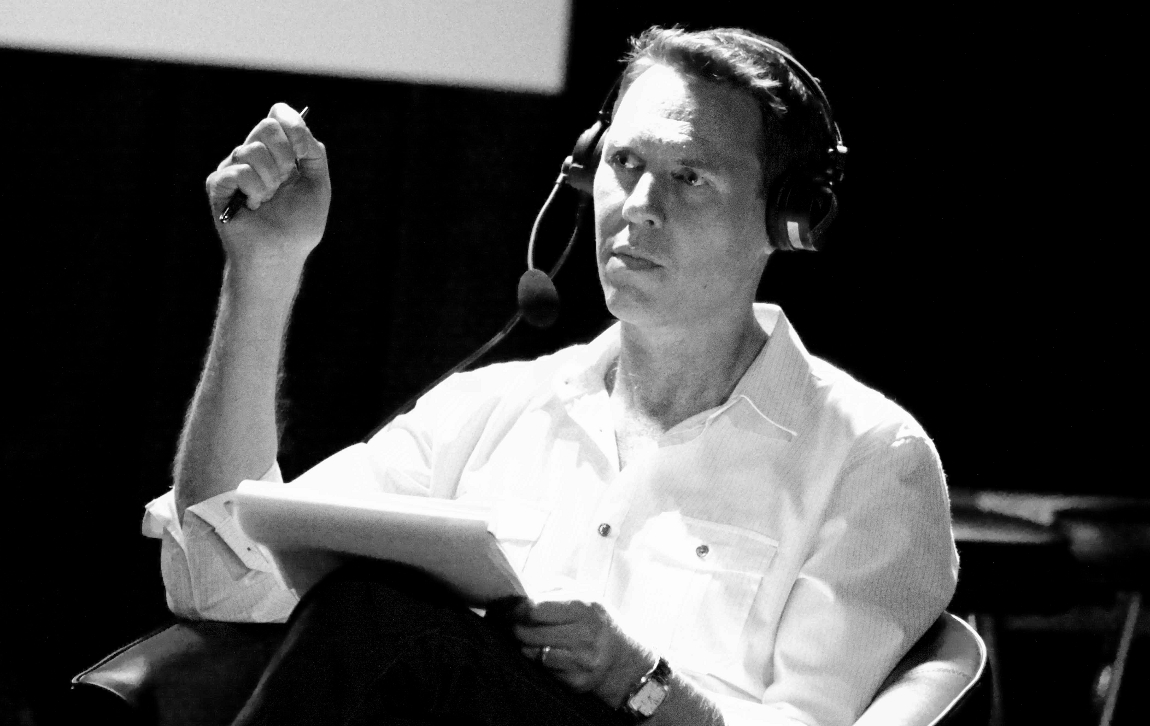
    103.2 Open House Finale 2010Your latest book recounts a year of resurrection. Tell us about the writing process; how was it? Surprises? Joys? Challenges?

    Apart from the sheer surprise of the project itself (writing a memoir on recovering from broken dreams was never in my plans), there were three main emotional responses. One was sadness. Resurrection Year tells the story of my wife Merryn and me starting again after our dream of starting a family ended. Writing that story required me to read through ten years worth of personal journals, reliving all those experiences of raised and dashed hopes. Most of that story is told in the first chapter, and few who’ve read it have done so with dry eyes.

    But I also experienced a sense of grace in writing this book that I’ve never felt before. Writing is never easy, especially if you’re attempting to write richly, with metaphor, simile and symbol. But I had a sense of ‘flow’ writing Resurrection Year. The metaphors came, paragraphs flowed, and very little of the original manuscript was jettisoned in the editing process.

    Thirdly, there was a sense of expectation. Resurrection Year was written in real time, during our first year here in the UK. How was the book going to end? I really didn’t know. The answer came literally within days of that chronological year ending.


    You and your wife faced the question of suffering and a good God particularly when at L’Abri. Which book(s) helped you most in this quest?

    During the toughest moments of our infertility journey Merryn described God as like ‘an old friend who no longer returns my calls’. Our stay at Swiss L’Abri gave her time to work out whether He is, in fact, good. One of the books that was most helpful in this was Greg Boyd’s Is God to Blame?—not because we agreed with it, but because it provoked so many questions about God’s control of the world, forcing us to think. Another helpful book was Philip Yancey’s Disappointment with God. I should add, though, that some of the books that held the most theological promise were sometimes the least accessible to read. Theologians can sometimes end up talking only amongst themselves.


    Resurrection-Year-3D-Main-124x170Adrian and Bridget Plass play a key role in the birthing of Resurrection Year. Which book of his has made the biggest impact on you?

    I can thank Adrian for both the phrase ‘Resurrection Year’ and the book’s creation. He gave me the phrase while talking off-air after an interview on my radio show. He suggested the book while staying with him and Bridget one weekend. Merryn and I owe a lot to this beautiful couple. I’ve enjoyed all of Adrian’s books, but special mention goes to The Horizontal Epistles of Andromeda Veal and Looking Good, Being Bad—both full of wisdom and whimsy.


    You’ve interviewed thousands of authors in your role of radio presenter in Australia. Can you relay to us a scintillating or funny or moving story from one of them?

    That question is always difficult to answer as there have been so many memorable moments, many of which are getting a second airing through my podcast. I’ll never forget author Bryce Courtenay singing the song he sang as his son died in his arms, or singer Gloria Gaynor recounting how she had fame and success but no meaning until she came to faith, or the actor Brian Deacon who played Jesus in The Jesus Film telling me why he didn’t believe. (It was a strange experience evangelising ‘Jesus’ on the air.) Some of the most memorable stories have come from my listeners—like ‘Samara’ who called in one night and said, ‘I don’t know why I’m telling you this as I’ve never told anyone this before. But I’m working as a prostitute, and this life is eating me up. I need a new life, and I need to find God again.’


    How has living in Oxford enriched your reading of Lewis and the other Inklings?

    Anyone who comes to Oxford should visit Lewis’s old home The Kilns, sit at his desk upstairs where he wrote his classics, and at the table in the living room downstairs with the view of the forest that likely inspired Narnia’s landscape. And anyone who’s experienced a broken dream should read The Great Divorce one Christmas Day afternoon and have God speak to them through it… like I did.


    Sheridan Voysey is a writer, speaker and broadcaster on faith and spirituality. He is the author of five books, including his memoir Resurrection Year: Turning Broken Dreams into New Beginnings.

  • Living intentionally – or trying to

    Recently I read a suicide note.

    Having seen plenty of movies, I was expecting drama or at least a nice piece of paper. But this was just a torn scrap with a few words jotted down. He was matter-of-fact in his note to my friend, saying that his girls needed money, as did his ex-wife; that he couldn’t take it anymore; that his neighbor had a key. Desperation and depression, fueled by a chemical imbalance after years of drug abuse, resulted in his final act of an overdose.

    Except that my friend received his letter in the afternoon, not the evening, as she was off from work for medical reasons. They went to his flat, broke down the door, and found him drugged but living. She wondered if he’d be angry to be found alive. He wasn’t; in fact, he later thanked her for caring – a first for him. He said he had written to her because he didn’t want his body to be found after a week, covered in flies.

    This was the same friend who a couple of months earlier had been told by an acquaintance, a doctor, to “get that mark on your face checked out.” He was the second medical friend who noticed it, which propelled her into actually making an appointment with her GP instead of delaying or brushing off the advice. She found out that she had pre-cancerous cells and underwent treatment. A few weeks later, she heard that this young doctor had died on a hiking adventure after falling into a ravine. His potentially life-saving advice to her turned out to be one of his final acts of service on this earth.

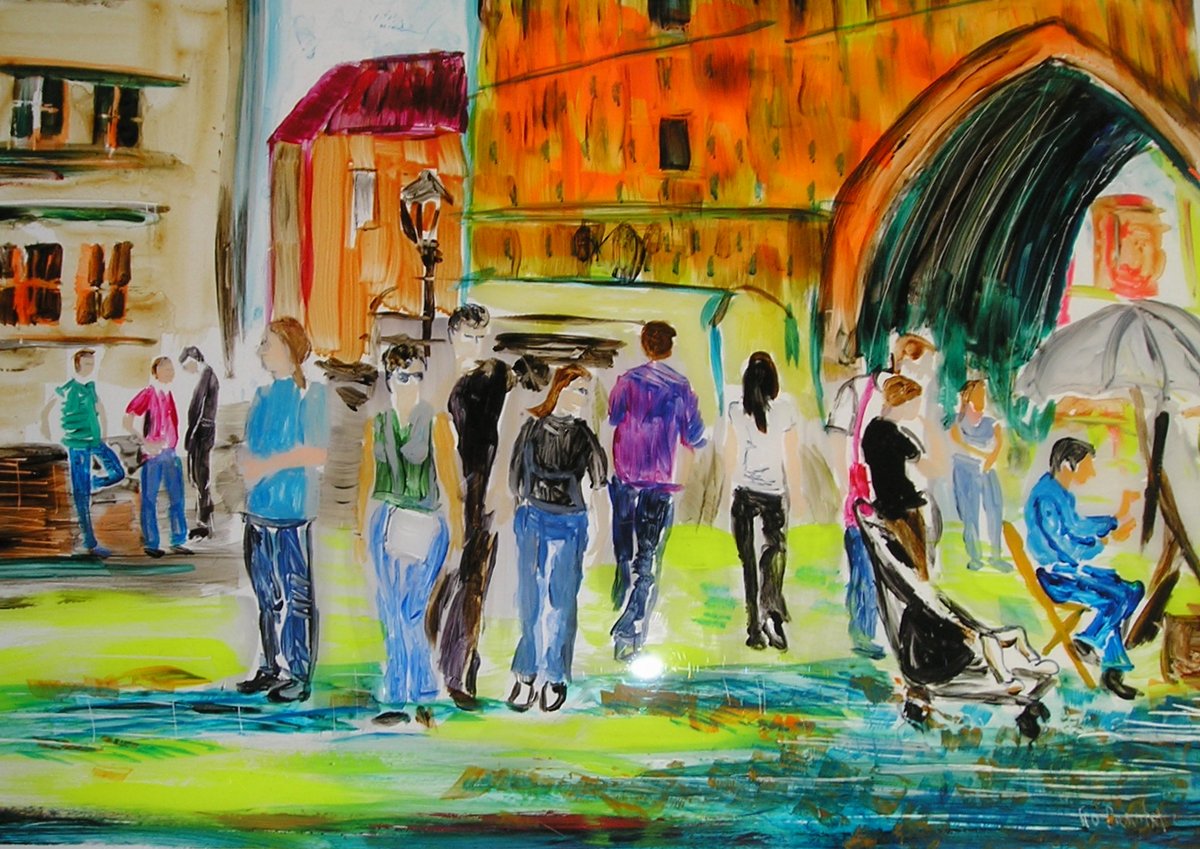
    Life in all its fullness. A painting by Leo Boucher. Reproduced by permission.
    Life in all its fullness. A painting by Leo Boucher. Reproduced by permission.

    Two men I’ve never met, and yet they made a profound impact on me. Why? Because I can easily get caught up in projects or tasks, and thus startling stories such as these remind me to value what really is important. For instance, some mornings I wake up early. Sometimes I can fall back to sleep, but usually I admit to myself that I won’t be able to, so I give in and get up. Recently on one such morning, I went into my study to do some writing. But PyelotBoy also woke early and joined me, eager just to sit and spend some time together. I battled internally but stayed with him on the couch, reminding myself to enjoy these sweet moments together.

    I wish I could say that morning was a grand success of communion with one whom I love, but throughout our half-hour together I kept thinking of the tasks I could and should be accomplishing. But although I didn’t succeed in shutting down the distracting thoughts that time, at least I stayed rooted to the couch, sitting with my son and chatting together. I didn’t shoo him away or give him some early iPad time to compensate for me wanting to get on with my next thing. Small victories, yes, but worth celebrating.

    Life. It’s worth living. Who is sitting on your couch today whom you can be present to and enjoy?

  • Devotional of the week: Discordant music

    “My people come to you, as they usually do, and sit before you to hear your words, but they do not put them into practice. Their mouths speak of love, but their hearts are greedy for unjust gain. Indeed, to them you are nothing more than one who sings love songs with a beautiful voice and plays an instrument well, for they hear your words but do not put them into practice” (Ezekiel 33:31–32).

    I'm sure this organ could make some clanging noises - or beautiful music. Taken in a church in Gloucestershire; wish I could remember which one!
    I’m sure this organ could make some clanging noises – or beautiful music. Photo taken in a church in Gloucestershire; wish I could remember which one!

    The prophet Ezekiel wrote after the fall of Jerusalem, when the Jewish people were exiled to Babylon. The unthinkable happened and no longer could they worship in the temple or live in their familiar city. In their anguish they must have wondered if the Lord had abandoned them. But they also allowed their pain to seep into a growing distance from God. They became complacent and removed from the cares of the Lord.

    The Lord tells Ezekiel that his prophecies are not penetrating the facades of his people; the words only waft above them as beautiful but meaningless music. For greedy hearts hide under their proclamations of love. Their spiritual state sounds similar to that of the church at Sardis, to whom Jesus wrote through the apostle John: “I know your deeds; you have a reputation of being alive, but you are dead. Wake up!” (Revelation 3:1–2). Or indeed to the church at Laodicea, whom he called lukewarm (Revelation 3:16).

    Sloughing off the old self and living out of the new entails our whole lives. In the birthing process, the baby bird grows stronger and more sure of itself as it pecks through its shell. So too will our souls gain weight and wisdom as we dedicate our everything to the Lord – our thoughts, words, and actions. Whatever stage of life we’re in, whether we’re in the process of breaking through the shell or soaring through the air with fully developed wings, may we lean on God as our source of everlasting strength and hope.

    Prayer: Lord Jesus, like the disciples in the Garden of Gethsemane, we struggle to stay awake. Stir us, we pray, that we might not become smug spiritually or unconcerned for the world around us.

  • Avoiding danger – lessons from the past

    Something was coming toward our car. I held tightly to the steering wheel, trying to see what it was as the wipers cleared enough of a spot on the windshield for me to see through. Suddenly, “Bam!” I kept the car on track, praying silently as we drove on the motorway in the dark.

    “What was that?” asked CutiePyeGirl from the back seat.

    “I think it was a bucket or something,” I replied.

    “Why did you hit it?”

    “I… I had to. Can I tell you later?” I asked, wanting to concentrate, focusing all my energy on the road and wanting to get us safely to our destination. When after what felt like hours, but was actually only about twenty minutes, we arrived and I turned the car off, I breathed a sigh of relief. “Thank you, Lord,” I thought.

    IMG_1998I don’t like driving in the best of circumstances, but give me a British motorway with crazy drivers, in the dark, with rain and wind and the defogger blasting away, and I’m definitely out of my comfort zone. But as I thought about holding firm to the wheel last night, after the fact, I remembered in a flash being a new driver on a sunny day in Minnesota. I was driving with my dad and we had just passed our church on the busy Victoria Street. Seeing a mother duck and her ducklings starting to cross the road, I swerved.

    Alarmed, my dad grabbed the wheel and kept our car going straight. “Kill the ducks rather than hitting another car,” he said. We didn’t hit the cute creatures, but his advice was sound, and I’ve always remembered it. Perhaps his words so lodged in my subconscious that I remembered them last night, keeping going straight and not swerving into the next lane.

    Ever think about how little incidents of the past might have prepared you for something later in life, like staying on the straight and narrow path?

  • Interview with Max Lucado

    I love books and reading, and in running the Woman Alive Book Club I get to interview some great authors. Here’s an uncut interview with the legendary writer Max Lucado.

    Lucado_750_WPGABP: Writing seems to just flow out of you. Is that true? Or do you ever hit a writer’s block?

    ML: It’s as not as true as people might assume, but on the other hand, I’ve never hit a writer’s block and so the bad news is that I find writing to be very difficult. It takes a lot work; it’s agonizing and challenging. Some days I hate it! But the good news is that all these years God has provided and I’ll just put forth the least amount of effort he seems to bless it with a rewarding thought.


    ABP: How do you stay humble, being dubbed America’s Pastor and with over 100 million products sold?

    ML: I don’t know if I always do! I wrestle with humility or lack thereof. I can tend to put myself first. Even though I’ve written a book called, It’s Not About Me, there are many times I think it is! And so I don’t think I deserve a high grade for humility, and I’m not sure how you measure someone’s humility anyway. You know that story about the boy who got the badge for being most humble and then he got it taken away because he wore it!


    ABP: Can you share any stories of how your children’s books have changed lives?

    ML: The book You Are Special has in my life provided the most rewarding story. Specifically the distribution of this book in China. There is a ministry called “You Are Special China” and it exists just to distribute that story among orphanages and schools in all the provinces in China. And they send back some wonderful stories. One in particular regards a school for the deaf. As they were being read this story, the story tells them that they were made by God and that God has a special place for them. The person who shared the story said that he heard the children start to wail. Start to cry. Because they’d never been told that before. And it touched such a deep, deep longing in their hearts. I wish I could have been there to see those kids with this particular response to that book.


    ABP: When you’re in glory, how would you like to be remembered?

    ML: Hmm. I think what brings me the most joy is that my three daughters all walk with God. When I first got into ministry, a good friend said, “Don’t sacrifice your family on the altar of Christian service.” And through the years I have seen how that could happen because ministry has its unique demand and stresses and many children and marriages suffer because of ministry. But I’m over 30 years into this ministry stuff (started in 1979) and my marriage has never been stronger and my children are all walking with the Lord. And for that I am most grateful.


    ABP: Besides the Bible, what books have influenced you most?  Are there specific books you turn to in a crisis?

    ML: I’ve always got a lot of encouragement from the writings of John Stott. I feel like he had such a grip on Scripture. His is not the writing that I necessarily turn to for inspiration but more for careful dissection of Scripture. Of all the writers, I’ve really enjoyed him. There’s another commentary, another writer by the name of Dale Bruner. And he’s written commentaries on Matthew and John, and there’s just something about the way he studies that I find inspiring. Again they aren’t inspirational books. You won’t find them on the lower level of a bookstore, but for people who are serious about getting into a Bible study, I’ve often recommended those two writers.


    Max Lucado is an author, pastor, minister and dad. With more than 100 million products in print, he is one of America’s most widely read authors. He and his wife, Denalyn, live in San Antonio, Texas, where he serves the Oak Hills Church.

  • Devotional of the week: A royal diadem

    “The nations will see your vindication, and all kings your glory; you will be called by a new name that the mouth of the Lord will bestow. You will be a crown of splendor in the Lord’s hand, a royal diadem in the hand of your God. No longer will they call you Deserted, or name your land Desolate. But you will be called Hephzibah,and your land Beulah; for the Lord will take delight in you, and your land will be married. As a young man marries a young woman, so will your Builder marry you; as a bridegroom rejoices over his bride, so will your God rejoice over you” (Isaiah 62:2–5 NIV).

    Photo credit: found on flickr by archer11.
    Photo credit: found on flickr by archer11.

    We might feel uncomfortable applying the language of the prophet Isaiah to our lives, and men in particular might struggle to call themselves a royal diadem or the bride of Christ. But as CS Lewis said, God is so masculine that we are all feminine in response to him. And so male or female, we can ask God to reveal how his loving words from centuries ago can speak into our spirits and souls today.

    Being a crown of splendor in the Lord’s hand makes me think of Jesus on the cross, wearing his crown of thorns. He who could take the place of the righteous king yet endured pain for our sakes. So that we too can be sons and daughters of the King, wearing a jewel-encrusted crown as bestowed by our heavenly Father.

    No longer do we have to endure desolate lives of emptiness. For God reassures his people that he dwells with us and delights in us. He who has created us – the Builder – who has set our foundations into place, will rejoice over us even as a bridegroom on his wedding day.

    Living out of the new self entails embracing our identity as the beloved. Our new name reflects joy, rejoicing, delight, and love. What name could you claim today?

    For reflection: “‘Come, I will show you the bride, the wife of the Lamb’… It shone with the glory of God, and its brilliance was like that of a very precious jewel, like a jasper, clear as crystal” (Revelation 21:9, 11).


  • An interview with a favorite author, Conrad Gempf

    ConradImageI got to know Conrad Gempf back when I worked for Zondervan, publishing fantastic UK authors. Although Conrad’s not a “UK author,” even though he got branded as such. He’s an American (from Jersey!) who has lived here a lot longer than I have. And I’m happy to report that he’s not lost his Yankee accent. He’s wry; he’s observant; he’s funny; he’s caring. All around a great guy. We’ve spent a couple of Thanksgivings together as families; his cranberry nut bread is to write home about.

    Professionally I love working with him because he’s got the ability to communicate the deep truths of the gospel in a clear, succinct and witty way. He’s an academic but doesn’t live in any ivory tower. After a few years of not working together, last year we, through Authentic Media, got to produce his fabulous book on the Apostle Paul: How to Like Paul Again. I can’t recommend it highly enough.

    Here’s a short interview with him focused on his reading interests (he’s the one who, many years ago, put me on to Malcolm Gladwell):


    Some Christians of my generation can’t believe anyone wouldn’t like Paul. But many, perhaps most, of my students have real trouble with him, particularly with his views – or what they think are his views – about gender issues and other “hot potato” topics. But it’s short-sighted to decide whether to like someone by whether they agree with you, or what they can do for you. Probably all of us have one or two people that we love to bits even though they hold some pretty dumb opinions. You really want to make such decisions on the basis of a person’s underlying integrity and values and motives.

    I’ve written popular-level books about Jesus, and now on Paul. My next project will probably be a more academic piece. One of the areas I’m interested in is in Jesus’ predictions about the End Times, a hotly debated area in my field. If it goes well, perhaps there would be room for a popular-level book on the same subject. Because Paul often uses “armour of God” imagery when he’s talking about End Times, a title I’m considering is: The End of the Universe: What to Wear.

    One of the characteristics I most want my writing to display is that I take Him seriously but don’t take myself seriously. I’ve actually learned a lot from comedy writers – how to emphasize the profound and cosmic by placing it with not just the ordinary but with the particular. Woody Allen once said he believed in a Deity who was in control of the universe except for certain parts of New Jersey. So my books about the New Testament bring in examples like John Deere tractors, Clark Kent, and a World War I aeroplane called a Nieuport 27. Even if you don’t know these names, the use of something so particular can be humorous. And if, by chance, you do know, well, author and reader share a warm private chuckle.

    I count a variety of authors as influences and favorites. Some are obvious choices, like CS Lewis, who writes so simply but with boundless intelligence and imagination. How I long to be like that! But I’ve also been fascinated by the writing styles of Raymond Chandler, Woody Allen, Malcolm Gladwell, Aaron Sorkin, Robert Farrar Capon, and Abraham Joshua Heschel. What a lively conversation a room full of them would be!

    I think I’ve used a different word processor for every major project I’ve written. The first chapters of my PhD thesis at Aberdeen were written on a word processor I programmed myself and the files were stored on cassette tapes! Lately, I enjoy writing on my iPhone with a small flat Apple keyboard on a simple word processor called WriteRoom. On the Mac itself, Scrivener is wonderful.

    I’m often asked why an author who is as ‘into’ technology as I am doesn’t make use of tools like Facebook. My answer may sound familiar. I think it’s short-sighted to align yourself with companies and services based solely on what they can do for you. I really want to make such decisions on the basis of a company’s or service’s underlying integrity and values and motives.

    Conrad Gempf is a Christian, husband, father, writer, teacher, speaker, introvert and idealist. His latest book is How To Like Paul Again: The Apostle You Never Knew. His website is gempf.com.

  • What fills your Ordinary Time?

    Why do so many people not like January? Something to do with grey days and dreariness, after all that excess?

    I’ve always loved January; it’s the month of my birthday and our wedding anniversary. And I love getting back into routine after the hyper-activities of December.

    DSCN9117

    I didn’t do so well last December. I felt like I was on an amusement-park ride, racing toward the finish as we hurled toward Christmas Eve. Cookies to bake; feasts to cook for; presents to buy; work to engage with. I crashed about 11pm on Christmas Eve, fighting shivers and a sore throat while trying to tidy up from one feast before the traditional English Christmas Day lunch the next. Next year – must do better.

    So the routine of January is one I embrace. An empty house on a Monday morning, me sitting in a sunny study, taking time to write or catch up on emails – what’s not to like? Okay, so my group-exercise classes – from which I disappeared for about, oh, eight years, but which now I’m again loving so much – are overly crowded with resolution-makers, but no doubt they will return to normality in a month or so.

    This time of getting back to routine is called, according to the liturgical calendars, Ordinary Time. We’re not feasting; we’re not fasting. But the term doesn’t imply that life is just ordinary – how could that be, when Christ himself dwells in and among us? Rather it comes from the Latin word ordinalis, which simply refers to numbers in a series. Our weeks are numbered. (With thanks to About.com for this definition.)

    If our weeks are numbered, how does that change how we live? How can we open our eyes to Christ’s presence in those whom we meet? Maybe I should spend less time with social networking and more time in creative pursuits. In activities that bring fruitfulness and love.

    How do you view January? Like it or loathe it? What joys and challenges fill your “ordinary time”?