Author: Amy Boucher Pye

  • Devotional of the week: Strength in Persecution (1 in John 15-16 series)

    If the world hates you, keep in mind that it hated me first. John 15:18

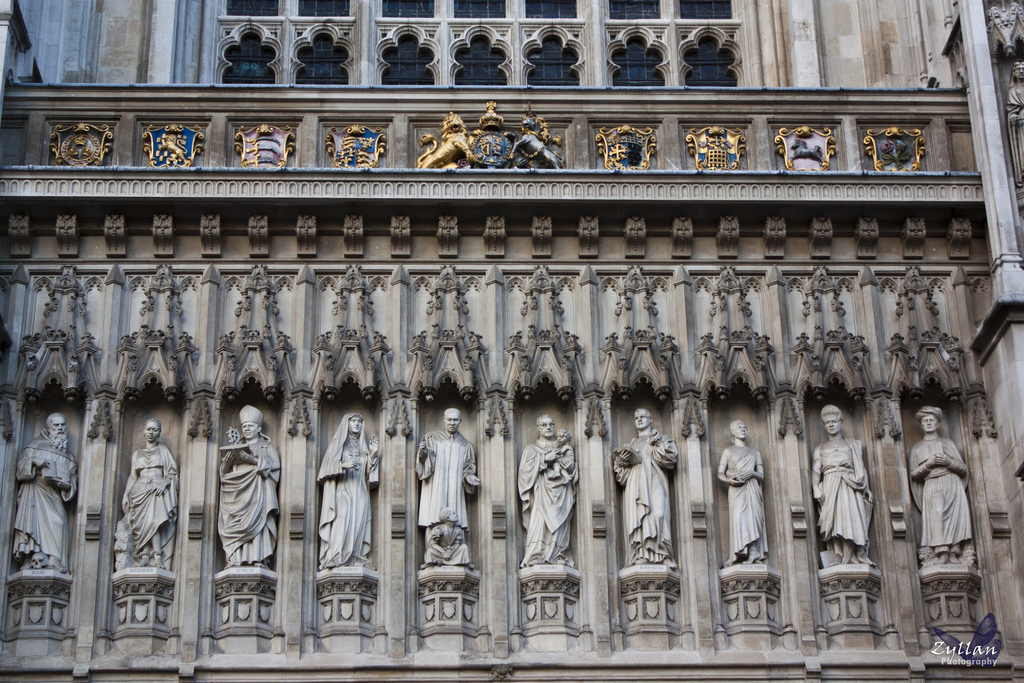
    Photo: "Londres: The ten Christian Martyrs in Westminster Abbey" by Zyllan Fotografía on Flickr
    Photo: “Londres: The ten Christian Martyrs in Westminster Abbey,” Zyllan Fotografía, Flickr

    If we come to Christ as a new convert, we often enjoy a lovely honeymoon period. So to hear these words of Jesus can be a shock and a surprise – is this what we signed up for?

    Some background is helpful as we delve into our passage for the next weeks, which is John 15:18-16:4. Jesus and his friends have finished their last meal together, and Judas has left, intent on betrayal. Jesus and the now-eleven disciples make their way to the Mount of Olives, where Jesus will later be arrested. In what is called the Final Discourse, Jesus teaches the disciples and prays with them.

    After telling his followers how to abide and live in him, Jesus says how they will suffer persecution because the world persecuted him first. We should not be surprised by this mistreatment, for the light of Jesus in us will make visible the evil in the world. Living for Christ might entail something seemingly trivial, such as opposing gambling at our local school. Or something more serious, such as not allowing a co-worker to fudge the truth. Or perhaps we may even be called to stand in solidarity with sisters and brothers around the world who are being tortured for their beliefs.

    Whatever level of persecution we face, we know that Jesus through his Holy Spirit will give us strength. We can count on him.

    Prayer: Lord Jesus, you suffered a horrific death so that I might live in freedom. Help me to live freely today, this week, this month, this year.

  • Review: Alister McGrath’s biography of CS Lewis

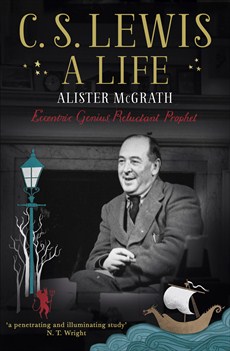
    isbn9781444745528-detailLike many American Christians, I’ve long been fascinated by the writings of CS Lewis. I’ve visited the Wade Collection at Wheaton College in Chicago to see the famous wardrobe and Lewis’s writing desk. I’ve enjoyed his haunts in Oxford such as the Trout and the “Bird and Baby” (the Eagle and Child pub). I even worked for his publisher for a time (Fount, part of HarperCollins). But only after reading Alister McGrath’s magisterial biography do I now feel I know the man behind the books. McGrath has produced a highly readable, engaging account of Lewis’s life as focused on his writings and what shaped them. I recommend it highly.

    In writing the biography, published for the fiftieth anniversary of Lewis’s death, McGrath read everything he could find penned by Lewis. McGrath then situates the various pieces of Lewis’s writing in the overall historical context as well as the goings-on in Lewis’s life. I found this grand sweep fascinating; it helped me understand why, for instance, Lewis wrote the Space Trilogy. Or why he first engaged in apologetics during the war, but afterward turned to more imaginative writings (including the Chronicles of Narnia and Till We Have Faces).

    McGrath uncovered some new revelations, one of which might be shocking, namely the affair between Lewis and the mother of his mate who died in the trenches in France. He wasn’t yet a Christian when he moved in with her, yet he stayed living in her family home (she was estranged with her husband) after his conversion. It seems an odd domestic arrangement, and one that he kept secret from his father.

    I was intrigued to learn how throughout his life Lewis portioned off parts of his emotions and memories. He never called up memories of World War I, saying that concerning the war he had a clear line of demarcation that he didn’t cross – maybe following a partitioning of his emotions when his mother died when he was a boy? Or how he never identified as an Irish writer. Although the scenery and beauty of his native land informed his writing, it wasn’t marked by nationalism.

    DSCN7519
    Bust of Lewis and his writing desk at the Marion E. Wade Center at Wheaton College

    And I found the whole story of Joy Davidman fascinating. An American, she moved to the UK with her sons to be near him. When her visa expired, she persuaded Lewis to marry her in a civil ceremony. He did, not thinking that the marriage was anything more than procedural. But she moved into the Kilns and then when they found out that she had terminal cancer, Lewis fell in love with her.

    I could go on and on! If you only read one or two books this year, choose this one. From it I’m inspired to go back and read and reread Lewis’s books.

    C.S. Lewis: A Life by Alister McGrath (Hodder, ISBN 978-1444745528)

  • Review: A favorite novel by Elizabeth Goudge

    9781598568417oI first read The Scent of Water in my late twenties, when I was longing for a husband. Little did I know that I would marry an Englishman when I was thirty and be transported to the setting of this novel. Or that the quick “yes” I said to moving to his country would become an act of obedience when I was missing family, friends, and good plumbing. I couldn’t know that this novel was in some way preparing me, for one of its main themes is obedience.

    Elizabeth Goudge wrote during and after the Second World War, when the country was reeling from hardship and loss of life. Her yearnings for a simpler time – for a pastoral idyll without machines or motorcars – are apparent in the novel, for the main character, Mary, moves from chaotic London to the quiet Chilterns to live in the cottage she inherited from her namesake cousin. This uprooting provides the setting for Mary’s growth, not only spiritually but in learning how to love and be loved.

    When I reread the novel for the third or fourth time recently, again I was struck by the author’s startling insights, such as the corrosive effect of sin on a person; how when we strengthen our will and follow God, ignoring our emotions, we grow and flourish; the masks we don and why; how faith can flourish through suffering; the importance of wonder and gratitude. Some of her writing is a bit clunky or rooted in its time – for instance, I cringed when she said that a character could “run like a Red Indian.” But the truths she conveys are worth the sometimes awkward characterizations or phrases.

    This time of reading, I was touched most by the author’s descriptions of the depression suffered by Cousin Mary, the woman from whom Mary inherited the cottage, and whom she got to know through her journals. Cousin Mary would have long periods of falling into the blackness of despair, when she would fear losing her reason forever. She wrote in her journal of meeting an odd old man who came to tea and gave her advice that changed her life forever: “‘My dear,’ he said, ‘love, your God, is a trinity. There are three necessary prayers and they have three words each. They are these, “Lord have mercy. Thee I adore. Into Thy Hands.” Not difficult to remember. If in times of distress you hold to these you will do well’” (pp. 94-95).

    I was glad to learn that this prayer was first uttered by Thomas Traherne, the seventeenth-century English clergyman and poet. Lately I’ve benefited by praying this trinity to the Trinity, especially at night if I can’t sleep.

    Why not pick up one of Elizabeth Goudge’s books? She will challenge you even as she transports you to a gentler time of village life in England.


    The Scent of Water by Elizabeth Goudge (Hendrickson, ISBN 978-1598568417). This is a recent version published in the States; I have to admit I found it a bit jarring to have the text Americanized!


  • Devotional of the week: A new name

    Whoever has ears, let them hear what the Spirit says to the churches. To the one who is victorious, I will give some of the hidden manna. I will also give that person a white stone with a new name written on it, known only to the one who receives it. (Revelation 2:17)

    Photo credit: "White Stone" by Anna, Flikr
    Photo credit: “White Stone” by Anna, Flickr

    A couple of women I know have changed their given names. One suffered sexual abuse, and by changing her name she was cutting painful ties. Another didn’t want to be defined by her name’s meaning, which was “bitter.” Instead she wanted to be known by a name that denotes “grace.”

    Our passage comes from the letters of Jesus, as revealed to the aging disciple John. Jesus says to the church at Pergamum that he will give them a white stone with a new name on it, known only to the recipient. Several meanings of this white stone have been put forward, as summarised by Craig Keener in the NIV Application Commentary (pp. 126–27). One is that in the ancient world, people used pebbles for admission to events; in this case, for a messianic banquet. Another is that in some ancient courtrooms, the jurors would cast a white stone for acquittal and black for conviction. (Thus Jesus would be the judge over what the Pergamum Christians were suffering.) Or the white stone could symbolize purity and eternal life, or a new name signifying a new identity.

    The symbolic possibilities are rich. Applying the promise to our own lives hearkens to the promises we examined in Isaiah 62. Our new name might be one that we publicize as we embrace our new, redeemed self. Or it might be one that we keep hidden, the name that we hear when we call to the Lord and listen for his affirming words of love.

    We are no longer bound to the old way of life. As we live out of our new selves, may we reflect the attributes of the One who created us, who made us for himself.

    For reflection: “Let us rejoice and be glad and give him glory! For the wedding of the Lamb has come, and his bride has made herself ready” (Revelation 9:17).

  • Life in the UK: Learning a new language

    I was warned. Before I married my Englishman, my boss – who was, conveniently, an Englishman living in America – told me that the little differences between the two countries would jar me at first. He was right, and I found that no where more true than with language.

    Photo credit:  UK & USA Flags - Dot Matrix by gavjof on flickr
    Photo credit: UK & USA Flags – Dot Matrix by gavjof on flickr

    I knew that the Brits and Yanks employed different terms, especially for things like cars: bonnets were quaint headpieces adorning Jane Austen’s characters; a boot was just that, something to wear on your foot, especially when living out West; and that thing hanging off the back of the car? I had no clue. In my first year in the UK when I tried to explain that a woman’s muffler was falling off her Range Rover, I stuttered and stammered (but actually no, I didn’t stammer, because I didn’t know that word either), knowing I wasn’t saying the correct word (and being slightly uncomfortable anyway, thinking I was probably breaking social convention to speak to a stranger). Finally I took her back to her car and pointed, and she exclaimed, “Ah, the exhaust!”

    And I knew that pronunciation would be different, as I outlined last week. Although imagine my surprise when one of Nicholas’s theological college (US: seminary) students invited us to lunch, and they asked me to say the name of a certain spice. One that starts with an o and ends with an o. Got it? Yes, I naively said, “Oregano,” (oh REG ah no) to which the party erupted in laughter. My host explained that Brits tend to pronounce each syllable of a word, which is why they would say, “oh rey gahn no.”

    So I knew I’d struggle with dustbin carts and, back then, the name for a pay phone (call box? pay box?), trousers and pants, chips and crisps and biscuits and crackers, but what I didn’t know was the hidden meaning of language. Yes, what Brits really mean behind their polite words or ironic remarks. You may have seen the graph that has been widely circulated on social media sites, reportedly developed by a Dutch company trying to do business in the UK. The one that has a column for what the British say, “That’s not bad”; a column for what the British mean, “That’s good”; and a column for what foreigners understand the British to mean, “That’s poor.” No wonder we foreigners get our knickers in a twist (US: can you figure it out?).

    I didn’t have the luxury of such a graph when I first moved here, so learned by making mistakes. My husband and I soon differentiated between a British “nice” and an American one – how nice was that person or meal or gift really? (We don’t often use that term anymore, which is just as well when there are far superior descriptors.) But it took a bolshey (US: in-your-face) literary agent to inform me, when I was a commissioning (US: acquisitions) editor at HarperCollins, that Brits and Americans mean different things when I said that I thought her client’s proposal was “quite good.” (She dropped any social niceties when she educated me, and no, I didn’t progress that proposal.) At least my boss didn’t expect me to pronounce schedule in the British way, and he did helpfully point out that the handwritten PS at the bottom of the letter, which I would most likely disregard, was actually the most important thing to the author.

    So tell me, British friends and family, what is behind this lack of saying it like it is? Does it all come down to class – not offending those above or below? A natural reticence? Social custom based on…? I’d love to hear what you think, and any experiences you’ve had of saying something and being completely misunderstood. And what you think of those colonists who prefer to speak unvarnished (Just to mix things up, I now work for an Australian company!).

  • Review of a stunning memoir

    The Long Awakening

    9781441243041

    Imagine waking up after 47 days in a coma, not realizing that the summer had passed or that you’d had a baby. This is what happened to Lindsey O’Connor, a mother of four who gave birth to her fifth baby – a planned later-in-life pregnancy – then suddenly crashed and nearly bled out, her brain deprived of life-giving oxygen. Her doctors induced a coma to allow her brain time and space to heal, but the extent of damage she suffered had no one knew. The Long Awakening is the gripping and moving story of her slow emergence out of the space between life and death as she hovered just below the surface, longing to connect but unable to do so.

    But a miracle occurred, and though her family thought one tortuous night that she would die, she slowly came back to life. But she, asleep, missed the miracle. The thousands who prayed; the hundreds who brought around meals and cared for children and lent support: they witnessed it. But she, its focus, felt outside. Yet she knew her awakening was inexplicable and miraculous, so how could she even voice these feelings?

    And who was she now, having been so deconditioned that she couldn’t even stand up on her tip toes or breathe on her own? How could she care for her children? Love her husband? Bond with her baby, whose first bath and first feeds she missed? Who was she in terms of her career? As she mused, “I used to be a writer… Now I cannot even read. Those days are over, I thought, and lay thinking of who’d I been, wondering who I was now.”

    The road to recovery has been slow and long, but Lindsey has determined to “play the hand we’re dealt.” She writes lyrically, raising profound issues of identity, family and community, faith, mother/child bonding, and end-of-life medical ethics. Using her training in crafting journalistic narrative, she weaves together the pieces of those 47 days in the coma and the 107 days in hospital. I only wish she would have been more forthcoming with her faith; strikingly absent is the present of Jesus (but not God), although she calls herself “one who loves God fiercely.” Perhaps being a mainstream journalist in America made her reticent to enter the fray of faith-related discussions, which Stateside can turn tribal.

    One to read and ponder, especially in a book-club setting, for the issues the book raises are manifold. A reminder to us all to treasure the moments we’re given.

    (published by Revell, ISBN 978-0800723170)

  • Devotional of the week: Christ in all

    Yep, clearly the artists in my family are my dad and daughter, not me... (This is my creation, not my daughter's!)
    Yep, clearly the artists in my family are my dad and daughter, not me… (This is my creation, not my daughter’s!)

    Do not lie to each other, since you have taken off your old self with its practices and have put on the new self, which is being renewed in knowledge in the image of its Creator. Here there is no Gentile or Jew, circumcised or uncircumcised, barbarian, Scythian, slave or free, but Christ is all, and is in all. Therefore, as God’s chosen people, holy and dearly loved, clothe yourselves with compassion, kindness, humility, gentleness and patience. Bear with each other and forgive one another if any of you has a grievance against someone. Forgive as the Lord forgave you. And over all these virtues put on love, which binds them all together in perfect unity. (Colossians 3:2–5; 9–11)

    Sadly, often in church life we fight battles with each other, sister against sister; brother against brother. Perhaps we think that we hold the whole truth and they fall short. Or a difference of opinion over a point of doctrine becomes the opening clash of a long and drawn-out war, which leaves lives bruised and relationships impaired. Or a matter of personality morphs into a heated battle that remains long in the memory of those involved.

    As the wife of a vicar, I’ve witnessed these spats between siblings, sometimes being wounded in the process. I don’t count myself as an authority on conflict resolution; nor do I claim to hold an infallible grasp on Truth. But we can see a way forward in our church family life through Paul’s letter to the Colossians. As we live out our redeemed lives, Christ is all and is in all. We can take off the old clothes, those old rags that hold the memory of conflict, and put on the clothes of Christ – compassion, kindness, humility, gentleness, patience, forgiveness, love.

    Wearing his garments, we are more able to live in harmony and peace with our sisters and brothers, especially if we remember that Christ sacrificed himself for them, as much as for us. As we live out of our new self, we can then move forward in unity, being freed from infighting and enabled to forgive as we seek to love and serve others and God.

    For reflection: “And let us consider how we may spur one another on toward love and good deeds, not giving up meeting together, as some are in the habit of doing, but encouraging one another – and all the more as you see the Day approaching” (Hebrews 10:24–25).

  • Life in the UK: By your accent ye shall know them

    Lately PyelotBoy has been critiquing my pronunciation – “correcting” it to the British equivalent. Now I know some Americans who have lived in the UK for a long time have no problem with acquiring a mid-Atlantic accent. Some simply can’t help it. Some aspire to it, seeing it as a step up in terms of class (Received Pronunciation, of course).

    Photo credit: by AndreaMBC on Flickr
    Photo credit: AndreaMBC on Flickr

    Not me. I was happy to lose some of my nasal Midwestern inflection when I moved to Washington, DC when in my twenties, but a decade later I had come to terms with my identity, so changing how I spoke felt like a step too far. And yet, when I first moved to the UK I was painfully conscious about opening my mouth. Any foray into a shop would label me as other – as foreign – as soon as I uttered a word. So I would keep shtum (US: stay silent) if I could, and would wait for the look of pity or surprise when I asked for my change or said thank you.

    But my many years of living in the UK, especially my years in multicultural London, have cured me, thankfully, of this self-conscious standing outside of myself. In London, I’m just one of many accents, and frankly, not terribly interesting at that. In my church of 170 people or so, we have 20 nationalities representing the continents of Africa, the Americas, Asia, and Europe. A taste of heaven!

    Sometimes when I’m outside of London, however, the reality of being a Yank in Britain comes back to me in a rush. I spent some time writing in Eastbourne a few years ago, reveling in the quiet of a friend’s house and generally speaking to no one but my family by phone. The sole person I talked to was in the grocery store (UK: supermarket), and sure enough, the bloke asked me where I was from and how long I was visiting. Or when I visited a friend in Carlisle and we ordered pizza, the delivery person queried me about my accent.

    In some parts, I guess, I’m still an anomaly. But in my own home I thought I would not face questions or ridicule. Think again.

    What about you? Has your accent morphed over the years? For an amusing question-and-answer column in the Guardian about a New Yorker seeking to acquire a Southern English accent, see here. My advice? Don’t even try.

  • Cause for wonder – review of two books by David Adam

    wonder of the beyond FCRecently I became submerged in the writings of David Adam. A Church of England clergyman, he was for many years vicar on the Holy Island of Lindisfarne. Inspired by the Celtic people of Britain and Ireland, he writes poems, prayers, and reflections on the triune God who is with us.

    One of the things that struck me most about his writing is his emphasis on wonder. As we open our eyes to creation and those around us, we live in the moment and learn to experience God’s presence. For as he says in The Wonder of the Beyond, “God is here, God is with us, and above all, God is.” And yet, so often we find ourselves preoccupied, caught up in this or that as we flit from one thing to another – to our detriment. The result, as he says in The Path of Life, affects the whole of our lives: “A short attention span makes for shallow relationships, for poor perception and reception. This is as true with God as it is with each other.”

    Path of LightThe two books I’ve chosen are a good place to start with his writings. In The Wonder of the Beyond he tells stories from his life, from working in a coal mine at the age of fifteen, to his decision to become a vicar, to his whirlwind romance with this wife (they met and married within a week). But he recounts his stories for the purpose of waking up the reader to “a wonder-full world” – to the world that hosts the glory of God in our midst. He challenges us to really see the people and objects of creation in front of us – to give them our undivided attention. Then through creation and others we will see God.

    The Path of Life is a series of meditations on prayers from the Celtic tradition, and is thus helpful in personal and corporate prayer. Recently I used his meditations on Rune Before Prayer (rune meaning poem) during a retreat as a focusing prayer. I love how he meditates on each member of the Trinity and their unique attributes, bringing them alive to us.

    In closing, a quotation from The Path of Life to ponder: “If you are insensitive to the things that are around you, how can you hope to be sensitive to the unseen God?”

    The Wonder of the Beyond (SPCK, ISBN 978-0281063307)
    The Path of Life (SPCK, ISBN 978-0281060702)


  • Devotional of the week: Give thanks

     We continually ask God to fill you with the knowledge of his will through all the wisdom and understanding that the Spirit gives, so that you may live a life worthy of the Lord and please him in every way: bearing fruit in every good work, growing in the knowledge of God, being strengthened with all power according to his glorious might so that you may have great endurance and patience, and giving joyful thanks to the Father, who has qualified you to share in the inheritance of his holy people in the kingdom of light. For he has rescued us from the dominion of darkness and brought us into the kingdom of the Son he loves, in whom we have redemption, the forgiveness of sins (Colossians 1:9–14)

    Photo credit: woodleywonderworks on flickr
    Photo credit: woodleywonderworks on flickr

    A primary characteristic of the new life is a spirit of thankfulness. Here Paul and Timothy are writing to the church at Colossae, and in these opening verses they pray that the believers will live out their new life. Not only that they might be strengthened so that they might endure and be patient, but all the while “giving joyful thanks to the Father.”

    In the West today we so easily see what we’re missing, especially when advertising slogans continually reassure that “you’re worth it.” We might pine after physical things such as the latest smartphone or tablet. Or in our relationships – such as longing for a baby, to be married, for our kids to find fulfillment and so on. And yet when we stop and ponder all that we have, our outlook changes. We begin to wonder at the treasures we’ve already received. Our senses become open to beauty in all its places, even if just hearing the birdsong in a concrete jungle.

    Poets and philosophers have seen thanksgiving as an overriding virtue throughout the ages. For instance, GK Chesterton said in his A Short History of England, “I would maintain that thanks are the highest form of thought, and that gratitude is happiness doubled by wonder.” Good advice for the new life.

    Prayer: Triune God, change my spirit that I might give thanks in all things. Let me know how you pour out your love and mercy on me, making me clean.