Author: Amy Boucher Pye

  • Life in the UK – The No-Name Rule

    “Oh, you’re never supposed to give your name in early conversations,” my fellow American-living-in-London friend said. “I was given a copy of Watching the English, which explains what’s behind it. Mainly a class thing, I think.”
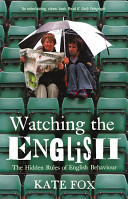
    booksShe’d lived in the UK for fewer years than I, but she had stumbled onto an area where I’d been making cultural faux pas for ages. I never could understand why the English didn’t seem to tell me their names in polite conversation. The starkest memory I had was when I was newly off the boat and meeting a group of spouses of ordinands (US: those studying for ordination in the Church of England) at my husband’s theological college (US: seminary). Sitting in a circle, we formed a cheery bunch, but after they introduced me as the latest arrival, I expected the others to say their names so I might get to know them too. Nope.

    Watching the English has helped me understand what’s behind this to-me peculiar behavio(u)r. Kate Fox is an anthropologist who turns the lens on her own people. She explains the “No-Name Rule” of social situations “where conversation with strangers is permitted, such as a pub bar counter,” and how you’d never say, “‘Hello, I’m John Smith,’ or even ‘Hello, I’m John.’” She continues:

    In fact, the only correct way to introduce yourself in such settings is not to introduce yourself at all, but to find some other way of initiating a conversation – such as a remark about the weather.

    The ‘brash American’ approach: ‘Hi, I’m Bill from Iowa,’ particularly if accompanied by an outstretched hand and beaming smile, makes the English wince and cringe…. The American tourists and visitors I spoke to during my research had been both baffled and hurt by this reaction. ‘I just don’t get it,’ said one woman. ‘You say your name and they sort of wrinkle their noses, like you’ve told them something a bit too personal and embarrassing.’ ‘That’s right,’ her husband added. ‘And then they give you this tight little smile and say “hello” – kind of pointedly not giving their name, to let you know you’ve made this big social booboo…’

    I ended up explaining, as kindly as I could, that the English do not want to know your name, or tell you theirs, until a much greater degree of intimacy has been established – like maybe when you marry their daughter. (p. 39)

    When I read her explanation, I felt an immediate sense of relief. Yes, I had made many a gaffe over the years of being too forward and friendly, but I no longer needed to feel a sense of personal rebuff or rejection. I could still be friendly, and maybe even introduce myself (the shock! the horror!), but I could now try to gauge how my British conversational partner was feeling and whether I dared to break social convention.

    What has been your experience? Do you introduce yourself in an informal social setting, or does it make you feel terribly uncomfortable to do so?
  • Review – Blue Like Jazz

    Here’s one from the archives, inspired by a reader review in the Woman Alive Facebook group. It’s my review in Woman Alive (from 2006!) of a book by a then relatively unknown author. I used to feature a book one month – complete with discussion questions – and then follow it up a few months later with my review and those of some readers. (Thanks to Woman Alive editor Jackie Harris for suggesting changes to the format… what we have now is superior!)

    I’ve always liked Don Miller’s writing; back in 2000 I acquired the UK/Commonwealth rights to one of his first, Prayer and the Art of Volkswagen Maintenance, for HarperCollins UK.

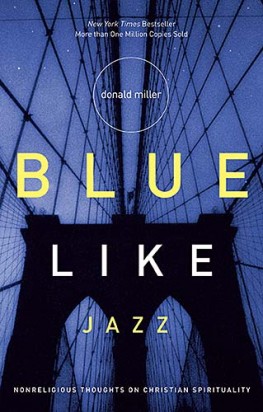
    0785263705In many ways Donald Miller is a typical American bloke. He’s a guy who is looking for love and God in the strains of everyday life. But he’s nontypical in that he shares his thoughts and experiences in his Blue Like Jazz: Nonreligious Thoughts on Christian Spirituality. He’s been called “Anne Lamott with testosterone.”

    The book is a series of linked essays on a variety of topics – from faith, redemption, and grace through to television, romance, money, and worship – that are sometimes quirky, sometimes humorous, sometimes introspective but often insightful. Of the title Miller says, “I never liked jazz music because jazz music doesn’t resolve. But sometimes you have to watch somebody love something before you can love it yourself … I used to not like God because God didn’t resolve. But that was before any of this happened.”

    Join me in exploring life through the lens of Don Miller. Here are some discussion questions for you to ponder or share with your group.

    • What did you think of the book overall? Did it appeal to you? Why or why not?
    • What stood out as you read? Were there images or ideas that lingered with you?
    • What do you think about Don’s view that “the greatest trick of the devil is not to get us into some sort of evil but rather to have us wasting time” (p. 13)?
    • Chapter 2 is all about problems, and basically about original sin – “that we are flawed, that there is something in us that is broken” (p. 17). Do you agree that the problems of the world boil down to “the needy beast of a thing that lives in my chest” (p. 20)?
    • More on the devil: “I think the devil has tricked us into thinking so much of biblical theology is story fit for kids’ (p. 30). Have you ever thought about Noah’s ark not being appropriate for children because of its themes of judgment?
    • Chapter 7 focuses on grace and “the beggar’s kingdom.” Don says how he “could not understand why some people have no trouble accepting the grace of God while others experience immense difficulty” (p. 83). He was one who had trouble. Do you? If so, why? Or why not?
    • Discuss Don’s description of the Grand Canyon at night: “There is something beautiful about a billion stars held steady by a God who knows what He is doing. (They hang there, the stars, like notes on a page of music, free-form verse, silent mysteries swirling in the blue like jazz.)” p. 100.
    • Don realized that “believing in God is as much like falling in love as it is like making a decision. Love is both something that happens to you and something you decide upon” p. 104. Do you agree or disagree?
    • Discuss a simple truth about relationships: “Nobody will listen to you unless they sense that you like them” (p. 220).

    My View

    I loved one of Don Miller’s books in the past, and when I started reading Blue Like Jazz I couldn’t put it down. Several weeks later I read the book in full, but by the time I was done my interest had waned. While there are instances of brilliance – I loved the thought of seeing the lines on Jesus’ face, for instance – there seems to be a lot of navel gazing too. I started to get a bit annoyed with what seems like Don’s preoccupation with himself. An editor could have cut a third of these meanderings and made a fabulous book.

    Still, there were memorable flashes of light. My heart warmed to hear of Penny’s conversion, as she was loved into the kingdom of God by Nadine. And I could certainly relate to Don’s experience of community life. As I read of his experiences in Graceland, my ten years of living with roommates in Washington, DC, came back with stark clarity. As with Don, living with others was a way for God to highlight my issues of selfishness and pride. It wasn’t always fun, but it was fruitful.

    Blue Like Jazz, Donald Miller, Nelson, ISBN 0785263705, 242 pages


  • Thoughts for writers – writing to sow seeds

    Recently a vicar (no, not that vicar) asked me to contribute a sermon on proclaiming the gospel message through writing. Happy to be asked, I said yes. Then I wondered whichever passage I would preach on. “Of the making of books there is no end”? Jeremiah’s “Eat this scroll”? My husband suggested looking at Colossians, for Paul never visited that church but ministered through the written word.

    Photo: Written in Gold, Flickr
    Photo: Written in Gold, Flickr

    I remained stuck, asking God for direction. That leading came through Facebook, for when I posed the question on my wall and in a Christian writer’s group, I received enough responses to write a book: Habakkuk 2:2: “Write the vision.” Or John 1, “In the beginning was the Word…” Or Psalm 45:1: “My tongue is the pen of a ready writer.” All rich with possibility, but the passage I settled on was Luke 1:1-4 as suggested by a writer who said it makes “clear that the words are written to communicate Christ to the reader.”

    Do you remember that bit at the beginning of the gospel? Luke uses it to tell Theophilus why he’s writing, but he’s also employing a literary convention that historians such as Josephus used to prove their authenticity and merit. So too Luke says that although “many have undertaken to draw up an account,” yet he “too decided to write an orderly account.” Why? Because “I myself have carefully investigated everything from the beginning.” He’s not implying that the earlier accounts were hopeless and thus he needs to pen his own. Rather he wants to build on and enlarge their work through his careful research and eyewitness interviews.  Primarily, he wants to reassure Theophilus: “So that you may know the certainty of the things you have been taught.”

    Encouragement for us to write too, don’t you think? Of course we won’t be creating Holy Writ. But if we are writing an historical account, for instance, we can follow Luke’s example of careful documentation to produce a trustworthy account. We can share his passion to tell the stories of God transforming lives. We can encourage our readers in the foundations of their faith.

    As I looked out on the congregation, clustered at the back in a cavernous and chilly Anglican church, I prayed that my words might spark some interest in the gift and discipline of writing. Conscious that many might not see themselves as writers, I emphasized the numerous ways we can write today, such through letters, emails, texts, social-networking sites, blogs. As we communicate, we can be a transformative presence. For instance, deciding never to act out a conflict over email. Or posting a handwritten letter as a surprise. Or texting a Scripture to encourage.

    I spoke about other places to write without seeking publication, such as keeping a prayer journal, which could become a treasured record of God’s working in our lives. Or documenting our family history. Or creating poems as a meaningful gift. And I spoke about writing for publication, such as letters to the editor, features in the local newspaper, writing for a charitable organization. And columns, articles, stories, Bible reading notes, books… the places where we can write are many.

    Did my words accomplish what I hoped as I unpacked one short passage in Scripture? Only God knows. I felt slightly disheartened as I glimpsed some frozen faces in the congregation. But God’s breath can bring life and warmth into even a cold church on a rainy day. And just as I don’t know the true effect of that sermon, neither do we of our written words. We ask God for the seeds to sow, and with his strength we fling them as far and wide as we’re able. Then we ask him to provide rain, sunshine, and protection from hungry birds or constricting weeds.

    May the Lord refill our stock of seed, that we may help to produce a harvest of righteousness.

  • Devotional of the week: Strength in Persecution (1 in John 15-16 series)

    If the world hates you, keep in mind that it hated me first. John 15:18

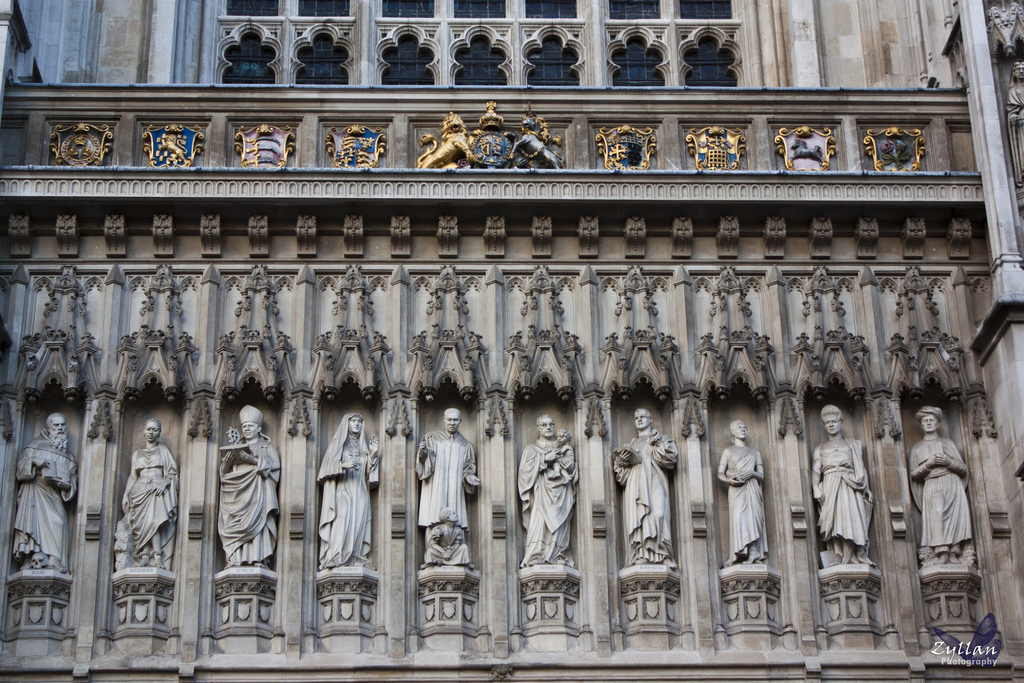
    Photo: "Londres: The ten Christian Martyrs in Westminster Abbey" by Zyllan Fotografía on Flickr
    Photo: “Londres: The ten Christian Martyrs in Westminster Abbey,” Zyllan Fotografía, Flickr

    If we come to Christ as a new convert, we often enjoy a lovely honeymoon period. So to hear these words of Jesus can be a shock and a surprise – is this what we signed up for?

    Some background is helpful as we delve into our passage for the next weeks, which is John 15:18-16:4. Jesus and his friends have finished their last meal together, and Judas has left, intent on betrayal. Jesus and the now-eleven disciples make their way to the Mount of Olives, where Jesus will later be arrested. In what is called the Final Discourse, Jesus teaches the disciples and prays with them.

    After telling his followers how to abide and live in him, Jesus says how they will suffer persecution because the world persecuted him first. We should not be surprised by this mistreatment, for the light of Jesus in us will make visible the evil in the world. Living for Christ might entail something seemingly trivial, such as opposing gambling at our local school. Or something more serious, such as not allowing a co-worker to fudge the truth. Or perhaps we may even be called to stand in solidarity with sisters and brothers around the world who are being tortured for their beliefs.

    Whatever level of persecution we face, we know that Jesus through his Holy Spirit will give us strength. We can count on him.

    Prayer: Lord Jesus, you suffered a horrific death so that I might live in freedom. Help me to live freely today, this week, this month, this year.

  • Review: Alister McGrath’s biography of CS Lewis

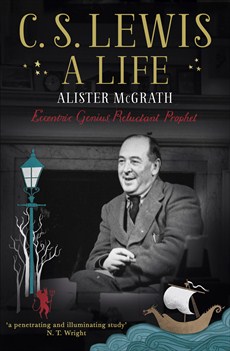
    isbn9781444745528-detailLike many American Christians, I’ve long been fascinated by the writings of CS Lewis. I’ve visited the Wade Collection at Wheaton College in Chicago to see the famous wardrobe and Lewis’s writing desk. I’ve enjoyed his haunts in Oxford such as the Trout and the “Bird and Baby” (the Eagle and Child pub). I even worked for his publisher for a time (Fount, part of HarperCollins). But only after reading Alister McGrath’s magisterial biography do I now feel I know the man behind the books. McGrath has produced a highly readable, engaging account of Lewis’s life as focused on his writings and what shaped them. I recommend it highly.

    In writing the biography, published for the fiftieth anniversary of Lewis’s death, McGrath read everything he could find penned by Lewis. McGrath then situates the various pieces of Lewis’s writing in the overall historical context as well as the goings-on in Lewis’s life. I found this grand sweep fascinating; it helped me understand why, for instance, Lewis wrote the Space Trilogy. Or why he first engaged in apologetics during the war, but afterward turned to more imaginative writings (including the Chronicles of Narnia and Till We Have Faces).

    McGrath uncovered some new revelations, one of which might be shocking, namely the affair between Lewis and the mother of his mate who died in the trenches in France. He wasn’t yet a Christian when he moved in with her, yet he stayed living in her family home (she was estranged with her husband) after his conversion. It seems an odd domestic arrangement, and one that he kept secret from his father.

    I was intrigued to learn how throughout his life Lewis portioned off parts of his emotions and memories. He never called up memories of World War I, saying that concerning the war he had a clear line of demarcation that he didn’t cross – maybe following a partitioning of his emotions when his mother died when he was a boy? Or how he never identified as an Irish writer. Although the scenery and beauty of his native land informed his writing, it wasn’t marked by nationalism.

    DSCN7519
    Bust of Lewis and his writing desk at the Marion E. Wade Center at Wheaton College

    And I found the whole story of Joy Davidman fascinating. An American, she moved to the UK with her sons to be near him. When her visa expired, she persuaded Lewis to marry her in a civil ceremony. He did, not thinking that the marriage was anything more than procedural. But she moved into the Kilns and then when they found out that she had terminal cancer, Lewis fell in love with her.

    I could go on and on! If you only read one or two books this year, choose this one. From it I’m inspired to go back and read and reread Lewis’s books.

    C.S. Lewis: A Life by Alister McGrath (Hodder, ISBN 978-1444745528)

  • Review: A favorite novel by Elizabeth Goudge

    9781598568417oI first read The Scent of Water in my late twenties, when I was longing for a husband. Little did I know that I would marry an Englishman when I was thirty and be transported to the setting of this novel. Or that the quick “yes” I said to moving to his country would become an act of obedience when I was missing family, friends, and good plumbing. I couldn’t know that this novel was in some way preparing me, for one of its main themes is obedience.

    Elizabeth Goudge wrote during and after the Second World War, when the country was reeling from hardship and loss of life. Her yearnings for a simpler time – for a pastoral idyll without machines or motorcars – are apparent in the novel, for the main character, Mary, moves from chaotic London to the quiet Chilterns to live in the cottage she inherited from her namesake cousin. This uprooting provides the setting for Mary’s growth, not only spiritually but in learning how to love and be loved.

    When I reread the novel for the third or fourth time recently, again I was struck by the author’s startling insights, such as the corrosive effect of sin on a person; how when we strengthen our will and follow God, ignoring our emotions, we grow and flourish; the masks we don and why; how faith can flourish through suffering; the importance of wonder and gratitude. Some of her writing is a bit clunky or rooted in its time – for instance, I cringed when she said that a character could “run like a Red Indian.” But the truths she conveys are worth the sometimes awkward characterizations or phrases.

    This time of reading, I was touched most by the author’s descriptions of the depression suffered by Cousin Mary, the woman from whom Mary inherited the cottage, and whom she got to know through her journals. Cousin Mary would have long periods of falling into the blackness of despair, when she would fear losing her reason forever. She wrote in her journal of meeting an odd old man who came to tea and gave her advice that changed her life forever: “‘My dear,’ he said, ‘love, your God, is a trinity. There are three necessary prayers and they have three words each. They are these, “Lord have mercy. Thee I adore. Into Thy Hands.” Not difficult to remember. If in times of distress you hold to these you will do well’” (pp. 94-95).

    I was glad to learn that this prayer was first uttered by Thomas Traherne, the seventeenth-century English clergyman and poet. Lately I’ve benefited by praying this trinity to the Trinity, especially at night if I can’t sleep.

    Why not pick up one of Elizabeth Goudge’s books? She will challenge you even as she transports you to a gentler time of village life in England.


    The Scent of Water by Elizabeth Goudge (Hendrickson, ISBN 978-1598568417). This is a recent version published in the States; I have to admit I found it a bit jarring to have the text Americanized!


  • Devotional of the week: A new name

    Whoever has ears, let them hear what the Spirit says to the churches. To the one who is victorious, I will give some of the hidden manna. I will also give that person a white stone with a new name written on it, known only to the one who receives it. (Revelation 2:17)

    Photo credit: "White Stone" by Anna, Flikr
    Photo credit: “White Stone” by Anna, Flickr

    A couple of women I know have changed their given names. One suffered sexual abuse, and by changing her name she was cutting painful ties. Another didn’t want to be defined by her name’s meaning, which was “bitter.” Instead she wanted to be known by a name that denotes “grace.”

    Our passage comes from the letters of Jesus, as revealed to the aging disciple John. Jesus says to the church at Pergamum that he will give them a white stone with a new name on it, known only to the recipient. Several meanings of this white stone have been put forward, as summarised by Craig Keener in the NIV Application Commentary (pp. 126–27). One is that in the ancient world, people used pebbles for admission to events; in this case, for a messianic banquet. Another is that in some ancient courtrooms, the jurors would cast a white stone for acquittal and black for conviction. (Thus Jesus would be the judge over what the Pergamum Christians were suffering.) Or the white stone could symbolize purity and eternal life, or a new name signifying a new identity.

    The symbolic possibilities are rich. Applying the promise to our own lives hearkens to the promises we examined in Isaiah 62. Our new name might be one that we publicize as we embrace our new, redeemed self. Or it might be one that we keep hidden, the name that we hear when we call to the Lord and listen for his affirming words of love.

    We are no longer bound to the old way of life. As we live out of our new selves, may we reflect the attributes of the One who created us, who made us for himself.

    For reflection: “Let us rejoice and be glad and give him glory! For the wedding of the Lamb has come, and his bride has made herself ready” (Revelation 9:17).

  • Life in the UK: Learning a new language

    I was warned. Before I married my Englishman, my boss – who was, conveniently, an Englishman living in America – told me that the little differences between the two countries would jar me at first. He was right, and I found that no where more true than with language.

    Photo credit:  UK & USA Flags - Dot Matrix by gavjof on flickr
    Photo credit: UK & USA Flags – Dot Matrix by gavjof on flickr

    I knew that the Brits and Yanks employed different terms, especially for things like cars: bonnets were quaint headpieces adorning Jane Austen’s characters; a boot was just that, something to wear on your foot, especially when living out West; and that thing hanging off the back of the car? I had no clue. In my first year in the UK when I tried to explain that a woman’s muffler was falling off her Range Rover, I stuttered and stammered (but actually no, I didn’t stammer, because I didn’t know that word either), knowing I wasn’t saying the correct word (and being slightly uncomfortable anyway, thinking I was probably breaking social convention to speak to a stranger). Finally I took her back to her car and pointed, and she exclaimed, “Ah, the exhaust!”

    And I knew that pronunciation would be different, as I outlined last week. Although imagine my surprise when one of Nicholas’s theological college (US: seminary) students invited us to lunch, and they asked me to say the name of a certain spice. One that starts with an o and ends with an o. Got it? Yes, I naively said, “Oregano,” (oh REG ah no) to which the party erupted in laughter. My host explained that Brits tend to pronounce each syllable of a word, which is why they would say, “oh rey gahn no.”

    So I knew I’d struggle with dustbin carts and, back then, the name for a pay phone (call box? pay box?), trousers and pants, chips and crisps and biscuits and crackers, but what I didn’t know was the hidden meaning of language. Yes, what Brits really mean behind their polite words or ironic remarks. You may have seen the graph that has been widely circulated on social media sites, reportedly developed by a Dutch company trying to do business in the UK. The one that has a column for what the British say, “That’s not bad”; a column for what the British mean, “That’s good”; and a column for what foreigners understand the British to mean, “That’s poor.” No wonder we foreigners get our knickers in a twist (US: can you figure it out?).

    I didn’t have the luxury of such a graph when I first moved here, so learned by making mistakes. My husband and I soon differentiated between a British “nice” and an American one – how nice was that person or meal or gift really? (We don’t often use that term anymore, which is just as well when there are far superior descriptors.) But it took a bolshey (US: in-your-face) literary agent to inform me, when I was a commissioning (US: acquisitions) editor at HarperCollins, that Brits and Americans mean different things when I said that I thought her client’s proposal was “quite good.” (She dropped any social niceties when she educated me, and no, I didn’t progress that proposal.) At least my boss didn’t expect me to pronounce schedule in the British way, and he did helpfully point out that the handwritten PS at the bottom of the letter, which I would most likely disregard, was actually the most important thing to the author.

    So tell me, British friends and family, what is behind this lack of saying it like it is? Does it all come down to class – not offending those above or below? A natural reticence? Social custom based on…? I’d love to hear what you think, and any experiences you’ve had of saying something and being completely misunderstood. And what you think of those colonists who prefer to speak unvarnished (Just to mix things up, I now work for an Australian company!).

  • Review of a stunning memoir

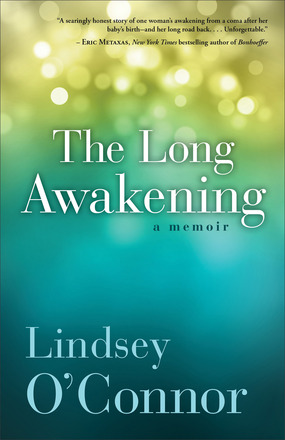
    The Long Awakening

    9781441243041

    Imagine waking up after 47 days in a coma, not realizing that the summer had passed or that you’d had a baby. This is what happened to Lindsey O’Connor, a mother of four who gave birth to her fifth baby – a planned later-in-life pregnancy – then suddenly crashed and nearly bled out, her brain deprived of life-giving oxygen. Her doctors induced a coma to allow her brain time and space to heal, but the extent of damage she suffered had no one knew. The Long Awakening is the gripping and moving story of her slow emergence out of the space between life and death as she hovered just below the surface, longing to connect but unable to do so.

    But a miracle occurred, and though her family thought one tortuous night that she would die, she slowly came back to life. But she, asleep, missed the miracle. The thousands who prayed; the hundreds who brought around meals and cared for children and lent support: they witnessed it. But she, its focus, felt outside. Yet she knew her awakening was inexplicable and miraculous, so how could she even voice these feelings?

    And who was she now, having been so deconditioned that she couldn’t even stand up on her tip toes or breathe on her own? How could she care for her children? Love her husband? Bond with her baby, whose first bath and first feeds she missed? Who was she in terms of her career? As she mused, “I used to be a writer… Now I cannot even read. Those days are over, I thought, and lay thinking of who’d I been, wondering who I was now.”

    The road to recovery has been slow and long, but Lindsey has determined to “play the hand we’re dealt.” She writes lyrically, raising profound issues of identity, family and community, faith, mother/child bonding, and end-of-life medical ethics. Using her training in crafting journalistic narrative, she weaves together the pieces of those 47 days in the coma and the 107 days in hospital. I only wish she would have been more forthcoming with her faith; strikingly absent is the present of Jesus (but not God), although she calls herself “one who loves God fiercely.” Perhaps being a mainstream journalist in America made her reticent to enter the fray of faith-related discussions, which Stateside can turn tribal.

    One to read and ponder, especially in a book-club setting, for the issues the book raises are manifold. A reminder to us all to treasure the moments we’re given.

    (published by Revell, ISBN 978-0800723170)

  • Devotional of the week: Christ in all

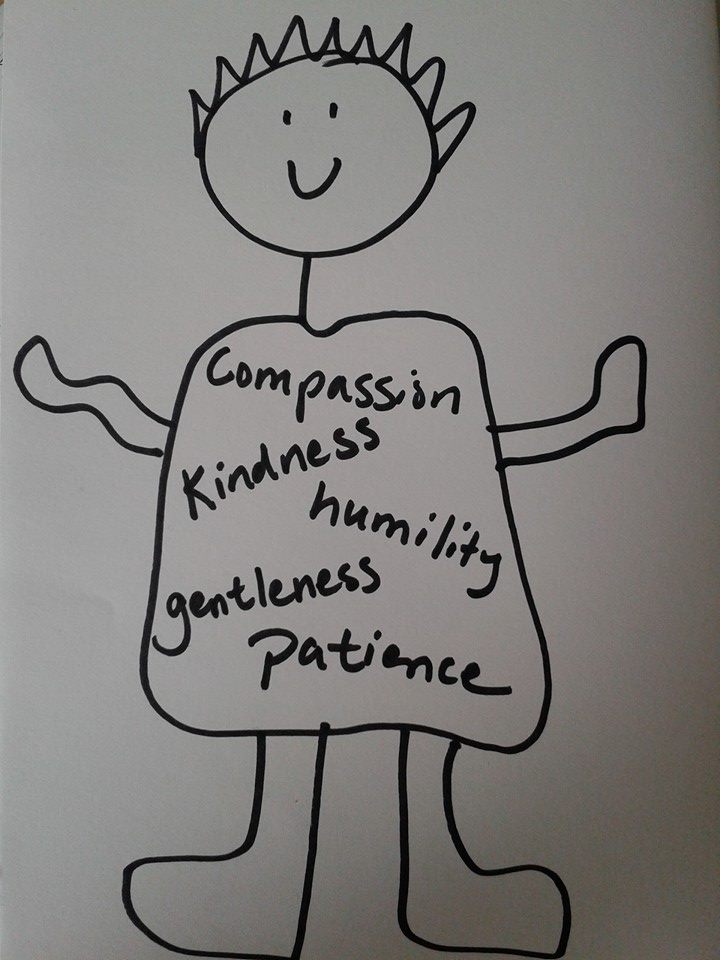
    Yep, clearly the artists in my family are my dad and daughter, not me... (This is my creation, not my daughter's!)
    Yep, clearly the artists in my family are my dad and daughter, not me… (This is my creation, not my daughter’s!)

    Do not lie to each other, since you have taken off your old self with its practices and have put on the new self, which is being renewed in knowledge in the image of its Creator. Here there is no Gentile or Jew, circumcised or uncircumcised, barbarian, Scythian, slave or free, but Christ is all, and is in all. Therefore, as God’s chosen people, holy and dearly loved, clothe yourselves with compassion, kindness, humility, gentleness and patience. Bear with each other and forgive one another if any of you has a grievance against someone. Forgive as the Lord forgave you. And over all these virtues put on love, which binds them all together in perfect unity. (Colossians 3:2–5; 9–11)

    Sadly, often in church life we fight battles with each other, sister against sister; brother against brother. Perhaps we think that we hold the whole truth and they fall short. Or a difference of opinion over a point of doctrine becomes the opening clash of a long and drawn-out war, which leaves lives bruised and relationships impaired. Or a matter of personality morphs into a heated battle that remains long in the memory of those involved.

    As the wife of a vicar, I’ve witnessed these spats between siblings, sometimes being wounded in the process. I don’t count myself as an authority on conflict resolution; nor do I claim to hold an infallible grasp on Truth. But we can see a way forward in our church family life through Paul’s letter to the Colossians. As we live out our redeemed lives, Christ is all and is in all. We can take off the old clothes, those old rags that hold the memory of conflict, and put on the clothes of Christ – compassion, kindness, humility, gentleness, patience, forgiveness, love.

    Wearing his garments, we are more able to live in harmony and peace with our sisters and brothers, especially if we remember that Christ sacrificed himself for them, as much as for us. As we live out of our new self, we can then move forward in unity, being freed from infighting and enabled to forgive as we seek to love and serve others and God.

    For reflection: “And let us consider how we may spur one another on toward love and good deeds, not giving up meeting together, as some are in the habit of doing, but encouraging one another – and all the more as you see the Day approaching” (Hebrews 10:24–25).