Author: Amy Boucher Pye

  • Review of a quirky memoir

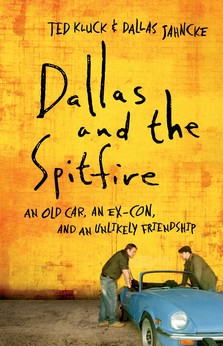
    A year or so ago I read nearly twenty books for a feature article in the Christian publishing trade magazine. That’s a lot of reading, even for a self-confessed bibliophile such as me. In the midst of all those words, the ones that stood out to me were those in Dallas and the Spitfire, the story of an unlikely friendship. Why? Because the author’s unique voice came through so clearly. His writing style is easy and engaging, and his footnotes are a fun place where he lets rip with wisecracks and asides. More importantly, the content is encouraging and thought provoking. For me the only negative was the shameless copying of the typeface/artwork of the similar hit book of a few years ago, Same Kind of Different as Me (although I tried to read that book and didn’t get very far, whereas I lapped up this one).

    dallasSFThe main author here is Ted Kluck, a freelance writer in his mid-thirties who lives in Michigan in the States and inhabits a Christian Reformed subculture. He meets Dallas, a young guy in his early twenties who has experienced more of life than many have who are twice his age. But not all of what he’s lived through has brought life. His father introduced him to drinking at the tender age of eight, and he lost his virginity at ten. He became a hardened drug addict, living a precarious life on the edge, fuelled by the desire and need to fund his habit. His actions led him to jail, and then eventually into a Bible-based rehab program. It was here when he first met Dallas.

    Their friendship is that of father to son, mentor to mentoree, friend to friend. Men seem to communicate best shoulder to shoulder, so their shared project of restoring an old European car gives them the excuse to hang out and do life together. Ted helps Dallas in his first year as a Christian as he navigates the strange waters of a fundamentalist Bible college, survives heartbreak over a romantic relationship, and manages to stay clean and off of drugs. Dallas in turn helps Ted, a neophyte when it comes to car restoration, to bring life to the old British Spitfire. And more than just car repair, he brings joy, hope, and the reminder through his changed life that our God is really able to do more than we could ask or imagine.

    A great read. My eyes admittedly glazed over at all the car descriptions and a few of Ted’s sideabout ramblings, but overall the story of the two’s friendship made for compelling and even compulsive reading.

    Dallas and the Spitfire: An Old Car, An Ex-Con and an Unlikely Friendship, Ted Kluck and Dallas Jahncke (Bethany, ISBN 978-0764209611)

  • Life in the UK – Cause for celebration?

    Why does a nation so filled with great achievements and peoples not celebrate? Why is a national day off simply called a Bank Holiday?

    Photo credit: Creative Commons, MikeDixson
    Photo credit: Creative Commons, MikeDixson

    Though I’ve lived on this small island for many a year now, I’ve taken a long time to understand what is behind this reticence. But my opening sentence gives a hint, for which nation am I talking about? The United Kingdom, after all, is a grouping of nations – the technical terms is, “the United Kingdom of Great Britain and Northern Ireland.”

    And I suppose the English are most reticent of all to celebrate their patron saint’s day, which is today – St George. For they have been seen as the oppressor. And to be English means to be understated; not to flaunt one’s accomplishments or achievements, lest one is seen as bragging.

    But times may be changing, and even Downing Street is today flying St George’s flag, alongside the Union Jack. Celebrations are taking place around the country, including a great feast in Trafalgar Square. Why we don’t have a massive celebration of the Bard today I do not know though – after all, it’s Shakespeare’s 450th birthday.

    If you’re English, are you reticent to fly St George’s flag or celebrate your Englishness? Why or why not?

  • Devotional of the week – Redemptive suffering (4 in John 15-16 series)

    “They will treat you this way because of my name, for they do not know the One who sent me.” John 15:21

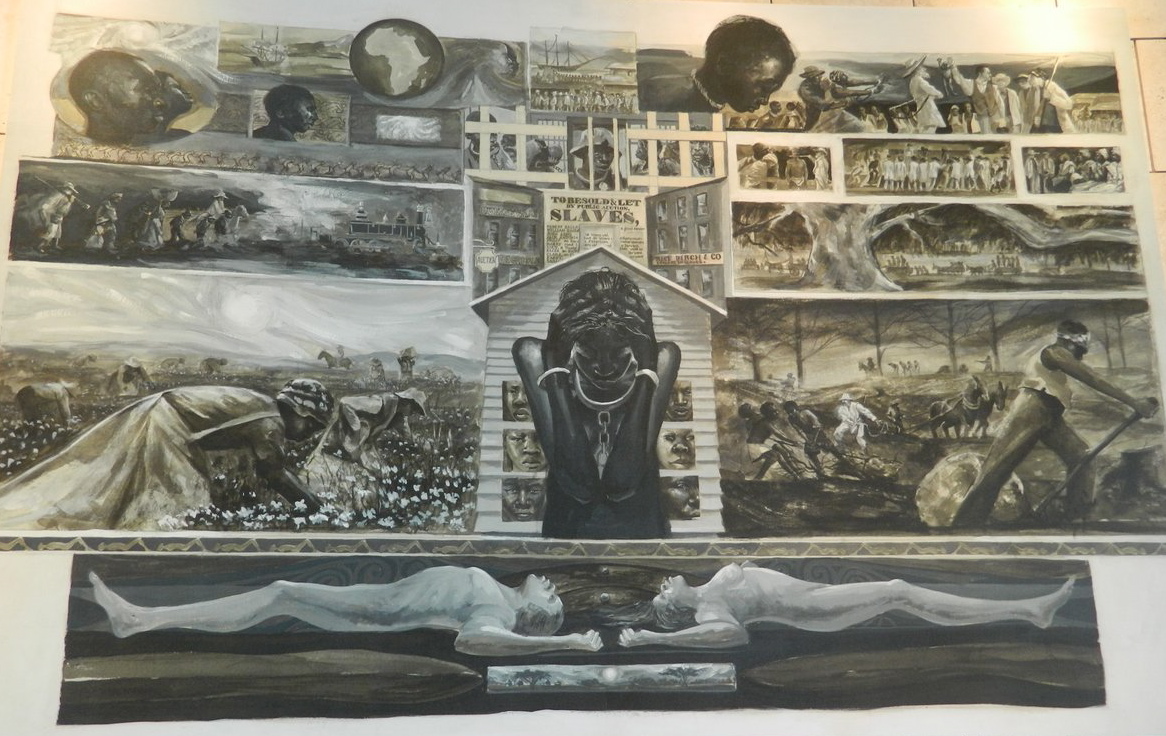
    Painting displayed in the National Underground Railroad Freedom Center in Cincinnati, Ohio
    Painting displayed in the National Underground Railroad Freedom Center in Cincinnati, Ohio

    In the West we currently enjoy religious freedom, and take for granted the ability to meet with other believers to pray and worship together. This freedom is not enjoyed by many brothers and sisters around the world, such as in China or in the United Arab Emirates. For instance, Christians in North Korea are tortured for their faith. Chinese believers from the house churches were barred from traveling to Lausanne III in 2010, the largest Christian gathering in history. Or in the UAE, Christian expatriates are allowed to worship in their own churches, but legally may not share their faith with locals.

    This section of John’s gospel must provide precious sustenance to these believers. They are misunderstood, misaligned, maltreated, and perhaps even tortured or killed because of the name of Jesus. But they can cling to the promise that God’s Holy Spirit is with them, purifying them and speaking through them.

    What can we learn from the suffering church? Many things, no doubt, but one that stands out is the strength of their commitment. Can we too live as though our whole lives depend on our belief and trust in God? Do we focus on the essentials of our faith and let the minor concerns drop? Do we believe in the power of God to bring real change and renewal?

    May the example of the persecuted church inspire and convict us this day.

    Prayer: Lord Jesus, you were persecuted, and so are many around the world. Redeem their suffering for your glory.

  • A Holy Week Poem

    Holy Week. I feel busy this week. Too busy. But I offer this poem that I wrote some years ago to remind myself to stop and consider the grand story of redemption being played out this week.

    DSCN9808
    O Jesus of Nazareth,
    Thorns we twisted and turned
    Upon your head we placed,
    Crowning you King of the Jews.
     
    Upon you we spat;
    With a reed we struck your head.
    Kneeling in homage, we mocked,
    With our lips; with our hearts.
     
    Crucified, we crucified,
    Nailing you to the tree
    Watching you whither and bleed
    As darkness came over the land.
     
    From deep you cried out,
    Not at us, but to your Father:
    “My God, my God, my God—
    “Why have you forsaken me?”
     
    Those words cut to the depth of our soul
    Reverberating from within
    We watched you breathe your last,
    And the curtain was torn in two.
     
    From what we have seen and heard,
    Indeed, from what we have done,
    We echo the words of the centurion,
    That truly, the Son of God you are!
     
     © 1999 Amy Boucher Pye
  • Devotional of the week – The Royal Family (3 in John 15-16 series)

    Remember the words I spoke to you: ‘No servant is greater than his master.’ John 15:20

    A house fit for a queen. Osborne House on the Isle of Wight.
    A house fit for a queen. Osborne House on the Isle of Wight.

    My son has had a fascination with the British monarchy over the years, and I’ve learned much about kings and queens as we’ve visited royal palaces and read biographies. I simply cannot imagine one of these exalted persons lowering themselves to the level of a servant. And yet this is what Jesus – the King of Kings – did when during the Last Supper he washed the feet of his disciples. He, the Teacher and Lord, got dirty in the service of others. So too must we: “I have set you an example that you should do as I have done for you. I tell you the truth, no servant is greater than his master” (John 13:15-16).

    Now as Jesus talks about persecution, he hearkens back to his words about the servant/master relationship. We must serve one other, and because servants aren’t greater than their masters, we must expect to be treated with spite or taunting, as he did. We will not be exempt from suffering, for his Father did not spare him. But as we will see in an upcoming reading, God will send his Spirit to us – the Advocate and Counselor – who will fill us with his presence and speak on our behalf.

    We may not be a member of the British royal family, but we are daughters and sons of the King. Though we may suffer, our adoption into his family is secure.

    Prayer: Our Lord God and King, reign in our hearts today, that we might love and serve you.

  • Review of Cross Roads, follow-up to The Shack

    My review from the Woman Alive book club, originally published in February 2013, shortly after the release of the follow-up to the massive hit, The Shack.

    Many anticipated Cross Roads, Wm Paul Young’s novel following his huge success with The Shack. Me? Not so much. I reviewed The Shack in the Woman Alive book club in 2008, and although it had more reader reviews than any other book in our half-dozen years of the book club, I didn’t love it. Some of his theology concerned me (bordering on universalism), and I thought the opening fifty pages was wrought with purple prose. And yet I couldn’t discount the way God used The Shack to bring grace and healing into the lives of many. So when Cross Roads arrived through the post, I thought, “Hmm.” I wasn’t keen to drop everything and read it. But some of our Facebook group wanted me to do so, and thus here I am.

    15789399Again the opening pages scream with adverbs and adjectives as the author is at pains to set the scene. Because this book was published traditionally, and not self-published as The Shack was initially, I hoped the publishers would have reigned in the prose. An example: “He had been birthed in an explosion of life, an inner expanding universe coalescing in its own internal solar systems and galaxies with unimagined symmetry and elegance” (p.4). But eventually the descriptions eased as the action got going, and I didn’t have to force myself to continue reading.

    The author has a fantastic imagination, and I enjoyed the worlds we traversed as Tony, the protagonist, lies in a coma, given one chance by Jesus and the Holy Spirit to physically heal one person. Tony slides into the head of another person (this is all on the dust jacket – I won’t give away too much!) and starts to see the world through their eyes. Compassion, empathy, grace, and mercy become real to him as he moves away from his self-centred focus. The reader too gains empathy for him, the once crusty businessman whose aim had been only to win, as we learn why he erected the towering walls of protection.

    Should you read Cross Roads? I don’t know if you should, but I think many will, especially those who loved The Shack. If you can make it past the early plodding pages, you’ll enter an imaginary world that may enlarge your view of God and your fellow men and women. Like me, you might find yourself irritated by certain quirks of the author (for instance, I wasn’t convinced by his CS Lewis character, and I found the idea that members of the Trinity could be sarcastic as falling outside of God’s character). But yes, it’s worth reading for a glimpse of what the soul could look like, and the relational view of God in his three persons, who always wants to interact with us.

    Have you read it? If so, what did you think?

    Cross Roads, Wm Paul Young (Hodder, ISBN 978-1444745979)

  • Devotional of the week – Heavenly citizens (2 in John 15-16 series)

    As it is, you do not belong to the world, but I have chosen you out of the world. John 15:19

    Photo: Ian Mackenzie, Flickr
    Photo: Ian Mackenzie, Flickr

    I have two passports – one from America, the land of my birth, and one from Britain, my adopted country. I will always have divided loyalties, whether in which sports team to support or which lingo to speak. But my most important citizenship is my heavenly one, to which Jesus refers here. For he has chosen us out of the world, and we do not belong to it.

    What does it mean to be a citizen of heaven? To be “in the world but not of it”? Christians throughout the ages have interpreted this question differently. Some remove themselves completely from the world. Others so accommodate it that they lose their Christian distinctiveness. Many struggle somewhere between the two poles, seeking to keep in tension engaging the world on the one hand while being a transforming force in it on the other.

    As we keep our sights fixed on God’s promises of his heavenly city, we will see our struggles and travails with his eternal perspective. He can pull us back when we are too engaged with worldly things, such as watching a dodgy television program. He can shed wisdom on the challenges we face, reminding us that he will never leave nor forsake us. He will strengthen and undergird us, helping us to be his witnesses in a world hungry for grace.

    Heavenly Father, as aliens and strangers on earth we long for a heavenly country. Help us to live by faith.

  • Life in the UK – The No-Name Rule

    “Oh, you’re never supposed to give your name in early conversations,” my fellow American-living-in-London friend said. “I was given a copy of Watching the English, which explains what’s behind it. Mainly a class thing, I think.”

    booksShe’d lived in the UK for fewer years than I, but she had stumbled onto an area where I’d been making cultural faux pas for ages. I never could understand why the English didn’t seem to tell me their names in polite conversation. The starkest memory I had was when I was newly off the boat and meeting a group of spouses of ordinands (US: those studying for ordination in the Church of England) at my husband’s theological college (US: seminary). Sitting in a circle, we formed a cheery bunch, but after they introduced me as the latest arrival, I expected the others to say their names so I might get to know them too. Nope.

    Watching the English has helped me understand what’s behind this to-me peculiar behavio(u)r. Kate Fox is an anthropologist who turns the lens on her own people. She explains the “No-Name Rule” of social situations “where conversation with strangers is permitted, such as a pub bar counter,” and how you’d never say, “‘Hello, I’m John Smith,’ or even ‘Hello, I’m John.’” She continues:

    In fact, the only correct way to introduce yourself in such settings is not to introduce yourself at all, but to find some other way of initiating a conversation – such as a remark about the weather.

    The ‘brash American’ approach: ‘Hi, I’m Bill from Iowa,’ particularly if accompanied by an outstretched hand and beaming smile, makes the English wince and cringe…. The American tourists and visitors I spoke to during my research had been both baffled and hurt by this reaction. ‘I just don’t get it,’ said one woman. ‘You say your name and they sort of wrinkle their noses, like you’ve told them something a bit too personal and embarrassing.’ ‘That’s right,’ her husband added. ‘And then they give you this tight little smile and say “hello” – kind of pointedly not giving their name, to let you know you’ve made this big social booboo…’

    I ended up explaining, as kindly as I could, that the English do not want to know your name, or tell you theirs, until a much greater degree of intimacy has been established – like maybe when you marry their daughter. (p. 39)

    When I read her explanation, I felt an immediate sense of relief. Yes, I had made many a gaffe over the years of being too forward and friendly, but I no longer needed to feel a sense of personal rebuff or rejection. I could still be friendly, and maybe even introduce myself (the shock! the horror!), but I could now try to gauge how my British conversational partner was feeling and whether I dared to break social convention.

    What has been your experience? Do you introduce yourself in an informal social setting, or does it make you feel terribly uncomfortable to do so?

  • Review – Blue Like Jazz

    Here’s one from the archives, inspired by a reader review in the Woman Alive Facebook group. It’s my review in Woman Alive (from 2006!) of a book by a then relatively unknown author. I used to feature a book one month – complete with discussion questions – and then follow it up a few months later with my review and those of some readers. (Thanks to Woman Alive editor Jackie Harris for suggesting changes to the format… what we have now is superior!)

    I’ve always liked Don Miller’s writing; back in 2000 I acquired the UK/Commonwealth rights to one of his first, Prayer and the Art of Volkswagen Maintenance, for HarperCollins UK.

    0785263705In many ways Donald Miller is a typical American bloke. He’s a guy who is looking for love and God in the strains of everyday life. But he’s nontypical in that he shares his thoughts and experiences in his Blue Like Jazz: Nonreligious Thoughts on Christian Spirituality. He’s been called “Anne Lamott with testosterone.”

    The book is a series of linked essays on a variety of topics – from faith, redemption, and grace through to television, romance, money, and worship – that are sometimes quirky, sometimes humorous, sometimes introspective but often insightful. Of the title Miller says, “I never liked jazz music because jazz music doesn’t resolve. But sometimes you have to watch somebody love something before you can love it yourself … I used to not like God because God didn’t resolve. But that was before any of this happened.”

    Join me in exploring life through the lens of Don Miller. Here are some discussion questions for you to ponder or share with your group.

    • What did you think of the book overall? Did it appeal to you? Why or why not?
    • What stood out as you read? Were there images or ideas that lingered with you?
    • What do you think about Don’s view that “the greatest trick of the devil is not to get us into some sort of evil but rather to have us wasting time” (p. 13)?
    • Chapter 2 is all about problems, and basically about original sin – “that we are flawed, that there is something in us that is broken” (p. 17). Do you agree that the problems of the world boil down to “the needy beast of a thing that lives in my chest” (p. 20)?
    • More on the devil: “I think the devil has tricked us into thinking so much of biblical theology is story fit for kids’ (p. 30). Have you ever thought about Noah’s ark not being appropriate for children because of its themes of judgment?
    • Chapter 7 focuses on grace and “the beggar’s kingdom.” Don says how he “could not understand why some people have no trouble accepting the grace of God while others experience immense difficulty” (p. 83). He was one who had trouble. Do you? If so, why? Or why not?
    • Discuss Don’s description of the Grand Canyon at night: “There is something beautiful about a billion stars held steady by a God who knows what He is doing. (They hang there, the stars, like notes on a page of music, free-form verse, silent mysteries swirling in the blue like jazz.)” p. 100.
    • Don realized that “believing in God is as much like falling in love as it is like making a decision. Love is both something that happens to you and something you decide upon” p. 104. Do you agree or disagree?
    • Discuss a simple truth about relationships: “Nobody will listen to you unless they sense that you like them” (p. 220).

    My View

    I loved one of Don Miller’s books in the past, and when I started reading Blue Like Jazz I couldn’t put it down. Several weeks later I read the book in full, but by the time I was done my interest had waned. While there are instances of brilliance – I loved the thought of seeing the lines on Jesus’ face, for instance – there seems to be a lot of navel gazing too. I started to get a bit annoyed with what seems like Don’s preoccupation with himself. An editor could have cut a third of these meanderings and made a fabulous book.

    Still, there were memorable flashes of light. My heart warmed to hear of Penny’s conversion, as she was loved into the kingdom of God by Nadine. And I could certainly relate to Don’s experience of community life. As I read of his experiences in Graceland, my ten years of living with roommates in Washington, DC, came back with stark clarity. As with Don, living with others was a way for God to highlight my issues of selfishness and pride. It wasn’t always fun, but it was fruitful.

    Blue Like Jazz, Donald Miller, Nelson, ISBN 0785263705, 242 pages


  • Thoughts for writers – writing to sow seeds

    Recently a vicar (no, not that vicar) asked me to contribute a sermon on proclaiming the gospel message through writing. Happy to be asked, I said yes. Then I wondered whichever passage I would preach on. “Of the making of books there is no end”? Jeremiah’s “Eat this scroll”? My husband suggested looking at Colossians, for Paul never visited that church but ministered through the written word.

    Photo: Written in Gold, Flickr
    Photo: Written in Gold, Flickr

    I remained stuck, asking God for direction. That leading came through Facebook, for when I posed the question on my wall and in a Christian writer’s group, I received enough responses to write a book: Habakkuk 2:2: “Write the vision.” Or John 1, “In the beginning was the Word…” Or Psalm 45:1: “My tongue is the pen of a ready writer.” All rich with possibility, but the passage I settled on was Luke 1:1-4 as suggested by a writer who said it makes “clear that the words are written to communicate Christ to the reader.”

    Do you remember that bit at the beginning of the gospel? Luke uses it to tell Theophilus why he’s writing, but he’s also employing a literary convention that historians such as Josephus used to prove their authenticity and merit. So too Luke says that although “many have undertaken to draw up an account,” yet he “too decided to write an orderly account.” Why? Because “I myself have carefully investigated everything from the beginning.” He’s not implying that the earlier accounts were hopeless and thus he needs to pen his own. Rather he wants to build on and enlarge their work through his careful research and eyewitness interviews.  Primarily, he wants to reassure Theophilus: “So that you may know the certainty of the things you have been taught.”

    Encouragement for us to write too, don’t you think? Of course we won’t be creating Holy Writ. But if we are writing an historical account, for instance, we can follow Luke’s example of careful documentation to produce a trustworthy account. We can share his passion to tell the stories of God transforming lives. We can encourage our readers in the foundations of their faith.

    As I looked out on the congregation, clustered at the back in a cavernous and chilly Anglican church, I prayed that my words might spark some interest in the gift and discipline of writing. Conscious that many might not see themselves as writers, I emphasized the numerous ways we can write today, such through letters, emails, texts, social-networking sites, blogs. As we communicate, we can be a transformative presence. For instance, deciding never to act out a conflict over email. Or posting a handwritten letter as a surprise. Or texting a Scripture to encourage.

    I spoke about other places to write without seeking publication, such as keeping a prayer journal, which could become a treasured record of God’s working in our lives. Or documenting our family history. Or creating poems as a meaningful gift. And I spoke about writing for publication, such as letters to the editor, features in the local newspaper, writing for a charitable organization. And columns, articles, stories, Bible reading notes, books… the places where we can write are many.

    Did my words accomplish what I hoped as I unpacked one short passage in Scripture? Only God knows. I felt slightly disheartened as I glimpsed some frozen faces in the congregation. But God’s breath can bring life and warmth into even a cold church on a rainy day. And just as I don’t know the true effect of that sermon, neither do we of our written words. We ask God for the seeds to sow, and with his strength we fling them as far and wide as we’re able. Then we ask him to provide rain, sunshine, and protection from hungry birds or constricting weeds.

    May the Lord refill our stock of seed, that we may help to produce a harvest of righteousness.