Author: Amy Boucher Pye

  • I Stole the Bride

    When, some years ago, one of my former roommates got married, I went on honeymoon with the newly married couple. And, being directionally challenged, got the bride lost.

    A group of friends met at Liz and Ed’s wedding. As so many of us were from out of town, the newlyweds invited us to join them for a couple of days of their honeymoon. Although they were keen to start their new life together, they wanted to enjoy their friends after the frenetic lead-up to the wedding.
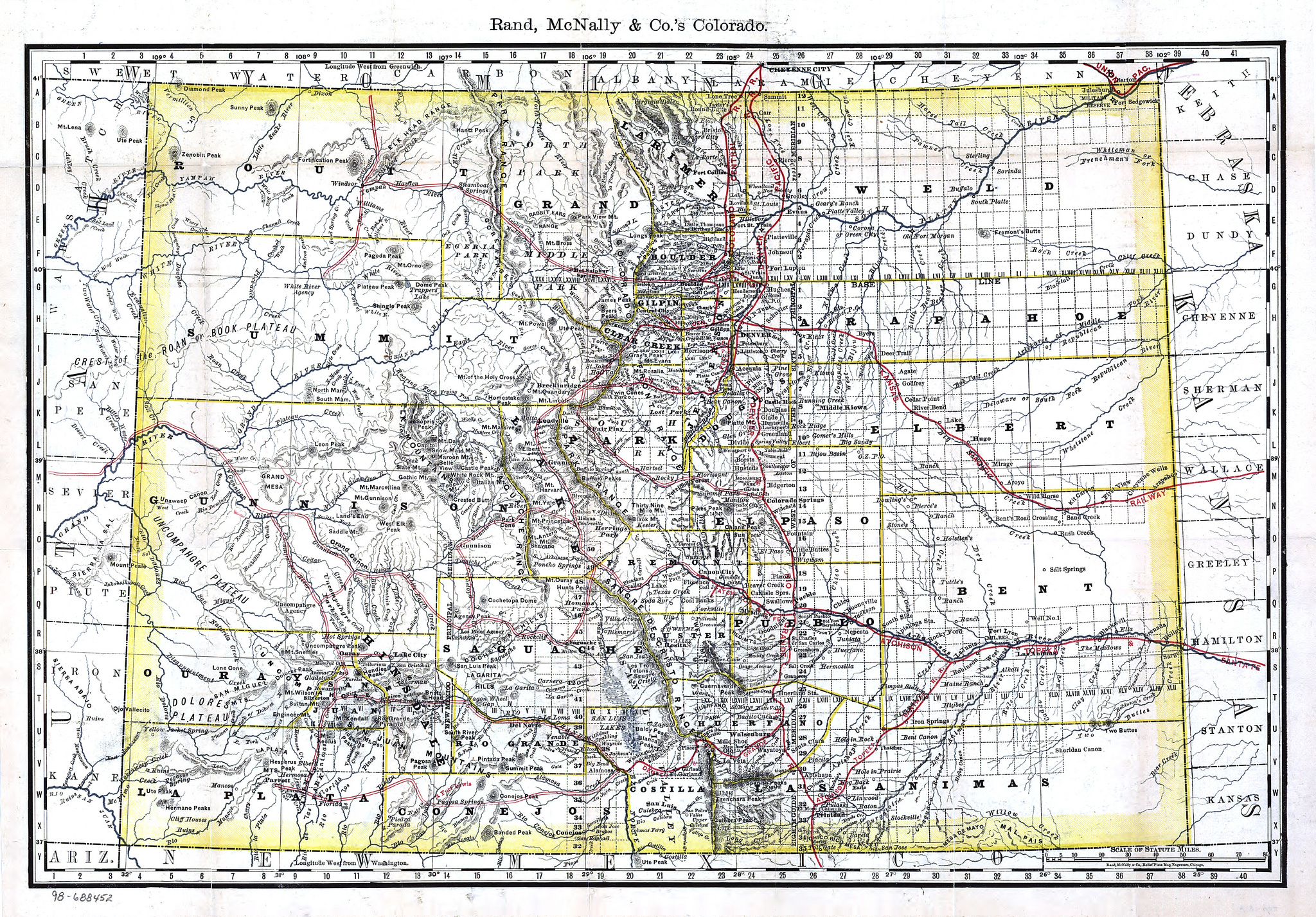
    Photo credit: JD Thomas, Creative Commons
    Photo credit: JD Thomas, Creative Commons

    And so a bunch of us decided to head over to the condo they were renting in the mountains for a few days of skiing and relaxing in the hot tub. Ed graciously let Liz come in my car, so we could have some girl-time together, and said I could follow him. Liz and I were chatting and talking through who danced with whom at the wedding when we slowed down at a stop sign. The sun was in my eyes but I saw Ed’s blue car turn right and take off quickly. I put my foot on the pedal, wondering why he was going so fast.

    We followed the blue car for over an hour, me wondering silently why Ed was making it so hard for me to keep up with him. Finally I asked Liz why she thought he was going so fast. She couldn’t figure it out either.

    I sped up, trying to close the gap between the cars.

    Liz said, “Amy! That’s not Ed’s car!”

    My stomach dropped and I wondered what I had gotten us into. “Oh man. I knew I was bad with directions, but I never thought I’d follow the wrong car!”

    We slowed down and stopped in Cripple Creek, finding a restaurant with a pay phone to try to let him know where we were – this was way before mobile phones were invented. I felt so bad that I kept saying sorry, until I realized that my profuse apologies were probably beginning to annoy Liz.

    After making some phone calls to tell friends whom Ed might call, we figured out where we where and realized I had driven us completely in the wrong direction. We now had to backtrack the sixty miles, plus drive the next hundred miles we always had in front of us. But at least now Ed would know that I hadn’t intentionally stolen his bride.

    When we finally met up with Ed and the other friends, I was exhausted and burst into tears. After calming down, we all were able to laugh about the incident and my stupidity. For in a moment of blindness, I followed the wrong car and got seriously off-track.

    The spiritual lessons are clear.

  • Swapping Houses

    DSCN7187
    There’s so much to see in Minneapolis.

    Last year right about now, I was frantically getting the vicarage ready for a house swap. The four of us were headed to Minnesota, to the land of my people – yes, where “all the women are strong, all the men are good looking, and all the children are above average” in Garrison Keillor’s memorable words. A British family, who have settled in Minnesota, were coming here to London, and we were taking over their home, which is (amazingly) only a couple of miles from my parents’ house.

    Entering someone else’s setting for a week or two can feel surreal. The friend whom I swapped with and I chatted back and forth on a social-media site during the early days, comparing US versus UK ways of doing things, and both of us, I think, having a sense of, “This could be my life.” In fact, I so hadn’t emotionally disengaged from life in London that at first it felt difficult to stop the conversation. Then one morning I realized in prayer that I needed to be present where I was – and why wouldn’t I want to be? I had longed for this space to see family and friends again, and to experience the joys of things like amazing plumbing and Target. And I needed to bless my friend and let her get on with her time in the UK.

    The kids loved so much about living in someone else’s home for two weeks. CutiePyeGirl was thrilled that they had two girls; PyelotBoy not fussed, understandably. One of the kids’ favorite things each day was running across the (not busy) street to get the mail out of the mailbox. A novelty, to be sure.

    Can you imagine what your life might look like if you changed places with someone living a similar sort of life (similar job; similar ministry), but in a different country? Not an exercise to get hung up on, for the reminder to me is to give thanks for the life I do have. Especially as today in London the sun is shining.

  • Weekly devotional: Water walking (9 in Jesus’ miracles series)

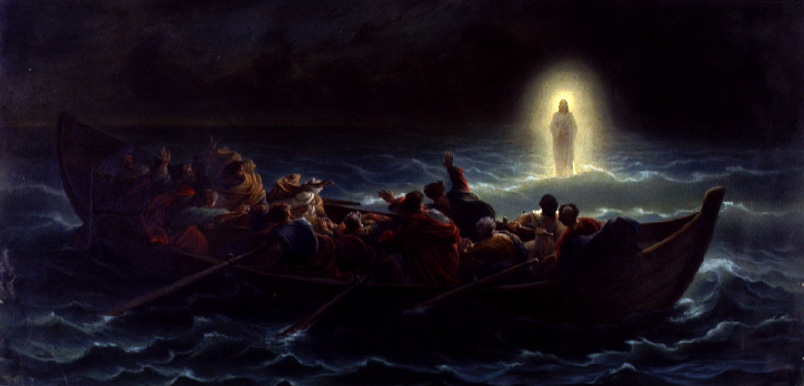
    Shortly before dawn Jesus went out to them, walking on the lake. When the disciples saw him walking on the lake, they were terrified. “It’s a ghost,” they said, and cried out in fear. But Jesus immediately said to them: “Take courage! It is I. Don’t be afraid.” “Lord, if it’s you,” Peter replied, “tell me to come to you on the water.” “Come,” he said. Then Peter got down out of the boat, walked on the water and came toward Jesus. But when he saw the wind, he was afraid and, beginning to sink, cried out, “Lord, save me!” Immediately Jesus reached out his hand and caught him. (Matthew 14:25–31)

    Painting by Amédée Varint; Creative Commons
    Painting by Amédée Varint; Creative Commons

    Having just fed a hungry crowd of five thousand after a day of teaching, Jesus was exhausted. He sent the disciples to find shelter on the other side of the lake while he went to pray. But the disciples encounter a squall and spend much of the night trying to cross the lake. Whereas Jesus was in the boat when a storm arose previously, this time they are on their own. But by now they know that Jesus is interceding for them, and will come to them.

    And he does so in a miraculous way, walking on the water. The disciples are depleted from the day’s ministry and a night of slapping on the waves; in their exhaustion they wonder if they’ve seen an apparition. But Jesus reassures them, and his “It is I” could hearken back to Yahweh’s statement of “I am” from the Hebrew scriptures.

    Then Peter asks to walk to Jesus. Jesus commands him to come, and – amazingly – he does. Only when he takes his eyes off Jesus does he realize that this isn’t normal. Then he starts to sinks, but knows immediately to cry out to Jesus for help.

    The feeding of the multitude and the amazing aqua balancing act bring forth a unified response from the disciples: “Truly you are the Son of God” (v. 33). Likewise, may we give him the authority and rule in our lives, turning to him when we are exhausted or sinking – or when we are flying high.

    Prayer: “I do believe; help me overcome my unbelief!” (Mark 9:24)

  • Identity: At home in your skin?

    A line in a novel recently jumped off the page: “The people were pleasant enough, but Beth had felt judged in a thousand subtle ways, simply for wanting to be herself” (in Forbidden by Claire Wright with GP Taylor).

    Have you ever felt like that? Like you’re just that bit different than the “in” crowd? Or when you walk into a crowded room boasting a lot of unknown faces, you wonder whether you’ll be accepted or whom you’ll talk to?

    VaseI have. But then I’m an introvert, and I haven’t always felt at home in my skin. I’ll probably always have to take a deep breath before entering new social or work situations. If I let the fear of the unknown get to me, I could easily descend into the muck of feeling like I’m the sad loner without friends. So, if I remember, I affirm a few truths with a simple breathing exercise. As I inhale deeply, I tell myself that I’ve been made in the image of God, and that through his Holy Spirit he dwells inside me. Then as I exhale, I shoot up an arrow prayer that God would lead me to just the right people to talk with – perhaps those who might be feeling on the edge of things themselves.

    That simple exercise reorients me, and I feel like I’ve put on a pair of God-infused glasses. All of the sudden I can see others as God’s amazing creations and I want to know more about them: what makes them tick; what they’re passionate about; how they find meaning. As the evening progresses, my smile grows and I may hear some astounding stories. All from stepping away from fear and stepping into the woman God created me to be.

    Of course, we live in an imperfect world, and sometimes the evening ends with me wondering why I didn’t have many God-encounters. Or why I still felt self-conscious, like I am watching myself from the outside. Or in the words of Forbidden, that novel I mentioned, “People just didn’t ‘get’ her. Rich hadn’t understood that part, but of course, he wouldn’t. His face already fitted.”

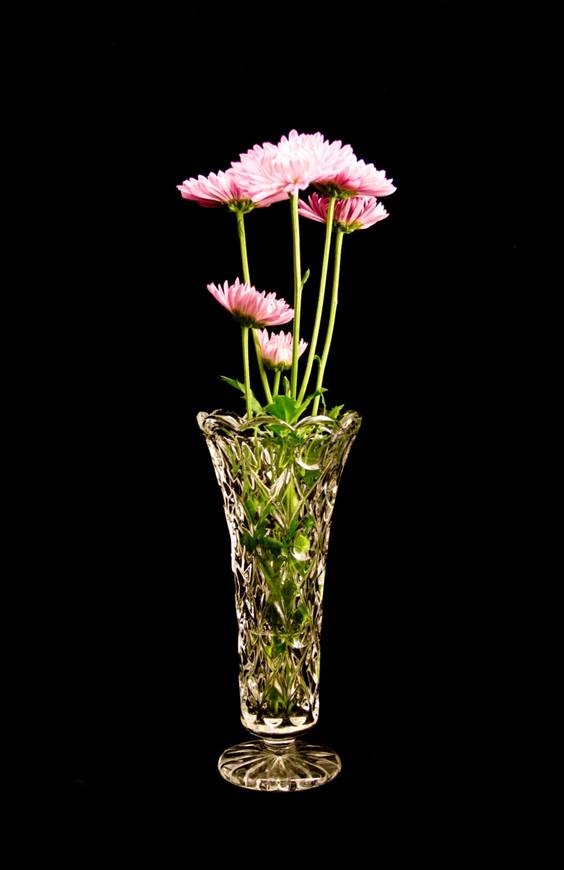
    If I take the time to reflect, I again realize that I have to root my identity in being God’s beloved. He has formed me as a beautiful crystal vase that reflects his light and glory. If I’m not receiving his love and affirmation, I might let the water inside the vase get stagnant or grey. But when I ask him to pour in his living water, he displaces all that is dirty and mucky. And in that vase he even places some gorgeous flowers from which waft his sweet fragrance.

    Do you feel at home in your skin? Why or why not? If not, what do you do to combat these feelings?

  • Weekly devotional: Mercy, not sacrifice (8 in Jesus’ miracles series)

    Going on from that place, he went into their synagogue, and a man with a shriveled hand was there. Looking for a reason to accuse Jesus, they asked him, “Is it lawful to heal on the Sabbath?” He said to them, “If any of you has a sheep and it falls into a pit on the Sabbath, will you not take hold of it and lift it out? How much more valuable is a human being than a sheep! Therefore it is lawful to do good on the Sabbath.” Then he said to the man, “Stretch out your hand.” So he stretched it out and it was completely restored, just as sound as the other. But the Pharisees went out and plotted how they might kill Jesus. (Matthew 12:9–14)

    800px-Christ_heals_tne_man_with_paralysed_handAs we move through Matthew’s gospel during this series on the miracles of Jesus, the clash between the Pharisees and Jesus intensifies. His claims and acts of authority incense the Pharisees. Seeking to trap him, they ask him about healing on the Sabbath and present to him a man with a withered hand. But Jesus again detects their secret thoughts. When he asks about a sheep falling into a pit, he refers to a long debate that the Pharisees were having about what was lawful on the Sabbath.

    Jesus shows how he is more concerned with mercy than empty ritual, and with human beings over animals. With one command he tells the man to stretch out his hand. The man had been a pawn of the Pharisees, but Jesus makes all things new.

    Of course, the Pharisees aren’t overjoyed. Instead of rejoicing that the man can now use his arm, they plot to kill Jesus. They were probably remembering how God restored Moses’ arm with one command (Exodus 4:6–7), realizing that Jesus with this action was claiming his Messiahship.

    Who are we most like in today’s passage? Jesus, blowing preconceptions and healing (and no, I’m not encouraging a Messiah-complex)? The man, argued over and yet restored? Or the experts in the law, who couldn’t overcome their prejudice to see the new work of God?

    For reflection: “‘I desire mercy, not sacrifice.’For I have not come to call the righteous, but sinners” (Matthew 9:13).

  • Review – Journey Into God’s Heart

    My version of Throwback Thursday is the very first book I featured in the Woman Alive book club, in July 2006! Back then I even wrote out discussion questions for each book – a labor of love. 

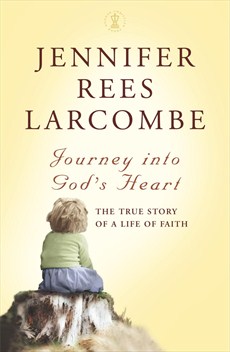
    Jennifer Rees Larcombe is a beloved figure in the Christian world. The daughter of well-known evangelists, she came to fame in the 1980s when she was dramatically healed following eight years confined to a wheelchair. She has told her story previously in several volumes, but this book brings the pieces together over her sixty years and is a deeper exploration of her journey into God’s heart.

    isbn9780340861578-detailJennifer’s life has not been easy, but it has been rich and glorifying to God. In just her early years, for example, she struggled with dyslexia, self-image problems and an eating disorder. After bearing her six children she had her years in a wheelchair and then the dramatic healing. And in her later years she has experienced tragedy and betrayal. But through it all she has never given up on God, nor lost her sense of humour. She may have cried out to him in gut-wrenching pain and endured periods of silence, but he has been her lifeline. In witnessing this real and gritty relationship, my faith was built up.

    Her book has so many topics to discuss – forgiveness, healing, the charismatic movement, intimacy with God, the power of prayer, being versus doing, spiritual warfare, self-hatred and self-acceptance, living in God’s presence and so on.

    Discussion Questions

    Here are some questions to get you thinking, responding and engaging:

    • What were your favourite parts of the book? Which episodes stand out most in your memory? How did you relate to Jennifer as you were reading? What have you taken away from her life story?
    • Early in her life, Jennifer made several vows. Positively, she vowed to know God intimately and journey deep into his heart (p. 10), but negatively, she vowed never to get angry (p. 33) and always to be ‘very very good’ (p. 47). How did these vows shape her life? How and when did she become conscious of them? What did she do to break the negative vows?
    • The journey into God’s heart for Jennifer has been filled not only with moments of joy and peace but also with times of pain, hurt and loneliness. In fact, she says in the first chapter (p. 12) that if she had known how hard the journey would be, she’s not sure she would have dared to make the vow. But she realizes that when our hearts are open by grief and loss we are most able to receive God’s love. Have you found this to be true? When have you felt closest to God?
    • Jen’s journey has also involved a lot of forgiveness – from Miss Mitchell to her parents to Tony. Some of her most painful memories were buried but were still affecting her daily life. Were you surprised that Jen needed to ask Miss Mitchell for forgiveness? And what do you think about her ‘stages of forgiveness’ (see pp. 58ff)? Does it make you think of old grudges you’re bearing or people you need to forgive?
    • After Jen’s amazing healing she faced many changes (see p. 204). Which ones were unexpected? Which ones were good, but hard? What losses did she face in becoming able-bodied?
    • A recurring theme in Jennifer’s book is the battle between her ‘Mary’ and ‘Martha’ sides – keeping a balance between being and doing (see for example pp. 116, 177 and 228). Discuss how she has coped with this tension over the years, and when and why one side dominated over the other. Is this a struggle you share?
    • At key turning points in Jennifer’s life she has sensed that the Lord has set before her some kind of choice (see pp. 140, 185 and 244). In each instance how did she react? What does the offering of these choices say about the character of God?
    • In chapter 10 Jennifer describes the heartbreaking collapse of her thirty-year marriage. Instead of making conjectures about what happened, recount how the Lord has become her husband and how her intimacy with him has deepened.

    jen_largeMy View

    I loved this book, and was deeply moved at so many points while reading it. Jen was brave to chronicle the hard bits in her life story as well as the glorious ones, for so often we can relate more closely to the times in the valleys than the mountaintop experiences. As with the other readers, I too struggled with the breakup of her marriage and wished it could have turned out differently. To be honest, I was angry on her behalf. But it was wonderful to see how God has used this painful experience in her life, drawing her closer to his heart.

    So good is this book that I’ll keep my underlined copy and in a few years read it again – not something I can say for all of the books I come across in my publishing work. Jen, we send our love and say thank you for your honesty!

    Journey Into God’s Heart by Jennifer Rees Larcombe (Hodder & Stoughton, ISBN 0340861576)

  • A mixed approach to hospitality

    We’re in a season of hospitality. When people ask us if they can come and stay, we say “Yes” as much as we can. Our vicarage is massive – and not technically ours – so we like to share this oasis in north London. Yes, in the winter it’s cold and the hot water runs out quickly, but we have the space to give our guests their own room, complete with sink and treadmill.

    300px-Angelsatmamre-trinity-rublev-1410Just yesterday, a friend said to me, “I don’t know how you do it.” But how do we do anything, really? We say yes, not knowing what challenges or joys may face us. We press through, perhaps with some groaning and complaining. We might even gossip, and then have to draw a line under the murmuring. We may offer hospitality with mixed motives or unclean hearts. Whenever do we offer God a completely pure offering? But he delights to receive our gifts.

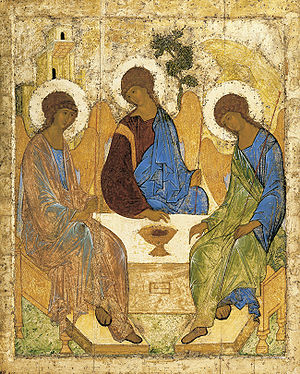
    This morning I looked at an upcoming Bible reading notes assignment: Genesis 18:1-15. Unlike my husband, I don’t have one of those brains that retains info – so it was only when I turned to the text that I said, “Ah, Abraham and the angels!” How delightful to write some devotionals on this text, in which Abraham welcomes three visitors, eagerly choosing a choice goat for their meal and asking Sarah to find the best flour for the bread. Many theologians believe the three men are angels who represent God the Father, God the Son, and God the Holy Spirit.

    During this visit, one of the men says that Sarah will give birth to a son. So unlikely that statement seems to her that she laughs (behind the man’s back, which she later denies). I’m not saying that they are given a son because they are hospitable and welcoming, but I find it interesting that this aged couple receive the promise of their heart’s desire when they open their hearts and lives, hosting strangers. And though Sarah isn’t the perfect host – laughing behind her guests back, after all – yet the guest blesses her.

    How might you open your heart and home today?

    Note 1: This passage inspired Andrei Rublev to paint his Holy Trinity icon around 1410. That’s another blog post or two – so many rich levels of meaning we find in a simple two-dimensional visual image.

    Note 2: Check out the riches on the topic of hospitality at Godspace.

  • Weekly devotional: A plentiful harvest (7 in Jesus’ miracles series)

    5733184848_405ac30c9f_zJesus went through all the towns and villages, teaching in their synagogues, proclaiming the good news of the kingdom and healing every disease and sickness. When he saw the crowds, he had compassion on them, because they were harassed and helpless, like sheep without a shepherd. Then he said to his disciples, “The harvest is plentiful but the workers are few. Ask the Lord of the harvest, therefore, to send out workers into his harvest field.” (Matthew 9:35–38)

    This week in our text we aren’t focusing on one particular miracle, as in past weeks, but rather we’ll look at one of the broad statements about Jesus’ ministry. As we see in Matthew’s gospel, he has come to teach, proclaim, and heal, his ministry fueled by his great compassion on the crowds who clamor to hear him speak and to receive his healing touch. The word in the Greek for compassion indicates a deep feeling in the gut, so strongly does Jesus feel for his people.

    Jesus longs to be their shepherd, a common picture in the Old Testament of God to his people. In doing so Jesus will provide protection and sustenance, meeting their voiced and unvoiced needs. He then changes the metaphor to another familiar one from the Hebrew Scriptures, telling his disciples that the harvest is ripe but more workers are needed.

    What is our role? One is prayer – “ask the Lord of the harvest.” So often we put prayer low on our list of priorities, sometimes by default due to the busyness of life. But for some amazing and mysterious reason, God wants to hear us cry out to him, and he acts on those prayers. As Lord Alfred Tennyson said, “More things are wrought by prayer than this world dreams of.”

    What would intentional prayer look like for you this week? Is someone coming to mind even as you read this, for whom you should pray and perhaps fast? Maybe you could turn on a timer to signal the hours, then pause for a moment and pray for that person. God delights in the cries of his people, however we choose to make them.

    For reflection: “Preach the Gospel always, and if necessary, use words.” St. Francis of Assisi

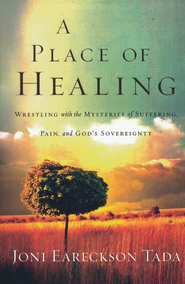
  • Review – A Place of Healing by Joni Eareckson Tada

    765320_w185When Joni was seventeen, she became paralyzed after a diving accident. The story of her accident and recovery became a bestselling book and film in the eighties, and she has been a disability advocate for decades. She has also written over thirty-five books, the latest of which concerns healing.

    Why does God heal? Why not? Will he heal if we have enough faith? This latter question is one that has been put to Joni by well-intentioned but misguided people, who have told her that she simply needs more faith to be healed. Her response is gracious but unwavering: “God reserves the right to heal or not … as He sees fit” (p. 41).

    Healing is something that Joni desperately longs for – although the healing that she has sought in recent years is freedom from chronic pain, and not so much a miraculous return to able-bodied movement. The pain can be unrelenting; for example, it can take over two hours each morning to get her stiffened body ready for the day. Here is one who writes with authority; healing is not an academic subject to her.

    She always points us back to God and his deep love for us. We don’t understand why he heals some and doesn’t heal others, but it’s up to him. I agree with her that God allowed and permitted her accident, but I struggle to affirm that “it was all planned long ago, and God brought it about in His perfect faithfulness” (p. 197). God allowed the accident, but is she here saying that he caused it (because he planned it)? On this side of heaven I don’t think any of us will decipher the mystery between what God allows and what he wills, so here I am content to take a slightly different position than Joni.

    Having endured forty years in a wheelchair, and now chronic pain and breast cancer, Joni is a trustworthy guide into the hard questions about healing. As she says, “Sharing about suffering is like giving a blood transfusion … infusing powerful, life-transforming truths into the spiritual veins of another.” Joni does this through her hard-fought words, penned during a battle with pain and weariness that not many of us will have to suffer. Through it all, she points to God’s sufficient love and grace, showing how God can redeem our pain. “But the beauty of being stripped down to the basics, sandblasted until we reach a place where we feel empty and helpless, is that God can fill us up with Himself. When pride and pettiness have been removed, God can fill us with ‘Christ in you, the hope of glory’” (p. 87).

    One to read and re-read, and to recommend to those dealing with suffering and pain.

    A Place of Healing: Wrestling with the Mysteries of Suffering, Pain, and God’s Sovereignty b;y Joni Eareckson Tada (David C Cook, ISBN978-1434702067)


  • Weekly devotional: Hope for the desperate (6 in Jesus’ miracles series)

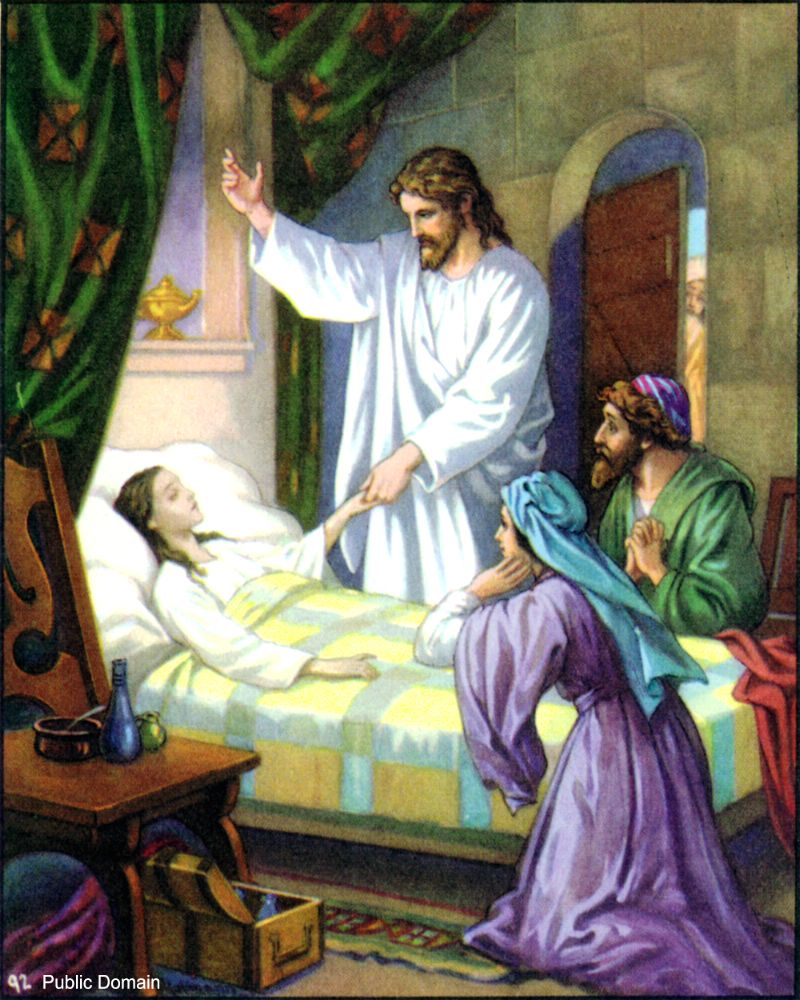
    A synagogue leader came and knelt before him and said, “My daughter has just died. But come and put your hand on her, and she will live.” Jesus got up and went with him, and so did his disciples. Just then a woman who had been subject to bleeding for twelve years came up behind him and touched the edge of his cloak. She said to herself, “If I only touch his cloak, I will be healed.” Jesus turned and saw her. “Take heart, daughter,” he said, “your faith has healed you.” And the woman was healed from that moment. When Jesus entered the synagogue leader’s house and saw the noisy crowd and people playing pipes, he said, “Go away. The girl is not dead but asleep.” But they laughed at him. After the crowd had been put outside, he went in and took the girl by the hand, and she got up (Matthew 9:18–25).

    Photo: pcstratman on flickr
    Photo: pcstratman on flickr

    Utterly desperate, a leader in the synagogue approaches Jesus for help because his daughter has died. Jesus agrees to go to his house, and as they do so a woman touches the hem of Jesus’ cloak, believing that her nonstop bleeding will stop. Jesus responds with compassion: the woman is healed; the girl was only asleep.

    Both situations were desperate. Jarius has tried everything but his daughter still died. But he holds out hope that this miracle man can save her. So too the woman who has been bleeding for a dozen years. That’s twelve years of being an outcast from her community, for the bleeding made her unclean. She had tried every type of medical cure available, to no avail.

    Jesus has compassion on those at the margins of society. He doesn’t penalize them for coming to him as a last resort but responds quickly and powerfully. His actions signal a new kingdom, one in which grace upon grace is poured on God’s children – all of God’s children, whether women, little girls, the blind or leprous, or the elite of society. May we enter into this grace this day.

    Prayer: Lord Jesus, help me to see those who might feel ostracized or lonely, and let me be your agent of love and grace.