When they came to the crowd, a man approached Jesus and knelt before him. “Lord, have mercy on my son,” he said. “He has seizures and is suffering greatly. He often falls into the fire or into the water. I brought him to your disciples, but they could not heal him.” “You unbelieving and perverse generation,” Jesus replied, “how long shall I stay with you? How long shall I put up with you? Bring the boy here to me.” Jesus rebuked the demon, and it came out of the boy, and he was healed from that moment. (Matthew 17:14–18)
A desperate father seeks the help of Jesus’ disciples but meets with frustration. We don’t know what the disciples were doing for the boy, but Jesus sees immediately their lack of faith. And this faithlessness is what Matthew wants to highlight in his gospel, for he again gives a sparse account in comparison with the other synoptic gospels.
I can feel this father’s pain, for it has been the burden of my own father (and mother). My brother has suffered from epilepsy since he was just three years old, and although my parents have sought healing from the Lord, my brother still has this disease. Why God heals at times and at other times does not is one of the biggest mysteries of our faith. I can only put it down to the fall of humanity, when our first parents chose their own way and thus sin, disease, and death entered the universe.
So in terms of my brother and this story, I believe that he is not demon-possessed but afflicted by our fallen nature. We ask God to heal and desire that he would do so. But when he does not we continue to ask him to increase our faith. And to give us the wisdom to know when to accept that healing may not come this side of heaven.
How about you? Have you pleaded with the Lord for something but your cries seemed to fall on deaf ears? May your trust in him continue to grow, and may he give you wisdom and understanding.
Prayer: Father God, we don’t always understand. Enlarge our grasp of your truth and your love, and give us your peace.
“Sometimes what we see as rejection is, in truth, sacrificial love.”
An interview with bestselling author Francine Rivers, who shares her heart for God and love for her readers. (Appeared originally in the June 2014 issue of Woman Alive.)
I thought being born into a Christian family and raised in the faith made me a Christian. It didn’t. Each person makes their own choice, and it took me years to surrender to Jesus – not until after I’d gone through college, married, had children and started a writing career. My husband Rick and I went to church, but came away dissatisfied and knowing there must be something more. We both had personal issues that brought us close to divorce several times. As a child, I’d asked Jesus to be my Savior. What I didn’t understand is I needed to surrender my life to Him and allow Him to be Lord of my life as well.
Studying the Bible changed our lives. Our hearts and minds opened to Christ. Rick and I both accepted Jesus as Savior and Lord and were baptized in May 1986. Since then, God has been changing our lives from the inside out. The Lord also healed our marriage – we recently celebrated our forty-fourth wedding anniversary.
From the time I was a child, I knew I would be a writer. On a dare from Rick, I decided to write a combination of my favourite genres and wrote a “western-gothic-romance.” Romance novels were booming in the general market, publishers were on the look-out for new writers. My first manuscript sold and was published. I was hooked! I followed with eight or nine more of what I call my B.C. (before Christ) books. They are all now out of print, are never to be reprinted, and are not recommended.
When I turned my life over to Jesus, I couldn’t write for three years. I tried, but nothing worked. I struggled against God because writing was my “identity.” It took that period of suffering writer’s block to bring me to my senses. God was trying to open my eyes to how writing had become an idol in my life. It was the place I ran to escape, the one area of my life where I thought I was in complete control. My priorities were all wrong and needed to be put right. God first, husband and children second and third, work. My love for writing and reading novels waned and my passion for reading and studying God’s Word grew.
Every year I go on a “pray, plot and play” retreat. There are eleven of us, all professional writers, one of whom is retired, in her nineties and no longer able to make the trip to Idaho. She is a mighty prayer warrior who served with her husband as a missionary in India. She remains an inspiration to us all. Our group always starts our daily session with a devotional presented by one of the members. We sing hymns. I can carry a tune, but three of our ladies have beautiful voices and could go on the road as professionals. I love to listen to the harmony; it’s a sweet taste of heaven. Our roundtable discussions and “twenty-question” plotting sessions have produced numerous published novels. We laugh a lot; cry together. We’re in constant contact through the year and support and encourage one another. All of us have faced or are facing major challenges: cancer, death of a spouse, children struggling with addictions, contracts and publishers, adopting children, moving from one state to another, caring for aging parents, writer’s block, loss of job, moving into a new publishing arena (online direct). We pray and pull together. We encourage and build up one another’s faith through whatever trials this life throws at us. And we keep writing stories to glorify our Lord and Savior, Jesus Christ.
A few years back, while in a writing competition, I saw the effect of the awards on a dear friend. She was happy I had received the award, but she longed for affirmation for her work. This writer had published far more novels than I had and is a wonderful writer. Seeing how hurt she was crushed me. Hence, I decided not to compete again. Why do we do it? We are one in Christ, and I don’t want anything to come in the way of that. And I don’t believe there is any such thing as a “best book” (unless it’s the Bible). If a novel or nonfiction work changes someone, encourages them, or opens their hearts to Christ, that is their best book of the year whether it sold ten copies or a million.
I don’t read reviews if I can avoid them. Good ones tend to stir pride and the bad ones crush the spirit, neither of which is good for my faith walk. Reviews are one person’s opinion. God is the one we want to please. I’m one of those people who would love to please everyone, so it’s better if I keep my audience to One. All I can do is put heart and soul into my work and leave what happens with it to Him.
I hope the stories I write will increase readers’ hunger and thirst for Jesus, and the characters will inspire them to be more like Him. It’s so easy to follow the ways of the world, to get sucked into following the herd rather than be among the flock. I want to encourage readers to trust in the Lord always and to remember only His Word is truth.
In Bridge to Haven, I wanted to explore how people can be bridges. Jesus is the ultimate bridge that takes us across the chasm over hell and into heaven to be in the presence of God. Each character in the novel plays a part as a bridge builder or bridge destroyer. Sometimes the characters begin as one and become the other.
The story started as an allegory about the character of God and Jesus, but how can anyone capture the immensity of God, His all-consuming love and passion for each of us? I certainly couldn’t. His love is so immense, cleansing, healing, restorative. It’s beyond human understanding. I dumped my first attempt and started over. In this rendition, two of the main characters, Zeke and Joshua, strive to be like Jesus, and often fail. The protagonist Abra represents those who turn away from the love offered, looking in all the wrong places for what they had from the beginning. It is a leap of faith to believe God’s grace is not earned, but freely given.
The Golden Years of Hollywood seemed to fit the story better than other eras. Many of the stars people idolized had miserable lives and tragic ends. I think of Marilyn Monroe in particular, who spent her life searching for love. James Dean, another Hollywood icon, died at 24 in a fiery car crash. Hollywood reeked of scandal; affairs, broken marriages, suicide, fortunes made and lost. It was also a time when girls believed all they had to do was show up in Hollywood to have all their dreams come true. Abra’s dream is to be loved, to be someone of importance. The challenge for me was interweaving the characters through World War II, the Korean War into the Cold War as well as a time of prosperity and showing how what happens in the world also impacts how we think, act and live. Only He is unchanging. Truth love and peace can’t be found anywhere else but in Him – in any era.
Children are deeply affected by early trauma. Abra focuses on the facts, believing she has been rejected by the only father she knew. She retaliates by rejecting him as well as the God he loves and serves. The seeds of bitterness and rebellion are planted at five, and Abra only sees through the eyes of a hurt child. This happens so often in life. What we see is only the surface. This was a theme in my two previous novels, Her Mother’s Hope and Her Daughter’s Dream. Sometimes what we see as rejection is, in truth, sacrificial love. It takes growing up and God’s intervention to bring truth, and for some that journey takes years and even deeper heartache before we fall to our knees and seek God’s perspective.
I was like Abra for many years. Despite the truth I was taught as a child, I took hold of a wrong view of God as a constant critical eye, a Being just waiting to condemn me to everlasting hell. When I turned to God, I felt like Paul when the scales fell away from his eyes. In a sense, I awakened and knew God loved me despite everything I had done and mistakenly believed. My stubborn pride had to be broken. There were always people around me who loved me and pointed the way to Jesus. That is true of everyone. God makes ambassadors and scatters them everywhere. When we open our hearts, usually out of desperation, God pours in His Holy Spirit and opens our eyes and ears to who He is and to those He has called to help us cross that bridge of faith God uses.
Before I started writing Redeeming Love, when I was still rather new at loving God with my whole heart, I got the idea to start using what I called a God Box – an inbox for God. I would write out prayers and put the papers into the God Box. This practice helped me to let go of the issues, to put them into God’s hands by physically putting them into the box. Every few months I would read the papers and marvel at how God had answered the prayers, often in unexpected ways.
What amazing things are our five grandchildren doing? Growing up! We have one grandson learning to drive and talking about joining the Air Force, another playing secondary-school basketball and winning spelling bees, and the youngest getting ready to enter kindergarten. One fourteen-year-old granddaughter is becoming a poised young woman and our eight-year-old granddaughter is one of two girls on a Christian basketball team and excelling in school. They’re all busy and happy and making their parents and grandparents proud (in a good way). The whole family was together at our place for Christmas Eve and the house was rocking!
“Trust in the Lord with all your heart; lean not on your own understanding. Acknowledge Him in all your ways, and He will make your path straight” (Proverbs 3:5-6). These are the Scriptures I go back to over and over again. The prince of the air has free run of this world, and he is the father of lies. Satan hates God and attacks Him by wounding and destroying His children. Even so, God reigns. Only God can take the worst we experience or bring on ourselves and use it to His good purpose in drawing us closer to Him as well as offering a light to others.
For me, trust has always been difficult. I trust and then I worry (doubt) and then, by submission and prayer, trust again. Our work is to believe and walk in faith one day at a time. And that is hard work at times. Some of us have to learn the hard way that life in this world is too painful to live any other way. Only in Christ do we have peace and a love that fills us up so much that we have a wellspring to pour out to others.
A Canaanite woman from that vicinity came to him, crying out, “Lord, Son of David, have mercy on me! My daughter is demon-possessed and suffering terribly.” Jesus did not answer a word. So his disciples came to him and urged him, “Send her away, for she keeps crying out after us.”He answered, “I was sent only to the lost sheep of Israel.” The woman came and knelt before him. “Lord, help me!” she said. He replied, “It is not right to take the children’s bread and toss it to the dogs.” “Yes it is, Lord,” she said. “Even the dogs eat the crumbs that fall from their master’s table.” Then Jesus said to her, “Woman, you have great faith! Your request is granted.” (Matthew 15:22–28)
Photo: Creative Commons, Waiting for the Word.
I struggle to understand why Jesus took so long to heal the poor woman’s daughter, and why he may have employed the Jewish derogatory term of “dogs” to describe the Gentiles. But as theologian Michael Green comments in The Message ofMatthew, we don’t know Jesus’ inflection or delivery of his words, for in the Greek, punctuation is inferred and not written. So Jesus could have been musing, asking the question if he was sent only to Israel. As Green says, “I believe this was a soliloquy of Jesus” (p. 172).
However we interpret it, we know that Jesus’ first mission is to save Israel. His actions here tell us, however, that he doesn’t limit his grace. As with the Roman centurion who sought healing for his servant, Jesus admires this woman’s faith and tenacity, and heals her daughter.
The early church would have been encouraged by this encounter, for it shows how amazed Jesus was by a Gentile’s faith. The story would have also served as a warning to those in Israel who were complacent in their privileged status. What Jesus yearns for, as we see here, is great faith.
Passages like this remind us that as much as we’d sometimes like to put Jesus into a neat and tidy box, we simply cannot. But we can follow the example of the Gentile woman, who was motivated by her maternal love and persevered in seeking healing for her daughter. And we can trust that God’s love and mercy is sufficient – whatever our ethnicity, race or tribe.
Prayer: Lord, thank you for the tenacity of this mother and your loving response. Help us to hold on to you, as you hold on to us. Amen.
When, some years ago, one of my former roommates got married, I went on honeymoon with the newly married couple. And, being directionally challenged, got the bride lost.
A group of friends met at Liz and Ed’s wedding. As so many of us were from out of town, the newlyweds invited us to join them for a couple of days of their honeymoon. Although they were keen to start their new life together, they wanted to enjoy their friends after the frenetic lead-up to the wedding.
Photo credit: JD Thomas, Creative Commons
And so a bunch of us decided to head over to the condo they were renting in the mountains for a few days of skiing and relaxing in the hot tub. Ed graciously let Liz come in my car, so we could have some girl-time together, and said I could follow him. Liz and I were chatting and talking through who danced with whom at the wedding when we slowed down at a stop sign. The sun was in my eyes but I saw Ed’s blue car turn right and take off quickly. I put my foot on the pedal, wondering why he was going so fast.
We followed the blue car for over an hour, me wondering silently why Ed was making it so hard for me to keep up with him. Finally I asked Liz why she thought he was going so fast. She couldn’t figure it out either.
I sped up, trying to close the gap between the cars.
Liz said, “Amy! That’s not Ed’s car!”
My stomach dropped and I wondered what I had gotten us into. “Oh man. I knew I was bad with directions, but I never thought I’d follow the wrong car!”
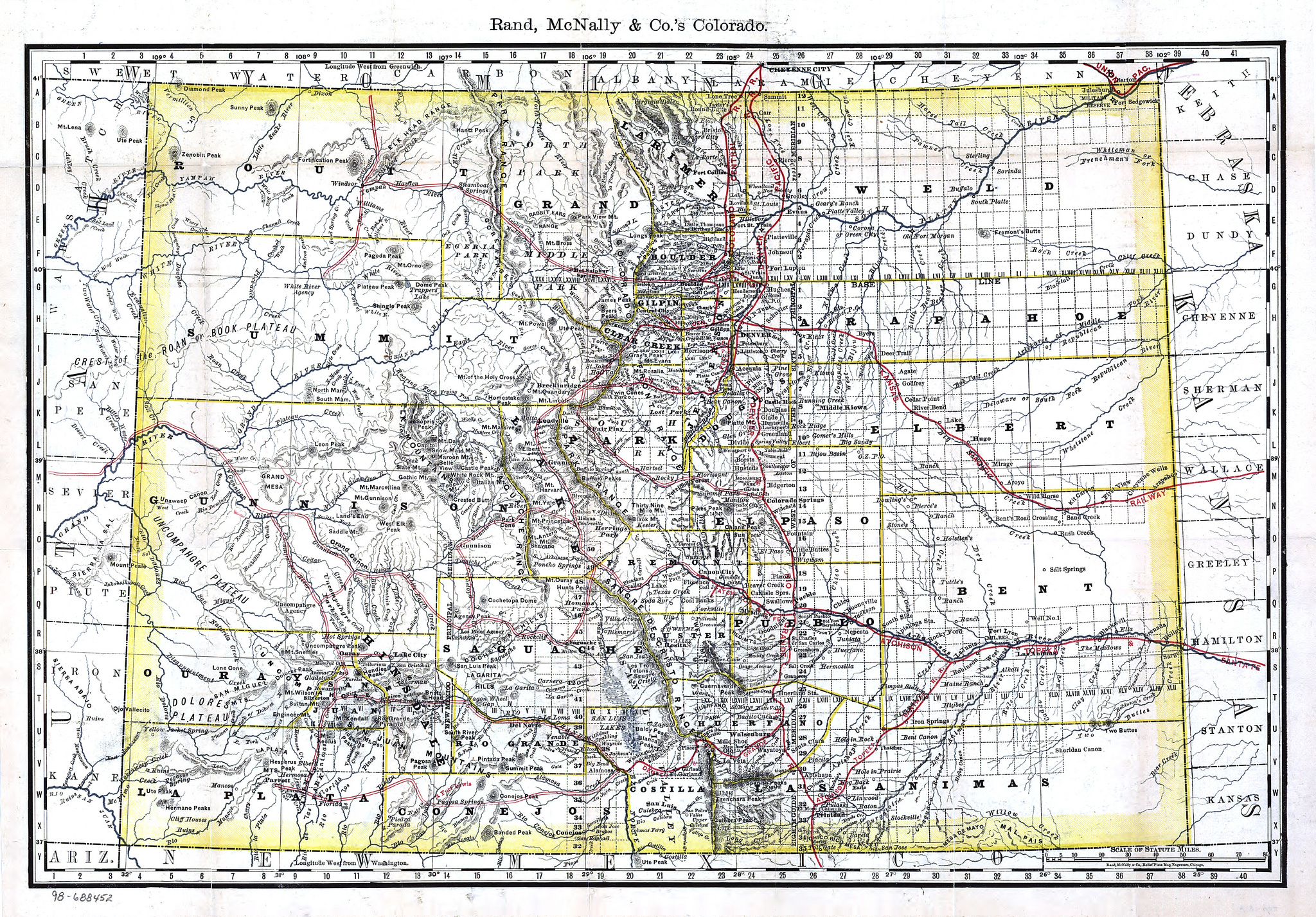
We slowed down and stopped in Cripple Creek, finding a restaurant with a pay phone to try to let him know where we were – this was way before mobile phones were invented. I felt so bad that I kept saying sorry, until I realized that my profuse apologies were probably beginning to annoy Liz.
After making some phone calls to tell friends whom Ed might call, we figured out where we where and realized I had driven us completely in the wrong direction. We now had to backtrack the sixty miles, plus drive the next hundred miles we always had in front of us. But at least now Ed would know that I hadn’t intentionally stolen his bride.
When we finally met up with Ed and the other friends, I was exhausted and burst into tears. After calming down, we all were able to laugh about the incident and my stupidity. For in a moment of blindness, I followed the wrong car and got seriously off-track.
Last year right about now, I was frantically getting the vicarage ready for a house swap. The four of us were headed to Minnesota, to the land of my people – yes, where “all the women are strong, all the men are good looking, and all the children are above average” in Garrison Keillor’s memorable words. A British family, who have settled in Minnesota, were coming here to London, and we were taking over their home, which is (amazingly) only a couple of miles from my parents’ house.
Entering someone else’s setting for a week or two can feel surreal. The friend whom I swapped with and I chatted back and forth on a social-media site during the early days, comparing US versus UK ways of doing things, and both of us, I think, having a sense of, “This could be my life.” In fact, I so hadn’t emotionally disengaged from life in London that at first it felt difficult to stop the conversation. Then one morning I realized in prayer that I needed to be present where I was – and why wouldn’t I want to be? I had longed for this space to see family and friends again, and to experience the joys of things like amazing plumbing and Target. And I needed to bless my friend and let her get on with her time in the UK.
The kids loved so much about living in someone else’s home for two weeks. CutiePyeGirl was thrilled that they had two girls; PyelotBoy not fussed, understandably. One of the kids’ favorite things each day was running across the (not busy) street to get the mail out of the mailbox. A novelty, to be sure.
Can you imagine what your life might look like if you changed places with someone living a similar sort of life (similar job; similar ministry), but in a different country? Not an exercise to get hung up on, for the reminder to me is to give thanks for the life I do have. Especially as today in London the sun is shining.
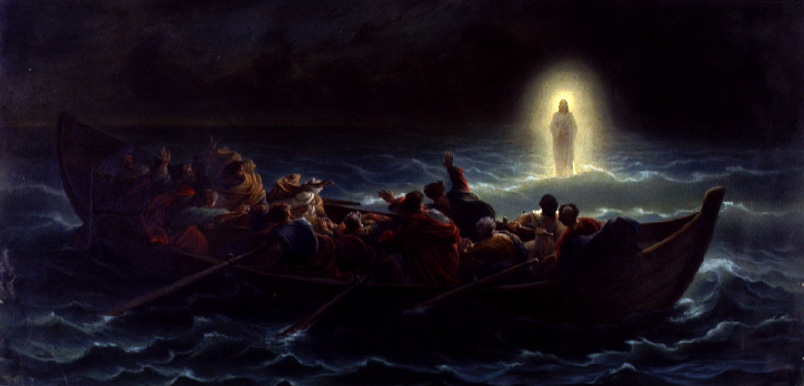
Shortly before dawn Jesus went out to them, walking on the lake. When the disciples saw him walking on the lake, they were terrified. “It’s a ghost,” they said, and cried out in fear. But Jesus immediately said to them: “Take courage! It is I. Don’t be afraid.” “Lord, if it’s you,” Peter replied, “tell me to come to you on the water.” “Come,” he said. Then Peter got down out of the boat, walked on the water and came toward Jesus. But when he saw the wind, he was afraid and, beginning to sink, cried out, “Lord, save me!” Immediately Jesus reached out his hand and caught him. (Matthew 14:25–31)
Painting by Amédée Varint; Creative Commons
Having just fed a hungry crowd of five thousand after a day of teaching, Jesus was exhausted. He sent the disciples to find shelter on the other side of the lake while he went to pray. But the disciples encounter a squall and spend much of the night trying to cross the lake. Whereas Jesus was in the boat when a storm arose previously, this time they are on their own. But by now they know that Jesus is interceding for them, and will come to them.
And he does so in a miraculous way, walking on the water. The disciples are depleted from the day’s ministry and a night of slapping on the waves; in their exhaustion they wonder if they’ve seen an apparition. But Jesus reassures them, and his “It is I” could hearken back to Yahweh’s statement of “I am” from the Hebrew scriptures.
Then Peter asks to walk to Jesus. Jesus commands him to come, and – amazingly – he does. Only when he takes his eyes off Jesus does he realize that this isn’t normal. Then he starts to sinks, but knows immediately to cry out to Jesus for help.
The feeding of the multitude and the amazing aqua balancing act bring forth a unified response from the disciples: “Truly you are the Son of God” (v. 33). Likewise, may we give him the authority and rule in our lives, turning to him when we are exhausted or sinking – or when we are flying high.
Prayer: “I do believe; help me overcome my unbelief!” (Mark 9:24)
A line in a novel recently jumped off the page: “The people were pleasant enough, but Beth had felt judged in a thousand subtle ways, simply for wanting to be herself” (in Forbidden by Claire Wright with GP Taylor).
Have you ever felt like that? Like you’re just that bit different than the “in” crowd? Or when you walk into a crowded room boasting a lot of unknown faces, you wonder whether you’ll be accepted or whom you’ll talk to?
I have. But then I’m an introvert, and I haven’t always felt at home in my skin. I’ll probably always have to take a deep breath before entering new social or work situations. If I let the fear of the unknown get to me, I could easily descend into the muck of feeling like I’m the sad loner without friends. So, if I remember, I affirm a few truths with a simple breathing exercise. As I inhale deeply, I tell myself that I’ve been made in the image of God, and that through his Holy Spirit he dwells inside me. Then as I exhale, I shoot up an arrow prayer that God would lead me to just the right people to talk with – perhaps those who might be feeling on the edge of things themselves.
That simple exercise reorients me, and I feel like I’ve put on a pair of God-infused glasses. All of the sudden I can see others as God’s amazing creations and I want to know more about them: what makes them tick; what they’re passionate about; how they find meaning. As the evening progresses, my smile grows and I may hear some astounding stories. All from stepping away from fear and stepping into the woman God created me to be.
Of course, we live in an imperfect world, and sometimes the evening ends with me wondering why I didn’t have many God-encounters. Or why I still felt self-conscious, like I am watching myself from the outside. Or in the words of Forbidden, that novel I mentioned, “People just didn’t ‘get’ her. Rich hadn’t understood that part, but of course, he wouldn’t. His face already fitted.”
If I take the time to reflect, I again realize that I have to root my identity in being God’s beloved. He has formed me as a beautiful crystal vase that reflects his light and glory. If I’m not receiving his love and affirmation, I might let the water inside the vase get stagnant or grey. But when I ask him to pour in his living water, he displaces all that is dirty and mucky. And in that vase he even places some gorgeous flowers from which waft his sweet fragrance.
Do you feel at home in your skin? Why or why not? If not, what do you do to combat these feelings?
Going on from that place, he went into their synagogue, and a man with a shriveled hand was there. Looking for a reason to accuse Jesus, they asked him, “Is it lawful to heal on the Sabbath?” He said to them, “If any of you has a sheep and it falls into a pit on the Sabbath, will you not take hold of it and lift it out? How much more valuable is a human being than a sheep! Therefore it is lawful to do good on the Sabbath.” Then he said to the man, “Stretch out your hand.” So he stretched it out and it was completely restored, just as sound as the other. But the Pharisees went out and plotted how they might kill Jesus. (Matthew 12:9–14)
As we move through Matthew’s gospel during this series on the miracles of Jesus, the clash between the Pharisees and Jesus intensifies. His claims and acts of authority incense the Pharisees. Seeking to trap him, they ask him about healing on the Sabbath and present to him a man with a withered hand. But Jesus again detects their secret thoughts. When he asks about a sheep falling into a pit, he refers to a long debate that the Pharisees were having about what was lawful on the Sabbath.
Jesus shows how he is more concerned with mercy than empty ritual, and with human beings over animals. With one command he tells the man to stretch out his hand. The man had been a pawn of the Pharisees, but Jesus makes all things new.
Of course, the Pharisees aren’t overjoyed. Instead of rejoicing that the man can now use his arm, they plot to kill Jesus. They were probably remembering how God restored Moses’ arm with one command (Exodus 4:6–7), realizing that Jesus with this action was claiming his Messiahship.
Who are we most like in today’s passage? Jesus, blowing preconceptions and healing (and no, I’m not encouraging a Messiah-complex)? The man, argued over and yet restored? Or the experts in the law, who couldn’t overcome their prejudice to see the new work of God?
For reflection: “‘I desire mercy, not sacrifice.’For I have not come to call the righteous, but sinners” (Matthew 9:13).
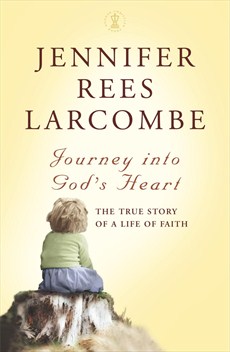
My version of Throwback Thursday is the very first book I featured in the Woman Alive book club, in July 2006! Back then I even wrote out discussion questions for each book – a labor of love.
Jennifer Rees Larcombe is a beloved figure in the Christian world. The daughter of well-known evangelists, she came to fame in the 1980s when she was dramatically healed following eight years confined to a wheelchair. She has told her story previously in several volumes, but this book brings the pieces together over her sixty years and is a deeper exploration of her journey into God’s heart.
Jennifer’s life has not been easy, but it has been rich and glorifying to God. In just her early years, for example, she struggled with dyslexia, self-image problems and an eating disorder. After bearing her six children she had her years in a wheelchair and then the dramatic healing. And in her later years she has experienced tragedy and betrayal. But through it all she has never given up on God, nor lost her sense of humour. She may have cried out to him in gut-wrenching pain and endured periods of silence, but he has been her lifeline. In witnessing this real and gritty relationship, my faith was built up.
Her book has so many topics to discuss – forgiveness, healing, the charismatic movement, intimacy with God, the power of prayer, being versus doing, spiritual warfare, self-hatred and self-acceptance, living in God’s presence and so on.
Discussion Questions
Here are some questions to get you thinking, responding and engaging:
What were your favourite parts of the book? Which episodes stand out most in your memory? How did you relate to Jennifer as you were reading? What have you taken away from her life story?
Early in her life, Jennifer made several vows. Positively, she vowed to know God intimately and journey deep into his heart (p. 10), but negatively, she vowed never to get angry (p. 33) and always to be ‘very very good’ (p. 47). How did these vows shape her life? How and when did she become conscious of them? What did she do to break the negative vows?
The journey into God’s heart for Jennifer has been filled not only with moments of joy and peace but also with times of pain, hurt and loneliness. In fact, she says in the first chapter (p. 12) that if she had known how hard the journey would be, she’s not sure she would have dared to make the vow. But she realizes that when our hearts are open by grief and loss we are most able to receive God’s love. Have you found this to be true? When have you felt closest to God?
Jen’s journey has also involved a lot of forgiveness – from Miss Mitchell to her parents to Tony. Some of her most painful memories were buried but were still affecting her daily life. Were you surprised that Jen needed to ask Miss Mitchell for forgiveness? And what do you think about her ‘stages of forgiveness’ (see pp. 58ff)? Does it make you think of old grudges you’re bearing or people you need to forgive?
After Jen’s amazing healing she faced many changes (see p. 204). Which ones were unexpected? Which ones were good, but hard? What losses did she face in becoming able-bodied?
A recurring theme in Jennifer’s book is the battle between her ‘Mary’ and ‘Martha’ sides – keeping a balance between being and doing (see for example pp. 116, 177 and 228). Discuss how she has coped with this tension over the years, and when and why one side dominated over the other. Is this a struggle you share?
At key turning points in Jennifer’s life she has sensed that the Lord has set before her some kind of choice (see pp. 140, 185 and 244). In each instance how did she react? What does the offering of these choices say about the character of God?
In chapter 10 Jennifer describes the heartbreaking collapse of her thirty-year marriage. Instead of making conjectures about what happened, recount how the Lord has become her husband and how her intimacy with him has deepened.
My View
I loved this book, and was deeply moved at so many points while reading it. Jen was brave to chronicle the hard bits in her life story as well as the glorious ones, for so often we can relate more closely to the times in the valleys than the mountaintop experiences. As with the other readers, I too struggled with the breakup of her marriage and wished it could have turned out differently. To be honest, I was angry on her behalf. But it was wonderful to see how God has used this painful experience in her life, drawing her closer to his heart.
So good is this book that I’ll keep my underlined copy and in a few years read it again – not something I can say for all of the books I come across in my publishing work. Jen, we send our love and say thank you for your honesty!
Journey Into God’s Heart by Jennifer Rees Larcombe (Hodder & Stoughton, ISBN 0340861576)
We’re in a season of hospitality. When people ask us if they can come and stay, we say “Yes” as much as we can. Our vicarage is massive – and not technically ours – so we like to share this oasis in north London. Yes, in the winter it’s cold and the hot water runs out quickly, but we have the space to give our guests their own room, complete with sink and treadmill.
Just yesterday, a friend said to me, “I don’t know how you do it.” But how do we do anything, really? We say yes, not knowing what challenges or joys may face us. We press through, perhaps with some groaning and complaining. We might even gossip, and then have to draw a line under the murmuring. We may offer hospitality with mixed motives or unclean hearts. Whenever do we offer God a completely pure offering? But he delights to receive our gifts.
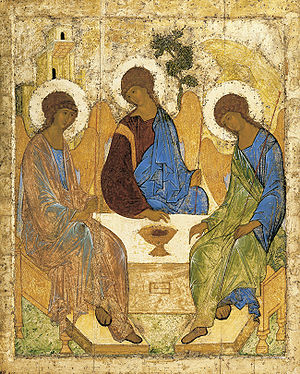
This morning I looked at an upcoming Bible reading notes assignment: Genesis 18:1-15. Unlike my husband, I don’t have one of those brains that retains info – so it was only when I turned to the text that I said, “Ah, Abraham and the angels!” How delightful to write some devotionals on this text, in which Abraham welcomes three visitors, eagerly choosing a choice goat for their meal and asking Sarah to find the best flour for the bread. Many theologians believe the three men are angels who represent God the Father, God the Son, and God the Holy Spirit.
During this visit, one of the men says that Sarah will give birth to a son. So unlikely that statement seems to her that she laughs (behind the man’s back, which she later denies). I’m not saying that they are given a son because they are hospitable and welcoming, but I find it interesting that this aged couple receive the promise of their heart’s desire when they open their hearts and lives, hosting strangers. And though Sarah isn’t the perfect host – laughing behind her guests back, after all – yet the guest blesses her.
How might you open your heart and home today?
Note 1: This passage inspired Andrei Rublev to paint his Holy Trinity icon around 1410. That’s another blog post or two – so many rich levels of meaning we find in a simple two-dimensional visual image.
Note 2: Check out the riches on the topic of hospitality at Godspace.
 A desperate father seeks the help of Jesus’ disciples but meets with frustration. We don’t know what the disciples were doing for the boy, but Jesus sees immediately their lack of faith. And this faithlessness is what Matthew wants to highlight in his gospel, for he again gives a sparse account in comparison with the other synoptic gospels.