Have you chosen a word for 2016 yet? Or to be more precise, has a word chosen you? (See here for background on this movement; I also write about this practice and my New Year’s spiritual traditions in Finding Myself in Britain.)
When I’ve mentioned this practice of holding one word before ourselves for a year, the question often posed to me is, “How do you know what word to choose?” with the subtext of, “How can I hear from God?”
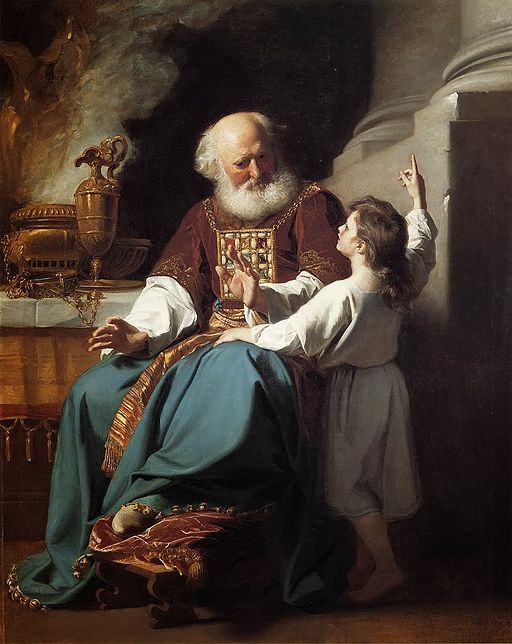
Eli and Samuel, from the well-known story in the Old Testament about Samuel hearing God while in the temple. The Lord was speaking, but Samuel didn’t know it was him. Painting by John Singleton Copley.
Huge topic, with many a book written on it – I like Dallas Willard’s Hearing God and Leanne Payne’s Listening Prayer in particular, but Bill Hybels’s The Power of a Whisper is good too, and Pete Greig’s God on Mute is the best book on unanswered prayer. Here’s a story I told about hearing God – a couple decades into my quest to communicate with our Creator, I’m still learning.
So in the case of hearing from God when choosing a word for the year, how can we know? What can we do? Here are some short pointers from my experience, but know that hearing God is an individual thing, and what works for one person may feel like a deadend for another.
Ask
It’s obvious, but sometimes we forget to do the first thing. Quiet yourself and specifically ask God to give you a word for the year. He loves to communicate with his children, so we shouldn’t therefore be surprised when we do hear from him. He also loves for us to voice our desires.
Wait
God is God and we are not – which means we can’t demand an answer right now like a petulant child and expect him to jump to it. (Sometimes he does respond to our demands, of course, just as sometimes parents out of love give an answer right away to children-with-attitudes.) Waiting teaches us humility and patience.
Expect
Trusting that God will speak to us helps as we wait, and keeping an expectant disposition also keeps us alert – watching, noticing, hoping. Having a posture of receiving opens us up to God’s word for us.
Receive
We might be reading Scripture when a word pops out to us that we can’t ignore, or perhaps we experience a few days of the same concept coming up again and again – ever had that? A lyric from a song might loop through our minds without stopping. We might sense a whisper from the Lord, that still, small voice that through time we recognize as God’s.
Test
A key part in the process is to hold your word once you think you have it, testing it out to see if the Lord confirms it. Often I have a sense that what I’ve chosen is right – I don’t have a clear, “Yes, Amy, this is your word for the year” kind of a revelation. Talking with trusted friends helps in the testing process as well.
New year; new devotional series! Welcome as we delve into what it means to be a pilgrim, which is part of our calling as disciples of Christ. As pilgrims we live within the tension of “already, but not yet,” for although we have our redemption through Jesus’ sacrificial death on the cross, we do not yet inhabit our heavenly bodies. The reminders of our fallen nature surround us – the unrest of disaffected youth, spats between siblings, our own pride and arrogance. And yet… We see glimpses of God’s glory every day: An awe-inspiring sunset. A grieving parent who reaches out to the friends of her dead son. A smile between strangers.
Living within the tension of being redeemed from our sins yet still sinful reminds us of our pilgrim status. We are always journeying to either life or death, the new self or the old self. God through his Son and Spirit reaches out to us, calling us to be empowered by his grace, truth and love. Our journey involves responding, stepping forth each day as we claim our status as God’s beloved and God’s pilgrim.
Scripture is filled with examples of pilgrims. Often the heroes of our faith embarked on a physical journey, leaving the familiar to follow God’s call. One example in the Old Testament is the Israelites’ exile and journey to the Promised Land – and all the wandering in between. Before that was Abram who was called to leave his people and his place. In the New Testament, Jesus himself exemplifies the life of the pilgrim, not least through being born just after his traveling parents found shelter in a cave.
We’ll explore the concept of pilgrimage through some of the biblical characters who were living in a state of “already but not yet.” Although pilgrimage is usually the act of going to a special or holy place, sometimes it involves setting off across the world to an unknown destination. Perhaps, even, never to return to one’s original home. And ultimately we as Christians are all journeying to that home that will set the gold standard for what home means – heaven.
Craggy rocks and rugged landscape – the West Coast of Ireland amazes with its beauty. Yes, I’d be a pilgrim there!
The Lord had said to Abram, “Go from your country, your people and your father’s household to the land I will show you. I will make you into a great nation, and I will bless you; I will make your name great, and you will be a blessing. I will bless those who bless you, and whoever curses you I will curse; and all peoples on earth will be blessed through you.” So Abram went, as the Lord had told him… (Genesis 12:1–4).
This week’s text is one of the early instances in the Bible of God’s covenants with his people. God gives Abram and Sarai a big task. Namely, to renounce their ties to their families, land, and inheritance, while trusting that God will bless them.
Humanly, what God is asking seems incredible, especially as we learn in Genesis 11:30 that Sarai is barren. Thus for Abram and Sarai, becoming pilgrims entails a huge amount of faith. For not only does Abram not have an heir, but by leaving his family he will be leaving behind his earthly inheritance. He won’t be caring for elderly parents or passing on the household goods to the next generation. And from the point of view of his new countrypeople, his identity will be that of foreigner and stranger.
Reading on in Genesis, we see that Abraham and Sarah heed God’s call, and in turn God fulfills his promise to make Abraham’s name great and to give him as many descendants as there are stars. God’s blessings more than overcome the sacrifices he required of Abraham and Sarah. But he did ask them to step out in faith.
God might not be asking us to leave our home and land. But even if we stay in the village or city in which we were born, he seeks in us a pliable heart; a willingness to follow him. Whether we stay or go, we can live the paradox highlighted by Jim Elliot, the missionary murdered in 1956, in his journal:
“He is no fool who gives what he cannot keep to gain what he cannot lose.”
For reflection: “Let us hold unswervingly to the hope we profess, for he who promised is faithful” (Hebrews 10:23).
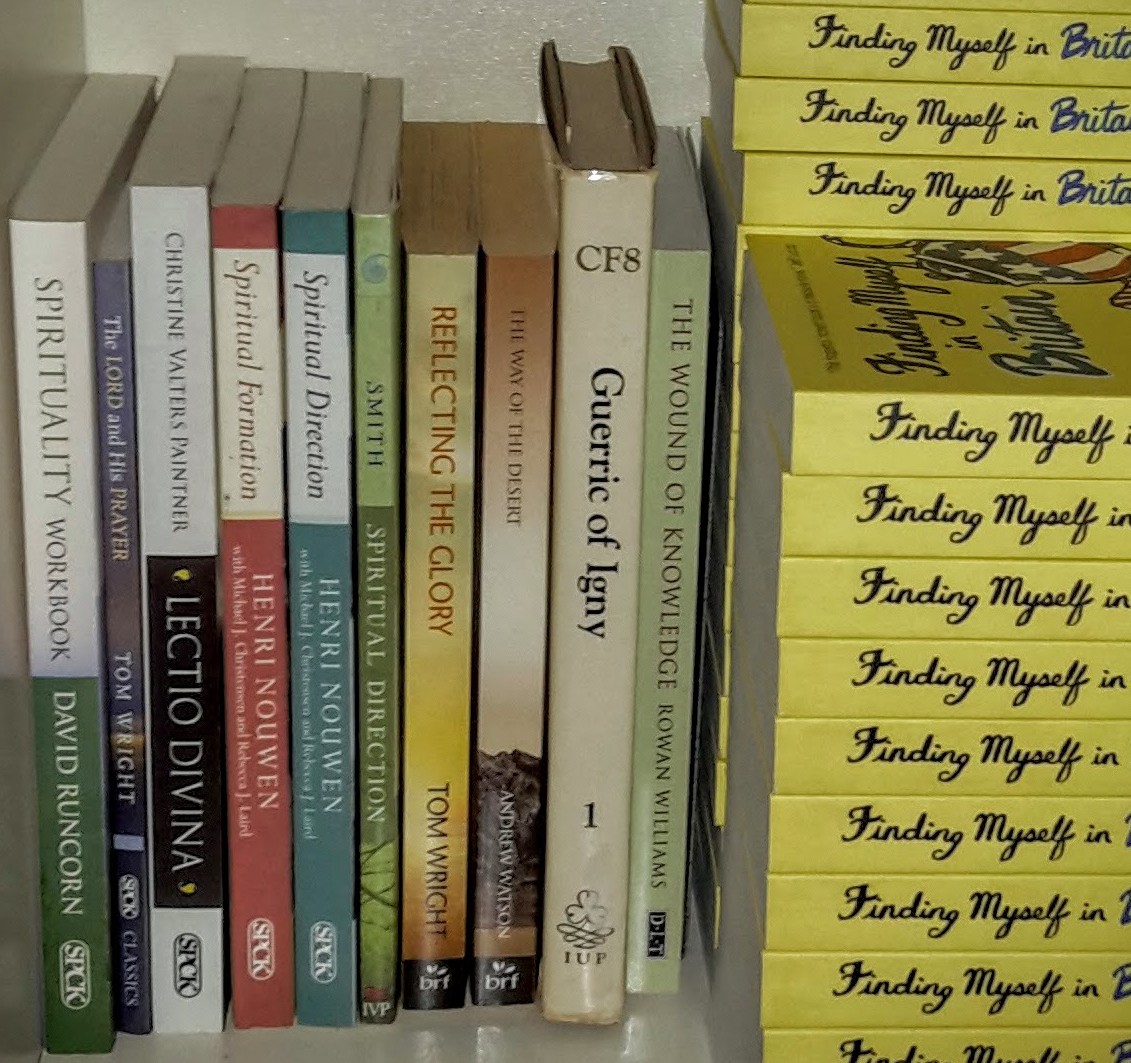
Books on spirituality next to some of mine waiting to find new homes.
Last year, inspired by Sheridan Voysey’s list of books he’d read in 2014, I started to note what I was reading on a spreadsheet. I was fine in the early months of duly recording each book, not only for my local book club but for the Woman Alive book club I run and the freelance work I was doing for Authentic Media as a commissioning editor. And the books I read for pleasure, of course.
The first book I noted was The Hundred-Year-Old Man Who Climbed Out of the Window and Disappearedby Jonas Jonasson, which my local book group chose. I noted, “Quirky and fun. Enjoyed suspending the disbelief, although others in my group didn’t. A sort of Swedish Forrest Gump.” Then came Scary Close by Don Miller, which I didn’t love, as I said in my review for the Woman Alive book club, reposted here on my blog.
I kept up the practice for the first four months or so but in the early summer I realized I had let it lapse. Wracking my brains for books read, I pretty much caught up. But now when I look at the date of when I last changed the document, it reads July. Hey ho.
I read a lot of books. I’m not going to say how many, because I’ve learned a wee bit of British understatement and self-deprecation in my years here. And also because my experiment failed and I don’t honestly know how many I’ve read. Some I skim, and does that count? Some I’ve read chapters from here and there. Some I start and they remain unfinished, piled by my side of the bed or in my study. Many I’m now reading for my master’s in Christian spirituality, and for the BRF 2017 Lent book I’m writing on forgiveness.
Books on forgiveness for The Living Cross, my 2017 BRF Lent book. And yes, for some bookshelves I double stack.Vulnerability alert! The unedited pile by my side of the bed this morning. Bible – points for that? Mother & Baby – no, no immaculate conceptions to report at this age; CutiePyeGirl was reading it. 84 Charing Cross Road – a fab gift from my editor that I will blog about soon. The Miniaturist, next for my local book club; I wolfed it down and enjoyed it but didn’t love it. Some Advent books. Hidden in there is Three Men in a Boat, which I just couldn’t get on with; odd British humor? A book on forgiveness; some mysticism (that’s an excellent introduction, by the way, and one to go for if you’re wondering what to choose) a journal hiding from under the Kleenex box; a novel by Kate Charles highly recommended to me; a classic on writing by Stephen King; Essentialism by Greg McKeown which I benefited from. And more that I really should declutter.
So I don’t have a “Best Books of 2015” list to share with you. I was, however, asked by a friend who runs a large UK Christian conference/festival which books they should stock for their bookstall. Below is how I responded, although as I post I do so with a bit of trepidation. I wrote the list fast and now as I post it, I’m correcting several of the titles and spellings of an author’s name. I’m aware I may offend authors whose books aren’t listed, such as any and all British fiction writers – oh dear! And I know that I’ve missed off books I should have included, such as Sheridan Voysey’s fine memoir exploring broken dreams, Resurrection Year. My apologies indeed.
Some of the books exploring spirituality that I’ve been delving into lately.
I acknowledge that this list has its faults and its biases, but I offer you some great books from 2015 and a few published earlier.
Christian living
Hidden in Christ by James Bryan Smith. Best devotional out there on Colossians 3. Puts the themes developed by Dallas Willard into a daily devotional.
Embracing the Body by Tara Owens. A fantastic look at our bodies by a spiritual director – why they are necessary; why do we sometimes hate them, etc. The best on the subject that I’ve seen.
Dark Night of the Shed by Nick Page. I found myself recommending this quirky book for men to the Woman Alive book club!
Why? by Sharon Dirckx. On the question of suffering from one who has suffered. I haven’t actually read this one but have heard many good things about it. Of course the best book on unanswered prayer remains God on Mute by Pete Greig.
Fool’s Talk by Os Guinness. Apologetics for the thinking person. His magnus opus on the subject.
John Ortberg. He’s usually got something good to say, although some people are put off by his quirks. I liked his Soul Keeping.
Christian fiction
Francine Rivers – any and all but especially Redeeming Love. Many in the Woman Alive book club women adore her; she’s not to everyone’s taste but her writing is deep, biblical, and emotional.
Sharon Brown – Sensible Shoes and Two Steps Forward. Fantastic to have the spiritual disciplines put into readable fiction. Top choice.
Katharine Swartz – Lion (The Vicar’s Wife and The Lost Garden). Evocative but not a whole lot of explicitly Christian content.
Julie Klassen – writes British historical fiction. She has a fantastic imagination and an ability to draw rich characters with a strong element of suspense.
Katherine Reay – Dear Mr Knightleyand others. Great modern writing inspired by classic texts.
Rachel Hauck – a great writer of Christian romance that uplifts and inspires.
Cynthia Ruchti – her novels are deep and thought-provoking on real-life (and tough) subjects – a woman’s husband gets out of jail and her choice is rebuilding their life or not, for instance.
Hiding in the Light by Rifqa Bary – compelling story of a Muslim girl who meets Jesus.
Anne of Green Gables, My Daughter & Me by Lorilee Craker – crackingly good read about a well-loved novel and adoption – but good for anyone, adopted or not.
Wherever the River Runs by Kelly Minter – fantastic account by an American of the man known as John Pac, the British Christian music/publishing genius whose heart was captured by the Amazon.
Finding Myself in Britain by Amy Boucher Pye – shameless promotion! A through-the-look at life in Britain by a stranger-turned-friend highlighting themes of home, identity and faith. Called Michele Guinness meets Bill Bryson.
Books I Commissioned (believed in so much as to spend months on them)
Digging for Diamonds by Cathy Madavan. She’s no stranger to you [the Christian conference I wrote this list for]. Pure gold.
How to Like Paul Again by Conrad Gempf. An academic who can write to the masses. So good on the genius of the Apostle Paul and how to read his letters in context.
Life Lines by Debbie Duncan and Cathy LeFeurve. The importance of friendship in fiction form.
More of the spirituality books.A sampling of some of the latest review books. Yes, the NIV study Bible was a score big moment! You can see why I recently decluttered over 300 books. It’s painful to get rid of them, but doesn’t make sense to keep books when others could be enjoying them.
As we ring in the new year, may you know God’s love, peace, and joy. May you be held and supported through the hard times and have friends and family to share the laughter and joy of the good times. May you look forward to new challenges and experiences in the year to come as you live in each moment.
“…and they will call him Immanuel” (which means “God with us”). When Joseph woke up, he did what the angel of the Lord had commanded him and took Mary home as his wife. But he had no union with her until she gave birth to a son. And he gave him the name Jesus (Matthew 1:23b–25).
What’s in a name? In biblical times, a name would often connote characteristics that the parents believed the child would embody. Along these lines, God through his angel told Joseph to name his son Jesus, which means “Yahweh saves,” and as we saw recently, what Jesus saves his people from is their sins. I don’t think Joseph had any idea of how Jesus would do this, but he welcomed it from a distance.
Matthew’s account gives Jesus two other names or titles – Messiah and Immanuel. Messiah is the Hebrew word for one anointed for a specific task (with Christ being the Greek rendering of this word). Matthew uses this term to signal to his Jewish audience that this is the coming Savior, for whom they have been waiting for generations to bring about God’s promised deliverance.
And Immanuel means God with us – God himself has taken human form in Jesus. God is with us because Jesus saves us from our sins, for sin is what separates us from God. Once Jesus rescues us from this fallen state, we enjoy Immanuel, God with us.
Jesus the anointed one. Jesus who saves. Jesus, God with us. What’s in a name? Simply, the whole gospel message.
Prayer: Lord Jesus, we welcome you this Christmas day! You are the anointed one, the God who lives with us, the one who saves. As we praise and worship you this day, fill us with your presence and your love. And help us to reach out to a world aching to hear your message of good news.
Today I’m excited to welcome Gayl Wright to the “There’s No Place Like Home” series. I’ve come to know Gayl online, and so enjoy her graceful encouragement and wisdom. She shares about the meaning of home through her family life – having raised seven children, which boggles my mind! I love the rootedness of her life and the way family traditions emerged over the years.
Home is many things to many people. Some consider home to be the place where they live or the place where they were born. I have lived in so many places that it would be hard to pick one to call home. To me, home is wherever I happen to be living at a particular time.
Home is also a place where people live together as they learn to share, to work out differences, to develop skills and more. It’s a place where stories begin and memories are made. In my case it first began with my parents and then my brothers as they came along. When I married, home was wherever my husband and I found ourselves.
As our family grew the home included seven children, although my oldest was twenty when the youngest was born. At that time our four daughters were 20, 18, 14, and 12. My sons were 6, 3, and a newborn. When our baby boy was four months old we left our home in NJ and moved to SC. That was over 18 years ago! Most all have left home now to find their place in the world.
We tried to establish a few traditions, one of which was praying and reading the Bible together. We also enjoyed tea and reading time. I began reading to the girls every afternoon while they would draw or color pictures. We continued as the boys were born, although sometimes it was a challenge with toddlers and babies, but we did it!
Part of the reading was for our homeschooling, but we also chose fun books and adventure stories. A lot of the books we read were by British authors and we fell in love with the idea of tea time. I’m not sure exactly when we started the everyday tea, but it quickly became a tradition carried on even as my children became adults.
Because we liked reading so much we began including my husband in the evenings when he would read aloud to us. The Chronicles of Narnia, the Little House books, the Lord of the Rings, Anne of Green Gables and the Swallows and Amazons series were a few of the many we enjoyed. We then branched out to such authors as G.K. Chesterton, Howard Pyle, P.G. Wodehouse, and others.
My children had big imaginations and were always making up plays or acting out stories, many of which were inspired by the books we read. A treasured discovery was a book written and illustrated by J.R.R. Tolkien that started out as letters to his children from Father Christmas. It has appeal to children and adults alike and quickly became a favorite of our family to read in the days leading up to Christmas.
When I was growing up we did not celebrate Advent and I didn’t really know much about it until my husband and I had been married for awhile. As we learned about it we decided to make that a tradition. We would make or buy a wreath every year and position candles around it, lighting one each Sunday of Advent as we read from various sources.
One year, our family learned and sang together the Hallelujah Chorus from Handel’s Messiah. We had a keyboard that could be set for a pipe organ, so I played the music which was recorded onto the keyboard. My husband, daughters and I learned the different parts and then shared it in church and with friends and family. One night while practicing in the car on the way home from visiting friends, our two-year-old surprised us by joining in!
Most of our days were not spent doing anything extraordinary, at least it didn’t seem that way to us. We enjoyed learning and doing things together. When I look back over my old journals I see that we did a lot of reading, singing, baking, playing, walking, talking, welcoming people into our home, and for the most part everyone got along well.
Of course we had our times of sibling rivalry, disagreements with Mom and Dad, arguments among ourselves, and other hard times. I know we did not always handle those things well, but our children knew we loved each other and we loved them. I think they felt secure in that.
Nowadays our home consists of my husband, myself and our oldest son, who battles muscular dystrophy and uses a wheelchair most of the time. It’s a challenge, but we are working on finding ways to make things easier for him. The three of us still spend time reading together almost daily. We also have chickens, two dogs and a cat who all live outside.
As Christmas quickly approaches we are once again lighting the candles around the Advent wreath continuing with a tradition started many years ago. The difference is that there are only three of us living here now, but the memories linger on, all contributing to making our house a home.
We always enjoy it when our other children and our grandchildren come to visit. It’s been awhile since we’ve had everyone at once as they live in various places and have different work and school schedules. At this point there are 26 of us, but the boys aren’t married yet…
Our home is always open for visitors. We love to share our beautiful views and from scratch home cooked food. One of the favorites is face pancakes. I’ve been told my pancakes are the best!
Come on over, make yourself at home and you’ll be treated like family.
Gayl Wright makes her home in upstate South Carolina. She is a seeker of truth who looks for beauty in ordinary things. A self-taught poet, photographer and artist, she loves to capture what she finds using her talents to encourage others and glorify God.
All this took place to fulfill what the Lord had said through the prophet: “The virgin will conceive and give birth to a son…” (Matthew 1:23)
Matthew’s concise account highlights the miracle of the virgin birth, which was foretold by the prophet Isaiah (7:14). God through his Holy Spirit overshadows Mary and conceives in her Jesus, who is both divine and human. It’s a mind-boggling concept of the Trinity at work: God, the creator of the universe, descends through his Holy Spirit to his creation in the person of Jesus, one who is God yet man, and thus one of the created. Being divine, Jesus can fulfill the meaning of his given name – Yahweh saves. Being human, Jesus can relate to us completely. Utterly brilliant.
But God doesn’t stop there, for following Jesus’ birth, death, and resurrection is Pentecost, when he pours out his Holy Spirit on his people. As the Holy Spirit overshadowed Mary and thus brought about the indwelling of Jesus, we too can host Jesus. Of course not physically, but Christ living in us will transform us, cleansing us and bringing forth the gifts and the fruits of the Spirit (including wisdom, understanding, knowledge, right judgment and love; joy, peace, gentleness, faith, and self-control). What better gifts this Christmas season?
Jesus dwelling in us, which is made possible through the incarnation, is echoed in Scripture. Jesus refers to it, such as when instructing his disciples before he dies: “…I am in my Father, and you are in me, and I am in you” (John 14:20) or his final prayer for them: “I in them and you in me” (John 17:23). The Apostle Paul reflects this new reality in his letters, such as “Christ in you the hope of glory” (Colossians 1:27) or “I have been crucified with Christ and I no longer live, but Christ lives in me” (Galatians 2:20).
Celebrating the incarnation is a wonderful opportunity to reflect on the reality of Jesus dwelling in us, and to rejoice.
Prayer: “I pray that out of his glorious riches he may strengthen you with power through his Spirit in your inner being, so that Christ may dwell in your hearts through faith” (Ephesians 3:16–17).
I got to know Rachel Hauck through social media after reading and loving her books – yes, I was one of those fan stalker types. She’s an amazing novelist who creates worlds you just don’t want to leave, whether in the sultry South of America or in Hessenberg, her fictional-but-real Kingdom. But her books aren’t mere escapism; they uplift and encourage with messages of hope based in her Christian faith. Rachel, as you’ll see in this engaging blog, has a huge heart, and I’m so thrilled she joins us today. (And if you’re not familiar with Cheetos – huge loss, in my view – they are a wonderful cheesy-but-crunchy snack food.)
Thanks Amy for having me on your blog! I love your book Finding Myself In Britain and how you’ve made “home” in the UK.
Home is a precious word. It’s defined by so many things. The cliché, “Home is where your heart is,” rings true to me. And it’s a cliché because it’s true.
As a kid, my family moved around a few times but even when we were in a new place, we were home. Because my parents made home a place of peace and rest.
When we moved, Dad, Mom, my brothers and sister were with me. The same argument I had with my older brother in Kentucky was the same argument I had with him in Florida. Even those bumpy moments are part of constructing home in our hearts, right. They are intense at the time but later we laugh at them. Hopefully.
My parents were good at setting the tone of our home. I love lighting and my mom always had this balance of warm light. It was more than light, it was the emotion of the home.
Me as a baby with my older brother! We loved potato chips!
Our home was welcoming. Never once did I dread going inside. I learned to be content in the place where I loved and was loved.
Off to college, I carried that sentiment with me. Living in a large sorority house part of the time, I found “home” with my friends, with my roommate, with the common bond of college sisterhood. We laughed. A lot. Laughter is a key component of “home” in my mind.
My dad with two of his brothers in 1980! Back in the day! My grandmother had a home in the Shawnee State Forest in southern Ohio. What memories we all have of that place! Dig my Uncle Dave’s plaid pants!
After college, I hit the road with my professional job. Home became a shared house in central Florida with a co-worker. But home also became the hotels I lived in 70 percent of the year.
I brought home with me in my heart. All the things I loved about “home” growing up and in college. Even ordering a pizza and watching a sitcom alone in my hotel room was “home” to me. Or sharing the evening with one of my co-workers.
Home also meant exploring my surroundings, discovering the community I was launched into for one, two or three weeks.
Upstate New York reminded me of my grandparent’s home in Ohio. A snowfall took me back to my childhood, to playing in the cold snow only to run home to a warm cozy place with soup on the stove.
Again with my older brother. Probably the ’90s. Clowning around at his home. It’s blurry but so defines our relationship!
Australia taught me people are the same all over the world. We want to raise our families in a good, safe place. Have a good job and good friends.
Venezuela allowed me to use all my years of high school and college Spanish! But in some places, it reminded me of south Florida where I’d lived in my early teens.
All the while, each place, each trip, each house I visited wrote the story of “home” on my heart.
One year my company sent me to Ireland two weeks before Thanksgiving. I was sure to be home in plenty of time to share the holiday with my family. As the weekend rolled around, my boss called to tell me I was not leaving and had to stay a few more days. Not the news I wanted to hear. I wanted to see my family, sure, but there might have been a guy I wanted to see more. (Wink!)
That evening, our Irish distributor, a kind, fatherly man, invited me to his home for Friday night fish and chips. Their home was cozy and welcoming — just like my parents home! — and we watched a movie and laughed, told stories. That night refreshed me for the for the days ahead and eased my disappointment of “life interrupted.” And, I still made it home in time for Thanksgiving. And yep, I saw my guy.
I love this one! My parents sitting out on the back deck one summer evening after dinner. They built the house. 🙂 Love their matching plaid shirts! This is probably the middle ’80s. But this shows so much who they are and the kind of home they made.
I married that guy a couple of years later and all those “home” moments helped me create my own atmosphere when we set up house together. I wanted a place people could come and just be. “Take your hat off and stay awhile.”
When my youngest brother married, we had the whole family at the house one afternoon and my young nephews were running around with Cheeto fingers. You know, orange and sticky from eating out of the Cheeto bag.
It was no skin off my nose because what’s the use in getting upset when anything they trashed could be cleaned? And why care more about my stuff than my nephews?
Later, my middle brother commented, “You didn’t get riled by them getting Cheetos crumbs all over the place. You just rolled with it. Not many people would do that.”
I want people to feel at home! Now, come on, I wouldn’t let the boys purposefully trash the place but they were just having fun, laughing, being… boys. At Aunt Rachel’s house. Do you know they make paint now that is easy to clean? I could clean Cheeto finger prints from the wall easily enough. But I could not change their memory of me if I’d yelled at them.
My nieces and nephew. He was one of the “Cheeto” culprits! He’s in college now!
All of these moments and events go into the stories I write. My own growing up experiences with my parents and siblings, cousins, aunts and uncles. My life as a sorority girl on a large university campus. My days living on the road in hotels and out of suitcases, making friends with those I met along the way.
When I sit down to create a world, like Brighton Kingdom and the Grand Duchy of Hessenberg in the Royal Wedding Series, I remember Ireland, or Australia. Or the six hours I was in London on my way to Israel.
When I create characters, the memories of the people I’ve met over the last 30 years, begin to form faces and voices in my head. Just one thing, or one event remembered can help me define a character.
I think home is a slice of heaven on earth. The place where one can just “be.”
Christmas in 2013 with my husband, one of our “adopted daughters” and our sweet dog Lola. I like to say home and family is whoever fits into your heart!
I know not every home is peaceful, safe or comfortable. We all have varied memories of our childhood homes. Or our married homes. My husband often comments he must have grown up in a different house than is sister. They have such different perspectives.
But our experiences, good or bad, can be stored safely away in the heart of Jesus who makes all things new. He is home to us all. Peace. Safely. Comfort.
That’s why I try to write a little bit of Jesus into my stories. Because no matter what worlds and characters I create, Jesus is the “home” in the midst of it all.
Rachel Hauck is a USA Today best-selling and award-winning author. Her latest novel, The Wedding Chapel, was named to Booklist 2015 Top Ten Inspirational Novels.
A graduate of Ohio State University with a degree in journalism, Rachel worked in the corporate software world before planting her backside in an uncomfortable chair to write full-time in 2004. She serves on the Executive Board for American Christian Fiction Writers and leads worship at their annual conference. She is a mentor and book therapist at My Book Therapy, and conference speaker.
Rachel lives in central Florida with her husband and pets, and writes from her two-story tower in an exceedingly more comfy chair. She is a huge Buckeyes football fan.
Christmas cookies to me are the language of love in the Advent and Christmas seasons. I’m behind this year – I’ve only made one measly batch so far, and Friday is the kids’ last day of school, so I need to get cracking in order to have the boxes of freshly baked goods ready for their teachers and staff at their schools.
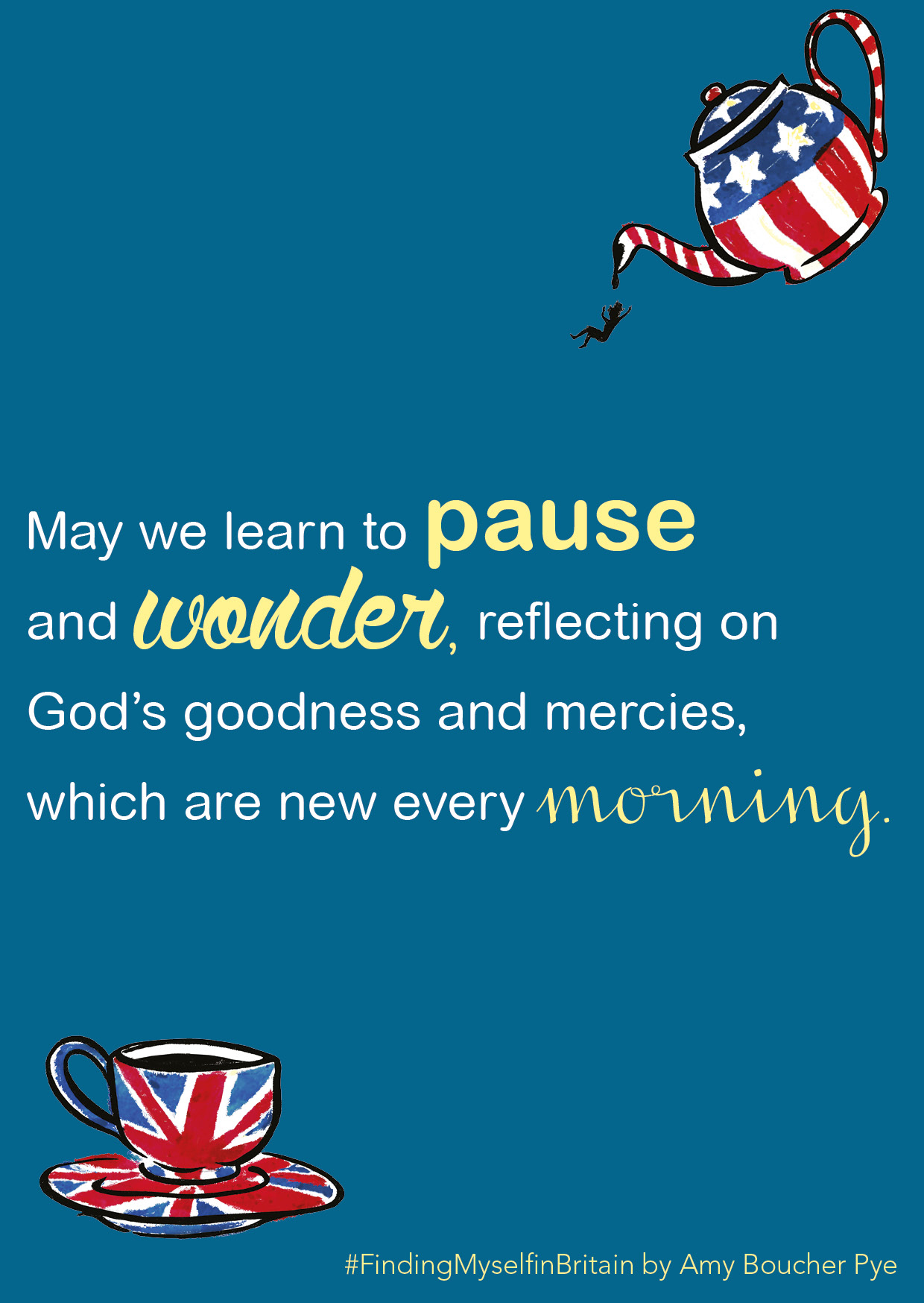
I write about Christmas cookies in Finding Myself in Britain, for the lack of them here in the UK (where mince pies, Christmas pudding and Christmas cake are the choice seasonal foods) sent me baking as I tried to recreate America on these shores. Well, at least a bit of Yankee Doodle love…
Here is the Pye Family Favo(u)rite, an almond cookie bursting with taste and flavor. I make a triple batch because everyone loves it so much. If you have a go, post a photo of your delicacies and let me know if it rivals your best mince pie!
But after he had considered this, an angel of the Lord appeared to him in a dream and said, “Joseph son of David, do not be afraid to take Mary home as your wife, because what is conceived in her is from the Holy Spirit. She will give birth to a son, and you are to give him the name Jesus, because he will save his people from their sins” (Matthew 1:20–21).
After Joseph learned that Mary was pregnant, he despaired over the future. No doubt she told him about the child’s divine origins, but how was he to believe her? Such a story was inconceivable. So as we saw last week, Joseph chose the best of the unwelcome options – divorce. God, however, had different plans.
Joseph awakes from his dream and instantly knows the truth of Mary’s pregnancy. The night before his hopes for marriage had been shattered, but in the light of day he sees a whole new reality shaping up, including him being the legal father of one who will become the Savior to his people. Surely Joseph wakes up a changed man; no longer despairing, he embraces a new life.
When the angel called Joseph “son of David,” this was to establish Jesus’ divine lineage. (Incidentally, Joseph is the only one named thus in the New Testament other than Jesus himself.) Along this line, the angel also instructed Joseph to name Jesus, for that entails him formally acknowledging Jesus as his son, and thus a son of David. Joseph may not be the biological father of Jesus, but his role as earthly father is vital.
God speaking to his children hasn’t changed from biblical times – he still breaks through, whether through a dream, an insight gleaned from the Bible, wisdom from friends, our time of prayer, or through other means. How is God reaching out to you, when you might be finishing up work or school, buying last-minute presents, preparing food, reading Christmas missives, or generally being stressed? As you go forth, know that God will speak, even in the midst of all of this.
Prayer: Father, I am busy with many things. Help me to choose what is best.




![DiggingForDiamonds-cover[2 DEC]FINAL-v3](https://amyboucherpye.com/wp-content/uploads/2016/01/DiggingForDiamonds-cover2-DECFINAL-v3-RGB.jpg)





 Our home is always open for visitors. We love to share our beautiful views and from scratch home cooked food. One of the favorites is face pancakes. I’ve been told my pancakes are the best!