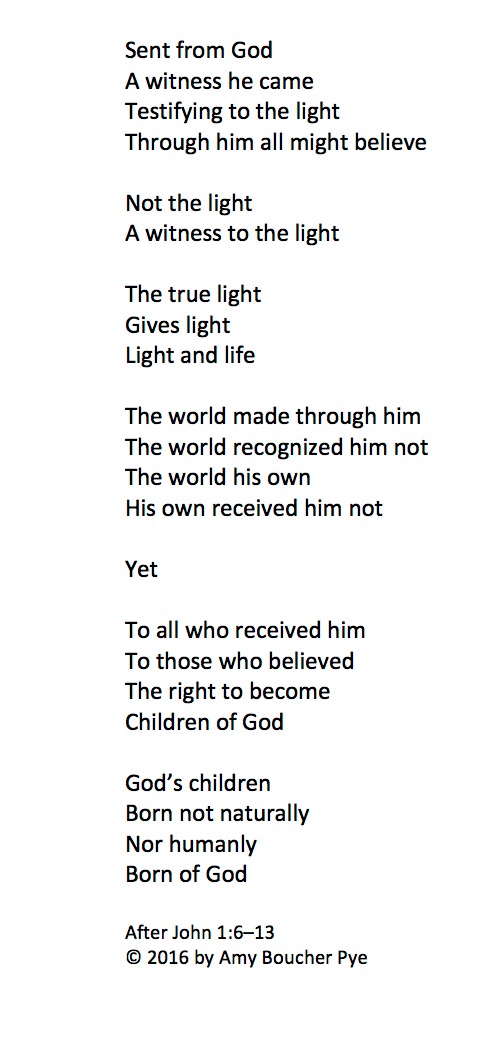
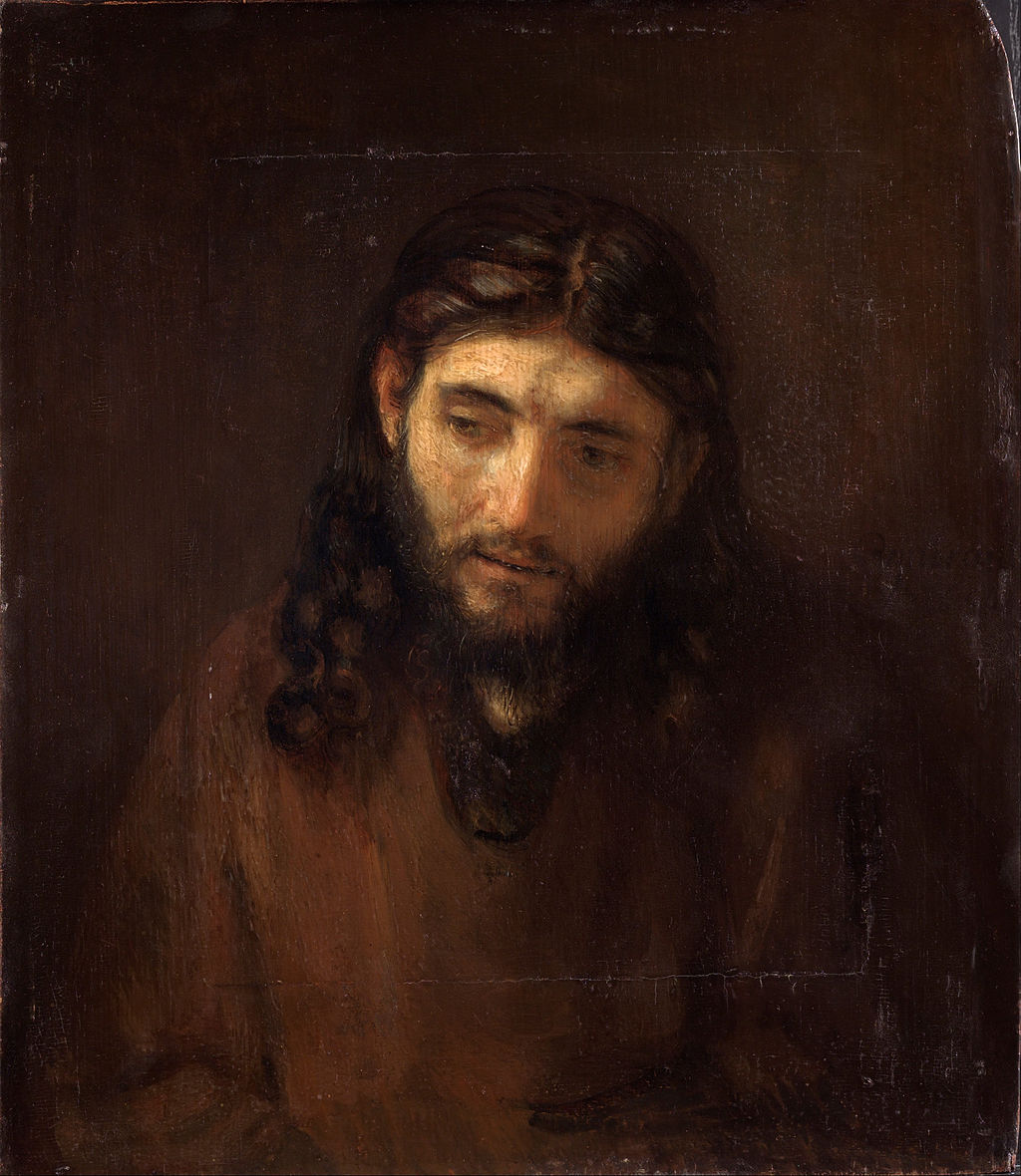
Jesus the Word, dwelling among us and making the Father known. Jesus who brings us grace and freedom and salvation. Jesus, without whom we would not observe Lent.
I met the engaging and encouraging Bev Murrill when I was a commissioning editor for Authentic Media. Although I didn’t end up getting to work with her on publishing her next book, I’m delighted that a friendship was born. She’s speaks life and love whether online or in person. I remember our first lunch, how she got me to stop questioning her in my usual habit of not only getting to know others but deflecting the attention off of me, when she exclaimed, “You must be an introvert!” I hadn’t before connected my personality preference to this practice. I love her blog on home, and especially how her obedience to God shines through.
Until I turned 44, I spent my entire life in Australia. I never went to another country, so I had no need of a passport. I was happy that way. I never wanted to travel. I loved Australia and being an Aussie, and the idea of living anywhere else appalled me. This was even truer when I thought of England, the place where my husband was born and grew through a childhood of desperate poverty among an abusive and dysfunctional family. I thought of England with horror. It seemed tiny, cramped and filled with people who used humour to ridicule each other. I didn’t want to live in Coronation Street.
So much for the plans we have for our lives.
Whatever your plan, God always has a better one and your mission, should you choose to accept it, is to embrace His plans with all your heart. If you do, I promise you, you will never be sorry.
Rick and Bev on their 44th wedding anniversary, out at the Hilton.
So, one day in 1996, we packed our bags and headed halfway around the world, obeying the call of God to England. We went to pastor a church in Essex, and thus began some of the most beautiful and challenging years of my life.
My relationship with God means that I know I will fare far better if I give myself to His plans rather than try to hide from them. It’s a mindset shift, but once you make it, it transforms your capacity to love what you have, rather than pine for what is no longer yours.
View from Merewether Heights Lookout, Newcastle, Australia. Photo: Roanish, flickrThe greens of England. The River Wye from Symonds Yat Rock. Photo: Anguskirk, flickr
What do I love about Britain? Have you got a month for me to tell you about the people, the places, the history and heritage, the idiosyncrasies, the beauty, and the banal? About the two beautiful English girls my youngest sons married, and my ten grandchildren who were born there, as my two other children and their spouses came to join us there.
I will tell you that I have truly never seen such green greens in my life. England’s ‘green and pleasant land’ is an understatement. In spring and summer, the greens are sensually intoxicating. Sometimes I would just sit and stare around me, marvelling at how varied and vivid green could be. There is really, really nothing like the beauty of Britain in summer. I love the fact that you can sit and drink coffee in a place that was open for business 10 or 15 centuries ago. I love the clear cold, and being rugged up against the harshness, and the fact that the homes are centrally heated and getting up on a winter’s morning is just as warm as if it was summer. I love that you can visit the rest of the beautiful British Isles and most of Europe and still have a large part of the day left to spend sightseeing.
Our street in the UK one winter!
Most of all though, I love the people: Funny, quirky, kind, sometimes prim, and polite to a fault. I chuckle at the righteous indignation of a British person you got off on the wrong foot with. It is not so of all Britain’s residents, but the place I called home was peopled with those who would turn linguistical somersaults in a bid to refuse a request without having to actually use the word NO. They had no intention of doing what you were asking but it appears there is something intrinsically vulgar about actually saying NO. For the life of me, I’ve never been able to work that one out but I did learn to work around it.
I deeply value the friends I made during my time in UK. They are full of grace and humour and love and compassion. Prayerful people, their caring hearts have shown me such love and they will never shirk from fighting for what is right regardless of how unpleasant that may be. They’ve been loyal to this uncultured Aussie, giving me a place in their hearts that is beyond my ability to comprehend. I love and appreciate them dearly and miss them greatly. The British have changed me forever. My thinking has stretched and developed and will never now return to its original shape, for which I am heartily grateful.
But I love Australia too. I love the browns of the land in summer. I love the barren, harsh beauty of ragged hills. I love the magnificent blue of the mountains and the glorious smell of the bush. I love the turquoise and azure blue waters that throw themselves wilfully onto the fine, cream sands. I love the 360º stretch of the blue, cloudless sky above me and I love the cities with their soaring skyscrapers and manically busy coffee shops. And I love the wild and reckless thunderstorms that stir your heart and make you want to rush outside and dance.
The Australian bush. Photo: Dushan Hanuska, flickr
But most of all, I love the people. I love the way Aussies say it as it is. They, too, are caring, but see no point in prevaricating, believing that breakthrough comes with understanding, rather than large hints and beating around the bush. I love that their dress is casual and their laughter is loud, and that they aren’t worried about what other people think of them. I love their can-do attitude; if something needs doing, they don’t spend months planning in committees, they just get in and start, and work it out as they go along.
My Aussie friends are awesome. I’m blessed by their strengths and their determination to make a stand for what they believe in. I love that they care passionately about issues that should matter to all of us. I love their truthfulness spoken in love to me, their passionate capacity to inspire others to make a difference. I love that they don’t care where you come from or how much money you have or what university you went to. The old friends and the new ones are a gift to me, in that they accept me for who I am.
The poet Dorothea MacKellar so beautifully describes the differences in the two nations I love. She calls Australia an ‘opal-hearted country’ and those words make my heart sing. I’d love to reproduce it here, but for copyright purposes I’ll point you to her official website.
Her poem makes a choice between the two nations and that is something I cannot do. Honestly, I have come to love Britain passionately for all the reasons I’ve described and a myriad more. If the Lord had not called us back to Australia two years ago, I would have happily lived there for the rest of my days.
Our daughter Skye, Rick and Bev on the Newcastle Foreshore on Australia Day.
But I love Australia too. I’m glad I’m here. I revel in being able to go swimming in the ocean baths in the early morning before the day begins. I love that I can drive around so many corners and be greeted with lakes and oceans and mountains right there in front of me.
I have two homes and they are 12,000 miles from each other. I wish it were not so but I wouldn’t change it for anything. I thank God He took me there. I could never have known how amazing the Brits are, had I not had the opportunity to see them up close and personal. But I could never have known how much more was in me than I knew, had I not had to take courage and expand my heart to grapple with greater issues than I ever would have had I stayed put.
Rick had a serious health scare in 2015 and one our ‘fight back’ strategies was to reinforce our intention to be together a lot longer. My first tattoo!
I thank God that His plan for my life has had so much more capacity for joy, fulfilment, grace, challenge, love, beauty, freedom, empowerment, and change, than my plan ever did. What a little life I would have lived had I never got that passport.
Never say no to God. He’s got so many great surprises up His sleeve.
Bev has been in senior ministry in Australia and UK for over 30 years. No longer leading Christian Growth International, the network of churches she and Rick planted in the UK, Bev continues to speak internationally, especially to leaders, churches and at women’s events. A mentor to many other leaders, Bev writes a regular blog at www.bevmurrill.com. She is the author of Speak Life and Shut the Hell Up, and Catalysts: You Can Be God’s Agent For Change. A pioneer and innovator, she has founded several organisations including Cherish Uganda, a village for HIV+ children, Liberti magazine – a contemporary Christian women’s magazine, and Kyria Network which supports, mentors and equips UK Christian women leaders. She has a masters degree in Global Leadership and is passionate about the issues women in the world currently face. Married to Rick for 45 years in September, she has 4 married children and 10 fantastic grandchildren.
As we start Lent, a time to reflect and to offer ourselves as a living sacrifice, I’ve been pondering John’s Gospel. My aim during Lent is to share some poems based on this unique story of Jesus with John’s emphasis on union with God through the indwelling of Jesus and the Holy Spirit.
May your Lenten journey be filled with insight, wonder, and love.
As the time approached for him to be taken up to heaven, Jesus resolutely set out for Jerusalem. And he sent messengers on ahead, who went into a Samaritan village to get things ready for him; but the people there did not welcome him, because he was heading for Jerusalem. When the disciples James and John saw this, they asked, “Lord, do you want us to call fire down from heaven to destroy them”? But Jesus turned and rebuked them. Then he and his disciples went to another village. As they were walking along the road, a man said to him, “I will follow you wherever you go.” Jesus replied, “Foxes have dens and birds have nests, but the Son of Man has no place to lay his head.” Luke 9:51–58
Having spent our previous weeks in the Old Testament in this series on pilgrimage, we now turn to the life of Jesus, which is fitting as we approach Ash Wednesday. In one sense Jesus’ whole human life was a pilgrimage, namely as one of the Godhead who became man and dwelt among us before returning to heaven.
This week’s reading comes as Jesus sets out for Jerusalem and the cross, knowing the sacrifice he will make. As part of this, he begins preparing his disciples for his death. When James and John thought the unwelcoming village would need judgment, Jesus rebukes the them. Rather than punishment, now was the time for grace and proclamation.
Then another man appears, saying that he wants to follow Jesus – probably as one would follow a rabbi, learning from him by walking behind him. Jesus replies that though even the wild animals have holes in which to escape, he does not enjoy such a refuge. Thus the cost of following him will be great. But the rewards will be eternal.
We often shy away from speaking of the sacrifice required of disciples of Christ when sharing with someone enquiring about our faith. Jesus, in contrast, is clear. Discipleship is costly, but worth it. As we share with those whom we meet, may he give us winsome words filled with the right balance of grace and truth.
Prayer: Lord God, sometimes we fear that you will make us renounce what we love. Give us strength and courage to follow you, and strike hope and faith in us that we may believe your promises.
I first met Tania Vaughan online in the Woman Alive book club, and then I got to meet her in person when we both traveled to Surrey to hear the wonderful Liz Curtis Higgs speak. After our meeting I reflected on how wonderful the online community can be – here was a new friend who was just the same in person as she was online. In her post on finding her home, she opens her heart and shares deeply – I trust her vulnerability will touch and move you, as it did me.
Thinking about ‘Home’ has been an interesting experience. As I thought about how that word often relates to safety, security, stability and love, I realised that’s not what it meant to me.
At the impressionable age of 7 I watched as my home was torn apart first by divorce and then a custody battle. My safe, secure, stable and loving home changed dynamics and then location completely.
Little did I know that it is around the age of 7 when our script for life is written. My script said that nothing is safe, nowhere is secure, there is no stability and you will be abandoned. This insight came 30 years later as I dealt with my abandonment issues in therapy.
It was only then that I could see how that script had impacted my life and how I felt about home. I never settled. I could live anywhere because nowhere held any meaning. I always said “a house is just bricks and mortar, it means nothing”. Moving on didn’t leave me with regret or sadness and I never held tight enough to anything to want to stay.
With my mum and step-father.
A lot of people feel like that about places; many would say that home is the people you’re with. This was the bigger problem for me. Not holding on to bricks and mortar was one thing but I realised I’d done the same with people. That first feeling of abandonment carried with me into every connection and relationship. I moved from one relationship to another without a backward glance. Friendships were shallow and meaningless, discarded and easily forgotten. There were no people I could call home; I believed they’d all abandon me in the end.
If they didn’t seem to be making moves to abandon me I would systematically destroy the relationship so that what I believed would bear out – people leave. I even left myself! As the destructive behaviour spiralled, self-harm and suicide attempts earned me a stay in a mental health hospital. It was there, as I faced myself, that I decided this was not where I wanted to make my home.
A few short years later, Jesus grabbed hold of me. Through the example of his love, God’s reassurance, “I will never leave you nor forsake you” (Deuteronomy 31:6), penetrated my defenses. It took my God-given husband another five years of battling my need to push him away before I realised he will never leave me either.
Without the fear of abandonment I have found stability and safety, a place and people to call home. It is only very recently as we have contemplated future plans that even the thought of leaving the house, the home we have built together, tugs at my heart strings. There are memories here and love has poured into the paintwork as we made it our own. The home I craved for so long has now rooted in the bricks and mortar around me.
To be homeless means to have nowhere to live, but it is so much more than just bricks and mortar. I always had a roof over my head but my heart was homeless. Now, through the transforming love of Jesus, this transient heart has found a home.
With my lovely husband.My little office, a place set apart for me to think and write.A fire makes everything so cosy.
Recently I came across a poem I wrote nearly 18 years ago to the day, just 10 days after I had moved to the UK. Part of me was sad I hadn’t found it when I was writing Finding Myself in Britain! But mostly I experienced a rush of poignancy, feeling for that person I was, so new to the UK and feeling stunned with the massive pruning I was undergoing. Everything seemed so strange and hard and different, and knowing that I was here to stay made me aware that I was going to have to send down roots and make this my home.
The poem is based on olive tree – mind you, I’d probably never yet even seen an olive tree – from Psalm 52:8–9: “But I am like an olive tree flourishing in the house of God; I trust in God’s unfailing love for ever and ever. I will praise you for ever for what you have done.”
“In those days, at that time,” declares the Lord, “the people of Israel and the people of Judah together will go in tears to seek the Lord their God. They will ask the way to Zion and turn their faces towards it. They will come and bind themselves to the Lord in an everlasting covenant that will not be forgotten.” Jeremiah 50:4–5
Rembrandt van Rijn, Jeremiah Lamenting the Destruction of Jerusalem, c. 1630
These few lines of prophecy about the Israelites come in the midst of a greater warning from the prophet Jeremiah to the people of Babylon. At this time, the Israelites had split into the northern and southern kingdoms, and thus lived in a state of disunity. Jeremiah is known as the weeping prophet because his words from the Lord often speak of impending destruction.
The prophecy here tells of God’s people who have turned away from him. No longer are they eager to follow his laws and decrees. A series of corrupt kings has added to the debauchery. But Jeremiah heralds a time when the people of both kingdoms will bow their knees and return to the Lord. With tears they will seek the way of Zion.
We might find the book of Jeremiah depressing, but verses such as these – tucked away in the midst of prophecies of doom – bring hope. Our pilgrimages are often filled with wrong or missed turnings, whether through sins of omission or commission. But when we seek the Lord, he will extend to us his everlasting covenant.
The Lord doesn’t demand that we come to him with weeping before he will forgive us. But tears of remorse are often a sign of true repentance. Sometimes when I’m having to discipline my children, I see them move from being somewhat sorry to being deeply so – perhaps because of the stronger consequences I have to enact. Eventually, they show true sorrow over the infraction. What will it take for us to repent?
Prayer: “Have mercy on me, O God, according to your unfailing love; according to your great compassion blot out my transgressions. Wash away all my iniquity and cleanse me from my sin” (Psalm 51:1–2).
I got to know Ben Irwin when we both worked for Zondervan – but in different countries. He and I had the privilege of launching Rob Lacey’s amazing The Word on the Street, the Bible in street language. We both loved Rob, and hated seeing him battling cancer, but I think we’d both say that working with him on such a creative project has been a highlight of our editing careers. We’ve both moved into writing, which as you’ll see in Ben’s piece has been a process and something to be embraced (which is true for me too). I love his thoughts on home. Enjoy!
Somewhere in Wyoming on one of our cross-country moving adventures.
Finding your home can be tough when you’re always on the move.
I was born on the East Coast of the United States but spent my formative years in the Deep South, where the minute someone heard my accent for the first time, they would invariably say, “You’re from the North, aren’t you?” It was more accusation than inquiry.
There was a time (before kids) when it seemed like my wife and I were always packing, moving, unpacking—only to repeat the cycle soon after. Five times in four years we moved. Michigan to Seattle. Seattle to England. England back to Seattle. Seattle to Tacoma (a cheaper, more laid back version of Seattle about 30 miles south). Tacoma to Michigan.
With every move, we looked back longingly on the last place we had lived. I found it hard to feel at home anywhere. When you’re constantly looking over your shoulder, you forget to be fully present where you are now.
It took me a long time to learn the art of being content where I am, instead of always wondering where we’ll go next or wishing we were back in the last place we lived. In some ways, I’m still learning.
Here’s one thing that has helped me: realizing that I have more than one “home,” and that’s OK.
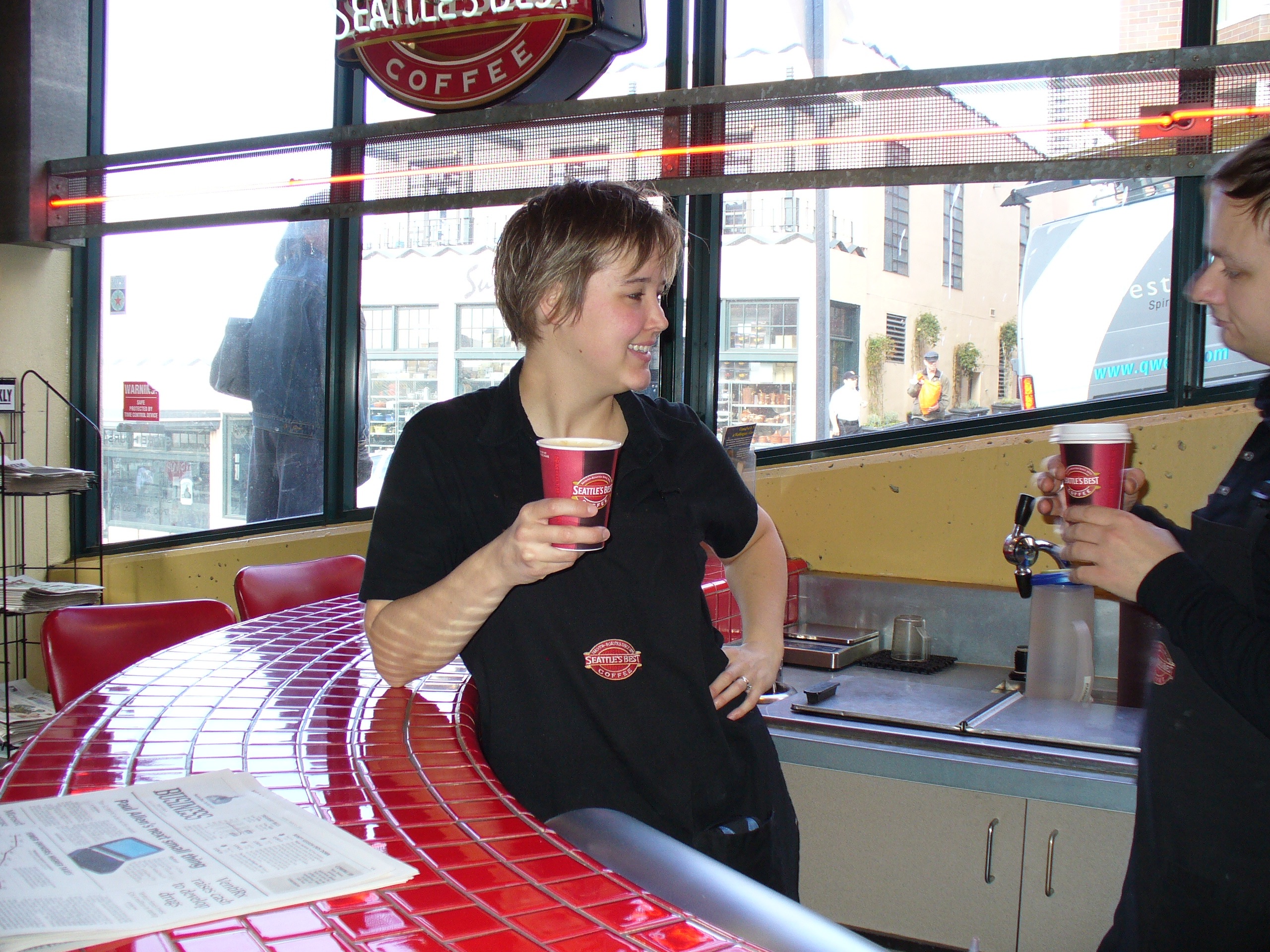
Seattle, 2007.Seattle, 2007.Amanda working at one of Seattle’s iconic coffee shops, 2007.
Each of the places we’ve lived has shaped us in some way—sometimes simple, sometimes profound. These places have become, in a sense, a part of who we are—each one a part of our idea of “home.”
When we moved from Michigan to Seattle, we learned the value of living with less—less home, less stuff, one less car. The values of simplicity and sustainability took up residence in our hearts.
Although we spent just seven months in England, it was long enough for us to find a new spiritual “home.” Someone invited us to the parish church in our village for Easter Sunday, and we’ve been Anglicans ever since. We’ve been soaked in the liturgies, prayers, and practices of a tradition that was new and strange to us at the time—yet now feels more like home than any other church we’ve been part of.
It’s because of one of those five moves that I am a writer today. We traversed the country so I could start a new job. It was the first time anyone ever paid me to write, and I’ve been writing ever since. It’s become my vocational “home.” Those who took a chance on an untested writer and helped me nurture my craft have since become part of our extended family.
England, 2008.Tacoma, 2010, just before our daughter was born.Tacoma, 2010Introducing our daughter to one of our past homes—England, 2012.
Today, it’s in the company of friends around the globe that we feel most at home. Some of our children’s godparents are those we met in the UK. Even though we go months and sometimes years without seeing each other face to face, when we’re together—whether it’s on our side of the ocean or theirs—it feels like we’re home.
The idea of having more than one home—or that our sense of “home” need not be bound by geography—should not seem strange to those of us who are Christians. As followers of Jesus, we live in one kingdom while our citizenship belongs to another.
This is not to say that “this world is not my home / I’m just a-passing through,” to quote the American Southern Gospel number.
As he ended the class, our lecturer said, “Well, that’s probably enough on Augustine’s On the Trinity.”
I piped up, “Yes, but we understand you have a birthday coming up, and we want to celebrate!” We broke into song, enjoying the stunned look on his face.
I enjoyed organizing the surprise party for our lecturer, who when he interviewed me for the course at Heythrop College, let on that we shared the same birthday, but a year apart. I filed that little detail away, for use later…
In organizing the get-together after our lecture, I was a bit cheeky as I didn’t let on to my fellow students that it was my birthday too. It was more fun to pull off the surprise for him – he’s a gracious, softly spoken man with a big intellect and an equally big heart. And I don’t know that we do enough celebrating, so give me a reason and I’m on it.
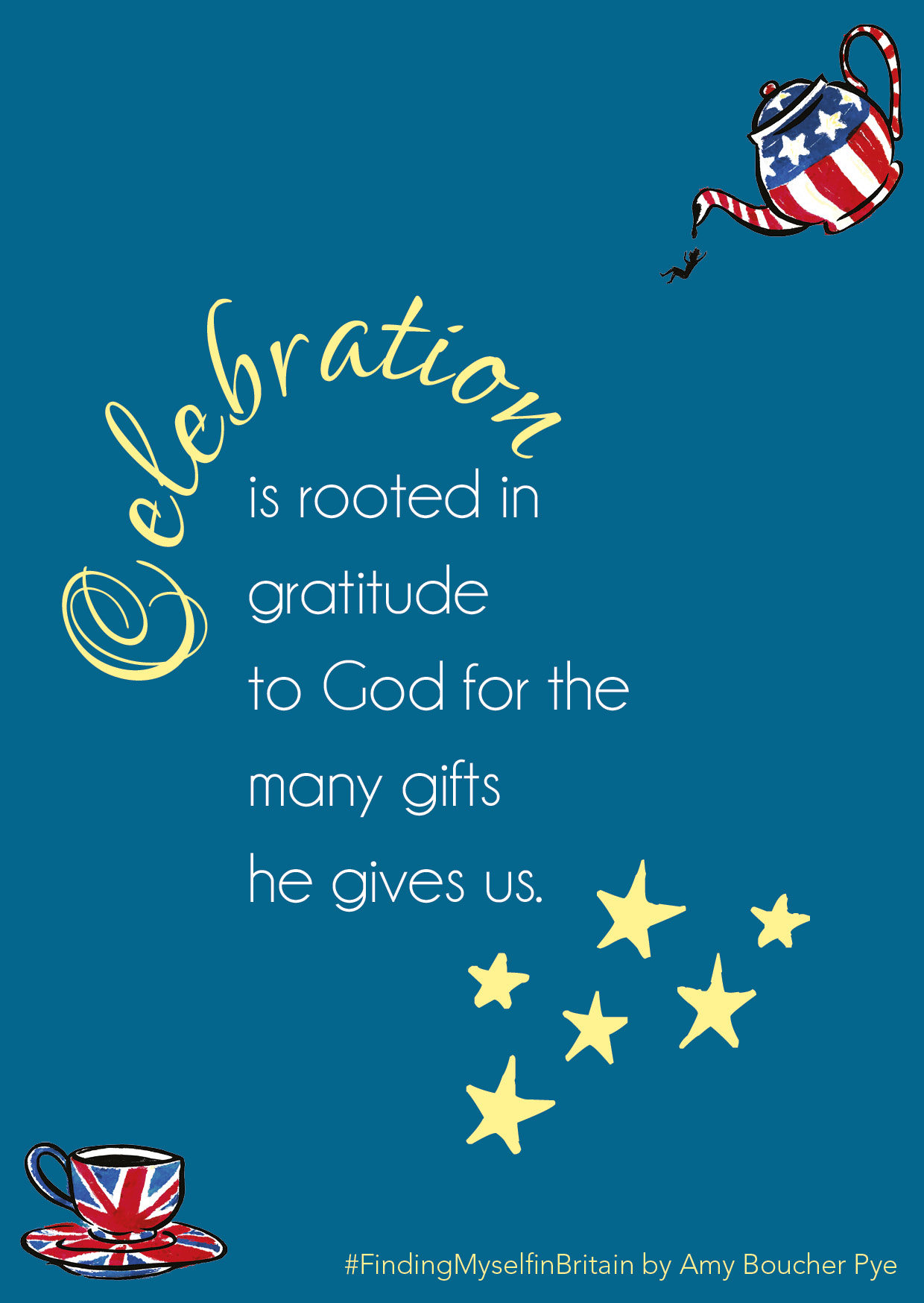
After all, as I say in Finding Myself in Britain, in the chapter, “Come to my Party,” celebration is a spiritual discipline:
As we see with King David, celebration is rooted in gratitude to God for the many gifts he gives us. I love how Dallas Willard puts it in his classic The Spirit of the Disciplines: “Holy delight and joy is the great antidote to despair and is a wellspring of genuine gratitude – the kind that starts at our toes and blasts off from our loins and diaphragm through the top of our head, flinging our arms and our eyes and our voice upward toward our good God.”[1]
How might you incorporate more celebrations into your life? Who could you surprise?
And for some tips on how to throw a birthday party for yourself, with some thought-provoking dinner-party questions you could pose, check out my celebrations chapter. No leftover Bounty or Dove Caramels, I promise. (That’s a UK quip – sorry if it doesn’t compute!)
[1] Dallas Willard, The Spirit of the Disciplines (San Francisco, CA: Harper & Row, 1988), 179.
Jesus the Word, dwelling among us and making the Father known. Jesus who brings us grace and freedom and salvation. Jesus, without whom we would not observe Lent.

I met the engaging and encouraging Bev Murrill when I was a commissioning editor for Authentic Media. Although I didn’t end up getting to work with her on publishing her next book, I’m delighted that a friendship was born. She’s speaks life and love whether online or in person. I remember our first lunch, how she got me to stop questioning her in my usual habit of not only getting to know others but deflecting the attention off of me, when she exclaimed, “You must be an introvert!” I hadn’t before connected my personality preference to this practice. I love her blog on home, and especially how her obedience to God shines through.


 Bev has been in senior ministry in Australia and UK for over 30 years. No longer leading Christian Growth International, the network of churches she and Rick planted in the UK, Bev continues to speak internationally, especially to leaders, churches and at women’s events. A mentor to many other leaders, Bev writes a regular blog at www.bevmurrill.com. She is the author of Speak Life and Shut the Hell Up, and Catalysts: You Can Be God’s Agent For Change. A pioneer and innovator, she has founded several organisations including Cherish Uganda, a village for HIV+ children, Liberti magazine – a contemporary Christian women’s magazine, and Kyria Network which supports, mentors and equips UK Christian women leaders. She has a masters degree in Global Leadership and is passionate about the issues women in the world currently face. Married to Rick for 45 years in September, she has 4 married children and 10 fantastic grandchildren.
 At the impressionable age of 7 I watched as my home was torn apart first by divorce and then a custody battle. My safe, secure, stable and loving home changed dynamics and then location completely.


 Tania Vaughan is a speaker and writer who started Let’s Talk About Ministries at www.liveloveshare.com after writing her book Let’s Talk About Sex and Relationships – A Bible study for single women. Through Bible teaching and devotionals Tania seeks to encourage every woman to claim the full life that Jesus came to give them. www.taniavaughan.com
 Recently I came across a poem I wrote nearly 18 years ago to the day, just 10 days after I had moved to the UK. Part of me was sad I hadn’t found it when I was writing Finding Myself in Britain! But mostly I experienced a rush of poignancy, feeling for that person I was, so new to the UK and feeling stunned with the massive pruning I was undergoing. Everything seemed so strange and hard and different, and knowing that I was here to stay made me aware that I was going to have to send down roots and make this my home.






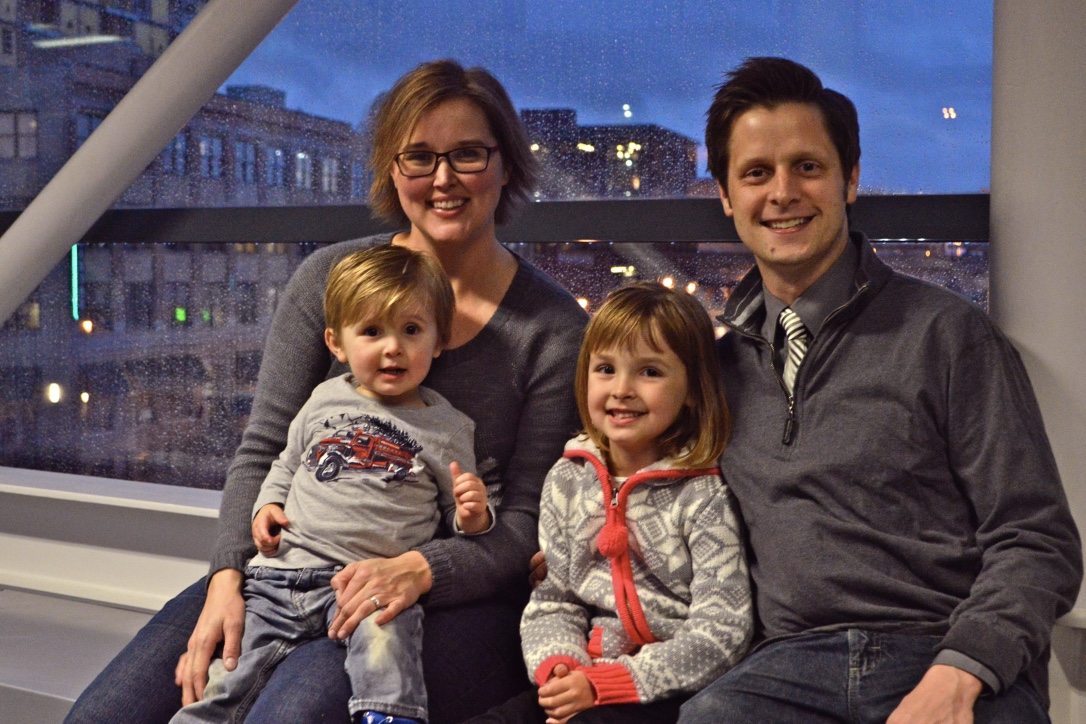 About Ben: Ben Irwin is the author of The Story of King Jesus and a member of the communications team at the Preemptive Love Coalition. He and his family live in Grand Rapids, Michigan.
 As he ended the class, our lecturer said, “Well, that’s probably enough on Augustine’s On the Trinity.”