Author: Amy Boucher Pye

  • Forgiveness Fridays: The Journey of Forgiveness by David Faulkner

    Forgiveness is a journey – a truth Dave Faulkner reminds us of in his story of being wronged. People aren’t machines who can immediately forgive. Sometimes we receive the grace to forgive right away, but many times it may take a whole lot longer…

    Beans on toast. That was my special meal for my thirtieth birthday.

    I was a single man, training for the ministry in Manchester, living in halls of residence. My friends John and Judy invited me to their flat to celebrate in true economic student style. At the end of the evening, John offered to call a taxi to take me back to my hall of residence. Being an experienced city dweller (and wanting to save money), I declined. I said I knew where it was safe to walk.

    Big mistake. A teenage thug cornered me. In one kick, he removed my glasses, which smashed on the pavement, and he injured my eye. Not realising I was a mere student, he demanded I took him home for him to take my TV. Eventually, he got away with my wallet, containing £7 and my credit and debit cards.

    Limping back to hall, friends gave me first aid. One called my bank to cancel the plastic money. Another – a former solicitor – took me to the police station and waited with me until I had finished my statement at four in the morning. A few days later, an optician assured me there was no permanent damage to my eye.

    Local gossip told me that the hoodlum was well known in the area. Yet the Police never arrested him. I don’t think they made much effort.

    I’m grateful that most people gave me space to get over the shock. That took longer than the injuries. Having grown up in urban London, my confidence in my own judgement took the greatest battering. So much for walking a lit-up route.

    The only unhelpful person was a tutor who put a time limit on my emotional recovery – after which, he declared, I should seek counselling. He meant well, but I was glad no-one else quantified my ideal recovery period.

    As I recovered, I found people asking me one common question: if you’re a Christian and you believe in forgiveness, would you have co-operated in a prosecution, had the offender been apprehended?

    My considered answer was yes, but it was a qualified affirmative. For the sake of society, I would have given evidence in any court case. But I would only have pressed charges once I knew I held no more resentment in my heart against him, and that my reason for doing so was for the protection of the community, not personal revenge.

    Regardless of the Police’s failure to arrest a known thug, it was a while before I got to the point of no resentment. Forgiveness is a journey, and we forget that. I have heard horrendous stories of Christians suffering unspeakable wrongs – even rape – and the only response from their church has been, ‘Have you forgiven him?’ There is no acknowledgement of the injustice or the violation, all that is administered is a theological tick-box questionnaire.

    I know it’s well meant: we don’t want people dying in an acid bath of prolonged bitterness. But when we rush to insist on forgiveness, it may not be forgiveness that is produced. For rather than feeling the pain and then releasing the perpetrator in forgiveness, the sufferer suppresses her anger.

    Suppressed anger has to find a way out: Jack will not stay in the box forever. The coiled spring of suppressed anger can come to the surface in all sorts of unhealthy ways. One is depression.

    If you know someone who has been greatly wronged, I urge you to walk with them on a journey to forgiveness. Be present, and be patient in our instant-on world for the slow work of grace.

    You may just help them to a deeper and truer forgiveness than if you had insisted they flick a spiritual switch.

    Dave Faulkner is a Methodist minister in Surrey. He is married with two children. He enjoys digital photography and creative writing. His latest blog project is at www.confessionsofamisfit.com.


    Amy’s book The Living Cross explores forgiveness through a series of daily Bible readings for Lent. You can find out more about it, and how to purchase, here.

  • Weekly Devotional: Worry not (8 in Hope and Trust in God series)

    Photo: Kirt Edblom, flickr

    Therefore I tell you, do not worry about your life, what you will eat or drink; or about your body, what you will wear. Is not life more than food, and the body more than clothes? …Can any one of you by worrying add a single hour to your life? Matthew 6:25–34

    We’re now halfway through our time together thinking about hoping and trusting in God, and today we come to the words of Jesus in the Sermon on the Mount. He is teaching the crowds, who are a mix of society but mainly peasants. They depended on their crops for their sustenance, and even when the harvest was small, they had to give their surplus to the rulers through tax. We could argue that their cause for worry was justified.

    But Jesus turns the wisdom of the world on its head, saying that life is more than food and the body more than clothes. He points to his heavenly Father as the source of all life, asking his listeners to recognize God’s gracious abundance. For instance, even the flowers of the field display more beautiful clothes than King Solomon. And he points out the futility of worrying, for in the end it will seep life out of us.

    I have a friend, Sarah, who is a self-professed worrier. She knows that it zaps her energy, but she struggles to give her concerns to God. Especially where her family is concerned. Some time ago one close to her had to undergo an emergency surgery, which we knew would be excruciating for Sarah. We texted back and forth, and although she was sometimes filled with anxiety, at other times she experienced the peace of God wrapped around her as if a warm coat. Her loved one came through the surgery well, and now she feels bolstered by the intimacy with God she found when clinging to him.

    We don’t have to wait for a crisis to draw near to God. As we seek him, he will come running towards us with outstretched hands while reassuring us not to worry.

    Prayer: Lord Jesus, help us to seek you and your kingdom this day.

  • Forgiveness Fridays: The life raft of forgiveness by Abbie Robson

    How can we forgive when the one hurting us doesn’t change? Abbie Robson invites us to explore this daunting question with her powerful story of forgiveness.

    When I was a kid, my dad drank. A lot.

    It’s hard to pull apart the memories, but I remember alcohol always being there, even before I knew it was a problem. I remember being afraid, and feeling guilty, although I still don’t know for what. And I remember frequently being disappointed, for every time he said he was going to stop drinking, I naively believed him. It never lasted.

    Fast forward to adulthood. My dad drinks. A lot.

    When I wrote my first book, Secret Scars, I was encouraged by my editor to end it on a happy note. Whilst I didn’t claim in the book that he had stopped drinking, the epilogue certainly suggested that our relationship had been repaired. The truth is, we’re still on the merry-go-round – up and down, round and round, the same arguments over and over again.

    I’d always thought that when it was all over, and he stopped drinking, then I’d forgive him. I thought that forgiveness came at the end of the sin, with the forgiven party who would go and sin no more. I had this innocent idea that he would see the light, stop drinking, apologise profusely for everything he’d put us though and beg for forgiveness. I pictured a happy family reunion with tears and hugs and a happy-every-after. As it turns out, I’m probably not going to get this hoped-for resolution. I’ve had to come to the sad but inevitable conclusion that my dad will almost certainly never remain sober for more than a couple of months.

    Thinking about forgiving someone when they can’t or won’t change is tricky. Sometimes I’ve felt like I’m putting myself in the firing line for getting hurt. He says sorry; I forgive him; I let my guard down; he starts drinking… and repeat.

    So what does forgiveness look like when you can’t see an end to the behaviour you’re supposed to be forgiving? It’s a road often travelled by those of us affected by addiction. Forgiveness feels futile when it’s shrouded in the knowledge that it will probably just keep happening. But since God has commanded us to forgive, it must be possible. He never says it is easy, but he wouldn’t command us to do something that can’t be done.

    I need to be clear here. Forgiveness doesn’t mean that everything is ok, or that the things someone does or has done are acceptable**. What it does mean is that I can go to my parents’ house and spend time with my dad, without constantly thinking about what happened last time. It means I can hold a conversation with him about the things that interest us. Will I end up coming away hurt or upset at the end of each visit? Probably. But through my new way of consistently offering him forgiveness, I don’t arrive expecting to be hurt; nor am I still wounded and raw from the last time.

    For me, this woundedness is the crux of the whole thing. What I’ve come to learn (much slower than I would have liked) is that forgiving my father actually has very little to do with him. Rather, forgiving him has become about saving myself. When someone keeps on hurting you, there comes a time when the answer becomes forgive, or sink. Forgiveness is a life raft in a situation where nothing else can change. Forgiveness keeps me safe from being hurt over and over again. As a friend of mine says, unforgiveness is like drinking rat poison then waiting for the rat to die. Each time I see my dad I come away with new baggage, and the only way I can deal with it is to bring it to God and forgive, and forgive and forgive.

    So, my advice? Start where you are. Don’t wait until everything is hunky dory to begin forgiving, and don’t wait for all the loose ends to be tied up; now is the time. Trust God to put before you what he wants you to deal with, knowing that his love and timing are perfect, and that forgiveness is his gift to you. It’s not about the other person’s sin – it’s about our freedom.

    ** A very important disclaimer: If someone is hurting you regularly, or if you are unsafe in a relationship or situation, do not stay. Forgiving someone abusive is tricky, but is not the same as staying somewhere or with someone who puts you at risk. I am in the situation where I can continually forgive my father because we don’t live in the same house, and he doesn’t pose any threat to me. Do not stay anywhere you are not safe.

    Abbie has been writing ever since she could hold a pencil. She wrote a memoir, Secret Scars (Authentic, 2007), and later, Insight Into Self-Harm (CWR, 2014). She founded and directs Adullam Ministries, an information and resource website and forum about self-harm and related issues. She blogs at Pink and Blue Mummyland and tweets as @AbbieRobson and @AdullamSelfHarm. She lives in Rugby with husband John, children Amelia and Seth, and two cats who still haven’t learned that they don’t run the house.

    Amy’s book The Living Cross explores forgiveness through a series of daily Bible readings for Lent. You can find out more about it, and how to purchase, here.

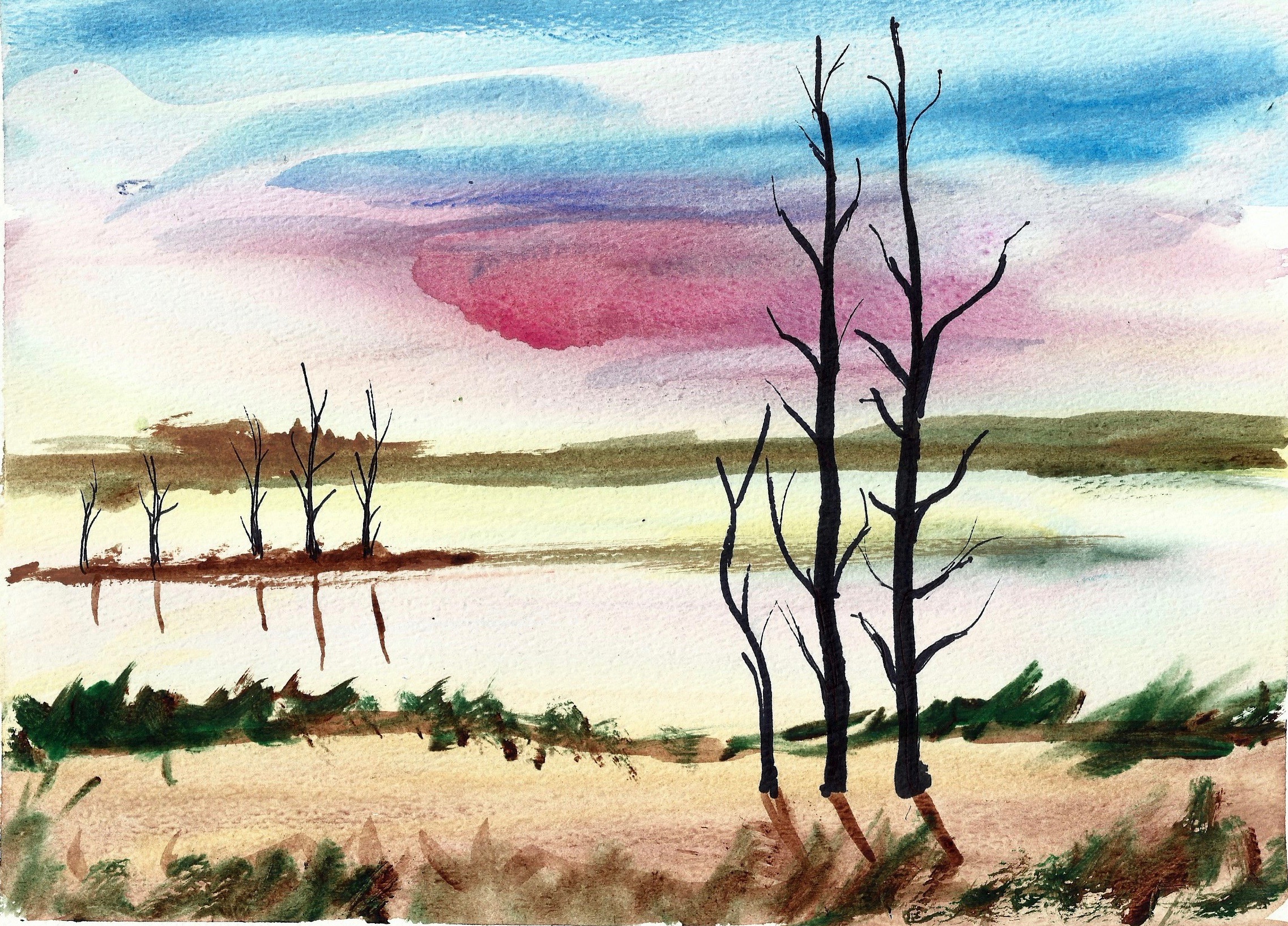
  • Watercolor Wednesday: Streaks of Color

    Though the trees are bare

    The ground shades of brown

    Yet resounding in the sky

    Streaks of color

    God’s beauty

    For those with eyes to see

    Glimpses of grace


  • Weekly Devotional: Fruit that lasts (7 in Hope and Trust in God series)

    Photo: sabin paul croce, flickr

    But blessed is the one who trusts in the Lord, whose confidence is in him. They will be like a tree planted by the water that sends out its roots by the stream. It does not fear when heat comes; its leaves are always green. Jeremiah 17:5–8

    We see a theme developing in the prophets, as they exhort the people of Israel and Judah to trust in the Lord and not in humans. We are so easily tempted to trust in that which we see or feel or touch; we find it harder to trust in what is unseen but real.

    But when we do, when we put our hope and trust in God, we become like a tree planted by a stream of water. Our roots go down far into the earth of God’s word. As we feed on his light and life, we can’t help but to grow. Branches and leaves and flowers burst forth from us, and we are amazed that we’re even able to provide shade and a place for birds and animals to make their home.

    You might be thinking, okay, that’s lovely imagery, but what does that mean for me? I’m home with my kids and they’re driving me crazy. I’m older and I’m looking for a job but I suspect my age is hindering me. I’m at uni and wondering what to do with my life. What comes to my mind in these disparate life situations is abiding in Jesus, as he says in John 15. He is the vine and we are the branches. As we rest/remain/live in him, his Spirit will move in and through us. He will give us the strength to love our children and provide a soothing word to their tantrums. He will give us the hope and perseverance to keep trying for just the right job. He will show us how to depend on him for the next steps in our life. Especially as we come together in prayer, we see that he leads, guides, encourages and affirms us.

    Prayer: Father, Son and Holy Spirit, you provide us with the living water that brings life and fruitfulness. Flow through us this day.

  • Forgiveness Fridays: Total Transformation by Andrea Gardiner

    Death, drug-trafficking, and desolation – but none are a match for the transforming power of forgiveness. Today’s contribution by Andrea Gardiner reveals a story of new life, birthed by repentance and forgiveness.

    Nine-year-old Jessica walked home from school to find her mother shot dead on the floor of their house in rural Ecuador. In the end, it was determined that her mum had died by suicide. Jessica’s father, Edwin, was a drug trafficker who made frequent trips to and from Colombia with the illegal substances.

    As her father was a heavy drinker, Jessica could never be sure what state he would be in when he came home. Jessica was taken in by her aunt. But a year later, Jessica’s father had become a Christian, was attending church regularly, and had totally given up drink, drugs and smoking. He was working hard in the fields, raising pigs, finding work for teenage lads, and re-establishing a relationship with his first wife, Maria.

    Maria had three sons with Edwin, but he had left her for Jessica’s mother. She had much to count against him; she had to bring their sons up alone, struggling to feed and clothe them without work. The eldest boy had left home to find work as a young teenager. But she, being a faithful member of her church, chose to forgive. She took him back into her home and they re-established their marriage. All their sons came home, and Jessica moved in with them.

    Edwin and his children.

    Now, they are an example of a hard-working, community-spirited family. When you visit them, laughs, love and words of faith abound. People look at them and comment, “When I see the change in Edwin and his family, there is no way I can deny the existence of God. Only God can change a man and a family like that.”

    I have had the privilege of witnessing this transformation. It is a transformation only forgiveness can bring. Theirs is a forgiveness which put the past in God’s hands and opened the way for reconciliation and renewal. There is no bitterness, only healing and a vibrant testimony of the power of the cross. It is truly breath-taking.

    Andrea Gardiner has been a missionary working for Project Ecuador since 2005. You can find out more about the work in Ecuador on www.projectecuador.co.uk and read more about Edwin’s story in Guinea Pig for Brunch, available on Amazon.


    Amy’s book The Living Cross explores forgiveness through a series of daily Bible readings for Lent. You can find out more about it, and how to purchase, here.

  • Watercolor Wednesday – A River Runs Through It

    By Leo Boucher.

    Watercolor Wednesday – but I believe this one my dad painted with oils. It’s fun to see this river picture, for it reminds me of my childhood – it hung in our living room for many years so I’d see it everyday. I’d always instantly pick out two faces – one on the right with the rocks on the ground, and the other in the rockface up on the left. What do you see?

  • Weekly Devotional: Perfect peace (6 in Hope and Trust in God series)

    Photo: Gordon Wrigley, flickr

    You will keep in perfect peace those whose minds are steadfast, because they trust in you. Trust in the Lord forever, for the Lord, the Lord himself, is the Rock eternal. Isaiah 26:1–9

    Each January I ask the Lord to reveal a special word and/or verse of Scripture for the upcoming year. In my twenties, when I was entering a new season of intimacy with God, he sparked the above verse from Isaiah. I felt like shouting it from the rooftops, for the words of the prophet from thousands of years before spoke electrically into my life.

    I had been learning to hear God’s voice, but as I mentioned previously, I got into trouble when I misheard the Lord. That made for a roller-coaster of emotions, with my feelings up sky-high one day and dashed the next. I saw that Isaiah’s words would provide the balance that my emotions so desperately needed. As I trusted in the Lord, keeping my mind steadfast and centered on him, he would keep me in perfect peace. I would no longer be hit by any passing wave of emotion, but would be anchored in God’s word. To change the metaphor, he would be my rock forever.

    It turns out that having this steadfast mind means having a capacity for imagining in the Hebrew, according to John N. Oswalt in the NIV Application Commentary: Isaiah (p. 304). As we fill our imaginations with God and his word, our lives are changed. We might decide not to expose our minds to certain books or movies so to keep our hearts fixed on God. For example, I concluded I couldn’t watch any more of a television show about a medical coroner. Please know that I’m not making a blanket statement here, but I realized that the dead bodies were filling my imagination and I needed to stop. The line of what is acceptable for you may be different; God directs as we stop and ask.

    How’s your level of peace today?

    Prayer: Lord, you are our rock and we trust in you. Fill our minds, hearts and imaginations with your sweet images of your true riches.

  • Forgiveness Fridays: Untying the Rope by Peter Edman

    Forgiveness bringing healing – I love Peter Edman’s post about some of the American Bible Society‘s work in countries affected by war and strife. Read on to be inspired; I love the rope exercise and would have included it in The Living Cross had I come across it before publication!

     What does forgiveness have to do with healing after trauma? I think everything.

    In recent years, one of my work responsibilities has been supporting the product line for the trauma healing model administered by American Bible Society. The first programs launched in central Africa in the aftermath of the Rwandan genocide and subsequent atrocities in eastern DR Congo. Churches asked for help in dealing with entire populations affected by PTSD and complex trauma.

    Fifteen years later and our church and NGO partners have served millions on every continent and nearly 100 countries, addressing not only post-war populations but people overwhelmed by abuse, natural disasters, and trauma from military service, urban poverty, and more. The latest activity reports on my screen are from Nashville, Kampala, Beirut, Manila, Georgetown (Suriname), and Kathmandu.

    Rwandan students in a Trauma Healing seminar.

    Reasons for this cross-cultural uptake seem to include the model’s holistic faith-based approach, its focus on empowering local leaders, and continual refinement after partner feedback. But I credit much of its effectiveness to clear and practical teaching on forgiveness.

    I see many trauma healing testimonies and photos, usually from week-long equipping sessions where local church leaders learn to facilitate small groups and apply best practices in mental health in a biblical context. Particularly in places like Congo and more recently in the Middle East, those church leaders themselves are traumatized. They need to deal with their own pain before they can help their neighbors. As your flight attendant says, put on your own oxygen mask first.

    Often the testimonies mention the effects of releasing emotional pain through lament or facilitated listening and (for those willing) giving that pain to Jesus. But I’ve noticed that the people who get most out of the program, who make the greatest progress from zombie-like severe PTSD to resilience and flourishing, are those with the courage to take the hard steps toward forgiving their perpetrators.

    Widows in the Democratic Republic of Congo who have taken part in the program.

    I’ve learned that emotions are quite literally energy. In PTSD, our emotional energy is directed inward. We are cut off from relationships, even from ourselves. We’re stuck on a mental gerbil wheel, a cycle of pain, flashbacks, and avoidance. The resulting hyperactivity in the endocrine system leads to aches, heart disease, autoimmune issues, and more. Little energy is left for simple life tasks like bathing and cooking, let alone more relational activities like learning, business, and government.

    The same thing happens, less intensely, when we fail to forgive someone who has wronged us. Unforgiveness does not hurt the perpetrator. Quite simply, it hurts us.

    A popular part of our program is the rope exercise, a skit about forgiveness. One participant plays the part of someone who has been wronged. She is tied back to back with a participant who represents the friend who wronged her. Then she acts out the instructions: When she takes a walk, or has breakfast, or prays, or sleeps, her friend is there with her. There is no escape without forgiveness. Only she can untie the rope. A variant of the exercise uses a longer rope to tie in all the people she won’t forgive—a parent, a boss, a spouse—until the person is dragging around a small crowd. The exercises are always accompanied with laughter, but nobody misses the point.

    One testimony that struck me was from a pastor in Uganda’s Nakivale refugee camp. He had been in the camp all his life, preaching and serving as best he could. After the lesson on forgiveness in our program, he publicly repented for years of bad preaching. He would explain how important it was to forgive—even using the same passage from Matthew 18 that grounds our lesson—but he offered no practical steps to forgiveness and had muddled the definition by also demanding acceptance and reconciliation. So he only made hurt people feel more guilt and pain.

    A man in a Burundi prison models how forgiveness can interrupt cycles of violence. He had been sent to prison unjustly. In prison, he had plotted violent revenge on the cousin whose false testimony had convicted him. But understanding forgiveness freed him from bitterness and spared his family further heartache.

    Most of the people we work with have a lot to forgive. But when they find the resources to let go of bitterness, the energy that is released can touch whole communities. In one town in Congo I visited, the many war widows who participated in the program are banding together to support each other. They have formed enterprise cooperatives and launched more than a dozen new churches.

    Jesus teaches that we must forgive—but I suspect this command is only a necessary condition: if we cannot forgive, we will not have the capacity to accept the forgiveness and abundant life that Jesus makes possible.

    To find out more, visit Traumahealinginstitute.org and As We Forgive and Hope Rising.

    Peter Edman, an editor, is a quality assurance manager with American Bible Society, where he also manages the product line for trauma healing programs now active for adults and children in more than 80 countries and 150 languages worldwide. He lives with his wife and five children in the Germantown neighborhood of Philadelphia. You can reach him at @pledman.

    Amy’s book The Living Cross explores forgiveness through a series of daily Bible readings for Lent. You can find out more about it, and how to purchase, here.

  • Watercolor Wednesdays: Spanish Sunset

    I hear that bookings are starting to come in for the retreat I’m leading at the fabulous El Palmeral in Spain in June. Could you join us?

    This retreat is one of my most favorite weeks. The setting is tremendous – Julie and Mike Jowett have set up a haven of hospitality in the desert. The dry heat envelops us as we feast on amazing Spanish cuisine and enjoy the company of the other guests. There is plenty of space for time on one’s own too – the gardens are lovely for quiet reflection, including a labyrinth. My favorite is sitting by the pool.

    This year the theme we’ll explore is:

    Finding Ourselves in God: We all face changes in life – we lose or gain a job, we experience a bereavement, if we’re parents our kids grow up – and these changes may lead us to wonder, “Who am I? With a different role, what’s left of me?” When this search for faith, home and identity lands on God, we find our true home and true self. Join Amy for inspiring sessions with plenty of time for guided prayer exercises.

    To find out more, check out their website at El Palmeral, including contact details. Mike and Julie run other themed retreats, or you may prefer a time-out retreat on your own.

    Lovely hosts, Julie and Mike.
    The labyrinth.
    Night prayer in the chapel is atmospheric.
    Local paella – yum!