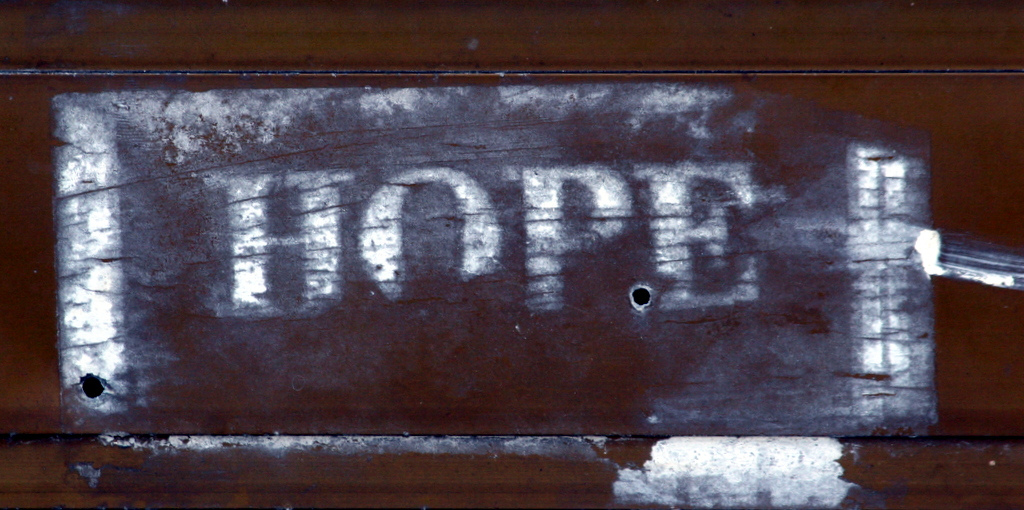
We also glory in our sufferings, because we know that suffering produces perseverance; perseverance, character; and character, hope. And hope does not put us to shame, because God’s love has been poured out into our hearts through the Holy Spirit, who has been given to us. Romans 5:1–5
This passage from Paul’s letter to the Romans reminds me of the old hymn, “My hope is built on nothing less than Jesus’ blood and righteousness.” For it is through the death of Jesus on the cross that we base our hope of redemption, grace, and life everlasting. As Paul says, through Jesus we gain access to the grace on which we stand.
But after affirming the tenets of our faith, Paul turns suddenly to the subject of suffering. It can seem jarring, but Paul knows that we live in a world that is not as God made it to be. Thus he tells the Romans that even as they hope and look to the coming kingdom of God, they must expect suffering. And that through their suffering they will gain the Christ-like attributes of perseverance, character, and hope. As the Holy Spirit fills their hearts, they will have the strength to make it through their suffering, whether it be persecution, pain, mistreatment, or other.
Suffering is not something we welcome, and perseverance is a trait we’d rather God simply gave us as a gift, instead of something we develop over time. But our character is formed day in and day out: through the sometimes hard conversations with family members; through how we treat the person at work we find particularly grating; through learning to give of ourselves selflessly, even when it’s not convenient; through holding back on flinging hurtful words to those near us. With the Holy Spirit living in us and empowering us, we can increasingly bring glory to God and peace to those whom we meet. As we do so, we will become beacons of hope – perhaps while not realizing just how much God’s light is shining through us.
Prayer: Lord, help us as we suffer that we might persevere. Fill us with your Spirit that we might rest in hope.
Today’s post by Lynda Alsford tackles an important, but often ignored, subject – how we forgive God. That is, how can we let God off the hook? Sound heretical? Read on.
You may think I’m being heretical even to talk about forgiving God, so let me say I’m totally convinced that God is completely without sin. He doesn’t need forgiving in the true sense of the word. Rather this relates to my perception of what has happened in my life. I’m talking about those times when we don’t understand why God has allowed something desperately painful to happen in our lives. We may blame him for it, and be intensely angry with him. Although I know in my head that God doesn’t sin, in my heart I thought he had done wrong by me.
As I grew up, all I wanted to do was get married and have children. In my twenties and thirties this became what I thought was a desperate need. However, many of my friends had weddings and became parents but I never did. The older I got the harder it was that I was single and childless.
By 2009 I was in my mid-forties and working as a successful Church Army evangelist at a Church in West London. But the pain of unwanted singleness and childlessness was indescribable. It was a knife going through me, a knife that was twisted every time I saw young women with their babies in Church. I couldn’t connect the intense pain I felt with a God of Love. Eventually it caused me to doubt the existence of God. It was easier than dealing with a God who had apparently betrayed me.
Being unable to deal with being an evangelist who no longer believed in God, I left the Christian ministry I enjoyed so much. I thought I was an atheist but I didn’t count on missing the God in whom I no longer believed. Eventually, after much searching and study, I came to a vital realisation. Faith is a choice. I would never be able to prove God. I would never be able to figure him out completely. I simply had to accept that God is there and he knows best even though I can’t understand it. I made a prayer of recommitment and felt immense peace. I realise now my faith has been through the fire described in 1 Peter 1:7:
These trials will show that your faith is genuine. It is being tested as fire tests and purifies gold—though your faith is far more precious than mere gold. So when your faith remains strong through many trials, it will bring you much praise and glory and honor on the day when Jesus Christ is revealed to the whole world. (NLT)
Photo: Aaron Burden
I know now that my faith is far more valuable than pure gold. It is the most precious thing in my life. Faith is what God is looking for. We are told in Genesis 15:6, “And Abram believed the Lord, and the Lord counted him as righteous because of his faith.” (NLT) Likewise Jesus says in John 6:29,“The work of God is this: to believe in the one he has sent.” (NIV)
If we could understand everything now we would not require faith. Having faith means we may not understand everything but still trust God anyway. It means saying with the writer of Hebrews 11:1, “To have faith is to be sure of the things we hope for, to be certain of the things we cannot see.” (GNB)
Acceptance of never having children didn’t come overnight. It took a long time, time which was filled with pouring out my pain to God and choosing to praise him as an act of my will. It isn’t an easy journey but it is so worth it. In the words of R.T. Kendall in his book Totally Forgiving God,
Totally forgiving God means setting him free, letting him off the hook and affirming him – even though he let some horrible things happen to you.
As an act of my will I let God off the hook. I went from feeling totally betrayed by him to accepting that he knows best. ‘Forgiving’ God has brought me through to a far deeper faith and consequently more peace.
My prayer is that you will be able to let God off the hook and affirm him despite any of the suffering you may have been through.
Lynda Alsford is a sea-loving, cat-loving GP administrator, who writes in her spare time. She has written two books: He Never Let Go describes her journey through a major crisis of faith whilst working as an evangelist at a lively Church in Chiswick, West London. Being Known describes how God set her free from food addiction. Both books are available in paperback and on kindle on Amazon.co.uk and Amazon.com. She writes a newsletter, Seeking the Healer, and is starting a new blog in the coming months. In both she shares the spiritual insights she has gained on her journey. The newsletter (and her blog in time) is found at her website www.lyndaalsford.com.
Watercolor Thursday doesn’t have quite the same ring, but yesterday is done and dusted; I only have the present.
I love this misty picture of fishing in the fog. Fishing is an act of faith anyway, and in the fog we can’t see what’s ahead or if anything’s jumping under the surface.
Against all hope, Abraham in hope believed and so became the father of many nations, just as it had been said to him, “So shall your offspring be.” Romans 4:18–25
Abraham and Sarah are two of my favorite characters in the Bible, partly because of what they experienced and felt. For instance, they faced the heartbreak of infertility for years before God promised Abraham that he’d be the father of many nations. Abraham’s biggest point of need – his desire for a son – was right where God met him. And not only met, but exceeded with mind-blowing abundance, for he promised that Abraham would have more descendants than the stars in the sky.
Abraham held on to God’s promise, even when it seemed impossible. In terms of him and Sarah conceiving a son, he believed God even though Sarah was long past her childbearing years. And God delivered; they had Isaac. Then Abraham held on to God’s promises through the heart-wrenching experience of being asked to sacrifice his beloved only son. Abraham knew that God would find a way to keep his promise, perhaps through the resurrection of the dead. For God had never failed him. And indeed, an angel of the Lord provided a ram in the place of Isaac.
Such hope and faith is modeled through a life of listening to and obeying God. As we mature in our faith, we learn to relinquish the requests that may not be of God or may not be for our best. We can ask God to change our hearts to align our desires with his. And our faith will grow as we look back and see how God has answered our prayers. I love reading through my old prayer journals, not only because they immediately and vividly transport me to times past, but because they reveal how faithful and loving is our God.
How might you be persuaded that God has the power to do what he has promised?
For reflection: “By faith Abraham, when called to go to a place he would later receive as his inheritance, obeyed and went, even though he did not know where he was going” (Hebrews 11:8).
When I consider those who construct fictional worlds seemingly from thin air, I’m in awe. For the stories we read move us, touching us in deep places that perhaps nonfiction cannot reach – or at least in a strikingly different way. Claire Dunn shares how her five-book series explores some of the truths of the heart – including forgiveness.
And throughout all Eternity
I forgive you, you forgive me.
As our dear Redeemer said:
“This the Wine, and this the Bread.”
–William Blake
Fiona Lloyd wrote movingly last week about learning to forgive herself and knowing she is beloved by God with all her human flaws. This is something that has also preoccupied me as a writer as I explore the lives of fictional characters and reflect upon my own.
The need to forgive touches the very heart of us and is not merely a form of words, but an act of love and understanding. There are many calls on us to forgive: the ill-judged words that unwittingly wound, the book lent and not returned, the thank you letter unwritten – small things in themselves that leave no lasting sting, but still require a ‘sorry’ or a hug. But how can someone forgive a grievous offence, a life-changing event, or a slight intended to destroy?
This is something explored in The Secret of the Journal series, where young Emma D’Eresby has cocooned herself in her world of work as a historian. She is fleeing from her past and finds refuge in the lives of other people. History cannot hurt you, she says; it is dead and gone. However, detached from the world, she has failed to face the truth about her own past as if by leaving it unvoiced it would somehow be forgotten, and in being forgotten lack the potency to hurt. But, like a festering wound that needs to be scoured, Emma had to examine her relationships with her own history before she can finally heal.
Emma knows she is redeemed, she understands why, but she does not feel it deep inside, and she has come to rely on her own resources. She has built a fictional world around herself in which she can hide from God and from herself. Or so she thinks. Only when she is shaken from the safety of her bubble by a string of events does she begin to face the truth. Looking the demons of her past in the eye is the first step towards healing inside out, and she forgives those who have hurt her most. Yet, while Emma is able to forgive others, she reserves judgment for herself, for how can she be forgiven when she cannot look at God in case she sees condemnation there? She has missed the point.
I wrote The Secret of the Journal series as romantic mystery-suspense laced with history, but at its very heart lies a tale of acceptance, understanding, and forgiveness.
The act of forgiving is a gift. Forgiveness lies within for how can you absolve another if you have not first forgiven yourself? Love is not our own, but a state of grace bestowed on us by a loving God. Forgiveness is a two-way deal.
Writing as CF Dunn, Claire Dunn is a Christian novelist writing historical and contemporary suspense fiction for the general market. Her debut novel Mortal Fire – published by Lion Fiction – won the gold medal for adult romance in the Book Of The Year Awards, 2012, and was nominated for Best Novel by CRT in the same year.
Alongside her first loves of family, history and writing, CF Dunn is passionate about the education and welfare of children with dyslexia, autism and communication difficulties, and runs a special needs school, which she founded in Kent with her husband.
Book five of The Secret of the Journal series – Fearful Symmetry – was recently released in the UK and USA, bringing the series to a heart-stopping conclusion. She is currently writing the first book in a Medieval suspense trilogy and drinking too much coffee.
Today’s “Watercolor Wednesday” by my dad, Leo Boucher, is actually a painting with oils. This one, entitled “Eternity,” captures the viewer’s gaze, not only for the intriguing areas of meaning but because it’s so very large when you see it.
Forgiveness has so many facets, and Fiona Lloyd touches on one we often overlook. I love her thoughts in this post, and invite you to take a moment to read and ponder.
There’s a woman at my church who really gets on my nerves. It’s not that she deliberately sets out to antagonise me: in fact, I know she means well. If I wrote a list of the ways she offends me, you’d probably think I’m overreacting. But when she admits she’s failed (yet again) to follow through on a promise to pray for someone, or confesses she’s missed another opportunity to share her faith, I can’t help cringing inside. I know I should be forgiving, but all too often, critical phrases jostle for attention at the forefront of my mind, leaving little space for gracious words.
If at this point you’re tempted to pull up the comments box and offer a timely reminder about specks and planks, please bear with me. In case you haven’t guessed – and at the risk of being self-indulgent – this irritating individual I find it so difficult to forgive is me.
Why is it that we can read and understand Jesus’ words about the need to forgive one another, but fail to apply this to ourselves? However offensive the actions of others towards us, we generally accept that Jesus meant exactly what he said in this regard – even if the reality feels harder than attempting Everest in roller-skates! But somehow, the need to extend the same abundant grace to ourselves doesn’t register. We agonise over simple mistakes and clumsily-spoken words. We clutter our thinking with regrets and what ifs, beating ourselves up over what might-have-been, if only we hadn’t been such a pathetic example of what it means to follow Jesus.
For the last few years, I’ve picked a word to focus on for the year, based on the book My One Word, by Mike Ashcraft and Rachel Olsen. In 2016, my word was beloved. I have to confess I felt intimidated by this word. In my prayer times, I dropped unsubtle hints to God that maybe He would like to give me an alternative. I did my best to consider other options; mostly pro-active words (such as honour or serve) that would allow me the opportunity to be more self-critical. But it was no use: beloved clung to me like a stray piece of sticky tape.
Photo: Pixabay
For the first couple of months, I kept my word at arms’ length. I knew in my head that I was – and still am – a beloved daughter of God, but allowing that truth to take up residence in my heart was far too threatening. I struggle with making myself vulnerable, and acknowledging that I was His beloved would require me to dismantle the barbed-wire fence of self-criticism I had constructed over many years as a protective mechanism.
The challenge of my word was that in taking it seriously, I had to learn to listen afresh to what God thinks about me, rather than clinging to my own blinkered perspective. All too often, my names for myself run along the lines of failure, no-hoper and misfit; but God calls me beloved, acceptable and included. Furthermore, He tells me I am forgiven. He’s aware all the times I’ve wandered off and ignored Him. He sees the minor slip-ups and the whopping great messes that are far too embarrassing to share in a blog post. He knows it all, and He still delights in me. His forgiveness is not based on my ability (or otherwise) to earn his approval, but on His tremendous love for me; a love that sent Jesus to sacrifice Himself in my place.
So, if God finds it easy to forgive me, why should I persist in condemning myself? It’s a slow process, but I’m learning to reject the harsh words that spring to mind whenever I get things wrong. And in choosing to receive God’s forgiveness, I am also taking the decision to forgive and accept myself. I’m starting to feel more at ease with the notion of being God’s beloved. The ugly names I’ve called myself in the past have (mostly) lost their power – and I’m convinced that every time I opt for forgiveness rather than self-loathing, their grip loosens a little more.
Lewis B Smedes once wrote: To forgive is to set a prisoner free and discover that the prisoner was you. Forgiving one another is a vital part of the Christian life; but to fully experience the freedom Jesus offers, we must also learn to forgive ourselves.
Fiona Lloyd lives in Leeds with her husband, where she pretends not to mind that her three children have grown up and are moving on. She spends her working days teaching violin in local schools, and her spare time doing as much writing as she can get away with. She worships at her local Baptist church, and is a member of the worship-leading team. Fiona blogs at fjlloyd.wordpress.com, and you can find her on Twitter at @FionaJLloyd. She is vice-chair of the Association of Christian Writers.
My publisher, the Bible Reading Fellowship, asked some thought-provoking questions about why I wrote The Living Cross. I love that the roots of the idea were sparked by Jill Saward’s story – someone whose life has been celebrated at the beginning of the year after her untimely death. Here’s a taster of the interview, and a link to read the whole thing. Also, if you’d like to buy the book but are worried about becoming behind in the readings, BRF will send you the first two weeks as a PDF while your printed version comes in the post.
Why is Lent a good time to pick up a book?
I’ve found Lent a wonderful time to come before God and examine my heart and my actions. In doing so, I’ve found that it became a rich season of intimacy with God. I hope that, if people pick up The Living Cross, they too will find their relationship with the Lord strengthened as they engage with biblical stories from the Old Testament and the New.
What drew you to writing about forgiveness?
The germ of the idea for a book on forgiveness came back in 2006 when I read an article in the Telegraph about the late Jill Saward’s act of forgiving her attackers. Instead of being shackled with bitterness, she campaigned for the good of other rape survivors. I wanted to explore the biblical roots of this freeing topic and to find other inspiring stories to share.
Jesus replied, “Truly I tell you, if you have faith and do not doubt … you can say to this mountain, ‘Go, throw yourself into the sea,’ and it will be done. If you believe, you will receive whatever you ask for in prayer.” Matthew 21:18–22
Our passage comes during what was the original Holy Week of Jesus’ death and resurrection, although the disciples didn’t realize it then. (And yes, I’m a little out of sync with the church calendar with Lent starting tomorrow. Think of it as a taster of things to come…) Jesus and his friends were walking from Bethany to Jerusalem when he encounters an unfruitful fig tree. He makes it wither, which amazes the disciples. But the fig tree symbolized Israel, for neither were they reflecting God’s fruit.
Then Jesus says that we should have faith and believe. That if we hope and trust in God, looking to him for our fruitfulness, he will answer our prayer. Of course, this can get tricky if we believe it literally, in a mindless “The Bible says it; I believe it” sort of way. Then we become as a demanding child, insisting that God should give whatever we ask in prayer.
Those who care for young children can see this folly acted out. Of course we aren’t going to give kids endless sugar or let a toddler climb a ladder unaided. God might similarly turn down some of our requests. Perhaps our most poignant experiences of learning from and leaning on God have come through unanswered prayer. They certainly have for me.
But Jesus wants us to have faith and believe. While we become downhearted quickly, thinking that our circumstances or another person will never change. I know I’ve been prone to this stance of unbelief. For instance, a former colleague and I couldn’t reach a meeting of the minds in terms of expectations or delivery, and I wanted to give up. But I knew I had to examine my own attitude, so I asked God to help me see her as he created her. Slowly, and sometimes painfully, I began to change in my outlook. And our working relationship improved.
What mountains need moving in your life?
For reflection: “If I have the gift of prophecy and can fathom all mysteries and all knowledge, and if I have a faith that can move mountains, but do not have love, I am nothing” (1 Corinthians 13:2).


 Lynda Alsford is a sea-loving, cat-loving GP administrator, who writes in her spare time. She has written two books: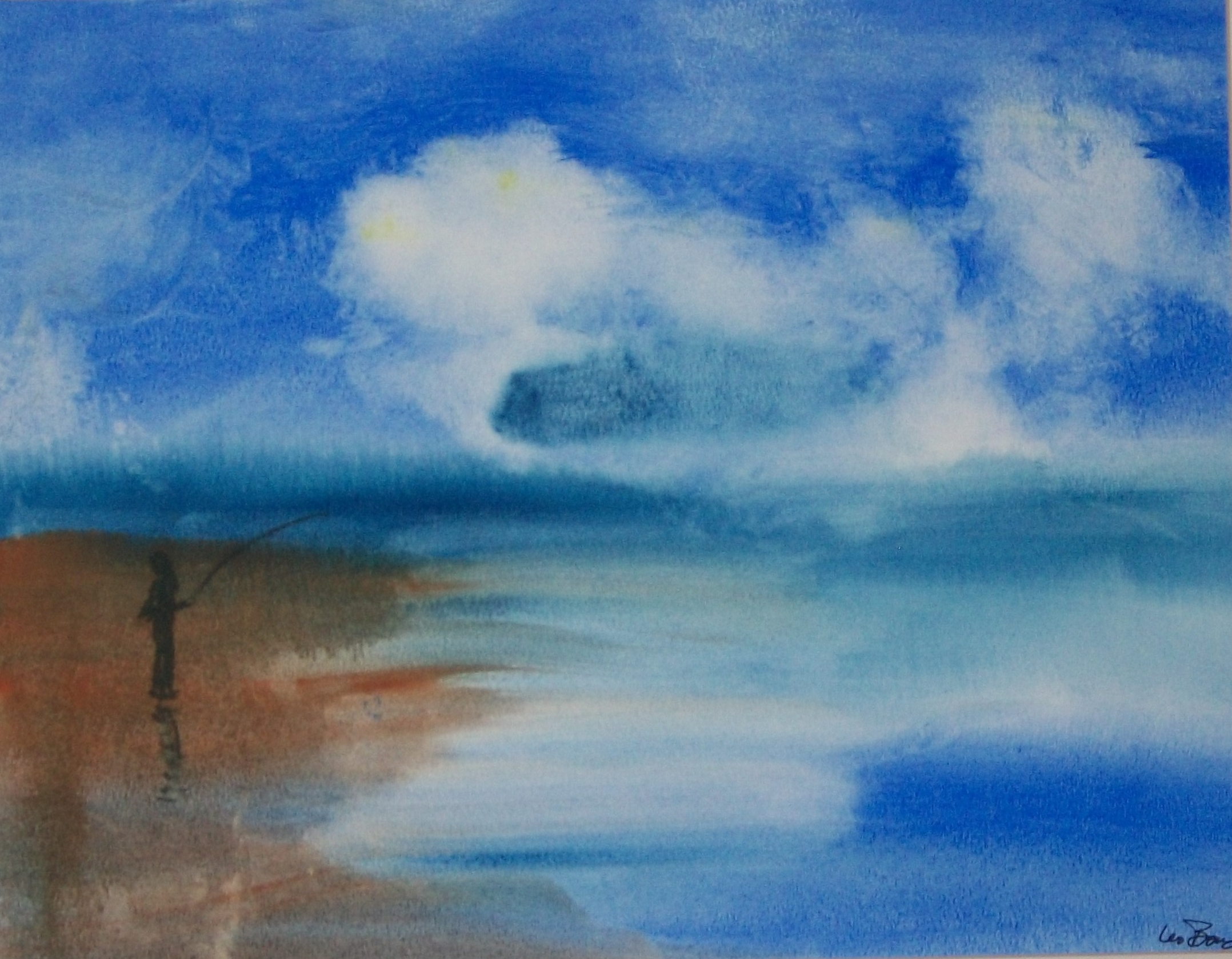

 Emma knows she is redeemed, she understands why, but she does not feel it deep inside, and she has come to rely on her own resources. She has built a fictional world around herself in which she can hide from God and from herself. Or so she thinks. Only when she is shaken from the safety of her bubble by a string of events does she begin to face the truth. Looking the demons of her past in the eye is the first step towards healing inside out, and she forgives those who have hurt her most. Yet, while Emma is able to forgive others, she reserves judgment for herself, for how can she be forgiven when she cannot look at God in case she sees condemnation there? She has missed the point.
 Writing as CF Dunn, Claire Dunn is a Christian novelist writing historical and contemporary suspense fiction for the general market. Her debut novel Mortal Fire – published by Lion Fiction – won the gold medal for adult romance in the Book Of The Year Awards, 2012, and was nominated for Best Novel by CRT in the same year.

 Fiona Lloyd lives in Leeds with her husband, where she pretends not to mind that her three children have grown up and are moving on. She spends her working days teaching violin in local schools, and her spare time doing as much writing as she can get away with. She worships at her local Baptist church, and is a member of the worship-leading team. Fiona blogs at