We’ve arrived at Holy Week, ushered in yesterday on Palm Sunday when Jesus rode into Jerusalem on a donkey. As I outline in my book, The Living Cross, one way to approach Holy Week is to consider each day what Jesus experienced, being conscious throughout the day of the unfolding events. I compiled the following based on what I found in Michael J. Wilkins, The NIV Application Commentary: Matthew (Zondervan, 2004), pp. 709–10.
Saturday (8 April)
Evening celebration; Mary anoints Jesus (John 12:2–8)
Forgiveness – how many times do we need to forgive? Mel Menzies poses this question with authenticity, for she has had to forgive over and over again, as you’ll read in her deep and searching post. I think you’ll be encouraged by her example.
You only have to forgive once.
That’s the repeated phrase that leapt out at me in the film version of The Light Between Oceans by M.L. Stedman.
Is that true? Jesus spoke of the necessity of forgiving seventy times seven, a number that showed the complete and never-ending quality of God’s forgiveness of us. So how does this pan out in real life?
Forever Forgiveness
My first marriage, begun in less than ideal circumstances with a baby on the way, is a case in point. To put it bluntly, my husband felt trapped. Having told my child’s father that I’d rather go it alone than have a termination, I felt I was subsequently presented with the choice as to whether our baby daughter was to live or not when she developed encephalitis. I begged God’s forgiveness for my wrong-doing and, pleading with him for her life, I promised to follow him faithfully.
My first book, written to comfort others with the comfort I received from God, tells the story of The Tug of Two Loves as the differences between my husband and I escalated now that I was a disciple. I’d already had to visit an STD clinic when he admitted to a one-night stand, and I now encountered a repeating cycle of infidelities. Another woman’s nightwear appeared beneath the pillow on my bed after I went to visit my parents, and female underwear appeared among the washing in my husband’s suitcase when he went away on business trips.
Unable to bring an end to our unhappy marriage himself, he would goad me to do so. ‘Well, if you don’t like it, you know what you can do!’ But the fact was that I couldn’t; I loved him, and I saw in him what I recognised in myself. He was the least favoured son, second to an academic older brother, just as I was a misfit in my family. Besides, how could I condemn him when I knew myself to be less than perfect?
For fifteen years I went on forgiving him, until – one Christmas morning, having destroyed his best friend’s marriage – he brought ours to an end. But that wasn’t the finish. His best friend died in what was assumed to have been a suicide, and our second daughter began a heroin addiction. For a further thirteen years, although both remarried, her father and I remained in touch, forced by our daughter’s circumstances to collaborate. (Her story, A Painful Post Mortem, is available as an e-book.)
He was already a heavy drinker, and increased alcohol consumption took its toll on his health until, with his death imminent, he begged me to attend his funeral. Visiting him in hospital, I sat and held his hand, praying that he might know not only my forgiveness, but would seek God’s, too. A few days later, at his wish, our first-born, now a Vicar, took his funeral, which I attended.
The pain of this experience brought home to me in some small measure, as nothing else could, the hurt God must feel when we wrong him. To this day, I am unable to stem the tears when I take communion and remember what Jesus has done for me.
Even in the black barren lava fields of Lanzarote, vineyards can take root and flourish.
Shaking the Dust from Your Feet
Other experiences have taught me, however, that there are times when forgiveness does not equate to reconciliation. When an agreement made between my parents, my youngest sister and her husband ripped our family apart, I applied the same principles of forgiveness. Verbal or written admissions of clemency, however, can have a negative effect. In forgiving someone, openly, we are stating that they are in the wrong. And if they don’t, or won’t, acknowledge any wrong-doing, the discord in relationships may go from bad to worse.
Enduring fourteen years of vitriol from my father in which my every attempt at reconciliation failed, I reached a point of peace when my dad lay dying in his bed. Sitting, holding his hand, I sang his favourite hymn, Dear Lord and Father of mankind, and, on my return home, learned that he had passed away ten minutes later. It was, I felt, as if he thought he had been given permission to let go.
Sadly, the same cannot be said about my youngest sister and brother-in-law, but I live in hope. Recognising the depressive and suicidal effect that the venom directed against me has had on my senses, I spoke with Revd David Coffey OBE, my one-time minister and friend, and understand that I can achieve nothing by staying in touch with my accusers. Into God’s hands I commit my forgiveness and prayers, in the sure and certain belief that in him all things are possible.
Merrilyn was first published in the 1980s, with commissions from Lion and Hodder & Stoughton, one of which became a Sunday Times No. 4 Bestseller. Her God-given directive is to comfort others with the comfort she has received in times of sorrow, and to this end she is available for speaking events. In the belief that God has now told her to ‘entertain your readers so they will absorb truths they might otherwise resist’, she now writes fiction under her maiden name, Mel Menzies. Her Evie Adams series – mysteries with a message – are set in Devon and have a counsellor, rather than a detective, to solve the mystery. Time to Shine went briefly to No. 1 in its category on Amazon and, as well as Chosen?, has received a number of reviews. www.melmenzies.co.uk ALL PROFITS & ROYALTIES ARE FOR TEARFUND TO SUPPORT SYRIAN CHILDREN.
As we reach Holy Week next week, we come to the pinnacle of the cross and resurrection. My dad’s artwork offering reminds us of the Trinity – of God the Father, Son, and Holy Spirit. The Father who sent his Son to die and rise again. The Son who indeed came. The Spirit who fills us and loves us. May you be wrapped in his triune love.
On him we have set our hope that he will continue to deliver us, as you help us by your prayers. Then many will give thanks on our behalf for the gracious favor granted us in answer to the prayers of many. 2 Corinthians 1:8–11
Again we look at hope; again we look at suffering. In the New Testament, Paul writes about these interlinked topics the most. And here he emphasizes the importance of prayer.
A couple of years ago my husband and I experienced the fear that is borne of one’s child being ill. Our son, who had gone to sleep without complaint, was barely able to breathe at midnight. As we wondered what was wrong, we made the necessary calls and almost reflexively gave our son over to God’s care. We waited for the emergency medics and I prayed over my son with words from deep within – while trying not to frighten him further. Soon help arrived and he was breathing oxygen and feeling better. A middle-of-the-night trip to the hospital was necessary, but the crisis passed with a diagnosis of croup and tonsillitis. He will recover, praise God.
My suffering was short-lived but intense, as fleetingly I wondered how I would cope if my son ceased to breathe. But I knew I had to put those thoughts aside and turn to prayer. Similarly, Paul, through speaking of his experiences, exhorts the believers at Corinth not to give up as they suffered but to pray. Again Paul is not downplaying suffering, but shows how through it we can increasingly rely on God instead of ourselves. And he emphasizes how God lovingly answers prayer.
As we see God move in our lives, we build our faith on his solid foundation. In this instance, our son soon was well – praise God. But if God had allowed him to die, I pray we too would not have despaired unto death but somehow held onto our sure hope of heaven. I pray you and I will be spared such heartbreaking trials, by God’s mercy.
Prayer: Lord, we remember the many children in many lands of the world who are suffering today and have no access to medical care. Lord, have mercy.
Godspell, a villanelle, and forgiveness – I love the richness and variety of my guest writers. I hope you’re as intrigued as I was to read Amy Robinson’s post!
Have you ever seen the 1973 film version of Godspell – the one starring Victor Garber? It’s well worth a watch if you haven’t. The script uses sections of Matthew’s Gospel to frame a story in which Jesus and the disciples are a sort of Vaudeville acting troupe performing parables around New York. It surprises me every time I watch it, because from somewhere among the facepaints, rainbow clothing and rocking music, the sheer unexpected force of the words of Jesus leaps out and hit me sideways.
Photo courtesy of Everett Collection.
There’s a scene early on in the film when the new, excited troupe are acting the parable of the unforgiving servant. The master forgives his servant a huge debt, but the servant then goes on to refuse to forgive a much smaller debt, so the master orders him to be captured. The troupe performs the arrest and then, with great relish, they pretend to torture the servant. In the middle of their fun, Jesus says casually over his shoulder, “And so will my heavenly father repay you, if you do not forgive…” and they all look up at him aghast, the wind taken right out of their sails.
This challenge of forgiveness at the heart of Christianity is summed up in the two lines of the Lord’s Prayer: “Forgive us our trespasses, as we forgive those who trespass against us”. In the comma between those two lines is hidden a huge effort of will and grace as we make the leap between accepting forgiveness for ourselves and offering it to others.
The following poem is a villanelle, which is a strict form that takes two repeating, rhyming lines through the poem, only bringing them together as a couplet at the end. It seemed right for a meditation on these two lines from the Lord’s prayer, which are together in one breath and yet sometimes so far apart in my ability to pray and mean them.
Forgive me, Lord, my sins, and make me free.
But next, the hardest line of all to say:
“As I forgive the ones who once hurt me”.
My lips repeat the words reluctantly:
my heart rebels and struggles to obey.
Forgive me, Lord, my sins, and make me free,
and help me in your constant light to see
my foes, my friends, and all my yesterday
as I forgive the ones who once hurt me,
because their debt and mine, one endless fee,
was what you gave your perfect life to pay.
Forgive me, Lord, my sins, and make me free,
and by your grace and love hand me the key
that opens up this dungeon to the day
as I forgive the ones who once hurt me.
Oh Lord, who spoke those words upon the tree,
who while still hurting prayed, teach me to pray:
Forgive me, Lord, my sins; and make me free,
as I forgive, the ones who once hurt me.
Amy Robinson is a writer, performance storyteller and ventriloquist, and benefice children’s worker for four Suffolk church communities. She has published three books with Kevin Mayhew, writes scripts and resources for www.GenR8.org and blogs a bit at www.amystoryteller.com. She lives in a rectory with the rector, two children and lots of puppets. You can find her on Twitter at @Ameandme and at Facebook. Read her contribution to the “There’s No Place Like Home” series here.
The season of Lent can feel lonely as we experience feelings of being on our own. God seems distant; silent. We walk the trail, step by step, perhaps with a cry of lament. Come, Lord. Come.
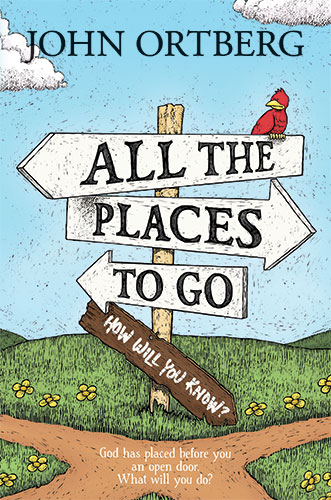
I haven’t posted a book review for a long time. Here’s one about a book by a popular author, John Ortberg, exploring doors. Yes, doors!
God’s wisdom never ends. We proclaim this to be true, but I realized it afresh when reading a book by a Christian who has submerged himself in the Bible for decades. I understood again how much I don’t know – and how much I have yet to learn and understand.
Here John Ortberg explores doors. Now I knew that doors appeared in Scripture, such as that which Holman Hunt pictured in his famous painting on Revelation 3:20, “I stand at the door and knock.” Or Jesus being the door for the sheep in John 10:7. But I loved learning the layers of meaning the author uncovers in such a simple symbol – doors that open for us, doors that close, how we approach doors, do we fear that doors will remain slammed shut, do we run from doors.
But Orberg isn’t concerned so much about the particular doors, rather the people we become as we approach them, and our relationship with the Master Door Opener/Closer. He sees life as a series of choices that impact our characters – will we yell at our (grand)kids/spouse/friends or humble ourselves and put their needs first? What happens to our hearts when God opens a door but we follow in Jonah’s footsteps and run a mile? What about when we, like Abraham, venture into the unknown? Do we pretend our husband is our brother, as he did with Sarah? Or do we grow in our character and follow God in obedience with faith, even when the Lord asks us to make our biggest sacrifice ever (as he did with Abraham and Isaac)?
I found All the Places to Go engaging and thought-provoking, and appreciated understanding doors in a new way. It’s a book that sparks ideas – it makes me want to delve into the Bible with new questions. But although John Ortberg’s books can be funny or provocative, his humour can jar people at times, and his style might not be yours. Some of his stories and asides I would have cut with my editor’s red pen – but you might resonate with just those passages and diversions.
Though mentors weren’t a main emphasis of his book, I found their impact in his life to be moving and encouraging (for instance, he learned about the levels of meaning of the door from his Greek professor). As modern people, we can let our goals or dreams of success waylay us from our relationships, but life is about people and friendships and doing the journey together. Whether the door is open or shut.
All the Places to Go … How Will You Know?: God Has Placed before You an Open Door. What Will You Do?John Ortberg (Tyndale, ISBN978-1414379005)
For in this hope we were saved. But hope that is seen is no hope at all. Who hopes for what they already have? But if we hope for what we do not yet have, we wait for it patiently. Romans 8:18–27
I have an amazing friend whose husband works in the oil industry. When he got a job in Dubai some years ago, she moved to a country she had never before visited. She trusted and believed that this was right. And it has been, for their sons have experienced the riches and challenges of a country far different from that of their parents. Then after some six years their time in the Middle East ended, and again they moved to a city she and the boys had never visited, this time Houston in Texas.
My friend reminds me of this passage from Romans, as well as Hebrews 11 with its list of the heroes of faith who welcomed from a distance the things they were promised. They couldn’t see what they hoped for, but they kept believing. Their hope was not a vague thing, such as “I hope my team will win.” Rather it referred to something solid, as we saw last week – something on which to build our lives.
Paul here speaks again of the suffering we will endure on earth. Yet because we have God’s Spirit living in us, as a deposit, we have this solid hope. Hope for things to come – our redemption, and the redemption of the world. Hope that helps us to endure and wait patiently for God to come good on his promises.
Living in the light of the hope of heaven can infuse our lives with joy in the midst of trials. For as Jesus said to his disciples, “In this world you will have trouble. But take heart! I have overcome the world” (John 16:33). And though we suffer, even the finality of death is tempered by the forthcoming grand reunion at the wedding supper of the Lamb (Revelation 19:9).
Prayer: Lord Jesus Christ, make me into a person of hope, who believes that you will do what you promise.
Forgiveness is healing – that’s the title of a wonderful book by Russ Parker, which has been a primary go-to book on the subject for decades. For forgiveness does bring healing, as we see in this inspiring and heartwarming story that Russ shares. Think of how many lives would be different if siblings – and friends and acquaintances – embraced like these two did. (Russ tells the story in his book, but recounts it here in a fuller form.)
I was just about to introduce our very first healing service in our church when it happened. It was the Saturday night before Easter and a group from a number of churches in town had come to pray and find the healing they were looking for. I was about to announce the opening hymn when my Verger, Roy, interrupted me and said that he did not think that this was a properly constituted service for an Anglican church. I explained that it was an ecumenical service and the Bishop was OK about it. He was quiet for a moment and then said, “I really don’t know why I have come to this service tonight.” His remarks saddened me and caused a minor irritation amongst the rest of the congregation. However, that was when God’s grace stepped in.
Roy’s wife, Eva, dug him in his ribs with her elbow as if to say, “Go on spit it out!” And that is what he proceeded to do. He almost erupted when he declared that try as he might he just did not like his younger brother. Years earlier his mother had died and his father remarried. It was from this second marriage that his brother Frank had been born. “All my daddy’s love went to my brother and I felt pushed out,” Roy said. “I hated him. The only good thing about him is that he lives far away in South Africa. Mind you he comes home now and then and I go through this game of pretending to be nice to him but really I can’t stand being near him.”
At this point some late arrivals came in at the back of the church. One them, hearing Roy speak, suddenly jumped to his feet and called out, “Roy!” It turned out to be Roy’s brother Frank. Roy was startled to hear his brother’s voice call out to him and he turned around to face him and said, “O God, I’ve been telling everyone I hated you.”
“I know that,” said Frank.
“You do!” replied Roy.
“Why do you think I went to live in South Africa? I decided to get right out of the way so you could have all of our dad’s love.”
“Well, it didn’t work,” said Roy. “Dad didn’t really pay any attention to me.”
Photo: Paul Sableman, flickr
In an attempt to move out of his obvious embarrassment Roy asked Frank, “Why have you come home now? We weren’t expecting you.”
“Well,” said Frank, “I was offered promotion at the school I work at near Cape Town. I was invited to become the Principal of the new school. I was sitting at my desk writing my letter of acceptance when I thought to myself, ‘I wonder what the verse on my Bible calendar has to say about today?’ As I was a few days behind I ripped away to the day’s date and the reading set for that day was, ‘If you are presenting your gift at the altar and you know that your brother has something against you, then leave your gift at the altar. First go and be reconciled with your brother.’ (Matthew 5v23+24)
“I asked the school authorities if they would give me a few weeks before I replied as I had something I needed to do. They refused and said they wanted an answer very soon. So I said no, I needed to go home and see my brother first and that is why I am here tonight Roy.”
There was a stunned silence in the church as we all waited to see how Roy would respond to this fact. His brother had gone thousands of miles to get out of the way of Roy being loved by his dad and now he had given up a job promotion and travelled those same thousands of miles to be reconciled to his brother.
Suddenly Roy dashed up the aisle of the church and Frank climbed out of his pew and the two brothers raced into one of the most passionate and heartfelt hugs I have ever seen. They wept as they embraced and the healing each was receiving was visible on their faces.
I turned to the congregation and said, “This seems a good moment to invite anyone else who needs healing to come forward for prayer with the laying on of hands. So if that is you, then come.” Every single person in church that night came out to engage with the Christ whose healing reaches out to touch us at our point of need.
Frank never did go back to South Africa but lived in that town for some years and Roy was transformed from a rather distant and reserved man into a warm and passionate servant of his Lord.
Russ Parker has written a number of books which include Healing Dreams, Healing Death’s Wounds, Free to Fail and Healing Wounded History. He travels extensively around the UK and abroad, lecturing and teaching in issues connected with Christian healing and healthcare, reconciliation and church transformation.
Russ has been a church leader in a number of different settings and is also a co-founder of the Community of Aidan and Hilda whose mother house is situated on the holy island of Lindisfarne. He is married to Roz and lives near Farnham, Surrey, and supports Liverpool Football Club, whether they are winning or losing!
Amy’s book The Living Cross explores forgiveness through a series of daily Bible readings for Lent. You can find out more about it, and how to purchase, here.
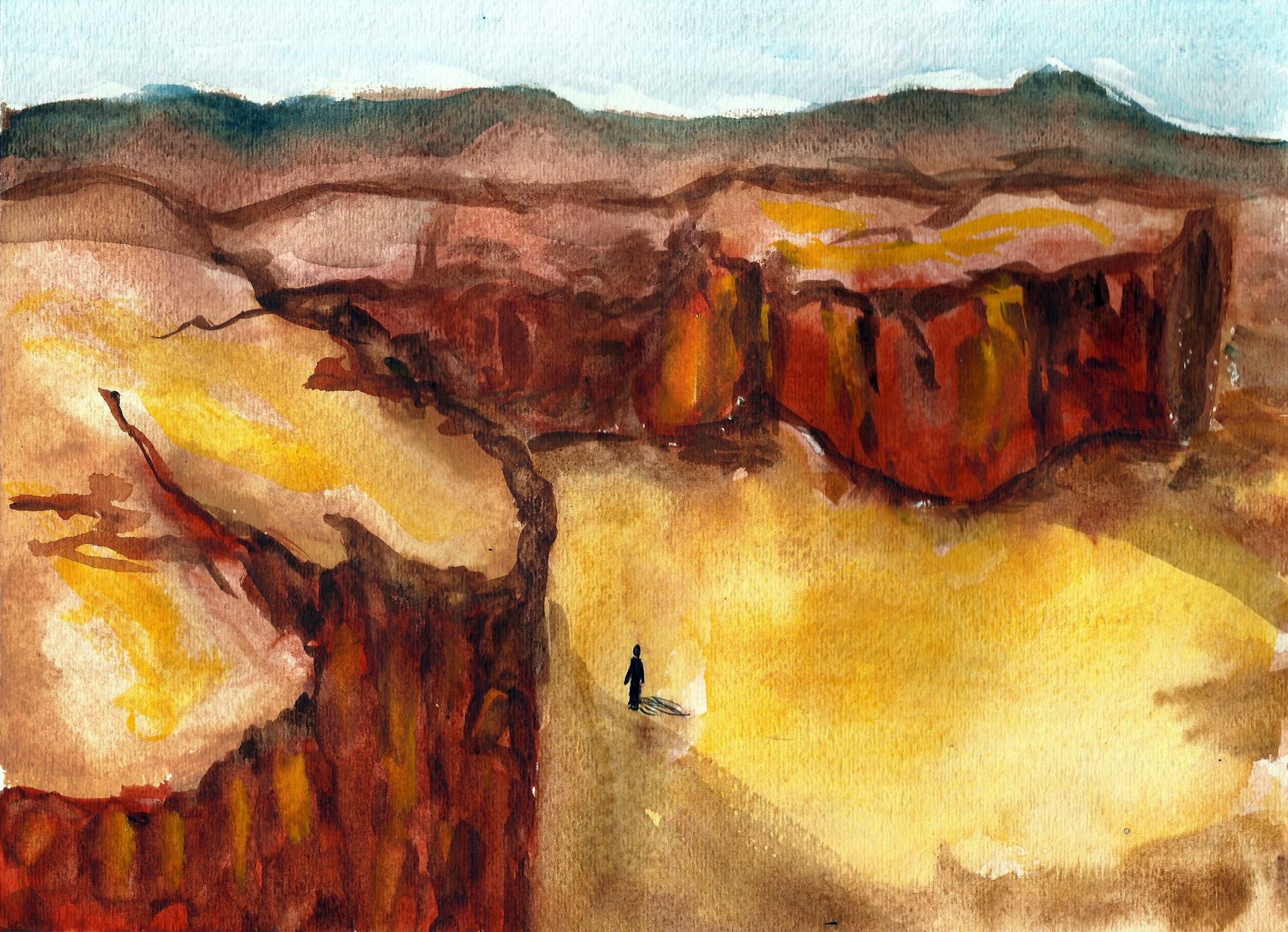
During Lent we are invited to ponder the life of Jesus. How God became man and dwelled among us. How he suffered and was abused. How, indeed, he experienced his own desert experience.
Do you feel like you’re banished to the desert? I pray you’ll feel the comfort of One who has experienced all this and more.
 We’ve arrived at Holy Week, ushered in yesterday on Palm Sunday when Jesus rode into Jerusalem on a donkey. As I outline in my book, The Living Cross, one way to approach Holy Week is to consider each day what Jesus experienced, being conscious throughout the day of the unfolding events. I compiled the following based on what I found in Michael J. Wilkins, The NIV Application Commentary: Matthew (Zondervan, 2004), pp.
709–10.
We’ve arrived at Holy Week, ushered in yesterday on Palm Sunday when Jesus rode into Jerusalem on a donkey. As I outline in my book, The Living Cross, one way to approach Holy Week is to consider each day what Jesus experienced, being conscious throughout the day of the unfolding events. I compiled the following based on what I found in Michael J. Wilkins, The NIV Application Commentary: Matthew (Zondervan, 2004), pp.
709–10.

 Merrilyn was first published in the 1980s, with commissions from Lion and Hodder & Stoughton, one of which became a Sunday Times No. 4 Bestseller. Her God-given directive is to comfort others with the comfort she has received in times of sorrow, and to this end she is available for speaking events. In the belief that God has now told her to ‘entertain your readers so they will absorb truths they might otherwise resist’, she now writes fiction under her maiden name, Mel Menzies. Her Evie Adams series – mysteries with a message – are set in Devon and have a counsellor, rather than a detective, to solve the mystery.


 Amy Robinson is a writer, performance storyteller and ventriloquist, and benefice children’s worker for four Suffolk church communities. She has published three books with Kevin Mayhew, writes scripts and resources for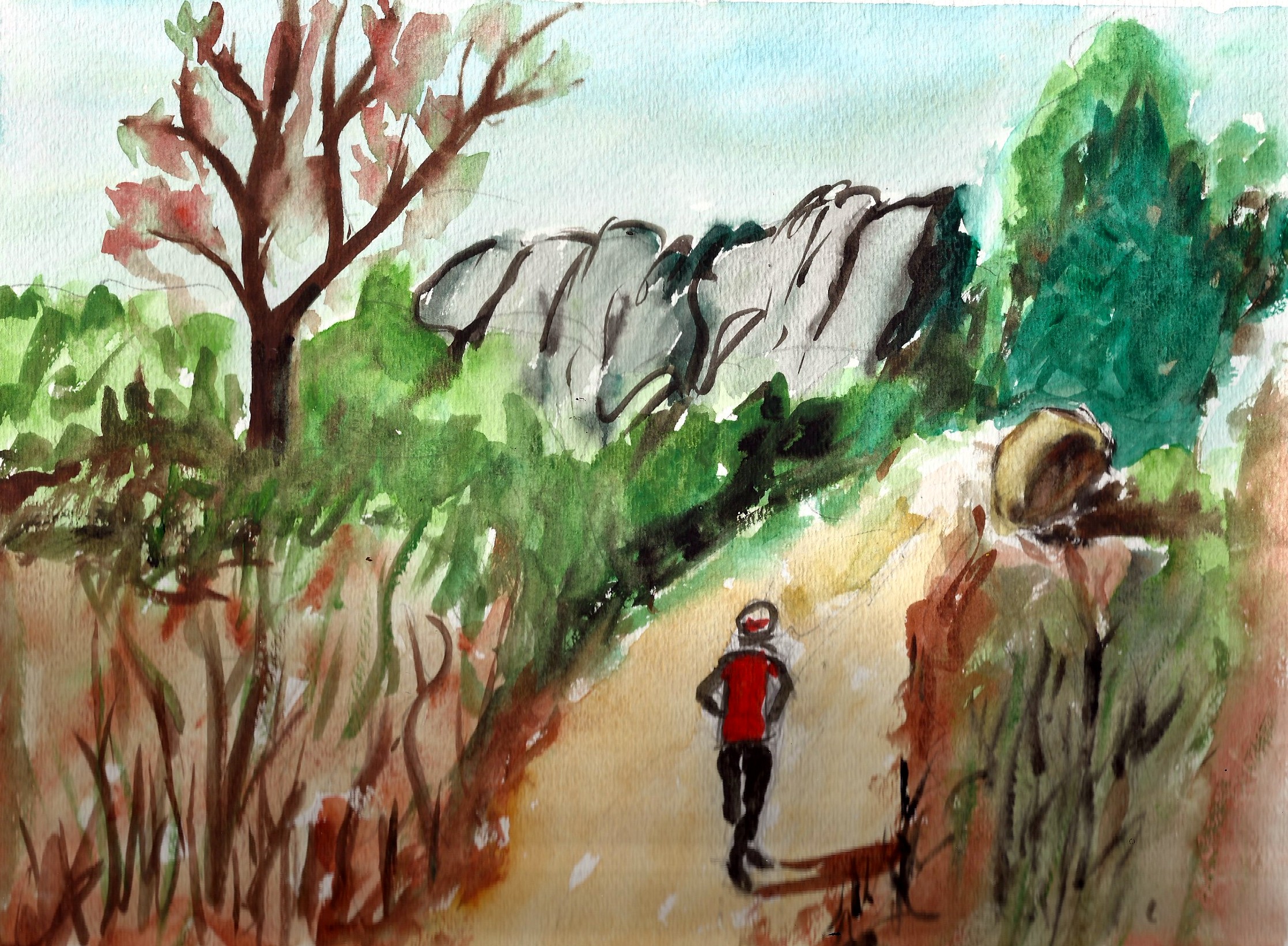


 Russ Parker has written a number of books which include Healing Dreams, Healing Death’s Wounds, Free to Fail and Healing Wounded History. He travels extensively around the UK and abroad, lecturing and teaching in issues connected with Christian healing and healthcare, reconciliation and church transformation.