Author: Amy Boucher Pye

  • Forgiveness Fridays: The miracle to forgive even a murderer

    When writing The Living Cross, I was moved by the extraordinary stories of people who were able to forgive those who murdered someone close to them. After reading several of these accounts, I attributed this special grace to not only God’s working in their lives, but the way their character had been formed over years of forgiving the everyday slights and faults. As we ponder the horrible atrocities that seem to come thick and fast in our world –  such as the killing of many young people at the concert in Manchester – we can find encouragement and hope in the stories of forgiveness.

    The family of Robert Godwin Sr. exhibited God’s love and forgiveness to the murderer of their dad. (In a shocking move, the man who shot Mr. Godwin posted the murder on Facebook.) Two of Mr. Godwin’s daughters, Debbie Godwin and Tonya Godwin Baines, were interviewed on CNN by Anderson Cooper before the murderer was located by the police. They shared how their father was a peaceable man; “a loving, kind man who loved his family and who was very giving – he’d give the shirt off of his back.” He was the father of five daughters.

    Cooper asked her about her father’s killer. “If this person is out there listening, what do you want them to know? Obviously, you want them to turn themselves in, but what do you want to say to them?”

    “I would say turn yourself in, that would be number one,” Debbie Godwin said. “I mean because although I do believe in forgiveness, I do believe in the law… when you break the law, there’s a penalty for breaking the law. And this man broke the law by taking my father’s life.

    “And so although I forgive him, there is still a penalty that he must pay for what he did to my dad. And so I would want him to turn himself in.”

    In the interview we see some of the strength and depth of her character, for she said, “And you know what, I believe that God would give me the grace to even embrace this man. And hug him.

    “…It’s just the way my heart is; it’s the right thing to do. And so, I just would want him to know that even in his worst state, he’s loved … by God, that God loves him, even in the bad stuff that he did to my dad. That he’s still loved. And that he has some worth … in him. And as long as there’s life in him, there is hope for him too.”

    Tonya Godwin Baines added, “The thing that I would take away the most from my father is he taught us about God. How to fear God. How to love God. And how to forgive. Each one of us forgives the killer. The murderer.”

    “You do?” Cooper asked.

    Debbie said, “We absolutely do. I honestly can say right now that I hold no animosity in my heart against this man. Because I know that he’s a sick individual…

    “If I didn’t know Him as my God and my savior, I could not forgive that man. And I feel no animosity against him at all. Actually, I feel sadness for him.”

    Tonya added, “We’ve lost our dad, but this mother lost her son…”

    Cooper commented that it was incredible that they could think of others even in their time of grief.

    “It’s just what our parents taught,” she responded. “It’s not just that they taught us, they did it. They lived it.

    “My dad would be really proud of us, and … he would say, ‘Tonya, forgive him, because they know not what they do.’”

  • Watercolor Wednesday: Punting on the River Cam

    By Leo Boucher. All rights reserved.

    It’s summertime and the living is easy… well, if one isn’t trying to complete an MA! I might be immersed in essays and my dissertation, but I can take a moment to stop and ponder those moments of rest that do so much to renew us. Like being a tourist in Cambridge and punting on the Cam – feeling the gentle movement of the water and taking in the wonder of the ancient buildings lining the banks. (Not familiar with punting, or the River Cam?)

    The very first time I went punting on the Cam was well before Nicholas and I were even engaged. We had been dating for just a few months, but knew we would marry each other – but we hadn’t done anything so rash as to make an announcement accordingly. I had already booked a trip to London and Paris before I met him, so added some destinations, such as meeting his family and going to his college (Ridley Hall). There I met a friend of his who was an American (from Wisconsin, my neighboring state), living in the UK, and married to an Englishman vicar. She was just gorgeous, and helped me so much with some ideas of what it would be like to move over here. And although she lived in Cambridge, she indulged my tourist longings and blagged us a cheap ride on the Cam. Ah, those magical days…

    How can you experience some calm in your day today?

  • Weekly Devotional: Bread from Heaven (2 in Sabbath and Rest series)

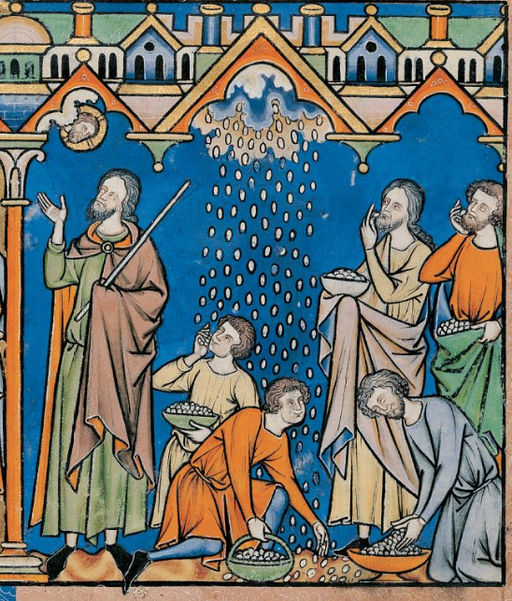
    Manna reigning from heaven on the Israelites, circa 1250, Maciejowski Bible

    “Bear in mind that the Lord has given you the Sabbath; that is why on the sixth day he gives you bread for two days.” Exodus 16:1–30 (NIV)

    The Lord God rescued his people from slavery in Egypt with dramatic measures as he sent down the plagues on the hard-hearted Pharaoh and he parted the Red Sea for the Israelites to escape the Egyptian army. But the people of God had a short memory, for as they wandered in the desert, fueled by hunger, they began to despair, saying, “Oh, if only we had stayed in Egypt.”

    The Lord, not tiring of their complaints, devises a solution – he sends quails and sweet-tasting bread from heaven to feed them. Their only work is to gather the riches set before them, enough daily bread for the day. And for the celebration of the Sabbath, the Lord instructs them to gather on the sixth day enough for two days.

    We see in the Lord’s provision and instruction his love for his people. Not only is he establishing a seven-day week (some biblical commentators believe the Egyptians held to a ten-day week), but he provides a day of rest for all classes of society – including the servants and slaves. He knows their limitations and provide them with a way of living that will help them to thrive. But do they listen? No – some gather too much during the week, and the bread turns moldy. Others go out on the seventh day, looking for food but not finding any.

    How are we like the Israelites? Do we understand how God gives us not only bread to eat but meat to feast on? Do we stop and rest, acknowledging that he is God and we are not? May today we ask Jesus, the living bread, to fill us with his sustenance and help us order our lives according to God’s wisdom and plans.

    For reflection: Read through the story again, this time imagining you are a slave girl in the story. How does the shift in perspective shed light on the narrative?


  • Forgiveness Fridays: When nations repent by Sheila Johnson

    What happens when nations repent? How does God honor the prayers of his people seeking forgiveness for those atrocities committed by governments? I don’t claim to know the answer to that mystery, but I also don’t want to discount how he might hear our cries. What do you think?

    Although I was born in the UK, my mother was a New Zealander, so I feel a certain attachment to the land and my many relations. To date I have visited there three times. Therefore, at a recent Lydia prayer conference, my ears pricked up when the speaker, a David Tidy of Prayer Warriors International, began talking about his recent visits to New Zealand and the need for the British to repent over their actions towards the indigenous people, the Maoris.

    When Captain James Cook arrived in the islands in 1770, a spirit of division, colonialism, legalism and land-grabbing entered the islands. Indeed, the New Zealand Company, which was in charge of encouraging the British settlers to emigrate, took land, often forcibly from the indigenous Maori population. This resulted in bitter land wars, violence and death, with Freemasonary being a very strong influence behind the British Colonialism.

    Early on in their three years of visits between 2012–15, David Tidy and the British team visited Waitangi where the treaty establishing British rule was signed in 1840. Here they instigated a new spiritual declaration, which was signed by local Maori believers on the backs of both the British and Maoris at the same spot. Repentance was declared for bringing in immorality, alcohol, broken promises and war, and forgiveness was declared. The vision of a ‘land octopus’ was seen by a number of intercessors, its head based in Westminster and its tentacles spreading out of the Bay of Islands in the north of the north island right over the whole of the two New Zealand islands. This repentance went into the very parliament building of the Beehive in Wellington where a meeting took place in the Maori room of the Beehive and the team knelt before two Maori MPs.

    The Beehive
    Detail of wall carvings from Maori Committee meeting room

    Then the octopus of Landlordism and Pride which the Maoris had seen sitting over the parliament building and thrashing its tentacles was prayed against as the team confessed the iniquity of colonialism and Westminster legalism over the Maori people. The team prayed for the severing of the head of this destructive image. In its place, an image of a jug pouring milk, representing a healing balm, was seen as a vision poured over the entire map of New Zealand.

    Tears flowed as the rawness and genuineness of the repentance was accepted by the Maori people and a new spirit was established allowing liberty and creating an environment where the Holy Spirit would be free to let people make their own choices whether or not to follow Jesus.

    This has been followed up by the New Zealand government who have issued a public apology for their unlawful actions allowed during the nineteenth-century land wars, followed by a final land settlement agreement between the various tribes and the Crown.

    Tarureka Estate (now a popular wedding venue)

    All this national history and repentance means a lot to me, not just because of my family background but also because I am currently writing a book based on my Scottish ancestors who went out to New Zealand in the nineteenth century. Interestingly enough, these were my Father’s ancestors and not my Mother’s. Yes, he too had connections with New Zealand, although in the farming community. My book is about a James Douglas who goes out to New Zealand on the encouragement of the New Zealand Company because, like many, he is told of all this cheap available land for farming and so he eventually sets up a dairy farm there. Now, I have discovered that it wasn’t cheap, available land at all but stolen land, land often flowing with bitterness and blood. I’m not sure that I can use all this information in my book, Tarureka, but it certainly puts a different complexion on the story and helps the twenty-first-century reader to see the character’s experiences in the new land in a slightly different light.

    Sheila Johnson, a UK-based writer, has over ten years’ experience as a successful freelance journalist. She writes fiction under the name of Sheila Donald, and in 2016, self-published a Christian romance based around an Alpha Course, called Alpha Male. Tarureka is her second book fictionalising the story of her Scottish ancestors’ life in New Zealand in the nineteenth century.

    When not writing, Sheila enjoys singing, history, films, the theatre, cooking and Formula One racing.

  • Watercolor Wednesday: When in Rome

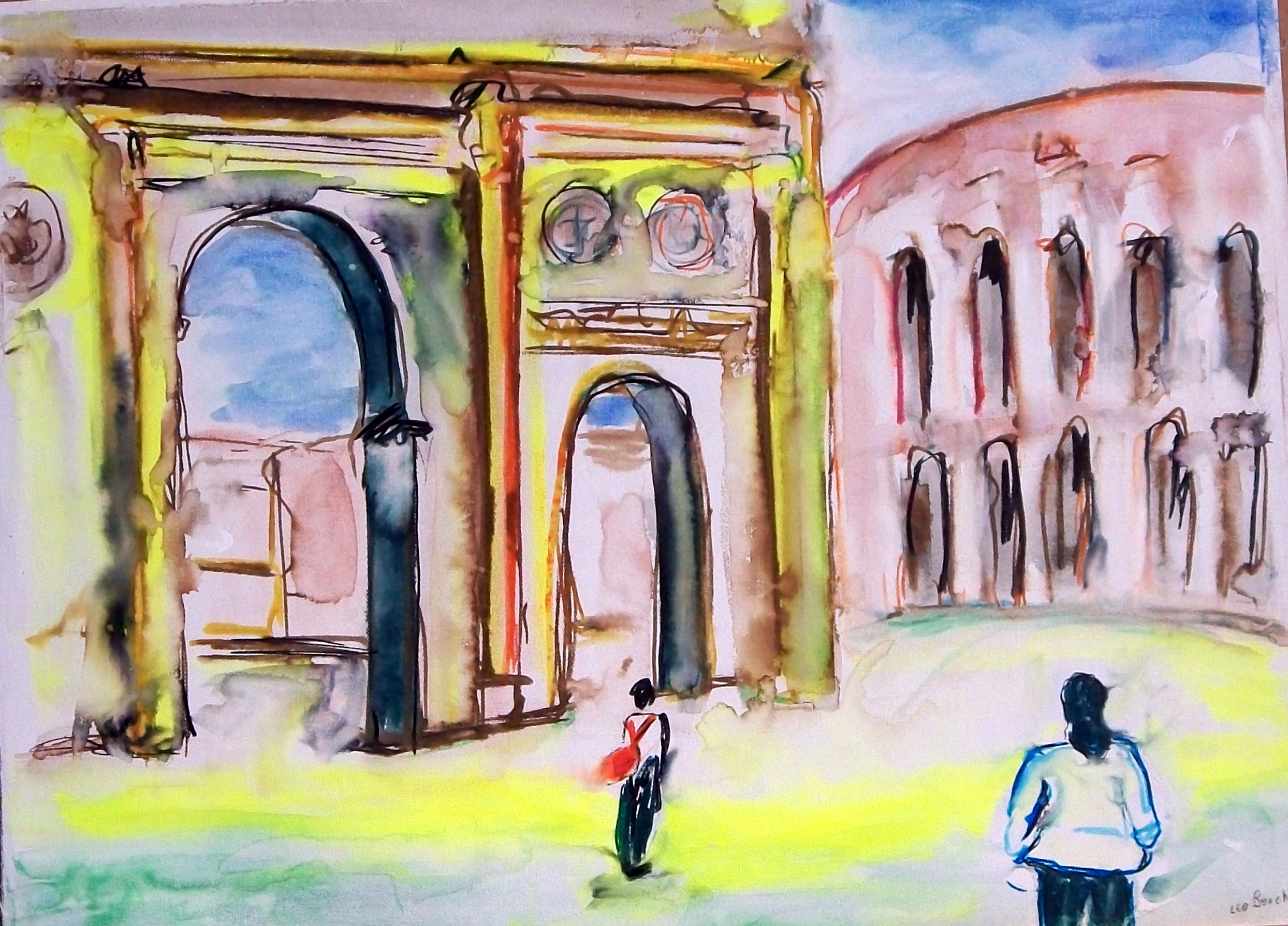
    By Leo Boucher.

    With the terror threat in Britain raised to critical, people are feeling concerned. We may think twice before our morning commute or going to a concert or other cultural gathering. Fear can make a home in our lives, constricting our actions.

    And yet we “keep calm and carry on.” We pray and we plan but we keep on keeping on, and those in other countries send their love and prayers. As the sad news of those who have died in this week’s bomb attack in Manchester are named, may we give an extra hug to our loved ones and pray for those who are hurting.

    For this Watercolor Wednesday, in the spirit of honoring big cultural places, here’s a painting of a street scene in Rome. A couple of years ago, my parents met us there for a week of touring and fun. Memories to remember with a smile.

    Might you take a few moments to remember a happy trip you took with friends or family? Why not send them a message of a fun memory from that trip?

  • Weekly Devotional: God Rested (1 in Sabbath and Rest series)

    Time for a new devotional series! I unintentionally took most of the Easter season off from posting – I think with my work on my MA studies along with the usual deadlines and lovely family life, I’ve been exerting more than I realized. I have about three more months of intensive work on the MA, and then – Lord willin’ and the creek don’t rise – I’ll be done.

    It seems fitting on many levels, not least for my own personal season, to explore the theme of Sabbath and rest. It can be a forgotten or overlooked command, but God wants us to switch off for our own good. Join me for this week’s introduction and first engagement with Scripture.

    “Come to me, all you who are weary and burdened, and I will give you rest. Take my yoke upon you and learn from me, for I am gentle and humble in heart, and you will find rest for your souls. For my yoke is easy and my burden is light” (Matthew 11:28–30). So says Jesus, our friend and our example, the One who not only redeems us but gives us life.

    After the fall of humanity in the Garden of Eden, sin and disease came into our world. Now we find it hard to rest, forever tempted by the distractions of our devices, the pain of unfulfilled hopes and dreams, the physical ailments that plague us. We wake too early in the morning, longing for sweet sleep, or find we can’t switch off our minds at night. We need the rest Jesus promises.

    Part of achieving this rest flows out of our own planning and preparation as we approach the Sabbath. During this series over the next months, we’ll see how God created the Sabbath as a gift to us, as a means of giving us a rhythm of work and rest, for he knows we are his fragile human creation. As we set aside as holy one day for worship of the Lord and the enjoyment of his gifts and people, we begin to realize just how we need this time to renew and recharge. We are not machines that can keep on running; we need to stop and acknowledge our smallness in comparison with his greatness. He is God and we are not.

    And as with Jesus’ words above, as we accept God’s command to rest, we see that it’s a gentle yoke and a light burden. The benefits are great as we learn to feast and switch off and enjoy true recreation – that is, the renewal of our souls and minds and bodies. We see rest as a life-giving gift.

    I pray your love of the Sabbath will increase ever more as we engage together in a journey through God’s word, seeing how he created us and formed us, and how much he loves and adores us. May this pattern of living be one that gives you life.

    Then God blessed the seventh day and made it holy, because on it he rested from all the work of creating that he had done. Genesis 1—2:1–3 (NIV)

    Many of us associate the word Sabbath with a killjoy list of restrictions: no shopping, no work, no, no, no. But what if we saw the Sabbath as a thing of joy as we imitate our Creator and find rest for our bodies, minds and souls?

    Reading the creation account may sound all-too-familiar, but as you do so today, think about the story from God’s point of view – well, as much as you can, being his created one. God, in the beginning, forms the heavens and the earth. Then the light and dark; the skies and the earth and waters and dry land; the plants and vegetation; the sun and the moon and the stars, the living creatures, the livestock. And he sees that it is good. Then he makes humanity in his image, giving them authority over the earth and animals, and he sees that it is very good.

    As this story reveals, being the Creator is part of God’s nature; it flows in and out of him. And we are the pinnacle of his creation, formed in his image, called to create and collaborate with him. We are to rule over all the creatures, whether in the air, sea or land, and to cultivate the vegetation for food.

    Made in God’s image, bearing his mandate, we are also called to rest as he rested. Had Adam and Eve not disobeyed the Lord in the Garden of Eden, I’m guessing our ability and desire to rest would come naturally. But with the consequences of the fall of humanity, we live in an imperfect world. And now we can struggle to switch off and find true Sabbath rest. May we, with the help of the Holy Spirit, find a spacious place to rest today.

    Prayer: Creator God, you have made me in your image. Help me to reclaim the ability to find your peace and release as I rest in your love. Amen.

  • Forgiveness Fridays: Forgiving Hitler? by Veronica Zundel

    When is it our place to forgive? Are we being presumptuous when we forgive someone who hasn’t hurt us directly, but who hurt someone close to us? Veronica Zundel poses some important questions to ponder. Do we have the right to forgive?

    Don’t laugh, but I find it much easier to forgive people once they’re dead. Yes, I know they can no longer apologize, but they key thing is, neither can they repeat the behaviour that caused me such hurt. The thing is, I find it hard to forgive someone who I know perfectly well is going to do it again, and again, because that’s what they do. They are a person who carps, or undermines, or pushes boundaries continually. And deep down, I feel they ought to be punished. Or at least to be told the truth of what they’re doing – only being a coward, I’m not going to be the one who tells them. Besides, my feelings of being hard done by seem so unconvincing once I put them into words. Is that really worth making such a fuss about?

    And another thing: how do I forgive someone who has not offended me directly, but has hurt someone close to me? Is it my place to forgive Hitler, or his subordinates, for what they did to my close family – forcing my parents to flee their home, and then killing my grandmother, great-aunt and great-uncle in a concentration camp? Clearly, it has affected my own history and my own emotions, but isn’t it for those who suffered to forgive? Or on a lesser level, can I forgive the ‘demon headmaster’ at my son’s school (who was also known as ‘Hitler’ to the pupils) for what he did to children with special needs? After all, it wasn’t done to me, and my son got off relatively lightly. The same applies to successive governments whose policies had and have horrendous effects on the poor and vulnerable – is it my place to forgive, when I wasn’t one of those affected?

    Most significantly right now, can I forgive my beloved church, the mainstay of my life for 24 years, for closing down? Or its parent body for closing five years earlier, which led directly to the dwindling of the church? The fact is, I’m just not very good at forgiving – in fact I’m much better at finding excuses why I shouldn’t. I’ve always had a keen sense of justice, and forgiving just doesn’t seem fair.

    Members of my church eating together.

    I know that God’s forgiveness of me is supposed to be the basis for my forgiving others. But I became a Christian at 16, before I’d had the chance to do much dramatic sinning, so sometimes I find it hard to see myself as ever having been a great sinner. Others who can see me more clearly may disagree… The saving grace is, the older I get, the more I see my own faults; and the more I realize that God, in fact, forgives me umpteen failures and deliberate choices day by day.

    Ultimately, I know my difficulty with forgiveness causes more harm to me than to the people against whom I bear a grudge – who probably don’t even know the effect they had on me. And my inability to forgive easily makes me more aware how much I rely on the Spirit of God to help me – which is why a couple of years ago my ‘prayer for the year’ was that God would teach me how to forgive. All learning is a process, so maybe I can start with those who’ve left us, and gradually progress to forgiving those who are still alive – even if I know they are almost certain to do it again. One day I might even manage seventy times seven….

    Veronica Zundel is a freelance writer for the Christian market, currently studying for an MA in Writing Poetry, and undergoing cancer treatment. She lives in North London with her husband, adult son and a large, fluffy cat inclined to sudden biting.
  • The Lord is my… Teacher: Riffing on Psalm 23 (part 3)

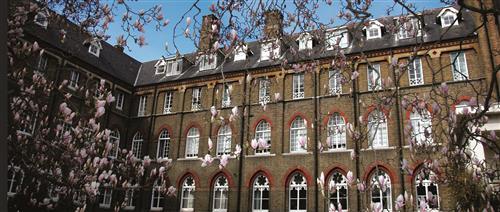
    The lovely Heythrop College, part of University of London until next year when it will close.

    Some years ago a writing friend shared with me how he liked to personalize Psalm 23 according to the different roles the Lord could play in his life. Thus instead of a Shepherd, I wrote about the Lord being my Publisher. (And here are some examples of other people engaging with this psalm.) Recently after receiving a not-so-stellar book review, I wrote about the Lord being my Reviewer, and this morning, as I struggle to write my penultimate essay for my MA in Christian spirituality, I’ve written about the Lord being my teacher (or I suppose I should say “tutor”).

    The Lord is my teacher, I lack nothing.
    He makes me rest from my studies,
    he leads me beside the bubbling brook,
    he refreshes my soul.
    He guides me along the right ways of thinking
    for his name’s sake.

    Even though I trudge
    through the valley of low marks
    I will fear no evil,
    for you are with me;
    Your assignments and comments,
    they comfort me.

    You prepare a place for me
    At the academic high table.
    You anoint my hands to type;
    my ideas overflow.

    Surely your goodness and love will follow me
    all the days of my life,
    and I will dwell in the College of the Lord
    forever.

    How could you make the beloved Psalm 23 applicable to you today?

  • Forgiveness Fridays: When there doesn’t seem much to forgive by Philippa Linton

    Forgiveness is key, but what about when we don’t feel like we have much we need forgiving? I love Philippa’s exploration of this topic, and when I lead retreats, I emphasize that this may be the case for some of the participants. We have the freedom not to go digging!

    Have you ever been on a retreat where the participants are asked to make a list of people they need to forgive and then destroy that list as a symbolic act of forgiveness and relinquishment?

    The retreatants choose a quiet place within the venue – the chapel, the art room, the garden, the lake – in order to reflect and write. They are given plenty of time in which to do it – 45 minutes, an hour. And people write reams. They write pages. Long lists of people to forgive: abusive parents or partners, adulterous spouses, insensitive doctors, vicious bullies, family feuds, appalling treatment from churches – gut-wrenching stuff, devastating wounds which are anything but easy to forgive. I’ve been to workshops led by sexual abuse survivors who talk about how it’s possible to forgive the perpetrator (in addition to seeking justice, because a serious crime has been committed) and I marvel at these people who show such courage and grace.

    I’ve taken part in exercises like this and I find it hard. For an unexpected reason though: not because my list of people to forgive is long, but because it’s so short. Usually only about three people come to mind. I can never quite believe it’s so few. Have I sailed through life so serenely that I only need to forgive three people? Seriously? Am I in denial?

    Here they are:

    1.The snappy cookery teacher who, astonished by my eleven-year-old incompetence, shouted at me and humiliated me in front of the entire class. Forty-three years later, the sting has gone out of that ancient memory. Just about.

    2. The good friend who once told me some ‘home truths’ which missed the mark. I had often valued her wise counsel and support, but on this occasion I found her words harsh and ill-judged – to be fair, this was the only time in our friendship this happened, but the people we love the most can hurt us the most, and I was deeply stung by her words. (It wasn’t so much what she said as the way she said it …) I composed a cold, cutting reply in my head. I was even tempted to send a curt e-mail terminating the friendship (I’m very glad I didn’t!) In the end I avoided the issue, which was both cowardly and unfruitful, because I then brooded over it for years. It would have been better to be honest with my friend and confessed to her that she’d hurt me, yet without falling into the trap of being bitter, accusing and unforgiving. I have now forgiven her (thanks largely to a sweet gesture on her part) and the friendship is restored and flourishes – I would not be without this friend in my life. But the incident showed me that I am more than capable of holding one heck of a grudge.

    3. My birth father. This is my weirdest example, because I never met my birth father or knew him. I can barely even remember his name. He has less substance in my life than a ghost, yet his existence casts a shadow. He was 26 when he dated my birth mother and when she got pregnant (with me), he abandoned both of us in the fifth month of the pregnancy, leaving my unmarried teenage mum to face the music alone. God made up the deficit by giving me a wonderful adoptive father who was everything a father should be – Dad was kind and funny, and hugely affirming of his daughters. But the fear of abandonment – the unconscious expectation that every man I am interested in will not return that interest – has cast a long shadow over my life. I realise I do have to forgive the man who was, to be blunt, no more than a sperm donor: it’s tempting to regard that primal abandonment by him as an excuse for avoiding intimacy.

    I’ve had a reasonably happy and secure life, yet not having that much to forgive has not made me a person who forgives that easily. Rejection by a parent is weighty stuff, to be sure, but I am an easy-going soul (pretty much) and can even shrug off some things that others struggle with. But while the things that have hurt me deeply may have been few and far between, I have found it mighty hard to let go of them. I can chew over them, imagine all the things I might say to the person now, treating them with cool contempt or sarcasm.
    So, no, I don’t find forgiveness easy. (Who does?!) Also, I have also messed up badly at certain points of my life and have needed other people to forgive me. I would be devastated if any friend held me to ransom over the stupid, thoughtless things I’ve said and done in my life … so I cannot hold anyone to ransom either.

    As a young girl, I was often very passive and allowed myself to be dominated or manipulated. I have sometimes over-compensated for that earlier passivity by becoming overly aggressive in reaction to perceived manipulation. But that’s not the answer either. I have to tell myself: “If someone hurts you, and you know you need to confront them about it, don’t do so out of vengefulness. You can be assertive, in facing the issue head on, but don’t be unloving and unkind. Forgive them, as Christ forgives you.”

    Forgiveness is a process, as Jesus tells Peter in Matthew 18: 21-22. ‘“Lord, how many times shall I forgive my brother or sister who sins against me? Up to seven times?” Jesus answered, “I tell you, not seven times, but seventy times seven.”’ His phrase “seventy times seven”, repeating Hebrew’s perfect number ad infinitum, illustrates his point: keep on forgiving if you have to, because it doesn’t come naturally.

    So next time I’m asked if I want to make a list of people I need to forgive … I will be thankful that my list isn’t large, and thankful for the grace of God that transforms us and enables us to keep forgiving.

    Philippa Linton’s day job is working for the education & learning department at the United Reformed Church in London. She is also a Reader (lay minister) in the Church of England. She likes J.R.R. Tolkien, C.S. Lewis, early 20th century feminism, and cats.

  • Forgiveness Fridays: The miracle of forgiveness by Jen Baker

    I keep being blown away by the stories in this forgiveness series. Today’s is miraculous – but Jen has done plenty of everyday forgiving too, as she outlines. I’m guessing that the timing for this blog might be special for someone today…

    I forgave by faith.

    Yet what happened next astounded even me….

    ***

    I believe the year was 1994 and I was 25 years old. Without going into unnecessary details, the back story was that a few years prior I had begun having flashbacks of being molested by a neighbour when I was a child. Afterwards he knelt next to my bed and quietly said in my ear, ‘If you tell anyone what happened I will kill you. I will follow you and I will kill you.’

    I believed him.

    So I kept quiet.

    Until that day, when the flashbacks opened up a door in my memory I didn’t even know existed.

    I could not keep silent any longer.

    Confused, scared (petrified) and ashamed, I began the journey of healing. I had a wonderful counsellor who journeyed with me each step of the way. But one day what I had been dreading happened and she broached the subject of forgiveness.

    I froze.

    I was a pastor; I knew it was the right thing to do, the biblical thing to do, but how could I forgive him? I was SIX when it happened. The anger I felt toward him bordered on rage and the disgust was palpable.

    But one drive home changed everything.

    Living about 45 minutes from the counsellor’s office gave me time to process our sessions before entering the ‘real world’ again. On one of these return journeys I was suddenly overcome by the thought that this man was not saved and was heading toward an eternity without God. I cannot describe what happened next except that I was overwhelmed with an urge to pray for his salvation, to the point of crying and pleading with heartfelt tears for God to save him and set him free.

    This cry from my heart came by the grace of God; it had nothing to do with me working up any forgiveness, only the obedience to follow the leading from God to pray. I suddenly felt ‘released’ from the burden and, from memory, that was the last time I prayed like that for him.

    For space I won’t go into further details, except to say after that day I began working through my anger and came to a place of complete forgiveness, actually feeling pity in place of rage.

    I never felt the urge to confront him during counselling but just over two years from that first moment when I chose forgiveness and prayer over bitterness and anger, I sensed Holy Spirit saying it was time.

    Due to circumstances out of my control, the moment came via a telephone call. I read him a letter I had written and at the end I explained how I had forgiven him because of the forgiveness I had received through Jesus Christ.

    After I finished speaking there was only deafening silence.

    Expecting the next sound to be the click of a line going dead, I wasn’t prepared for what actually happened…

    He very quietly squeaked out: “I’m so sorry. I am … so …. sorry.”

    Now I was the one rendered silent.

    He then uttered words which changed me forever.

    He explained that two years prior to this he was passing a church and had the sudden urge to drive in the driveway and speak to the pastor, asking him how to get right with God.

    He surrendered his life to Christ that day.

    He was a believer. He was … my brother in Christ.

    I’ll never be able to prove that the overwhelming urge I felt to pray for him and his salvation two years before was the same moment that he pulled in to the church car park, but to this day I believe it was.

    And twenty years later, the fact that we will share eternity together still brings tears of joy to my eyes.

    ***

    I am aware that not all stories end this way; in fact, very few of them have an ending like mine.

    But the truth is that I wasn’t freed when he apologised; I was freed when I forgave.

    I wasn’t freed when he apologised; I was freed when I forgave.

    And I could only have forgiven him completely by God’s redeeming grace. Grace which is freely available to all of us whenever we ask for it.

    ***

    Your story may be different.

    Since that time I have had to forgive some deeply painful choices made by others, and have needed forgiveness for my own wrong choices, and sadly not all have ended as ‘textbook’ as that one.

    2 Corinthians 12:9 says in part “My grace is sufficient for you, for my power is made perfect in my weakness.” Paul goes on to say he will boast in his weakness so that Christ’s power may rest on him.

    You see, the focus isn’t so much on our weakness as it is on Christ’s power and sufficient grace.

    In our inability, He is able. For our weakness, He gives strength.

    The key called grace is what opens the door to forgiveness.

    And it is through that door our tears are wiped dry and our freedom stands waiting.

    Even if it’s 25 years later.

    Jen Baker is a speaker, author and leader who loves seeing the Holy Spirit and the Word change atmospheres, creating personal and corporate impact. Most often described as ‘inspiring,’ she previously sold all in America to follow the call of God to England where she’s been a pastor, director and consultant working with the local church and several anti-trafficking charities. She has a heart for the nations … but a home in London.

    More information can be found at www.jenbaker.co.uk, including information on her books, Unlimited and Untangled. You can read her contribution to the “There’s No Place Like Home” series here.