Author: Amy Boucher Pye

  • Celebrating the fourth day of Christmas: Marking Holy Innocents day

    A stark black, white and grey scene of a winter tree in the snow, void of color.
    A stark picture fitting for today’s topic. By Leo Boucher. Used with permission; all rights reserved.

    The Christmas season is for celebrating, but it doesn’t shy away from the horrors of this world, such as the slaughter of “holy innocents.” The day marks the killing of all the boys in Bethlehem under two by Herod, a jealous and volatile king:

    …an angel of the Lord appeared to Joseph in a dream. ‘Get up,’ he said, ‘take the child and his mother and escape to Egypt. Stay there until I tell you, for Herod is going to search for the child to kill him’… When Herod realised that he had been outwitted by the Magi, he was furious, and he gave orders to kill all the boys in Bethlehem and its vicinity who were two years old and under (Matthew 2:13; 16a).

    This massacre of around thirty boys (for Bethlehem was a small village) wasn’t outside of Herod’s character, for Herod also had his wife and her mother killed, as well as three of his sons. And when he was dying, he ordered that all the notable men of Jerusalem be killed in the hippodrome.

    Herod may have been a powerful king, but his plans to eliminate Jesus were foiled. For Joseph again was warned in a dream, and he obeyed the angel’s direction, trekking into safe territory in Egypt.

    But why did those sweet little boys have to die? Why all those mothers weeping for their slain children? We just don’t know, for it is wrapped up in the fall of humanity and the problem of evil. But we can stand on God’s promises that he will comfort the comfortless and bring hope to the hopeless. And we know that he too grieves at the loss of children so young.

    Heavenly Father, we don’t understand why you sometimes allow innocent people to die. Strengthen our faith and help us to know more about your character, and comfort all those who mourn today.

  • Celebrating the third day of Christmas: The wonder of lights and ornaments

    By Leo Boucher. Used with permission; all rights reserved.

    This morning, one of the participants in the Woman Alive book club Facebook group posted this comment:

    “If people want to mark the 12 days of Christmas how do they keep the spirit alive when other people think it’s over? I’m back to work this morning and I’ve already seen one post of Facebook about getting the decorations down!”

    Celebrating the full twelve days of Christmas is something I’ve become more keen about doing in recent years. I confess I don’t observe the season of Advent properly – for I put up the Christmas tree far earlier than I should (my excuse is that putting up the tree and decorations takes a long time). But I do love celebrating the twelve days, marking the full season and not “getting back to normal” as seems to be the tradition these days shortly after Christmas day.

    One simple thing we do for the twelve days of Christmas in our family is eating our dinner in the dining room, table laden with candles, including the Advent wreath fully ablaze. We can see the Christmas tree in the living room as we eat, and it feels festive and fun.

    Another idea is to pray along with the #FollowtheStar prayers produced by the Church of England, which you can find here.

    Do you mark the twelve days of Christmas? Why or why not?

  • Celebrating the second day of Christmas: Around the Christmas tree

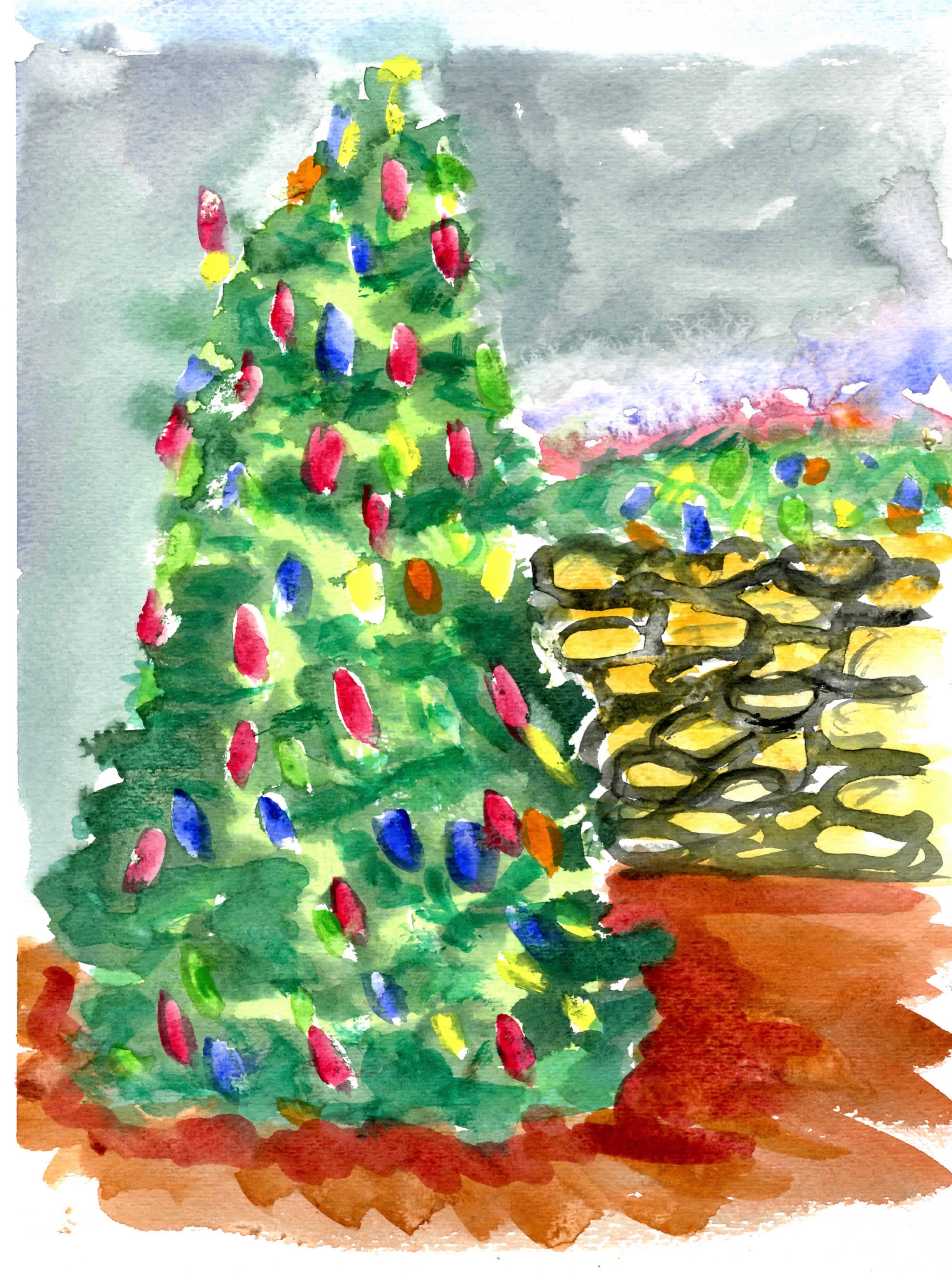
    Christmas tree by a fireplace.
    By Leo Boucher. Used with permission; all rights reserved.

    Happy second day of Christmas!

    I love this painting by my dad, for it evokes Christmases in the family home growing up in Minnesota, where my parents still live, and where they celebrated on Christmas Eve with all the family (except us).

    That “except us” is the poignant bit, isn’t it. Christmas is a wonderful holiday for family celebrations, but often not everyone is gathered around the tree, for whatever reason. Maybe they’ve moved far away, like I did, or a rift between siblings turned into a war that now fractures the family, or someone has to work in healthcare or in the church, or maybe they have died, and we miss them achingly… Christmas will never be picture perfect, because life this side of heaven isn’t picture perfect.

    But we can have glimpses of wonder and joy, those moments of unity and fun that drop deeply into our memories and make us long for unbroken moments of sweet communion. May you experience more than a handful of these today and during this Christmas season.

  • Welcoming the Light: Happy Christmas!

    In a matter of hours we enter the Christmas season! I love these twelve days when the baking is done, the presents all wrapped and distributed, and we can enjoy time as a family relaxing in front of the tree – or the telly (Call the Midwife, anyone?). We’ve made it through the shortest day, and now journey to the light as we embrace the Light of the world, who has come to distill our darkness.

    May you know joy and peace during the Christmas season; may you be renewed in body and spirit as you stop to wonder and marvel at the God who became Man and lived among us.

    Happy Christmas!

  • Watercolor Wednesday: Here’s the church and there’s the steeple…

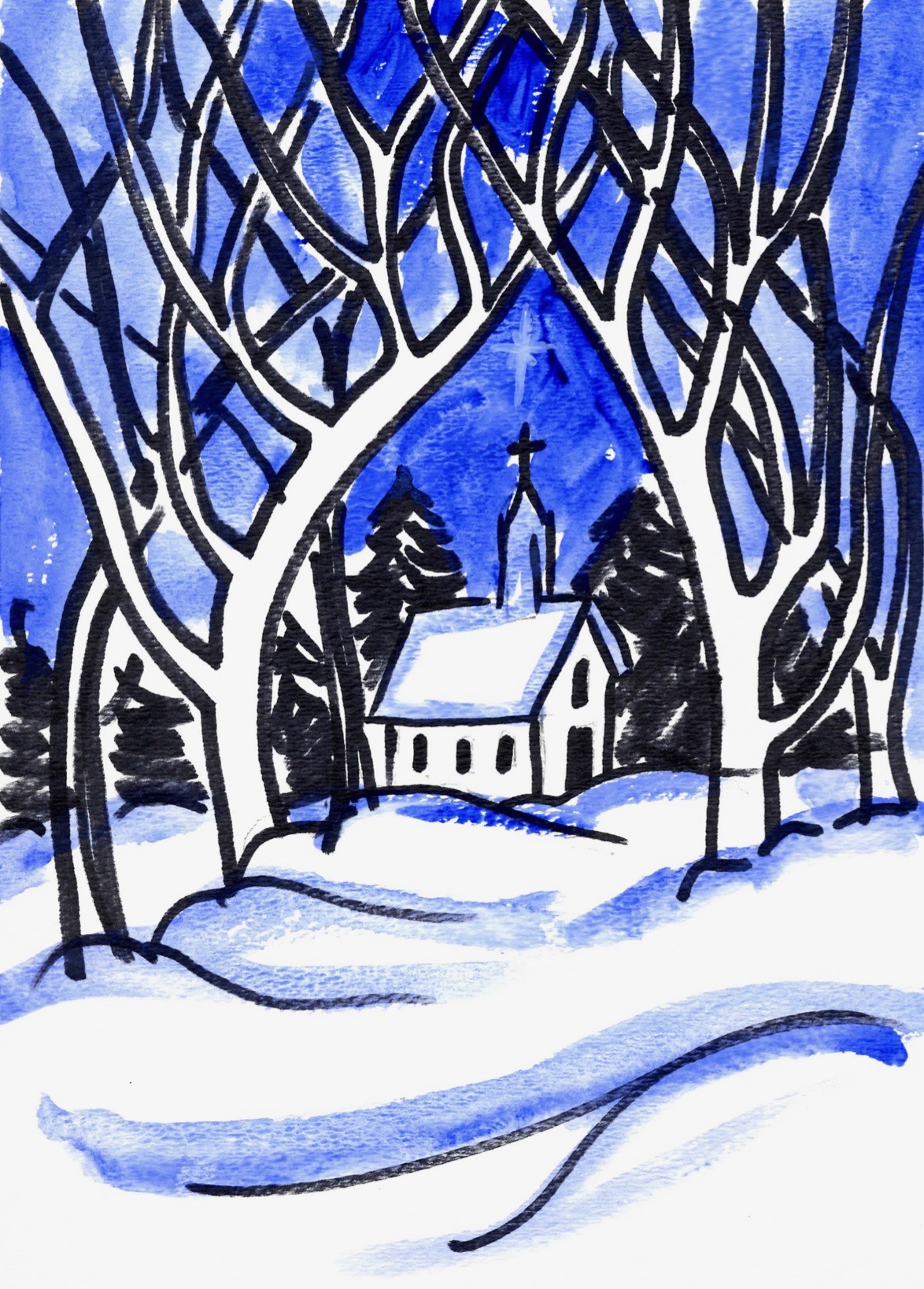
    A church in blue and white surrounded by trees and sitting in a bed of snow.
    By Leo Boucher. Used with permission; all rights reserved.

    We’re in the third week of Advent, but soon and very soon we’ll have the fourth week and then boom, in quick succession, Christmas Eve and Christmas Day. The twelve days of Christmas will commence. And many of us will go to church to celebrate. I love this picture of a sweet little church framed by trees and cushioned by snow, painted by my father. It’s an idyllic picture of what we imagine church should be like – all soft edges, coziness, and safety.

    But, of course, life doesn’t always follow art. Church can be an experience of disappointment, weariness, hurt, anger, criticism, and pain. If you’re human and you’ve gone to church for a length of time, I’m guessing you can relate to that list of feelings and experiences, and add your own.

    But church can be joy and communion; peace and fellowship; wonder and relating. Jesus came to earth as a baby to usher in a new kingdom, where we are filled with his presence and can find union not only with him but others – and we can find this in church, of all places.

    As we wait for his coming again, may we glimpse what church can be here on earth. Even if for a slender moment. 

    Father God, you sent your Son to earth as a baby, that he might live as one of us. How you must ache for the pain you see your children wrapped in. Thank you that you want to relieve us from this heartache. Help us to turn to you for comfort and help. And please bring unity and peace to our places of worship, bringing healing and release where there has been hurt and betrayal. May we sense your calming presence in our lives this day. Amen. 

  • Weekly Watercolor: The second week of Advent

    By Leo Boucher. Used with permission; all rights reserved.

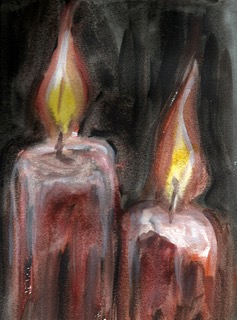
    This week, two candles glow on our Advent wreath, the light becoming stronger in our kitchen as we eat dinner each night in candlelight. The second candle traditionally denotes peace and the prophets. Peace – that’s certainly something we can pray for, in these worldwide times of terrorism, political upheaval, and unrest. 

    Father God, you sent the Prince of Peace to our world as a baby, that we might not live shrouded in fear, conflict, and strife. Continue to usher in your peace, the peace that passes all understanding and guards our hearts and minds through your Son. We ask for creative ways to mend the brokenness among people groups around the world; we long for unity and respect among those with deep differences. May your shalom reign, that your kingdom on earth might flourish. Amen.

  • Reflecting on #myoneword for 2018, Replenish

    I enjoyed a replenishing time on retreat in February with the Sheldon community in Devon with walks in the countryside and time to try out a new type of writing.
    This quotation from Jeremiah 31:25. 

    My word for the year (#myoneword) has been replenish, which I chose following the exhaustion of writing books and completing an MA in Christian spirituality over a compressed period of time. This year has been for rest, but as we reach the end of it I wonder if I’ve fulfilled my creative hopes that bring life to my soul and refill the well. I’m not sure that I have, but perhaps I started at a very low deficit, being so tired that at times I felt that all I could do was binge-watch a television series. I would cycle between this kind of collapse and then scurrying to finish off my regular deadlines, such as my monthly articles for OurDaily Bread and running the Woman Alive book club, as well as writing other Bible reading notes, such as Inspiring Women Every Day.

    But finally, in this last month of the year, I feel I have more energy for the creative projects that I love pursuing. To make way for them, however, I seem to need to declutter some of the gathered stuff that I didn’t sort out when I was so focused on writing and academic study. I have many more areas of the house to attack, but I’m pleased when I can attend to one, such as the weekend’s job of sorting through the computer table.

    Okay, so we still have a lot of papers to sort through on the top shelf… 

    I really should have taken a “before” photo, for this large wooden-box-on-stilts was filled to the brim with stuff—Christmas boxes, papers galore, and an old computer that needed dumping. I’m thrilled to have it cleaned out. Now the working computer has a new home, releasing the dining-room table from its temporary captivity under said computer, and our daughter has a new workplace for the increased amount of homework she has with secondary school. Do you need to clear out before you can create?

    I like being able to close the doors to the clutter!

    I still have a long list of books to read, creative projects to make, and even Christmas cookies to start baking. But instead of seeing all of the things undone, I can rest in what I have been able to do, giving thanks for that clean dining-room table and tidy home for the computer. In a small way, this approach echoes the way we can embrace the incomplete nature the #myoneword experience over a year. I’m guessing that we probably will not have reached a perfect state of contentment with our progress on the particular word, but we may be farther along than we anticipated.

    And so as you come to the end of 2018, might you take some time to consider how you’ve grown or where you’ve stagnated, particularly in the area related to your word for the year, if you’ve chosen one? As we reflect on how God has moved in and through us, we can give thanks for his grace in our lives.

    Over to you: Did you choose a word for 2018? If so, what was it, and how did having that word before you shape you over the months?

  • Watercolor Wednesday: Life in the city

    By Leo Boucher. Used with permission; all rights reserved.

    Last week while I was speaking in Somerset, I heard time and time again how much those I was talking with loved their home county. They might like visiting London, but they exhaled when they got home to the green open spaces with its hedgerows, hills, and atmospheric clouds.

    I can understand that, for I love breathing in the clean(er) country air, slowing down, and taking in the surroundings. But I love the city too, and if I had to choose, would go for the hustle and bustle of, say, multicultural London over the quiet of the countryside. (Especially as I can more easily travel on public transport versus those scary single-lane country roads with drivers bearing down on us less confident types!)

    What about you? City or country or somewhere in between? Why? Where do you feel most at home?

    Art by Leo Boucher, my father. Not a watercolor, I know – I’m guessing acrylics on canvas. To purchase prints of some of his work, click here, or email me if you are interested in a piece not listed there.

  • Forgiveness Fridays: The sweet freedom of forgiveness between Christians by Sheila Holwell

    I am pained by the division that happens sometimes between Christians who embrace different streams of faith and practice, so when I heard Sheila Holwell’s story of the freedom that forgiveness brings from this kind of fracture, I was eager to share it with you. Might there be someone who has hurt you in this way whom you could forgive?

    A meditation in Our Daily Journey, written by Amy Boucher Pye on the subject of forgiveness, got me thinking. At the conclusion we were led into considering whether there were any experiences in our lives where there was a need to forgive.

    While I have been very conscious of the need for forgiveness over the years, and have known the wonderful freedom it brings, as I read there suddenly flooded into my mind the memory of an incident about thirty years ago in the church. I knew immediately that I had not really forgiven.

    A new Curate came when I was involved with the Pathfinder Group of young teens. The mother of one of our members came to see us, concerned that, while she encouraged her children to be faithful to their commitments, she felt this was being challenged as the Curate had told her daughter to be trained as a Server, which meant leaving Pathfinders. This was done without our being told of that decision.

    There were other incidents that were done without communication so I went to the Curate and asked him to “lay his cards on the table” and tell me what was going on. He looked me straight in the eye and said, “You are not a mainline Anglican and you don’t fit. I was so shocked that I did not respond, so I went to the Vicar and told him what had been said and his response was “Well, it is true.” Having made a point of being committed to the church over the years in every way possible, including moulding into the different churchmanship, I found their statements very hurtful.

    As the realisation came to me that I had not forgiven the Curate, I laid the whole situation at the foot of the Cross. I knew that Jesus had been there with me at the time, and so I was able to forgive and pray for this person, leaving it all with the Risen Christ. Subsequent circumstances caused me to thank God that it was a stage on my pilgrimage that was contributory to where I am today.

    Finally, to bring the seal of God’s redeeming love on it all I placed the whole situation, via a little written note, on the Altar at the Eucharist. Praise the Lord! I am free!

    Sheila Holwell was born in North London, where she had a grandmother who taught her to love the Bible and to enjoy Moody and Sankey hymns. As a teenager she felt the call to serve the Lord where he wanted her. Later came the very unexpected pathway to being an R.A.F. wife to a widower, and stepmother to a nine-year-old boy, with whom sixty years on she has a wonderful relationship.

    She worked for the NHS with her husband became Readers in the Oxford Diocese, serving together until they moved to Devon. Sadly her husband died of cancer and also had dementia. It was then, however, that she experienced the miraculous ways God leads in devastating circumstances.

    The doorway into Anglo-Catholicism opened and she is very happy with a wonderful vicar, who has a great sense of humour. Their evangelical versus liberal theology is dealt with in love. She finds sharing Jesus in prayer, preaching, and pastoral care such a privilege.

    Amy’s book The Living Cross explores forgiveness through a series of daily Bible readings for Lent. You can find out more about it, and how to purchase, here.

  • Watercolor Wednesday: A lighthouse in the darkness

    By Leo Boucher. Used with permission; all rights reserved.

    I find this painting of my dad’s intriguing. The lighthouse sits high on a rock, promising to illuminate the dark skies and warn boats of the rocks that would crush them. I see hope and promise in that image.

    And then I glimpse the large fall leaves in the foreground, those that soon will wither and disappear as coldness sets in. They are a sign of the earth hibernating and sleeping.

    Two juxtaposing images. Together, they bring hope for light even in the seasons of death.

    What do you see?