Author: Amy Boucher Pye

  • What I learned at a global publishing conference – LittWorld 2018 in Singapore

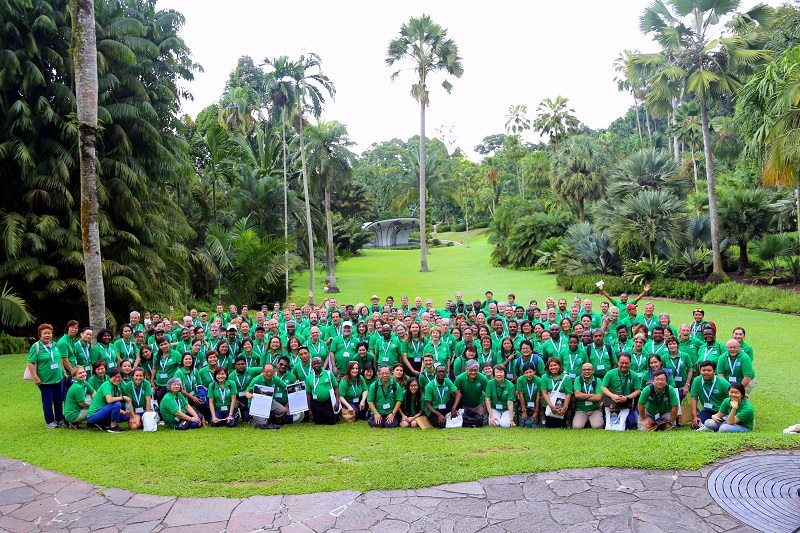
    Photo courtesy of Leong Jeam Wong

    On my first trip to Asia, I got to visit Singapore while enjoying the company of 250 people from 52 nations at LittWorld, the triennial gathering of Christian writers and publishers hosted by Media Associates International (MAI). Having traveled some twelve hours to Singapore, and only sleeping an hour of it, I was feeling a bit ill and sick when I got on the elevator to go up to my room – that is, my new room, as the hotel had given me a smoking room the first time round, making me feel even more queasy. On the lift I joined Dan Elliott, publishing doyen from Tyndale House, who uttered, “These are some of my favorite people.” I knew I was in for a treat.

    Now that I’ve been home over a week from Singapore, what stands out in my memory is the gift of seeing the worldwide church in action. I’m aware that sounds vague; when I say the “worldwide church,” I mean its people. For when I think of LittWorld, a host of smiling faces appear before me. Here are a few (and see the photo gallery at the end):

    • The publisher I enjoyed lunch with from Burkina Faso, who earned his MBA from a Chicago university and returned home to apply his financial prowess to the family business.
    • A lovely lady from the Philippines who became an instant soul friend, a marketing genius who adds her touches of grace to the work she does for a well-known Christian publisher.
    • The teacher from a country where being a Christian is difficult, who is writing a novel of hope about mothers and daughters, borne out of her own experience.
    • The publisher from Turkey who endured a horrendous experience of extremist abuse, but who remains committed to working in his country, for “these are my people.”

    Perhaps the best way to highlight some of the richness of this conference is to share a few gems from the speakers.

    Pusonnam Yiri, Nigeria, “Thinking Locally, Writing Globally”

    Pusonnam spoke on one of the defining themes of MAI, the desire to empower local writers around the world for global impact. I love this emphasis, for it’s so rooted in God’s love for all people, and how we’re made in his image and have something to share. And although those writing within their culture will speak powerfully to their own contexts, as Pusonnam said:

    “Ideas are travelers… they can’t be caged.” (Pusonnam Yiri) Share on X

    Great ideas will travel; they aren’t limited to one culture or one land. They are for global sharing – yes, please!

    I love, in today’s climate of suspicion, his next point:

    “Ideas are criminals… they break immigration laws.” (Pusonnam Yiri) Share on X

    No walls can contain them. And, he continued, who knows where the next great idea will come from? As we cannot see into the future, we should foster an openness to welcoming great ideas from anywhere.

    And finally:

    “Ideas are visitors. Welcome one, and others will come.” (Pusonnam Yiri) Share on X
    Films by Myth Film Co., by Simon Hunter

    Simon David Hunter, Australia, “Screenwriting”

    I loved Simon’s sessions on screenwriting. I’ll probably never write a screenplay, nor will I ever direct a film, but I gained so much from his talks. How do we write content – not only fiction, but I apply this to nonfiction as well – that will reach audiences? How do we tell the grand story of faith in ways that touch hearts and minds?

    In terms of films, he contends that audiences want a good story, well told, that engages the emotions. And good stories are all about one thing – character. Where do we get good characters? We observe. We note from real life. Some might even call this stealing…


    Bishop Robert Solomon, Singapore, “Words for the Wounded”

    How can our writing be a means of extending God’s grace? I appreciated Bishop Robert Solomon’s talk, for he exuded grace and hope as he spoke. A medical doctor as well as an ordained minister, he told of the power of the scalpel to bring healing – yes, pain, too, but it cuts out the infection that would spread and eventually kill. And as he said, Jesus heals through words. We aren’t Jesus, of course, but God can bring about his healing even through our words.

    I also loved his point about tsundoku, the Japanese word for the piling up of books to read. I know many of us can relate! I certainly can with my heaving shelves. What he observed about tsundoku is that the keeping of many books keeps us humble, for we know that we don’t know everything.

    Europeans in Singapore!

    I left Singapore profoundly grateful to have met so many fascinating people, humbled by the way God is using them around the world.

    The next gathering is LittWorld 2021 – might you join fellow writers and publishers from so many different countries to be encouraged in your faith?

    To find out more about MAI, click here. To watch the video about LittWorld and learn more about the conference, it’s here.

    I loved meeting fellow Our Daily Bread writers/editors – from USA, UK and Singapore!
    A taste of a famous Singapore dessert – ice kachang.
    We went to the Hawker Centre for our dessert. Fascinating to see all of the street food vendors located in one area, for then they can be regulated. Each stand had a food rating, from A to D.
    Loved going to Singapore’s Botanic Gardens. As you probably know, Singapore has limited space. Here is vertical growth!
    Better together than apart!
    Meet Lynnie, my Spirit-filled friend from the Philippines.
    With Our Daily Bread readers from Indonesia!
    The orchids were stunning!
    Let your light shine, as you go into the world, bringing news of God’s grace and love.
  • Watercolor Wednesday: Scenes from the life of Jesus

    By Leo Boucher. Used with permission; all rights reserved.

    Today I thought we could spend a few moments taking in some words of Jesus as depicted my dad in these sketches. Why not spend some time considering one or more of the scenes, asking God through his Spirit to speak to you. What strikes you? Do you see something in a new way?

  • Weekly devotional: Preach the word (13 in Paul’s letters to Timothy series)

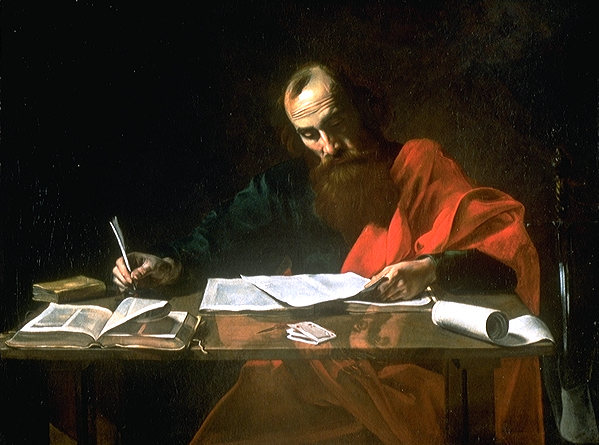
    Raphael Study for St Paul Preaching in Athens

    In the presence of God and of Christ Jesus, who will judge the living and the dead, and in view of his appearing and his kingdom, I give you this charge: Preach the word; be prepared in season and out of season; correct, rebuke and encourage – with great patience and careful instruction. For the time will come when people will not put up with sound doctrine. Instead, to suit their own desires, they will gather round them a great number of teachers to say what their itching ears want to hear. They will turn their ears away from the truth and turn aside to myths. But you, keep your head in all situations, endure hardship, do the work of an evangelist, discharge all the duties of your ministry (2 Timothy 4:1–5).

    As we come to the end of Paul’s letter, he lays out his final commands to Timothy, underlining their importance as he calls upon the Father and Son as his witnesses. His exhortations reflect his understanding that Timothy in his ministry will again encounter false teaching – he is to preach, be prepared, correct, rebuke, encourage. As we saw earlier, Timothy should do this with love – with great patience.

    “Keep your head,” Paul says. A simple charge, but one we all should heed, for when we lose our cool, we can descend into words we shouldn’t speak and actions we should avoid. Anger can turn into bitterness and rage as we lose our self-control, which can quickly negate our good work of sharing the gospel. I think with shame of the times when I have lost my cool.

    Instead, taking Paul’s advice, we can be prepared “in season and out,” training ourselves with the help of the Holy Spirit to exercise self-control in times of ease and abundance, so that later in moments or seasons of stress and hardship, our character reflects Christ.

    My prayer is that we would be given great patience, and great love.

    Lord God, may our teachers bring you glory with sound teaching, winsome words and a deep reservoir of patience, and may we love to learn.


  • Watercolor Wednesday: A place to pause and reflect

    By Leo Boucher. Used with permission; all rights reserved.

    Stop for a moment and look at my dad’s watercolor. Transport yourself to the little red shed. What’s it for? Painting? Writing? Pilates?

    What’s happening outside the window? What’s the temperature outside and in?

    What’s on your heart to do or create today? What emotions rise to the surface as you stop to reflect where you can see God’s fingerprints today?

    Commit the rest of your day to God’s care.

  • Weekly devotional: Holy writ (12 in Paul’s letters to Timothy series)

    Photo: George Bannister, flickr

    But as for you, continue in what you have learned and have become convinced of, because you know those from whom you learned it, and how from infancy you have known the Holy Scriptures, which are able to make you wise for salvation through faith in Christ Jesus. All Scripture is God-breathed and is useful for teaching, rebuking, correcting and training in righteousness, so that the servant of God may be thoroughly equipped for every good work (2 Timothy 3:14–17).

    Many Christians memorize 2 Timothy 3:17, and I can understand why, for it’s the strongest statement about the Bible made in the Bible. But reading this statement on its own, out of the context of Paul’s letters to Timothy, dilutes its impact. As we’ve spent many a week considering these missives, we can gain a sense of the power of Paul’s view of the Bible – this crescendo at the end of the two letters reveals how he knows its worth and necessity in church life, especially when dealing with false teaching.

    We can take comfort and courage knowing that Scripture is “God-breathed” and, as Hebrews 4:12 says, “alive and active. Sharper than any double-edged sword, it penetrates even to dividing soul and spirit, joints and marrow…” With the inspiration of the Holy Spirit, when we read the Bible we can hear God speaking to us: words of love and affirmation; words of conviction and direction. As Paul says, we will find teaching there, and sometimes the sense of being rebuked and corrected; through it we will be prepared and given the tools to do the works of God.

    Dallas Willard, a renowned writer on the spiritual disciples, prized the practice of memorizing Scripture, and would regularly commit large passages to memory. He even said if one had to choose between a “quiet time” and memorizing, he’d choose the latter. When we do so, we find God’s word more readily available in our hearts and minds.

    May we become wise for salvation through faith in Jesus Christ.

    Prayer: Lord Jesus Christ, you are the Word made flesh. May you bring us wisdom as we read the Scriptures that we may serve you and reach out to those in need.


  • Watercolor Wednesday: The fruitfulness of autumn

    By Leo Boucher. All rights reserved; used with permission.

    Autumn is a time of glorious colors, as I was reminded last week when I spent time in the Upper Midwest of America. Glorious oranges and yellows peppered the browns and greens in the tree-line, which I noticed even more because London doesn’t afford such striking colors. I’ve heard that the difference in temperature from warm days to cool nights produces the amazing displays.

    I suppose this can be true in our own lives. When we move from extreme temperatures, whether through grief or change or some other reason, we can look to God to bring forth his beauty in and through us as we walk through the changes or time of testing. If we’ve committed our lives to him, he will be doing this work already, and often we aren’t aware ourselves of how he’s moving within us. But others can see the fruit of the Spirit, the glorious gifts of autumn.

    How today can you commit yourself to God, asking him to reflect his love and life within you? In terms of my dad’s painting, what speaks to you within it?

  • Weekly devotional: Godless chatter (11 in Paul’s letters to Timothy series)

    Keep reminding God’s people of these things. Warn them before God against quarreling about words; it is of no value, and only ruins those who listen. Do your best to present yourself to God as one approved, a worker who does not need to be ashamed and who correctly handles the word of truth. Avoid godless chatter, because those who indulge in it will become more and more ungodly. Their teaching will spread like gangrene. Among them are Hymenaeus and Philetus, who have departed from the truth. They say that the resurrection has already taken place, and they destroy the faith of some. Nevertheless, God’s solid foundation stands firm (2 Timothy 2:14–19).

    Seemingly without taking a breath, Paul’s tone changes and he’s back to the brisk warnings against false teaching that he made in 1 Timothy and Titus. He may be making his final remarks in this letter, but he reserves the right to warn Timothy against the distractions which idol talk and endless controversies can “spread like gangrene,” in his memorable image. And although God’s truth is the solid foundation never to be worn down by rust or mold – or eaten away by gangrene – those in church leadership can become infected, with their focus diverted from the teaching, preaching and serving that should occupy them. Paul yearns that Timothy, and those who follow after him, would be saved from those trials.

    I’ve heard stories about, and have witnessed, church conflict, including “godless chatter” and quarrels over words. Soon the arguments seem to descend into character assassinations, with those on opposite sides leaving behind the language of love as they slaughter each other with words. How the Holy Spirit must grieve at the splits and division.

    Consider taking a few moments to review in your mind and heart, and before God, any conflicts at church you’ve been involved in. May we echo King David, who said how good and pleasant it is when people dwell together in unity (Psalm 133:1).

    Prayer: Lord Jesus, you became man and died that we might find you and friendship with our neighbors. May your grace oil the wheels of communication in our homes, schools, places of work, churches and community meeting places.

  • Weekly devotional: Faithful in the task (10 in Paul’s letters to Timothy series)

    Valentin de Boulogne – Blaffer Foundation Collection, Houston, TX

    You then, my son, be strong in the grace that is in Christ Jesus. And the things you have heard me say in the presence of many witnesses entrust to reliable people who will also be qualified to teach others. Join with me in suffering, like a good soldier of Christ Jesus. No one serving as a soldier gets entangled in civilian affairs, but rather tries to please his commanding officer. Similarly, anyone who competes as an athlete does not receive the victor’s crown except by competing according to the rules. The hardworking farmer should be the first to receive a share of the crops. Reflect on what I am saying, for the Lord will give you insight into all this (2 Timothy 2:1–7).

    Paul fills his letters with vivid images that stick in the mind and imagination. As he passes along to Timothy his final words of wisdom, and his longings for the fulfillment of the gospel, he uses examples from ancient times that Timothy would have been familiar with – a soldier, athlete, and farmer. Those working tirelessly for the gospel may not appear to reap the same concrete results as those yielding crops or winning races, but Paul trusts that Timothy will understand his examples as the Lord gives him insight.

    The three examples have in common their hard work and faithfulness to produce a result: soldiers follow in obedience; athletes submit their bodies to training; farmers cultivate and care for the land. Each of the three shows their commitment through their training, devotion, and consistency. So too, infers Paul, should the Christian commit to their life of godliness and right living.

    Note too that neither a soldier, athlete, nor farmer knows in advance what the end result of their efforts will be, whether a battle or competition will be won or lost, or whether they will be harvesting a large or small crop. Their faithfulness and dedication to the task is what matters.

    Prayer: Lord God, we may be at the beginning of our journey in life with you, at the end, or somewhere in the middle. Wherever we are on this road, we ask you to help us to be faithful, for your glory.

  • Forgiveness Fridays: Letting Go by Mabel R. Nyazika

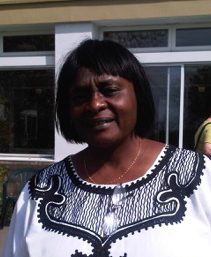
    I love hearing stories of how God brings transformation and healing, and I so enjoy being able to share them as well. I met Mabel, the author of today’s story, at a day I led in a Methodist church on “Finding Ourselves in Christ.” Afterward, she told me how God helped her to forgive her husband, setting her free from bitterness:

    Betrayal – the one thing that almost without fail breaks a person’s heart. That’s what happened to me.

    I was in my mid-fifties with an established career and was happily married, with everything near perfect. I had a strong meaningful relationship with God, a fulfilling job in the church, and a life I had built with my husband – or so I thought.

    When my marriage ended suddenly in Addis Ababa, my world collapsed. I had never anticipated that happening, so I had no plan B in my mind. I had married for life, because in my wedding vows I had committed myself to this other person until “death do us part.” I just assumed that my husband had as well, so when he told me he didn’t love me anymore and he wanted the marriage to end I was devastated.

    What I found so hard was the unwillingness on my husband’s part to work at our marriage. I felt like something was going on but I couldn’t place my finger on what it was. What brought more heartbreak was his refusal to sit down and talk, for up until then we had been very good friends who enjoyed each other’s company. This time he could not bear being in the same room with me.

    All this happened when we were living in a foreign country where I did not have the support networks I would have had in our native country. But I did have the support of the vicar who was the minister at the Anglican church where we worshipped. My husband wanted us to play happy families at church, pretending all was alright. For a while I played along with that hoping that perhaps he wanted to work things out. In the end I decided to confide in the vicar who waited for my husband to tell him what was happening in our marriage.

    But he didn’t. Instead he told the vicar that we had decided that I should leave Ethiopia to go back home to be with his son, my step son. That was not true; I was going back because we were now divorcing.

    I continued to pray and fast, hoping that somehow God would help us sort things out. The scripture I held on to was Malachi 2: 16 which says:

    “I hate divorce,” says the Lord God of Israel. “I hate it when one of you does such a cruel thing to his wife. Make sure that you do not break your promise to be faithful to your wife” (GNB).

    Because my husband attended the Anglican church I honestly believed that he was reading and praying as he thought about the vows he made when we married. But ten months after he had sent me back home, I heard he had got married. I couldn’t understand how he could have met someone in that short time and married her.

    Then it dawned on me that he must have been in a relationship with someone else while we were still married. I recalled some telephone calls in the middle of the night. When I inquired who this person was, he would tell me a story that I believed as I had no reason to be suspicious. That realisation made me feel betrayed as I had trusted him to be a faithful, God-fearing husband.

    Forgiveness is something I have always struggled with despite being a Christian as I’ve read verses like Proverbs 17:9 which say: “If you want people to like you, forgive them when they wrong you. Remembering wrongs can break up a friendship.” I tend to hold on to the hurt. If it the hurt involves close family, I would cut communication with them to take my time navigating the difficult situations. Then later I get to the place where I can forgive.
    But the end of my marriage has helped me to deal seriously with my unforgiving heart. As I struggled with my marriage breakdown I understood the line in the Lord’s prayer which I have said over again throughout my life which says: “Forgive us our sins as we forgive those who sin against us.”

    The more I reflected on my not letting go of my husband’s betrayal, the more I realised I was robbing myself of experiencing God’s forgiveness. I let go of all my resentment and anger towards him and felt lighter and liberated. I felt free of a burden that was not worth carrying around with me. Despite his cheating, I knew that deep down in my heart I had sincere love for him as God’s creation. This love covered over all his offences. I kept on reminding myself to forgive him not only seven times, but seventy seven times, as reflected in Matthew 18:21-22.

    Letting go of needing answers as to why my marriage ended freed me from being a victim. I sought healing of the wounds from God as I deepened and strengthened my relationship with him. As I accepted what happened to me, what was a catastrophe turned out to be a liberating learning curve – a  great experience of forgiveness and my ability to bask in God’s forgiveness for me.

    Now as I move forward all, I want to do is to help others who may find themselves in the situation like the one I went through, which I now use as a stepping stone to greater things.

    Mabel R. Nyazika is a Zimbabwean currently living in the United Kingdom and employed by Sale Methodist circuit as a lay worker. She worked for the Methodist Church in Zimbabwe for the best part of her life as a training co-ordinator. She holds a BA (HONS) and an MA in contextual theology.
    Amy’s book The Living Cross explores forgiveness through a series of daily Bible readings for Lent. You can find out more about it, and how to purchase, here.

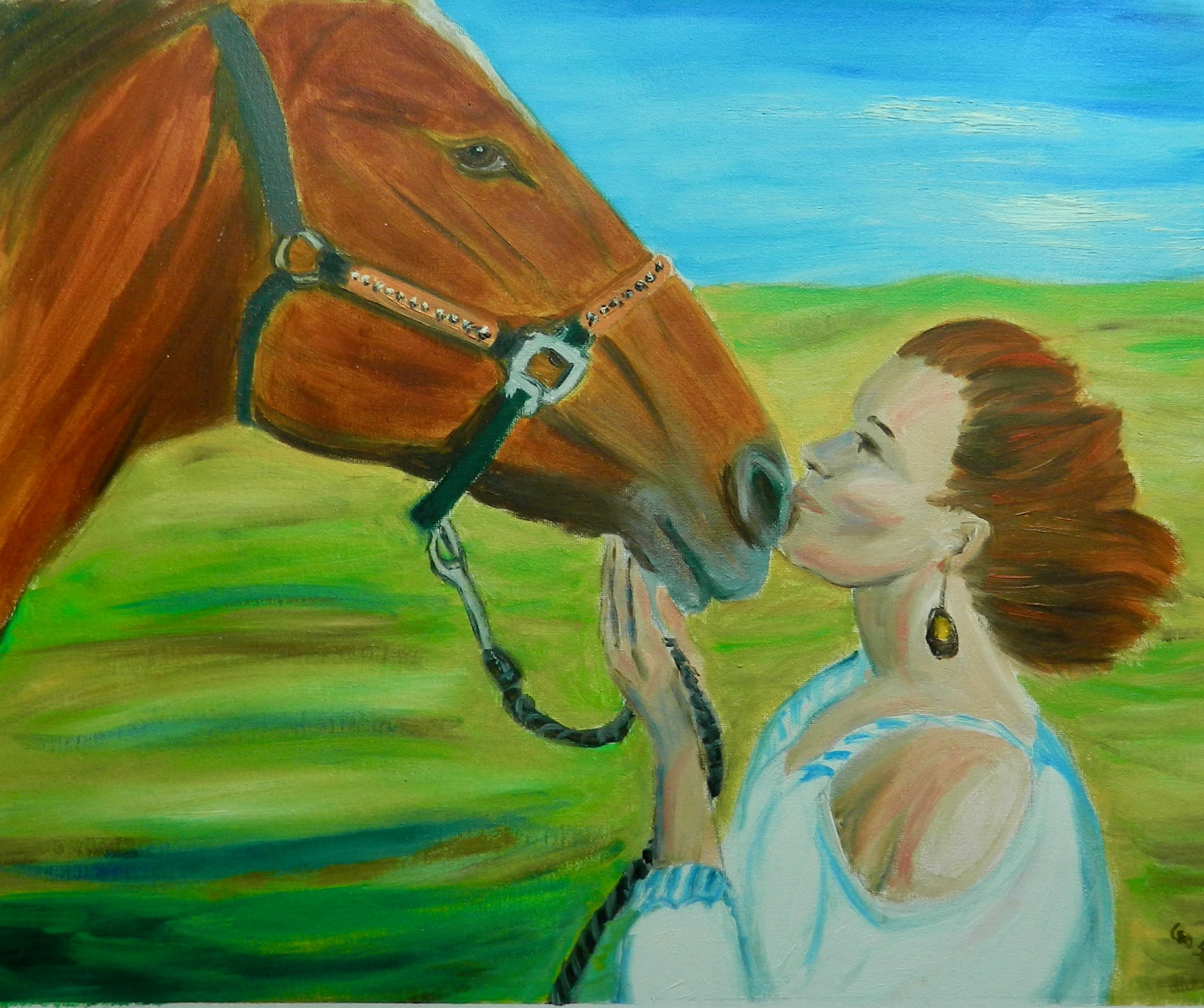
  • Weekly Watercolor: The gift of an animal

    By Leo Boucher. Used with permission; all rights reserved.

    For the love of a horse…

    Today, why not ponder the amazing creatures God has given us to enjoy – horses, dogs, cats, and so many wild creatures. They can enrich our lives through their love and service.

    What’s your favorite animal?