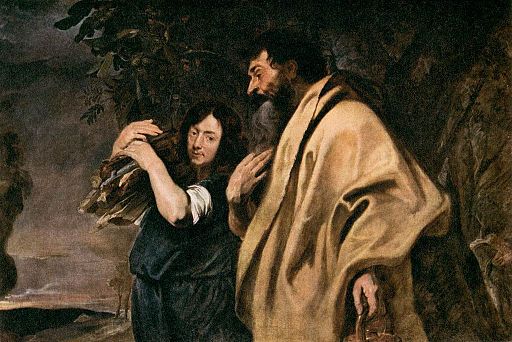
Take your son, your only son, whom you love – Isaac – and go to the region of Moriah. Genesis 22:2
They say losing a child is the hardest thing to experience. One day your hopes and dreams for your son or daughter live and breathe; the next they seem quashed. Your world has changed inexorably, and how God fits into the questions of why can lead to a lifetime of questing. (I write from empathy, not experience.)
The Lord God didn’t require of Abraham something he wasn’t willing to do himself – sacrifice his only beloved son. We see in the Lord’s instructions that he knows what he asks of Abraham – this is Abraham’s only son; the one who will fulfill God’s promises. It seems unthinkable.
Yet Abraham obeys, setting off on the three-day journey to Moriah. Consider what Abraham must have been thinking and feeling. Every step closer to Moriah marked less time with Isaac. Did he battle internally, questioning God? We don’t know, but as we see in Hebrews 11:19, he came to a point of acceptance, for he “reasoned that God could even raise the dead.”
Wrestling with the questions of “why” can eventually be a means of strengthening our faith, as we work through with God the issues that we don’t understand. This side of heaven, we won’t fully comprehend, but I hope the character of God – His goodness, faithfulness and love – will frame our questions and answers.
Prayer: Triune God, there’s so much we can’t fathom; at times our grief feels too much. Show us your great love. Amen.
We embark on a new seven-week series in which we explore a famous story from Genesis. That the Lord would ask Abraham to sacrifice his son may boggle our minds, but we will see what was behind this request as we travel through the passage. We can be inspired and encouraged by Abraham’s obedience to God’s voice, knowing that the Lord of this patriarch is too the God who made us and formed us, and loves us as his own.
Some time later God tested Abraham. He said to him, “Abraham!”
“Here I am,” he replied.
Then God said, “Take your son, your only son, whom you love – Isaac – and go to the region of Moriah. Sacrifice him there as a burnt offering on a mountain I will show you.”
Early the next morning Abraham got up and loaded his donkey. He took with him two of his servants and his son Isaac. When he had cut enough wood for the burnt offering, he set out for the place God had told him about. On the third day Abraham looked up and saw the place in the distance. He said to his servants, “Stay here with the donkey while I and the boy go over there. We will worship and then we will come back to you.”
Abraham took the wood for the burnt offering and placed it on his son Isaac, and he himself carried the fire and the knife. As the two of them went on together, Isaac spoke up and said to his father Abraham, “Father?”
“Yes, my son?” Abraham replied.
“The fire and wood are here,” Isaac said, “but where is the lamb for the burnt offering?”
Abraham answered, “God himself will provide the lamb for the burnt offering, my son.” And the two of them went on together.
When they reached the place God had told him about, Abraham built an altar there and arranged the wood on it. He bound his son Isaac and laid him on the altar, on top of the wood. Then he reached out his hand and took the knife to slay his son. But the angel of the Lord called out to him from heaven, “Abraham! Abraham!”
“Here I am,” he replied.
“Do not lay a hand on the boy,” he said. “Do not do anything to him. Now I know that you fear God, because you have not withheld from me your son, your only son.”
Abraham looked up and there in a thicket he saw a ram caught by its horns. He went over and took the ram and sacrificed it as a burnt offering instead of his son.So Abraham called that place The Lord Will Provide. And to this day it is said, “On the mountain of the Lord it will be provided.” Genesis 22:1–14 (NIV)
“From everyone who has been given much, much will be demanded” (Luke 12:48). So said Jesus to his disciples, but this statement could equally apply to Abraham. The man known as the father of the nations was one who obeyed (Hebrews 11:8). Much was given to him, but much was also required.
When we consider the story in our text, however, we may wonder why the Lord would put his servant to the test. We’ll see hints later in our series, but for this week, consider how we respond when we feel tested. Are we like Abraham, who when God calls him, says, “Here I am”? He has learned how to discern the voice of God over time and thus presents himself before him, ready to listen and obey. His trusting relationship with God prepares him to follow his commands.
I don’t believe God will put us to the test in such an extreme way as he did with Abraham, but I’ve seen him allow hard things in life, which tests our faith. One day I asked a friend whose husband and daughter had died about her relationship with God. She said, “Who else can I turn to? He’s my rock.” What a humbling, faith-filled response born out of the crucible of pain and suffering.
May our faith be strengthened, that we may be found ready.
Prayer: Father God, shine your light on the Scriptures, that we might understand and love you more. Amen.
A shoot will come up from the stump of Jesse; from his roots a Branch will bear fruit (Isaiah 11:1–5).
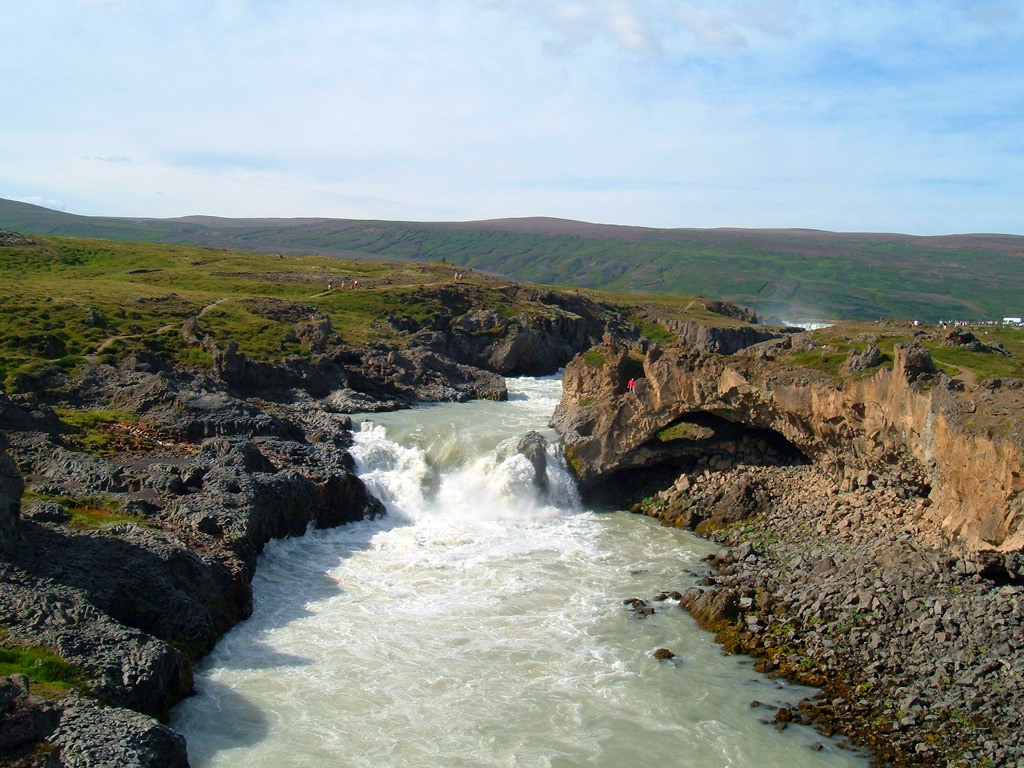
I love walking by a brook near to us, taking in the gentle gurgling water and enjoying the canopy of green from the many trees and shrubs in the area. Often I don’t pay any attention to the tree stumps near to the water. But recently as I was reading the prophecy of Isaiah, I thought of those pieces of wood rooted in the ground: “A shoot will come up from the stump of Jesse” (v. 1). And I realized that although something like a tree stump may appear useless or decrepit, God can be working deep within.
Although God’s people at the time of the prophet Isaiah faced enemies and exile, the Lord assured them that hope would spring forth, for from the roots of a stump would come the Branch bearing fruit (v. 1). Another level of meaning in the prophecy is this Branch being the Messiah, Jesus Christ. Not only is he the Branch that bursts forth out of the lifeless stump, but he is the Vine to whom the disciples are connected (see John 15:5).
When you next go for a walk, maybe even near a gurgling brook, consider the roots and stumps that may appear seemingly dead. And know that nothing is impossible with God. May we find hope in the tree of life and be strengthened in our connection to the Lord, who dwells with us.
Prayer: Lord Jesus, thank you for being the Branch to whom we are connected. May your Spirit flow through me, bringing renewal and new life.
When I saw him, I fell at his feet as though dead. Then he placed his right hand on me and said: “Do not be afraid. I am the First and the Last. I am the Living One; I was dead, and now look, I am alive! Revelation 1:12-18
Our time together of considering the phrase “Fear not” started in Genesis and ends in Revelation. We could have spent much longer exploring this theme, for nearly all of the books of the Bible contain this phrase. As puny human beings, fear and awe seem to be our natural reaction when God bursts into our lives. Even the seasoned disciple John falls down flat when the living Lord appears to him.
And rightly so, for as the Proverbs say, the fear of the Lord is the beginning of wisdom (1:7). A proper and holy fear acknowledges God’s majesty and glory; that he is God and we are not. When we rightly fear him, we want to obey his commands and his leading.
With our two lovely children, we seek to instill in them a healthy fear of the Lord, partly through prayer and teaching, but also through discipline. We don’t enjoy taking away screen time or when they were little sending them to the naughty chair. But encouraging them to change their hearts and obey with a good attitude takes time and perseverance. I wonder if the Lord feels the same with us at times, when we put our own agendas before his, or are ungrateful for his grace.
Jesus appeared to John in a brilliant vision of flashing light and sound. John feared him, but the Lord brought reassurance: He was no longer dead but alive. He had overcome death and the evil one. So too does Jesus want to appear to us, saying “Fear not; I am with you. The waters won’t pass over you. The flames won’t burn you. I will never leave or forsake you. You are my beloved. Fear not, and come with me.”
How will we respond?
Prayer: Holy Father, loving Son, comforting Spirit, we honor you with a holy fear. May you increase our awe and wonder at your glories and goodness. Amen.
Last night an angel of the God to whom I belong and whom I serve stood beside me and said, “Do not be afraid, Paul. You must stand trial before Caesar; and God has graciously given you the lives of all who sail with you.” Acts 27:13-44
The apostle Paul was a passionate man whose life was changed radically. He who had been the primary persecutor of the new Christians was struck blind on the Damascus Road as God revealed himself through Jesus. After his conversion, Paul gave up his prestigious Jewish career and lived no-holds-barred for God. Our reading comes when he is a prisoner for his beliefs and is being transported to Rome to appear before Caesar.
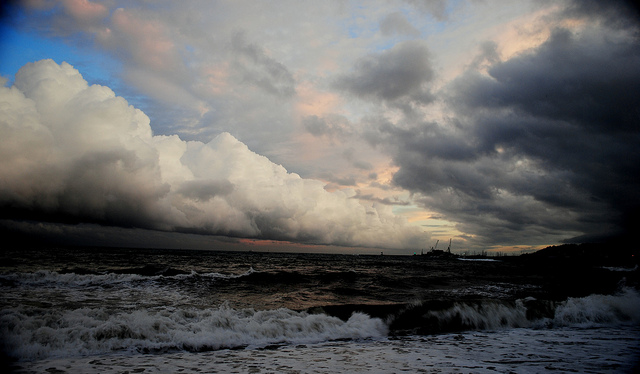
The pilot and sailors must have regarded their cargo – the prisoners – as a nuisance. They continued in their own course along the water, even though Paul warned them to stop and harbor over the winter. Sure enough, they find themselves caught in hurricane-force winds. Battered for days and worried about food supplies, they must have started to give up hope. Just then Paul speaks up, sharing a word from God that he received through a dream. He conveys hope amid the fears.
I love how matter-of-fact Paul seems when he shares his dream. He can’t resist pointing out that they should have listened to him in the first place, but that God will graciously rescue all of them. His faith is strong enough to bring calm during a raging storm, for he has put his trust in the triune God.
What storms are you facing, or those close to you? What squalls rage in the world, with nation poised against nation and many peoples facing abject poverty? As we consider the good news of Jesus coming into our world, may we commit to praying and believing that God can calm the storm. And then may we act on what we discern the Lord would have us do, for we are his agents of peace and hope in a hurting world.
For reflection and prayer: “May the peace of the Lord Christ go with you, wherever he may send you. May he guide you through the wilderness, protect you through the storm” (Celtic Daily Prayer)
Peace I leave with you; my peace I give you. I do not give to you as the world gives. Do not let your hearts be troubled and do not be afraid. John 14:1-27
I love this part of the Bible. It’s called Jesus’ Final Discourse, because he and the disciples have eaten their last supper together and Judas has gone off to plan his betrayal. Soon Jesus and his friends will make their way to the Mount of Olives, where the soldiers and officers will arrest him. The setting and timing makes Jesus’ words all the more important.
The disciples have just learned that Jesus is going to die, and of course they react with fear and trepidation. But Jesus reassures them, telling them not to be afraid. Then he shares with them a great truth of the Christian faith, the dance between the three members of God (the Father, the Son and the Holy Spirit) and us, his children. Jesus says, “I am in my Father, and you are in me, and I am in you.” And that he is sending the Spirit, the Advocate of truth, to be with us forever.
What does this mean for us, that the Trinity dwells in each other and in us? It’s a great mystery, to be sure, but has practical implications. For one, we are never alone. Jesus lives within, and we can just pause and practice his presence, to quote the phrase from Brother Lawrence of centuries ago. As we are quiet, we can call to mind the fact that God has descended not only to earth as the man Jesus, but that he dwells in us when we have welcomed him in. He can quicken our thoughts; bring to mind someone who is hurting for whom we can pray and reach out to; bring comfort and peace… the list is endless. No longer are we alone.
May the peace of Christ surround us this day.
For reflection: “And the peace of God, which transcends all understanding, will guard your hearts and your minds in Christ Jesus” (Philippians 4:7).
I love this section of the Bible so much that I have written a month of daily notes on John 14 to 17 for Inspiring Women Every Day. Look for it in September!
“Do not be afraid of those who kill the body and after that can do no more. But I will show you whom you should fear: Fear him who, after your body has been killed, has authority to throw you into hell. Yes, I tell you, fear him.” Luke 12:1-12
The title of a book captured my imagination when I was introduced to it some twenty years ago: psychologist O Hobart Mowrer’s You Are Your Secrets. I often think of that book when I catch a horrific news headline, such as the death of a young television presenter through asphyxiation in a solo sex game gone wrong. A secret act is made public, and along with grieving for the person involved, I can’t help but think how horrified they would have been at the revelation, had they lived.
Here Jesus is teaching the crowds, warning them against the hypocrisy of the Pharisees and telling them that their secrets will be made known. He alerts them to the arrows of the evil one, warning them to be on guard against his schemes. We need not fear our heavenly Father, who cares for us more than even the smallest and least significant of birds, for whom he also provides. But we need to fear the enemy of our souls. He who could keep us in eternal separation from God is one we should keep our distance from.
Yet some Christians seem to be fascinated with the devil, seeing him under every bush while binding him and casing out demons. Satan is active in the world; I’m not wanting to discount our need to put on the armor of God and to stand against his evil schemes. But neither should we become so focused on his activities that we become distracted from all that is true, good and beautiful. After all, we want to further God’s kingdom.
If “you are your secrets,” how would a headline sum you up?
Prayer: Lord Jesus, shine your light in my life that I might confess any hidden secrets. Thank you for setting me free and making me whole.
[Simon Peter] fell at Jesus’ knees and said, “Go away from me, Lord; I am a sinful man!” For he and all his companions were astonished at the catch of fish they had taken… Then Jesus said to Simon, “Don’t be afraid; from now on you will fish for people.” Luke 5:1-11
As Jesus calls his disciples to follow him, we see their fear. Jesus has been teaching the crowds, and uses Simon Peter’s boat to give him some space from the many people. Then he tells Peter to let down his net; Peter protests but obeys, and hauls in such a large number of fish that his nets start to break. Immediately Peter is shot through with fear, realizing the depth of his sinfulness.
When we come into God’s presence, his Holy Spirit burns as a refining fire, revealing to us where we have let God, others, or ourselves down. As with Peter witnessing the acts of Jesus, we who have his presence dwelling within us can ask him anytime to reveal what sins we might need to confess. Having received his forgiveness, we can follow him in joy.
Like Peter, we might respond to God’s prompting in our lives with skepticism. “Lord,” we might say, “I do so love my friend, and try to share your love with her, but the time never seems right.” But one day you sense the Lord’s prodding to send her a text. So you do, and she rings back, recounting a crisis through a veil of tears. Timidly you ask if you can pray for her, and she says yes. Afterwards you say to God, “Wow, Lord. I really don’t know what’s going on in the lives of my friends like you do. Thank you that you care even more than I. Let me not stop praying for them.”
How might the Lord be asking you to set down your nets?
Prayer: Father God, so often my faith seems weak and I am quick to discount your working in my life. Enlarge my vision and strengthen my faith.
Do not fear, for I have redeemed you; I have summoned you by name; you are mine. When you pass through the waters, I will be with you; and when you pass through the rivers, they will not sweep over you. Isaiah 43:1-7
The prophet Isaiah had to mete out many words of judgment to God’s people (especially in the first two-thirds of his book), but in the last third, his message changes to promises of hope, redemption, and love. God may have been angry with his people, but he will not give up on them. He wants to save them from their lives of sin and separation from him.
Though our passage for this week was written thousands of years ago, yet it speaks today of God’s loving mercy. Often when I am praying with people, we pray these words back to God as a way of setting their truth into our lives. If one of us is experiencing something that is particularly difficult, we ask God to help us push back our fears through these affirmations. For we know that God has created us, knows us by name and that we are his (v.1). We might feel that the waters are creeping over our heads, yet we know that with God’s help we won’t become submerged (v.2). Or that the flames that seem to be snapping at our feet won’t burn us (v.2). For we are precious and honored in God’s sight, and he loves us (v.4).
God’s word is rich and deep; I love how it speaks into our situations and those of so many years ago. For instance, verse 2 about passing through a river might refer to when Moses led the Israelites out of Egypt through the parting of the Red Sea. And the flames that don’t burn (also in verse 2) could hearken back to the days of Daniel, when Shadrach, Meshach and Abednego were thrown into the fiery furnace.
Truly our God is a God who saves. Never shall we fear.
Prayer: Lord Jesus, you were there with Daniel’s friends amid the flames. When I feel their heat encroaching on me, please save me and help me.
The Lord is my light and my salvation – whom shall I fear? The Lord is the stronghold of my life – of whom shall I be afraid? Psalm 27 (NIV)
King David, as the accepted author of many of the Psalms, reveals in them his great faith in God that was forged through lots of adversities. For example, he was on the run from his best friend’s dad, King Saul, who became jealous of his popularity with the people. After Saul and Jonathan were killed in battle, David faced other challenges as King of Israel and Judah, namely his people’s enemies such as the Philistines and the Moabites.
Some of David’s trials were self-created, however. Such as one spring, when other kings were off fighting wars but he stayed home, to rest and take it easy. The beautiful wife of one of his army men catches his eye and he commits adultery with her. When she becomes pregnant, he has her husband killed in war. Psalm 51 is his heart-rending cry of repentance.
The psalm we read this week is a confident affirmation of God’s presence in his life. David knows he need not fear the arrow that flies by day nor the terror of the night, for God is with him. The Lord is his light and salvation; the Lord is his place of refuge and protection.
Echoing David’s songs of trust and faith to the Lord may not feel natural at first. We might struggle to believe that the Lord will light our way or set us in a spacious place. But as we relinquish more of what we claim as ours over to him, we see how he leads us – and how he gives us back in abundance. Our faith grows and we can affirm with David that we will dwell in the house of the Lord all the days of our lives.
What rooms can you invite the Lord to inhabit today?
Prayer: Father God, we know that you are a jealous God, and that you want all of us. Help us to live wholly for you.