Tag: devotional

  • Devotional of the week: The God of the Unseen (5 in ‘Fear Not’ series)

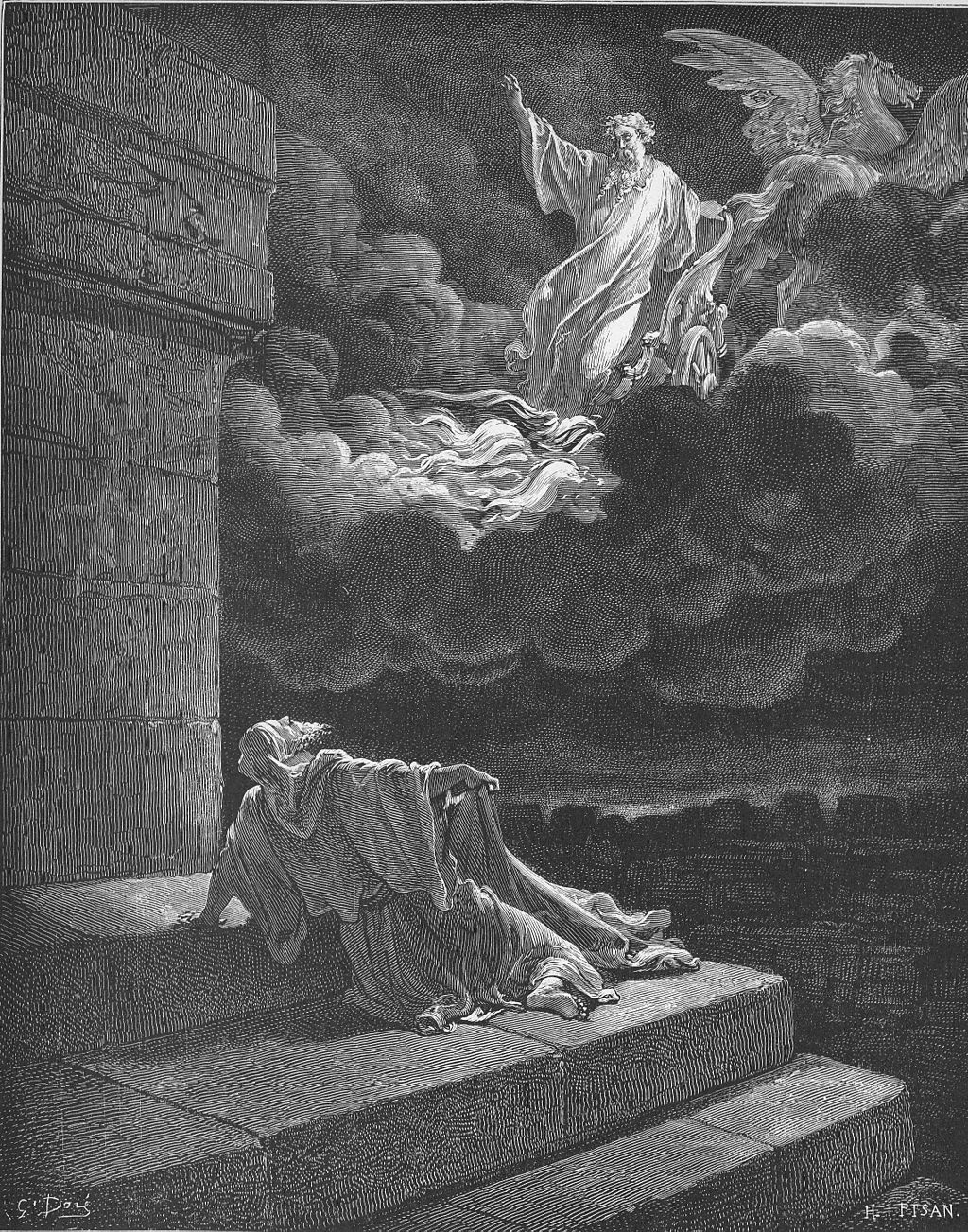
    Elijah ascends to heaven in a chariot of fire. Gustave Doré.
    Elijah ascends to heaven in a chariot of fire. Gustave Doré.

    Don’t be afraid,” the prophet answered. “Those who are with us are more than those who are with them.” 2 Kings 6:8-23

    Some years ago, I prayed regularly with a friend who was going through an excruciating time. She had experienced betrayal and she feared for her safety. Each week we would pray for God’s mercy, love, and protection into their lives. One morning while we prayed, I felt the verse above bubble up within me. I couldn’t remember where it was in the Bible, but quickly located it with the help of an internet search. “Ah, the chariots of fire!” I exclaimed.

    We read through the story with new eyes, for we felt that God was reassuring her that he had erected around her an unseen army. She could rest and be at peace, even though a battle might be raging.

    Elisha was a wise prophet, and through years of faithfulness had honed his spiritual vision. He knew that the armies of the Lord were far greater than the ones bearing down on him as sent by the king of Aram. And he knew that the Lord Almighty was more powerful than any human warrior. But his servant feared, so he asked God to open his eyes to what was unseen but real. Then Elisha asked God to strike the army blind, and they were. But amazingly he didn’t have his enemies killed. Instead he put on a great feast for them and sent them back to their master. They then stopped troubling him.

    A prayer I often repeat is that God would open my spiritual eyes, that I might witness his power and mercy. What is going on in the heavenlies is real, though we, living in a materialistic age, might be skeptical. Or fear might keep us from trusting God. But as we witness his saving grace, as with Elisha, our faith becomes a firm foundation.

    Prayer: Lord of the heavens and the earth, open our eyes that we might glimpse the saving work you are effecting in our lives, and in those around us.
  • Devotional of the week: The God who Protects (4 in ‘Fear Not’ series)

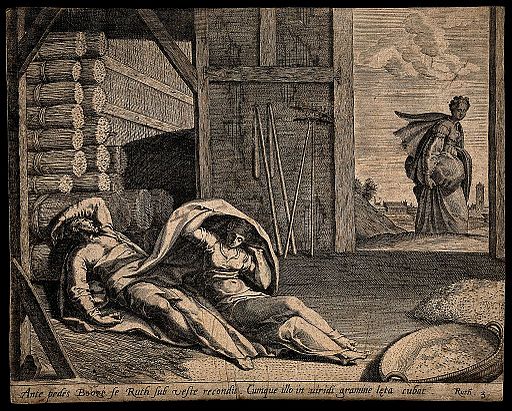
    Ruth comes to take shelter under Boaz's cloak. Engraving.
    Ruth comes to take shelter under Boaz’s cloak. Engraving.

    And now, my daughter, don’t be afraid. I will do for you all you ask… Although it is true that I am a guardian-redeemer of our family, there is another who is more closely related than I… If he is not willing, as surely as the Lord lives I will do it. (Ruth 3-4:10)

    When I first moved to the UK with my new English husband, verses from the book of Ruth floated through my mind: “Your people will be my people and your God my God.” I knew I had left my home in the States – at least for the first five to seven years, as was our agreement (writes she, now eighteen years later!). But I hadn’t thought about adopting my husband’s people as my own. As with adopting children, we find that we have not only enough love for the children currently in our family, but an abundance with which to love the new member too. So has it been with adopting a nation – as I write in Finding Myself in Britain.

    Ruth too was living in a foreign land, but she has seemingly lost everything when her husband dies. Yet she commits herself to her mother-in-law Naomi and says she will not leave her. Naomi then hatches a plan to provide for Ruth. It’s risky – Ruth presenting herself on the threshing floor where Boaz slept could have ruined her reputation. Ruth has reason to fear, but Boaz tells her not to. He will act honorably towards her, becoming her kinsman-redeemer in marrying her and thereby providing for her a place of safety and protection.

    What a balm those words from Boaz must have felt to Ruth – don’t be afraid. With them she knew that her future was secure and that she wouldn’t be a rejected widow. She would have life and family and joy.

    As I reflect on this story, I think of the apostle Paul’s letter to the Corinthians: “For no matter how many promises God has made, they are ‘Yes’ in Christ” (2 Corinthians 1:20). Boaz said yes to Ruth. What “Yeses” might God have in store for us?

    Prayer: Lord God, we sometimes gaze into the unknown with fear. As with Ruth, may we walk forward with faith and hope.

  • Devotional of the week: The God who Inspires (3 in Fear Not series)

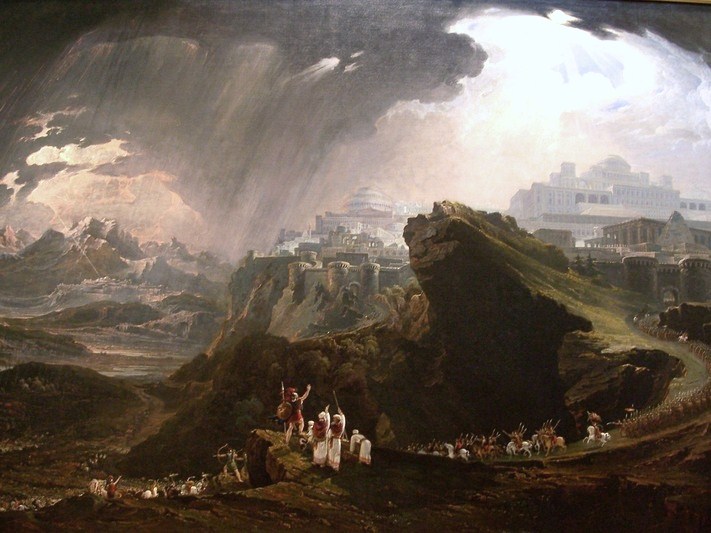
    Joshua Commanding the Sun to Stand Still upon Gibeon by John Martin. Public domain.
    Joshua Commanding the Sun to Stand Still upon Gibeon by John Martin. Public domain.

    “Be strong and courageous. Do not be afraid; do not be discouraged, for the Lord your God will be with you wherever you go.” Joshua 1

    A church leader had these opening verses of Joshua impressed on him by the Lord as he settled into life in a new parish. Little did he know that he would be facing strife, assault, accusation, and anguish in what became a church divided. Sensing from the Lord that he needed to be strong and courageous, that he shouldn’t be afraid or discouraged, he kept on with the challenge of clarifying the core beliefs of the church. Later he acknowledged that he could have handled some things differently, with more loving grace, yet now he delights in a church transformed. Out of the ashes have come sprouts of new growth.

    Joshua has a tough act to follow – as do church ministers when taking over the leadership of a church from one greatly admired. Moses has died and now Joshua faces the challenge of his lifetime, to lead his people to claim the land God had promised them. The Lord assures him that he will be with him, just as he was with Moses, and tells him repeatedly to be strong and courageous. Not to fear. To obey God’s commands. To meditate on the Book of the Law.

    As we see with Joshua, the Lord promises never to leave us, but we have to step forward in faith. We might face challenges we never dreamed were possible, such as betrayal by our closest prayer partner or a whispering campaign that cuts us to the heart. Though we suffer, the Lord will not abandon us. With God’s indwelling Spirit, he brings comfort, peace and even the ability to forgive those who wrong us. And he will show us where we have sinned, lifting the lid of self-deception and convicting us to repent. May we rejoice in God’s mercy this day.

    For reflection: Consider a church leader you know, perhaps your own. How might you encourage and uphold them today?

  • Devotional of the week: The God Who Travels (2 in ‘Fear Not’ series)

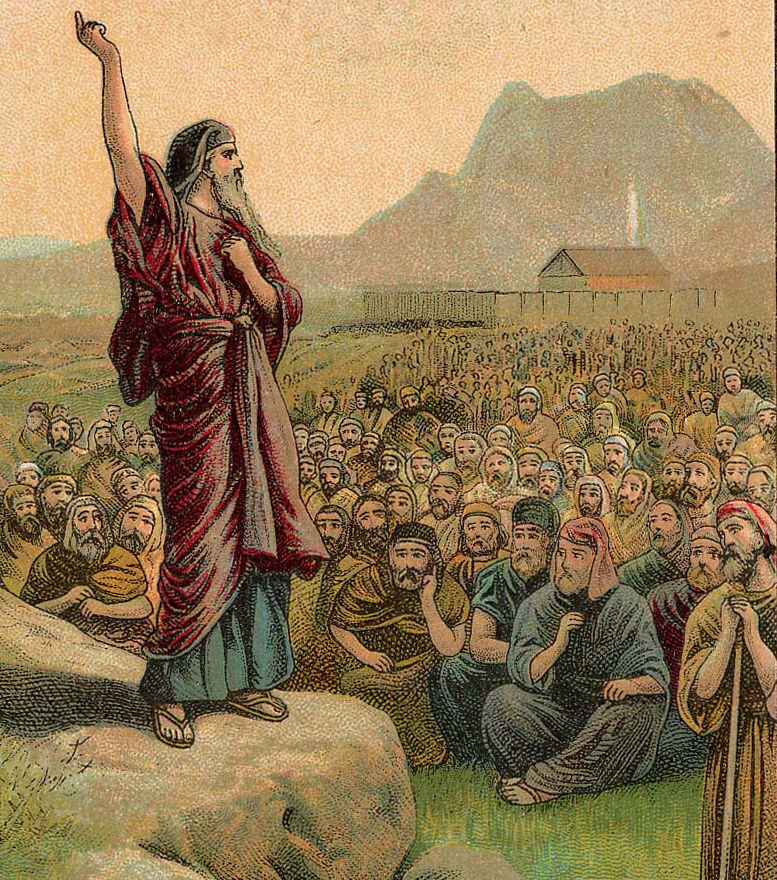
    Moses pleading with Israel, illustration from a Bible card published 1907 by the Providence Lithograph Company.
    Moses Pleading with Israel, illustration from a Bible card published 1907 by the Providence Lithograph Company.

    Then Moses went out and spoke these words to all Israel: “I am now a hundred and twenty years old and I am no longer able to lead you. The Lord has said to me, ‘You shall not cross the Jordan.’ The Lord your God himself will crossover ahead of you. He will destroy these nations before you, and you will take possession of their land. Joshua also will cross over ahead of you, as the Lord said. And the Lord will do to them what he did to Sihon and Og, the kings of the Amorites, whom he destroyed along with their land. The Lord will deliver them to you, and you must do to them all that I have commanded you. Be strong and courageous. Do not be afraid or terrified because of them, for the Lord your God goes with you; he will never leave you nor forsake you.”

    Then Moses summoned Joshua and said to him in the presence of all Israel, “Be strong and courageous, for you must go with this people into the land that the Lord swore to their ancestors to give them, and you must divide it among them as their inheritance. The Lord himself goes before you and will be with you; he will never leave you nor forsake you. Do not be afraid; do not be discouraged.” Deuteronomy 31:1–8

    Some years ago, my daughter woke up complaining that her legs hurt and that she couldn’t walk. Witnessing her crawling around, fighting pain, struck fear in my heart. As it turns out, she had a common childhood ailment – irritable hip – that sorted itself out within a fortnight. My momentary fears that she would never walk again were thankfully unfounded.

    But some of us do have children (or friends or family) who are paralyzed. Living in a fallen world, we face sickness and hardships, just as the Israelites met challenges as they entered Canaan – the land promised to Abram, as we read yesterday. Moses knows they fear what lies ahead, and seeks in his farewell address to calm their anxiety. Mainly he assures them that the Lord goes with them, and will never leave nor forsake them. Twice he tells him not to fear; twice he says to be strong and courageous. And not in their own strength, but because the Lord is with them.

    Moses’ faith has been sharpened and strengthened over many decades, from his own wandering in exile after killing the Egyptian to witnessing God’s plagues against Pharaoh and their subsequent miraculous crossing of the Red Sea. He has grown from one who stammered and used his brother as his mouthpiece to a leader of mammoth stature. He has learned that with God he need not fear.

    I don’t know what you’re facing today or this week; it might be a draining situation at work where you feel maligned and misunderstood. Or you weep for a child who has seemingly rejected God. Or you struggle with your marriage, or that you’re not married. Whatever faces you today, may you hear the words of centuries ago: Be not afraid nor discouraged, for the Lord your God is with you.

    Prayer: Triune God, you travel with me throughout each day. May I know that you are before and behind me, on my right and on my left.

  • Devotional of the week: Aim at heaven (11 in Pilgrim series)

    Photo: Baigal Byamba, flickr
    Photo: Baigal Byamba, flickr

    All these people were still living by faith when they died. They did not receive the things promised; they only saw them and welcomed them from a distance, admitting that they were foreigners and strangers on earth. People who say such things show that they are looking for a country of their own. If they had been thinking of the country they had left, they would have had opportunity to return. Instead, they were longing for a better country—a heavenly one. Therefore God is not ashamed to be called their God, for he has prepared a city for them (Hebrews 11:13–16).

    A couple of years ago, as we and our children were discussing the evening’s Bible story – Jesus with the woman at the well – we talked about nationalities, for Jesus as a Jewish man talking with a Samaritan woman would have broken social conventions. We discussed national allegiances, for our children have two: British and American. To which my son said that he felt more British than American – to my chagrin but not to my surprise.

    The kids – and now I – have dual citizenship, but as Christians we all have dual or triple or more citizenship, with our most important passport aligning us to the heavenly country. We hold our earthly citizenship lightly, knowing that our lives here are an itty bitty dot compared with the length of eternity.

    These verses from Hebrews underline how the ancients were living in view of heaven. The passage forms an interlude, when the writer pauses in his great list of the heroes who lived by faith to emphasize their eternal perspective. As with the psalm we read last week that spoke of being a foreigner and stranger, the heroes listed in Hebrews also knew that their heavenly passport was the important one.

    Are we living in the light of eternity? One way I like to get heaven into my imagination, so to speak, is to chew over the last chapters of Revelation. The imagery soaks into my heart and mind, and for a few minutes at least the cares of this world lessen.

    For reflection: “Aim at Heaven and you will get earth “thrown in”: aim at earth and you get neither” (CS Lewis, Mere Christianity).

  • Devotional of the week: Pilgrims by faith (10 in Pilgrim series)

    Photo: geocaching.smartlog.dk, flickr
    Photo: geocaching.smartlog.dk, flickr

    By faith Abraham, when called to go to a place he would later receive as his inheritance, obeyed and went, even though he did not know where he was going. By faith he made his home in the promised land like a stranger in a foreign country; he lived in tents, as did Isaac and Jacob, who were heirs with him of the same promise. For he was looking forward to the city with foundations, whose architect and builder is God (Hebrews 11:8–10).

    As we near the end of this journey of engaging with the concept of pilgrimage, we return to Abraham, Isaac, and Jacob through this faith-building passage from the letter to the Hebrews. This chapter lists hero after hero in the Bible who followed God’s call on their life. They lived by faith while enduring hardship, welcoming from afar the fulfillment of the promises of God.

    For me, a line from our text that stands out is that Abraham didn’t know where he was going. He didn’t have the latest GPS update, his travel route planned out in detail down to which hotel he would stay in on night twenty-three. Rather he set out, trusting God, with herds and children and servants and household goods, journeying laboriously through heat and sunshine. I’m continually directionally challenged, so the thought of going on a journey without Gertie, our so-named GPS, sends shivers down my spine. I’m a much more content traveler when someone else is navigating – at least when it’s a physical journey.

    And Abraham made mistakes: to Pharaoh he passed off his wife as his sister so that the Egyptians wouldn’t kill him; he gave into Sarah’s request that he sleep with her maid so to hurry up the process of him receiving the promised heir. Yet the writer to the Hebrews doesn’t mention these errors in judgment; rather he says that Abraham obeyed and went. I find that encouraging. Though we may follow the wrong course or get off-track, God forgives us and, if we are faithful, will say that we too obeyed and went.

    Prayer: Lord God, direct my footsteps this day that I might walk the path that leads to joy, peace, and righteousness.

  • Devotional of the week: Our flimsy tent (9 in Pilgrim series)

    Photo: Michael Pollock, flickr
    Photo: Michael Pollock, flickr

    For we know that if the earthly tent we live in is destroyed, we have a building from God, an eternal house in heaven, not built by human hands. Meanwhile we groan, longing to be clothed instead with our heavenly dwelling, because when we are clothed, we will not be found naked. For while we are in this tent, we groan and are burdened, because we do not wish to be unclothed but to be clothed instead with our heavenly dwelling, so that what is mortal may be swallowed up by life. (2 Corinthians 5:1–4)

    When growing up, I would go on a yearly wilderness canoe trip in northern Minnesota. We would eschew plumbing and comfortable beds for the wonders of being close to nature. So close that just a flimsy tent would be between us and the outside world. Most nights we would sleep well, if somewhat cramped, a cool breeze wafting through the screen. But one night stands out in my memory: the rains felt like floods and our tent’s walls became saturated with water. Droplet after droplet came in, soaking our sleeping bags and making us miserable. We wondered if the night would ever end.

    Tents are flimsy things, and necessarily so. For who would want to haul bulky boards and nails on a long portage? So too our bodies, as the Apostle Paul says in his letter to the Corinthians. But our culture resists Paul’s words, with its ever more invasive forms of plastic surgery to stave off aging. Or the latest miracle cream to reduce wrinkles. Or the latest gadget or fast car or trophy wife. But Paul speaks of the eternal realities under which we live.

    Our hope is in heaven, when we will enjoy a dwelling made with the best building materials, which will never leak, rot, get moldy or break. We won’t need Botox or surgery or exorbitantly expensive face creams – or the latest Ferrari or yacht or smartphone. None of that will matter – it will be “swallowed up” – as we embrace true living. Come, Lord Jesus!

    Prayer: Lord, we want not to be overly concerned with our earthly tent. Help us to focus on what truly matters.

  • Devotional of the week: Transformed (8 in Pilgrim series)

    Photo: Julie Raccuglia, flickr
    Photo: Julie Raccuglia, flickr

    Therefore, I urge you, brothers and sisters, in view of God’s mercy, to offer your bodies as a living sacrifice, holy and pleasing to God – this is your true and proper worship. Do not conform to the pattern of this world, but be transformed by the renewing of your mind. Then you will be able to test and approve what God’s will is – his good, pleasing and perfect will (Romans 12:1–2).

    In writing to the Romans, the Apostle Paul delivers a lot of theology in the first eleven chapters – salvation, justification, righteousness, freedom. Then he pens a big “therefore.” What does all of it mean? Listen up, he seems to say, this is how to live it out.

    We think about his “therefore” this week as we consider the internal transformation of a pilgrim that results in changes to our behavior. Paul tells the Romans to start with offering their bodies to God. No longer do they make animal sacrifices, for the new covenant brought forth by Jesus supersedes that. Rather, now they give themselves as a living sacrifice. And God will not reject them as he would previously an imperfect dove or bull.

    Then Paul says not to conform. Living in a caustic world, we can easily sink to the level of the prevailing culture as we give in to gossip, angry thoughts, bitter recriminations. But God through his indwelling Spirit can change the pattern of our thoughts as we submit to him. Perhaps we can call to mind that the Lord dwells within through a hourly alarm on our phone. Or each time we relieve ourselves. Or when we are about to blast out a series of unhelpful or hurtful words. For when we are transformed, then we will understand how God wants us to live. We’ll learn his “good, pleasing and perfect will.”

    For reflection: “So whether you eat or drink or whatever you do, do it all for the glory of God” (1 Corinthians 10:31).

  • Devotional of the week: Gifts now; gifts later (7 in Pilgrim series)

    James Fraser and some of the people he introduced to Christ.
    James Fraser and some of the people he introduced to Christ.

    Then Peter spoke up, “We have left everything to follow you!” “Truly I tell you,” Jesus replied, “no one who has left home or brothers or sisters or mother or father or children or fields for me and the gospel will fail to receive a hundred times as much in this present age: homes, brothers, sisters, mothers, children and fields – along with persecutions – and in the age to come eternal life.” (Mark 10:28–30)

    Our text comes just after the rich man asks Jesus how to enter the kingdom. Jesus’ words to him are stark: sell his possessions, give to the poor, and follow him. The disciples are amazed. Then Jesus gives the assurance above – those who renounce family members and livelihoods and who endure ill-treatment will receive a hundredfold of blessings.

    This passage makes me think of missionaries of old, who would leave their home for a far-flung country never to return, or to come back decades later to a few remaining relatives whom they might not recognize. James Fraser (1886–1938) was such a pilgrim. He gave up what would have been a budding career as an engineer – or a concert pianist – to live among the remote tribal people in China. What he relinquished was great, but what he gained was everlasting. For through his dependence on God as expressed through a disciplined program of prayer (shared with his prayer partners at home), he witnessed many Lisu Chinese people come to faith.

    God might not be asking us to be mission partners in a remote village. But what he seeks in us, as with the young rich man, is a heart willing to eschew the things that may have become an idol to us – even our family members or our homes or our work. Can we say yes to Jesus as he asks us to follow him, trusting that we will receive a hundred times as much of what we say no to?

    For reflection: “Now to him who is able to do immeasurably more than all we ask or imagine, according to his power that is at work within us, to him be glory in the church and in Christ Jesus throughout all generations, for ever and ever! (Ephesians 3:20–21).

  • Devotional of the week: Set toward Jerusalem (6 in Pilgrim series)

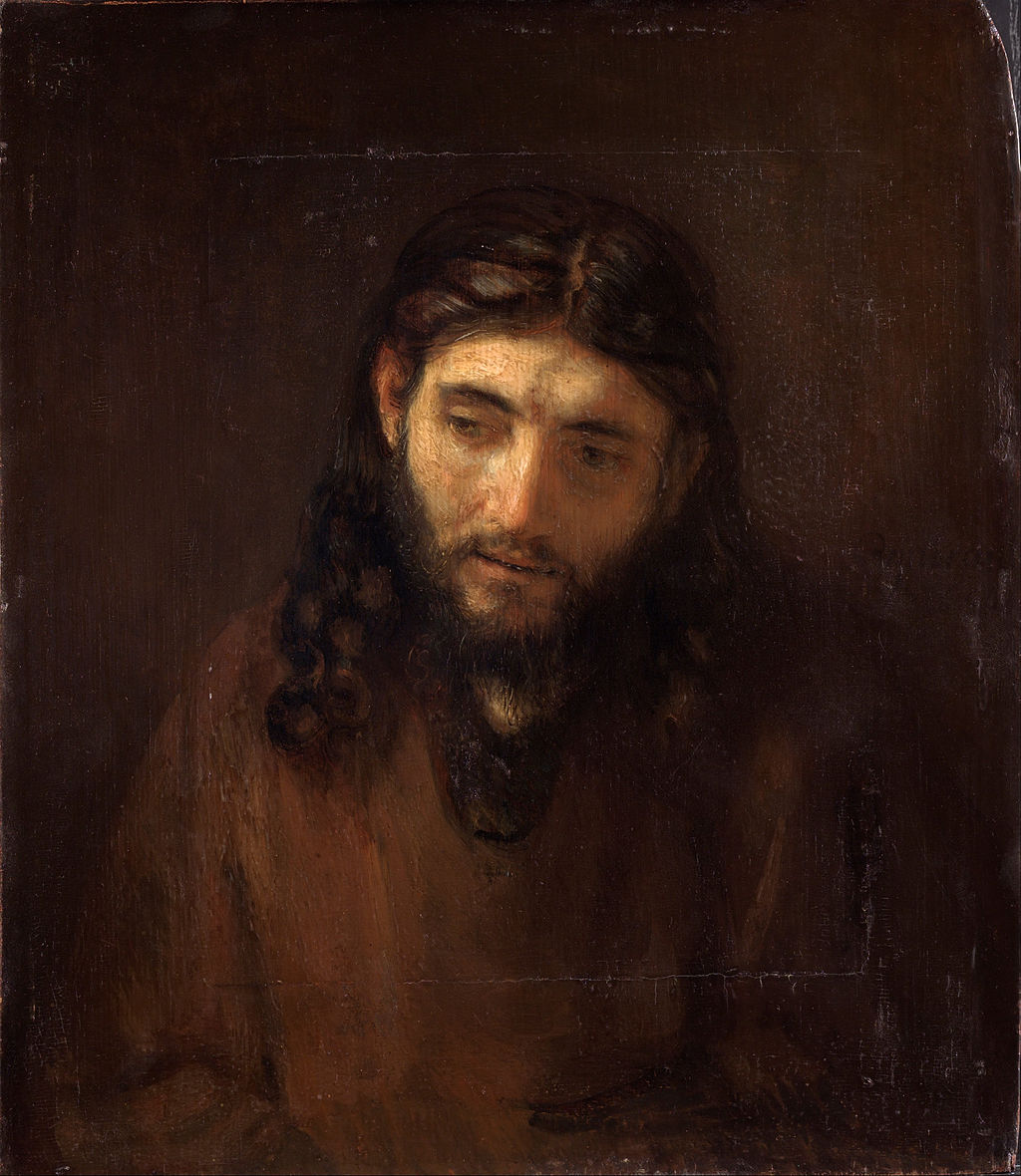
    Rembrandt, public domain
    Rembrandt, public domain

    As the time approached for him to be taken up to heaven, Jesus resolutely set out for Jerusalem. And he sent messengers on ahead, who went into a Samaritan village to get things ready for him; but the people there did not welcome him, because he was heading for Jerusalem. When the disciples James and John saw this, they asked, “Lord, do you want us to call fire down from heaven to destroy them”? But Jesus turned and rebuked them. Then he and his disciples went to another village. As they were walking along the road, a man said to him, “I will follow you wherever you go.” Jesus replied, “Foxes have dens and birds have nests, but the Son of Man has no place to lay his head.” Luke 9:51–58

    Having spent our previous weeks in the Old Testament in this series on pilgrimage, we now turn to the life of Jesus, which is fitting as we approach Ash Wednesday. In one sense Jesus’ whole human life was a pilgrimage, namely as one of the Godhead who became man and dwelt among us before returning to heaven.

    This week’s reading comes as Jesus sets out for Jerusalem and the cross, knowing the sacrifice he will make. As part of this, he begins preparing his disciples for his death. When James and John thought the unwelcoming village would need judgment, Jesus rebukes the them. Rather than punishment, now was the time for grace and proclamation.

    Then another man appears, saying that he wants to follow Jesus – probably as one would follow a rabbi, learning from him by walking behind him. Jesus replies that though even the wild animals have holes in which to escape, he does not enjoy such a refuge. Thus the cost of following him will be great. But the rewards will be eternal.

    We often shy away from speaking of the sacrifice required of disciples of Christ when sharing with someone enquiring about our faith. Jesus, in contrast, is clear. Discipleship is costly, but worth it. As we share with those whom we meet, may he give us winsome words filled with the right balance of grace and truth.

    Prayer: Lord God, sometimes we fear that you will make us renounce what we love. Give us strength and courage to follow you, and strike hope and faith in us that we may believe your promises.