Easter is early this year, which means that Lent of course starts early too! Ash Wednesday is on 18 February, just over a week away.
How might you spend this time leading up to Easter? Feel daunted by the traditional approach of prayer, fasting, and almsgiving? Lent can be a time for those practices, of course, but God is pleased with any and all of the ways we seek to draw close to him.
I have some resources for you to help.
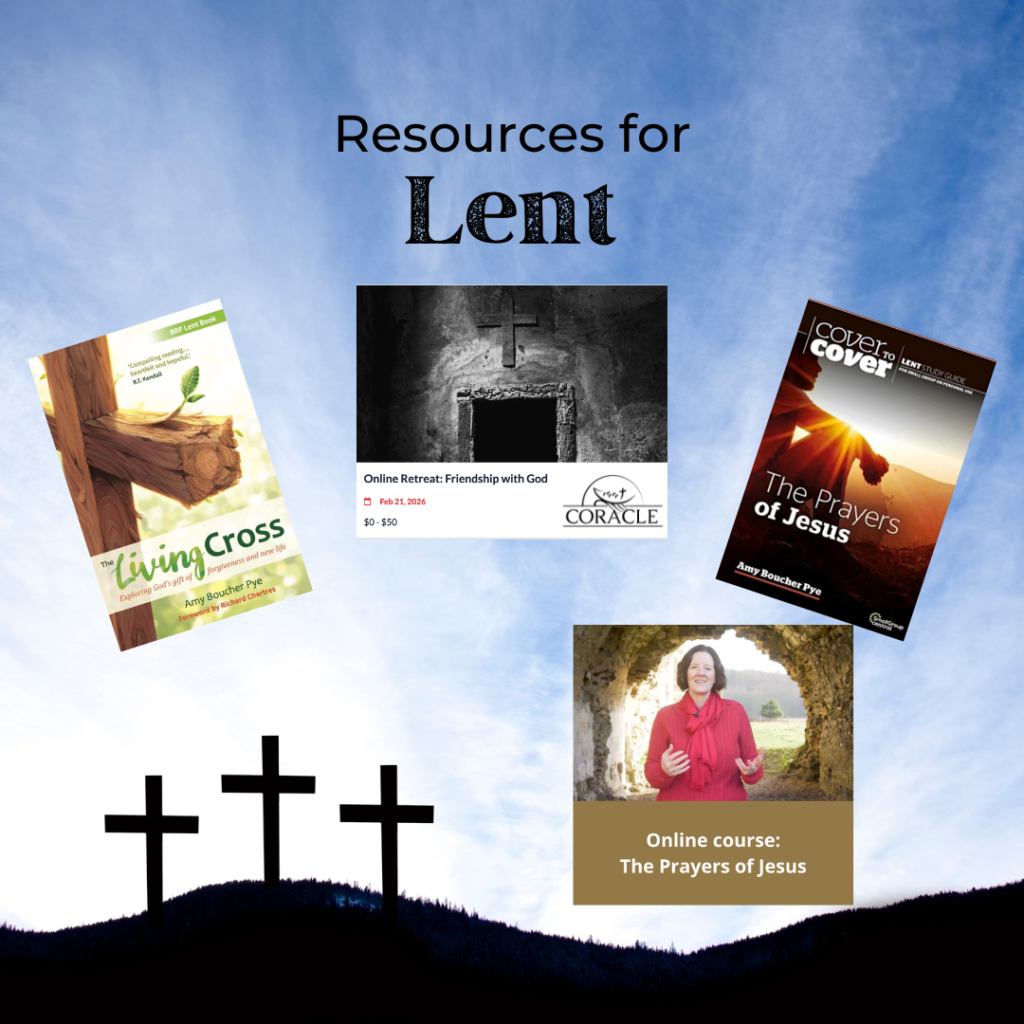
• Tomorrow (11 February) I’ll be on Premier Christian Radio at 11am (UK time) for an hour discussing with Mal Pope some strategies for staying close to God during Lent. [Edit: you can find the recording here, including an imaginative prayer exercise with Jesus in the wilderness.]
• On Saturday 21 February, I’ll be leading an online retreat sponsored by Coracle on Friendship with God, looking at the story of Mary, Martha, and Lazarus with Jesus. So much of the key events of their story in the gospels comes during Lent, and I trust you’ll be encouraged. You can find my full exploration in my book Transforming Love.
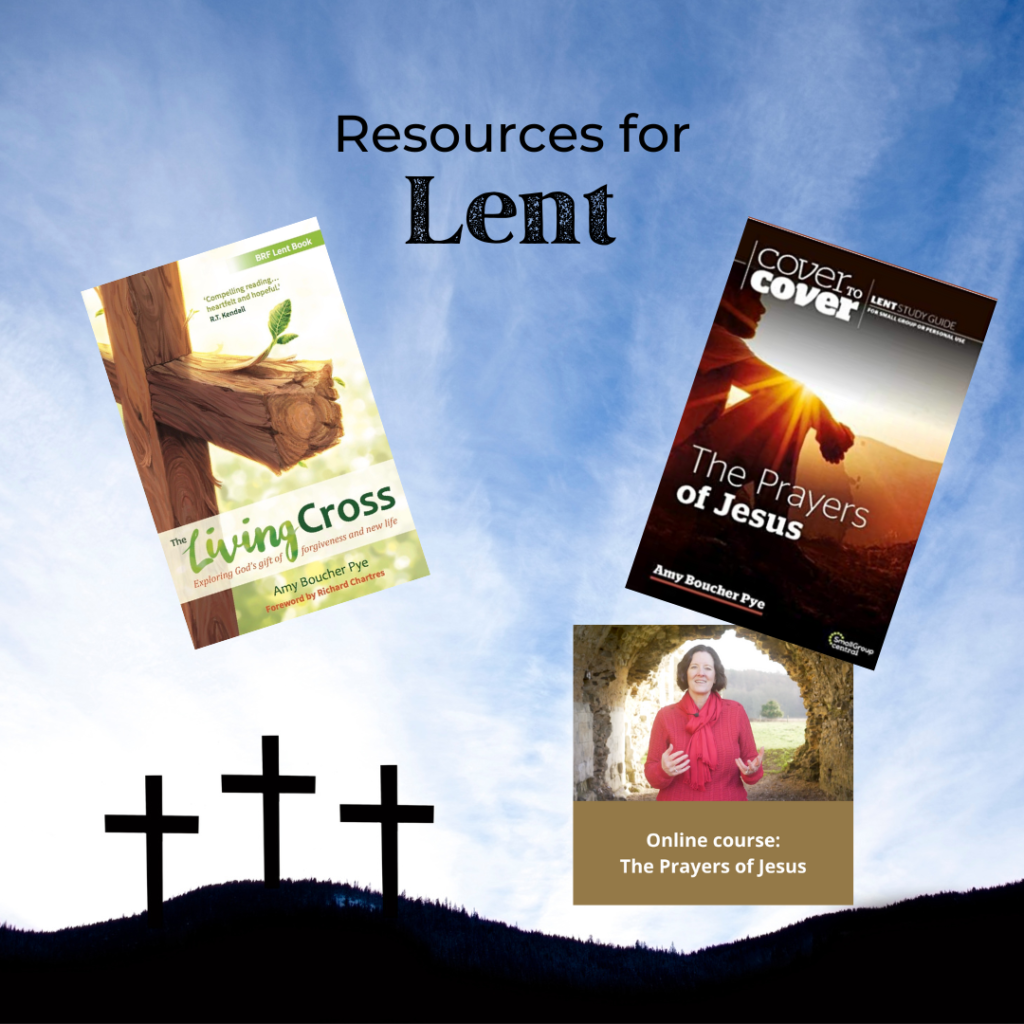
• My book The Living Cross is a through-the-Bible look at forgiveness, half in the Old Testament and half in the new. I’ll be giving away a copy of this book with my next newsletter.
• The Prayers of Jesus is a small-group course that explores 6 of the 7 prayers of Jesus recorded in the gospels. So many of these occur during Lent. There’s a prayer exercise included for each week. And…
• The online course for the above is a great resource as I so enjoyed my conversations with the amazing Micah Jazz, who has now gone to glory. Wow – I think this is now free!
Soon we’ll be entering Holy Week, when those who follow Jesus join in, again, with the events of the shaping story of our faith: Christ has died, Christ is risen, Christ will come again.
You might feel that you’ve fallen short or failed in what you hoped to do/read/observe during this season of Lent. For me, the Lenten book I ordered never arrived; I’ve waited and hoped that it would come while reading the first week, kindly made available by the author to those of us who decided at the last minute to use her resource.
But in God’s kingdom it’s not too late. He welcomes us to enter into the story fully, whether we’ve been able to be faithful or not. He sparks the desire within us and gives it the oxygen and fuel to help it burn brightly.
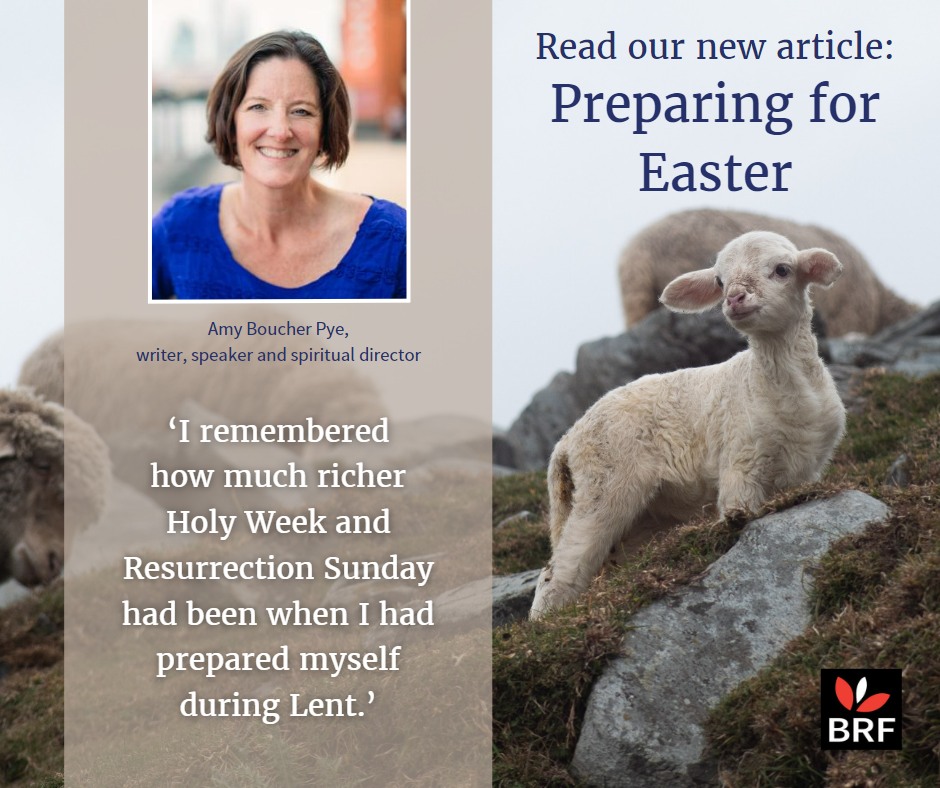
I welcome you to enter into the story this Holy Week with wonder and sorrow. One way to do so is through praying through the events of the week as they happen. I share a guide to do so in the linked article, written for my lovely friends at BRF, the publisher of my forthcoming book in November with my dad’s art (which will be perfect for next Lent!), Holding onto Hope.
May you receive from God exactly what he has just for you in the coming week as we journey to the cross and the resurrection.
I received a question about Lent resources last week:
I am hoping to have a women’s Lent group and wondered if you could recommend a book to follow?
My answer:
I wonder if your women’s group would like my little resource The Prayers of Jesus? It explores 6 of Jesus’ 7 prayers from the gospels, which is fab for Lent because as you know they culminate in Gethsemane and on the cross. I did a video series for it with introductions, a prayer exercise and a conversation with the very interesting Micha Jazz. There are meeting-starter ideas, the session content, discussion questions, and ideas for leading a prayer exercise. Perhaps this could be adaptable for your group? No worries if not. With the cost-of-living shooting upwards, the latest print run got expensive for a little paperback – £7.99, discounted.
For a Lent book if your group is happy to read a bit more, I love Walter Wangerin’s Reliving the Passion. (My review from years ago in Woman Alive is here.) Or my daily readings of The Living Cross, a through-the-Bible look at forgiveness.
Need ideas for how to have a good Lent? Here’s an article I wrote a few years ago.
I recently came across a moving story of forgiveness, which I share below. The woman writing it needs to remain anonymous, but I can vouch for her integrity and love. She shows that forgiveness is freeing.
Wisdom and forgiveness are like a “a garland of grace on your head, and a pendant around your neck.” Proverbs 1:9
To say that you forgive a person for doing wrong to you is easier said than done. You can say those words “I forgive you,” but can you honestly say in your heart that you really do forgive that person? Or as Corrie Ten Boom says, “Sometimes people forgive like they are burying the hatchet but keep the handle uncovered in case they need to use it again.” But this only prolongs the conflict.
I have been through a tough time. Only a handful of people
know and have been praying for me. It started in March 2017 and I didn’t see an
end to it. You see, I was bullied. Most people think this only happens in the
playground but, in my fifties I’m ashamed to say I was bullied by a woman a few
years older than myself. The reason for the bullying, it seems, was because I
was good at my job. Crazy but true.
Going back to before I became a Christian, my values were
different. If someone upset me, I could stand up for myself, and believe me, I
did. My husband once said that I could “rip someone’s throat out at 50 paces” –
something I am not proud of. But Jesus changed me. I accepted him into my life
and the change in me was so real, so amazing, that even my sister said, “It’s
like you have been taken over by aliens” and my husband said I had a glow “like
the Readybrek advert.” I was a changed person, not in a small way but in a huge
way and it was all thanks to God.
However, over the years, I struggled and still do. The reason I struggled is that when people are cruel to me or upset me, instead of dealing with it in the way I should, I accepted their behaviour towards me. I almost allowed them to say or do what they wanted because I didn’t know how I should react. So instead of responding, I said nothing. You see, I didn’t know what response was acceptable as a Christian and what wasn’t. So I let people walk over me and hurt me. I realise now that the change had to come from me but I didn’t know how to do that. I couldn’t do it in my own strength.
The story of Corrie ten Boom has been told countless times
through the years. Yet, even today, it remains one of the most beloved stories
of forgiveness this world has ever known. During World War II, she and her
family saved Jews from being sent off to concentration camps by hiding them in
a room at the top of their home. When Nazi officers learned what was going on,
the house was raided and Corrie was sent to a prison, a political concentration
camp, and finally a death camp. But, miraculously, she survived. As you can
imagine, there were many moments of hardship that Corrie had to overcome even
after the war ended.
One such moment was at a church where she saw a former SS
man who guarded her in the concentration camp. As the man approached her to
shake her hand, everything in her reminded her of the horrid pain this man had
brought upon her. And even though Corrie often spoke of the need to forgive
others, she knew she couldn’t forgive this man in her own strength. God had to
do it through her.
Corrie writes, “When He tells us to love our enemies, He
gives, along with the command, the love itself.” God gave Corrie the strength
to forgive and love the man when she could not.
Perhaps you’ve never had to deal with such heavy forgiveness
in your life as Corrie ten Boom has, but there are many times in life when we
will have to both forgive and be forgiven. Here are four things to keep in mind
when you forgive someone.
Realize everyone has to be forgiven. It will save you a lot of trouble to understand early on that we all will make mistakes and need forgiveness at some point.
Forgiveness isn’t earned. Grace is undeserved favour that no one can earn. Therefore, forgiveness should be given with no expectations in return and no strings attached.
Don’t bring it up again. Sometimes people forgive like they’re burying the hatchet but keeping the handle uncovered in case they need to use it again.
Make the decision and your heart will catch up. If you wait to feel ready to forgive, it’s never going to happen. Rather, you must make the decision to forgive and soon enough your heart will catch up.
I believe that in recently I’ve truly understand forgiveness
for the first time. I can honestly say that through the teachings of Corrie Ten
Boom, I can wholeheartedly forgive the person who has bullied me, and I pray
that God will change that person’s heart and make her a better person. I pray
that He will replace the bullying attitude within her and give her a spirit of
kindness and humility and that she will now begin to treat people the way they
should be treated. I pray that whatever has caused this bitterness within her
will be revealed to her so that she can deal with it and have peace in her
heart.
Recently I received an amount of compensation for what I
went through. For me it wasn’t about the money. It was about truth and justice,
and that no one else should ever experience what I went through. From some of
the money, I purchased a necklace. It felt a bit extravagant, but when I wear
this necklace, I will remember that I stood up to the bully, that justice was
done and forgiveness was given. Corrie Ten Boom went through an awful lot more
than I did and found the strength to forgive through Jesus, so if Corrie can go
through all of that and forgive, then I can too.
So, do I feel good that the outcome is compensation paid into my bank account? No I do not. But I wear this necklace as a symbol that justice was done, and I thank God that through the teachings of Corrie Ten Boom, forgiveness has been given. Now I will take time to recover and allow Jesus to heal me so that I can move forward and not look back.
Amy’s book The Living Cross explores forgiveness through a series of daily Bible readings for Lent. You can find out more about it, and how to purchase, here.
I am pained by the division that happens sometimes between Christians who embrace different streams of faith and practice, so when I heard Sheila Holwell’s story of the freedom that forgiveness brings from this kind of fracture, I was eager to share it with you. Might there be someone who has hurt you in this way whom you could forgive?
A meditation in Our Daily Journey, written by Amy Boucher Pye on the subject of forgiveness, got me thinking. At the conclusion we were led into considering whether there were any experiences in our lives where there was a need to forgive.
While I have been very conscious of the need for forgiveness over the years, and have known the wonderful freedom it brings, as I read there suddenly flooded into my mind the memory of an incident about thirty years ago in the church. I knew immediately that I had not really forgiven.
A new Curate came when I was involved with the Pathfinder Group of young teens. The mother of one of our members came to see us, concerned that, while she encouraged her children to be faithful to their commitments, she felt this was being challenged as the Curate had told her daughter to be trained as a Server, which meant leaving Pathfinders. This was done without our being told of that decision.
There were other incidents that were done without communication so I went to the Curate and asked him to “lay his cards on the table” and tell me what was going on. He looked me straight in the eye and said, “You are not a mainline Anglican and you don’t fit. I was so shocked that I did not respond, so I went to the Vicar and told him what had been said and his response was “Well, it is true.” Having made a point of being committed to the church over the years in every way possible, including moulding into the different churchmanship, I found their statements very hurtful.
As the realisation came to me that I had not forgiven the Curate, I laid the whole situation at the foot of the Cross. I knew that Jesus had been there with me at the time, and so I was able to forgive and pray for this person, leaving it all with the Risen Christ. Subsequent circumstances caused me to thank God that it was a stage on my pilgrimage that was contributory to where I am today.
Finally, to bring the seal of God’s redeeming love on it all I placed the whole situation, via a little written note, on the Altar at the Eucharist. Praise the Lord! I am free!
Sheila Holwell was born in North London, where she had a grandmother who taught her to love the Bible and to enjoy Moody and Sankey hymns. As a teenager she felt the call to serve the Lord where he wanted her. Later came the very unexpected pathway to being an R.A.F. wife to a widower, and stepmother to a nine-year-old boy, with whom sixty years on she has a wonderful relationship.
She worked for the NHS with her husband became Readers in the Oxford Diocese, serving together until they moved to Devon. Sadly her husband died of cancer and also had dementia. It was then, however, that she experienced the miraculous ways God leads in devastating circumstances.
The doorway into Anglo-Catholicism opened and she is very happy with a wonderful vicar, who has a great sense of humour. Their evangelical versus liberal theology is dealt with in love. She finds sharing Jesus in prayer, preaching, and pastoral care such a privilege.
Amy’s book The Living Cross explores forgiveness through a series of daily Bible readings for Lent. You can find out more about it, and how to purchase, here.
I love hearing stories of how God brings transformation and healing, and I so enjoy being able to share them as well. I met Mabel, the author of today’s story, at a day I led in a Methodist church on “Finding Ourselves in Christ.” Afterward, she told me how God helped her to forgive her husband, setting her free from bitterness:
Betrayal – the one thing that almost without fail breaks a person’s heart. That’s what happened to me.
I was in my mid-fifties with an established career and was happily married, with everything near perfect. I had a strong meaningful relationship with God, a fulfilling job in the church, and a life I had built with my husband – or so I thought.
When my marriage ended suddenly in Addis Ababa, my world collapsed. I had never anticipated that happening, so I had no plan B in my mind. I had married for life, because in my wedding vows I had committed myself to this other person until “death do us part.” I just assumed that my husband had as well, so when he told me he didn’t love me anymore and he wanted the marriage to end I was devastated.
What I found so hard was the unwillingness on my husband’s part to work at our marriage. I felt like something was going on but I couldn’t place my finger on what it was. What brought more heartbreak was his refusal to sit down and talk, for up until then we had been very good friends who enjoyed each other’s company. This time he could not bear being in the same room with me.
All this happened when we were living in a foreign country where I did not have the support networks I would have had in our native country. But I did have the support of the vicar who was the minister at the Anglican church where we worshipped. My husband wanted us to play happy families at church, pretending all was alright. For a while I played along with that hoping that perhaps he wanted to work things out. In the end I decided to confide in the vicar who waited for my husband to tell him what was happening in our marriage.
But he didn’t. Instead he told the vicar that we had decided that I should leave Ethiopia to go back home to be with his son, my step son. That was not true; I was going back because we were now divorcing.
I continued to pray and fast, hoping that somehow God would help us sort things out. The scripture I held on to was Malachi 2: 16 which says:
“I hate divorce,” says the Lord God of Israel. “I hate it when one of you does such a cruel thing to his wife. Make sure that you do not break your promise to be faithful to your wife” (GNB).
Because my husband attended the Anglican church I honestly believed that he was reading and praying as he thought about the vows he made when we married. But ten months after he had sent me back home, I heard he had got married. I couldn’t understand how he could have met someone in that short time and married her.
Then it dawned on me that he must have been in a relationship with someone else while we were still married. I recalled some telephone calls in the middle of the night. When I inquired who this person was, he would tell me a story that I believed as I had no reason to be suspicious. That realisation made me feel betrayed as I had trusted him to be a faithful, God-fearing husband.
Forgiveness is something I have always struggled with despite being a Christian as I’ve read verses like Proverbs 17:9 which say: “If you want people to like you, forgive them when they wrong you. Remembering wrongs can break up a friendship.” I tend to hold on to the hurt. If it the hurt involves close family, I would cut communication with them to take my time navigating the difficult situations. Then later I get to the place where I can forgive.
But the end of my marriage has helped me to deal seriously with my unforgiving heart. As I struggled with my marriage breakdown I understood the line in the Lord’s prayer which I have said over again throughout my life which says: “Forgive us our sins as we forgive those who sin against us.”
The more I reflected on my not letting go of my husband’s betrayal, the more I realised I was robbing myself of experiencing God’s forgiveness. I let go of all my resentment and anger towards him and felt lighter and liberated. I felt free of a burden that was not worth carrying around with me. Despite his cheating, I knew that deep down in my heart I had sincere love for him as God’s creation. This love covered over all his offences. I kept on reminding myself to forgive him not only seven times, but seventy seven times, as reflected in Matthew 18:21-22.
Letting go of needing answers as to why my marriage ended freed me from being a victim. I sought healing of the wounds from God as I deepened and strengthened my relationship with him. As I accepted what happened to me, what was a catastrophe turned out to be a liberating learning curve – a great experience of forgiveness and my ability to bask in God’s forgiveness for me.
Now as I move forward all, I want to do is to help others who may find themselves in the situation like the one I went through, which I now use as a stepping stone to greater things.
Mabel R. Nyazika is a Zimbabwean currently living in the United Kingdom and employed by Sale Methodist circuit as a lay worker. She worked for the Methodist Church in Zimbabwe for the best part of her life as a training co-ordinator. She holds a BA (HONS) and an MA in contextual theology.
Amy’s book The Living Cross explores forgiveness through a series of daily Bible readings for Lent. You can find out more about it, and how to purchase, here.
The alleluias are still buried, and Christ isn’t yet risen. We wait. We stand with others who are living in a dark tunnel of pain and questions, all the while hoping, praying, and loving.
Briton Rivière (1840–1920), The Temptation in the Wilderness; (c) City of London Corporation; Supplied by The Public Catalogue Foundation
As one who grew up in a church that uses set prayers in its services and observes seasons and rituals, I’ve known the season of Lent from my childhood. For me it’s an important time to prepare myself for Jesus’ death and resurrection; it’s a yearly reminder of my sins, Jesus’ sacrifice on the cross, and God’s amazing grace in the gift of forgiveness and new life.
But I know that not all Christians love Lent. Some may be concerned about empty ritual, or believers engaging in unnecessary penance when Jesus has paid the price on the cross once and for all. Yet the benefits of a time set apart to examine myself before God have outweighed the potential pitfalls, and so I’d like to offer up some ideas for Lent as a way to deepen our love for and commitment to God. And as I’ve loved books for as long as I can remember, these suggestions are based on words – and the Word. Following are some practices you can enact during Lent.
Focus on one book of the Bible
Lent is made up of 40 days (excluding Sundays), so it’s a wonderful time to hone in on one of the books of the Bible. Why not choose an Old Testament prophet, such as Isaiah, which is rich in foreshadowing our Saviour? With Isaiah’s 66 chapters, you could read one chapter on Mondays to Fridays, and then two-three chapters on each day of the weekend. Or a gospel makes prime reading in Lent as it helps us focus on the life, death and resurrection of Jesus. Many Christians also add praying through one of the Psalms daily.
Add a practice of giving or forgiving
Many people see Lent as a time of fasting or taking away, but we’ve seen through the #40acts movement how we can add a practice to prepare for Easter. Through committing to 40 acts of generosity – things such as giving away chocolate or supporting the Fairtrade movement – Christians embrace the joy of giving as rooted in God’s gift of his son, Jesus.
Along with giving, we can embrace more forgiving. I was reminded of this recently when a long-time disciple of Christ, a woman who has seen heartache and pain but whose heart remains tender, said, ‘We can always forgive a little bit more.’ She and I were talking about my book, The Living Cross: Exploring God’s Gift of Forgiveness and New Life (BRF, 2016), which engages with readings from the Old Testament and the New on the theme of forgiveness (more on it below). Her words struck me as so wise, for in this fallen world where we experience disappointment, betrayal and pain, we need a regular practice of forgiveness to keep us from becoming bitter and lacking hope.
Why not commit to daily forgiveness? I’m not suggesting we go digging for unconfessed sins, or for people to forgive whom we haven’t considered for decades, but we can trust that the Holy Spirit will lead us in a sort of spring cleaning of the soul. Forgiveness is freeing – we’ll approach the resurrection of Jesus with a new sense of joy if we’ve been able to release the pain that may weigh us down.
Meet with fellow Christians
Lent is a wonderful time to meet with others while reading and discussing Christian resources. One year our church engaged in the E100 Challenge as produced by Scripture Union. I begrudgingly gave up my own programme of Bible reading to join in, and I was so glad that I did. Each week we’d share our thoughts and new understanding, and we’d also be encouraged by what others gained through the experience. I saw new things about the Bible as a whole from this programme.
There are many resources to choose from, which leads me to my final point…
Read a book
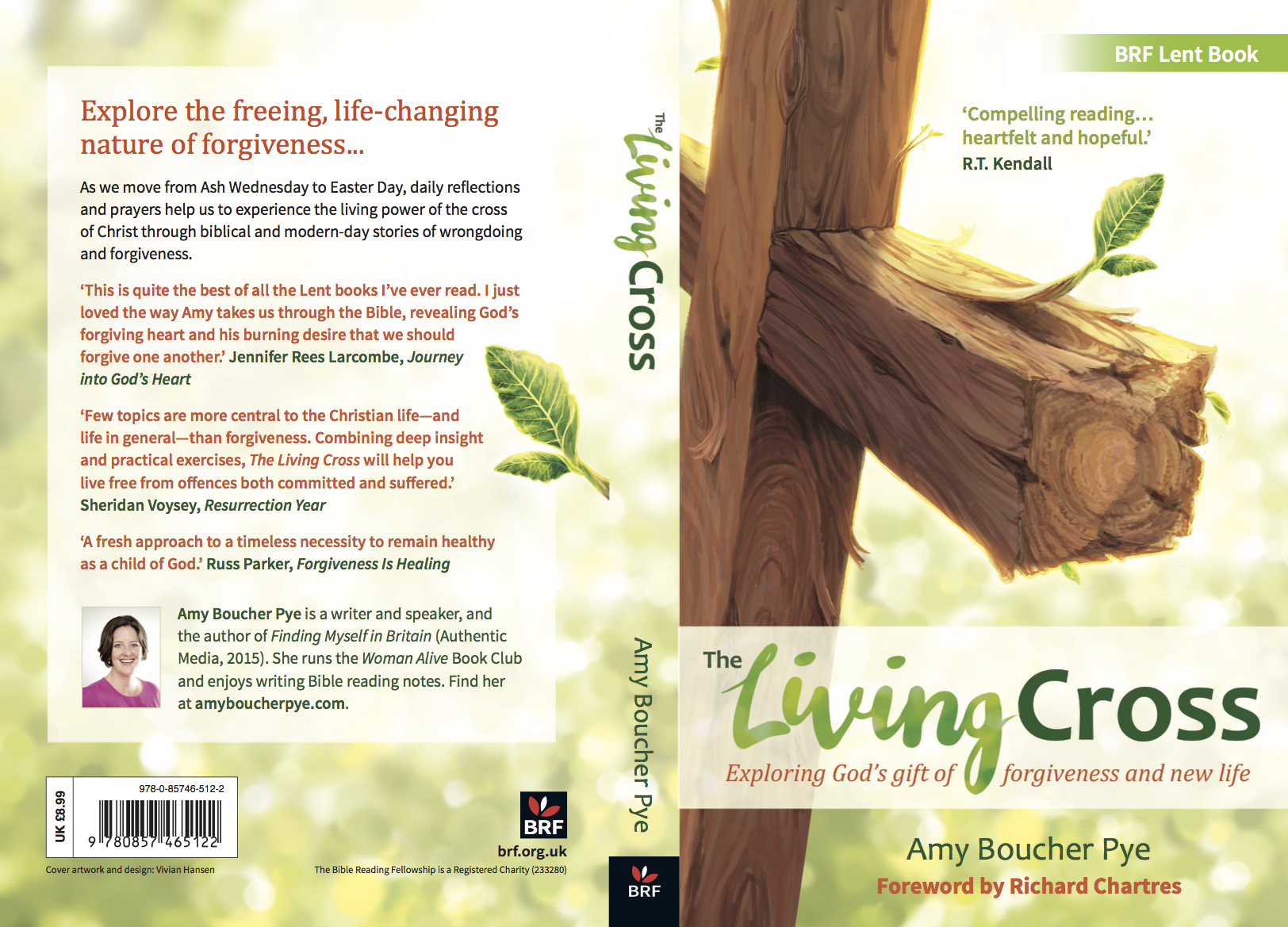
Why not read a book specially prepared for Lent? I mentioned mine, The Living Cross, about which Catherine Campbell has said,
A Lenten journey you won’t want to miss. From the Fall to the Cross and beyond, Amy Boucher Pye walks us down the centuries to meet the One she calls the “Father of outstretched arms.” With captivating writing and inspiring biblical insight, we are reassured from the stories of fallen heroes, fallible leaders and plain ordinary sinners that God’s lavish forgiveness is available to each one of us. The more I read the more excited I became, and the more thankful I am for God’s “scandalous grace and love poured out.” Simply superb. I can’t wait to read it again!
I learned so much about forgiveness while writing this book, including how in the Old Testament, people didn’t assume they could forgive others – for them, forgiveness came from God. But with the death of Jesus, we now can not only of receive forgiveness from God, but others as well – and we can extend it ourselves.
My favourite Lenten book is Reliving the Passion by Walter Wangerin (Zondervan, 1992). He’s a master storyteller, and writes here as a participant in the passion events. He transports us to a vivid world of sights and smells that bring the story alive, engaging our heads and our hearts. I can’t recommend this book enough.
Whether you manage to engage in a new practice each day in Lent, or not quite as regularly, I trust the Lord will help you to draw closer to him in your journey. As we approach the celebration of the resurrection, I pray that you will feel the joy of know that Christ is risen – indeed, he is risen!
With the 500th anniversary of the Reformation next week, I thought it appropriate to feature a post on forgiveness and Martin Luther, written by one who knows a lot about the reformer, Michael Parsons. He also was my editor for The Living Cross, and was one of my three readers for my MA dissertation on Calvin. He’s a gentle and insightful teacher, as you’ll see here.
In a year that commemorates the beginnings of the European Reformation, it seems appropriate to say something about Martin Luther. Those who know anything about Luther will know that he never minimizes the seriousness of sin; nor, however, does he minimize the grace of forgiveness. Indeed, he exalts in it. And the biblical story of Jonah gives him ample opportunity.
Luther spots at least two sins in Jonah’s behaviour. First, Jonah should have accepted the will of God (Jonah 1) and should have been ‘most happy to carry it out’. Instead, he runs away. Second, he sins, in being angry to the point of wanting to die (Jonah 4). What impresses me, however, is how positive the reformer is about all this. Luther moves from a negative situation (the sin of Jonah) to extremely positive application. In that, he might be an example to us today.
Luther rejoices to see that Old Testament saints sinned! Notice how he puts this: ‘even the greatest and best saints sin grievously’. Read that again. They sin, but they remain ‘the greatest and best saints’! Jonah chapter 4 gives the clue. Luther notices that the prophet continues to converse with God, ‘He chats so uninhibitedly with God as though he were not in the least afraid of him … he confides in him as in a father.’ Luther insists that the bottom line is not the prophet’s sin, but that Jonah ‘is God’s dear child’.
Look at Luther’s amazing application: ‘[W]e learn that God permits his children to blunder and err greatly and grossly. … [W]e observe how very kindly, paternally, and amiably God deals with those who place their trust in him in times of need. … It is the daily sin of a child that the heavenly Father willingly bears in his mercy.’ Again, re-read that last comment. The Lord mercifully forgives us daily – that’s grace!
Luther applies it again in a very personal way: ‘I remain in the kingdom of grace when I do not despair of God’s mercy, no matter how great my sin may be, but resolutely pin mind and conscience to the belief that there is still grace and forgiveness for me.’ Notice the italicized words, ‘no matter how great my sin may be’. He concludes that divine ‘mercy asserts itself and proves stronger than all wrath’. And again, ‘All sins which let grace triumph and reign are forgivable.’
So, Luther moves from a negative situation to extremely positive application. He wants us to see outside the confines of the human dilemma to the wider context of the love of God. Luther’s main intention is to encourage us, and particularly those of us who preach, to trust in the grace and goodness of God. Therefore, he stresses God’s grace in forgiveness and in an openness to receive sinners who return to him.
One of Luther’s repeated comments (though I don’t remember it in his lectures on Jonah) is that in Jesus Christ we already have everything. It is this truth that underlines his application. We are loved, we are forgiven daily, because the Father loves us in Christ.
Michael Parsons is currently commissioning editor for The Bible Reading Fellowship. He is the author of several books on the Reformation and an Associate Research Fellow at Spurgeon’s College.



 As the realisation came to me that I had not forgiven the Curate, I laid the whole situation at the foot of the Cross. I knew that Jesus had been there with me at the time, and so I was able to forgive and pray for this person, leaving it all with the Risen Christ. Subsequent circumstances caused me to thank God that it was a stage on my pilgrimage that was contributory to where I am today.
 Sheila Holwell was born in North London, where she had a grandmother who taught her to love the Bible and to enjoy Moody and Sankey hymns. As a teenager she felt the call to serve the Lord where he wanted her. Later came the very unexpected pathway to being an R.A.F. wife to a widower, and stepmother to a nine-year-old boy, with whom sixty years on she has a wonderful relationship.
 Forgiveness is something I have always struggled with despite being a Christian as I’ve read verses like
 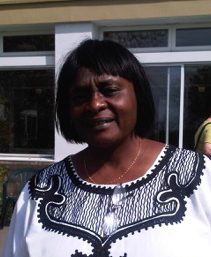 Mabel R. Nyazika is a Zimbabwean currently living in the United Kingdom and employed by Sale Methodist circuit as a lay worker. She worked for the Methodist Church in Zimbabwe for the best part of her life as a training co-ordinator. She holds a BA (HONS) and an MA in contextual theology.
 The chorus of voices joins together with joy to say, “Christ is risen! He is risen indeed! Alleluia!”

 Focus on one book of the Bible
 Add a practice of giving or forgiving
 Read a book
 Michael Parsons is currently commissioning editor for The Bible Reading Fellowship. He is the author of several books on the Reformation and an Associate Research Fellow at Spurgeon’s College.