Author: Amy Boucher Pye

  • Devotional of the week: God in us for unity

    We’re at the beginning of Advent, but instead of starting a new series, I’m continuing with this one through December on the indwelling Christ. After all, the Incarnation – the coming of Jesus – is what we celebrate at Christmas, how he’s birthed in our lives. May your time of waiting this Advent season be filled with wonder and awe. 
    Photo: Carla Vasquez, flickr
    Photo: Carla Vasquez, flickr

    “I pray also for those who will believe in me through their message, that all of them may be one, Father, just as you are in me and I am in you. May they also be in us so that the world may believe that you have sent me. I have given them the glory that you gave me, that they may be one as we are one—I in them and you in me—so that they may be brought to complete unity” (John 17:20–26).

    In my twenties I lived in a house with three other women. Over a decade some of them moved in and out, but one woman and I lived together the whole time. And she was the one whom I most struggled to love or to have unity with.

    Being blind to my own faults, I rarely saw things from her point of view. Thus I was shocked during one of our struggles when she said that she had asked God to show her how much he loved me. “Oh dear,” I thought, “Who am I that Kay needs to pray for me in this way?” A few scales fell from my eyes as I realized how self-focused and proud I had been. I had to humble myself and ask her forgiveness. After that revelation, we still had our challenges, but we forged a deeper bond based on our shared love for Jesus Christ.

    Our passage this week focuses on the unity of believers, and comes again during Jesus’ last night with the disciples. Here is Jesus’ longest and most intimate prayer, where he prays not only for the followers of his day but for those who would come after – us! Jesus longs that we would be united even as he is one with the Father and the Spirit. This unity is not just for our own good, but that the world would yearn to know more about Jesus.

    Being united can be difficult and painful, especially when we glimpse our own sins through the eyes of another. It requires openness, vulnerability, forgiveness, and grace, but we can rest in Jesus’ prayer for us. For he who dwells in us will help us bring about his unity, in and through him.

    Prayer: Lord, I often miss the log in my own eye and want to pull out a speck in someone else’s. Give me clarity of vision that I might love others as you love them.

  • Darkness to dawn: An Advent poem

    The first Sunday of Advent hearkens our period of waiting for the coming King.

    candle-hallowDarkness
    Deep darkness
    Walking and stumbling
    Feeling our way
     
    Feet in the muck
    Sucking us down
    Helpless cries
    Feeling lost
     
    But then the sense
    A lightening of our spirit
    Darkness turns to dawn
    The light breaks through
     
    The Son appears
    His light not covered
    The secret places revealed
    He gives hope and health
     
    We welcome him with us
    That light now within
    In us; through us
    We dwell in him
     
    Our cracked clay pots
    Now shine forth bright
    What was dirty and broken
    Reveals patterns of light
     
    The people walking in darkness
    Have seen a great light
    On those living in darkness
    A light has dawned
     
    Come, Lord Jesus.
     
    © 2014 by Amy Boucher Pye

    A poem after Isaiah 9:2, “The people walking in darkness have seen a great light; on those living in the land of deep darkness a light has dawned.”

  • Giving Thanks

    Photo credit: Martin Cathrae, flickr
    Photo credit: Martin Cathrae, flickr

    Today is the fourth Thursday in November, so for me and millions of others, that means only one thing: Thanksgiving. A day for giving thanks and feasting. A day to tease our British friends that we’re celebrating our independence from them.

    But living as an American in the UK as I do, these high days and holy days bring not only joy but a corresponding ache as I’m away from family and friends. On Thanksgiving I feel the loss of feasting around a table heaving with turkey, stuffing, and gravy and of enjoying the friendship and lively conversation that ensues. Of course I understand why the British don’t celebrate this holiday, but I’m grateful that St Paul’s Cathedral hosts us for a meaningful Thanksgiving service each year.

    Living today, I enjoy a mobility never imagined by the Pilgrims. My seven-hour airplane ride is a blip compared with their five-month journey across the choppy Atlantic in 1620. Their journey on the Mayflower was desperate. The ship was designed for carrying cargo, not passengers. And the cabin where they slept was intended for thirty people, not eighty. Their food rotted and was infested with insects; they nearly drowned when the ship’s main beam cracked; they endured ridicule from the sailors.

    To read the rest of the blog, pop on over to Tania Vaughan’s “Best of British Women” blogs. (Yes, I’m British!)
  • Review: One Thousand Gifts

    I reviewed One Thousand Gifts at the end of 2011 in the Woman Alive Book Club that I run. But with it being US Thanksgiving tomorrow, it seems an appropriate time to post my review here. Enjoy – and be thankful.

    null.jpg_11684Ann Voskamp seemed to have it all – a loving husband, six strapping children to raise and educate, a farm in which to live the rural dream. But her discontent ran deep: “I look in the mirror, and if I’m fearlessly blunt – what I have, who I am, where I am, how I am, what I’ve got – this simply isn’t enough.” However, she started stepping into a nourishing new way of living through a simple dare emailed to her by a friend: “Can you name a thousand things you love?” And this list-making mother/writer/homeschooler started a new list: “1. Morning shadows across the old floors; 2. Jam piled high on the toast; 3. Cry of blue jay from high in the spruce.” Her life has never been the same.

    Through the act of naming things for which she is thankful, Ann started to see God’s handiwork where before it was hidden. As she says, “This writing it down – it is sort of like … unwrapping love.” Where as previously she felt anxious, weary and tired, now she was feeling joy: “I can hardly believe how it [makes me happy], that running stream of consciousness, river I drink from and I’m quenched in, a surging stream of grace and it’s wild how it sweeps me away.” A new habit is born through the glimpses of graces throughout the day. A new habit that shapes her soul, reorienting it back to God. Moving from clenched hands to open, cupped hands, ready to receive.

    Many friends had recommended Ann’s book before I got a copy. The day it arrived I read the first chapter through a veil of tears, being moved by her account of the death of her toddler sister when she herself was just four. But other books got in the way and several months passed before I read it on holiday in Ireland. The amazing rugged beauty of my surroundings provided a stunning backdrop for the beauty of Ann’s prose. Her writing calls forward striking images from the earthy setting of farm life. Spiritual truths are grounded in the stuff of life – making them all the more compelling.

    As an editor I couldn’t help notice the times she flouts some of the rules of grammar – and gets away with it. Such as with adverbs: “…feel my pulse quicken fierce” or “…the sun rolls across wheat warm.” Her unusual usage made me slow down and ponder her word pictures.

    One to read and reread slowly, for the spiritual truths she unpacks are deep and potent – namely, that to live fully in God’s kingdom, we must give thanks. And so on holiday I too started a list of thanks: “1. Sound of waves lapping on the lakeshore; 2. Fluffy clouds kissing the tops of mountains; 3. Irish soda bread…”

    One Thousand Gifts: A Dare to Live Fully Right Where You Are, Ann Voskamp (Zondervan, ISBN978-0310321910, £10.99)

  • Devotional of the week: Practicing the presence of Jesus

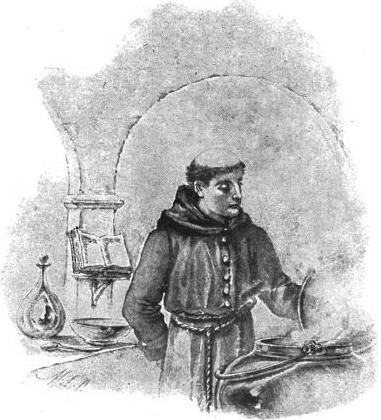
    Brother_Lawrence_in_the_kitchen“As the Father has loved me, so have I loved you. Now remain in my love. If you keep my commands, you will remain in my love… I have told you this so that my joy may be in you and that your joy may be complete.” (John 15:9–17)

    Our text comes from what is known as the Final Discourse, when Jesus and the disciples move from the Last Supper to his betrayal. As he prepares them for his death, he’s been speaking with them about remaining in him and in his love. To abide in him.

    But what does this mean – abiding, so that our joy may be complete? One of the commentators calls it a mystical and interior experience. Perhaps it is mystical, but I hope it can also be natural, practical, and down-to-earth.

    We remain in Jesus even as God the Father, Son, and Holy Spirit remain in each other. As we saw last week, we are the branches that are attached to the vine. And our growth comes through nourishment – prayer, companionship with other believers, study of God’s word, corporate worship – all empowered by the Holy Spirit who makes his home in us.

    Brother Lawrence was one who sought to remain, moment by moment, in Jesus. He was a French monk who lived in the 1600s and worked in the kitchen, so he was definitely rooted in his spirituality. He coined the term “practicing the presence of God,” which simply means calling to mind – anywhere, anytime – that Christ dwells in us, and allowing that reality to shape our lives.

    So when we’re making dinner for our family or friends, we can affirm that Christ lives in us as we ask him to help us make a special and nourishing meal. When we are queuing at the bank we can remember that Jesus radiates from within and that we can be his witness of grace to the hassled clerk behind the window. When we are annoyed by ones we love most, we can ask the triune God to help us see that person as he sees them and love them as he does.

    As we remain in the love of Jesus, our life will be transformed and our joy will be complete.

    For reflection: “In your conversation with God, praise him, adore him, and love him without ceasing because of his infinite goodness and perfection” (Brother Lawrence).

  • Hope will not disappoint

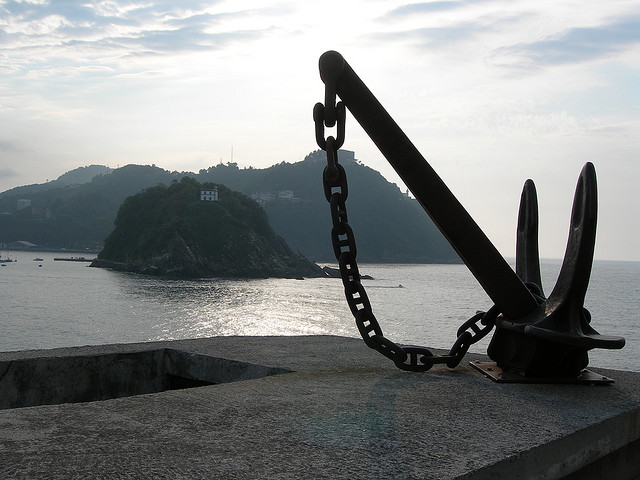
    Photo: Creative Commons, Urko Dorronsoro
    Photo: Creative Commons, Urko Dorronsoro

    “Don’t give up hope!” the well-intentioned friend says.

    The one in pain wants to punch her friend, but restrains herself while thinking, “What does she know about hope? What does she know about disappointment and betrayal and death? How can she tell me not to give up on hope?”

    Though perhaps lacking tact, the friend has a point. For those who follow Christ are told not to give up on hope. Even though their child might have died, or they suffer in a loveless marriage, or they face a life of unwanted singleness, or, or, or. The list of pain is as long as there are people, for we live in a world that is not as it should be. So how can we hope in the midst of what we face?

    Continue reading at The Hope Diaries, an achingly honest blog about the birthing of faith, hope, and love in the midst of a marriage once shattered but now being rebuilt, stronger than before…

  • When God throws you a life ring

    I sucked in my breath as I read a suicide note.

    Having seen plenty of movies, I was expecting drama or at least a nice piece of paper. But this was just a torn scrap with a few words jotted down. He was matter-of-fact in his note to my friend, saying that his girls needed money, as did his ex-wife; that he couldn’t take it anymore; that his neighbor had a key. Desperation and depression, fueled by a chemical imbalance after years of drug abuse, resulted in his final act of an overdose.

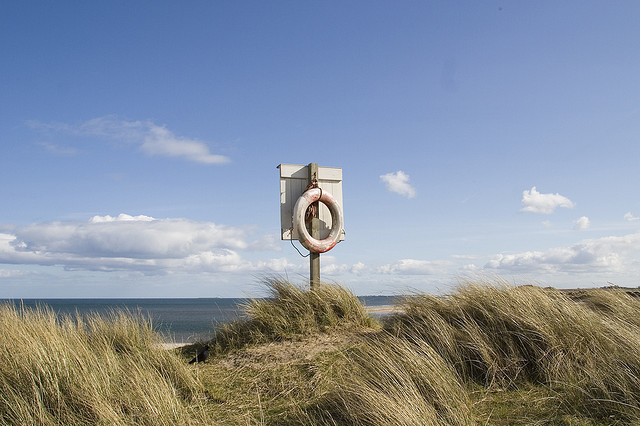
    Life ring on the dunes in Alnmouth, Northumberland. Credit: Dan Brady, flickr
    Life ring on the dunes in Alnmouth, Northumberland. Credit: Dan Brady, flickr

    Except that my friend received his letter in the afternoon, not the evening, as she was unexpectedly off from work. She grabbed a friend and went to his flat, broke down the door, and found him drugged but living. She wondered if he’d be angry to be found alive. He wasn’t; in fact, he later thanked her for caring. He said he had written to her because he didn’t want his body to be found after a week, covered in flies.

    This was the same friend who a couple of months earlier had been told by an acquaintance, a doctor, to “get that mark on your face checked out.” He was the second medical friend who noticed it, which propelled her into actually making an appointment with her GP instead of delaying or brushing off the advice. She found out that she had pre-cancerous cells and underwent treatment. A few weeks later she heard that this young doctor had died on a hiking adventure after falling into a ravine. His potentially life-saving advice to her turned out to be one of his final acts of service on this earth.

    Two men I’ve never met, and yet they made a profound impact on me. Why? Because I can easily get caught up in projects or tasks, and thus startling stories such as these remind me to value what really is important. For instance, just this morning I woke up early. Finally admitting I wasn’t going to fall back to sleep, I gave in and went into my study to write. But PyelotBoy also woke early and joined me, eager just to sit and spend some time together. I battled internally but stayed with him on the couch, reminding myself to enjoy these sweet moments together.

    I wish I could say it was a grand success of communion with one whom I love, but throughout our half-hour together I kept thinking of the tasks I could and should be accomplishing. But although I didn’t succeed in shutting down the distracting thoughts, at least I stayed rooted to the couch, sitting with my son and chatting together. I didn’t shoo him away or give him some early iPad time to compensate for me wanting to get on with my next thing. Small victories, yes, but worth celebrating.

    Life. It’s worth living. Who is sitting on your couch today whom you can be present to and enjoy?

  • Devotional of the week: Painful pruning; lasting fruit

    “I am the true vine, and my Father is the gardener. He cuts off every branch in me that bears no fruit, while every branch that does bear fruit he prunes… Remain in me, as I also remain in you… If you remain in me and I in you, you will bear much fruit.” (John 15:1–8)

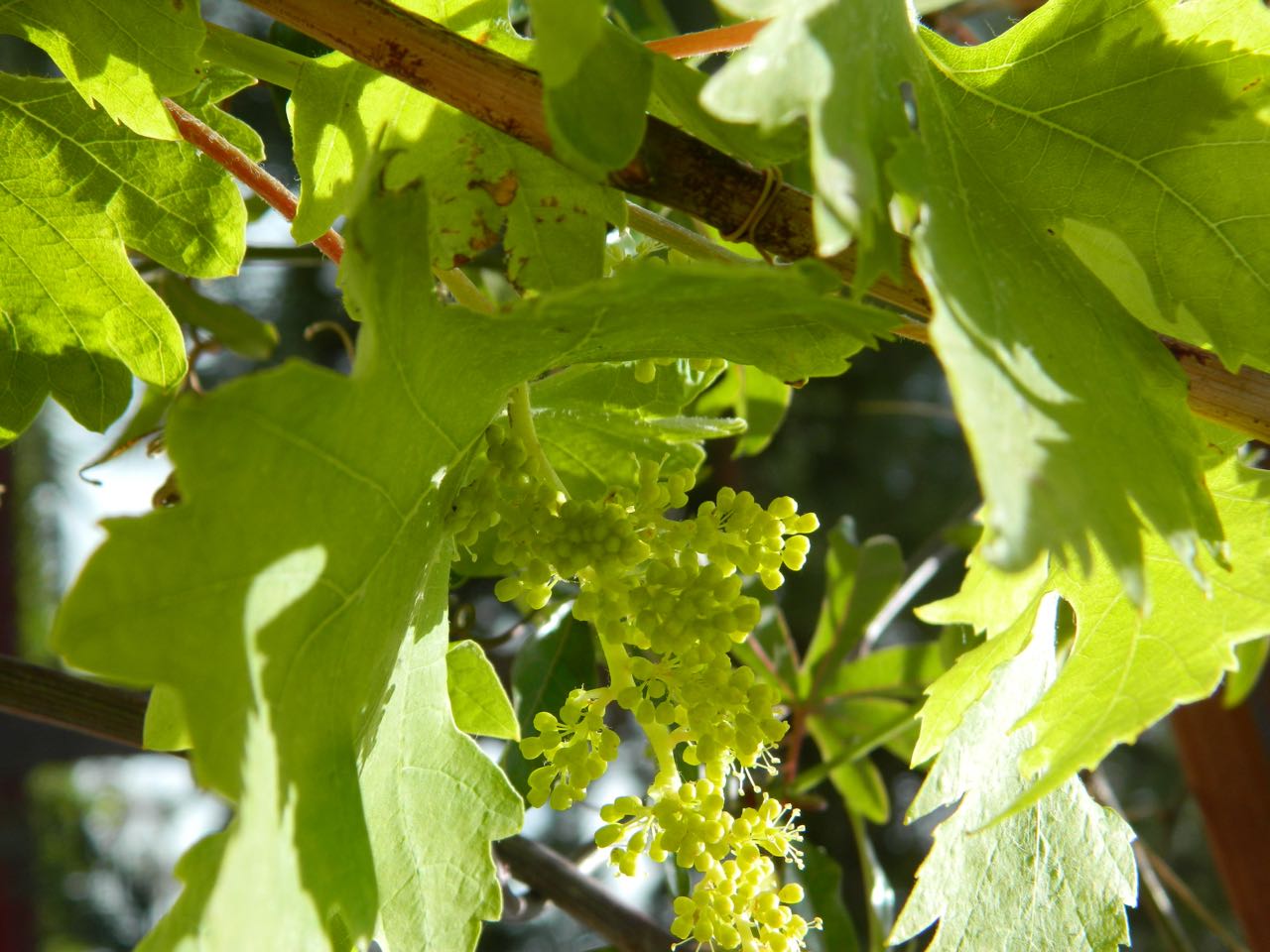
    DSCN2953Jesus is still teaching his disciples after their last supper together, probably as they pass the temple while walking to the Mount of Olives. Overhanging the entrance was a massive vine made of gold, for vines in the Old Testament refer to God’s people, Israel. Thus for the disciples, Jesus’ teaching would have been filled with meaning. Jesus says that he is now the true vine, the fulfillment of this ancient symbol. He is the one plant, and his people are the branches.

    As we think about abiding in Jesus, shall we focus on the painful and inevitable pruning that occurs as we remain in him?

    Back in the first century, a new vine would be planted, cultivated, and pruned for three years before it was allowed to bear any fruit. That early in its life, the plant’s branches weren’t strong enough to bear the weight of even one grape. Then even when fully grown, the branches would be cut back after harvest for rest and nourishment to become strong for the next growing season.

    We all undergo seasons of pruning. Are you experiencing one? Perhaps it’s health-related – perhaps a feared illness or the slowing down of old age. Maybe it’s relationally based – you’re single and you don’t want to be; your kids are breaking your heart; your parents are aging and infirm. Maybe it’s professional or educational – your job was eliminated or you didn’t do well in your last exam.

    Whatever the particular form of cutting back, we can rest on the knowledge that the Master Vinedresser has the best plan for us. For he allows us to be pruned where we most need it so that we will become stronger, healthier, and able to bear more fruit than we ever thought possible. May we receive the strength to bear any pruning with good cheer.

    Prayer: Lord, this pruning hurts. But we know that you will only take away what needs to be cut back. Help us to trust in you as you form lasting fruit.

  • We will remember

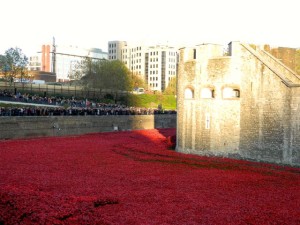
    DSCN3986We traipsed to the Tower of London on Sunday – Remembrance Sunday – to see the nearly 900,000 handmade poppies that have been planted to commemorate the start of the First World War. Although we were jostled by the crowds, we were moved by the beauty and pain of the sea of red. Each poppy a life.

    NicTheVic and PyelotBoy, along with Charlotte, our wonderful intern at church, have spent a lot of time researching the over 150 men whose names are listed on our two war memorials at church. These were men with connections to Finchley, who died in World War I. The higher the rank of the man, the more information the researchers were able to glean (which usually correlated to their social class).

    On this Remembrance Day (Veteran′s Day in the States), as we stop to consider the sacrifice of the people who gave their lives that we might live, I include information as found by the researchers above on one of the soldiers, Frederick Goodyear. Sounds like a man who wouldn’t have chosen to serve if not for the war – he sounds like a creative type; a dreamer. Mr Goodyear, we will remember.

    Name: Frederick Goodyear
    Rank: Second Lieutenant
    Date of Death: 23 May 1917
    Age: 30
    Regiment: Essex Regiment 2nd Battalion
    Cemetery: Aubigny Communal Cemetery Extension which is approximately 15 kms north-west of Arras. From March 1916 to the Armistice, Aubigny was held by Commonwealth troops.
    Additional Information: Son of Frederick and Anne Maria Goodyear. B.A., Brasenose College, Oxford Served 1915-17. Died at 1st Canadian Casualty Clearing Station of wounds received in action at Fampoux on 12th May 1917.

    image001Frederick Goodyear was born on the 5th March 1887 at Fallow Comer, North Finchley. His father owned a prosperous coal business and took an active part in public life. Frederick had a sister Edith, later curator at University College London, and a brother, Geoffrey, who served in the Yeomanry, later in the Machine Gun Corps, and who survived the war.

    Frederick was educated privately, first by Miss Shoults of Finchley and later at Christ’s College, Finchley. In 1902 he passed on to University College School, where he remained till 1905. His School record lists a great number of achievements and prizes, spanning Chess, Literature, Cricket, Cadet Corps and the Sciences. He was also gifted in languages, speaking and writing French, German, Welsh, Latin and Greek in his adult life in addition to English.

    His Housemaster wrote of him:

    His striking appearance and incisive manner arrested attention. His interests were literary and artistic, rather than academic…Essentially an eclectic, he found it difficult to concentrate on subjects that bored him… Frederick Goodyear was not a boy who readily followed the crowd. No Housemaster could have had a more capable and loyal House-captain.

    In March 1905, Frederick received the Senior Classical Scholarship at Brasenose College, Oxford. He matriculated the following autumn, and his tutors acknowledged him as the ablest man to enter the college in their time. His friend F.W. Leith-Ross, who wrote the biographical foreword of Frederick Goodyear – Letters and Remains in 1920, and recalled:

    He could never be persuaded that his reading should be directed into the narrow channels prescribed by the Examining Body, and throughout his time he browsed at large on whatever aspect of literature, art, or philosophy pleased his fancy.

    Upon leaving Oxford, Frederick reported cricket for ‘The Field’, as well as contributing essays and other writings to various publications. In 1913, he lived in Paris for some months, writing a long autobiographical novel. Early in 1914 he left journalism and took up the post of temporary Assistant Master at Charterhouse, a public school in Surrey. Upon leaving this post, he agreed to write a series of books on British sports. However, he soon realised that he did not wish to do so and accepted a post with the Oxford University Press in Bombay, primarily to escape his contract.

    Within months of his arrival in India, the fighting in Europe broke out, and rapidly spread. Frederick resigned his post as soon as it was possible and sailed back to England in January 1915. He had felt it his duty to enlist with the Artists’ Rifles and did so within days of returning home. His temperament was not particularly conducive to military discipline making a commission difficult to obtain. He did, however, secure a transfer to the Meteorological Service of the Royal Engineers in September 1915, with the rank of Corporal.

    For the next year, he remained behind the lines and spent a great deal of time studying the flora and fauna of France and Flanders, as well as his supposed objects of study. In the summer of 1916 he was sent back to England, in order to go through the Cadet course and obtain a commission in the Essex Regiment. On 16th March 1917 he left once more for France.

    image001A few weeks after his return, his battalion went into action near Arras and on the 12th May, during an attack on Fampoux, a shell hit his dugout and he was buried. Though found, his left leg was so damaged that it required amputation. Letters he wrote at this time are clear and cheerful, describing the incident and answering his correspondents’ questions about migratory birds. However, his right leg also required amputation on 22nd May and Frederick died from the effects of shock on his weakened state in the early hours of that morning.

    Frederick was a highly committed Christian and his letters are full, not only of news and birdwatching, but of his theological reflections and commentaries on church goings-on. Though in one letter of 1905 he describes himself as ‘as close to atheist as anything else’ and believes that religion will die out leaving only philosophy; by 1911 he writes ‘I am really a Christian’. In letters to his sister he reflects on half-hearted Christianity, Nietzsche’s attitude to religion and the transformation of Indian converts to Christianity.

  • Devotional of the week: Gold dust in the skies

    DSCN2933Jesus replied, “Anyone who loves me will obey my teaching. My Father will love them, and we will come to them and make our home with them… But the Advocate, the Holy Spirit, whom the Father will send in my name, will teach you all things and will remind you of everything I have said to you.” (John 14:22–31)

    When I was at university I received a lower grade on a literature paper than I had expected. The professor told me to read the work again and go for a walk while musing on it. I followed his instructions and rewrote the paper, but evidently I didn’t receive any flashes of inspiration. My mark remained the same.

    Those moments of knowing and understanding, which I lacked as I labored over my literature paper, we receive by the Holy Spirit, whom Jesus here promises will come and make his home with us. Not only will he teach us all things but then will remind us of them later. He knows our limitations, and even our forgetfulness.

    I often miss the Holy Spirit’s wisdom when I haven’t quieted the competing noises and voices around me. They may be actual voices, like the sound of my sweet daughter playing downstairs. Or they may be the hopes, longings, and fears that we keep bottled inside. Or they may be the anger and bitterness we harbor after being wronged. Or they might simply be the distractions of daily life, like what we will make for dinner or the leaking faucet that needs to be fixed or the phone that continues to ring.

    We can stop for a few moments, remember that Christ lives in us, and ask for his Spirit to show us the way. As we rest in his presence he will bring us the word we need, whether an assurance of his love, the knowledge that he is leading us, the healing balm for our hurts or the inspiration and answer to our dilemma. As we quiet ourselves, he will shower down his wisdom, like flakes of gold swirling down from the skies.

    Join me in seeking his peace and wisdom.

    Father, Son and Holy Spirit, help me to enter into the deep quiet and know your wisdom and truth. I seek you in all that I do today. Thank you for your presence in and through me. Amen.