Author: Amy Boucher Pye

  • Review: Books for Lent

    Need an idea for a book for Lent? Here’s a review from last year, as published in the Woman Alive book club. Features one of last year’s crop of devotional books, and the Best Lent Book Ever.

    Wangerin Reliving the PassionReliving the Passion by Walter Wangerin. A master storyteller, the author writes as a participant – sometimes a close bystander, sometimes a character – of the narrative of Jesus’ last days. He transports us to a vivid world of sights and smells that bring alive the story. In so doing he engages not only our heads but our hearts. We’re there at Bethany, seeing the woman pour out her extravagant love for Jesus. We feel Peter’s desolation after his betrayal of Jesus. We experience the blackness and despair of Good Friday. We rejoice at the wonder of the resurrection, the empty tomb.

    If you’ve never tried a Lent book, give this one a go. If you read one every year, prepare to be refreshed and engaged. The publisher could even promise a reader-be-satisfied-or-have-your-money-back guarantee on it – it’s that good and profound and engaging and faith-building.

    9781408188477One that is thought-provoking is this year’s Lent book as commissioned by the Archbishop of Canterbury. Graham Tomlin takes the notion of looking through the cross, similar to how Eastern Orthodox Christians gaze through icons as a window to the real Christ. As we use the cross as our lens, we see how God turns the world’s approach on its head. For instance, thinking about power, the cross “offers us a picture of powerlessness. It is hard to imagine a less powerful figure than someone nailed to a cross” (p. 65). True power, it turns out, is that of self-sacrificial love and service. Of Jesus dying for us.

    The author takes one concept per chapter and explores it in relation to the cross, whether wisdom, suffering, identity, evil, ambition, failure or reconciliation. I thought his chapters on suffering and identity were the strongest, with plenty to chew over. For example in the chapter on suffering: “Once you start to try to love people, then it will hurt” (p. 121). I did wonder if this book was published at speed, however, for I got distracted by errors such as missing punctuation. Still, one to read slowly.

    Looking Through the Cross, Graham Tomlin (Bloomsbury, ISBN 978-1408188477) and Reliving the Passion, Walter Wangerin (Zondervan, ISBN 978- 0310755302)

  • “Consider your death” – Ash Wednesday reflections

    8617719091_25b9ef118a_z“Whenever the journey to Easter begins, it must always begin right here: at the contemplation of my death, in the cold conviction that I shall die.” (Walter Wangerin, Reliving the Passion, p 21)

    Sobering words for the beginning of Lent. Even more sobering as I consider the deaths of two people, one whom I’ve never met and one who has played a considerable influence in my life. The one I’ve never met is the 26-year-old nephew of a friend. Newly married, he collapsed recently and is near death. My heart breaks for this family I’ve never met; for the bride at the beginning of their married life, with so much to look forward to, who now may feel like her plans are crumbling into dust. Where tears will replace a warm embrace. I cry out to the God of hope.

    The other person near death is Leanne Payne, an amazing woman who was active in healing prayer, and for whom I edited Listening Prayer and her spiritual autobiography, Heaven’s Calling. She poured love and care into my life, calling forth in me a language to communicate with God as she helped me to find the vocabulary in which to speak and listen to my Creator, my Friend. Our early morning phone calls (she would routinely wake at 4 am for her time of prayer, and my 7 am phone call would be well into her day) would fill me with laughter and hope as we would talk through not only her writing but my hopes, dreams, and relationships. She helped me grow up in Christ, and the debt I owe her is massive.

    So I ponder with Walt Wangerin death at the start of Lent. The coming death of two people; the death of our Lord for us; my own death. As this gifted writer says at the end of today’s reading, “When we genuinely remember the death we deserve to die, we will be moved to remember the death the Lord in fact did die…. We will yearn to hear the Gospel story again and again, ever seeing therein our death in his, and rejoicing that we will therefore know a rising like his as well.” (p 22)

  • Review: Feeling Empty, Being Filled, The Book of Ruth

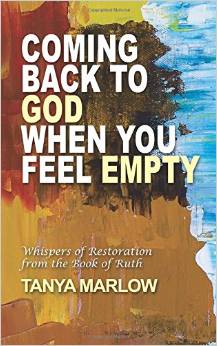
    Unknown“In 2010, I gained a baby, and lost the ability to walk more than twenty metres.” So begins Tanya Marlow in this thought-provoking look at the book of Ruth. She interweaves her story of life with myalgic encephalomyelitis (ME – or chronic fatigue syndrome, as it’s commonly known Stateside) with that of two women from centuries past – Naomi and Ruth.

    When we look at this biblical account, usually we focus on Ruth – the young widow who commits to her mother-in-law, making her home in a foreign land, such the depth of her love. We skip over the bitter old woman, Naomi, who is reeling from loss and is definitely disappointed with God. But Tanya explores – gently – how we mirror Naomi, and yet how God showers us with his love. (And she doesn’t miss out on gleaning encouragements from Ruth’s story either.)

    Coming Back to God When You Feel Empty is a short but satisfying read, currently free when you sign up to Tanya’s website. Read it for the poetic language; read it for the insights this story from old can shine into our lives today; read it for the emphasis on prayer and a God who loves us.

    Coming Back to God When You Feel Empty: Whispers of Restoration from the Book of Ruth by Tanya Marlow (CreateSpace, 2015).

  • Review: Austen-Inspired Fiction

    I just finished Katherine Reay’s latest engaging novel, and before I add my review, I thought I’d better post my thoughts on her first book, which was published originally in Woman Alive.

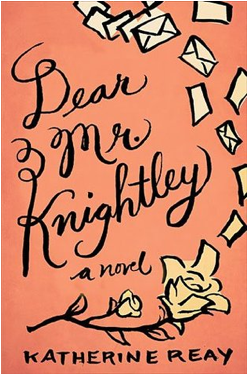
    529FF670-E4E0-465F-A6FD-69F7FE055D41When I finished this novel, I sighed in satisfaction and thought about turning back to the beginning, reading in the light of the plot twist at the end. Before doing so, I posted in our Woman Alive Facebook group about my delight with this book, but what happened next left me feeling ambivalent. In fact, I felt similar to that first time I visited New York City, when I bought a watch from a man outside the Statue of Liberty who had watches hanging all along the inside of his coat. (Of course it only worked for a day; how gullible was I as a naive young woman from the Midwest!) For one of the regular Facebook members, Angie Pollard, said:

    I love Dear Mr Knightley – though didn’t think I would when I started reading it… I presume you’ve read the classic Daddy Long Legs by Jean Webster, which it parallels and is one of my ‘go-to’ books. Time for a re-read of both!

    No, I hadn’t heard of Daddy Long Legs; this was news to me. From being so pleased with the fresh and original plot twist in Dear Mr. Knightley, now I felt like I had bought a knock-off Gucci watch that would die an early death. (And I’m sorry if you’ve read Daddy Long Legs so now you know the plot of Dear Mr. Knightley.) I’ve been mulling over my reaction, wondering why a new novel based on an older version troubles me. Maybe it has something to do with how the protagonist, Sam, hid behind characters from literature (mainly those of Jane Austen and Charlotte Bronte), spouting off their words when she felt trapped or scared. She – who as a child had experienced an abusive, broken family and grew up in the foster-care system – hadn’t found her voice and so employed the voices of others. Was the author of this novel doing the same by lifting the plot from a classic?

    I remain undecided. That issue aside, Dear Mr. Knightley delighted me. I loved Sam’s references to Lizzie Bennet and others, and I was moved by her journey to love as she learned to trust and shed her fears of exposure and rejection. She also finds her calling and her voice as a journalist, moving from one whose features were wooden and unpublishable to a passionate teller of hidden stories of children at risk. The novel even has a touch of romance.

    What do you think? Knock-off or inspired update?

    A Tale of Two Sisters

    19167656More Austen-inspired fiction from Katherine Reay. I don’t know if the bones of this novel emerged from another classic, such as with Dear Mr Knightley; I somehow hope not. But either way, I was captivated by this story of two sisters. Their mother died of cancer a decade or so previously, splitting the sisters and their father, with Lizzy moving to New York City and Jane staying on the West Coast. Lizzy poured herself into her chef career while Jane – ten years older – took the marriage/family/work balancing act route. But when Jane is diagnosed with breast cancer, Elizabeth loses her cooking genius. She realizes she needs to go back to Seattle and Portland and reconnect with her sister – and all that she ran from.

    Strong, evocative writing; I especially enjoyed delving into the sisters’ relationship – how can two different people with so much history become friends? How can they come to understand the other enough to forgive – and in the process, find out more of who they are and who they have been created to be? The novel addresses bigger questions of what are we living for; what fuels our passion; how can we love and live with those closest to us without scratching their eyes out on the one hand or distancing ourselves emotionally on the other.

    I figured out how the novel would end, but that didn’t put me off enjoying it. One to read with a cuppa.

    Dear Mr. Knightley, Katherine Reay (Thomas Nelson, ISBN 978-1401689681) and Lizzy & Jane: A Novel, Katherine Reay (Thomas Nelson, 978-1401689735)

  • Guest Post with Evelyn Bence: Redeeming the Time with Thyme

    My very first guest post! I’m thrilled to host the lovely writer and editor Evelyn Bence today, whom I know through the Christian publishing world. She lives in Virginia, where I used to live, though we didn’t know each other well when I lived there. Yet I can picture her in my former stomping grounds, the suburbs of Washington, DC, which makes me smile. Snarled traffic but warm hearts.

    Photo: Jason Baker, flickr
    Photo: Jason Baker, flickr


    Late spring: over coffee I was catching up with a former colleague named David. My news: “I’m just finishing a book manuscript. Fifty-two devotionals or meditations, about table hospitality. The setups are very anecdotal, from early planning and shopping to cooking, conversation, and cleanup. I’ve got forty-two. I’m not sure where I’m going to ‘find’ ten more stories, say nothing of insightful spiritual applications.”

    “Fresh herbs,” he said, taking his conversational turn and describing his nightly foray before dinner, out into the yard to snip parsley, basil, rosemary, thyme for the vegetable or salad served up to his family. “The boys”—high school and college-aged—“roll their eyes at me. But I know they appreciate the taste, and, besides, I’m having fun.”

    When he dropped me, back home, he recognized and pointed to the greenery in my porch boxes. “Remember the herbs. Parsley. Right there. Write about it.”

    I knocked the idea around but couldn’t make it work. The final meditations jelled by other means, other themes.

    cover-Bence_Room-at-TableFast forward to a cold-weather Wednesday, late morning. An editorial job due on my desktop on Monday hadn’t yet arrived, but surely it would come in any moment now . . . or maybe not. Restless and unfocused, I flitted around the house, not able to settle on a new project or pick up an old, until my eyes rested on a bunch of thyme stems, grown out front, pruned way back, dried in a closet, and now pushed aside on a tabletop. David came to mind and his “remember the herbs.”

    “Just sit,” an inner voice said. “Strip the leaves from a few stems.”

    The hands-on—tactile—sensation focused me physically. Then the aroma! My spirit settled down. My restless thoughts turned to prayers, including thanks for David and the memory of our herbal conversation. I stayed with fragrant manual task until I had only two piles: barren stems for discard and tiny pointy leaves for my thyme tin.

    I calmly checked my computer inbox. The job hadn’t arrived. But I felt as if I’d been graced—by choosing to redeem the time with thyme.

    Bence-2014-yes cropEvelyn Bence is author of Room at My Table: Preparing Heart and Home for Christian Hospitality.

  • A song in a foreign land – a poem

    This morning I’m digging into one of my favorite activities – writing some Bible reading notes. This will be a set for Inspiring Women Every Day, for the month of November 2015, on the theme of foreigners and strangers. After the Garden of Eden, we’re all strangers now. Here’s a little poem I wrote as I reflected on Psalm 137. Do you feel foreign?


    DSCN8576By the rivers we sat
    By the water we wept
    Water rushing by
    Tears upon our face
     
    Zion we remembered
    Jerusalem, our home
    On the trees our harps
    No songs to sing
     
    But our captors demanded
    Our tormentors said to sing
    “Sing us a song of Zion!”
    “Sing us a song, now!”
     
    But how can we sing?
    How the songs of the Lord
    In a foreign land?
    How can we sing?
     
    If we forget our home
    May our tongues not move
    Our highest joy, Jerusalem
    With God, our home, at peace.
     
    © 2015 by Amy Boucher Pye
  • Interview with Celtic writer Ray Simpson

    Here′s an interview that appeared originally in Woman Alive with Ray Simpson, the founding guardian of the international Community of Aidan and Hilda. He lives in Lindisfarne and has written over 30 books.

    Ray for DenmarkThe Community of Aidan and Hilda is a dispersed new monastic community which includes Anglicans, Catholics, Orthodox and Evangelicals in four continents. These follow a holistic Way of Life which includes a rhythm of prayer, work and re-creation, simplicity, purity, and creation-care, healing, unity and service. We seek to reconnect with the Spirit and the Scriptures, the saints and the streets, the seasons and the soil.

    I wrote Hilda of Witby because we can unearth from her life a much-needed spirituality for now – a spirituality of warmth in hard places and exile, of wholeness, unity in diversity and ‘releasing the song in every human heart’. Hilda may be the greatest first-millennium Christian woman in the English-speaking world; she is becoming a contemporary icon of holistic leadership. As we come to the end of two thousand years of patriarchal Christendom, we need models of God’s wisdom and mothering dimensions from within our own submerged cultural memory.

    I have ‘lived’ with Aidan for twenty years. My historical novel Aidan of Lindisfarne: Irish Flame Warms a New World has just been published; it describes Aidan in what is now Ireland, Scotland and England.

    Here in Lindisfarne I walk in the steps of Aidan who kept a rhythm of retreat and outreach, love of God and people. Some decades ago I realized something was missing in my own and the church’s life. Prayer had been separated from work, mind from body, religion from science, Jesus from creation and the church from being real. So I immersed myself in the best of early Celtic and other expressions of Christianity in order to discover passion, presence, pilgrimage, roots, rhythms and relationships, the Body of Christ as Christ’s heart in me and in community.

    Hilda of WhitbyIn common with early Celtic Christians, we can see ourselves as life-long learners and pilgrims of the love of God, leaving behind addictive relationships and work patterns, being open to the Spirit, and travelling light. We can hone godly intuition and keep alive an imagination which ‘sees’ Jesus building God’s kingdom among us now. We can sustain a natural fellowship with all human beings in whom is something of the light of Christ (John 1:4). A passion for social care and evangelism can flow from the single heart of compassion in Christ.

    My first book, Exploring Celtic Spirituality, has been re-published many times and translated into two other languages. I continue to receive letters or emails that say it has changed the writer’s life. A pagan who had never read the Bible rang me after reading this book and said ‘I had a dream in which a white hand came from above into my heart, and I could not stop crying for three days; can I come to your retreat?’ He asked Jesus into his life.

    Etched in my heart is a letter from a family I have never met. As they encircled a dying loved one they had in their hands my book about dying well, Before We Say Goodbye. They used some of its suggested prayers, rituals and poems – and told me of a beautiful soul-encompassing at death.

  • Interview with Michele Guinness – She Wears Purple

    Today I received the paperback edition of Michele Guinness’ page-turning, magisterial novel, Archbishop, in which she explores the issues facing women in leadership. For your reading pleasure, here’s an interview with her, originally published in Woman Alive.
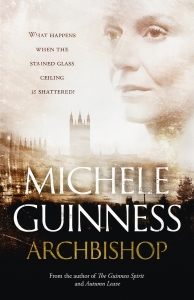
    Archbishop High ResWhen my husband and I were at theological college, we met so many strong women, many of whom have gone on to great things – they became deans and archdeacons. I suddenly thought, What would it be like to have a woman archbishop? Would it be different? What would be the pressures for a woman, especially a woman leader at a time where not everyone is reconciled to the idea?

    When at theological college, I was very agnostic about the role of women in the church – I hadn’t thought it through. And then I met these women who were just extraordinary and exceptional, and a part of me said, how can their calling be wrong? So I looked at all the biblical stuff on women, and particularly Romans 16, in Paul’s closing words to the Romans from prison. He mentions the women who have worked by his side, and he uses the same words for them in the Greek as for Timothy and Silas and the big guns. He entrusts the letter to Phoebe, who is his patron, and who runs the church in Cenchreae, and I thought at that point, yes, it’s okay, these women are not mistaken or misled. I became convinced that women have a very special role.

    We have to look very carefully at how women lead; it’s not easy for women in leadership to maintain their femininity, vulnerability or integrity. So I wanted to create somebody who had a go! I wanted to explore where would it take her, and what would it cost her. What difference can we women make in society today? Can we have a voice?

    Yet a lot of women who become powerful pull the ladder up: they don’t encourage younger women to look for their potential. So I wanted to create a woman who wasn’t like that; rather someone who was confident and secure in who she was; someone who would say, this is who I am and this is all I have to give and if I have to pay for it, so be it.


    I’m aware that people can see the weaknesses of Vicky, my archbishop; she has frailties, for she’s very human. She also has this wonderful spiritual director who helps her to keep on the straight and narrow. And I realized that those who might be against women in leadership could use her weaknesses as a weapon to say that women aren’t up to it. So I tried to create someone who had a lot of integrity, honesty and vulnerability. We need that in church leadership, whether it’s male or female.

    We haven’t seen many very public and powerful women leaders who can maintain that femininity. But I wanted to have someone who was out of the political scene, and yet could become a figurehead for women. She’d have to be tough and feisty enough to get where she got, but at the same time able to maintain her femininity. At one point in the book she says to herself, “Don’t cry. Be a man.” Nor does she use her tears manipulatively.


    When Vicky became archbishop she had to have a vision. We all have to have a vision; whether we live up to it is another matter. But if you don’t have a vision, you won’t even start. And so she had to have a sense of the objectives she wanted to achieve. I’ve left it a bit like-life, that with some of them she gets a long way down the road and some of them she doesn’t and has to leave them for the future. That’s true of all of our lives; there will be things that we had planned to do that we do, and a lot of things that we don’t, which we leave to the next generation.

    That’s coping with loss. As you get older, you realize that there are still a lot of things that you haven’t done and that you don’t have a lot of time left to do them. And that an awful lot of things you need to inspire the next generation to do. Vicky does that through her preaching. When she gets up and preaches, young people like to listen to her, as do old people and people who’ve got no faith.


    Josh7One person observed that there were a lot of very dark forces at play in the novel; surely this doesn’t happen in the church. I had to say that actually it does. We’ve experienced it. And I had insider information; someone very close to the centre. He wrote me huge notes about how emotion in Synod sounds: No, you couldn’t say that; no, she wouldn’t do that. It was brilliant; I was so grateful.


    I can envision a world where certainly here in the UK, being a Christian is less acceptable, where the secularists move into the ascendancy. It has started and continues, but my hope is that if something like an Anti-Proselytizing Law comes into effect, that actually will make people want to know what about Christianity is so offensive. I can foresee as well that in times of persecution, the church is at its best. My publisher was really hot on this, for he said that people in society just don’t know what Christians do, and how much voluntary work would grind to a halt without them.


    Peter and I were like ships that passed in the night when I worked as a senior manager in the NHS. And neither of us particularly enjoyed that, much as I loved my job and he loved his. We could only sustain it for a number of years; I think we did it for 5 years in the end. After that, although he encouraged me to continue, I felt that I needed to give up. It was a hard decision, but looking back, it was the right one.

    In the case of the novel, it’s Tom, Vicky’s husband, who gave up as an NHS consultant. It’s a very big question for couples. It’s very hard when you have children, and childcare is a real issue. And you think to yourself, once they’ve gone, now we can both really go for it. That’s what Peter and I did, and what you don’t realize you’re doing is compensating for the loss of the children – you’re grieving. Peter threw himself into his work, because the children make you stop. Children give you a reason to stop. And neither of us had that anymore.

    In the early days of your marriage when you’re both working and you have childcare to sort out, it’s very tricky, and then later in life, you think it’s going to get easier. But if you both have high-powered careers, or hugely demanding careers, you face different battles – but battles. I’m not saying that couples can’t do it, and I take my hat off to those who do, but marriage is about giving to each other. If you’re both going to have high-powered careers, at one moment, one will take priority and the other will have to give way, and at other times the other will take priority. If you don’t have that understanding, I don’t see how you can do it.


    The press, particularly the tabloid press, will pick on aspects of the physical side of women – how they look and come across – in a way that they’d never done with men. I think the first woman bishop will have quite a battle on her hands. Everything from the timbre of her voice to whether she wears makeup to the length of her skirt – everything will be up for grabs, especially in the tabloids, I have no doubt. And then it might then settle down. But women are treated differently than men. No one says of a bishop, “Oh, another middle-aged, balding bishop.” But they do look at whether or not a woman is attractive.

    The press have a celebrity issue. They get tired of the idols they create and give them feet of clay. For a woman who is vulnerable and honest and open, she’s a really easy target. You look back at the way Mrs Thatcher was treated; the discussion of pearls and her blouses… The analysis of her shoes and hair and even her sexuality, how power gives women a certain attractiveness. The press talked about all of that in a way that they never talk of a male politician. And they still do the same way today – you never hear them mention David Cameron’s shoes!

    This is hard on women. The first woman archbishop will need a good press manager who can handle this as well as possible. But even so, you can never manage the press completely; they really are a wild animal. I used to say that you can feed them, but you can’t tame them.

    The other thing a woman archbishop would have to face is if she spoke out on issues of justice, how newspapers and many politicians would be saying that it’s not the role of the church to get involved in political issues.


    MINOLTA DIGITAL CAMERAThe journalist in me uses a lot of fact. I found that the easiest bit, writing up something that was factual and fictionalizing it. It was very cathartic. There were some things in the novel that I could let go of once I’d written them, from churches we’ve been in, to situations we’ve experienced. The going out at night from the ordinand’s retreat looking for chocolate actually happened to Peter! You start with fact and then you let your imagination play.


    I loved writing about the Queen. I sat down and thought, “I can’t do this; I can’t do this!” And then I kind of heard her voice in my head! Apparently she has a lot of humour and she’s very personable and I just went on what I knew. Writing about the Queen was such a fun thing to do. I hope she reads it!


    Part of me as a writer that has always felt that other people are out there fighting for justice. My spiritual director said to me, “In the body of Christ there are many members, and you are a mouth.” And my daughter Abby said, “You’ve got it officially now, Mum; a mouth on legs!” It’s comforted me a little bit, but part of me would like to be the mouth that’s out there, fighting for justice and being the advocate that I haven’t been.


    Some people say, “Is Vicky you?” She’s not. But there might be a part of me that would like to be her.
  • Celebrating Life – a Poem

    Photo: Hamed Saber
    Photo: Hamed Saber
    You formed me
    My insides
    You knitted me together
    In my mother’s womb
    Fearfully I am made
    Wonderfully formed
    I praise you, Lord
     
    Wonderful your works
    I know it well
    You hid not my frame
    You saw me made
    Secretly formed
    Intricately woven
    In the depths of the earth
     
    In your book
    All my days written
    Every one numbered
    Those gone by
    Those to come
    I praise you, Lord
     
    After Psalm 139:13-16
    © 2015 Amy Boucher Pye
  • A Dream Shopping Trip – An Abundant God

    dresses-155838_1280Have you ever gone on a dream shopping trip? Like one of those televised free-for-alls where someone can keep whatever they grab in thirty minutes? Well, I’ve not been on one of those – thankfully, I think, for I can only imagine the specter of my consumerist heart going mad. But a few years ago I got to go on an even better trip to the mall.

    “Let’s go shopping!” Lulu said.

    “Okay!” I responded, with a surge of joy and nervousness. My friend was a generation older than I, and in a different stratosphere financially. I sensed this wouldn’t be any ordinary shopping trip, but an amazing experience of grace and beauty.

    I had recently given birth to our second child and wasn’t feeling good about my body. The weight hadn’t magically melted after my daughter appeared; nor was it shifting in the months that followed. I felt I didn’t deserve the nice clothes Lulu might buy for me – I was lumpy, not svelte. Somehow I believed that gorgeous clothes should only be enjoyed when we are at our goal weight. Not when we’re way over.

    But Lulu wanted me to feel beautiful, extra pounds or not. She decided I needed some stunning business suits and dress clothes, with no cost spared. So we camped out in the fitting room of a high-class department store with a special salesperson at our beck and call. This woman dashed from one rack of clothes to another, finding the right sizes of sparkly shirts and well-cut trousers.

    As I glimpsed the expensive tags I started to worry. How, I wondered out loud, could she spend so much money on me when I wasn’t slim and trim? Lulu shushed me in a loving but firm manner. “Amy, I want you to look and feel good. Let me do this for you. Besides, when your size changes, you can always find a tailor.”

    Grace incarnate. Did I deserve the clothes? No. But do I feel good when wearing them? You bet I do (although for some I now need a tailor). What a gift, this lavish splurge on clothes. What an example of love and acceptance.

    I’m still not at the perfect weight, and my daughter is well into her primary school years. But instead of hating my body, I try to remember that God has formed me and created me. He doesn’t want me to look down at myself with despair, but to turn to him in praise and out to other people with love.

    He’s always sending his loving words to us, saying that he’s chosen us and not rejected us. That he is with us when we pass through the waters – they will not sweep over us. That we are precious and honored in in his sight.

    When I look to the Lord for love and affirmation, I gain a sense of well being – whatever the number on the scale. How about you?