Author: Amy Boucher Pye

  • Books and Friends – An Interview with Debbie Duncan and Cathy LeFeuvre

    Here’s an interview that ran in Woman Alive previously from when I chatted with two great friends – Deborah Duncan and Cathy LeFeuvre, who bonded during the morning commute. Their friendship inspired a fictionalized account of two friends who become a life line to each other. Life Lines is published by Authentic Media.

    Debbie and Cathy-1During our journeys to work together, we talked about not only the day-to-day stuff, but we also began to chat about things that had happened in the past. We laughed – a lot – about some of the ridiculous things that had occurred in both our lives. We started a private blog where we shared more stories and became more creative, making up stories as well. Suddenly, we found we had 20,000 words, some fantastically funny anecdotes which also had some kernels of depth, and we had created these two fictional friends – Louise and Esther. We had the foundation for our book.

    Although many of the stories were birthed in our imagination, some are based on reality. Believe it or not, the very first story in the book – where Esther writes to Louise about the previous evening’s most hideous ‘Christian Singles Night’ is based on a real evening, with lots of embellishments, of course.

    And there is another story in the book where Louise attends a church event (not at her church) and attempts to get one of the leaders to talk to a woman who obviously wants to know more about the Gospel. When she approaches a male leader to ask if he will speak to the woman, he looks at Louise and says ‘You’re a woman…!’ Implying that he, as a man, is ill equipped to talk to a female about Jesus. That, unfortunately and bizarrely, is also based on a true incident.

    A key to a really great friendship is shared experiences and often shared values. Even if you’re separated by geography, it’s important to keep in touch. That’s why sometimes, even if we haven’t seen our great friends for a while, we just pick up where we left off.

    Women talk. That’s a reality! We talk to each other about lots of things that are happening to us, and we share confidences and troubles, fears and joys. Sometimes there are things that women can only share with other women, without being misconstrued or misunderstood. It doesn’t mean we don’t share with the men in our lives, but most women will recognize the importance of female friends. Louise and Esther are two such friends!

    Admittedly some of their confidences are rather over-egged and exaggerated for literary effect, but at the heart of Life Lines is the truth that when one has a friend or friends with whom you can truly share, some of the bad stuff we encounter in life doesn’t appear so awful after all.

    Being a good friend involves accountability. Sometimes it’s only your closest friends who can tell you just how irrationally you may be behaving. In Life Lines, when Louise begins to behave irrationally over the matter of some fair trade chocolate eggs, it’s up to Esther to tell her just how mad her behaviour is, but in such a way that Lou doesn’t fly off the handle but sees just how hilariously weird she has become.

    They say a problem shared is a problem halved – well that’s true. In the case of Esther and Louise (and Debbie and Cathy) a problem laughed over also helps a great deal. Sharing things that happen to us helps to put situations into perspective; it helps us to see the big picture outside of the small hurts and gossip that unfortunately pervades even in church. And when wonderful things happen, it’s fantastic to have someone with whom to celebrate.

    True friendship is not a competition. Some friends may feel possessive, which can be difficult. At times, friendship is one sided, with one friend having to do all the hard work. If we’re losing friends, then maybe we’re the one who always expects our friends to contact us.

    Being a friend means being sensitive to the needs of others. In Life Lines there’s the story of Sue who asks Esther if she can borrow her unused wedding dress – unused because Esther has just been dumped! That (fictional) story, and others, reveals how best not to do friendship, and how not to become so obsessed with your own world that you forget that others around you are hurting. That blinkered type of friendship, when it is all about you and not the other person, is probably not a friendship at all.

    Social media can help us be a better friend – by staying in touch. It’s very easy to send messages and have conversations that way. But remember, no amount of social media status updates can replace face to face meetings. Or phone calls where we hear each other’s voices.

    Even though one of us is married and the other is not, we have so much in common. It’s great to have a friend whom we can unburden to at times, and encouragement is a very important part of our friendship. Laughter is often the way we handle this – seeing the funny side of a situation sometimes is a great help. We also pray together, which is fantastic encouragement. For we’re both Christian women seeking to find God’s will for our lives.

    Of course, being married and being a mother brings a whole host of responsibilities and being a single also has its challenges but ultimately we believe God has a purpose for each one of us outside of our personal relationships or status. God does not define us by our marital status, even if church and the world sometimes does. We try to encourage each other to be the person God wants us to be … for ourselves.

    Ultimately, true friends will remain close – no matter what is happening in their lives!

  • Devotional of the week: God’s masterpiece (3 in Ephesians series)

    "God's Masterpiece" by Dawson Vosburg
    “God’s Masterpiece” by Dawson Vosburg

    You were dead in your transgressions and sins, in which you used to live when you followed the ways of this world and of the ruler of the kingdom of the air… All of us also lived among them at one time, gratifying the cravings of our sinful nature and following its desires and thoughts… But because of his great love for us, God, who is rich in mercy, made us alive with Christ even when we were dead in transgressions… For it is by grace you have been saved, through faith—and this is not from yourselves, it is the gift of God—not by works, so that no one can boast. For we are God’s handiwork, created in Christ Jesus to do good works… (Ephesians 2:1–5, 8–10)

    Some say that Ephesians 2:1–10 is the best biblical summary of the gospel. As Paul moves in the previous chapter from an exultation of God through Christ on a cosmic level, he turns here to the level of humanity, showing how God has saved us from our sinful lives. He compares the old with the new: once we were dead, but now we are alive. Once we were ruled by the cravings of our flesh; now we are saved.

    This is pure grace. God in his mercy pulls us out of the graves we dig for ourselves, through lies, slander, bitterness, unbelief, or unforgiveness. He releases us from the tangles of these deathly cords and sets us onto a solid foundation. When we are placed firmly on the rock of Christ, we are then propelled into a life of good works. And lest we claim this goodness for ourselves, Paul reminds us that these works too are a gift from God. We are God’s craftsmanship, his handiwork, his workmanship; in short, we are his work of art. And we, fuelled by grace, find joy in the release from our sinful nature.

    Some people have had an amazing conversion story, having turned from a life of drugs, sex, or the occult. Others, like me, have been followers of Christ since they were children. Either way, we know that God is continually transforming us through his renewing Sprit, forming us into the glorious creation that he has always intended for us to be.

    Prayer: Lord, you are renewing me day by day. Shape me into your masterpiece.

  • A Father’s Day Poem

    My dad is a gentle giant. An unsung hero. A quiet example of God’s love in action. One whose own father died when he was young, he yet passes on a heritage of love.

    A poem to honor my dad, Leo Boucher, this Father’s Day.

    CutiePyeGirl entertaining Gramps.
    CutiePyeGirl entertaining Gramps.

    Listening and hearing
    Serving and seeing
    Knowing and encircling
    A father’s love

    Patient and true
    Laying foundations
    Practicing kindness
    A father’s hands

    Gentle and strong
    Fueled by hope
    Glimpsing the unseen
    A father’s heart

    Telling the truth
    Speaking in love
    Calling forth
    A father’s heir

    Father’s Day 2015
    © Amy Boucher Pye 2015


  • Devotional of the week: The riches of our hope (2 in Ephesians series)

    IMG_0738…Ever since I heard about your faith in the Lord Jesus and your love for all his people, I have not stopped giving thanks for you, remembering you in my prayers. I keep asking that the God of our Lord Jesus Christ, the glorious Father, may give you the Spirit of wisdom and revelation, so that you may know him better. I pray that the eyes of your heart may be enlightened in order that you may know the hope to which he has called you, the riches of his glorious inheritance in his people, and his incomparably great power for us who believe. (Ephesians 1:15–19)

    Paul moves from his song of praise to a prayer of intercession and thanksgiving for his readers. He longs that they would know Christ better through the Holy Spirit’s wisdom, revelation, and enlightenment. When he prays for the opening of the eyes of their hearts, he uses wonderfully imaginative language. And he prays that they would receive God’s hope, riches, and power.

    When we are grounded in Christ, we are filled with hope. Theologian CFD Moule has a marvelous definition for this Christian virtue, namely “faith standing on tiptoe” (as quoted in the NIV Application Commentary, Zondervan, 1996, p. 74). Our circumstances may seem unrelenting or impenetrable, but we can ask God to stretch our faith and give us the hope to believe his promises.

    When my much-loved job at a major publisher was eliminated some years ago, my first reaction was pain and disbelief. I turned to God, asking him to fill me with hope for the future. The loss didn’t disappear instantly, but gradually chinks of light appeared in the darkness. And over time I formed a so-called portfolio lifestyle that affords me more time with my kids along with enriching writing and editing.

    Have you lost hope? If the waters seem to be washing over you, may you be able to grasp the Lord’s life raft this day. May he bring you encouragement, whether through a verse of Scripture leaping off the page, the assurance of his never-ending love, the laughter of children, the caress of a loved-one or, perhaps, even a new job prospect.

    For prayer: “Be strong and take heart, all you who hope in the Lord” (Psalm 31:24).

  • “Writers, Read!” Encouragement for writers

    20150612_102312 (1)

    An oft-repeated piece of advice for writers is short and sweet: “Read.” As writers we need to immerse ourselves in words, and usually this has been our bent from birth. We are those who as children got told off for reading with our friends on a playdate (yes that was me), or for not engaging with the family on car journeys because we had our nose in a book (me again, before I starting suffering from travel sickness). We read the back of a cereal box as we eat or scan the junk mail when we’re waiting for the microwave to finish. Reading often comes to writers as second nature.

    Why read? As we lose ourselves in a book, we chew and swallow and digest the writing, which imparts richness to our writing. Although all of this reading might mean that our early attempts to put pen to paper or fingers to keyboard sound like we’re parroting our favorite authors, for we haven’t yet developed our voice. But as the words get inside us, and as we continue to hone our writing, the writings of others help us to find our voice. Read the rest at the ACW blog

  • Interview with Jeff Lucas

    Phew – my too-busy season is over, and I can be more attentive here on the blog. Here’s an interview with the amazing Jeff Lucas – the prolific author and not-to-be missed speaker and broadcaster. He spends his time with one toe on each side of the Atlantic (his official title is teaching pastor at Timberline Church in Fort Collins, Colorado).

    jeff_photo_4_2010-2011Through spoken or written word, I want to creatively communicate truth with vulnerability – I am weary of the image that some Christian leaders present which is about strength and arrival; I am about weakness and journey. I want to liberate, agitate, and bring relief. I love to hear people say, ‘It’s not just me – I thought that I was alone in my thoughts and fears.’

    I love Jesus, but am endlessly frustrated with the religious clutter that surrounds him. I want to help remove the rubbish, not as someone who loves to knock things down, but rather to build up. I love the church, even though she drives me crazy at times. Ultimately, I want people to discover what it means to be healthily human, rather than becoming more spiritual – and of course healthy humanity is only ultimately possible as people discover a life of love and friendship with God in Christ.

    Being a pastor who lives on both sides of the Atlantic means that I am able to write about the joys and challenges of church life while actually experiencing it, which was not the case when I was traveling full time. And interfacing between the church cultures in American and Britain gives me such a valuable opportunity to see the strengths and weaknesses of both Christian communities.

    514GVZgAu0L._SY344_BO1,204,203,200_When Adrian Plass and I work together, most of the time it’s both serious and funny. We write back and forth across the Atlantic, occasionally meet to collaborate on the manuscript, and then tour with the Seriously Funny evening. Kay and I love being with Adrian and Bridget. Our conversations together are fuel to my soul, filled with hope, angst, questions, half-answers, and laugh-out-loud stupidity.

    The Wisdom of Pelicans by Dr. Donald McCullough is my book of the decade. McCullough was a distinguished church leader and university academic who had two affairs and lost everything – his wife, his job, his car. He almost lost his faith. He spent a lot of time walking the beach, and watched the ungainly flights of pelicans each day, and wrote this book, describing life lessons that he discovered as he watched and walked. It is a beautiful, gut-wrenchingly honest book. I have been in personal contact with Donald and have sought to encourage and thank him. We have exchanged very warm emails, and he told me that my encouragement came at a very timely moment for him.

    My grandson Stanley likes it when I make up my own stories, which can be completely pointless and follow no logical plotline whatsoever. He laughs even when I’m not funny. I’m grateful.

  • Review and discussion questions: Redeeming Love

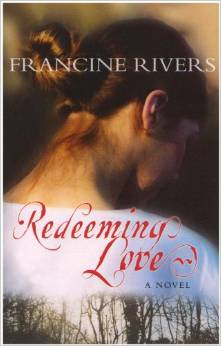
    I’m recently back from leading a book club retreat at the lovely El Palmeral in Spain. We sat by the pool, the bubbling water and chirping birds as our background soundtrack, and discussed four books, along with engaging in related spiritual exercises. You may not enjoy such a tremendous setting to engage with Francine Rivers’ story, but here are my thoughts on it along with some questions for reflection and discussion.

    Redeeming LoveA novel that Liz Curtis Higgs calls “the most powerful work of fiction you’ll ever read.”

    What’s it about? Sarah is a young girl whose innocence was fully shattered when her mother dies. At just eight, she was renamed Angel and sold into prostitution. It was the 1850s in California during the Gold Rush, and the craze for gold warped many morals.

    Angel closes off her emotions and learns to expect nothing. Then an honest, God-fearing man enters her life; Michael, a farmer who follows God’s leading and marries her. Her heart remains cold but he loves her day by day. Finally she begins to thaw, and unexpectedly confronts a whole host of emotions she never knew she had. And so she does the only thing she knows to do, which is to run from him.

    My view: What a novel. I’ve read it three times; twice in 2008 when I featured it in the Woman Alive book club and then again recently. Each time I found more to ponder, although the first times I read it, I found myself so gripped that raced through it in one sitting.

    Francine Rivers does a wonderful job at weaving the Christian faith into the story. It’s integral and doesn’t feel forced or false. She raises vital issues for, including self-identity, forgiveness of others and forgiveness of self, community, sacrificial love, and hearing God’s voice. And she does so in a way that is emotionally compelling and gripping.

    My heart broke many times for Angel as she was used and abused, starting with the rejection by her father, continued by her mother’s dependence on him and then her death, and then all the atrocious and despicable acts committed against her as she was sold into prostitution. It made me grateful for the charities engaged in putting an end to this modern form of slavery. Are we standing by while such horrors are still occurring?

    Redeeminglove-webbannerRedeeming Love shows a journey of character development, and doesn’t just recount a bunch of hurdles the characters have to overcome for them to come together. After the marriage, Angel has to change and become transformed. She needs to open herself up to love and life; she needs to learn how to trust; then she needs to give herself to God. And we see how Michael fights for her and loves her sacrificially, giving of himself that she might find herself.

    One to reread every couple of years!

    Discussion Questions

    Spoiler alert: don’t read these questions until after you’ve finished the book.

    • What did you think of the novel? Did you find it gripping? Too long? Not long enough?
    • Child prostitution, violence, drunkenness, sexual tension, unvarnished greed… not the usual subjects of a Christian novel. Were you comfortable with how the author handled these topics?
    • Why do you think Sarah’s mother stayed in the relationship with Alex Stafford?
    • Michael was a man who followed God’s leading. What did you think about him as a character? Was he too good to be true, or believable? What were his strengths and weaknesses?
    • Sarah lost her identity when she was sold into prostitution as a child. She then had many names – Angel, Mara, Amanda, Tirzah. What does a person’s name say about them? What did you think of her deepest gift to Michael when she revealed her true name?
    • What about Michael Hosea’s name? Consider this internet definition of the Archangel Michael, and discuss how it applies to the character in the story: “The spirit creature called Michael is not mentioned often in the Bible. However, when he is referred to, he is in action. In the book of Daniel, Michael is battling wicked angels; in the letter of Jude, he is disputing with Satan; and in Revelation, he is waging war with the Devil and his demons.”
    • Were you surprised that God called Michael to marry a “soiled dove,” a woman who had sold her body to many men? Do you think the Lord would call someone to such a calling today?

    06bd6cf3fd8a299ed3c76949bfc40e05

    • Michael sparks feelings in Angel that she doesn’t even know exist as he opens her up to beauty, such as when he takes her to view the sunrise (p. 129). She had been exposed to worldly beauty in her previous life – with the finest foods and silks, and yet her world was actually the color of brown, surrounded she was by mud in many forms. Discuss how she begins to open up to life and light and color.
    • Michael says to Angel, “A woman is either a wall or a door, beloved” (p. 153). Agree or disagree? Why?
    • What did you think of the character of Paul? Did you dislike him? Why do you think Miriam fell for him? Why was he the only one who could have called Angel home? Discuss the Altman family. How did God use them to reveal his love to Angel? To Michael?
    • Freedom is an important topic running throughout the novel (see, for instance, pages 187 and following). How did Angel finally come to true freedom? Who helped her along this journey?
    • “But the past kept catching up with her, no matter how fast she ran” (p. 254). Have you seen this to be true in your life? Why or why not?
    • Discuss the meaning of truth (pp. 257–58). Angel’s understanding is so different from Michael’s, for he knows the truth will set her free but she thinks it will bind her. How have they come to their different understandings, and what does it take for Angel to understand the real meaning of truth?
    • 50cd6e9bf88fd473c796bfc9c50a3581Michael says to Angel, “Love cleanses, beloved. It doesn’t beat you down. It doesn’t cast blame… My love isn’t a weapon. It’s a lifeline. Reach out and take hold, and don’t let go” (pages 291–92). Discuss.
    • Has reading Redeeming Love changed you? Moved you? Helped you to see grace and redemption in a new way? If so, how?
    • Do you think the epilogue is necessary? Helpful?
    • What did you think of the author’s journey in writing this book? Why do you think she had to give up writing all together for a time?

    Redeeming Love: A Novel, Francine Rivers (Monarch, ISBN 9781854246592)

  • Devotional of the week: In Christ (1 in Ephesians series)

    Time for a new devotional series! We start off a journey through Ephesians, one of the letters of the Apostle Paul, dripping with riches. Join me today for the introduction and first Bible reading note.

    The Apostle Paul’s letter to the Ephesians may be relatively short, but it has shaped the lives of countless Christians. Some have called it the crown of Paul’s letters; others say that “pound for pound,” it is the most influential document ever written.

    DSCN9618Paul may have intended for churches throughout Asia Minor to read it, and not just at the church at Ephesus (in modern-day Turkey), for it is less personal than his other letters and he does not address specific concerns and heresies. Rather he outlines God’s cosmic plan of redemption through his Son, Jesus Christ, and then gives the new believers instructions on how to live.

    The first part is a song of praise for Christ, and how God has revealed to Paul the amazing mystery of our (that is, the Gentiles’) salvation through him. God has lavished his grace on us through Christ and has sealed us with the Holy Spirit. Now we are now heirs of his glorious riches.

    He then explores the old life versus the new, urging the believers to dwell in Christ, leaving their old selves behind. For Christ has shattered the former divisions between peoples and races, and calls for a life of unity and peace. No longer are we foreigners and strangers, but citizens and members of God’s household. Now we dwell in Christ, being rooted and established in him.

    If the first half of Paul’s letter is cosmic, theological and lofty, the second half is deeply practical. Paul gives instructions for unity and maturity, urging the believers to live a life worthy of the calling they have received. No longer should we give ourselves over to drunkenness or debauchery, but we should be filled with the Holy Spirit. As we put on the new self, we take on the virtues of humility, love, patience, grace, holiness and kindness. We submit to each other out of love for Christ.

    At the end of Paul’s letter, he calls the believers to action. He urges them to put on the armor of God so to stand firm in the battle that rages around us, namely in the heavenly realms. As we arm ourselves with his resources, we will stand.

    As you engage with the riches of Paul’s letter, may you have power, together with all the Lord’s people, to grasp how wide and long and high and deep is the love of Christ.

    Praise be to the God and Father of our Lord Jesus Christ, who has blessed us in the heavenly realms with every spiritual blessing in Christ. For he chose us in him before the creation of the world to be holy and blameless in his sight… In him we have redemption through his blood, the forgiveness of sins, in accordance with the riches of God’s grace that he lavished on us… In him we were also chosen, having been predestined… in order that we, who were the first to put our hope in Christ, might be for the praise of his glory. And you also were included in Christ when you heard the word of truth, the gospel of your salvation. Ephesians 1:3–4, 7–8, 11–13 (TNIV, abridged)

    DSCN9809In the Greek, Ephesians 1:3–14 is all one sentence, forming Paul’s expression of praise for what God has done through his Son, Jesus Christ. Repeated throughout these verses is the phrase, “in Christ.” In the Greek it appears 11 times and in the whole of Ephesians, 36 times. In Paul’s writings overall, it shows up 164 times. Many biblical commentators, including Klyne Snodgrass, author of The NIV Application Commentary: Ephesians, name this theme as Paul’s central theological idea.

    What does it mean to be in Christ? We see various meanings here: God chose us in Christ to be his children; through Christ we are redeemed and forgiven; we are to hope in Christ; through him we believe. We are in Christ and he is in us; we are joined with him and have union with him.

    This oneness with Christ changes us from the inside out. It is mystical, for this is the realm of the unseen invading our lives. But this union is practical too, for as we dwell in him, we find the resources to live in his way. That could mean being an advocate for the poor, joyfully making a cup of tea for a builder, spending time with someone who is housebound, reigning in our tongues or spreading peace and love with those we meet. Christ defines us and our understanding of reality. He truly is, in the words of the popular praise song, our “all in all.”

    Prayer: Lord Jesus Christ, I find my identity in you. Fill me with your presence this day, that your love, grace, and truth might overflow from within.

  • Devotional of the week: Praises always (7 in 1 Peter 4 series)

    Sowing-circle-pic…so that in all things God may be praised through Jesus Christ. To him be the glory and the power… 1 Peter 4:11

    I’ve had the privilege of knowing some Christians who are completely sold out for God. Truly in all things, God is praised in their lives. One is a businesswoman who conducts her dealings with transparency and integrity. She nearly ended her life about forty years ago when mired in the occult, so she has a deep passion to spread the good news of the gospel wherever she goes – whether in a taxi or when buying gifts for a friend. She who has known the chains of oppression desires that others would be free. Another chose the sometimes lonely path of Christian leadership when being a woman leader wasn’t accepted in all parts of the church. She committed herself – her salary, where she lived, how she served – to the mission she was called to.

    As we’ve seen in this passage, Peter knows we will suffer. But he knows that suffering will produce a harvest of righteousness as we trust in God. We are to serve the Lord as wholehearted people; those to whom we commit things big and small. Not only how we spend our time – our life projects – but how we treat, say, the person selling us a newspaper. In all things may we bring glory to God, through Christ Jesus. Know that he is with you each moment of each day.

    Prayer: Lord God, may I know that you lead me and are with me. I commit myself to your glory. Amen.

  • Devotional of the week: Many gifts; one body (6 in 1 Peter 4 series)

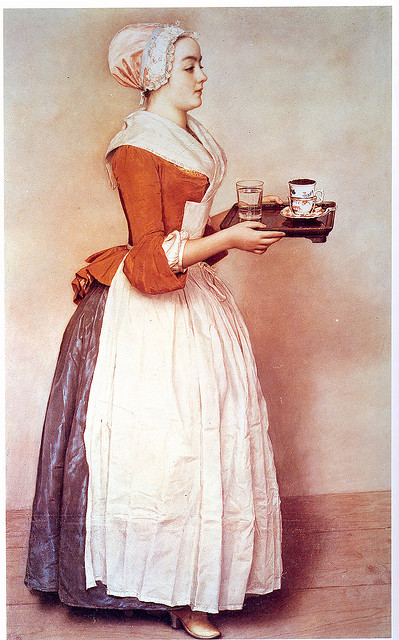
    Photo: Jean-Etienne Liotard: The Chocolate Pot
    Photo: Jean-Etienne Liotard: The Chocolate Pot

    Each of you should use whatever gift you have received to serve others… 1 Peter 4:10

    When I think of servants, a couple of people spring to mind immediately. They don’t know each other – they are separated by an ocean – but are kindred spirits. Both love to serve in the background in churches where I’ve been a member; whether it’s making the tea or setting up chairs, they find meaning and joy in tasks that some might see as mundane. The world is richer for them.

    Other people like to serve through leading, through seeing and sparking to life the God-given potential in another. They often bring together disparate groups of people to build a cohesive team. Others have the gift of empathy, reaching out to those who are hurting with what seems an innate sense. We see Paul’s list of gifts in 1 Corinthians 12, where he names some as teachers, some as prophets, some as helpers. All are different, and all are needed in the body of Christ.

    Do you know what your gifts are? Maybe you’re seeing yourself through old lenses, with new gifts having been developed or wanting to emerge. Have you buried a desire, but the Lord might want to encourage you in it? Spend some time being quiet before the Lord, and see how he leads. This could be the start of a new period of fruitfulness.

    Prayer: Lord God, help me serve with the gifts you’ve given. Give me eyes to see and a heart to love. Amen.