Author: Amy Boucher Pye

  • Finding Myself in Britain – School Days

    PyelotBoy graduating from primary school.
    PyelotBoy graduating from primary school.

    GCSEs? A Levels? Ofsted? Kids in uniform and starting at the age of four? These were some of the foreign-sounding words and concepts to me as an American with kids in British schools. In fact, there were enough differences that I’ve included a chapter in Finding Myself in Britain (coming soon!) on the topic. But I didn’t include anything about secondary school, because when I was writing I had scant experience with it. Now that PyelotBoy has launched from primary to secondary, however, I am forming a few impressions.

    The main one has to do with his growing independence. Whereas I can clearly picture the setting of the kids’ primary school, with its familiar and friendly teachers and staff, PyelotBoy’s secondary school is much more hazy. I haven’t yet met any of his tutors; nor can I picture him very well in the dining hall or in one of his classes. Besides the first day of school when I dropped him off – with him eager and antsy to get out of the car – he’s made his way to and from school on his own. He’s making new friends and becoming more responsible.

    This independence is right and what I desire, and yet so very poignant. As pictures of him as a toddler and young boy flash across my screen saver, I sigh and smile. We parents have such a short time with our kids – I know the days (and nights) can feel long but the years go by quickly, in that well-known saying.

    And so as PyelotBoy launches into year 7 and secondary school, I breathe a prayer and give thanks for the young man he is becoming.

    If you’re a parent or aunt/uncle or caregiver with a child who has made it through secondary school, what advice would you give?
  • To Be a Cover Girl

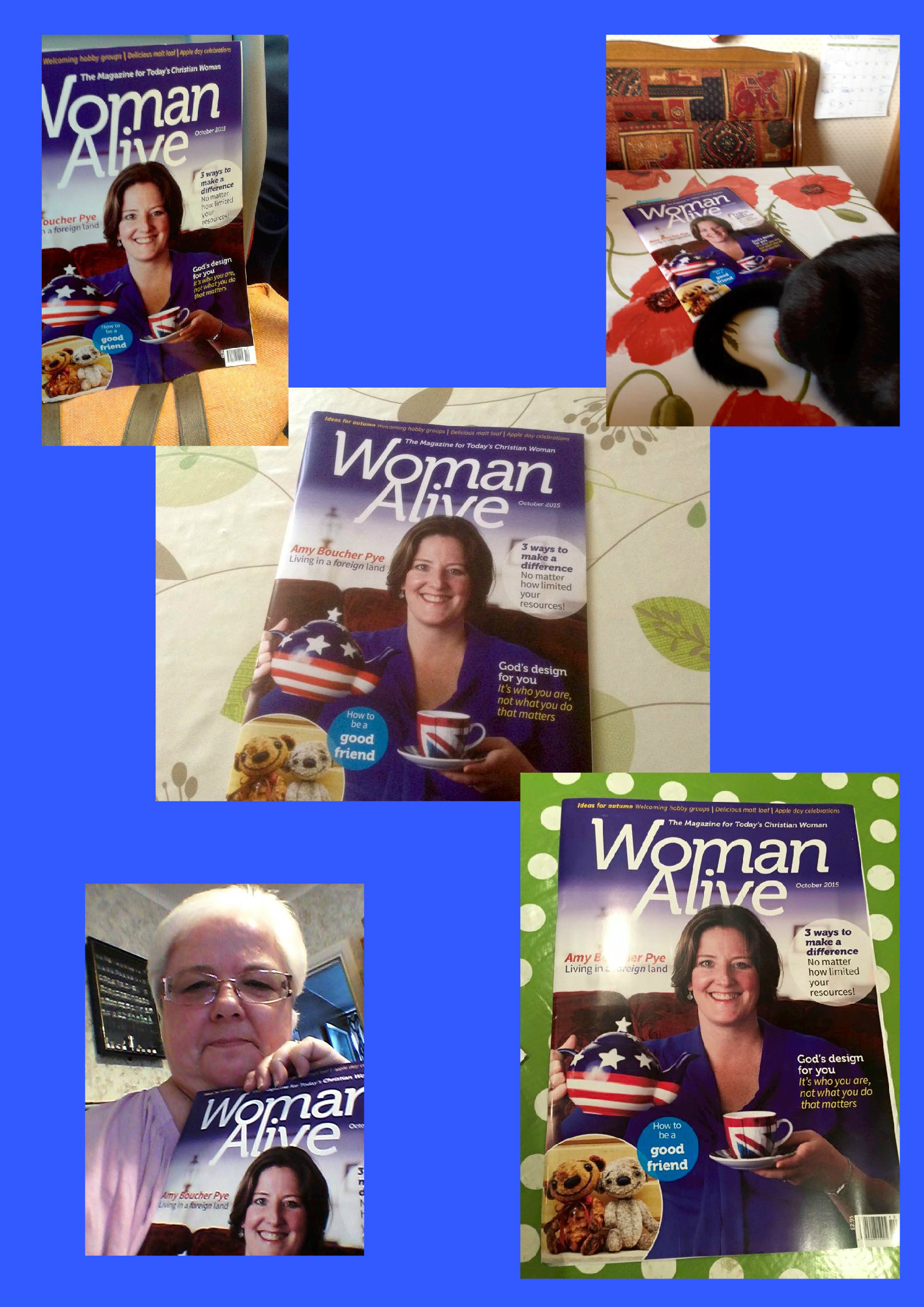
    A surreal feeling washed over me when I glimpsed the cover of the October Woman Alive – there under the new logo was me in my living room, pouring a cup of tea out of a Yankee Doodle teapot, sporting a big smile. I knew the cover was happening, but the shock of actually seeing my photo there felt like a jolt. For I’m not your usual “cover girl” material – no size zero here. And yet it’s wonderful to have real people smiling out from the front of a glossy magazine.

    I was so moved that people posted their photos of Woman Alive on social media! Such fun!
    I was so moved that people posted their photos of Woman Alive on social media! Such fun!

    We know our worth is not in our looks, and that God loves us no matter if we’re gussied up in evening wear or clad in our gym clothes after a workout. But do we believe that we’re worth the cover of a magazine? Even writing this post feels indulgent, like I should be apologizing. Instead, I’m going to give thanks that indeed, I’m a woman who is alive, who is made in God’s image, and who wants to love as she’s loved. To extend grace and peace and hope. And to be forgiven for when I fail.

    findingmyselfI never guessed before I moved to the UK those many years ago that I’d ever be pictured on a magazine pouring a cup of tea. Tea was something that I bought on my trip to London when I was 21, which I kept in a decorative Jackson’s of Piccadilly canister but never drank. Nor that I’d write a whole chapter about tea in my soon-to-be published book, Finding Myself in Britain. How fun to live our adventures with God.

    Over to you – if you were to be pictured on the cover of a magazine, what would you fancy you’d be doing in the photo? And why? How does God surprise you?

  • Devotional of the week: Filled with the Spirit (11 in Ephesians series)

    Be very careful, then, how you live—not as unwise but as wise, making the most of every opportunity, because the days are evil. Therefore do not be foolish, but understand what the Lord’s will is. Do not get drunk on wine, which leads to debauchery. Instead, be filled with the Spirit, speaking to one another with psalms, hymns and songs from the Spirit. Sing and make music from your heart to the Lord, always giving thanks to God the Father for everything, in the name of our Lord Jesus Christ. Submit to one another out of reverence for Christ (Ephesians 5:15–21).

    Many modern translations of today’s passage lose the original structure. They start a new section at verse 21 (“Submit to one another…”) instead of having verses 18–21 as one sentence, as they are in the Greek (starting with “Do not get drunk…”). When we understand how the text fits together, according to Klyne Snodgrass in The NIV Application Commentary, we see that Paul is telling his readers five ways to be filled by the Spirit: speak to one another with psalms, sing, make music, give thanks, submit to one another in fear of Christ.

    Why does this matter? As Snodgrass says, “Failure to understand the structure has made this section one of the most misappropriated texts in the Bible” (p. 286). The “house codes” that follow about how wives and husbands, children, and parents, slaves and masters should treat each other all fall under the command of mutual submission under Christ. Because we live in holy fear of God, we submit to each other. This entails humility, sacrificial love, and putting others above ourselves.

    As we cast away our old selves and put on the new, we may live a life controlled not by wine, but by the Spirit. The careful living that Paul describes entails the filling of the Holy Spirit, that we might be empowered to act in a holy way that is pleasing to God. Through his Spirit we can sing, make music, give thanks – and submit to others.

    For reflection: “Your attitude should be the same as that of Christ Jesus: Who, being in very nature God, did not consider equality with God something to be grasped, but made himself nothing, taking the very nature of a servant, being made in human likeness” (Philippians 2:5–8).

  • Some Gleanings from a Christian Publishing/Retailing/Suppliers Gathering

    I’m back from two wonderful but intense days at Christian Resources Together, a gathering for people in the Christian publishing, supplying, and retailing industry – and yes, that includes content creators such as writers. I’ve been in the Christian resources biz for over twenty years, nearly 18 of those in the UK. So for me it’s a rare time to see, greet, and hug familiar faces from the past (a few mates were playing STL Bingo during the award ceremony, which hints at their affection and humor, and will only mean anything for those in my industry).

    This year was special because I moved officially from “publisher” to “author.” I’ve loved being an editor, launching all of those wonderful Christian books out into the world to be ambassadors for God’s good news. And I grateful now to be one of those authors too, with her baby arriving in the world. For Finding Myself in Britain was shipped directly from the printer to the conference centre, as the official launch doesn’t arrive until the first of October. In fact, my publisher, Steve Mitchell, saw it first there. For me, the feeling was surreal to walk into my room in Swanwick and to see my book there on the bed, complete with chocolate for the participants to savor and enjoy.

    Fuzzy photo of The Book greeting me. Surreal! Wonderful! Yes, a ghastly bedspread!
    Fuzzy photo of The Book greeting me. Surreal! Wonderful! Yes, a ghastly bedspread!

    I was captivated by Bishop John Pritchard’s talk in particular. Here are some of his quotes, worth pondering:

    “God doesn’t know how to be absent.”

    I agree, but many people feel the absence of God when they go through tough times. Do you find this a challenging or encouraging statement, or somewhere in between?

    “In the Bible, water is always dangerous to the Jewish mind.”

    I never knew this, and want to do some biblical investigation. What about Proverbs 25:25, “Like cold water to a weary soul is good news from a distant land”?

    “Pray, but not as though God is an outsider. He’s here.”

    Yes, I love this, and sense the influence of Tom Wright.

    I also learned that Thomas Hardy became disgusted at the reaction to his novels so he gave up writing them and turned to writing a poem a day. Many are pedestrian, but some are brilliant. Hmm; maybe I should try to write a poem every day. I did that during Advent last year, and loved it. I learned other things too, but those nuggets seem worth sharing.

    Lawrie Stenhouse, Authentic Media's fab sales guy.
    Lawrie Stenhouse, Authentic Media’s fab sales guy.

    I came away exhausted but encouraged. What heartened me the most was the family-like atmosphere, with the organizers Mandy and Steve Briars called the “grandparents” of the group. How wonderful that we can laugh together and enjoy one another’s company, especially when times in the Christian resources business have been so tough.

    If you went to CRT, what were your impressions?

  • Devotional of the week: How much is enough? (10 in Ephesians series)

    But among you there must not be even a hint of sexual immorality, or of any kind of impurity, or of greed, because these are improper for the Lord’s people. Nor should there be obscenity, foolish talk or coarse joking, which are out of place, but rather thanksgiving. For of this you can be sure: No immoral, impure or greedy person—such a person is an idolater—has any inheritance in the kingdom of Christ and of God… For you were once darkness, but now you are light in the Lord. Live as children of light (for the fruit of the light consists in all goodness, righteousness and truth) and find out what pleases the Lord. (Ephesians 5:3–5, 8–10)

    Leo Tolstoy posed an age-old question in his 1886 short story: “How Much Land Does a Man Need?” His protagonist is bitten by the land bug; once he completes one purchase, he seeks out the next deal. Then one day he is given a chance to stake out as much land as he can cover by foot, as long as he returns to the starting point by sundown. He greedily runs farther and farther, only turning back when he realizes the sun is setting. He makes it back to the starting point just in time, but drops dead from exhaustion. How much land does a man need? Just six feet for a grave.

    Paul knows that greed, when left unchecked, can grow and flourish like a weed. He wants to stamp out even a hint of it, along with other sins such as sexual immorality and obscenity. Sexual sin was rife in biblical times, including prostitution, sexual misuse of slaves, and promiscuity. Our culture, too, remains sex-craved and sex-saturated. We are not immune; impurity can enter our minds and bodies like a worm, growing ever stronger as it feeds on our fleshly desires.

    No longer can we dwell in that darkness; now we are actually light in the Lord. Light dispels the darkness, so as we live before, in, and through Christ, we will glow in his holy light. And we will bear the fruit Paul mentions, namely goodness, righteousness, and truth.

    May we be content with his riches, not desiring more than he has chosen to bequeath to us.

    Prayer: Lord, give me peace in your presence, and help me to be content.

  • Launching Forth – How Much Is Enough Social Media? For Writers

    I’ve been waiting for this moment for years. This week, my first book – Finding Myself in Britain, my wee baby – will start its launch into the world. It will first appear at the Christian Resources Together retreat (a gathering for publishers, authors, retailers and distributors), when all of the participants will receive a copy. Then 27 September I’ll be preaching at our church and we’ll share lunch together afterwards, celebrating and giving thanks. Then 1 October is the official launch date, when bookshops and online retailers should have their stock – woo hoo! – and hopefully my social-media and blogging campaign hits its full gear. The following week I get to speak at the Grange Coffee House in Wokingham (5 October) and at St James’ Church in Shirley, Southampton, on 9 October. I’m so grateful.

    [Read the rest at my monthly slot at the Association of Christian Writers, on how much interaction should writers have on their books/articles before they annoy their friends completely…]

  • The Kingdom of God is like…

    …a handwritten letter

    20150812_114311-2Every Sunday without fail, my mom will pause to write letters to her two sisters (and when her mother was alive, to her). And they to her. They used to pen their letters by hand but now write by computer – but they print them out and mail them each week. For part of the joy is in the ritual: addressing the envelopes, applying the stamp, putting the letters in the post. And receiving “real mail” each week. Indeed, so regular is the practice that the postal people worry when they don’t see the two letters appearing on Wednesday or Thursday with the daily assortment of bills and junk mail.

    Whenever I visit my parents, I read the weekly letters. My Aunt Carole’s are filled with her wit and quips (she the youngest of four); my Aunt Judy’s drip with wisdom and observations of life on the farm (she the eldest). I don’t know what my mom – middle child – puts in hers, as of course her letters aren’t lying on the kitchen counter for me to read like my aunts’ are.

    These letters remind me of the Kingdom of God. They may not ooze with emotional declarations, for… [read the rest at Accidental Devotional here]

  • Devotional of the week: How to live (9 in Ephesians series)

    I’ve been taking a bit of a hiatus from the blog as my wonderful web designer, Tina Grobler, and I chop and change things around. It’s still a work in progress, but let’s get back to Paul’s letter to the church at Ephesus.

    Therefore each of you must put off falsehood and speak truthfully to your neighbor… “In your anger do not sin”: Do not let the sun go down while you are still angry, and do not give the devil a foothold. Those who have been stealing must steal no longer, but must work, doing something useful with their own hands… Do not let any unwholesome talk come out of your mouths, but only what is helpful for building others up… And do not grieve the Holy Spirit of God, with whom you were sealed for the day of redemption. Get rid of all bitterness, rage and anger, brawling and slander, along with every form of malice. Be kind and compassionate to one another, forgiving each other, just as in Christ God forgave you. (Ephesians 4:25–32, abridged)

    After exploring theological concepts, such as how we live in Christ, Paul turns to a practical set of instructions as he continues teaching on the old versus the new. Each of these commands, as John Stott says in his commentary God’s New Society, addresses our relationships. Holiness does not occur in a vacuum, but in the real world we inhabit with those around us.

    Stott also shows how each of the commands starts off with a negative prohibition, followed with a positive action. For example, do not lie, but speak the truth to your neighbor. Have righteous anger, but don’t nurse your anger. Stop stealing; make your hands useful by working. Don’t speak unkindly, but build others up with your words. Don’t grieve the Holy Spirit, for you are sealed with him. Eradicate any bitterness, rage, fighting, and malice; instead be kind and filled with compassion as you forgive each other.

    Old habits can die hard; we need God’s grace and help to change our ways. Today why not take Paul’s list and ask God to help you change just one thing. Adjust your expense report to make it reflect reality. Instead of tearing down your spouse or friend, pay them a compliment. Ask the Lord to give you compassion for someone who annoys you.

    May God help us live out of our new selves as we put off the old.

    Prayer: Lord, sometimes I speak before I think about what I’m saying. Reign in my tongue, that I might bring glory to you.

  • Devotional of the week: Old versus new (8 in Ephesians series)

    So I tell you this, and insist on it in the Lord, that you must no longer live as the Gentiles do, in the futility of their thinking. They are darkened in their understanding and separated from the life of God because of the ignorance that is in them due to the hardening of their hearts. Having lost all sensitivity, they have given themselves over to sensuality so as to indulge in every kind of impurity, and they are full of greed. That, however, is not the way of life you learned… You were taught, with regard to your former way of life, to put off your old self, which is being corrupted by its deceitful desires; to be made new in the attitude of your minds; and to put on the new self, created to be like God in true righteousness and holiness. (Ephesians 4:17–20, 22–24)

    Photo: Prayitno on flickr
    Photo: Prayitno on flickr

    When I started a job as a acquisitions/commissioning editor in London, I was overwhelmed by the many new things to learn. Some were obvious, such as the names of colleagues, a different computer system, unfamiliar publications. Some, however, lurked below the surface, such as the working culture, personalities and relationships, expectations and emotions. I returned home those early days utterly exhausted. But before long, my new editorial life felt comfortable and familiar.

    Here Paul is urging his readers to leave their old lives of sin behind. Though the new converts were still living next to the Gentiles, they were not to mimic their actions or their hardness of heart. Instead, they were to put on their new self, in which they would reflect God’s righteousness and holiness.

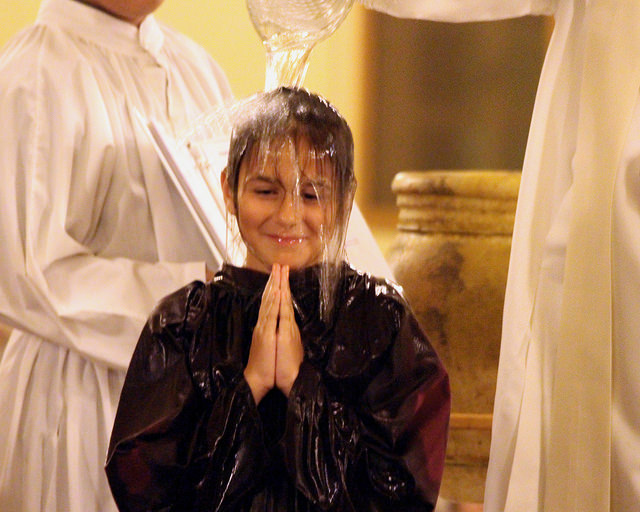
    Paul speaks of the old and new selves throughout his letters. To name a few: Romans 6:6: “…our old self was crucified with him…”; Colossians 3:9: “Do not lie to each other, since you have taken off your old self…”; Romans 13:14: “Clothe yourselves with the Lord Jesus Christ.” Employing this baptismal language, he yearns that the new believers would commit themselves fully to the ways of Christ, leaving greed and impurity behind.

    What do we need to leave behind from our old selves? A not-too-edifying television drama? A spirit of complaining? A lack of thankfulness? Join me in asking the Lord to illuminate those areas where we are corrupted, that our minds and hearts may be renewed.

    Prayer: Lord, we want to be made clean and holy. Help us to embrace the new life you are forming in us.

  • Finding Ourselves Through Change – Children and Schools

    Trigger warning – a post about children and transitions.

    Photo: David Schott, flickr
    Photo: David Schott, flickr

    Today is PyelotBoy’s last day of primary school. When I think back to me changing from elementary school to junior high, my memories are fuzzy. I know I was nervous about moving from class to class throughout the day instead of staying in one familiar classroom, but I had the comfort of nearly all of my classmates moving to the same school (the now defunct Capitol View in St. Paul, Minnesota).

    Whereas for PyelotBoy, the move to secondary school seems massive. Although half of his classmates are going to the same school, they morph from 60 in their year group to 180. And unlike in the States where we have middle school or junior high, and then high school, for many here, their secondary school will be their home until university.

    I only started to realize the import of finding the right secondary school as my kids got older and I’d hear the buzz on that day when secondary schools announce who gets their places each year. (The school where PyelotBoy is going had 1100 applications for 180 places.) Then it was our turn to traipse between open evenings and tutoring sessions and entrance exams. We’re pleased with the school he’ll be going to – another attached to the Church of England – but as we experience the leaving events for him at his primary school, I ponder the meaning of leaving.

    I know the job of a parent is to release our children to the big and often scary world, teaching them to cope and hopefully thrive as we keep on letting them go. But it’s difficult. And the emotion can come through the individual moments, such as letting them travel to school on their own or allowing them more electronic devices. We know this is our mission, but sometimes we just want to freeze time.

    Parents face these moments of their kids growing up continually. A friend on a social-media site mentioned how hard the transition to a bigger car seat was for her, for it signaled her baby growing up. For another it was when her child moved to a child-facing-front stroller. For me, I remember the strong feelings of loss when I realized that my son was hearing things at school that I had no control over. Or the poignant feelings that arise when I listen to recordings we made with the children years ago, when their voices sound so strikingly different.

    So to the adage carpe diem – seize the day – I would add treasure the moments. We can’t freeze time, but we can be present, giving thanks for the gifts we receive, whether it’s our own children or grandchildren or those whom we are close to in the community.

    Any pointers or stories on how you’ve handled big transitions in your life, or the life of your children?