Author: Amy Boucher Pye

  • The Meaning of Home by Katharine Swartz

    No Place Like HomeI first heard of Katie Swartz from my then-fiancé who said excitedly, “A North American couple is joining Ridley, coming over on the QE2!” They arrived in Cambridge, where Nicholas was studying to become a vicar, a few months before we got married and I moved there as well. Life was new and different for us all, and Katie and I didn’t get to know each other terribly well – as she said in a joint interview for Woman Alive, she was “working four jobs and then pregnant and terribly nauseous.” She and her husband went on to have four more children after their first was born in Cambridge, when they lived in a flat with a narrow, round staircase separating the bedroom from the loo (a nightmare for a pregnant woman). Since then, the family has lived in the UK and back in the States and now in the UK again, and Katie all the while has been writing loads of wonderful novels. I love her Tales from Goswell series, the first of which, The Vicar’s Wife, intertwines a modern-day American-moved-to-England with a Victorian vicar’s wife.

    Her addition to the “There’s No Place Like Home” series had me in tears.

    After Amy asked me to contribute to her blog, I have been reflecting on what home means to me, and I realized that it has changed over the last few months. A little over four years ago my husband and I, along with our four children, moved from New York City to a small village in England’s Lake District, and what I felt was my ideal home: a two-hundred-year-old vicarage with eight bedrooms and plenty of space to practice Christian hospitality, a walled garden perfect for the vegetable plot I’d been longing for, and a warm and friendly village community I was eager to be a part of. I truly felt I’d come home.

    St Bees in Cumbria, where the Swartz's lived for four years.
    St Bees in Cumbria, the Swartz’s home for four years.

    For four years we enjoyed that home, entertaining often, planting a garden, and becoming valued members of our community. Looking back, I wonder if I was a bit smug about it all—I had everything I’d wanted. Then, quite suddenly, the school where my husband served as chaplain closed, his position was cut, and we were forced to move in a matter of months. That perfect home was taken away from us—making me reassess what really comprises a home.

    We now live in rented accommodation in a village where I am slowly getting to know the residents, and my husband has a new job as a teacher—one he is very thankful for, but not the kind of position he ever expected to have. Everything feels very temporary and fragile—made more so by the fact that as the same time as all of this was happening, my dear father was diagnosed with terminal cancer. He is now in its last stages.

    This all might sound rather grim, but there is a magnificent silver lining to it—and that is, as a Christian, I realize now more than ever that home is not a beautiful vicarage or a temporary house or even the prospect of having your family all around you, as we will this Christmas, my father’s last. For the Christian, home is heaven.

    It hasn’t been easy to give up the things I have enjoyed and desired—the lovely house, the cooking range we saved up for, the walled garden I spent many hours on. Beyond those material things, I have missed the community we were part of and the church where we served. I dislike having my life feel temporary and uncertain, and yet it has all been such a valuable lesson to me, because isn’t all of life uncertain?

    The Bible tells us this world is fleeting. Over the last few months I have been reminded of the parable of the rich fool who stored his crops in big barns, only to have his life taken away from him that very night, and I have wondered if I had been doing the same.

    In the Western world it is so easy and tempting to yearn after material goods. For the Christian this might not be a flashy sports car or something similar, but merely a comfortable home, a place to raise your family and offer hospitality—none of those are bad things to desire. But I am constantly asking myself: where is my heart? Where is my hope?

    Katharine's parents.
    Katharine’s parents.

    As my world has crumbled and changed, I have the deep and abiding joy that it is with Christ, in heaven, where God promises: ‘Never again will they hunger; never again will they thirst. The sun will not beat upon them, nor any scorching heat. For the Lamb at the center of the throne will be their shepherd; he will lead them to springs of living water. And God will wipe away every tear from their eyes.’ (Revelation 7:16-17)

    This Christmas, as you enjoy the many blessings of the season that God has granted you, I encourage you to reflect on the true meaning of Advent in looking forward to Christ’s return, and the hope of heaven that believers may all hold onto now.

    Katharine Swartz

    After spending three years as a diehard New Yorker, and four years in the Lake District, Katharine Swartz now lives in the Cotswolds with her husband, their five children, and a golden retriever. She writes women’s fiction as well as contemporary romance under the name Kate Hewitt, and whatever the genre she enjoys delivering a compelling and intensely emotional story. Her latest is The Lost Garden.

  • Food – the call of home

    What foods make you think of home?

    When I look back at growing up in Minnesota, I think of the BLTs my mom made me for breakfast, or the chicken-noodle soup we’d have for Christmas Eve (which I still make – recipe in Finding Myself in Britain), or Iowa-fried chicken cooked in my grandma’s cast-iron pan, or my mom’s cinnamon rolls and homemade rye bread (yep, recipes for those too in the book). They call macaroni and cheese “comfort food” for a reason.

    Photo: cyclonebill, Flickr
    Photo: cyclonebill, Flickr

    I knew that food plays an important role in memory and emotions (comfort eating, anyone?), but recently I was taken aback by just how powerful is the absence of loved and familiar foods for people away from their country of origin. I realized this when I raised a question in several Facebook groups for American ex-pats in the UK, having come in contact with one of the key buyers of the American food section at a massive grocery chain. Intrigued with the idea of influencing this chain and their selection American products, I posted these questions to my fellow expats: “What foods do you miss? What do you wish this grocery-store chain would stock?”

    I posted and left for my gym class, and when I came back a couple of hours later I was stunned at the rapid response. In that short amount of time, one group had 92 replies; another had 48; another 32. I clearly had hit a nerve.

    I loved scrolling down the comments, for some foods that others hankered after I forgot about, such as pizza rolls. Other entries I could understand the draw of, although they didn’t apply to me, such as coffee creamer (I don’t drink coffee). Some items kept popping up again and again, such as real dill pickles (no sugar added, please) and real bacon (streaky, that is).

    Photo: Maggie Mudd, Flickr
    Real pickles don’t have sugar. Photo: Maggie Mudd, Flickr

    I saw lots of cracker type longings: graham crackers (digestive biscuits just aren’t the same), saltine crackers, Cheez-its, Wheat Thins, Goldfish, and especially Triscuits, as evidenced by this comment: “For the love of all that is holy, they have one-thousand types of ‘cracker’-type products, but nothing I have found that approaches the taste or texture of a TRISCUIT.” Amen.

    Photo: Yasmeen, flickr
    The mighty Triscuit. Photo: Yasmeen, flickr

    And Velveeta and Kraft macaroni and cheese (which many supermarkets stock, but at 3 quid a pop I can’t justify it – the equivalent to 5 bucks a box, which only costs a dollar Stateside) and Old Bay seasoning and Jiffy cornbread mix and Cool Whip and Miracle Whip and Eggo waffles (PyelotBoy heartily agrees) and, again and again, Hidden Valley ranch packets.

    A British person reading this list might think, huh? That sounds like a lot of processed food – why would they miss it? But we do. These foods scream memories or convenience or form the missing ingredient in a favorite recipe (Fritos for Frito pie, anyone?). Food can signify home to us because of the people we’ve eaten our feasts with; the memories we’ve created; the conversation, love, and sense of knowing and being known.

    Photo: Heidi Smith, flickr
    Kashi! Photo: Heidi Smith, flickr

    For many years, I brought back boxes of Kashi GoLean Crunch, a cereal filled with protein and that satisfying tooth-filling-defying crunch. I think one summer I brought back 22 bags of the stuff, hoarding it in the cupboard under the stairs, grudgingly sharing it with my children. I even made five of my high-school friends bring a couple of bags with them as their “payment” for staying at the vicarage, calling them my Kashi mules. But eventually I tired of it, switching my allegiance to oatmeal (UK: porridge) with a dollop of almond butter to make it rich and nutty. Yet recently, I was cleaning out that cupboard under the stairs and I came upon a crusty old bag of that Kashi GoLean Crunch. How I would have loved it years previously when it was fresh, but now all it was suitable for was the trash.

    So what foods would you bring back in a suitcase if you lived away from your country of origin? What screams home to you?

  • Advent devotional 3: When plans change

    Photo: Martin Howard, flickr
    Photo: Martin Howard, flickr

    This is how the birth of Jesus the Messiah came about: his mother Mary was pledged to be married to Joseph, but before they came together, she was found to be pregnant through the Holy Spirit. Because Joseph her husband was a righteous man and did not want to expose her to public disgrace, he had in mind to divorce her quietly (Matthew 1:18–19).

    The betrothal had taken place, and Mary and Joseph were pledged to one another in marriage. But it didn’t turn out as they had planned, for before they “came together” (Matthew’s way of implying sexual relations), Joseph learned that Mary was expecting a child. At this time, she was probably four months pregnant, having spent time with her relative Elizabeth, who herself was expecting her son John the Baptist (as we learn in Luke’s account).

    Courting and marriage were different in biblical times. Back then, young men and women would be betrothed to each other for about a year before they entered into marriage. The betrothal would involve exchanging gifts and signing a prenuptial agreement, which would give the man rights over the woman. To break these legal ties entailed divorce. This, then, is what Joseph faced.

    Imagine what Joseph was feeling – shocked, angry, hurt, disappointed, indignant, deflated. His plans for spending his life with Mary were shattered. In an instant, everything changed. What was he to do?

    He could marry her, but that would condone her sin of adultery, leaving him impure before God. He could demand a public divorce, but that would humiliate her publicly and perhaps even cause her death by stoning. He settled on a third option, a private divorce, which would ensure his holiness before God while safeguarding her life.

    Your day may be filled with preparations for the feast of Christmas. Stop for a moment, however, put yourself in Joseph’s shoes and forget what comes next in the story. With Joseph, every cell cries out in anguish. Why? Why did she? Why me? Why, God? Oh, why?

    For reflection: “As the heavens are higher than the earth, so are my ways higher than your ways and my thoughts than your thoughts” (Isaiah 55:9).

  • An Advent Poem

    A poem for Advent, celebrating the with-us-and-in-us God, based on Isaiah 7:14: “Therefore the Lord himself will give you a sign: The virgin will conceive and give birth to a son, and will call him Immanuel.”

    6369656185_2996107d77_zThe virgin will conceive
    And give birth to a son
    And call him Immanuel
    God with us
     
    God with us
    Never to leave us
    God in us
    Transform us to new
     
    And this will be a sign
    The virgin will conceive
    All will  know he is God
    A man and God a King
     
    His name is Emmanuel
    He is God with us
    Not a God far away
    But a God at hand
     
    © 2014 Amy Boucher Pye
  • Home Is Where The Heart Is by Simon Lawton

    No Place Like Home

    I met Simon Lawton when he and his wife Julia invited me to come speak to women at their amazing church in Newcastle last spring. Their church was growing and a Bingo hall was declining, so they swapped premises – fantastic! I love their vision for reaching their community with the good news of Jesus.

    Home is where the heart is and where we belong. But what happens if, as you grow up, you don’t really have that sense of belonging. I was adopted into a Christian home and spent my early years feeling like I didn’t belong. I felt disconnected from my parents and my siblings through no fault of theirs. I had an itch that I couldn’t adequately scratch and a sense that there was a home and a family elsewhere.

    IMG_2490When I was 16 I received limited information from my adopted parents concerning my background. I had always felt like there was something missing from my life. I wanted to know, like most adopted children, where I’d come from and where my roots were. I discovered that my biological mother was from the very town that I had grown up in (Leicester) and that my father was from Omaha, Nebraska. He was an US Airforce engineer based in Leicestershire during the early 60s. At the time I was simply happy to rest in this knowledge and get on with my life.

    I decided in 1989 that it was time I found my biological mother and this we achieved with the help of social services. It was an incredibly emotional moment when I met her for the first time. I’d found my own flesh and blood and also someone whom I discovered had the same interests as me. I felt like for the first time that I belonged.

    IMG_2259It was not until 2001 that God clearly directed me to look for my father. I had been thinking about it for some years and had a deep longing in my heart to find him. I was at a pastor’s conference in Toronto and received an incredibly accurate personal prophecy, part of which emphasised how important it was for me to know who my father was. Amazing!

    On my return home I started searching on the internet and within a few weeks I was calling this guy whom I thought was my Dad on the phone. What do you say to this man thousands of miles away when he answers his phone? I simply said, ‘Were you at Bruntingthorpe airbase in Leicestershire in the early 1960’s?’ He replied ‘Yes’ and I paused for a moment and then said, ‘I think I’m your son!’ He was absolutely delighted and told me he had always thought there was someone out there.

    In that moment I discovered a whole family, including two great half brothers, in the USA that I had no idea existed previously. I finally felt that I belonged and had a home. They are wonderful people and when Julia and I visited the USA for the first time they threw the most fantastic party in Omaha for us. I felt like the prodigal son returning home. They remain very special to me and we very much keep in touch.

    IMG_2252Whilst in Omaha I discovered lots of information on my new family. My great grandparents are of Syrian descent from a place called Beth Latiya. I later discovered that it is the headquarters for the terrorist organisation Hamas! Wow! Further, I also discovered that my ancestors had been immigrants through Ellis Island and that whilst those US immigration guys changed the spelling of my family name to ‘Koory,’ the original name was spelt ‘Khouri.’ I was stunned to also discover that in Syrian the name ‘Khouri’ means ‘priest!’

    This knowledge simply blew me away….to think that one of my early ancestors was a priest and here I was hundreds of years later, serving God as a priest (pastor). I was even more amazed to discover from the Syrian family historian that the family tree goes back to Solomon. Incredible!

    God has been so gracious to me. He created me in my mother’s womb and set me in a wonderful Christian home where I was able to find Christ for myself and have that sense of belonging. He allowed me the privilege of discovering my family background and then he allowed me the even greater privilege of serving Him in His home – the church. I remain completely in His debt.

    “Even the sparrow has found a home, and the swallow a nest for herself, where she may have her young— a place near your altar, Lord Almighty, my King and my God.” (Psalm 84:3)

    The Dream Centre, where Simon is a pastor. I love the story how their church swapped places with a dying bingo hall in Newcastle. Hooray for God's message of love and grace!
    The Dream Centre, where Simon is a pastor. I love the story how their church swapped places with a dying bingo hall in Newcastle. Hooray for God’s message of love and grace!

    Simon Lawton was born and bred in Leicester. He left school at 16 and worked in retailing until God called him into ministry in 1985. He’s an adopted Geordie, Pastor, Husband, Father, Grandpa and Leicester City fan. He’s currently writing his first book and blogs regularly. 

  • Review – An Advent book and Christmas novella

    Reviews of two books for this season, as published last year in the Woman Alive book club.

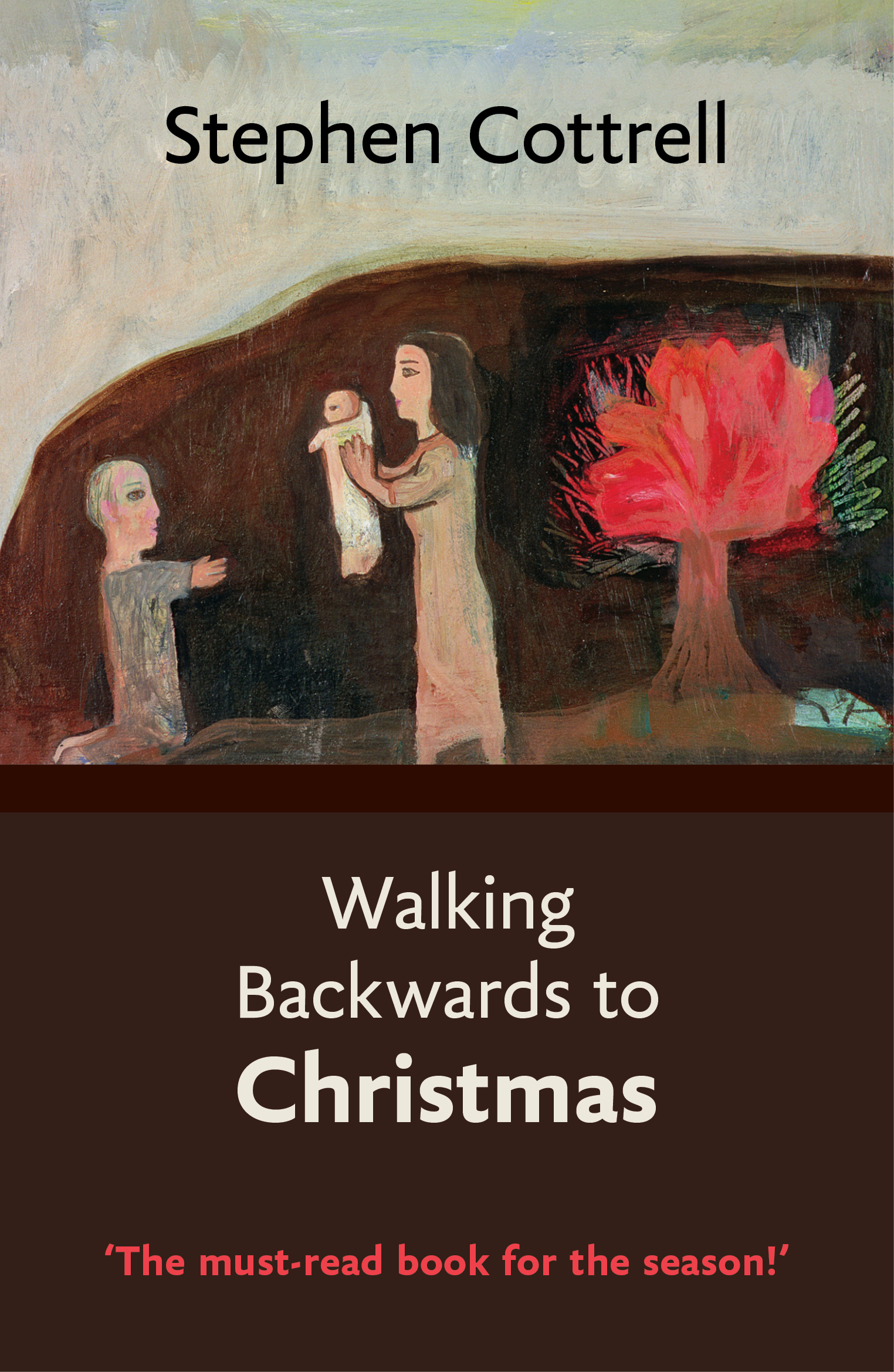
    walking backwards to christmas FCI wasn’t sure I’d like Walking Backwards to Christmas when I picked it up. I’ve read a fair number of first-person narratives from biblical characters over the past few years as this genre has gained in popularity. Sometimes the books work; sometimes, not so much. But in the hands of Bishop Stephen Cottrell, these narratives sing. I highly recommend reading this during Advent or the Christmas season.

    He moves through the Christmas story backwards, as it were, starting with Anna in the temple, moving to Rachel, a mother of one of the slaughtered first-born sons, then to (among others) Herod, the innkeeper’s wife, Joseph, Elizabeth, and Mary, and finally to two prominent Old Testament figures, Isaiah and Moses. I found their stories moving and thought-provoking, impressed that the author imagined such different characters and voices in each chapter.

    What’s refreshing is that he addresses the dark components of the story; for instance, the chapter by Rachel is piercing in her mother’s grief. Or Anna’s decades-long loneliness as a widow, which slowly is eclipsed by her love of God. Or the power-mongering of Herod; or the strife between Joseph and Mary over the questionable pregnancy. All stories worth considering, but not often addressed in seeker-friendly carol or candelight services.

    higgs wreathPerhaps this season you’d like to escape with a Christmas novella, cozied up with some mulled hot liquid, snuggled by the fire. If so, I’d recommend Liz Curtis Higgs’ A Wreath of Snow. She’s one of the few Americans who can pull off writing novels set in the UK; this one showcases Scotland in Victorian times. (Her secret? Research like crazy. When I interviewed her here in 2011, she said she had 800 books just about Scotland!)

    Margaret Campbell is a young woman with a painful history. She flees the family home on Christmas Eve, determined to go back to her flat in Edinburgh. But her train journey is unexpectedly halted, including a surprising meeting with the gentleman seated across the aisle. The story has romance, but it doesn’t shy away from hard topics such as bitterness, grudges, and the need for forgiveness. I especially enjoyed how the prompts of the Holy Spirit were portrayed – not too “out there,” and clearly as something that the person could heed or ignore.

    Two to make time for in the busyness of Advent and Christmas, lest we lose the true meaning of the season.

    Walking Backwards to Christmas, Stephen Cottrell (SPCK, ISBN 978-0281071470)

    A Wreath of Snow, Liz Curtis Higgs (WaterBrook Multnomah, ISBN 978-1400072170)

  • And now it’s Advent – Finding Myself in Britain

    In Finding Myself in Britain, I take a through-the-year approach at life in the UK. Originally I wanted to start the book with Advent, for after all, it’s when the church calendar commences. But I took my publisher’s good advice and instead began with the start of the academic year, which marks a time of fresh starts. Here’s a snippet of the chapter on Advent: “Waiting for the Coming King.”

    16680236843_ee72945b30_k
    Photo: grassrootsgroundswell, Flickr

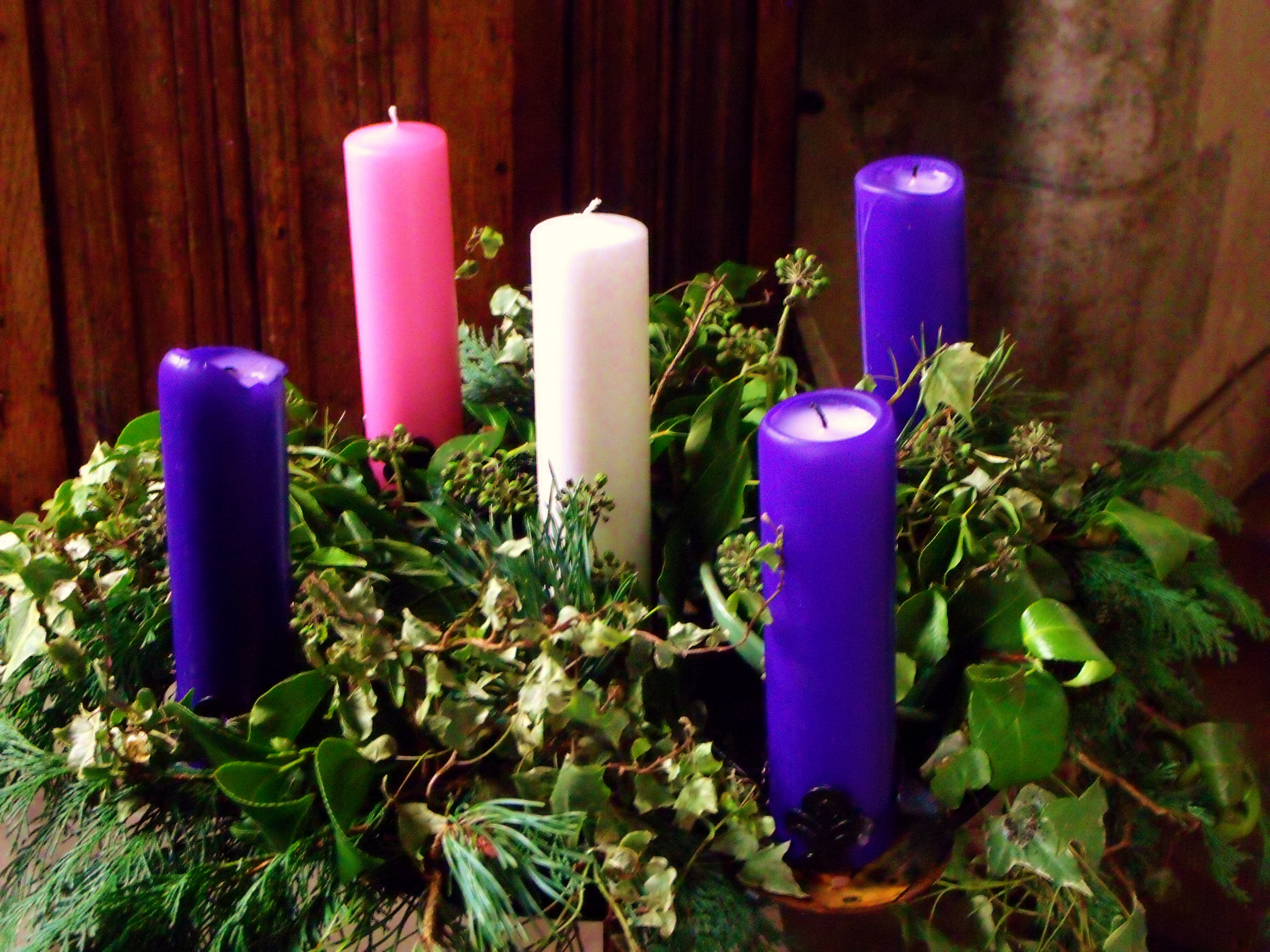
    For those who follow a church calendar, the start of the church year begins with the season of Advent. Traditionally the four Sundays before Christmas have been a period of fasting during which we prepare ourselves for the birth of Jesus. Some Christians are returning to this lost practice, making sure they have done all of their Christmas shopping, for instance, before Advent starts. They take the time and energy to prepare for Advent so that they can be ready for Christmas.

    I laud them. I would love to be like them. But I haven’t ever managed a complete fast from decorations or baking or even Christmas carols during Advent, for the cultural trappings of the season speak deeply to me of the spiritual meaning of Christmas. Growing up, I’d help decorate the Christmas tree much earlier than what Nicholas experienced – his family would purchase theirs on Christmas Eve, whereas my parents use the late November days just before or after Thanksgiving to put up theirs. As a child, I never knew of Christmas carols banned during Advent, for I understood that the practical preparation of this season was part of the spiritual looking ahead.

    I would love to spend Advent in quiet reflection, praying and preparing for Jesus to be born in my heart and home, but instead I mix the reflective with the practical as I get ready for the feasts of Christmas. Because the British traditions differ from the American, over the years I’ve worked hard to ensure that Christmas feels like Christmas in this foreign land. What could feel like a situation of scarcity – the pain of being away from loved ones during the holidays – has evolved into a season of abundance as our traditions have developed and solidified. Finding myself in Britain means creatively enacting the American approach to Advent and Christmas, while learning the British one too. And more importantly, making sure the Christian elements, which transcend any culture, receive the star treatment.

    How about you? How do you approach the season of Advent? Are there practices you ban, saving them for the twelve days of Christmas, or do you enter into the spirit of the season as soon as you can?

  • An Advent pantoum (form of poetry)

    Today in my writing group video chat, I was introduced to the pantoum, a form of poetry I’d never heard of previously. With just 5 minutes of free writing, I created this, an evocative Advent poem:

    • Here we felt accepted; here we felt affirmed; here we felt known
    • The sky was dark
    • We waited in the car, shivering, while we waited for Mom
    • And off we went to church, us three kids waiting
    • The sky was dark
    • Saying the liturgy and singing the carols, all the time waiting
    • And off we went to church, us three kids waiting
    • And so we listened to the priest and we shuffled in our seats, waiting
    • Saying the liturgy and singing the carols, all the time waiting
    • We waited in the car, shivering, while we waited for Mom
    • And so we listened to the priest and we shuffled in our seats, waiting
    • Here we felt accepted; here we felt affirmed; here we felt known
  • Advent devotional 2: A divine passive

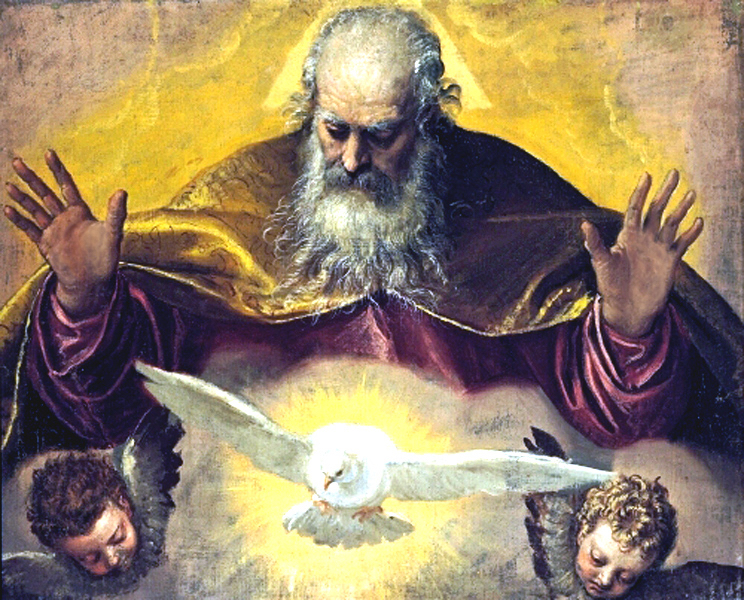
    Photo: Waiting on the Word, God the Father, Flickr
    Photo: Waiting on the Word, God the Father, Flickr

    …Matthan the father of Jacob, and Jacob the father of Joseph, the husband of Mary, and Mary was the mother of Jesus who is called the Messiah. (Matthew 1:15b–17, NIV)

    What a difference a bit of grammar can make (so says Michael J. Wilkins in The NIV Application Commentary: Matthew [Zondervan, 2004]). Throughout the genealogy we looked at last week, Matthew used the Greek verb gennao in the active voice, such as “Abraham fathered Isaac.” After forty instances of the active verb, he turns to the passive when describing Mary and Jesus – in the NIV, Joseph was the husband of Mary, “of whom was born Jesus…” Matthew’s readers would have noticed this shift, for it implies what many grammarians “call a divine passive, where God is the assumed agent of the action” (p. 63).

    When I trained to be an editor, my teachers drummed into me always to use the active voice. But sometimes, as we see here, the passive is quite simply divine. In a simple shift of language, Matthew points to God at work. Watch out, he says, for what comes next is something new and completely different.

    When it comes to his people, God is always the divine initiator. Mary responded to him, saying yes to God working literally in her body – “what is conceived in her is from the Holy Spirit” (v.20). Luke’s gospel records her humble and willing response when the angel announces that she will conceive a child through the “power of the Most High” (Luke 1:35): “I am the Lord’s servant… may it be to me according to your word” (v.38). Mary’s receptivity changed the world.

    How does God want to break through to us? He may not want us to change the world, but rather parts of our world. Perhaps he is opening a new opportunity for service, or inviting us to mentor someone, or prompting us to extinguish anger and repair a broken relationship. Whatever it is, as we are still and listen for his voice, we will hear his words of love and guidance. May we be as Mary, responding with open hands and a receptive heart.

    For reflection: The angel Gabriel to Mary: “For no word from God will ever fail” (Luke 1:37).

  • Heading Home by Debbie Duncan

    No Place Like HomeToday’s installment in the “There’s No Place Like Home” series is Debbie Duncan, lovely author I had the privilege of working with at Authentic Media with the release of her co-authored book Life Lines, a brilliant fictionalized-but-based-in-reality look at friendship. She’s a minister’s wife and nurse who has taught at the Florence Nightingale School of Nursing, King’s College London. She and Malcolm have four teenage children and live in Buckinghamshire, UK.

    Am I a turtle without his shell?

    We have a natural affinity to the past; something captivates us when we hear where are from or when we learn about our ancestors. Certainly the television programme, “Who do you think you are” has been a huge success, facilitating an increase in people looking into their own genealogy. I have managed to get back to 1600 in my family tree, uncovering a pirate called Foxy Ned, a lady of the manor who ran off with the groomsman and a diamond scandal. My family have many roots in many countries and I cannot on good authority say where I am from, although I do claim to be Scottish as Scotland is where I spent my formative years. Home, however, is a different matter.

    IMG_2909Home is where I feel safe, surrounded by those I love. At the moment we are based in Buckinghamshire, having lived in the same house for more than five years, which is a record for us. Three of my children are presently away from home at university. When my oldest daughter, Anna, went, she had a box of decorations for her room. It was really important to her that this box was packed and went with her. In fact she packed it before she packed any clothes or books. On her first evening in her new halls the box was un-packed and she strung up her lights and hung up her photos.

    Susan Clayton, an environmental psychologist says, “For many people, their home is part of their self-definition.” They have bought in to this concept of home, paying for a mortgage or spending money renovating and decorating buildings. Walls are covered with photos and pictures of where we have been and shelves are covered with souvenirs from past adventures. I have to confess I have the odd smattering of tartan throughout the house.

    “Where are you from” is an important question but “where do you call home?” should be the question we ask. And if we think that “home is where the heart is” then home is where we are right now. For the moment for us that’s in Chalfont St Peter, where I have come to love the community. For instance, when we experienced tragic loss earlier this year I had a strong desire to stay at home – I didn’t want to leave. I wanted to feel safe and secure surrounded by people I know.

    I am made even more aware of how much I value this place I call home as I have been involved in a pilot project in a nearby town as an outreach nurse for the homeless. They live in a hostel where they are supported by a variety of care givers and staff. They may not have a physical space that they have decorated but they have a place of safety where people care for them. Some of the clients have talked about how they feel exposed not having their own place – a little like a turtle without his shell.

    IMG_2818
    The Duncans

    As Christians our natural trajectory should be towards our real home. This place I live in is a temporary measure but like a turtle without a shell maybe this keeps me focused, awaiting the day when I am made whole and complete. The money I spend on my surroundings means where I live looks comfortable and may reflect some of my identity but that is only truly revealed when I am in my real home.

    Home is where we are right now, but for those who believe in Jesus it is also only a temporary state. I am not defined by the pirates and diamond dealers of my past or whether I am English or Scottish. I am defined by being part of God’s kingdom, heading towards my final destination of my real home.

    Reepicheep, the valiant talking mouse in CS Lewis’ book The Last Battle, stood on the shore at the end of the story and said, “I have come home at last! This is my real country. I belong here. This is the land I have been looking for all my life.” He may not have been a turtle, but he found his shell.