I got to know Ben Irwin when we both worked for Zondervan – but in different countries. He and I had the privilege of launching Rob Lacey’s amazing The Word on the Street, the Bible in street language. We both loved Rob, and hated seeing him battling cancer, but I think we’d both say that working with him on such a creative project has been a highlight of our editing careers. We’ve both moved into writing, which as you’ll see in Ben’s piece has been a process and something to be embraced (which is true for me too). I love his thoughts on home. Enjoy!
Somewhere in Wyoming on one of our cross-country moving adventures.
Finding your home can be tough when you’re always on the move.
I was born on the East Coast of the United States but spent my formative years in the Deep South, where the minute someone heard my accent for the first time, they would invariably say, “You’re from the North, aren’t you?” It was more accusation than inquiry.
There was a time (before kids) when it seemed like my wife and I were always packing, moving, unpacking—only to repeat the cycle soon after. Five times in four years we moved. Michigan to Seattle. Seattle to England. England back to Seattle. Seattle to Tacoma (a cheaper, more laid back version of Seattle about 30 miles south). Tacoma to Michigan.
With every move, we looked back longingly on the last place we had lived. I found it hard to feel at home anywhere. When you’re constantly looking over your shoulder, you forget to be fully present where you are now.
It took me a long time to learn the art of being content where I am, instead of always wondering where we’ll go next or wishing we were back in the last place we lived. In some ways, I’m still learning.
Here’s one thing that has helped me: realizing that I have more than one “home,” and that’s OK.
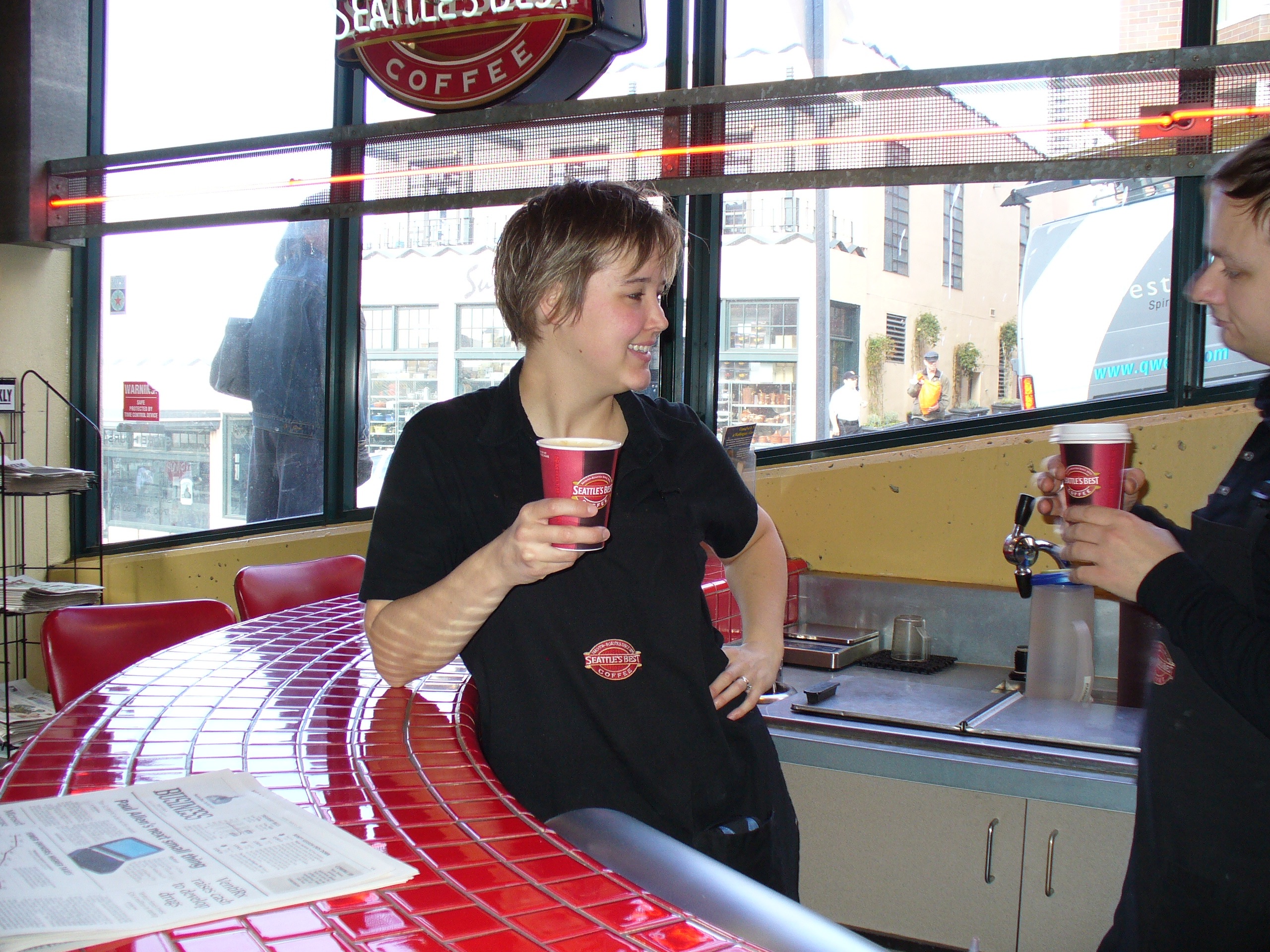
Seattle, 2007.Seattle, 2007.Amanda working at one of Seattle’s iconic coffee shops, 2007.
Each of the places we’ve lived has shaped us in some way—sometimes simple, sometimes profound. These places have become, in a sense, a part of who we are—each one a part of our idea of “home.”
When we moved from Michigan to Seattle, we learned the value of living with less—less home, less stuff, one less car. The values of simplicity and sustainability took up residence in our hearts.
Although we spent just seven months in England, it was long enough for us to find a new spiritual “home.” Someone invited us to the parish church in our village for Easter Sunday, and we’ve been Anglicans ever since. We’ve been soaked in the liturgies, prayers, and practices of a tradition that was new and strange to us at the time—yet now feels more like home than any other church we’ve been part of.
It’s because of one of those five moves that I am a writer today. We traversed the country so I could start a new job. It was the first time anyone ever paid me to write, and I’ve been writing ever since. It’s become my vocational “home.” Those who took a chance on an untested writer and helped me nurture my craft have since become part of our extended family.
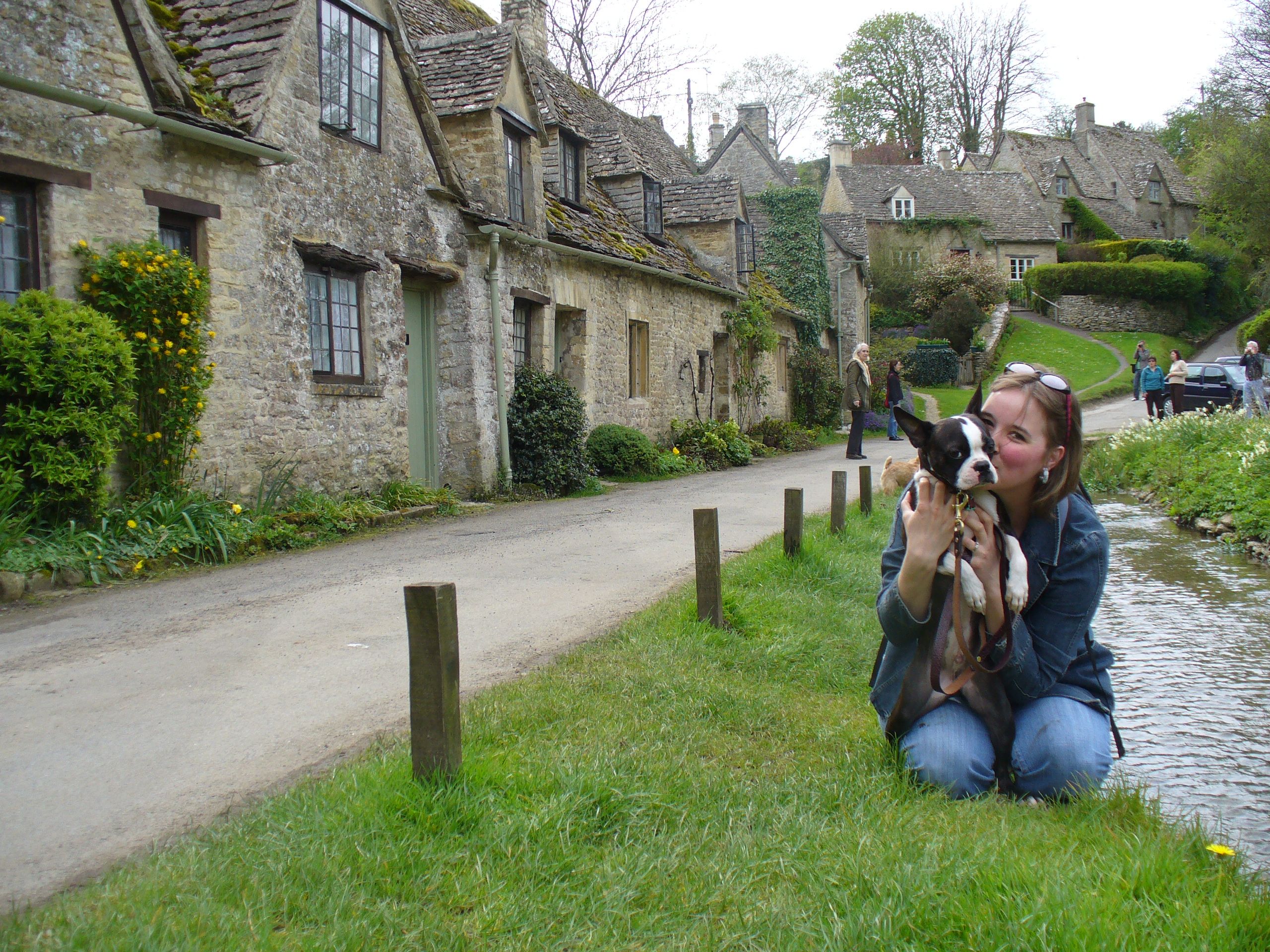
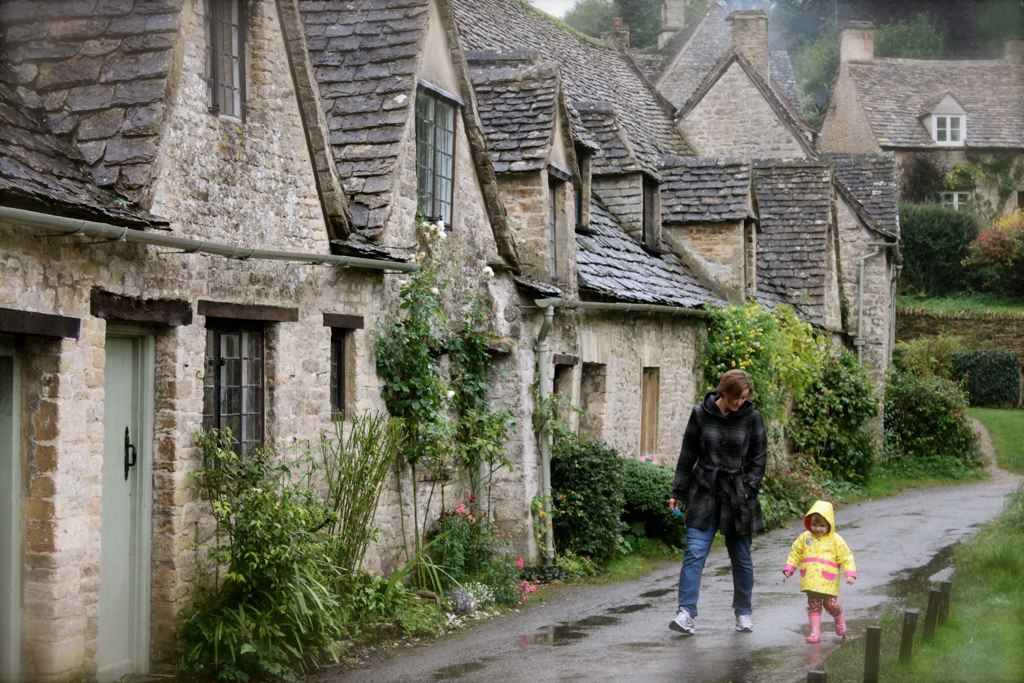
England, 2008.Tacoma, 2010, just before our daughter was born.Tacoma, 2010Introducing our daughter to one of our past homes—England, 2012.
Today, it’s in the company of friends around the globe that we feel most at home. Some of our children’s godparents are those we met in the UK. Even though we go months and sometimes years without seeing each other face to face, when we’re together—whether it’s on our side of the ocean or theirs—it feels like we’re home.
The idea of having more than one home—or that our sense of “home” need not be bound by geography—should not seem strange to those of us who are Christians. As followers of Jesus, we live in one kingdom while our citizenship belongs to another.
This is not to say that “this world is not my home / I’m just a-passing through,” to quote the American Southern Gospel number.
As he ended the class, our lecturer said, “Well, that’s probably enough on Augustine’s On the Trinity.”
I piped up, “Yes, but we understand you have a birthday coming up, and we want to celebrate!” We broke into song, enjoying the stunned look on his face.
I enjoyed organizing the surprise party for our lecturer, who when he interviewed me for the course at Heythrop College, let on that we shared the same birthday, but a year apart. I filed that little detail away, for use later…
In organizing the get-together after our lecture, I was a bit cheeky as I didn’t let on to my fellow students that it was my birthday too. It was more fun to pull off the surprise for him – he’s a gracious, softly spoken man with a big intellect and an equally big heart. And I don’t know that we do enough celebrating, so give me a reason and I’m on it.
After all, as I say in Finding Myself in Britain, in the chapter, “Come to my Party,” celebration is a spiritual discipline:
As we see with King David, celebration is rooted in gratitude to God for the many gifts he gives us. I love how Dallas Willard puts it in his classic The Spirit of the Disciplines: “Holy delight and joy is the great antidote to despair and is a wellspring of genuine gratitude – the kind that starts at our toes and blasts off from our loins and diaphragm through the top of our head, flinging our arms and our eyes and our voice upward toward our good God.”[1]
How might you incorporate more celebrations into your life? Who could you surprise?
And for some tips on how to throw a birthday party for yourself, with some thought-provoking dinner-party questions you could pose, check out my celebrations chapter. No leftover Bounty or Dove Caramels, I promise. (That’s a UK quip – sorry if it doesn’t compute!)
[1] Dallas Willard, The Spirit of the Disciplines (San Francisco, CA: Harper & Row, 1988), 179.
Hear my prayer, Lord, listen to my cry for help; do not be deaf to my weeping. I dwell with you as a foreigner, a stranger, as all my ancestors were. Look away from me, that I may enjoy life again before I depart and am no more. Psalm 39:12–13
Honoré Daumier (French, 1808 – 1879), The Prodigal Son, pen and black ink with wash on laid paper, Rosenwald Collection
This song, probably from King David, expresses repentance. Stricken with illness, David feels silence from God and pleads that the Lord will bridge the distance that has become a wedge between them. The silence makes him feel like a foreigner and a stranger from God. Bereft, he seeks that their relationship be restored.
From the point of view of pilgrimage, this psalm echoes the theme of dislocation. The Hebrew words that David uses for “foreigner” and “stranger” broaden our understanding of this sense of not being at home (which I’m indebted to The NIV Application Commentary for illuminating). The Hebrew word for foreigner refers to someone who was not an Israelite but who inhabited the Promised Land, although without full rights. They may have been someone such as a servant or employee of an Israelite family. Another meaning of the word describes anyone not living in their native land – and thus this term could be applied to the Israelites themselves as they travelled to Canaan.
Thus to be a stranger and a foreigner meant living with tenuous rights. The landowner could become fickle and throw them out. Their ability to prosper is limited. And this is how the psalmist feels – he knows that his sin has rebuked his standing as a favored son. Now he is on the outside, looking in. He is as the prodigal son, tending the pigs and yearning for his father’s embrace.
Because we are sinful, our journeys entail times of separation from God due to our wrongdoing. But as with David and the prodigal son, when we repent, God in his mercy closes the gap. He runs toward us, embraces us, puts on the prized coat over our pig-slopped clothes and rejoices that we are home.
For reflection: “Let’s have a feast and celebrate. For this son of mine was dead and is alive again; he was lost and is found” (Luke 15:23–24).
Riches upon riches – that’s what this blog series, “There’s No Place Like Home,” is. And today I’m thrilled to host the marvelous Cathy Madavan, a firecracker of a woman who is passionate about living the Christian life with joy, purpose, and commitment. When I was working as a publisher with Authentic Media, I longed to commission her – and was thrilled when she said yes. I love, love, love her book Digging with Diamonds, which I got to help her with – if you haven’t read it, do so. She’s not only brilliant with catchy turn-of-phrases, but has the wisdom and depth to go with it. And yes, she was the one who came up with the title for this series!
No place like home.
There really is no place like home. And by home I mean the place where you can kick off your shoes and sprawl over the sofa armed with a book and a cavernous bag of crisps/bar of chocolate/bowl of popcorn *delete as desired*.
Of course, the pressure is always on for us to create the ‘ideal home’ straight from the pages of a glossy magazine, but creating a home is different to constructing a house. It takes an architect and some bricklaying experience to construct a house, but if we want to create an home environment where relationships can thrive, that also takes some planning and skill. It’s worth thinking about what we want to build, so that we can deliberately put the right foundations and building blocks in place.
Build what matters
I once visited a home with a sign above the door that read, “If you want to visit the house make an appointment. If you want to visit us, come any time.” Good point, I thought. We all want our houses to be warm and welcoming, but will people really feel more at home because your trinkets are displayed in perfect symmetry? Will they be so dazzled by your spotless floor that they want to open up their hearts and reveal their hopes and fears? Not so much. Now, I do love my house – I could well suffer from Obsessive Cushion Disorder and have spent an embarrassing amount of hours choosing the right shade of cream for the walls, but it’s not a home because of shabby chic accessories.
So, rather than spending too much time discussing our fabulous new feature wall or conversely moaning about our collection of cobwebs and unfinished projects, why not instead draw attention to all God has given us and be thankful and joyful about it? This is about building firm foundations. Your house might be perfect or it might be a work in progress, but you have a safe place called home where you know you belong and where strong relationships can be built. Stable buildings need firm foundations and it’s up to us to remember what really matters most in our homes and then build on that. What are our values? How do we enjoy in this space? How can we best express our memories and passions here?
Protect what is precious
For any building, we take out insurance in case our belongings are damaged, lost or stolen. But our most precious possessions are not material. Our home is a place where love can flourish, forgiveness can be practiced and honesty can be shared. These vital values need to be protected. Just as we deliberately keep out physical danger, so we should intentionally close the door on division, bitterness and selfishness. Pray that kindness will guard the threshold into your home. Declare that transparency will shine through the windows of your family. Believe that fruitfulness will abound on your land.
Your values and your traditions will not accidentally emerge; they will be created through intention and remain safe through protection. Sadly, through the busyness of life and various competing agendas, other influences will constantly try and invade our space and the enemy will attempt to steal all we hold dear. God has given us all we need to protect our territory; what do we need to do to ensure that His love remains at the heart of our home? Are we sufficiently spiritually insured against the loss of what matters most?
Extend where necessary
Somebody said that it’s not how many bedrooms you have, but how you use them that matters. Now, while constant striving for a larger house is futile (everybody always needs just one more room), I do think this person had a point. I know people with huge houses and small apartments who demonstrate equally incredible and sacrificial hospitality. And I know others who don’t. We can all extend ourselves and replicate our values by offering a grace space to others. Our homes can be a light into our community and our relationships. It doesn’t have to be a lot of work – my preferred option is holding pudding parties where other people bring the puds! We provide the table and a place to grow deep-rooted relationships. Could you invite others to share what you are building? Why not welcome them into your mistakes as well as your success? Allow your children (if you have them) to invite friends, make mess and eat pizza.
Proverbs 24:3–4 says ‘By wisdom a house is built, and through understanding it is established; through knowledge its rooms are filled with rare and beautiful treasures.’ What a blessing it is that as we dwell together, God dwells in the midst of us, enabling us to build a rich and significant place called home. There really is no place like it.
Cathy is the author of Digging for Diamonds and speaks at events, churches and organisations across the UK including tours with Care for the Family. She also writes for Liberti magazine and for CWR and is part of the Spring Harvest Planning Group. She is mum to two teenage girls, wife to Mark (a church leader) and leads worship at church. She loves communicating creatively and connecting with people.
Me with Kate Beaton and Becky Fawcett, she of editorial fame, at my book launch, September 2015.
I’m delighted to welcome Kate Beaton to the blog today to talk all things marketing. She is an amazing person – one who feels things deeply with a huge gift of empathy, and one whose passion to connect readers with great Christian content has shaped much of her professional life. At the end of the year, she moved from Authentic Media to a position at World Vision, where she’s exercising her skills in a slightly different area – but still focused on connecting people with great ideas and causes. Join me in finding out more about her heartbeat behind how she spends her days.
ABP: Tell us a bit about yourself, Kate. How did your interest in marketing develop?
KB: I’m Chaos Manager at my home which I’m blessed to share with two children, aged 3 and 7, and my husband Kenny, a louder-than-life 6’1 Scot who works in the local prison where he brings light and life. We’re part of the congregation at Stony Stratford Community Church.
My publishing adventure began 18 years ago when I left the tranquility of East Devon for Milton Keynes, knowing only one person in my soon-to-be home but having a very clear sense of God going before me.
My interest in marketing has always been about people. I have always loved connecting people with others and sharing ideas. For me, marketing is about connections and adding value to people’s lives through great products, which in the world of Christian publishing has been a dream and a privilege.
Kate and Kenny, her gregarious Scotsman husband.
ABP: I knew of you when I worked at Zondervan and you were at Authentic Media – I remember thinking that you were a firecracker of a marketer, and I was secretly jealous of Authentic and your work there. Imagine my surprise when we were reunited to work together later at Authentic! Tell us about your work at Authentic and then Scripture Union and then Authentic again.
KB: Funny that you say that as I remember thinking the same of you! I came to work at Word Entertainment selling advertising space in Premier Magazine and then moved in to a Marketing and PR role. One of the stand-out campaigns I remember was lead singer of Irish group Clannad, Maire Brennan’s album ‘Perfect Time’. I then moved into the role of Marketing Manager and was with Authentic until my role was made redundant in 2007. That was a tough time and a stark reminder that who we are as people is more important than the job titles we do or don’t have.
I moved on to Scripture Union where I had the joy of being involved in the launch of their digital suite of products, WordLive and LightLive and their strong portfolio of published products. I loved being part of a mission organization full of gifted passionate people and was there for over 6 years before Authentic came knocking on my door!
ABP: I’d love to hear more from you about what is behind what you do in marketing. What do you hope to achieve?
KB: For me, relationship is at the heart of marketing. That is, knowing the audience you seek to serve in terms of their needs and communicating the benefits that your product will provide. In an increasingly noisy world where the average person is said to be exposed to over 350 marketing messages a day, it’s sometimes really tough to get your message heard. But the old advertising mnemonic AIDA is still relevant: build Attention of a product, capture Interest, create Desire, lead to Action.
The marketing process follows through from the inspiration and work of the author as we the publisher seek to build their voice to connect with the type of reader they had in mind. Of course, the author has to be a part of the marketing effort to deliver this.
At the heart of any good marketing campaign is a great product, and we are privileged to work in shaping campaigns that have already been inspired by the Holy Spirit as writers and artists have tuned in to God and what he is asking them to craft and create.
I’m sure many authors can relate that golden moment when they hear from a reader about the positive impact that their book has made in the reader’s life. We serve the ultimate Creator so it’s fantastic to be involved in a process which has creativity at its heart (and if you want to be inspired about releasing your creativity, watch this great poem written and performed by Fusion’s effervescent Miriam Swaffield).
Kate’s creative handiwork at the book launch. She taught CutiePyeGirl how to make a stunning book tower.
ABP: I was touched at my book launch how you saw potential in CutiePyeGirl to be a marketer someday. What qualities does someone need to be successful? What sorts of things did you see in her? (She now insists on creating any book tower wherever I go when selling my book – and she does so very well, under your tutelage!)
KB: Your second question first! In CutiePyeGirl I saw a gregarious, confident, people-loving girl who wanted to help shape a fantastic book-launch experience for all involved. Her creative spark was plain to see and her instant engagement with the building of the book tower was lovely to watch. All the natural ingredients of a marketer-in-the-making (which may answer your first question)! I wanted to verbalize what I saw to encourage her, as I know how powerful a well-placed God-inspired word can be for us all, whatever age we are.
A publisher’s lunch with Kate and Steve Mitchell, then MD of Authentic.
ABP: Many authors are disgruntled with their publishers, saying that they don’t get enough attention (not a complaint, mind you, that I would lodge). Why do authors need to be so involved in spreading the word today? What advice would you give to authors?
KB: In this noisier, digital world we are closer to each other. And people are searching for authenticity and truth. The author’s voice is powerful and readers develop a relationship with an author through reading their words. And these days people expect to be able to have – if they want it – interaction with writers and speakers, whether that is to follow their blog posts or tweets or watch their videos.
People follow people so at Authentic we have been working with our authors to help with this process as best we can. I understand that it can be scary for authors to see themselves as marketers, but when a book is published, that really is Day 1 of its life. There comes a lot of hard graft after that!
It’s not a question of having to be all things to all people, but it is a challenge to see how what you have carefully crafted in the pages of your book can be ‘repackaged’ and served up to add value to people’s lives across multiple platforms, including TV, radio, speaking engagements and last but not least social media which is where many of us spend time looking for inspiring content. Publishers will help you do this as they have a vested interest to do so!
So think about your target reader and how you can engage with them and continue to add value to their lives in a time-bound realistic way for you; perhaps that’s blogging once a week about a topic that you are passionate about and relates back to your book. Remember this isn’t about meaningless, soul-less marketing; it’s about relationship building, understanding your reader who is closer than ever before and bringing the message that God has given you and giving it away to others for his glory.
“Yes, Amy, this is a book. You read it by looking at the words on the page and turning them, one by one, to move along through it…”
ABP: Your time at Authentic is ending as you move to World Vision. I hear you’re passionate about this new venture; please share with us what you’ll be doing and what you hope to be able to achieve.
KB: Milton Keynes is home to many Christian charities. World Vision is an organization I’ve always deeply admired in terms of their work in child sponsorship, community development and disaster response. I know a lot of fantastic people who work there.
I will be joining the Supporter Experience team who connect with World Vision child sponsors and seek to enrich the relationship they have with their sponsored child through relevant timely communication. I’m looking forward to being part of a large marketing team and hope to be able to help World Vision grow its impact and awareness in the UK through child sponsorship. Ultimately it’s about God’s people using the resources we have to answer the call to bring about God’s will on earth as in heaven; sharing our resources and praying to make it possible to live in a world where every child is free from fear.
“Look,” said Naomi, “your sister-in-law is going back to her people and her gods. Go back with her.” But Ruth replied, “Don’t urge me to leave you or to turn back from you. Where you go I will go, and where you stay I will stay. Your people will be my people and your God my God. Where you die I will die, and there I will be buried. May the Lord deal with me, be it ever so severely, if even death separates you and me.” Ruth 1:15–17
Some eighteen years ago, a verse from the book of Ruth was impressed on my mind as my new husband and I approached the town where he would be a curate: “Your people will be my people and your God my God.” The thought was daunting, for I was not long in the UK and was still getting used to the ways of my new countrypeople. As we entered the high street, these words reverberated within me. So much so that I wondered if living there would entail a cost.
Our time there was cut short, for tensions within the parish meant that the vicar was signed off on stress-related sick leave. My husband was left adrift. I began to consider whether I really did want “these people” to be “my people,” for I had witnessed behavior that left me sad and disquieted. But I knew that whatever their actions, these were still “my people,” for I too had the propensity for similarly uncharitable thoughts and deeds.
In the book of Ruth, we see a daughter-in-law so committed to her dead husband’s mother that she is willing to forsake her country and move with Naomi back to Bethlehem. Ruth becomes a pilgrim, serving her mother-in-law with grace and selflessness. For many, the story is familiar – Naomi finds a relative who agrees to marry Ruth, thus redeeming her under the law so that she can carry on the family line. Ruth and Naomi’s needs for protection, care and love are met.
All over the world, God’s people are our people. Who will he send on your path today?
Prayer: Lord, open my eyes and my heart to embrace your children.
Today I’m happy to host Joan Bonner in our “There’s No Place Like Home” series, whom I met through an American writing friend who goes to church with Joan. We became friends on Facebook, and I soon enjoyed her Northern (English) wit and comments in discussions about America versus the UK, for Joan has lived in the States for decades. I’m also thrilled to host her because she and my in-laws lived through many similar experiences during the Second World War, with her and my mother-in-law thankfully avoiding the fate of those schoolchildren who boarded a ship to Canada, as she describes below. I love how she brings alive a recent history that many of us don’t know; I think you’ll also enjoy hearing how she and her husband ended up making their home an ocean away from what had been home.
When Dad came back from World War 1, he had trouble finding a job, so when he and Mam heard about a job-opening being caretakers (US: janitors) of a church, they jumped at the chance. A rent-free house and one pound a week, what more could you ask? Thus for me as a child, home was a four-room, one-story terraced (US: row) house in a large shipbuilding town on the northeast coast of England. On one side was an identical house and on the other was a church.
Here I am at the age of two with my big brother. It must have been a balmy day – probably as high as 60F/16C, because he is taking me into the water to plodge.
Mam was an amazing housekeeper. Not only did she keep the church clean but our house was immaculate. Other houses on the street were also spotless but to the point where you were afraid to sit down. Not my house! Friends were always made welcome and, best of all, if you stayed for tea (US: dinner), you didn’t have to make polite conversation – we always read at mealtimes. (At the time I didn’t know how uncouth and bad-mannered this was, but to this day I have to have a book propped up in front of me at mealtimes.)
We moved to our terraced house in 1936 when I was seven, which was, of course, when Hitler was coming to power. For the next three years, every time Hitler’s name was mentioned, Dad would say “There’s going to be a war. I don’t care what Chamberlain, or anyone else says, there’s going to be a war.”
No surprise to me, therefore, when 3 September 1939 rolled around. There I was, 10 years old, sitting in church that Sunday morning, when Dad appeared behind the pulpit and whispered to the minister. I was totally embarrassed that he would do that until the minister turned to the congregation and said, “We are at war!”
In front of my house at the age of eight.
During those three years leading up to the war, Dad realised that our town would be bombed and so he had made arrangements for me to be evacuated to Montreal, where we had family. The government offered free passage to children from low-income families, so I was put on a waiting list.
Meanwhile, the war had started and bombs were dropping. One of the elders of our church lived outside of town and, hearing Dad’s concern, offered to let me live with them. This felt like culture shock for me, for they lived in a house “in its own grounds.” No, nothing like Downton Abbey, but so much bigger than my home and – indoor plumbing!
And it was just as well that Dad had arranged an alternate evacuee home for me. In 1940, the first evacuee ship,“City of Benares,” carrying 90 children, was torpedoed and sunk. Because they were in a convoy, the other ships were not allowed to stop and help. Most of the children died, including nine from Sunderland. Naturally that put a stop to any more children being sent overseas.
The couple who hosted me were about my grandparent’s age, but were wonderful to me. I have no complaints. Well, actually, Uncle Matt would not let me have tea at night! What! However, every Friday night, we all got to have a bath and shampoo, so Auntie Em would say, “I’m going to take Joan into the kitchen so that I can dry her hair by the fire.” Uncle Matt surely must have known what was going on, because Auntie Em would make me a cup of tea.
Their house was beautiful and had a gorgeous rose garden out front, plus a lawn and vegetable garden out back. Everyone was so kind to me, but still, it wasn’t home. Home was where Mam, Dad and big brother were.
As time went on and I grew a little older, I would miss my family and would decide that I needed to walk home and see them. I don’t think I told anyone where I was going; I would just show up at my home and Mam would have to take me back. I don’t remember being chastised at all at either end. What amazing people to be able to do that! While I lived there I was going to a very good high school, which I enjoyed, but still, it wasn’t home. So, in 1943, when I was 14, I talked Dad into letting me come home.
Finally back home where I belong, after three years of being evacuated. I’m fourteen in this photo.
By this time, bombing was going on regularly but I didn’t care. I was home where I belonged. Dad would actually let me sit up on the church roof with him when he was “firewatching,” which sounds like we were just watching the city burn, but we weren’t. All large buildings were required to have people go on the roof when the sirens went off to put out small fires with buckets of sand. I find it hard to believe now that I went up with my dad, but at the time I wasn’t afraid. Why should I be? – I was home.
A day at the beach – this is how we’d bundle up for the cold northern winds!
Home changed unexpectedly after I was married to my husband Bob. A misunderstanding in language meant we left England and moved across the Pond.
Bob left school at the age of fourteen, which was standard then if one didn’t go to high school. He signed on as an apprentice fitter in one of our local shipyards. Every morning he would get up, have a good old English “fry-up,” (US: a fried English breakfast of eggs, sausages, baked beans, tomatoes and mushrooms) get on his bicycle and off he’d go to the shipyard. He’d work all morning then home for dinner (lunch to you posh people), back to work, home for tea, then off to night school in our local college.
At the end of seven years of this routine, he was certified as a “Chartered British Marine Engineer” and “Chartered British Mechanical Engineer,” and moved up into the drawing office. His title was draughtsman. There were several lower staff (mostly women, of course), who would trace his designs, and were therefore called tracers.
Bob (seven years older than me) started all this before the war when there was plenty of work. By the time he and I met and were married in 1950, the war was over and the shipyards were closing. He had been working at the same shipyard for thirteen years but realized it was time to move on.
He went on several interviews which didn’t work out. We had never even considered emigration but one day, I saw an ad in the paper for draughtsmen in Canada. Interview in England, first class passage out, one year guaranteed, first class return if no more work. Salary was three times what he was earning in England. I figured, what could we lose, so I talked Bob into applying. They didn’t even want an interview, but asked, “When can you start?”
Within a month we were on our way.
We had only been married a year but had bought a house, which our family had furnished through wedding presents. Everything happened so fast we didn’t have time to think about what we were doing, or what we were leaving behind.
Outside the home we were leaving on our last day in England, bound for North America and making a new home there.
We arrived in Montreal and off Bob went to work. When he got there he discovered that a draughtsman, on this side of the pond, was the same as a tracer! Nor did we know that the cost of living was so much higher than at home.
We did, of course, finish the contract, but later moved on to the United States. Bob and I never regretted heading across the Pond and making our home there, but I know there is no way he would have accepted that job if he had realized what the position was that he was being offered.
I am so blessed here at my home in America. Both of our sons and our eldest granddaughter all live here in Indiana. They and their spouses join us regularly for shepherd’s pie or roast beef and Yorkshire pudding, keeping the traditions alive.
Our family, decades later! We wear our paper crowns at Christmas with pride.Introducing my American granddaughter to the beach in Sunderland.
This January, I’ve read many blogs on the #MyOneWord phenomenon, and I even wrote one about how to discern God’s voice in choosing a word. But I haven’t yet shared my word for the year, because at first it feels so fragile and tender. I’m still testing it out with God, waiting to hear any whiff of confirmation.
But as we’re now almost halfway through the month, I will share, especially as my word fits beautifully with the graphic above that my fabulous publisher put together for me (and another one I will share later in the year). That quotation comes from from the Parallel Lives chapter in Finding Myself in Britain, from an email I wrote to Jo Saxton, a Nigerian Brit who lives in Minnesota, when we were swapping homes and I was sitting on her comfy couch in the basement while the rest of the family slept (ah, jetlag).
Can you guess my word? It felt a bit of an odd one when it popped up into my mind, but as I’ve been sitting with it, I think it’s right.
No doubt meanings will emerge over the year, but the obvious one for me right now hints at being present, as I write above about the sacrament of the present moment. When I’m with my family and tempted to whip out my phone, for instance, I remind myself, “present,” that instead I should be living in the moment and relishing the gifts in front of me.
I have some idea of other shades of meaning, but they are whisps just now so I will leave them there.
How about you? Did you choose a word for the year? What spiritual practices do you employ to keep your attention present?
“The approach to Mount Sinai” by David Roberts – Bonhams. (Public domain)
Now Moses said to Hobab son of Reuel the Midianite, Moses’ father-in-law, “We are setting out for the place about which the Lord said, ‘I will give it to you.’ Come with us and we will treat you well, for the Lord has promised good things to Israel.” He answered, “No, I will not go; I am going back to my own land and my own people.” But Moses said, “Please do not leave us. You know where we should camp in the wilderness, and you can be our eyes. If you come with us, we will share with you whatever good things the Lord gives us.” So they set out from the mountain of the Lord… (Numbers 10:29–32)
Hobab was Moses’ brother-in-law, tied through marriage. Moses appeals to him to join them as the Israelites leave Mount Siani for Canaan. Hobab first says no, for he wants to return to his people. But Moses pleads with him, knowing he’ll be an asset in the wilderness. The biblical account doesn’t tell us what made Hobab change his mind and join Moses. Was it a conviction from God that this was the right way forward? Pity or compassion for Moses? A puffed-up desire to be a hero?
We don’t know. It could be a combination of the above, for we often have mixed reasons in undertaking new ventures. And even though our hearts may not be clean and pure, God still uses us. He changes our sometimes divided heart, cleansing the black and gunge and making us clean.
When I’m out walking in the park by our home in north London, often I’m in my own world. One day, however, I heard another American accent. After walking past I felt the nudge to talk to her, but I resisted. As I continued my circuit the feeling remained. Finally I struck up a conversation and learned that the woman was newly transplanted, having come from Iowa, the state right next to my native Minnesota, and had been feeling lonely and disconnected. Our conversation brought her encouragement, and I was grateful that I had heeded God’s nudge to reach outside my comfort zone and share his love.
On a much larger scale, Hobab changed his plans radically as he said yes to Moses. Moses was then able to follow God in the wilderness through the ark, complemented by Hobab’s hands-on experience. A good partnership resulted. As you reflect on Moses and Hobab, consider how God might want to mold you this day and this week. How might 2016 shape up as you hear and heed his voice?
Prayer: Lord, make my heart my heart soft and help me heed your nudges. Amen.
Another installment in our “There’s No Place Like Home” series, and again I read with tears. Thank you to Amy Robinson, a friend I’ve met online who is a storyteller and writer – and like me, a vicar’s wife (whatever that means!). She bursts with joy and encouragement, and I’ve so enjoyed getting to know her. She contributed a wonderful story to Finding Myself in Britain about the eccentricities and quirks of Knole House, a stately country home near to her boarding school, but alas, the story met the cutting-room floor. Perhaps I could obtain her permission to share it in a deleted-scenes post – she has a wonderful way of transporting you to amazing places through her writing. Which is what she does here, as she invites you to take up your cutlery and join her for a taste of heaven.
Do you know what food they serve at the banquet in the kingdom of heaven? I do, because one night as a teenager, I dreamed I was there. It was one of those vivid and detailed dreams, and heaven was a cross between Narnia and the Royal Albert Hall, with a banqueting table curving around the length of every balcony. When you took your place, at once the food you most wanted to eat appeared, as if the dishes had read your mind.
What was on my plate? Oh, I do feel silly admitting it, but I’ve started now. It was carrots and apples grated together: fresh, sweet and juicy the way my mother makes it. The taste of childhood summers.
A favourite mountain in France.
Food connects us so instantly to memories and to people, and in a family’s language, meals can take on a symbolic meaning. When my family arrived from France to stay over Christmas, I made fish pie. I can’t quite get it just the same as Aunt Jane’s, even though I add hard boiled eggs and serve it with cloudy apple juice, but it still tastes of welcome: of the sight of Aunt Jane opening her front door and flinging her arms wide, and the warm smell of the pie that she always made ready for our arrival.
Aunt Jane standing rather perfectly outside her front door.
Of course, because it was Christmas, I also made Grandmama’s Dundee cake. Apparently I’m the only member of the family who can make it taste exactly like hers did, but this is not due to any secret recipe or deep spiritual connection. It’s because I inherited her cake tin.
A perfect slice of Dundee cake, made from Grandmama’s tin.
My childhood was rooted in several places at once, rather than one ‘home’ which kept changing. We used to say that we worked in London and lived in France, where we spent every available holiday, but they were both ‘home’. And then there was boarding school, where I made my first deep friendships and met my husband. And there was Grandmama’s flat in London and Aunt Jane’s house near the Malverns (still where I want to live one day). All ‘home’ in that I belonged there, and they made up such important parts of me.
At school sharing a midnight feast of Grandmama’s cake! Can you guess which one I am?
Isn’t it strange and wonderful that my children, who will not meet Aunt Jane or Grandmama this side of heaven, will still grow up with the tastes of their foods as part of their own sense of home, of welcome and belonging? They will add their own places and people and foods to pass on to their children too, but I wonder for how many generations the taste of fish pie might mean the first night at home?
A few days after welcoming my family with Aunt Jane’s pie, it was Christmas day and I was at the communion rail. As I stretched out my empty hands to receive, I reflected that we are all spiritual wanderers, longing for home, but here, being handed to me, was the heavenly equivalent of fish pie: the bread and wine, the food that represents welcome and belonging, the meal which Jesus gave to his followers to remember him by. A tiny taste of home.
An incredibly young me and Tiffer, our first Easter together at my family home in France.Aunt Jane with me as a baby (she never aged, did she?!)Grandmama.Family with Grandmama on her 90th birthday.
Amy Robinson is a writer, performance storyteller and ventriloquist, and benefice children’s worker for four Suffolk church communities. She has published three books with Kevin Mayhew, writes scripts and resources for www.GenR8.org and blogs a bit at www.amystoryteller.com. She lives in a rectory with the rector, two children and lots of puppets. You can find her on Twitter at @Ameandme and at Facebook.
I got to know Ben Irwin when we both worked for Zondervan – but in different countries. He and I had the privilege of launching Rob Lacey’s amazing The Word on the Street, the Bible in street language. We both loved Rob, and hated seeing him battling cancer, but I think we’d both say that working with him on such a creative project has been a highlight of our editing careers. We’ve both moved into writing, which as you’ll see in Ben’s piece has been a process and something to be embraced (which is true for me too). I love his thoughts on home. Enjoy!






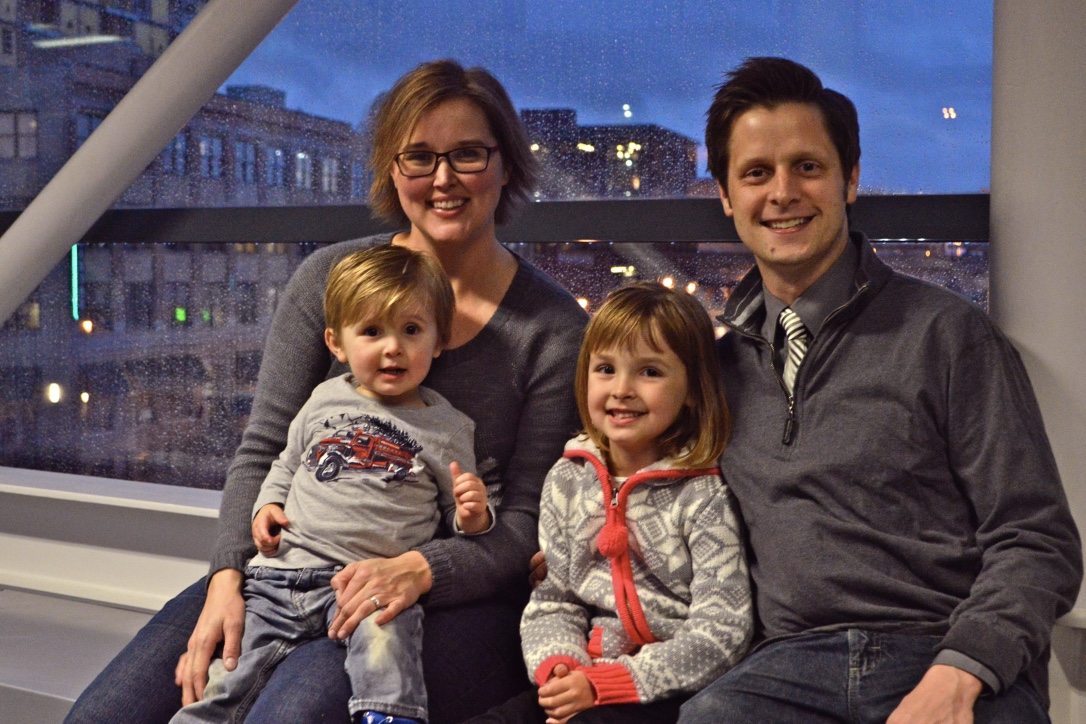 About Ben: Ben Irwin is the author of The Story of King Jesus and a member of the communications team at the Preemptive Love Coalition. He and his family live in Grand Rapids, Michigan.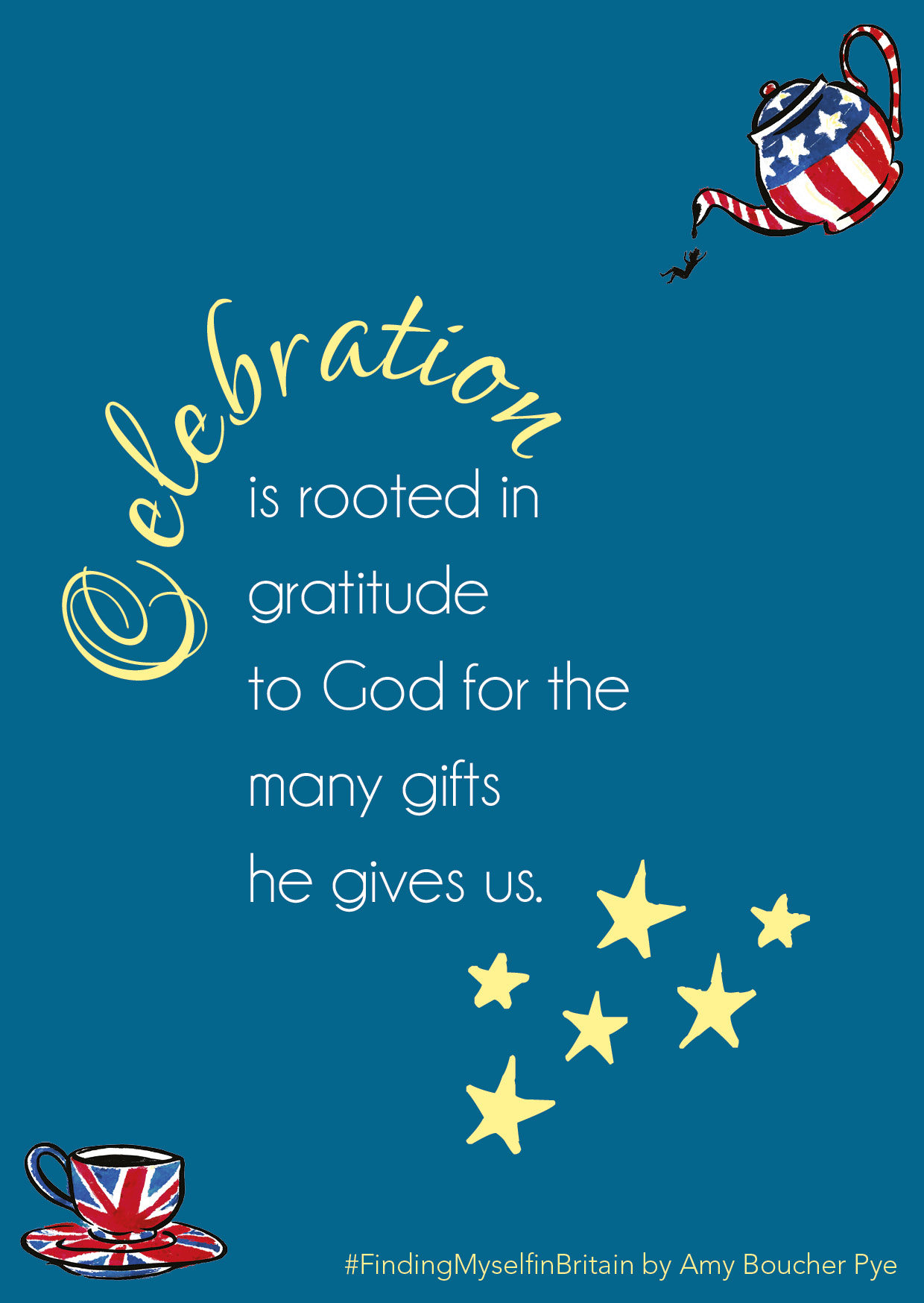
 No place like home.


