Author: Amy Boucher Pye

  • A letter to my goddaughter going to university

    Photo: liz west, flickr
    Photo: liz west, flickr

    Dear lovely goddaughter

    It’s the last week for you at home before you go off to university – and your life changes forever! I know that sounds daunting and exciting and nerve-wracking and scary but wonderful too.

    We have loved watching you (admittedly from afar) develop into such a wonderful young woman – one who knows and loves God, who seeks to deepen in her faith. That in particular gladdens my heart as your godmother. To me, I seek to keep my faith the most important factor in my life. With the triune God as your friend, you’ll be able to face the challenges and to rejoice in the joys in the days and years to come. He’ll never leave you. He’s always there, gently sending his nudges of grace and whispers of love. I hope you continue to learn to sense the ways he communicates with you.

    You going to university has made me think back to my leavings and beginnings, as I took the big step to leave high school and go to a Christian university, just a few miles from my parents’ home in Minnesota. I thought it was important to live on campus that first year, and so I did with two very close friends. Two blondes, in fact!  We had hard times and good times, and it was important for me to live away from home to establish my identity apart from my parents. To start thinking through issues of faith and belief – especially as I attended a Baptist university and grew up in the Roman Catholic church. And to learn how to live with roommates!

    My faith took an almighty hit my sophomore year, on October 15th to be precise, when one of my closest friends from high school was killed in a car accident. It was a shattering time, and I wondered how a good God could have allowed such a horrible thing to happen. To be honest, all these years later I can’t totally answer that question. Who can? But as I probed and sobbed and searched, I found hints to answers to that question – the mystery of evil and a broken world and yet a loving God who works to redeem and shower grace.

    My friend’s untimely death makes me think of one of the biggest pieces of advice that I can give you as you go off to university: Expect the unexpected. Now I pray so much that this will not mean not the death of a loved one – I definitely don’t wish that for you. But things probably won’t turn out the way you anticipate as you set off to your new home away from home, heart pounding, stomach a bit growly, your nerves a flutter.

    Things may not turn out the way you hope they will, but they can turn out in a better way! I for one would have never believed that I’d be living in the UK these almost 19 years later, nor that I would have lived in the amazing city of Washington, DC, for ten years, which started with a semester my junior year. God has mysterious ways of working and moving, and helping us to learn and love and change. Sometimes we feel the changes are welcome; sometimes unwelcome. But he’s always with us, and life with him is an adventure.

    So lovely goddaughter, know that we love you and will be praying for you. Your heart will be tugged in more directions now as you meet new friends and learn to love a new city. Come to visit us in London some weekend – you’re always welcome!

    With love from us all, Amy
  • Devotional of the week: Abundant God (7 in Genesis 22 series)

    Photo: Eugene Kim, flickr
    Photo: Eugene Kim, flickr

    So Abraham called that place The Lord Will Provide. Genesis 22:14

    Recently I’ve been challenged to consider where I hold a worldview of scarcity or abundance. Do I believe that God is abundant? That he showers gifts on us? We might embrace a scarcity mindset when we think that we don’t have enough time, or we won’t be given opportunities, or even when we hold back from sharing how we’ve been blessed because we worry it will incite jealousy in others.

    Abraham didn’t embrace this outlook of scarcity. Instead of sacrificing his son, he made a burnt offering of a ram that was caught in a thicket nearby. The Lord showed him and his people that he was different from the other gods; he didn’t want his children to follow their ways with child sacrifice.

    Do you suffer from this syndrome of scarcity-itis? How can you reorient yourself to embrace God’s view of abundance? One way is to start a gratitude journal, noting things large or small to give thanks for. Mine today would include our recent summer trip to the States to enjoy time with my family, the pretty roses spreading beauty in my study, the joy of my kids as they each have friends over, an invitation to speak to women gathered together.

    The Lord will provide – amen and may it be so.

    Prayer: Triune Lord, for your abundance in our lives, we give you thanks and praise. Help us to notice these blessings everyday. Amen.

  • Itinerancy and Incarnation by Dave Faulkner

    No Place Like HomeAs I’ve got to know a few Methodist ministers and their families, I’ve wondered at what effect of the regular moving has on them. Here Dave Faulkner, a Methodist minister, gives us a window into the itinerant ministry – and how in the midst of it he’s found his home.

    “Dad, I never knew there were poor areas of London. I thought London was wealthy.”

    “Son, welcome to where I grew up.”

    My son Mark was eleven. We had just got out of White Hart Lane train station, and were walking to White Hart Lane the football stadium to watch our beloved Tottenham Hotspur cause untold misery later that afternoon for Manchester United.

    Mark, dressed up in Tottenham Hotspur gear and holding a trophy for Team Player Of The Year in the side he played for.
    Mark, dressed up in Tottenham Hotspur gear and holding a trophy for Team Player Of The Year in the side he played for.

    Tottenham Hotspur is my last remaining connection with my upbringing, a mile or so north of the ground in nearby Edmonton. I have no remaining friends or relatives living there.

    That part of north London is nothing like Surrey, where I now live with my family. You can justifiably prefix much of Surrey with the adjective ‘leafy’: we are surrounded by heathland, making it a wonderful place to raise a dog.

    Back home, you tried to find a good comprehensive school. Here, many people think nothing of sending their children into private education. ‘Is the Gospel against Surrey?’ asked one of my colleagues. Er, yes, I think it might be.

    What took me away from urban London? Answer: studying Theology as a mature student, and becoming a Methodist minister. I infiltrated an Anglican theological college in Bristol to explore my calling, take my first degree, and run the Free Church Liberation Front. Having settled on the ordained ministry of the denomination in which I grew up, Methodism sent me to a college in a deprived area of Manchester for three years of re-indoctrination.

    Leafy Surrey. Horsell Common, Woking, the location H G Wells used for the Martian invasion in War Of The Worlds.
    Leafy Surrey. Horsell Common, Woking, the location H G Wells used for the Martian invasion in War Of The Worlds.

    Leaving college, Methodist presbyters and deacons are ‘itinerant’. We are under the discipline of our Conference, which reserves the right to station us where we are most needed. So I have ministered in middle-class Hertford, the economically depressed Medway Towns, loadsamoney Chelmsford, and now – yes – leafy Surrey. Our daughter and son were born in Medway, but we left there when Rebekah was two and Mark was one. (Ask our children where they’re from, and they’ll give our current address, and add, “But really I’m from Gillingham,” even though they barely remember it.)

    Itinerancy is justified on the grounds that Jesus and Paul had itinerant ministries, and so they did. But at the same time, we learn from Jesus the importance of incarnation. The doctrine of the incarnation is too important to be limited to Christmas. ‘The Word became flesh, and dwelt among us,’ writes John. It’s critical for Christians to be rooted in an area, where they are known and can be a witness.

    What itinerancy denies me is that rootedness of incarnation. The congregations know we’re moving on after a certain number of years. It exacerbates an ‘us and them’ relationship. I don’t know where home is anymore. I think that’s why following my football team is still important to me: it reminds me of where I came from.

    In ten years’ time or so, I shall be retired, and I look forward to the opportunity Debbie and I will have to put down roots together in a community. But I can’t be satisfied with that. Christians have a longing for what Augustine of Hippo called ‘the city of God’. And we have already come there, in one sense. For as the writer to the Hebrews puts it:

     But you have come to Mount Zion, to the city of the living God, the heavenly Jerusalem. You have come to thousands upon thousands of angels in joyful assembly, to the church of the firstborn, whose names are written in heaven. You have come to God, the Judge of all, to the spirits of the righteous made perfect, to Jesus the mediator of a new covenant, and to the sprinkled blood that speaks a better word than the blood of Abel. (Hebrews 12:22-24)

    The church, then, is meant to be a sign of what it is to be home in an ultimate sense. I wonder what we do to make sure that the fellowship of the church is home for us?

    But until that day arrives in all its fulness, one more time: “Come on you Spurs …”

    DSC_0186-WebDave Faulkner is a Methodist minister in Surrey. He is married with two children. He enjoys digital photography and creative writing. His latest blog project is at www.confessionsofamisfit.com.
  • Devotional of the week: Healthy Fear (6 in Genesis 22 series)


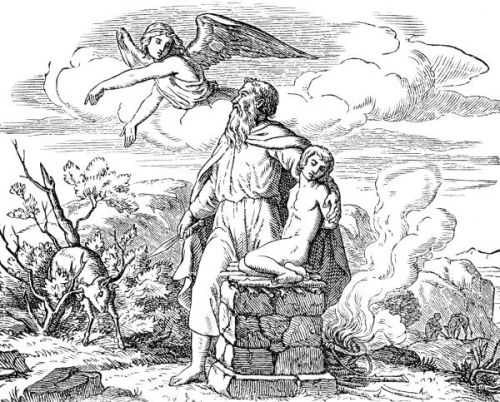
    abraham_and_isaac__image_9_sjpg361

    “Do not do anything to him. Now I know that you fear God.” Genesis 22:12

    Fearing God seems to have fallen out of fashion. We sing love songs to Him; think of Jesus as our best friend; spend times wittering with the Lord (and I hasten to add that I welcome all of these ways of relating to the triune God, for we are blessed to worship a God who communicates with us in many different ways). But do we bow our knees and honor him as the infinite, never-ending, all-powerful, holy, holy, holy God?

    Because Abraham feared God, he obeyed him, and this obedience is counted to Abraham as righteousness. Abraham was released from following through on his act of sacrifice – it’s the only time in the Bible that God sends the order to halt proceedings. And so Abraham, as the writer to the Hebrews says, is one of a great cloud of witnesses who surrounds us. We who have the benefit of these great heroes of the faith should therefore throw off the sin that entangles us as we run with perseverance the race marked out before us, setting our eyes on Jesus (12:1).

    As Isaac carried the wood on which he would be sacrificed, so did Jesus carry his wood – his cross, enduring its shame. Today, in holy reverence and awe, may we fear the Lord, considering Jesus’ sacrifice that we may not grow weary and lost heart.

    Prayer: Lord Jesus Christ, Son of the living God, have mercy on me, a sinner. Amen.

  • Living in Tents by Peter L. Edman

    No Place Like HomeThe shock of uprooting and moving and the hidden graces – that’s what Peter Edman so eloquently addresses in his contribution to the “There’s No Place Like Home” series. I’m grateful to hear Peter’s thoughts, not least because they remind me of our many years of working together in the nation’s capital. We were like brother and sister at times, squabbling but with that fraternal love that meant I knew I could call on him when I was stranded at Baltimore airport at midnight and he’d come to rescue me. True friendship to me gives a taste of Home.

    One of my acquaintances used to introduce himself to an audience by giving his name and quipping, “I’m from Washington, DC, and I’m here to help you.” He usually got the wry laughter he was expecting. I too used the line over the two-plus decades I made my home in DC and Northern Virginia. Then I was transferred to Philadelphia, and I’ve been a bit wistful at leaving behind that comfortable joke—and a comfortable identity informed by that influential city.

    DC is not a homey place, but we found stability and community there. I stayed at the same church and eventually managed to have most of my family close to us. The relocation—four residences and three offices in three years, all three hours farther from grandparents, cousins, and friends—has meant making a new life for myself and my family. It’s meant finding a new home while negotiating pointers, hopes, and compromises. And in a sense, recentering my identity.

    The pointers, at least, have been pretty clear. A mandate to move if I was to keep a stable job doing interesting and meaningful work. The discovery of a new church that continues several relationships with our old church. The quick sale of our old house. Creative financing that secured a newly renovated historic house with room for our five children. A new family with kids unexpectedly moving in across the street.

    Our new home.
    Our new home.

    There have been other pointers, even up to this weekend. On Saturday I was preparing for this post and began to think about Hebrews 11. On Sunday it was my turn to read the New Testament lesson at church, and I discovered Hebrews 11 was the assigned passage. “By faith Abraham obeyed the call to leave his home”—in an influential city—“for a land which he was to receive as a possession; he went away without knowing where he was to go” (Hebrews 11:8 REB). I am glimpsing more of its meaning now.

    Our hopes have been met in part and redefined in part. We are compromising. After so many years in prosperous suburban settings, we’re still adjusting to the vigilance required in our new, mixed urban neighborhood. We don’t want to afford two cars in the city, but with public transit, my commute is the shortest it’s ever been. Our house renovations were extensive, and we have space for hospitality, but its “architect and builder” (11:10) was not God, and a series of leaks taxes our patience and our budget. We could not afford to live near our new church, but we can host a home group.

    The Edman brood.
    The Edman brood.

    For introverts it’s hard to reach out and build new friendships, let alone replace missing support structures, but both are happening slowly. Already we know more neighbors here and have more connection with community groups than we did over our years in Virginia. The lack of pretense and the friendly attitude toward our small children in public spaces are refreshing.

    The expectations on us are different too. No one asks me what I “do” anymore. I’m not expected to “help,” just to participate, to be a neighbor.

    I am reluctantly seeing value in the compromises. My nature is to treat my home as a safe space, a gated community. But Abraham settled as an alien, not as an insider—“living in tents” along with his children and grandchildren (Hebrews 11:9). You can’t depend on tent fabric to keep your possessions safe, and indeed the writer tells us that Abraham was “looking forward to a city with firm foundations” (11:10), “longing for a better country” (11:16). His identity was not dependent on walls, riches, social standing, or citizenship—and yet he is remembered not only for faith but for exploits of hospitality, generosity, even warfare. God took care of his children. But no one now remembers who was king or top socialite back in his hometown. It’s worth reflection.

    DSC_0483The joys and flaws of my new city and my new house, along with our increasing awareness of our need for help, offer regular reminders that my home, my citizenship, is not finally here. I can live with my family like resident aliens, offering and receiving hospitality, raising my children, serving those around me, and hopefully living as a pointer to the God who, in spite of all appearances, rewards those who seek him (11:6).

    My name is Peter. I’m not here to help you. But perhaps I can remind you to long for a better country.

    PLE 2016 whitePeter Edman, an editor, is a quality assurance manager with American Bible Society, where he also manages the product line for trauma healing programs now active for adults and children in more than 80 countries and 150 languages worldwide. He lives with his wife and five children in the Germantown neighborhood of Philadelphia. You can reach him at @pledman.


  • Devotional of the week: Sacrificial Love (5 in Genesis 22 series)

    Sacrifice of Isaac by Caravaggio

    Sacrifice of Isaac by Caravaggio

    Then he reached out his hand and took the knife to slay his son. Genesis 22:10

    As we read this story in Genesis, it seems like time slows down. Each step as Abraham moves towards the slaying of Isaac feels like it happens in slow motion: they reach the place God told them about; Abraham builds an altar; he arranges the wood; he binds his son; he lays him on the altar… And then (big breath), he reaches out his hand (heart pounding) and takes the knife (hand shaking) to slay his son (“Whatever am I doing?”).

    Abraham proves himself worthy of being the father of nations. He doesn’t grasp the promises of God too tightly, nor has he made the promises themselves into an idol. Therefore God is pleased to move forward with his covenant with his people.

    Consider how this story, right at the beginning of our Bibles, reveals God the Father’s love for us. As we read the account of Abraham, we sense some of the pain and loss this earthly father must have felt. The Lord God on such a greater scale experienced the depth of this anguish when he sent his only Son to live on the earth and die on behalf of the people who often turn to their own ways.

    May we honor our Father whose sacrificial love saves us from despair and the consequences of sin.

    Prayer: Heavenly Father, your love never ends. Saving Son, thank you for your sacrifice. Convicting Spirit, we’re sorry for our sins. Amen.

  • Home is another country by Veronica Zundel

    No Place Like Home“Where is home when your mother’s tongue is not your mother tongue?” Veronica Zundel’s opening line compels us to read on – and I hope you will, for her thoughts on finding home as the child of immigrants will move you. She speaks of loss and yet an undergirding hope.

    Where is home when your mother’s tongue is not your mother tongue? Let me explain. My Jewish mother and Gentile father left Vienna in 1939 for the UK. Their marriage in London was followed by 14 house moves (well, 14 single room moves) in a few years. Finally they settled in Coventry, where I, their second child, was born. When I was five and my doctor Dad had earned enough (Mum was unable to finish her medical studies), they bought land and had a modern house built, with a large garden including an apple orchard, where I would later pick and eat unripe cooking apples, to the detriment of my digestion!

    100_0152
    My mother.

    My mother never saw her own mother again – she perished, along with Mum’s aunt and uncle, in a concentration camp. Five of my potential six grandparents (my mother was adopted), died before I was born. The sixth, my father’s mother, along with his brother and sister, lived in Vienna, so I saw them at best annually. Neither of Dad’s siblings had children (though I later learned of my rakish uncle’s secret illegitimate daughter), so my brother and I were the only ‘next generation’. There were plenty of honorary aunts, uncles and even cousins of a sort, but no extended family. We had enough money, but this was a form of poverty not often recognized.

    Meanwhile the family home held a different culture from that of school or playmates; a little enclave of Austria where they spoke a strange hybrid language laughingly called ‘Emigranto’ or ‘Refugäsisch’, where they ate different foods and even held cutlery differently, where everyone spoke at once and I couldn’t get a word in. Better to retreat to my bedroom with a book and explore other worlds, as well as playing with my imaginary English family with five children (including, as in all the best fictional families, twins).

    When I was 13 and he 18, my brother became mentally ill, and was in and out of hospital until he killed himself in 1975 at 27. In the light of all this, it is unsurprising that I found ‘home’ in places rather than people. At 16 I found a new home in Jesus; and about a year later I discovered what would be my first ‘spiritual home’, at a Lutheran community/conference centre I visited regularly and later lived and worked at for six intense months. Yet a few years on, this ‘home’ would be lost, sold by the Lutherans and its community scattered. By then, I had my own flat in London, home of a sort but often lonely.

    Christmas in Vienna.
    Christmas in Vienna.
    Beautiful rural Austria.
    Beautiful rural Austria.

    100_0581

    Fast forward a dozen or so years to my marriage in 1989, and my parents’ decision to ‘retire to London’ to be nearer us. This was fine, except that I soon learned that the couple (a Jewish doctor and his convert wife) who bought their house, had demolished my bedroom to build an octagonal excrescence containing a new master bedroom and a kosher double kitchen. (All that observance didn’t do the wife much good, she later ran off with her personal trainer!) They also felled the silver birch tree outside my garden window, and losing the other window that allowed me to climb surreptitiously onto the garage roof. All my childhood, gone at a stroke.

    Happily Ed and I had found a new, wonderful spiritual home in the Mennonite church. After a lifetime of taking photographs only of places, I started to take photographs of people, and to find Christ in them, where I had previously found him only in solitude and natural beauty. Could home, once more, be a community? But now that home, after more than two decades, is lost too, with the closure of what was the only English-speaking, non-conservative Mennonite church in the UK.

    Mennonites eating together.
    Mennonites eating together.

    What is left? I have a caring, loyal husband and a delightful son who just turned 22, and we have lived in the same house for 27 years – so is this home? Coventry, which I still visit, still feels like home in a deeper way; and Vienna, which I have known since I was four, another kind of home, yet not home. Perhaps home is always elusive, a state to which we aspire. As Jesus followers we are ‘resident aliens’, citizens of another kingdom, longing for a city which is to come. Only there will we be truly at home.

    Veronica_Zundel_015-1Veronica Zundel is the author of nine books including three anthologies for Lion Publishing, and three books for BRF, of which the latest is Everything I Know about God, I’ve Learned From being a Parent (BRF 2013). She writes regularly for BRF’s New Daylight notes, and a column for Woman Alive magazine, which won a national award, beating columnists from the Mail on Sunday into second and third places. She is is a prize-winning poet who blogs at reversedstandard.com and on the ACW blog, More than Writers.

  • Devotional of the week: A Father and Son (4 in Genesis 22 series)

    Pieter Lastman: The Angel of the Lord Preventing Abraham from Sacrificing his Son Isaac
    Pieter Lastman: The Angel of the Lord Preventing Abraham from Sacrificing his Son Isaac

    “God himself will provide the lamb for the burnt offering, my son.” Genesis 22:8

    This week, reread our passage from Isaac’s point of view. What do you think he felt as he and his father walk toward the place of sacrifice, no animal in sight to offer to the Lord? I wonder if he had a sense of foreboding, or if that came later, when Abraham tied him to the altar. Here we see a conversation between son and father, one that echoes the loving relationship of Abraham to the Lord. As Abraham trusts his heavenly Father, knowing that he will be true to his promises, so Isaac has confidence in the character of his earthly father. For each, trust comes from their relationships.

    Some questions to consider in the light of this passage: What might be an “Isaac” you need to lay down at the altar of the Lord? Is there something in your life that threatens to overtake your relationship with God as your primary source of love, affirmation and belonging? You could write down anything that comes to mind, setting it at the foot of the cross while you ask God to take his rightful place in your heart. Or think about relationships close to you – which mirror that of Abraham and Isaac? That of Abraham and the Lord? Take some time asking God to shine his holy light on your life, that you might experience his freedom and joy.

    Prayer: Lord, we want to trust and obey you. Reveal whatever hinders our walk with you. Amen.

  • Home from Home

    No Place Like HomeAugust can be a time to be away from home. What measures do you put into place when you’re away from home to make it feel more homely? Here I contribute to the “There’s No Place Like Home” series.

    I watched her unpack her toiletries into the drawers in the bathroom, wondering why she wasn’t concerned about any nasties that might be hiding there. “Wow,” I remarked. “You go for it, don’t you!”

    My friend had moved around a lot as a child, and perhaps this mobility contributed to her rooting herself to where she was staying even if just a night. I was in my twenties and had only experienced one childhood home, where my parents still lived, before I had moved to the East Coast in America. Maybe that’s partly why I had never thought to unpack my toiletries or even my suitcases when I went somewhere. After all, I never was sure how clean the drawers would be.

    Photo by einalem on flickr
    Photo by einalem on flickr

    But in the intervening years I’ve adopted my friend’s ways, nasties be damned. Now when I unpack at the beginning of a stay somewhere, I’m telling myself that I will be fully engaged there. Not having to search in an increasingly rumpled suitcase for a shirt or bathing suit makes me feel more rooted. Just the physical act of unpacking informs my heart and my mind that I want to experience the joys and delights of the new place, preparing me for the adventures to come.

    And if I remember to pack some wet-wipes to do a quick clean of the surfaces, all the better.

    What helps you feel at home when you’re away from home?

  • An Embassy of Heaven by Catherine Butcher

    No Place Like HomeHome as a taste of heaven – I love this from Catherine Butcher. Heaven is a topic she loves to think about, speak about, and write about, and her blog on home radiates with a glimpse of its glory. Take a few moments to ponder and wonder, and join us in thinking about home and heaven and feasting together at the table.

    Not long after we were married, friends who stayed overnight wrote a kind note in our guest book. They described our home as ‘an embassy of heaven’. I’ve carried those words for more than a quarter of a century now. They are as challenging today as ever. What makes a home ‘an embassy of heaven’?

    IMG_2386A British embassy overseas gives visitors a tiny taste of Britain – everything is quintessentially British. Sometimes that means cocktails on a perfect lawn or tea and cucumber sandwiches. But in many parts of the world the embassy is a refuge; a place of peace and sanctuary for Britons stranded in foreign lands.

    And that’s what I want our home to be. A sanctuary and safe haven. More than just a place to shelter. A place to be totally relaxed. Always welcoming. Always nourishing.

    Our kitchen table is the heart of our home. As soon as we could afford it we extended the compact kitchen so we could eat meals there. Later, we made further changes so there’s room to extend the table fully and entertain guests. That table is the setting for my happiest memories. As a family we’ve laughed ‘til we’ve cried. We’ve prayed in good times and bad. We’ve debated and discussed everything from future dreams to family finances.

    IMG_2410But the table could be anywhere. What makes it home is the people seated round it. Home has been a caravan in a field; a picnic table in a forest. I could adapt that Marvin Gaye lyric (later recorded by Paul Young) – ‘Wherever I lay a table, that’s my home’.

    Reading The Sacred Romance by Brent Curtis and John Eldredge helped me to understand why I feel so happy sharing a meal with the people I love most around a table. They pointed to Ecclesiastes 3:11, and Eldredge’s subsequent volumes continue to explore the conclusion of that first book: ‘Our longing for heaven whispers to us …’

    christmas dinnerWhen Jesus said, ‘I go to prepare a place for you’ he was talking about our heavenly home, our safe haven, where we will be fully known and fully accepted just as we are. In heaven, with Jesus, we will never feel like the outsider or the unnecessary extra. Each of us will know he has included us on purpose, not by accident. When we take our place in heaven it won’t be like one of those parties where you wander into the crowded room and wonder who to talk to or where to sit. Jesus is waiting to welcome the citizens of his heavenly kingdom, not formally, but as family. There won’t be an embarrassed shuffling of seats to squeeze you in. He has already prepared a place just for you.

    Our longing for that heavenly welcome whispers to us. Jesus very deliberately chose a meal around a table as the setting to remember him. One day we will sit together at a heavenly wedding supper for Christ and his bride.

    Home is where we have a foretaste of that welcome – and I want every family member and guest to feel that ‘welcome home’ as they walk through the door.

    IMG_2387Catherine Butcher is HOPE’s Communications Director, author of several books and co-author with Mark Greene of The Servant King and the King She Serves, published by HOPE, Bible Society and LICC as a tribute to the Queen on her 90th birthday. Her book What you always wanted to know about heaven – but were afraid to ask (CWR, 2007) is now out of print but is still available from Catherine. Find her on Facebook or email cathbutcher@live.co.uk to buy a copy.