By Leo Boucher. Shared with permission; all rights reserved.
Time on a boat affords much thought, if you’re a solitary rower like the one in this painting by my dad. As we turn to autumn, why not take some time to reflect over your summer. What were some highlights? Lowlights? How did you react to them? How did you sense God moving in and through you during the highs and lows – and all the times in between? As you take some time to reflect, consider what speaks to you in the painting.
For me, summer involved travel. Times to see loved ones making new and precious memories; times to experience new places and sights; times to remember that as physical beings, we get tired and hungry and need some down time. The tree stretching across the water tells me that God erects a shelter over me, to provide relief from the baking sun and reminds me to sink my roots deeply into the rich soil, that I might access his living water.
By Leo Boucher. Used with permission. All rights reserved.
Summer can be a time for tourism, with people indulging in things that they wouldn’t do at home – like taking a ride in a horse-driven carriage. Does this sound like fun to you?
What I like about this watercolor by my dad is that it’s a study for a more involved painting. I like the spare strokes and white space. How can you fill your life with more white space?
The elders who direct the affairs of the church well are worthy of double honor, especially those whose work is preaching and teaching. For Scripture says, “Do not muzzle an ox while it is treading out the grain,” and “The worker deserves his wages.” Do not entertain an accusation against an elder unless it is brought by two or three witnesses. But those elders who are sinning you are to reprove before everyone, so that the others may take warning. I charge you, in the sight of God and Christ Jesus and the elect angels, to keep these instructions without partiality, and to do nothing out of favoritism (1 Timothy 5:17–21).
The Church of England may have its faults, but as a vested party (as one married to an Anglican vicar), I think their system of paying their clergy works well in principle (notwithstanding the families where the spouse doesn’t work, and who can struggle financially). For all clergy are paid roughly the same stipend, whether theirs is a large church or a tiny one, and the more wealthy churches pay into a central fund that finances churches in poorer areas. With a standard stipend, clergy aren’t tempted to move from post to post to seek a larger salary.
Paul touched on this issue of not playing favorites in his letter to Timothy – although he emphasizes Timothy’s actions regarding the elders, namely how he should act wisely, impartially, and with justice. They are to be remunerated for their work, Paul says, but they are also to be held to account. I wonder if Paul was picturing the elders as he wrote his letter, for he had spent three years at the church in Ephesus previously.
It’s beneficial to consider the work of the elders, not least so that we can pray for and support those in positions of church leadership. Friends say how much they value the prayers of the people in their congregation, even, and perhaps especially, when there are areas of division.
For reflection: What do you think is behind Paul’s command not to “entertain an accusation against an elder unless it is brought by two or three witnesses”?
If you point these things out to the brothers and sisters, you will be a good minister of Christ Jesus, nourished on the truths of the faith and of the good teaching that you have followed. Have nothing to do with godless myths and old wives’ tales; rather, train yourself to be godly. For physical training is of some value, but godliness has value for all things, holding promise for both the present life and the life to come. This is a trustworthy saying that deserves full acceptance. That is why we labor and strive, because we have put our hope in the living God, who is the Savior of all people, and especially of those who believe (1 Timothy 4:6–10).
The trend of the yearned-for perfectly shaped and sculpted body continues in our culture as we run, train, jump, pump iron, dance, and eat foods from the latest diet, whether low or high GI, protein, or other. But do we focus enough on the training of our soul? Do we have fit bodies but fat minds, in the memorable title by Os Guinness (Fit Bodies, Fat Minds, Baker, 1994)?
Paul speaks of Timothy being nourished by the food that lasts – that is, the truths of the faith and the good teaching he’s received, whether through his mother and grandmother, other church leaders, or Paul himself. Why, Paul says, should we neglect the state of our souls in favor of the state of our bodies, when our souls will be those which live on into eternity?
Many Christians seek to practice the spiritual disciplines regularly, such as Bible reading and study, being thankful, taking time for silence and solitude, and doing acts of mercy in secret. They find doing so in community to be mutually beneficial. May we continue to spur each other on towards love and good deeds (Hebrews 10:24).
Prayer: Father God, through the power of your Holy Spirit, help us to train ourselves in righteousness, that we might reflect your grace and your glory to a hurting world.
By Leo Boucher. Used with permission; all rights reserved.
Have you eased fully into summer? We’ve had the longest day, and the 4th of July, and for Americans it may feel like half of the summer is over. Yet my kids aren’t even out of school yet! So our official summer holidays aren’t here yet, but soon and very soon will be.
Today I’m looking at this painting by my dad of what may be a river in the Midwest of America as I think about fresh water and warm evenings and beautiful, colorful skies.
By CutiePyeGirl from a few years ago – perfect for Watercolor Wednesday!
Happy Independence Day! The day has a multitude of meanings for me, not least as the day I felt called away from my county of birth, as I wrote in Finding Myself in Britain:
When Nicholas and I contemplated marriage, we each went on a quiet retreat to pray and seek God’s guidance about the potential union. I finished my time away on the Fourth of July, later joining the throngs celebrating Independence Day with fireworks, food, and friends on the Mall in Washington, DC. But that morning I was in rural Maryland, reading about Abraham, the stranger who lived in a foreign country. The text of Hebrews 11 came alive in an amazing yet disconcerting way, for I felt that I, too, was being called to a new land.
As Nicholas was studying to be a Church of England vicar, I knew that in melding our lives together, I would need to be the one to leave behind my life in the States. But until that retreat, I hadn’t considered the deeper implications of what such a move might entail. I hadn’t noticed before that Abraham was obedient in going to this new place: “By faith Abraham, when called to go to a place he would later receive as his inheritance, obeyed and went, even though he did not know where he was going” (Hebrews 11:8). In the flush of the first stages of romantic love, it didn’t seem a hardship to be obedient to a move to a foreign land – especially such an exciting and olde worlde place dripping with history as Britain. I was blissfully unaware of the costs involved, and that my obedience would need to come later in accepting, with grace and without bitterness or complaining, what I had signed up to.
Like Abraham, I didn’t know where we were going; Cambridge was the first stop, but that would be for only a short time while Nicholas finished up his studies before ordination. I didn’t know then that I would be moving four times in five years, and thus would be a wanderer like Abraham. This moving brought upheavals and uprootedness, but over time God answered my pleas for belonging, a few friends, and even a fabulous job.
But on that Independence Day what struck me deeply was that I was leaving my earthly citizenship behind – instead I’d be a foreigner and stranger and would need to claim my heavenly citizenship. Like the heroes of faith listed in Hebrews 11, I would be looking for a country of my own; a “better one – a heavenly one.” I would have my American passport, and eventually a British one too, but my heavenly passport would denote my defining identity.
From Finding Myself in Britain (Authentic Media, 2015). Available in the UK from Christian bookshops, or online from Eden and Amazon. Available Stateside from Amazon.
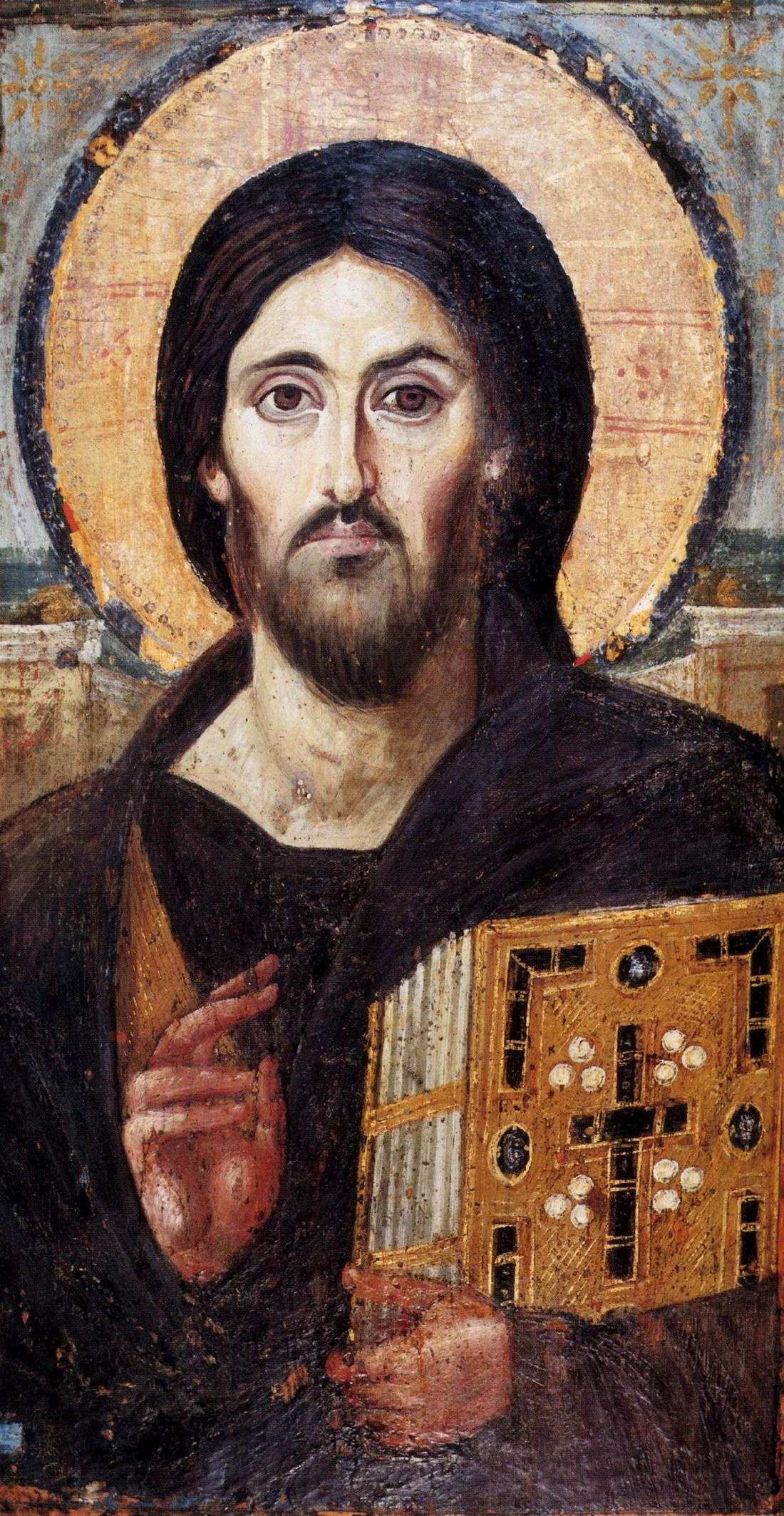
The oldest surviving panel icon of Christ Pantocrator, encaustic on panel, c. 6th century.
Although I hope to come to you soon, I am writing you these instructions so that, if I am delayed, you will know how people ought to conduct themselves in God’s household, which is the church of the living God, the pillar and foundation of the truth. Beyond all question, the mystery from which true godliness springs is great: He appeared in the flesh, was vindicated by the Spirit, was seen by angels, was preached among the nations, was believed on in the world, was taken up in glory (1 Timothy 3:14–16).
As Paul moves from his opening remarks to addressing the false teaching that had been abounding in the church at Ephesus, he doesn’t want to lose sight of Jesus. Theologians differ in their views over the form and structure of the hymn of praise in verse 16, but the content is clear – the second person of the Trinity shapes our faith and practice. We may not fully understand the mystery of God becoming man and returning to heaven, but we know that through his dwelling in us we can bear the fruit of goodness and godliness.
Take a moment to consider the words of the ancient song, such as Jesus appearing in the flesh. As the opening of John’s gospel puts it, “The Word became flesh and made his dwelling among us. We have seen his glory, the glory of the one and only Son, who came from the Father, full of grace and truth” (John 1:14). Our God through Jesus is fully acquainted with the feelings we experience, such as joy and grief.
The rest of the hymn also reflects his dual nature of God and man. For instance, as a man he has been preached amongst the nations and believed by millions around the world. In terms of him being God, angels have seen him and he was taken from earth into heaven.
How does Jesus being both divine and human affect you?
For reflection: “The true light that gives light to everyone was coming into the world… Yet to all who did receive him, to those who believed in his name, he gave the right to become children of God” (John 1:9, 12).
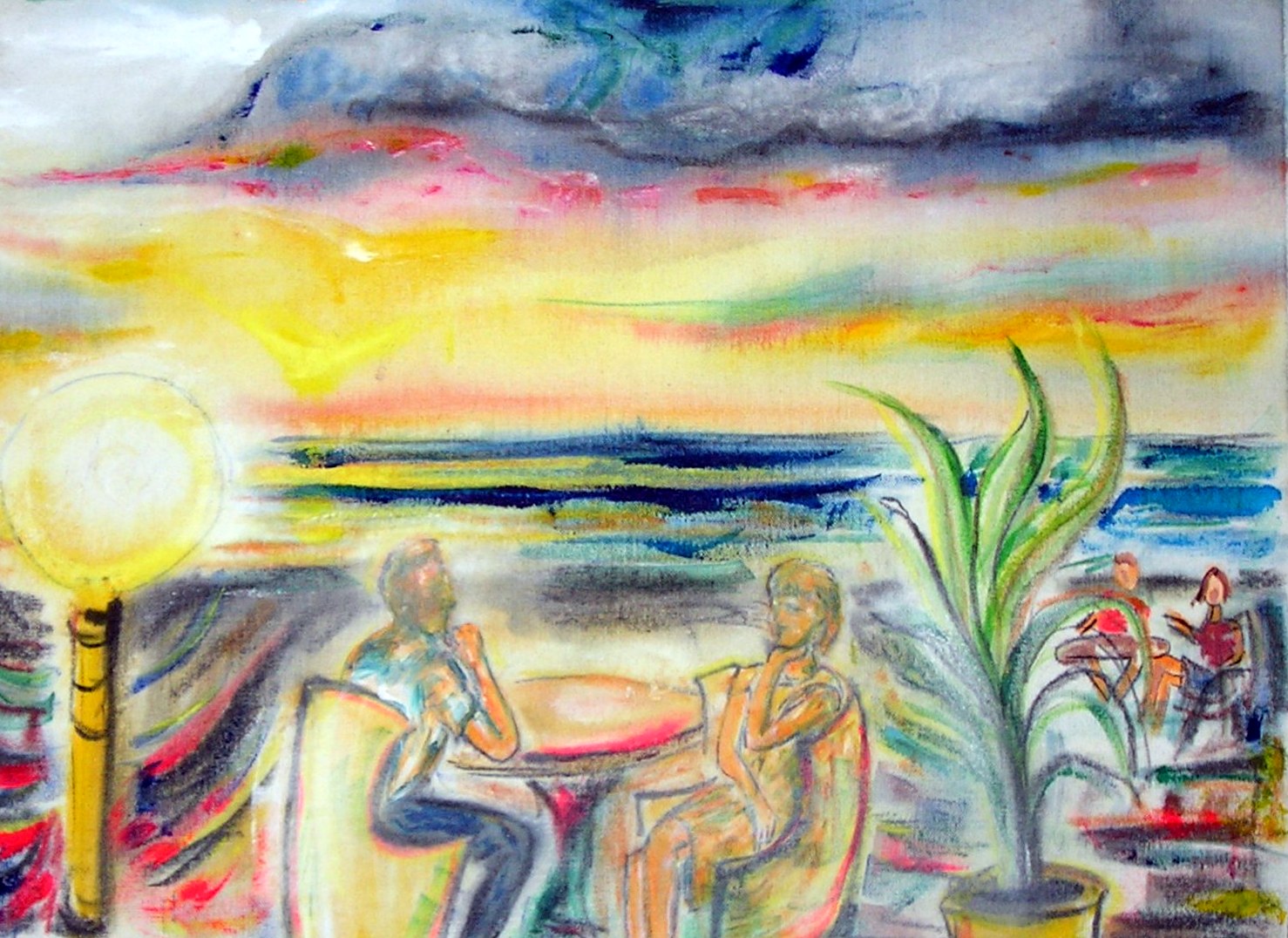
I’ve shared this watercolor before, but as I’m actually in Spain, looking at this very view in the evening from the balcony outside my room, it feels fitting to share it again.
We’re retreating, looking at Paul’s letter to the Colossians, and exploring how we live in and for Christ. Group discussion, imaginative prayer, walking the labyrinth… it’s been a great week so far and we’ve got more to enjoy! Check out El Palmeral for more details – you won’t be sorry.
I urge, then, first of all, that petitions, prayers, intercession and thanksgiving be made for all people – for kings and all those in authority, that we may live peaceful and quiet lives in all godliness and holiness. This is good, and pleases God our Savior, who wants all people to be saved and to come to a knowledge of the truth. For there is one God and one mediator between God and mankind, the man Christ Jesus, who gave himself as a ransom for all people (1 Timothy 2:1–6).
In September 2015, Queen Elizabeth II surpassed Queen Victoria to be the longest reigning monarch of the United Kingdom. As an American who is now also her subject, I’ve harbored mixed feelings and views about the monarchy over the years. But I am humbled by the Queen, who has served her country tirelessly as part of her duty and calling. It’s an hono(u)r to pray for her and her reign.
We might feel jolted by Paul’s command to Timothy to pray for rulers and kings, coming so soon in this letter of instructions for Timothy. But Paul yearns that the gospel would be proclaimed and accepted, and he knows that a just and ordered society will better foster its message as one that people can hear and heed than when they dwell in a culture of corruption. Note too the various ways Paul wants the church to pray – through petition, prayer, intercession, and thanksgiving – for he knows that God hears our prayers.
We might find it difficult to pray for our rulers, especially if we find their policies differing from what we hold to. But prayer is something constructive that we can engage with, as we ask God to help shape our societies to be places where people can thrive in freedom and faith. Perhaps you could join with others from your neighborhood or church, once a month or once a term, to pray for your local and national leaders. We trust that God hears us, and responds.
Prayer: Lord God, you are the ultimate Ruler, just and fair. We give you thanks for those in authority over us, praying that they would embody values of wisdom, justice and mercy.
By Leo Boucher. Used with permission; all rights reserved.
Soon I will go to Spain, to the lovely El Palmeral, where I’ll be leading a retreat when we delve into the book of Colossians. Such a lot to explore in just 95 verses! The incomparable Christ, living in Christ, living for Christ.
I’m sharing this painting of my dad’s today as I think about Spain, for I love the colors he uses. Although the Mediterranean climate means for a lot of brown, when I think of Spain I think in color – the vibrant bougainvillea and other flowers, the glimpses of glory painted in the sky as the sun sets. And as this painting shows, time to sit by some water and reflect and converse, enjoying God’s glories and each other.
If you can’t make it to a led retreat at El Palmeral, you could enjoy what they call a time-out retreat. You craft the time as you wish, such as the daily Celtic prayer in the outdoor chapel. Those who go, want to come back!





 I’ve shared this watercolor before, but as I’m actually in Spain, looking at this very view in the evening from the balcony outside my room, it feels fitting to share it again.