Tag: forgiveness

  • “The Gift of Forgiveness” by Sheila Holwell: 7 Ways to Pray blog series

    I so appreciate hearing from readers when they share their stories of God working in their lives, and when a bit of my writing plays a part, I’m humbled and grateful! I loved reading Sheila’s story of forgiveness, spurred on by the Spirit. As you read, may you open your heart to that same Spirit, who might bring to mind someone you could forgive?
    A meditation in Our Daily Journey, written by Amy Boucher Pye on the subject of forgiveness, got me thinking. At the conclusion we were led into considering whether there were any experiences in our lives where there was a need to forgive.

    While I have been very conscious over the years of the need to forgive, and have experienced  the wonderful freedom it brings, as I read the meditation there suddenly flooded into my mind the memory of an incident more than thirty years ago in the church. I knew immediately that I had not really forgiven.

    A new Curate came when I was involved with the Pathfinder Group of young teens. The mother of one of our members came to see us, concerned that, while she encouraged her children to be faithful to their commitments, she felt this was being challenged as the Curate had told her daughter to be trained as a Server, which meant leaving Pathfinders. As leaders of Pathfinders we weren’t told of this decision.

    Several other incidents that happened without communication, so I went to the Curate and asked him to tell me what was going on. He looked me straight in the eye and said, 

    “You are not a mainline Anglican and you don’t fit.”

    I was so shocked that I did not respond, so I went to the Vicar and told him what had been said and his response was, 

    “Well, it’s true.” 

    Having made a point of being committed to the church over the years in every way possible, including broadening my churchmanship, I found their statements very hurtful.

    These thirty years later, as I read the article in Our Daily Journey and realised that I had not forgiven the Curate, I laid the whole situation at the foot of the Cross. I knew that Jesus had been there with me at the time, and so I was finally able to forgive him, and pray for him, leaving it all with the Risen Christ.

    Finally, to bring the seal of God’s redeeming love on it all I placed the whole situation (albeit thirty plus years later!) via a little written note, on the Altar, at a recent Eucharist.

    Subsequent circumstances have made me realise, and has caused me to thank God, that it was that stage on my pilgrimage that was a contributory factor to where I am today. And soon after, there was a lovely reconciliation with the Vicar.

    I am forgiven and able to forgive!
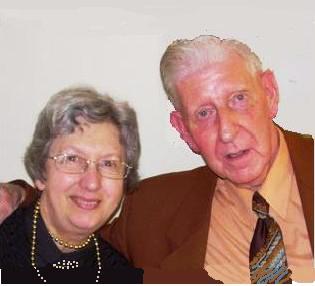
    Sheila Holwell says: I grew up in North London where from the age of six I went to Crusaders where Evangelical Bible Teaching was tops and on which she I stand eighty years later!

    After school I went to RAF Hendon doing office work, where I met the family of a Sergeant whose wife was dying. She requested that I witnessed her Baptism (in the Hospital bed), which was such a privilege. She died soon after. Eventually, but not without much heart searching and doubts, I responded to George’s (the widower) request to marry him. One day I took him and his son, Peter out in the car. Eight-year-old Peter from the back seat said “Well, when are you two going to get married then?” I nearly crashed the car!! Then I said “Oh, at least not until next year.” His immediate answer was, “Oh! I’ll die if I have to wait that long.” We didn’t let him die, and there followed wonderful experiences in Singapore and Libya as well as the UK.

    Then followed a period in Oxfordshire where both George and I became Readers (LLMs) with a final move to S. Devon where George went to Glory. George did have very bad fits of depression which marred the first 25 years of our marriage, but the Lord was there and George had a wonderful healing, which is another story.

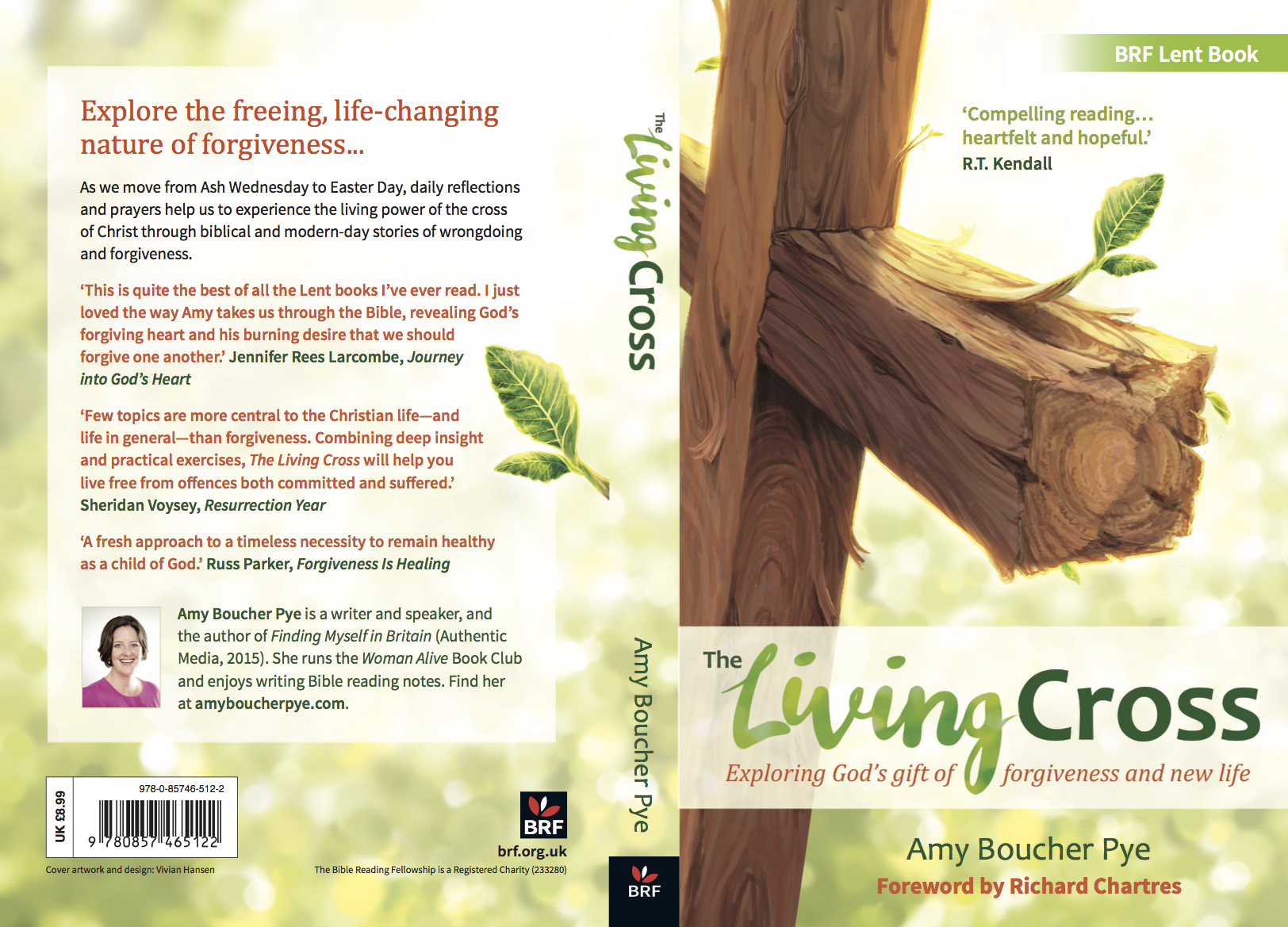
    Order 7 Ways to Pray here for more ways to encounter God. And have a look for The Living Cross, which is a through-the-Bible engagement with the topic of forgiveness.

  • Forgiveness Fridays: Bullying, a necklace and a story of forgiveness

    I recently came across a moving story of forgiveness, which I share below. The woman writing it needs to remain anonymous, but I can vouch for her integrity and love. She shows that forgiveness is freeing.

    Wisdom and forgiveness are like a “a garland of grace on your head, and a pendant around your neck.” Proverbs 1:9

    To say that you forgive a person for doing wrong to you is easier said than done. You can say those words “I forgive you,” but can you honestly say in your heart that you really do forgive that person? Or as Corrie Ten Boom says, “Sometimes people forgive like they are burying the hatchet but keep the handle uncovered in case they need to use it again.” But this only prolongs the conflict.

    I have been through a tough time. Only a handful of people know and have been praying for me. It started in March 2017 and I didn’t see an end to it. You see, I was bullied. Most people think this only happens in the playground but, in my fifties I’m ashamed to say I was bullied by a woman a few years older than myself. The reason for the bullying, it seems, was because I was good at my job. Crazy but true.

    Going back to before I became a Christian, my values were different. If someone upset me, I could stand up for myself, and believe me, I did. My husband once said that I could “rip someone’s throat out at 50 paces” – something I am not proud of. But Jesus changed me. I accepted him into my life and the change in me was so real, so amazing, that even my sister said, “It’s like you have been taken over by aliens” and my husband said I had a glow “like the Readybrek advert.” I was a changed person, not in a small way but in a huge way and it was all thanks to God.

    However, over the years, I struggled and still do. The reason I struggled is that when people are cruel to me or upset me, instead of dealing with it in the way I should, I accepted their behaviour towards me. I almost allowed them to say or do what they wanted because I didn’t know how I should react. So instead of responding, I said nothing. You see, I didn’t know what response was acceptable as a Christian and what wasn’t. So I let people walk over me and hurt me. I realise now that the change had to come from me but I didn’t know how to do that. I couldn’t do it in my own strength.

    The story of Corrie ten Boom has been told countless times through the years. Yet, even today, it remains one of the most beloved stories of forgiveness this world has ever known. During World War II, she and her family saved Jews from being sent off to concentration camps by hiding them in a room at the top of their home. When Nazi officers learned what was going on, the house was raided and Corrie was sent to a prison, a political concentration camp, and finally a death camp. But, miraculously, she survived. As you can imagine, there were many moments of hardship that Corrie had to overcome even after the war ended.

    One such moment was at a church where she saw a former SS man who guarded her in the concentration camp. As the man approached her to shake her hand, everything in her reminded her of the horrid pain this man had brought upon her. And even though Corrie often spoke of the need to forgive others, she knew she couldn’t forgive this man in her own strength. God had to do it through her.

    Corrie writes, “When He tells us to love our enemies, He gives, along with the command, the love itself.” God gave Corrie the strength to forgive and love the man when she could not.

    Perhaps you’ve never had to deal with such heavy forgiveness in your life as Corrie ten Boom has, but there are many times in life when we will have to both forgive and be forgiven. Here are four things to keep in mind when you forgive someone.

    • Realize everyone has to be forgiven. It will save you a lot of trouble to understand early on that we all will make mistakes and need forgiveness at some point.
    • Forgiveness isn’t earned. Grace is undeserved favour that no one can earn. Therefore, forgiveness should be given with no expectations in return and no strings attached.
    • Don’t bring it up again. Sometimes people forgive like they’re burying the hatchet but keeping the handle uncovered in case they need to use it again.
    • Make the decision and your heart will catch up. If you wait to feel ready to forgive, it’s never going to happen. Rather, you must make the decision to forgive and soon enough your heart will catch up.

    I believe that in recently I’ve truly understand forgiveness for the first time. I can honestly say that through the teachings of Corrie Ten Boom, I can wholeheartedly forgive the person who has bullied me, and I pray that God will change that person’s heart and make her a better person. I pray that He will replace the bullying attitude within her and give her a spirit of kindness and humility and that she will now begin to treat people the way they should be treated. I pray that whatever has caused this bitterness within her will be revealed to her so that she can deal with it and have peace in her heart.

    Clipart drawing of a necklace.

    Recently I received an amount of compensation for what I went through. For me it wasn’t about the money. It was about truth and justice, and that no one else should ever experience what I went through. From some of the money, I purchased a necklace. It felt a bit extravagant, but when I wear this necklace, I will remember that I stood up to the bully, that justice was done and forgiveness was given. Corrie Ten Boom went through an awful lot more than I did and found the strength to forgive through Jesus, so if Corrie can go through all of that and forgive, then I can too.

    So, do I feel good that the outcome is compensation paid into my bank account? No I do not. But I wear this necklace as a symbol that justice was done, and I thank God that through the teachings of Corrie Ten Boom, forgiveness has been given. Now I will take time to recover and allow Jesus to heal me so that I can move forward and not look back.

    Amy’s book The Living Cross explores forgiveness through a series of daily Bible readings for Lent. You can find out more about it, and how to purchase, here.

  • Forgiveness Fridays: The sweet freedom of forgiveness between Christians by Sheila Holwell

    I am pained by the division that happens sometimes between Christians who embrace different streams of faith and practice, so when I heard Sheila Holwell’s story of the freedom that forgiveness brings from this kind of fracture, I was eager to share it with you. Might there be someone who has hurt you in this way whom you could forgive?

    A meditation in Our Daily Journey, written by Amy Boucher Pye on the subject of forgiveness, got me thinking. At the conclusion we were led into considering whether there were any experiences in our lives where there was a need to forgive.

    While I have been very conscious of the need for forgiveness over the years, and have known the wonderful freedom it brings, as I read there suddenly flooded into my mind the memory of an incident about thirty years ago in the church. I knew immediately that I had not really forgiven.

    A new Curate came when I was involved with the Pathfinder Group of young teens. The mother of one of our members came to see us, concerned that, while she encouraged her children to be faithful to their commitments, she felt this was being challenged as the Curate had told her daughter to be trained as a Server, which meant leaving Pathfinders. This was done without our being told of that decision.

    There were other incidents that were done without communication so I went to the Curate and asked him to “lay his cards on the table” and tell me what was going on. He looked me straight in the eye and said, “You are not a mainline Anglican and you don’t fit. I was so shocked that I did not respond, so I went to the Vicar and told him what had been said and his response was “Well, it is true.” Having made a point of being committed to the church over the years in every way possible, including moulding into the different churchmanship, I found their statements very hurtful.

    As the realisation came to me that I had not forgiven the Curate, I laid the whole situation at the foot of the Cross. I knew that Jesus had been there with me at the time, and so I was able to forgive and pray for this person, leaving it all with the Risen Christ. Subsequent circumstances caused me to thank God that it was a stage on my pilgrimage that was contributory to where I am today.

    Finally, to bring the seal of God’s redeeming love on it all I placed the whole situation, via a little written note, on the Altar at the Eucharist. Praise the Lord! I am free!

    Sheila Holwell was born in North London, where she had a grandmother who taught her to love the Bible and to enjoy Moody and Sankey hymns. As a teenager she felt the call to serve the Lord where he wanted her. Later came the very unexpected pathway to being an R.A.F. wife to a widower, and stepmother to a nine-year-old boy, with whom sixty years on she has a wonderful relationship.

    She worked for the NHS with her husband became Readers in the Oxford Diocese, serving together until they moved to Devon. Sadly her husband died of cancer and also had dementia. It was then, however, that she experienced the miraculous ways God leads in devastating circumstances.

    The doorway into Anglo-Catholicism opened and she is very happy with a wonderful vicar, who has a great sense of humour. Their evangelical versus liberal theology is dealt with in love. She finds sharing Jesus in prayer, preaching, and pastoral care such a privilege.

    Amy’s book The Living Cross explores forgiveness through a series of daily Bible readings for Lent. You can find out more about it, and how to purchase, here.

  • Forgiveness Fridays: Letting Go by Mabel R. Nyazika

    I love hearing stories of how God brings transformation and healing, and I so enjoy being able to share them as well. I met Mabel, the author of today’s story, at a day I led in a Methodist church on “Finding Ourselves in Christ.” Afterward, she told me how God helped her to forgive her husband, setting her free from bitterness:

    Betrayal – the one thing that almost without fail breaks a person’s heart. That’s what happened to me.

    I was in my mid-fifties with an established career and was happily married, with everything near perfect. I had a strong meaningful relationship with God, a fulfilling job in the church, and a life I had built with my husband – or so I thought.

    When my marriage ended suddenly in Addis Ababa, my world collapsed. I had never anticipated that happening, so I had no plan B in my mind. I had married for life, because in my wedding vows I had committed myself to this other person until “death do us part.” I just assumed that my husband had as well, so when he told me he didn’t love me anymore and he wanted the marriage to end I was devastated.

    What I found so hard was the unwillingness on my husband’s part to work at our marriage. I felt like something was going on but I couldn’t place my finger on what it was. What brought more heartbreak was his refusal to sit down and talk, for up until then we had been very good friends who enjoyed each other’s company. This time he could not bear being in the same room with me.

    All this happened when we were living in a foreign country where I did not have the support networks I would have had in our native country. But I did have the support of the vicar who was the minister at the Anglican church where we worshipped. My husband wanted us to play happy families at church, pretending all was alright. For a while I played along with that hoping that perhaps he wanted to work things out. In the end I decided to confide in the vicar who waited for my husband to tell him what was happening in our marriage.

    But he didn’t. Instead he told the vicar that we had decided that I should leave Ethiopia to go back home to be with his son, my step son. That was not true; I was going back because we were now divorcing.

    I continued to pray and fast, hoping that somehow God would help us sort things out. The scripture I held on to was Malachi 2: 16 which says:

    “I hate divorce,” says the Lord God of Israel. “I hate it when one of you does such a cruel thing to his wife. Make sure that you do not break your promise to be faithful to your wife” (GNB).

    Because my husband attended the Anglican church I honestly believed that he was reading and praying as he thought about the vows he made when we married. But ten months after he had sent me back home, I heard he had got married. I couldn’t understand how he could have met someone in that short time and married her.

    Then it dawned on me that he must have been in a relationship with someone else while we were still married. I recalled some telephone calls in the middle of the night. When I inquired who this person was, he would tell me a story that I believed as I had no reason to be suspicious. That realisation made me feel betrayed as I had trusted him to be a faithful, God-fearing husband.

    Forgiveness is something I have always struggled with despite being a Christian as I’ve read verses like Proverbs 17:9 which say: “If you want people to like you, forgive them when they wrong you. Remembering wrongs can break up a friendship.” I tend to hold on to the hurt. If it the hurt involves close family, I would cut communication with them to take my time navigating the difficult situations. Then later I get to the place where I can forgive.
    But the end of my marriage has helped me to deal seriously with my unforgiving heart. As I struggled with my marriage breakdown I understood the line in the Lord’s prayer which I have said over again throughout my life which says: “Forgive us our sins as we forgive those who sin against us.”

    The more I reflected on my not letting go of my husband’s betrayal, the more I realised I was robbing myself of experiencing God’s forgiveness. I let go of all my resentment and anger towards him and felt lighter and liberated. I felt free of a burden that was not worth carrying around with me. Despite his cheating, I knew that deep down in my heart I had sincere love for him as God’s creation. This love covered over all his offences. I kept on reminding myself to forgive him not only seven times, but seventy seven times, as reflected in Matthew 18:21-22.

    Letting go of needing answers as to why my marriage ended freed me from being a victim. I sought healing of the wounds from God as I deepened and strengthened my relationship with him. As I accepted what happened to me, what was a catastrophe turned out to be a liberating learning curve – a  great experience of forgiveness and my ability to bask in God’s forgiveness for me.

    Now as I move forward all, I want to do is to help others who may find themselves in the situation like the one I went through, which I now use as a stepping stone to greater things.

    Mabel R. Nyazika is a Zimbabwean currently living in the United Kingdom and employed by Sale Methodist circuit as a lay worker. She worked for the Methodist Church in Zimbabwe for the best part of her life as a training co-ordinator. She holds a BA (HONS) and an MA in contextual theology.

    Amy’s book The Living Cross explores forgiveness through a series of daily Bible readings for Lent. You can find out more about it, and how to purchase, here.

  • Why Lent?: How to Enrich Your Faith Before Easter

    Briton Rivière (1840–1920), The Temptation in the Wilderness; (c) City of London Corporation; Supplied by The Public Catalogue Foundation

    As one who grew up in a church that uses set prayers in its services and observes seasons and rituals, I’ve known the season of Lent from my childhood. For me it’s an important time to prepare myself for Jesus’ death and resurrection; it’s a yearly reminder of my sins, Jesus’ sacrifice on the cross, and God’s amazing grace in the gift of forgiveness and new life.

    But I know that not all Christians love Lent. Some may be concerned about empty ritual, or believers engaging in unnecessary penance when Jesus has paid the price on the cross once and for all. Yet the benefits of a time set apart to examine myself before God have outweighed the potential pitfalls, and so I’d like to offer up some ideas for Lent as a way to deepen our love for and commitment to God. And as I’ve loved books for as long as I can remember, these suggestions are based on words – and the Word. Following are some practices you can enact during Lent.

    Focus on one book of the Bible

    Lent is made up of 40 days (excluding Sundays), so it’s a wonderful time to hone in on one of the books of the Bible. Why not choose an Old Testament prophet, such as Isaiah, which is rich in foreshadowing our Saviour? With Isaiah’s 66 chapters, you could read one chapter on Mondays to Fridays, and then two-three chapters on each day of the weekend. Or a gospel makes prime reading in Lent as it helps us focus on the life, death and resurrection of Jesus. Many Christians also add praying through one of the Psalms daily.

    Add a practice of giving or forgiving

    Many people see Lent as a time of fasting or taking away, but we’ve seen through the #40acts movement how we can add a practice to prepare for Easter. Through committing to 40 acts of generosity – things such as giving away chocolate or supporting the Fairtrade movement – Christians embrace the joy of giving as rooted in God’s gift of his son, Jesus.

    Along with giving, we can embrace more forgiving. I was reminded of this recently when a long-time disciple of Christ, a woman who has seen heartache and pain but whose heart remains tender, said, ‘We can always forgive a little bit more.’ She and I were talking about my book, The Living Cross: Exploring God’s Gift of Forgiveness and New Life (BRF, 2016), which engages with readings from the Old Testament and the New on the theme of forgiveness (more on it below). Her words struck me as so wise, for in this fallen world where we experience disappointment, betrayal and pain, we need a regular practice of forgiveness to keep us from becoming bitter and lacking hope.

    Why not commit to daily forgiveness? I’m not suggesting we go digging for unconfessed sins, or for people to forgive whom we haven’t considered for decades, but we can trust that the Holy Spirit will lead us in a sort of spring cleaning of the soul. Forgiveness is freeing – we’ll approach the resurrection of Jesus with a new sense of joy if we’ve been able to release the pain that may weigh us down.

    Meet with fellow Christians

    Lent is a wonderful time to meet with others while reading and discussing Christian resources. One year our church engaged in the E100 Challenge as produced by Scripture Union. I begrudgingly gave up my own programme of Bible reading to join in, and I was so glad that I did. Each week we’d share our thoughts and new understanding, and we’d also be encouraged by what others gained through the experience. I saw new things about the Bible as a whole from this programme.

    There are many resources to choose from, which leads me to my final point…

    Read a book

    Why not read a book specially prepared for Lent? I mentioned mine, The Living Cross, about which Catherine Campbell has said,

    A Lenten journey you won’t want to miss. From the Fall to the Cross and beyond, Amy Boucher Pye walks us down the centuries to meet the One she calls the “Father of outstretched arms.” With captivating writing and inspiring biblical insight, we are reassured from the stories of fallen heroes, fallible leaders and plain ordinary sinners that God’s lavish forgiveness is available to each one of us. The more I read the more excited I became, and the more thankful I am for God’s “scandalous grace and love poured out.” Simply superb. I can’t wait to read it again!

    I learned so much about forgiveness while writing this book, including how in the Old Testament, people didn’t assume they could forgive others – for them, forgiveness came from God. But with the death of Jesus, we now can not only of receive forgiveness from God, but others as well – and we can extend it ourselves.

    My favourite Lenten book is Reliving the Passion by Walter Wangerin (Zondervan, 1992). He’s a master storyteller, and writes here as a participant in the passion events. He transports us to a vivid world of sights and smells that bring the story alive, engaging our heads and our hearts. I can’t recommend this book enough.

    Whether you manage to engage in a new practice each day in Lent, or not quite as regularly, I trust the Lord will help you to draw closer to him in your journey. As we approach the celebration of the resurrection, I pray that you will feel the joy of know that Christ is risen – indeed, he is risen!

  • Forgiveness Fridays: Forgiveness, Martin Luther and Jonah by Michael Parsons

    With the 500th anniversary of the Reformation next week, I thought it appropriate to feature a post on forgiveness and Martin Luther, written by one who knows a lot about the reformer, Michael Parsons. He also was my editor for The Living Cross, and was one of my three readers for my MA dissertation on Calvin. He’s a gentle and insightful teacher, as you’ll see here.

    In a year that commemorates the beginnings of the European Reformation, it seems appropriate to say something about Martin Luther. Those who know anything about Luther will know that he never minimizes the seriousness of sin; nor, however, does he minimize the grace of forgiveness. Indeed, he exalts in it. And the biblical story of Jonah gives him ample opportunity.

    Luther spots at least two sins in Jonah’s behaviour. First, Jonah should have accepted the will of God (Jonah 1) and should have been ‘most happy to carry it out’. Instead, he runs away. Second, he sins, in being angry to the point of wanting to die (Jonah 4). What impresses me, however, is how positive the reformer is about all this. Luther moves from a negative situation (the sin of Jonah) to extremely positive application. In that, he might be an example to us today.

    1. Luther rejoices to see that Old Testament saints sinned! Notice how he puts this: ‘even the greatest and best saints sin grievously’. Read that again. They sin, but they remain ‘the greatest and best saints’! Jonah chapter 4 gives the clue. Luther notices that the prophet continues to converse with God, ‘He chats so uninhibitedly with God as though he were not in the least afraid of him … he confides in him as in a father.’ Luther insists that the bottom line is not the prophet’s sin, but that Jonah ‘is God’s dear child’.
    2. Look at Luther’s amazing application: ‘[W]e learn that God permits his children to blunder and err greatly and grossly. … [W]e observe how very kindly, paternally, and amiably God deals with those who place their trust in him in times of need. … It is the daily sin of a child that the heavenly Father willingly bears in his mercy.’ Again, re-read that last comment. The Lord mercifully forgives us daily – that’s grace!
    3. Luther applies it again in a very personal way: ‘I remain in the kingdom of grace when I do not despair of God’s mercy, no matter how great my sin may be, but resolutely pin mind and conscience to the belief that there is still grace and forgiveness for me.’ Notice the italicized words, ‘no matter how great my sin may be’. He concludes that divine ‘mercy asserts itself and proves stronger than all wrath’. And again, ‘All sins which let grace triumph and reign are forgivable.’

    So, Luther moves from a negative situation to extremely positive application. He wants us to see outside the confines of the human dilemma to the wider context of the love of God. Luther’s main intention is to encourage us, and particularly those of us who preach, to trust in the grace and goodness of God. Therefore, he stresses God’s grace in forgiveness and in an openness to receive sinners who return to him.

    One of Luther’s repeated comments (though I don’t remember it in his lectures on Jonah) is that in Jesus Christ we already have everything. It is this truth that underlines his application. We are loved, we are forgiven daily, because the Father loves us in Christ.

    Michael Parsons is currently commissioning editor for The Bible Reading Fellowship. He is the author of several books on the Reformation and an Associate Research Fellow at Spurgeon’s College.

  • Forgiveness Fridays: Forgiving my abuser; forgiving my accusers

    Today’s post tells the story of heartache and pain, but new life after forgiveness. In the light of all of the current news about abusers and the women who suffer from them, it feels timely. The writer, who asked not to be named, suffered not only at the hands of her husband but by those who believed the lies spread about her. Yet she found freedom in forgiveness.

    When I wanted to be baptised by full immersion, the minister – the most gentle, patient man I had ever come across – touched my back to show me how I would be dipped under the water. I nearly screamed because it involved trusting him completely. I was most upset but he got the ladies of the church to lay on hands and pray for me. I also went back to my Bible and my God and read that He is the greatest Counsellor of them all. I understood that I had to forgive my abusive husband, who had caused so much fear and pain, but initially I was unable to recall the incident that had affected me so much.

    I was baptised in the summer of 1988 and testified that “Perfect Loves drives out fear.” However, by the next summer, my husband threw me out for bringing God home. As I was unable to see my son much and was concerned for his welfare, I started custody proceedings. One evening my husband picked up my son, told him to stay in the car and came into the place where I was staying and nearly strangled me. The year before I had used the name of Jesus to protect me from violence but now I could barely scream.

    Someone heard and interrupted him – he claimed to have stepped on my toe! As the accommodation I had was not secure, I ran across the field to friends. He went directly to the Manse and said “I haven’t done anything!” I was in shock but had a cup of tea and as soon as the memory came back, I prayed, for I wanted to forgive him.

    Over time, I was able with God’s help recall the experiences and feel God walk with me through them, as He reassured me that He was there and in control. I received forgiveness for my own guilt and to forgive in the sense that if my abuser asked God for forgiveness he would be forgiven.

    I learned that the trauma of violence and menacing threats can have a deep effect on the unconscious as well as conscious mind. Fear is a normal human reaction when memories are triggered. Some think that there are two reactions to fear – fight or flight. But there is a third reaction – freeze, like a rabbit caught in car headlights. It means that a person cannot stop the abuse and can be made to feel guilty (e.g. you asked for it). To freeze is to submit to some pain in fear of something worse, which is how I reacted.


    Photo: Tim Geers, flickr

    I grew up in a family where my mum was unfaithful all her married life, despising my dad and me as his daughter. After my abusive husband threw me out and I was granted a divorce, I was fourteen years single and celibate. I did not realise that my mum behind my back accused me of some awful things, such as sleeping with every man I spoke to being the least unpleasant. Perhaps it was harder, though, to have to leave the church where I had found faith, for people were nice to my face but later told others I should be thrown out – and I never knew why. Apparently I did not need to be told as I knew what I had done!

    So I left my church and started going to a small country chapel. But I felt rejected for “being divorced”, even though I would not have been divorced if I had not found God. I might have been one of the stats, killed by my husband as he threatened it often and long.

    I continued to go there, and fourteen years after the trauma of leaving my abusive husband, Andrew asked me out. I told him that I was “damaged goods”, but he said that I was a new creation in Christ. I prayed, heard God and said yes to him.

    Three weeks after Andrew had said he wanted to marry me, and the day he bought my engagement ring, he was told by another couple in the chapel that they would not take communion with him because he was marrying a divorced woman (even though the man himself was divorced and remarried). Andrew’s parents too had heard much gossip and told him that he was wrong to marry me. In the face of this opposition, he had to choose to do what he thought God was telling him to do. He chose to obey God and pursue me, even though he would lose the friendship of the only Christian friends he had and the respect of his family. But after three years, we were reconciled to those who had opposed our union, and when Andrew’s father died, his mother said that he was fond of me.

    My church have a policy of not marrying divorced people, so we married in the registry office and the vicar sat in the front row to witness it! We each had to cling to our Lord and our faith, not each other. Later Andrew said he felt like Joseph (in the New Testament) as he doubted when the people he respected all told him he was wrong to marry me. He also felt like Joseph (in the Old Testament) as he felt thrown out and sent away by his family. But in all of this, forgiveness has been the key as we trusted God and found freedom from bitterness.


    I had known for years that I did not like anything around my neck. But I found Andrew had the most gentle touch I ever came across. He works with his hands but they are soft – his touch felt like a feather. He wanted to touch my neck, and involuntarily I jumped like I had a shock. It was an unconscious reaction, but he put his strong arms around me and starting talking to God in the same way he spoke to me.

    I had been healed of much but had thought that complete healing would only be in heaven where there is no more sorrow, crying or pain. But Andrew has a deep profound faith and asked our Father God, believing that He wanted me healed now. Not that I didn’t think God was not big enough to deal with this, but I felt somehow I didn’t deserve it. Andrew’s attitude of faith encouraged me to ask Father God also to heal if it was his will for Andrew’s sake as much as my own – it seemed so unfair to him and my reactions made me feel very guilty.

    When he prayed for me, it was not a warm fuzzy feeling but then you must remember this is healing of emotions and teaching the brain to react in a different way. Over about ten days I realised there was a difference as Andrew continued to pray whenever I needed it. Now I like my neck being touched; it gives me pleasure. After all, Satan comes to take the best; to steal and destroy, but God restores and makes all things new! Father God honoured Andrew’s faith and increased my own.

    I have been forgiven much, and I forgave. Forgiveness means leaving the justice issue with God rather than wanting vengeance. By doing this, it made a painful memory into plain history and enabled me to move on.

    My book The Living Cross looks at the theme of forgiveness through daily readings based in the Old Testament and the New. Find out more here.

  • Forgiveness Fridays: No Longer a Caterpillar by Claire Daniel

    I believe today’s contribution to our forgiveness series will resonate with so many people. I can certainly relate to that having a stream of thoughts and accusations running through my mind of things I shouldn’t have said or done. How can we forgive ourselves? Read on…

    Ten years ago, as summer faded into autumn, I experienced a season of overwhelming depression that upended every aspect of my life. It altered my very thoughts and feelings, and made my internal and external world feel utterly shaken. Overcoming this all-consuming illness was a difficult journey, where everything felt uncertain. Hope was hard to find, yet never truly lost.

    I now live daily aware, grateful for the changes that have occurred in me having experienced that season and in so many ways stronger, having been broken and restored. Yet still, at times, I remember. In moments of vulnerability, forgiving my past self is not easy. Unexpected things will trigger off a memory. I am reminded of things I said or did whilst ill and waves of guilt and remorse can still come flooding back into my consciousness. This usually happens when I least expect it and I still struggle to reconcile these memories with the person I am now. I cannot erase them, or forget. If I am absolutely honest, I am still working on how to completely forgive myself.

    I love the beauty and grace of butterflies but they also represent for me a powerful metaphor for the journey we take, in life and faith. Like a caterpillar, we need to go through a process of change, in order to be renewed and transformed. This often means experiencing times that are ‘dark,’ where we need to enter a ‘chrysalis’ season, where change feels slow or even halted entirely and progress seems slow.

    I was recently struck by a verse someone shared with me from Zephaniah. In looking at it in context, we see a book that seems so full of doom, yet is ultimately about a God of redemption. Zephaniah 3:17 says, in the NIV translation, ‘The Lord your God is with you, the Mighty Warrior who saves. He will take great delight in you; in his love he will no longer rebuke you, but will rejoice over you with singing.’ It is interesting that in the Good News translation the phrase ‘new life’ is used rather than the word ‘rebuke.’ God will rebuke you no longer, but gives you a fresh start, a clean slate.

    Yet how often do we still rebuke ourselves? We berate ourselves for our actions, whether consciously or subconsciously. How can we truly say we live in freedom through Christ, yet continue to hold ourselves in contempt for something we said or did in the past? I think this is partly human nature but I also believe that forgiveness is a choice, an action. We can choose to hold on to the guilt that binds us and reproach ourselves or we can surrender it to God and ask him to help us forgive ourselves. We can make a conscious decision to let go of long-held feelings of shame or regret. When we recall our past behaviour we can strive to replace these with a real understanding of the truth – that we are loved by God and he rejoices over us, our past forgiven.

    When we place our hope in God, we can trust that he will keep on transforming us, replacing our disgrace with his grace. There will still be ‘caterpillar’ days or ‘chrysalis’ seasons where we feel we aren’t moving anywhere or we repeat the mistakes of the past. In these times God is still gently honing us, teaching us through the seasons where daily life and faith is a struggle and we feel so very far from becoming the ‘butterfly’ God created us to one day be. Even when we have moved on in our life, there will be vulnerable moments when we feel those feelings afresh. Memories will remain, though with time they will intrude on our thinking less often. It is one thing to know that God forgives us but to truly forgive ourselves can be so very hard to do, to fully embrace the freedom God has for us – no guilt, no shame, our sins forgotten.

    Part of my recovery from that season of my life involved reclaiming hope and believing afresh that I am forgiven and restored. I continue to daily place my trust in God, to refine me. If we have truly changed, like a caterpillar who has entered the chrysalis, the fact is we cannot change back. The echoes of past transgressions can be silenced by choosing to let them go, giving them over to God, when they threaten to darken our present. We can take a stand, refusing to let the memory of the past define us today or prevent us from being the person God is daily transforming us into – perhaps not yet a butterfly but no longer a caterpillar.

    Claire Daniel is author of 80 Creative Prayer Ideas and Prayer Journey into Parenthood and lives in Water Orton, Birmingham, with her husband and their two busy boys. She is passionate about prayer, supporting parents on their journey into parenthood and encouraging others to explore different ways of praying and meeting with God in every season of life. She provides support to groups, churches and organisations seeking to use creative prayer ideas in ministry or develop new ways to pray. She leads workshops on creative prayer and speaks about prayer and the journey of parenthood and faith at conferences, churches, and retreats.
    http://www.clairedaniel.org.uk/
    www.facebook.com/creativeprayer
    www.facebook.com/parenthoodprayerjourney
    Twitter: @Creative_Prayer

  • Forgiveness Fridays: A Teasel in the Wind by Sharon Roberts

    Forgiving ourselves can often be harder than forgiving others. Sharon Roberts shares her story of learning to forgive herself – a journey of forgiveness that she still walks, as I suspect many of us do. I loved learning about teasels, too.

    My story of forgiveness had to start from within. In my journey of forgiveness I’ve had to focus on the relationship between the sins of inheritance and how can God forgive a sinner like me.

    What do I mean by the sins of inheritance? My mum had schizophrenia and bipolar, and because of that, I felt useless. After all, I couldn’t stop her from becoming ill and spending a long period of time in hospital. I felt too that my behaviour was a contributing factor to my mum’s illness, for members of my family said so. I had the ability to push buttons of family members, which would confirm their accusations.

    In infancy, I experienced rejection, and abandonment was a feature of those early years. I always felt like an outsider; one who was a disappointment; the useless human. I have believed it all my life. The root cause is the childhood experiences that had left great chasms of regret and failure. I was the outsider – the attention seeker, the drama queen. I felt I made everyone’s life a misery. To escape that internalised misery became a battle, with my first line of defence being belittling myself, causing myself to be humiliated and to hide the feelings that I long felt in my heart. I learnt to believe what I was hearing and feeling.

    I had searched for forgiveness in my family and community, but realized these earthly relationships were never going to give what my soul required. The forgiveness I required was far more than the accepting of my own personality defects, but that Jesus loved me.

    However, the forgiveness was coming from a male father construct. And for me, the relationship with my own father was volatile and we could – and still can – push emotional buttons. That button has been depressed so frequently that forgiveness is never been fully established. The relationship is damaged.

    To heal my pains, I would rescue emotionally damaged people and put them in a lifeboat, trying to get them to the shore. This is the way I chose to seek personal forgiveness for the actions that had caused so much hurt to others – or at least so I felt.

    But the more this happened, the more the pain increased, especially when the support I offered was rebuked or shunned, with them jumping from the lifeboat and seeking their own way back to land. My feelings of inadequacy returned as self-hatred soared through me like a red-hot poker. I was unable to forgive myself. The pain I saw others in, and my failure to get the desired response, meant I could not forgive myself. My actions became subconsciously narcissistic and added to my internalised guilt, frustration and rejection. Each time a footprint was left on me and it took time to fade, although some are still there and may never change.

    Not understanding forgiveness on a spiritual level, I served myself an unappetising meal of self-regret and hatred and seasoned it with a poison that tainted my palate. The problem with this type of relationship with one’s self is destructive and its ripples can be felt throughout one’s life. You stop looking at the Cross and continue to paddle the lifeboat by yourself.

    Then one day I began to understand – perhaps as an answer to prayer – that these flaws were actually part of a unique picture, the picture was colourful, it was more beautiful than I had ever imagined. It danced like a teasel in the wind.

    Prickly Wild Teasel Dipsacaceae Dipsacus Fullonum

    Now let me explain this analogy. A close friend one day described me as a teasel in the wind. At first, I was bemused by the thought of looking like spikey, undesirable plant, used by the National Trust to keep the public from positioning their bottoms on a famous or delicate chair. Teasels, meant to me keep off something too precious. Then I went online and found the picture of one. This is where the journey of forgiving my hatred of myself began. A friend who had prayed for me planted a teasel seed, via God.

    I started to follow the advice of others. I sought Jesus and stopped and observed a teasel. Its beauty is not instant; you have to sit and observe, to get to know it. Its prickly appearance makes it seem unapproachable, but after a little time, its beauty is apparent. Its purple colouring attracts the attention of bees – creatures also maligned and misunderstood. Bees are not forgiven for protecting themselves, for which they die. They are never remembered for the work they do and the part they play in our beloved life cycle.

    I forgive the bees but can I ever forgive myself for being me? Time tests this regularly, and on a good day I can see the beauty that God forgave me a long time ago. When He sent Jesus to look for the missing sheep, He found me. Scared, broken, fearful I was, and slowly Jesus has helped to bring this teasel into bloom. Sometimes, it doesn’t get as tall or as noticeable as the others. But it tries again and may need to be rescued, re-cultivated.

    It has always been easier to forgive others than it has been to forgive my own mistakes and personality flaws. Not forgiving myself became the norm, and there was, is and will be, days that I just can’t move past these negative feelings.

    When I was a child, I was the sheep that was different, the black sheep. As an adult, I learned that Jesus came for this lost sheep. As a much wiser adult, I truly believed that lost sheep could actually munch on teasels.

    Sharon Roberts has lived with her partner of 30 years, walking their roads together with some of the terrain being more treacherous than others, but making it through. She is the mother of two grown-up sons who are a source of inspiration, and the grandmother to one. She finds that being a grandmother is the reward that just keeps on giving and helps her on the journey to self-forgiveness.
  • Forgiveness Fridays: A Work in Progress

    What about when forgiveness seems impossible? A mountain too high even to contemplate climbing? Today’s contribution comes from an unnamed friend who writes honestly and movingly. She knows that she is a work in progress – and yet she has hope for the way forward.

    Sometimes I wonder why I find it so hard to forgive. Is God picking on me with all the bad and hard stuff? Maybe I exaggerate. I know many people are much worse off than I am; people with nothing, less than nothing, and I should be grateful.

    Let me tell you a bit of my story. My grandmother was killed in Auschwitz, as well as my uncle, and aunt, and a cousin, and there’s another cousin about whom there is a mystery. I feel I shouldn’t complain, for whole families were wiped out that way, and I didn’t experience it myself.

    But also, my mother died by suicide when I was a child. She spoke her last words to me, and they were not kind. My relationship with her was bad, really bad. It took me till my 60s to admit to myself that she was cruel to me. I’ve had to work on forgiving her.

    I admit too that I’ve made some not so clever choices in my life. I rushed into marriage too young, to a non-Christian, and started a family very quickly. Then within that first week of our child’s life I was in a mental hospital with post-natal depression. Becoming a mother, I realise decades later, I flipped. The last thing I wanted was to be a mother as my mother had been towards me.

    Being put into a mental hospital is horrid, I can tell you. I’ve been put in one three times, after which I came to think about myself as someone who is mentally ill. I’ve really struggled with that.

    For 10 or so years I didn’t go to church. Looking back I wonder did God allow that, or even cause it that way. Brokenness is somewhere in the heart of the Gospel, yet my experience is that people even in church find brokenness hard to accept, for they’re uncomfortable with it. They seem to want to fix it. They seem to ask, ‘Why don’t you tow the party line and be healed?’

    People can be very unkind and add to the hurt. Having experienced so much pain, I concluded I must be a bad person who sinned. But it’s God choice who he heals, and when, and in what way. To this day I struggle with depression and still carry the imposed thought, ‘If only you forgave you’d be set free; be healed.’

    I know that perhaps it was not a wise choice to marry a non-Christian. I still hear the question, ‘Were you a Christian when you married him?’ The implications are, ‘You did wrong, you’ve only yourself to blame’. It’s difficult. Though the drive of his life, his motives, are completely different from mine, still I love him and want the best for him. I am told he is my spiritual sand-paper.

    After all, I read, ‘Wives respect your husbands.’ I also read, ‘Do not separate what God has put together.’ Who is to say that my marriage is outside God’s plan? If others don’t know what to say they might do well to remain silent, because now I have even more things to forgive.

    About 2 years ago things went very pear-shaped when everything fell apart around me, like a tsunami in my life. I even questioned God’s existence. I wanted to walk away from God. But I’ve come to know that ‘God’s arm is not too short’, and he cannot let me go. I belong to him.

    It feels like I’m buried under a huge mountain of forgiving I have to deal with. Can I summon up enough faith to move this mountain and believe it will be moved? I just don’t know where to begin, for it feels like a daunting task. I know I should forgive and that God’s grace is sufficient.

    Jesus tells us clearly the consequences if we do not forgive others their sins, and also the results when we do. However, on the cross Jesus gave responsibility of forgiving to his Father, even though quite evidently it was he who was being sinned against.

    Through all of this, I know that God is at work in my life. Even though I still sometimes feel like the unforgiving servant I know there is no condemnation for those who are in Christ. He is working his purpose out, in and through me. God has not finished with me. This is not the end of the story, and that gives me hope.