Category: “There’s No Place Like Home”

  • A Love Song for London by Shaneen Clarke

    No Place Like HomeWhen I met up for a coffee with Shaneen Clarke recently, we marveled about how as sisters in Christ we can go deep immediately even though we are new friends. That’s such a gift that God gives, and one I don’t take for granted. I love her passion and her faith, and the way she travels around the world sharing the news of God’s love and life. Here she adds a London-centric addition to our “There’s No Place Like Home” series, which of course I love as an adopted Londoner. And her poem rocks.

    I do love London (1)12751323_1014384838596577_408251367_n12728507_674112129398191_2106618342_nLondon has a resident population of 9 million and an annual tourist population of 19 million. Its history spans Anno Domini an embanks itself on the River Thames. London boasts as the financial centre of the world as its clock at Greenwich allows simultaneous trading from Tokyo, Beijing and New York.

    London has four airports, one helipad at Wandsworth and the rich can land their private jets within 40 minutes of the city centre. The centre of Government at Westminster houses the rulers of the nation with its buildings of Government huddled within walking distance. From Dick Whittington to Boris Johnson it has a Lord and London Mayor, from ceremonial to legal. This capital city houses two of the oldest professions and the one so respectfully guarded is the world centre of justice where anyone can come at fine price to seek and find justice. Its legal system designed by kings, founded by Romans has sufficient flex to allow Islamic ruling.

    image5It is the world centre for any religion; its willingness to allow freedom of speech and demonstration caters for all. Its two cathedrals house the ranks of Christianity and its abbey at Westminster marries and buries monarchs. Its Royal Family is the oldest and has survived and thrived as ultimate ruler with little power to rule.

    Its underground tube rail system along with its Victorian sewer systems creak at every edge crying for renewal as they wash through the masses and their waste daily. The ever increasing density and pressure of commerce attracts the rodents, rats and foxes of all shapes and sizes. The opportunities to house, feed and attract the people compound every business opportunity and its streets are paved with gold. Yet its homeless lie there and beggars are allowed to beg on streets, trains and buses occasionally moved on by its Community Police force. From Robert Peel its Peelers, Coppers and Bobbies have maintained order with the City and Metropolitan Forces.

    image 3London with its streets designed for horse and cart is the busiest traffic grid in the world served by two circular roads north and south with one single circular motorway which from air looks more like a car park. Its famous black cab has been allowed to be usurped and attacked by mini cabs, Addison Lee and Uber bring clamour and chaos to private transport whilst its daily congestion charge and road camera fines line the coffers of its government.

    Its incredible labyrinth of museums, art galleries and concert halls wrapped in the bow of history is the envy of the planet. The old Tower of London as the seat of original government no longer executes people but stands as an attraction to many a ghoul, whilst the location of those hung drawn and quartered at Smithfield and Marble Arch are still proudly spoken of. Its London prisons built in Victorian times remain as torrid reminders to the populous and the scales above the Old Bailey a reminder of how ones life can so easily tip the wrong way.

    image6London boasts the tallest building in Europe built on the wrong side of the Thames yet like cancer continues to feed all tributaries of life. Its main line railway stations connecting the masses via tunnel to Europe breaks with our island status yet the 2000 year debate to be joined with our continent continues. Its London buses driven no longer by the Jamaican but by Somalians and Ethiopians no longer know where Trafalgar Square is; the 87 languages heard create the buses of Babel daily.

    It’s a city that somehow works, it’s a city of constant change; yet the longer one lives in it the more stranger one becomes. Squeezed like toothpaste, one can see one’s personal end and as we long for London of old we reminisce and are saddened at its plight not might. It’s the centre of all yet we know there is a better life beyond but we are glued to its connectivity, vibrancy and opportunity.

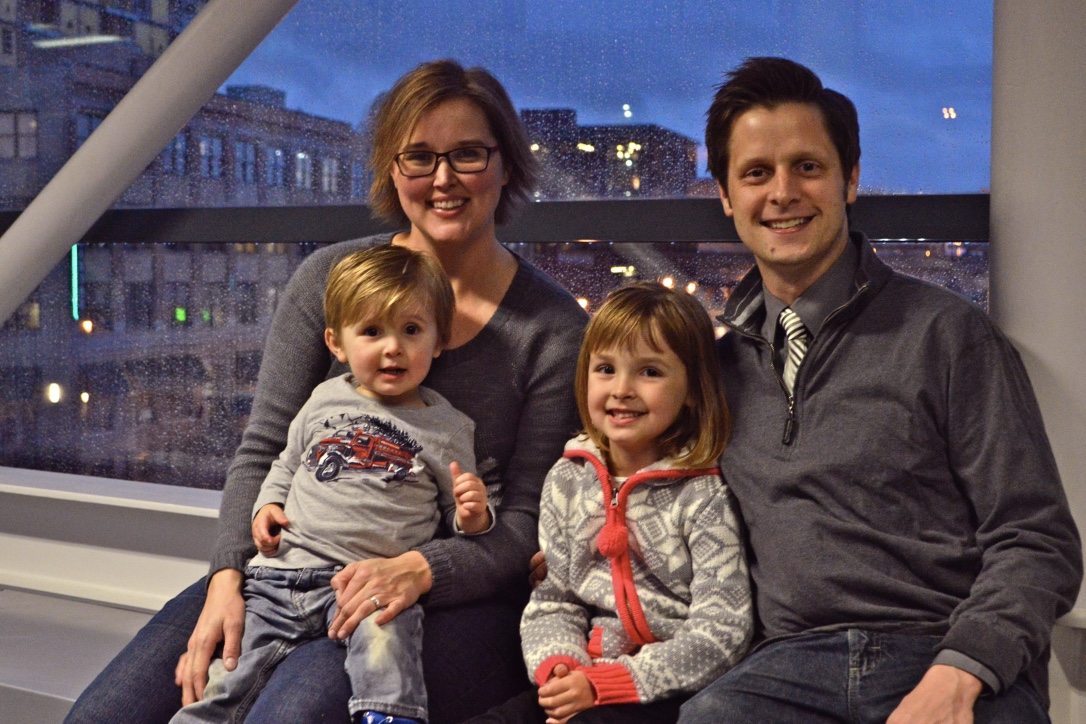
    Shaneen and her family - true Londoners.
    Shaneen and her family – true Londoners.

    shaneenShaneen Clarke is an author, speaker and evangelist who speaks and ministers internationally and has written Dare to be Great. She has been responsible for many educational and women’s initiatives and instigated the Ritz Tea in London where famous leaders address faith issues. She is a fluent Punjabi and Mandarin speaker in addition to her native English, and is married with two grown children.


  • At Home Away from Home by Sharon Garlough Brown

    No Place Like HomeWe can be at home with members of the family of God, wherever in the world we find ourselves. What an amazing truth and gift, as Sharon Brown so movingly writes this week in our home series. I rave about her novels in the Sensible Shoes series, in which her characters live out the spiritual disciplines in a rich and layered way. I never thought fiction could be such a wonderful vehicle for bringing the spiritual disciplines to life. Read them! And please join me in reading her story about a speaking engagement where it all went seemingly wrong.

    Recently I found myself far away from our home in West Michigan in order to speak at a conference in Edmonton, Alberta. My first morning there I was introduced to Sue, my volunteer guide for the weekend. “It’s my job to make sure you’re taken care of,” she said. “Each of us makes sure our presenters get where they need to be.” So we talked that morning in the hotel lobby about shuttles and meal times, workshop locations and other logistics. The conference was a well-oiled operation, and the first day of leading my intensive six-hour workshop on responding to the love of God through the practice of spiritual disciplines went off without a hitch.

    Until.

    Until I ate something for dinner that did not agree with me. And my reaction to that something was so violent that I ended up flat on a couch in the presenters’ “green room” with a conference center medic trying to get my blood pressure to register.

    Far away from home.

    With my husband Jack and our son David.
    With my husband Jack and our son David.

    Because the medic could not get my blood pressure stabilized, the paramedics were called at 9pm, and I was transported by ambulance to an Edmonton hospital, with Sue sitting in the front seat, holding my purse. “I’m not leaving you,” she insisted whenever I (rather incoherently) suggested that she should go home to get some rest. “This is what I signed up for.”

    This was SO not what either one of us had signed up for. But she never complained. At 2am she and her husband, Howard, were still sitting beside me in an Emergency Room waiting area, me slumped over in a wheelchair, an IV port still in my hand, and Sue with her hand on my shoulder, gently rubbing my back and saying periodically, “The Lord is here. Jesus is with you.”

    Yes. He was.

    The hospital staff asked if Sue and Howard were “family.” Yes. They were. They are. Far away from home I was reminded of what it means to be at home in the body of Christ, to be loved by brothers and sisters who have only just learned your name.

    Sue and her husband Howard, celebrating their 40th wedding anniversary. This sweet picture captures their spirit.
    Sue and her husband Howard, celebrating their 40th wedding anniversary. This sweet picture captures their spirit.

    “As the Father has loved me,” Jesus said, “so I have loved you. Now abide in my love.”

    I love Eugene Peterson’s rendering of that verse: Make yourselves at home in my love.

    This is the theme I write about, the theme I speak about, how God invites us to know ourselves as he names us: beloved children who have been called to make ourselves at home in his love. And when our hearts need to be assured and reassured of that love, what a gift to have brothers and sisters embody it, reminding us that wherever we are, we are at home in him.

    In Edmonton I was thrilled to meet a “member of the family” who has long been a mentor and inspiration for me: Philip Yancey and his lovely wife, Janet.
    In Edmonton I was thrilled to meet a “member of the family” who has long been a mentor and inspiration for me: Philip Yancey and his lovely wife, Janet.

    By the grace of God (and through his power being perfected in my weakness), I was able to lead two more workshops just hours after being released from the hospital. Food poisoning, the doctor declared, after investigating a myriad of possibilities.

    What a terrible experience, those who heard the story through the grapevine declared.

    But I had a different testimony. I got to see the glory of God. I got to see the love of God made incarnate through his people. I was given an experience that brought to life for me (again) the words I long for all of us to embrace in ever deepening ways. “I’ve loved you the way the Father has loved me. Make yourselves at home in my love.”

    Even—and especially—when we’re “far away from home.”

    Author PhotoSharon Garlough Brown is an author, retreat speaker, and spiritual director. A graduate of Princeton Theological Seminary, Sharon has served on the pastoral staff of congregations in Scotland, Oklahoma, England, and most recently in West Michigan, where she co-pastored Redeemer Covenant Church with her husband, Jack, for many years. Her spiritual formation novels, Sensible Shoes and Two Steps Forward, follow the journey of characters who are learning to rest in the love of God. Her third novel in the Sensible Shoes series, Barefoot, will be released by InterVarsity Press this November.

  • Home of the Heart by Penelope Swithinbank

    No Place Like HomeI’m delighted to welcome Penelope Swithinbank to the “There’s No Place Like Home” series. I knew of Penelope before I knew her, for she and her husband arrived at my former home church in Virginia shortly after I moved to her native England. They now run a gorgeous-looking retreat centre that I long to visit in the beautiful English countryside. We most often “see” each other online now, and I so appreciate Penelope’s wise and gracious insights. Her post had me smiling and tearing up.

    “Shrimp for supper,” I announced to my hungry husband. “Same recipe as that one I tried in the States last week.” I think he started salivating. We had visited our American grandsons in America, and I’d found a new recipe which we’d loved: skewered shrimp. Now I wanted to recreate it in Wiltshire, and had eagerly pounced on a packet of shrimp I’d spotted when shopping.

    Time to cook; I’d soaked the bamboo skewers in preparation and slit open the defrosted packet. Out tumbled tiny, tiny pathetic pink things. Not the large succulence I was expecting; these were miniscule. Lots of them to be sure, but far too small to be threaded on to skewers.

    And then I remembered – we are two nations divided by a common language. What England calls prawns are what America calls shrimp, and they are huge in the States and tiny in the UK. I should have looked for ‘jumbo prawns’ or ‘tiger prawns’ in England. At least I had remembered that zucchini are courgettes and summer squash merely the yellow ones.

    We ate shrimp and courgette risotto for supper. It was edible (just) but not what was expected, and a poor substitute.

    IMG_2263Same word but different meanings. And I had forgotten my translation skills. The years we spent living in the States should have reminded me of the need for interpretation. I used to dread using some word in a sermon that might be perfectly normal and acceptable in English, but have an entirely different and unsuitable meaning for my American congregation.

    “Let’s make a list of differences,” Patti exclaimed enthusiastically, as we told each other about trunks and boots, pavements and sidewalks, bonnets and hoods. A gloriously correct Southern Lady, Patti found paper and pen and drew a line down the centre (center!) of the page. She wrote at the top of the left hand column: “English” and listed trunk and sidewalk and hood. Her pen hesitated at the top of the righthand column and she turned back to me. “So what do YOU speak?” she asked, bewildered.

    Two nations divided by a common language, said George Bernard Shaw.

    And then there’s “home.” Where is it? What is it?

    American granny.
    American granny.

    When we lived in Virginia, despite the fact that we were ‘having a blast,’ and following the Lord’s calling to minister there, I often had moments of overwhelming grief. I would wander into my elder daughter’s bedroom and stand there sobbing, knowing that she was thousands of miles away in the UK at university and that my son, also in England, was now married and would never join us to live in the States.

    It wasn’t place I was missing, but people, family. When we were all together, whether in England or Virginia, that was ‘home.’ Eating together, laughing, sharing memories, sharing griefs and joys. Enjoying one another’s company.

    And now, with family both sides of the Atlantic (the younger daughter married a Virginian!) I have one foot each side of the Pond. Where is ‘home?’ And whichever side of the Pond I find myself, half of me is missing what, or rather who, is on the other side. I miss the company of my family.

    English granny.
    English granny.

    Cue a sermon illustration, of course. My preacherly mind wonders which one to pursue – the language of heaven, the homeliness of heaven (oops, homey-ness for American readers) …

    But it’s people, family, relationship, which impacts most, I think. Home, for me, is both America and England. I want to live in both, at the same time, holding all those I love around me forever. I could happily live in either – or both. Wherever my family is. I long for their company. But two-thirds live in London and a third in Virginia. When I’m in one place, I long for the other.

    12321125_1354507351320861_7219847649783684369_nAnd what about heaven? Do I long to live there too? With my church family, with the communion of saints, with the Lord forever. Do I long for the company of heaven? Com pane: with bread, eating and sharing in the feast that will be ours in heaven.

    “And then there will be one huge family reunion with the Master. So reassure one another with these words.” (1 Thessalonians 4:17–18. The Message)

    Bet the prawns – or shrimp – are larger there, as well.

    198b2f766493faf1a3cefecd1944f17d12392014_10204452113176744_854142529839352345_nPenelope Swithinbank is the Director of Ministry for Ministries by Design. She is an ordained Anglican priest and a trained Spiritual Director. She is married to Kim and they run the Vine at Mays Farm, a Christian retreat centre in Wiltshire. Penelope and Kim have 3 grown and married children and 6 grandchildren. She loves reading, the theatre, walking the dog and looking after her grandchildren on both sides of the Atlantic.

  • Two homes, 12,000 miles apart by Bev Murrill

    No Place Like HomeI met the engaging and encouraging Bev Murrill when I was a commissioning editor for Authentic Media. Although I didn’t end up getting to work with her on publishing her next book, I’m delighted that a friendship was born. She’s speaks life and love whether online or in person. I remember our first lunch, how she got me to stop questioning her in my usual habit of not only getting to know others but deflecting the attention off of me, when she exclaimed, “You must be an introvert!” I hadn’t before connected my personality preference to this practice. I love her blog on home, and especially how her obedience to God shines through.

    Until I turned 44, I spent my entire life in Australia. I never went to another country, so I had no need of a passport. I was happy that way. I never wanted to travel. I loved Australia and being an Aussie, and the idea of living anywhere else appalled me. This was even truer when I thought of England, the place where my husband was born and grew through a childhood of desperate poverty among an abusive and dysfunctional family. I thought of England with horror. It seemed tiny, cramped and filled with people who used humour to ridicule each other. I didn’t want to live in Coronation Street.

    So much for the plans we have for our lives.

    Whatever your plan, God always has a better one and your mission, should you choose to accept it, is to embrace His plans with all your heart. If you do, I promise you, you will never be sorry.

    Rick and Bev on their 44th wedding anniversary, out at the Hilton.
    Rick and Bev on their 44th wedding anniversary, out at the Hilton.

    So, one day in 1996, we packed our bags and headed halfway around the world, obeying the call of God to England. We went to pastor a church in Essex, and thus began some of the most beautiful and challenging years of my life.

    My relationship with God means that I know I will fare far better if I give myself to His plans rather than try to hide from them. It’s a mindset shift, but once you make it, it transforms your capacity to love what you have, rather than pine for what is no longer yours.

    View from Merewether Heights Lookout, Newcastle, Australia. Photo: Roanish, flickr
    View from Merewether Heights Lookout, Newcastle, Australia. Photo: Roanish, flickr
    The greens of England. The River Wye from Symonds Yat Rock. Photo: Anguskirk, flickr
    The greens of England. The River Wye from Symonds Yat Rock. Photo: Anguskirk, flickr

    What do I love about Britain? Have you got a month for me to tell you about the people, the places, the history and heritage, the idiosyncrasies, the beauty, and the banal? About the two beautiful English girls my youngest sons married, and my ten grandchildren who were born there, as my two other children and their spouses came to join us there.

    I will tell you that I have truly never seen such green greens in my life. England’s ‘green and pleasant land’ is an understatement. In spring and summer, the greens are sensually intoxicating. Sometimes I would just sit and stare around me, marvelling at how varied and vivid green could be. There is really, really nothing like the beauty of Britain in summer. I love the fact that you can sit and drink coffee in a place that was open for business 10 or 15 centuries ago. I love the clear cold, and being rugged up against the harshness, and the fact that the homes are centrally heated and getting up on a winter’s morning is just as warm as if it was summer. I love that you can visit the rest of the beautiful British Isles and most of Europe and still have a large part of the day left to spend sightseeing.

    Our street in the UK one winter!
    Our street in the UK one winter!

    Most of all though, I love the people: Funny, quirky, kind, sometimes prim, and polite to a fault. I chuckle at the righteous indignation of a British person you got off on the wrong foot with. It is not so of all Britain’s residents, but the place I called home was peopled with those who would turn linguistical somersaults in a bid to refuse a request without having to actually use the word NO. They had no intention of doing what you were asking but it appears there is something intrinsically vulgar about actually saying NO. For the life of me, I’ve never been able to work that one out but I did learn to work around it.

    I deeply value the friends I made during my time in UK. They are full of grace and humour and love and compassion. Prayerful people, their caring hearts have shown me such love and they will never shirk from fighting for what is right regardless of how unpleasant that may be. They’ve been loyal to this uncultured Aussie, giving me a place in their hearts that is beyond my ability to comprehend. I love and appreciate them dearly and miss them greatly. The British have changed me forever. My thinking has stretched and developed and will never now return to its original shape, for which I am heartily grateful.

    But I love Australia too. I love the browns of the land in summer. I love the barren, harsh beauty of ragged hills. I love the magnificent blue of the mountains and the glorious smell of the bush. I love the turquoise and azure blue waters that throw themselves wilfully onto the fine, cream sands. I love the 360º stretch of the blue, cloudless sky above me and I love the cities with their soaring skyscrapers and manically busy coffee shops. And I love the wild and reckless thunderstorms that stir your heart and make you want to rush outside and dance.

    The Australian bush. Photo: Dushan Hanuska, flickr
    The Australian bush. Photo: Dushan Hanuska, flickr

    But most of all, I love the people. I love the way Aussies say it as it is. They, too, are caring, but see no point in prevaricating, believing that breakthrough comes with understanding, rather than large hints and beating around the bush. I love that their dress is casual and their laughter is loud, and that they aren’t worried about what other people think of them. I love their can-do attitude; if something needs doing, they don’t spend months planning in committees, they just get in and start, and work it out as they go along.

    My Aussie friends are awesome. I’m blessed by their strengths and their determination to make a stand for what they believe in. I love that they care passionately about issues that should matter to all of us. I love their truthfulness spoken in love to me, their passionate capacity to inspire others to make a difference. I love that they don’t care where you come from or how much money you have or what university you went to. The old friends and the new ones are a gift to me, in that they accept me for who I am.

    The poet Dorothea MacKellar so beautifully describes the differences in the two nations I love. She calls Australia an ‘opal-hearted country’ and those words make my heart sing. I’d love to reproduce it here, but for copyright purposes I’ll point you to her official website.

    Her poem makes a choice between the two nations and that is something I cannot do. Honestly, I have come to love Britain passionately for all the reasons I’ve described and a myriad more. If the Lord had not called us back to Australia two years ago, I would have happily lived there for the rest of my days.

    Our daughter Skye, Rick and Bev on the Newcastle Foreshore on Australia Day.
    Our daughter Skye, Rick and Bev on the Newcastle Foreshore on Australia Day.

    But I love Australia too. I’m glad I’m here. I revel in being able to go swimming in the ocean baths in the early morning before the day begins. I love that I can drive around so many corners and be greeted with lakes and oceans and mountains right there in front of me.

    I have two homes and they are 12,000 miles from each other. I wish it were not so but I wouldn’t change it for anything. I thank God He took me there. I could never have known how amazing the Brits are, had I not had the opportunity to see them up close and personal. But I could never have known how much more was in me than I knew, had I not had to take courage and expand my heart to grapple with greater issues than I ever would have had I stayed put.

    Rick had a serious health scare in 2015 and one our ‘fight back’ strategies was to reinforce our intention to be together a lot longer. My first tattoo!
    Rick had a serious health scare in 2015 and one our ‘fight back’ strategies was to reinforce our intention to be together a lot longer. My first tattoo!

    I thank God that His plan for my life has had so much more capacity for joy, fulfilment, grace, challenge, love, beauty, freedom, empowerment, and change, than my plan ever did. What a little life I would have lived had I never got that passport.

    Never say no to God. He’s got so many great surprises up His sleeve.

    Bev preachingBev has been in senior ministry in Australia and UK for over 30 years. No longer leading Christian Growth International, the network of churches she and Rick planted in the UK, Bev continues to speak internationally, especially to leaders, churches and at women’s events. A mentor to many other leaders, Bev writes a regular blog at www.bevmurrill.com. She is the author of Speak Life and Shut the Hell Up, and Catalysts: You Can Be God’s Agent For Change. A pioneer and innovator, she has founded several organisations including Cherish Uganda, a village for HIV+ children, Liberti magazine – a contemporary Christian women’s magazine, and Kyria Network which supports, mentors and equips UK Christian women leaders. She has a masters degree in Global Leadership and is passionate about the issues women in the world currently face. Married to Rick for 45 years in September, she has 4 married children and 10 fantastic grandchildren.  
  • A transient heart finds a home by Tania Vaughan

    No Place Like Home

    I first met Tania Vaughan online in the Woman Alive book club, and then I got to meet her in person when we both traveled to Surrey to hear the wonderful Liz Curtis Higgs speak. After our meeting I reflected on how wonderful the online community can be – here was a new friend who was just the same in person as she was online. In her post on finding her home, she opens her heart and shares deeply – I trust her vulnerability will touch and move you, as it did me.

    Thinking about ‘Home’ has been an interesting experience. As I thought about how that word often relates to safety, security, stability and love, I realised that’s not what it meant to me.

    12606782_10153303531386720_494500236_nAt the impressionable age of 7 I watched as my home was torn apart first by divorce and then a custody battle. My safe, secure, stable and loving home changed dynamics and then location completely.

    Little did I know that it is around the age of 7 when our script for life is written. My script said that nothing is safe, nowhere is secure, there is no stability and you will be abandoned. This insight came 30 years later as I dealt with my abandonment issues in therapy.

    It was only then that I could see how that script had impacted my life and how I felt about home. I never settled. I could live anywhere because nowhere held any meaning. I always said “a house is just bricks and mortar, it means nothing”. Moving on didn’t leave me with regret or sadness and I never held tight enough to anything to want to stay.

    With my mum and step-father.
    With my mum and step-father.

    A lot of people feel like that about places; many would say that home is the people you’re with. This was the bigger problem for me. Not holding on to bricks and mortar was one thing but I realised I’d done the same with people. That first feeling of abandonment carried with me into every connection and relationship. I moved from one relationship to another without a backward glance. Friendships were shallow and meaningless, discarded and easily forgotten. There were no people I could call home; I believed they’d all abandon me in the end.

    If they didn’t seem to be making moves to abandon me I would systematically destroy the relationship so that what I believed would bear out – people leave. I even left myself! As the destructive behaviour spiralled, self-harm and suicide attempts earned me a stay in a mental health hospital. It was there, as I faced myself, that I decided this was not where I wanted to make my home.

    A few short years later, Jesus grabbed hold of me. Through the example of his love, God’s reassurance, “I will never leave you nor forsake you” (Deuteronomy 31:6), penetrated my defenses. It took my God-given husband another five years of battling my need to push him away before I realised he will never leave me either.

    Without the fear of abandonment I have found stability and safety, a place and people to call home. It is only very recently as we have contemplated future plans that even the thought of leaving the house, the home we have built together, tugs at my heart strings. There are memories here and love has poured into the paintwork as we made it our own. The home I craved for so long has now rooted in the bricks and mortar around me.

    To be homeless means to have nowhere to live, but it is so much more than just bricks and mortar. I always had a roof over my head but my heart was homeless. Now, through the transforming love of Jesus, this transient heart has found a home.

    With my lovely husband.
    With my lovely husband.
    My little office, a place set apart for me to think and write.
    My little office, a place set apart for me to think and write.
    A fire makes everything so cosy.
    A fire makes everything so cosy.

    taniaTania Vaughan is a speaker and writer who started Let’s Talk About Ministries at www.liveloveshare.com after writing her book Let’s Talk About Sex and Relationships – A Bible study for single women. Through Bible teaching and devotionals Tania seeks to encourage every woman to claim the full life that Jesus came to give them. www.taniavaughan.com

  • When “home” is a moving target by Ben Irwin

    No Place Like HomeI got to know Ben Irwin when we both worked for Zondervan – but in different countries. He and I had the privilege of launching Rob Lacey’s amazing The Word on the Street, the Bible in street language. We both loved Rob, and hated seeing him battling cancer, but I think we’d both say that working with him on such a creative project has been a highlight of our editing careers. We’ve both moved into writing, which as you’ll see in Ben’s piece has been a process and something to be embraced (which is true for me too). I love his thoughts on home. Enjoy!

    Somewhere in Wyoming on one of our cross-country moving adventures.
    Somewhere in Wyoming on one of our cross-country moving adventures.

    Finding your home can be tough when you’re always on the move.

    I was born on the East Coast of the United States but spent my formative years in the Deep South, where the minute someone heard my accent for the first time, they would invariably say, “You’re from the North, aren’t you?” It was more accusation than inquiry.

    There was a time (before kids) when it seemed like my wife and I were always packing, moving, unpacking—only to repeat the cycle soon after. Five times in four years we moved. Michigan to Seattle. Seattle to England. England back to Seattle. Seattle to Tacoma (a cheaper, more laid back version of Seattle about 30 miles south). Tacoma to Michigan.

    With every move, we looked back longingly on the last place we had lived. I found it hard to feel at home anywhere. When you’re constantly looking over your shoulder, you forget to be fully present where you are now.

    It took me a long time to learn the art of being content where I am, instead of always wondering where we’ll go next or wishing we were back in the last place we lived. In some ways, I’m still learning.

    Here’s one thing that has helped me: realizing that I have more than one “home,” and that’s OK.

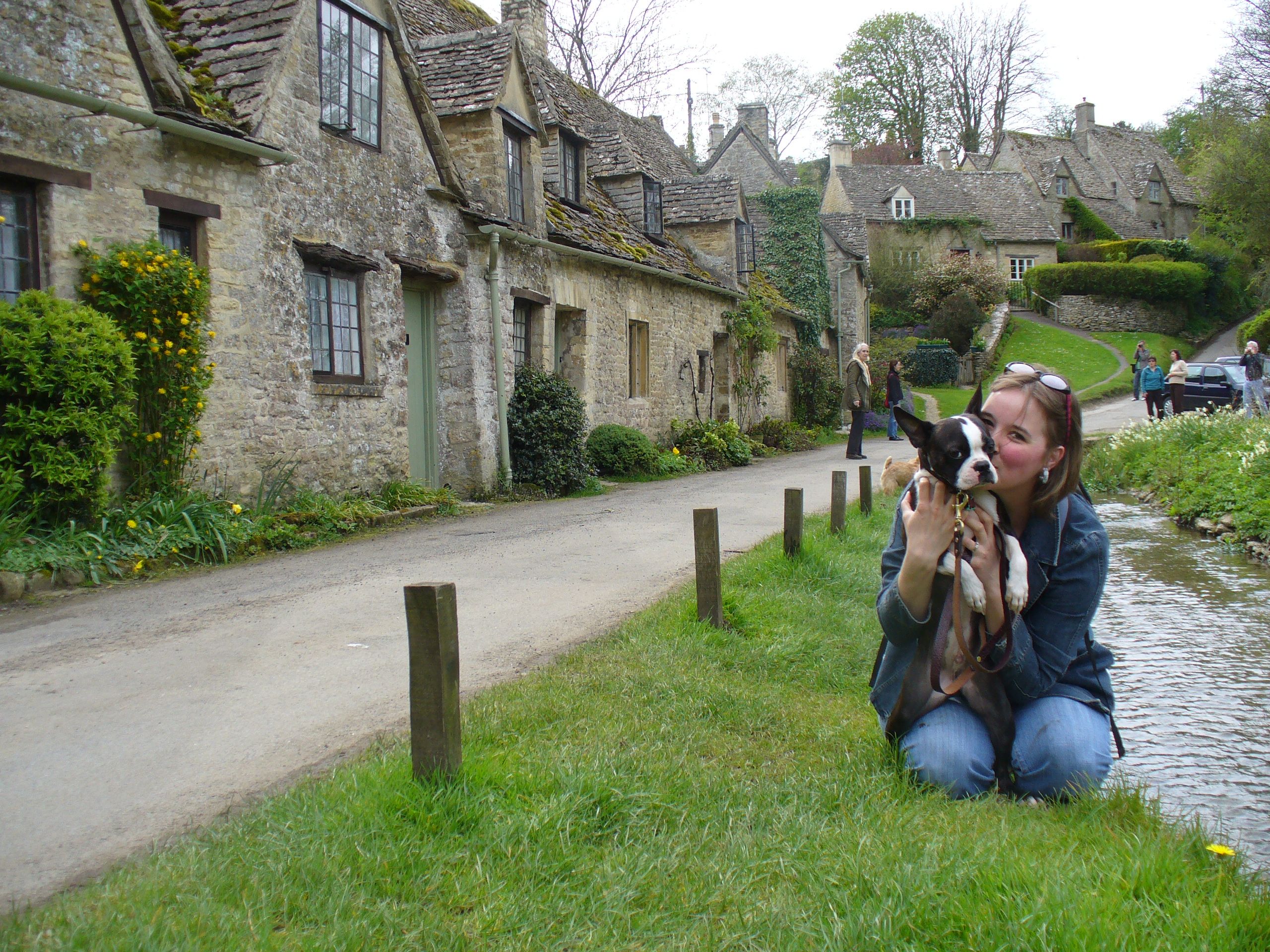
    Seattle, 2007.
    Seattle, 2007.
    Seattle, 2007.
    Seattle, 2007.
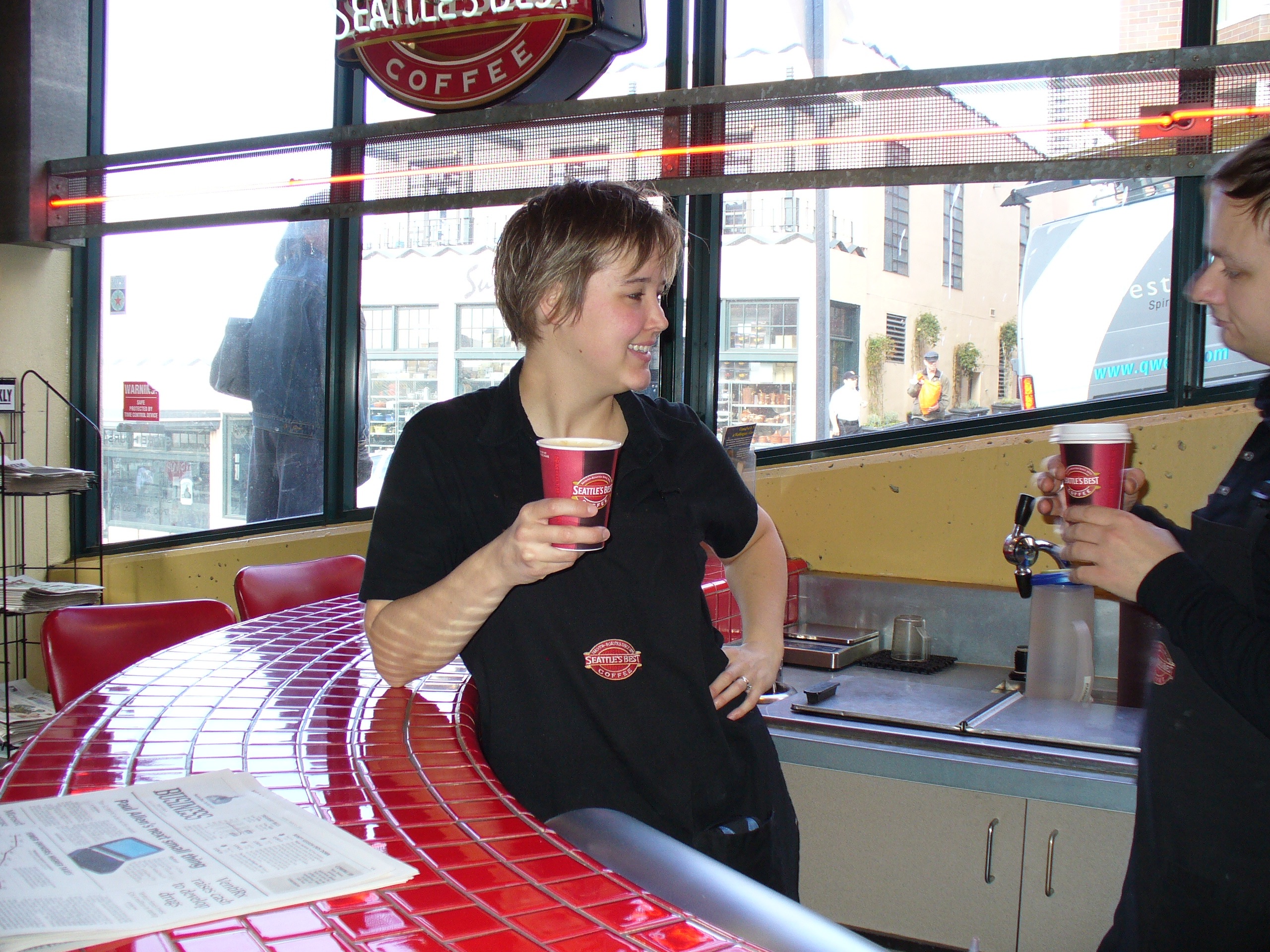
    Amanda working at one of Seattle's iconic coffee shops, 2007.
    Amanda working at one of Seattle’s iconic coffee shops, 2007.

    Each of the places we’ve lived has shaped us in some way—sometimes simple, sometimes profound. These places have become, in a sense, a part of who we are—each one a part of our idea of “home.”

    When we moved from Michigan to Seattle, we learned the value of living with less—less home, less stuff, one less car. The values of simplicity and sustainability took up residence in our hearts.

    Although we spent just seven months in England, it was long enough for us to find a new spiritual “home.” Someone invited us to the parish church in our village for Easter Sunday, and we’ve been Anglicans ever since. We’ve been soaked in the liturgies, prayers, and practices of a tradition that was new and strange to us at the time—yet now feels more like home than any other church we’ve been part of.

    It’s because of one of those five moves that I am a writer today. We traversed the country so I could start a new job. It was the first time anyone ever paid me to write, and I’ve been writing ever since. It’s become my vocational “home.” Those who took a chance on an untested writer and helped me nurture my craft have since become part of our extended family.

    England, 2008.
    England, 2008.
    Tacoma, 2010, just before our daughter was born.
    Tacoma, 2010, just before our daughter was born.
    Tacoma, 2010
    Tacoma, 2010
    Introducing our daughter to one of our past homes—England, 2012.
    Introducing our daughter to one of our past homes—England, 2012.

    Today, it’s in the company of friends around the globe that we feel most at home. Some of our children’s godparents are those we met in the UK. Even though we go months and sometimes years without seeing each other face to face, when we’re together—whether it’s on our side of the ocean or theirs—it feels like we’re home.

    The idea of having more than one home—or that our sense of “home” need not be bound by geography—should not seem strange to those of us who are Christians. As followers of Jesus, we live in one kingdom while our citizenship belongs to another.

    This is not to say that “this world is not my home / I’m just a-passing through,” to quote the American Southern Gospel number.

    thumb_DSC_1330_1024About Ben: Ben Irwin is the author of The Story of King Jesus and a member of the communications team at the Preemptive Love Coalition. He and his family live in Grand Rapids, Michigan.

  • No Place Like Home by Cathy Madavan

    No Place Like Home

    Riches upon riches – that’s what this blog series, “There’s No Place Like Home,” is. And today I’m thrilled to host the marvelous Cathy Madavan, a firecracker of a woman who is passionate about living the Christian life with joy, purpose, and commitment. When I was working as a publisher with Authentic Media, I longed to commission her – and was thrilled when she said yes. I love, love, love her book Digging with Diamonds, which I got to help her with – if you haven’t read it, do so. She’s not only brilliant with catchy turn-of-phrases, but has the wisdom and depth to go with it. And yes, she was the one who came up with the title for this series!

    10386267_10153430063592424_7935969089141327826_nNo place like home.
    There really is no place like home. And by home I mean the place where you can kick off your shoes and sprawl over the sofa armed with a book and a cavernous bag of crisps/bar of chocolate/bowl of popcorn *delete as desired*.
    Of course, the pressure is always on for us to create the ‘ideal home’ straight from the pages of a glossy magazine, but creating a home is different to constructing a house. It takes an architect and some bricklaying experience to construct a house, but if we want to create an home environment where relationships can thrive, that also takes some planning and skill. It’s worth thinking about what we want to build, so that we can deliberately put the right foundations and building blocks in place.

    cross stitch signBuild what matters

    I once visited a home with a sign above the door that read, “If you want to visit the house make an appointment. If you want to visit us, come any time.” Good point, I thought. We all want our houses to be warm and welcoming, but will people really feel more at home because your trinkets are displayed in perfect symmetry? Will they be so dazzled by your spotless floor that they want to open up their hearts and reveal their hopes and fears? Not so much. Now, I do love my house – I could well suffer from Obsessive Cushion Disorder and have spent an embarrassing amount of hours choosing the right shade of cream for the walls, but it’s not a home because of shabby chic accessories.

    So, rather than spending too much time discussing our fabulous new feature wall or conversely moaning about our collection of cobwebs and unfinished projects, why not instead draw attention to all God has given us and be thankful and joyful about it? This is about building firm foundations. Your house might be perfect or it might be a work in progress, but you have a safe place called home where you know you belong and where strong relationships can be built. Stable buildings need firm foundations and it’s up to us to remember what really matters most in our homes and then build on that. What are our values? How do we enjoy in this space? How can we best express our memories and passions here?

    12347938_10153390853207424_8627574237170553316_nProtect what is precious

    For any building, we take out insurance in case our belongings are damaged, lost or stolen. But our most precious possessions are not material. Our home is a place where love can flourish, forgiveness can be practiced and honesty can be shared. These vital values need to be protected. Just as we deliberately keep out physical danger, so we should intentionally close the door on division, bitterness and selfishness. Pray that kindness will guard the threshold into your home. Declare that transparency will shine through the windows of your family. Believe that fruitfulness will abound on your land.

    Your values and your traditions will not accidentally emerge; they will be created through intention and remain safe through protection. Sadly, through the busyness of life and various competing agendas, other influences will constantly try and invade our space and the enemy will attempt to steal all we hold dear. God has given us all we need to protect our territory; what do we need to do to ensure that His love remains at the heart of our home? Are we sufficiently spiritually insured against the loss of what matters most?

    12311235_10153390853217424_8772987293084811593_nExtend where necessary 

    Somebody said that it’s not how many bedrooms you have, but how you use them that matters. Now, while constant striving for a larger house is futile (everybody always needs just one more room), I do think this person had a point. I know people with huge houses and small apartments who demonstrate equally incredible and sacrificial hospitality. And I know others who don’t. We can all extend ourselves and replicate our values by offering a grace space to others. Our homes can be a light into our community and our relationships. It doesn’t have to be a lot of work – my preferred option is holding pudding parties where other people bring the puds! We provide the table and a place to grow deep-rooted relationships. Could you invite others to share what you are building? Why not welcome them into your mistakes as well as your success? Allow your children (if you have them) to invite friends, make mess and eat pizza.

    Proverbs 24:3–4 says ‘By wisdom a house is built, and through understanding it is established; through knowledge its rooms are filled with rare and beautiful treasures.’ What a blessing it is that as we dwell together, God dwells in the midst of us, enabling us to build a rich and significant place called home. There really is no place like it.

    12552588_10153465466832424_1287782433368880483_n

    cathy pic 2014 jpeg copyCathy is the author of Digging for Diamonds and speaks at events, churches and organisations across the UK including tours with Care for the Family. She  also writes for Liberti magazine and for CWR and is part of the Spring Harvest Planning Group. She is mum to two teenage girls, wife to Mark (a church leader) and leads worship at church. She loves communicating creatively and connecting with people.

  • Making my Home by Joan Bonner

    No Place Like HomeToday I’m happy to host Joan Bonner in our “There’s No Place Like Home” series, whom I met through an American writing friend who goes to church with Joan. We became friends on Facebook, and I soon enjoyed her Northern (English) wit and comments in discussions about America versus the UK, for Joan has lived in the States for decades. I’m also thrilled to host her because she and my in-laws lived through many similar experiences during the Second World War, with her and my mother-in-law thankfully avoiding the fate of those schoolchildren who boarded a ship to Canada, as she describes below. I love how she brings alive a recent history that many of us don’t know; I think you’ll also enjoy hearing how she and her husband ended up making their home an ocean away from what had been home.

    When Dad came back from World War 1, he had trouble finding a job, so when he and Mam heard about a job-opening being caretakers (US: janitors) of a church, they jumped at the chance. A rent-free house and one pound a week, what more could you ask? Thus for me as a child, home was a four-room, one-story terraced (US: row) house in a large shipbuilding town on the northeast coast of England. On one side was an identical house and on the other was a church.

    Here I am at the age of two with my big brother. It must have been a balmy day - probably as high as 60F/16C, because he is taking into the water to plodge.
    Here I am at the age of two with my big brother. It must have been a balmy day – probably as high as 60F/16C, because he is taking me into the water to plodge.

    Mam was an amazing housekeeper. Not only did she keep the church clean but our house was immaculate. Other houses on the street were also spotless but to the point where you were afraid to sit down. Not my house! Friends were always made welcome and, best of all, if you stayed for tea (US: dinner), you didn’t have to make polite conversation – we always read at mealtimes. (At the time I didn’t know how uncouth and bad-mannered this was, but to this day I have to have a book propped up in front of me at mealtimes.)

    We moved to our terraced house in 1936 when I was seven, which was, of course, when Hitler was coming to power. For the next three years, every time Hitler’s name was mentioned, Dad would say “There’s going to be a war. I don’t care what Chamberlain, or anyone else says, there’s going to be a war.”

    No surprise to me, therefore, when 3 September 1939 rolled around. There I was, 10 years old, sitting in church that Sunday morning, when Dad appeared behind the pulpit and whispered to the minister. I was totally embarrassed that he would do that until the minister turned to the congregation and said, “We are at war!”

    In front of my house at the age of eight.
    In front of my house at the age of eight.

    During those three years leading up to the war, Dad realised that our town would be bombed and so he had made arrangements for me to be evacuated to Montreal, where we had family. The government offered free passage to children from low-income families, so I was put on a waiting list.

    Meanwhile, the war had started and bombs were dropping. One of the elders of our church lived outside of town and, hearing Dad’s concern, offered to let me live with them. This felt like culture shock for me, for they lived in a house “in its own grounds.” No, nothing like Downton Abbey, but so much bigger than my home and – indoor plumbing!

    And it was just as well that Dad had arranged an alternate evacuee home for me. In 1940, the first evacuee ship,“City of Benares,” carrying 90 children, was torpedoed and sunk. Because they were in a convoy, the other ships were not allowed to stop and help. Most of the children died, including nine from Sunderland. Naturally that put a stop to any more children being sent overseas.

    The couple who hosted me were about my grandparent’s age, but were wonderful to me. I have no complaints. Well, actually, Uncle Matt would not let me have tea at night! What! However, every Friday night, we all got to have a bath and shampoo, so Auntie Em would say, “I’m going to take Joan into the kitchen so that I can dry her hair by the fire.” Uncle Matt surely must have known what was going on, because Auntie Em would make me a cup of tea.

    Their house was beautiful and had a gorgeous rose garden out front, plus a lawn and vegetable garden out back. Everyone was so kind to me, but still, it wasn’t home. Home was where Mam, Dad and big brother were.

    As time went on and I grew a little older, I would miss my family and would decide that I needed to walk home and see them. I don’t think I told anyone where I was going; I would just show up at my home and Mam would have to take me back. I don’t remember being chastised at all at either end. What amazing people to be able to do that! While I lived there I was going to a very good high school, which I enjoyed, but still, it wasn’t home. So, in 1943, when I was 14, I talked Dad into letting me come home.

    Finally back home where I belong, after three years of being evacuated. I'm fourteen in this photo.
    Finally back home where I belong, after three years of being evacuated. I’m fourteen in this photo.

    By this time, bombing was going on regularly but I didn’t care. I was home where I belonged. Dad would actually let me sit up on the church roof with him when he was “firewatching,” which sounds like we were just watching the city burn, but we weren’t. All large buildings were required to have people go on the roof when the sirens went off to put out small fires with buckets of sand. I find it hard to believe now that I went up with my dad, but at the time I wasn’t afraid. Why should I be? – I was home.

    A day at the beach - this is how we'd bundle up for the cold northern winds!
    A day at the beach – this is how we’d bundle up for the cold northern winds!

    Home changed unexpectedly after I was married to my husband Bob. A misunderstanding in language meant we left England and moved across the Pond.

    Bob left school at the age of fourteen, which was standard then if one didn’t go to high school. He signed on as an apprentice fitter in one of our local shipyards. Every morning he would get up, have a good old English “fry-up,” (US: a fried English breakfast of eggs, sausages, baked beans, tomatoes and mushrooms) get on his bicycle and off he’d go to the shipyard. He’d work all morning then home for dinner (lunch to you posh people), back to work, home for tea, then off to night school in our local college.

    At the end of seven years of this routine, he was certified as a “Chartered British Marine Engineer” and “Chartered British Mechanical Engineer,” and moved up into the drawing office. His title was draughtsman. There were several lower staff (mostly women, of course), who would trace his designs, and were therefore called tracers.

    Bob (seven years older than me) started all this before the war when there was plenty of work. By the time he and I met and were married in 1950, the war was over and the shipyards were closing. He had been working at the same shipyard for thirteen years but realized it was time to move on.

    He went on several interviews which didn’t work out. We had never even considered emigration but one day, I saw an ad in the paper for draughtsmen in Canada. Interview in England, first class passage out, one year guaranteed, first class return if no more work. Salary was three times what he was earning in England. I figured, what could we lose, so I talked Bob into applying. They didn’t even want an interview, but asked, “When can you start?”

    Within a month we were on our way.

    We had only been married a year but had bought a house, which our family had furnished through wedding presents. Everything happened so fast we didn’t have time to think about what we were doing, or what we were leaving behind.

    Outside the home we were leaving on our last day in England, bound for North America and making a new home there.
    Outside the home we were leaving on our last day in England, bound for North America and making a new home there.

    We arrived in Montreal and off Bob went to work. When he got there he discovered that a draughtsman, on this side of the pond, was the same as a tracer! Nor did we know that the cost of living was so much higher than at home.

    We did, of course, finish the contract, but later moved on to the United States. Bob and I never regretted heading across the Pond and making our home there, but I know there is no way he would have accepted that job if he had realized what the position was that he was being offered.

    I am so blessed here at my home in America. Both of our sons and our eldest granddaughter all live here in Indiana. They and their spouses join us regularly for shepherd’s pie or roast beef and Yorkshire pudding, keeping the traditions alive.

    Our family, decades later! We wear our paper crowns at Christmas with pride.
    Our family, decades later! We wear our paper crowns at Christmas with pride.
    Introducing my American granddaughter to the beach in Sunderland.
    Introducing my American granddaughter to the beach in Sunderland.
  • Tastes of Home by Amy Robinson

    No Place Like Home

    Another installment in our “There’s No Place Like Home” series, and again I read with tears. Thank you to Amy Robinson, a friend I’ve met online who is a storyteller and writer – and like me, a vicar’s wife (whatever that means!). She bursts with joy and encouragement, and I’ve so enjoyed getting to know her. She contributed a wonderful story to Finding Myself in Britain about the eccentricities and quirks of Knole House, a stately country home near to her boarding school, but alas, the story met the cutting-room floor. Perhaps I could obtain her permission to share it in a deleted-scenes post – she has a wonderful way of transporting you to amazing places through her writing. Which is what she does here, as she invites you to take up your cutlery and join her for a taste of heaven.

    Do you know what food they serve at the banquet in the kingdom of heaven? I do, because one night as a teenager, I dreamed I was there. It was one of those vivid and detailed dreams, and heaven was a cross between Narnia and the Royal Albert Hall, with a banqueting table curving around the length of every balcony. When you took your place, at once the food you most wanted to eat appeared, as if the dishes had read your mind.

    What was on my plate? Oh, I do feel silly admitting it, but I’ve started now. It was carrots and apples grated together: fresh, sweet and juicy the way my mother makes it. The taste of childhood summers.

    A favourite mountain in France.
    A favourite mountain in France.

    Food connects us so instantly to memories and to people, and in a family’s language, meals can take on a symbolic meaning. When my family arrived from France to stay over Christmas, I made fish pie. I can’t quite get it just the same as Aunt Jane’s, even though I add hard boiled eggs and serve it with cloudy apple juice, but it still tastes of welcome: of the sight of Aunt Jane opening her front door and flinging her arms wide, and the warm smell of the pie that she always made ready for our arrival.

    Aunt Jane standing rather perfectly outside her front door.
    Aunt Jane standing rather perfectly outside her front door.

    Of course, because it was Christmas, I also made Grandmama’s Dundee cake. Apparently I’m the only member of the family who can make it taste exactly like hers did, but this is not due to any secret recipe or deep spiritual connection. It’s because I inherited her cake tin.

    A perfect slice of Dundee cake, made from Grandmama’s tin.
    A perfect slice of Dundee cake, made from Grandmama’s tin.

    My childhood was rooted in several places at once, rather than one ‘home’ which kept changing. We used to say that we worked in London and lived in France, where we spent every available holiday, but they were both ‘home’. And then there was boarding school, where I made my first deep friendships and met my husband. And there was Grandmama’s flat in London and Aunt Jane’s house near the Malverns (still where I want to live one day). All ‘home’ in that I belonged there, and they made up such important parts of me.

    At school sharing a midnight feast of Grandmama's cake! Can you guess which one I am?
    At school sharing a midnight feast of Grandmama’s cake! Can you guess which one I am?

    Isn’t it strange and wonderful that my children, who will not meet Aunt Jane or Grandmama this side of heaven, will still grow up with the tastes of their foods as part of their own sense of home, of welcome and belonging? They will add their own places and people and foods to pass on to their children too, but I wonder for how many generations the taste of fish pie might mean the first night at home?

    A few days after welcoming my family with Aunt Jane’s pie, it was Christmas day and I was at the communion rail. As I stretched out my empty hands to receive, I reflected that we are all spiritual wanderers, longing for home, but here, being handed to me, was the heavenly equivalent of fish pie: the bread and wine, the food that represents welcome and belonging, the meal which Jesus gave to his followers to remember him by. A tiny taste of home.

    An incredibly young me and Tiffer, our first Easter together at my family home in France.
    An incredibly young me and Tiffer, our first Easter together at my family home in France.
    Aunt Jane with me as a baby (she never aged, did she?!)
    Aunt Jane with me as a baby (she never aged, did she?!)
    Grandmama.
    Grandmama.
    Family with Grandmama on her 90th birthday.
    Family with Grandmama on her 90th birthday.

    12510034_10101543672460180_2026998564_oAmy Robinson is a writer, performance storyteller and ventriloquist, and benefice children’s worker for four Suffolk church communities. She has published three books with Kevin Mayhew, writes scripts and resources for www.GenR8.org and blogs a bit at www.amystoryteller.com. She lives in a rectory with the rector, two children and lots of puppets. You can find her on Twitter at @Ameandme and at Facebook.

  • What Is Home? by Gayl Wright

    No Place Like HomeToday I’m excited to welcome Gayl Wright to the “There’s No Place Like Home” series. I’ve come to know Gayl online, and so enjoy her graceful encouragement and wisdom. She shares about the meaning of home through her family life – having raised seven children, which boggles my mind! I love the rootedness of her life and the way family traditions emerged over the years.

    IMG_0670Home is many things to many people. Some consider home to be the place where they live or the place where they were born. I have lived in so many places that it would be hard to pick one to call home. To me, home is wherever I happen to be living at a particular time.

    Home is also a place where people live together as they learn to share, to work out differences, to develop skills and more. It’s a place where stories begin and memories are made. In my case it first began with my parents and then my brothers as they came along. When I married, home was wherever my husband and I found ourselves.

    As our family grew the home included seven children, although my oldest was twenty when the youngest was born. At that time our four daughters were 20, 18, 14, and 12. My sons were 6, 3, and a newborn. When our baby boy was four months old we left our home in NJ and moved to SC. That was over 18 years ago! Most all have left home now to find their place in the world.

    IMG_0666We tried to establish a few traditions, one of which was praying and reading the Bible together. We also enjoyed tea and reading time. I began reading to the girls every afternoon while they would draw or color pictures. We continued as the boys were born, although sometimes it was a challenge with toddlers and babies, but we did it!

    Part of the reading was for our homeschooling, but we also chose fun books and adventure stories. A lot of the books we read were by British authors and we fell in love with the idea of tea time. I’m not sure exactly when we started the everyday tea, but it quickly became a tradition carried on even as my children became adults.

    Because we liked reading so much we began including my husband in the evenings when he would read aloud to us. The Chronicles of Narnia, the Little House books, the Lord of the Rings, Anne of Green Gables and the Swallows and Amazons series were a few of the many we enjoyed. We then branched out to such authors as G.K. Chesterton, Howard Pyle, P.G. Wodehouse, and others.

    20151129_214154My children had big imaginations and were always making up plays or acting out stories, many of which were inspired by the books we read. A treasured discovery was a book written and illustrated by J.R.R. Tolkien that started out as letters to his children from Father Christmas. It has appeal to children and adults alike and quickly became a favorite of our family to read in the days leading up to Christmas.

    When I was growing up we did not celebrate Advent and I didn’t really know much about it until my husband and I had been married for awhile. As we learned about it we decided to make that a tradition. We would make or buy a wreath every year and position candles around it, lighting one each Sunday of Advent as we read from various sources.

    One year, our family learned and sang together the Hallelujah Chorus from Handel’s Messiah. We had a keyboard that could be set for a pipe organ, so I played the music which was recorded onto the keyboard. My husband, daughters and I learned the different parts and then shared it in church and with friends and family. One night while practicing in the car on the way home from visiting friends, our two-year-old surprised us by joining in!

    IMG_0669Most of our days were not spent doing anything extraordinary, at least it didn’t seem that way to us. We enjoyed learning and doing things together. When I look back over my old journals I see that we did a lot of reading, singing, baking, playing, walking, talking, welcoming people into our home, and for the most part everyone got along well.

    Of course we had our times of sibling rivalry, disagreements with Mom and Dad, arguments among ourselves, and other hard times. I know we did not always handle those things well, but our children knew we loved each other and we loved them. I think they felt secure in that.

    Nowadays our home consists of my husband, myself and our oldest son, who battles muscular dystrophy and uses a wheelchair most of the time. It’s a challenge, but we are working on finding ways to make things easier for him. The three of us still spend time reading together almost daily. We also have chickens, two dogs and a cat who all live outside.

    As Christmas quickly approaches we are once again lighting the candles around the Advent wreath continuing with a tradition started many years ago. The difference is that there are only three of us living here now, but the memories linger on, all contributing to making our house a home.

    We always enjoy it when our other children and our grandchildren come to visit. It’s been awhile since we’ve had everyone at once as they live in various places and have different work and school schedules. At this point there are 26 of us, but the boys aren’t married yet…

    loghouseOur home is always open for visitors. We love to share our beautiful views and from scratch home cooked food. One of the favorites is face pancakes. I’ve been told my pancakes are the best!

    Come on over, make yourself at home and you’ll be treated like family.

    profilepic (2)Gayl Wright makes her home in upstate South Carolina. She is a seeker of truth who looks for beauty in ordinary things. A self-taught poet, photographer and artist, she loves to capture what she finds using her talents to encourage others and glorify God.