 I read Tina Brown’s Vanity Fair Diaries with some fascination and yet a sense of repellence. I’ll share more in the next post, in which I explore the writing of her diaries and her views on publishing, but as it’s Friday, the day on which I shared the “There’s No Place Like Home” series, I thought it appropriate to look at her thoughts as a Brit living in America on finding home.
She left the UK for New York City when she was thirty-one, to edit Vanity Fair. Controversy has seemed to follow her, whether related to her marriage to then Sunday Times editor Harold Evans or for being named as editor of this prominent magazine when young and from out of the country.
As one who has lived away from England for thirty-four years, she’s given thought this subject of home. I have interspersed my comments on extracts from her book, The Vanity Fair Diaries, in italic. I haven’t included page numbers because I read from an electronic version of a pre-published book.
Like many people who have moved to a new country, we long for bits of our old one combined with the joys of the new:
My ideal place to live would be Transatlantica, an island that combined English irony, country lanes in summer, the National Theatre, and a real pot of tea they never seem to be able to make here, with American openness, lack of class barriers, willingness to give away money to good causes, and the view of Manhattan from the Rainbow Room at the top of Rockefeller Center.
I agree with her about American openness and the lack of class barriers and a tradition of philanthropy. I’d add to the American list, an optimism and sunny outlook, the sheer sense of space that vast swathes of land afford, and the friendliness of the people. To the UK side of things, I’m not too bothered by tea (shhhh), and I still don’t understand irony, but yes please to the beauty of the countryside, the National Trust, the wealth of friendships infused with loyalty, and sticky toffee pudding.
 Here, time is to be spent, like money; time is to be killed, time is to be forgotten. Everything is a race against time. Trying to beat it is the pressure at your throat. I dream of London’s manageable scale, its compactness, its conversation. America is too big, too rich, too driven. America needs editing.
I wonder if her reflections here are related to her high-power job and life in New York City. But her words, “America needs editing” make me take pause – are we too bold, brash, and in your face?
The soulless, anonymous America of shopping malls and strip malls, of chain stores, Dunkin’ Donuts, Walmarts, Drug Fairs . . . whenever I roam those aisles I feel dispossessed yet enclosed by them. I wonder if my tight little European soul will ever expand enough to fit. I fear it won’t but that it will never shrink back down enough to fit England again. My home is now Transatlantica. That place between England and America is the only world where I can be happy now.
Having grown up in the land of shopping malls, I miss their convenience here in England, and the cost of the goods. At first, everything felt so small; when I’d go back to the States for a visit, I’d be overwhelmed by, for example, the number of salad dressings on offer at the supermarket. The openness of the people can be mirrored in the openness of the land, and I don’t feel spite for the chain stores and strip malls, as much as I do much enjoy browsing in quaint shops. She speaks of the lack of class barriers, but her sniffinesss over this type of store reveals a patronizing tone.
I sometimes feel there’s a bravery, even nobility, to people who leave their own country for some other dream. It makes you so vulnerable. There is a bit of my own expatriate heart that’s frozen, not here, not there, a lonely thing.
Yes, I agree to the feeling of displacement, and sometimes the loneliness, but here is where I would lean on my Christian faith – and the hope of heaven – to find comfort and meaning. Knowing that I will be united with my loved ones for eternity helps me when I’m missing out on birthdays, meals together, and so on.
 I think I may have left London for good. But that doesn’t mean I’ll ever absorb America. Fenimore Cooper will never mean anything to me. But it doesn’t mean I’ll ever go back… I’m turned off by much about England now.
I can understand her almost point of pride that an author like Fenimore Cooper won’t mean anything to her, just as Enid Blyton won’t to me. But I am not turned off by England or America. Yes, both are lacking in many ways, but both are rich and wonderful too.
I feel how wildly foreign we Brits really are to Americans and how the gap is widening all the time. They see us as Masterpiece Theatre, to be briefly appreciated before zapping the channel to something more relevant.
I resonate with this – do my friends picture Ye Olde England in their minds when they think of me living in a Victorian vicarage? Wondering if we have tea and scones everyday? And her reflection was written before Downton Abbey so took off. I suppose we long for the ideas of a place that have been cultivated in our imaginations – Pemberley in Derbyshire, but without women only finding a way through marriage or the vast difference between the classes.
It’s strange to live between two cultures in my head. When I left Thatcher’s England I had a jaded vision of its future—the widening schism between the classes and the coming of a new, moneyed yahooism, nihilistic and coarse, not meritocratic and aspirational as it is here. I don’t know the names and the faces of the new England to really judge if that’s true. Here I can penetrate into the subtext of what I see, but I don’t know enough about American history or politics yet to be able to contextualize it against the past as I can at home. Here I live in a permanent red-hot present, fascinated, appalled, thrilled, amused, enraged—but never ultimately touched, because in the end I am always a spectator and a foreigner.
How does one overcome the feeling of being a permanent spectator and foreigner? I’ll always be known as “the American,” – recently when out to dinner with friends, they were talking about several other Americans in this way.
Maggie’s quote about Dennis Thatcher: “Home is where you go when you have nothing better to do.” …Mrs. Thatcher was not being dismissive about home—quite the contrary. She was talking about its place in the minds of grown-up children who have left it: “We are a very close family even though we do our own thing. That is what family life is about. This [home] is where you come to with your problems. This is from where you go, to do whatever you wish. And sometimes if something happens and we don’t see the family as often as we would wish, and they go off, I say: “˜Well, look, home is where you come when you haven’t anything better to do. We are always there.’ ”
What do you think of Tina Brown’s musings, and especially this last paragraph about home being the place in one’s memories?
The full series on finding home, with many wonderful guest writers, can be found here. It links up to the themes of home that I explore in my book, Finding Myself in Britain: Our Search for Faith, Home and True Identity. Available in the UK from lovely Christian bookshops, or online from Eden and Amazon. Only available Stateside from Amazon.
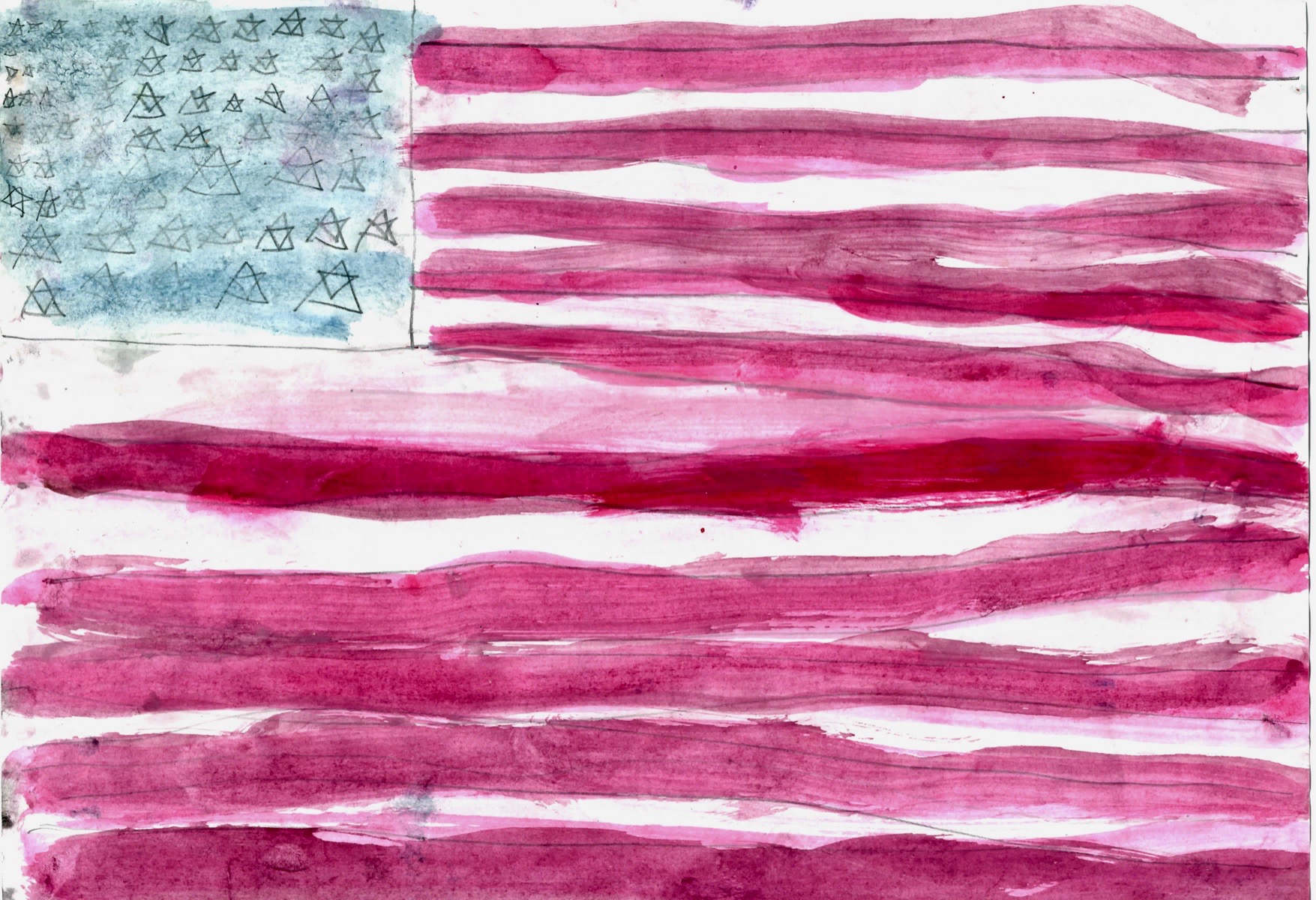

 The royal wedding is just over a week away, when an American will again enter the royal family – this time, I trust, with a strong welcome. Prince Harry and Meghan Markle seem to be representing both cultures in their celebration. For instance, the invitations were printed on English card with American ink. Their wedding cake is being made by a Californian who lives in London. A gospel choir will be singing at the wedding. I wonder how many more American influences we’ll see?

 “I like your trainers,” said one of my new husband’s fellow theological college (US: seminary) students.
 It’s Epiphany! The day we mark the wise men coming to worship Jesus. Contrary to common tradition, they didn’t appear at the same time as the shepherds, but a lot later – many commentators think Jesus was around two years old. But for us the day rounds off the Christmas season. We look back at the sparkle and wonder and give thanks for the many gifts the Lord gives us, not least the best gift ever – the presence of his Son, Jesus. So today marks the last of my dad’s paintings – for now. I’ve saved one of my favorites for today; enjoy! (I will post again when