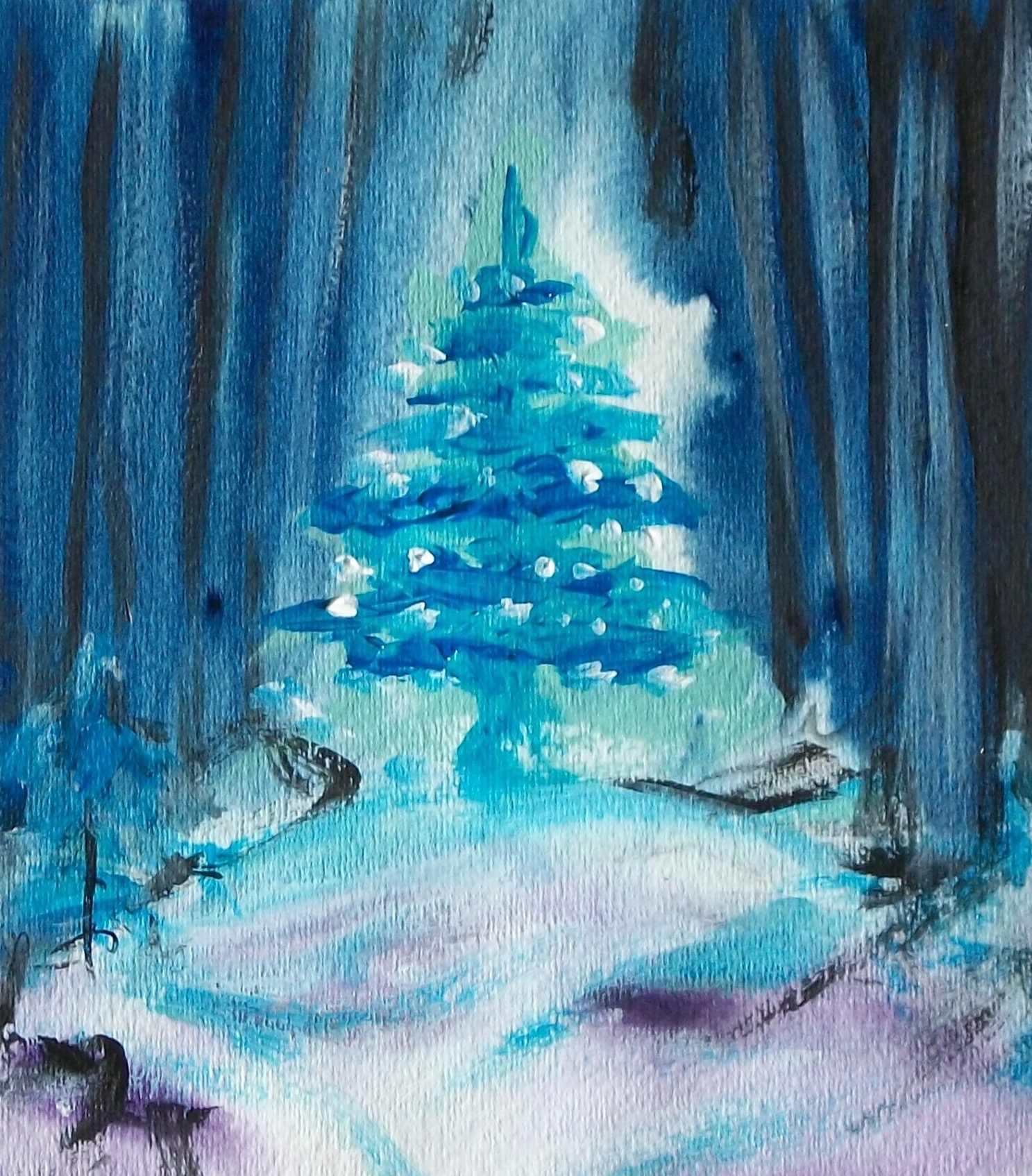
We’re still enjoying our Christmas decorations during this season of Christmas. Are you? Painting by Leo Boucher. Used with permission; all rights reserved.
We have reached the final day of 2018. Many people will be grateful to leave behind this year with its acrimony, fear, tragedy, disappointment, and divisiveness. May we find greater unity and joy in 2019.
In the middle of this Christmas season of celebration, and battling a head cold, I lost track of the days and realized with a jolt that today was New Year’s Eve – and the end of 2018. In my blocked-up state I’ve been pondering a bit about my word for 2019 (#myoneword).
Some years ago I joined this movement that embraces a word
for the year instead of making a lot of resolutions that are forgotten after a
few weeks. Keeping one word before us – through a visual representation or a
reminder on our phone – can help us to stay focused on a word that helps us to
live as we wish with God. I usually choose a verse from Scripture to accompany
the word as well.
I’ve blogged about #myoneword previously – you can find all of the posts here. One post that might be helpful is how to hear God on your word for the year. My review of the book that started it all off, My One Word, is here.
The first year I tried out this practice I chose flourish, with Isaiah 55:10–11 as the verses:
As the rain and the snow come down from heaven, and do not return to it without watering the earth and making it bud and flourish, so that it yields seed for the sower and bread for the eater, so is my word that goes out from my mouth: It will not return to me empty, but will accomplish what I desire and achieve the purpose for which I sent it.
I loved the idea of this word and all of its richness, but for
many months forgot about the practice. But in the late spring I remembered it,
and printed out some reminders of the word to keep it before me. As I was more intentional
about praying about how with God I could flourish, I started to get excited
about the possibilities. I saw the word as a promise from God – one that I
could forget and ignore, or one that I could embrace as I joined my hands in
his.
Other words have been train, with the
accompanying verse 2
Timothy 3:16 (about Scripture being God-breathed and useful for
training in righteousness); breathe, which
spoke to me about rest and breathing in the Spirit of God; present, with the lovely meanings of God’s presence, receiving the
present of God’s presence, and the need for me to stay present and in the
moment; and in 2018, replenish, with
the emphasis on resting and rejuvenating after a very busy couple of years.
As I mentioned above, I haven’t yet discerned what my word
will be for 2019. I need to set aside some time to think and pray about this – including
going for a walk, which I find is a wonderful way to ponder and pray and enjoy
creation.
How about you? Do you choose a word for the year? If so, how has the practice helped you? Do you have a word for 2019?
Churches are picturesque, but they can be “middling” places as well! Love this painting by Leo Boucher. Used with permission; all rights reserved.
On the sixth day of Christmas, my true love gave to me…
Can you remember? Six maids a milking? Geese a laying? An
online search says I got it right with the second guess.
My memory for that popular song is murky, just as this point in the Christmas season can feel murky. Many people have taken down their Christmas trees and decorations, ready to move into 2019 with a new purpose. It feels countercultural to keep banging on about the days of Christmas, especially in this messy middle (see the wonderful blog by Amy Young by this name), when the wonder of the first days of Christmas seem long past and the end feels a long way off.
How can you make the sixth day of Christmas feel special?
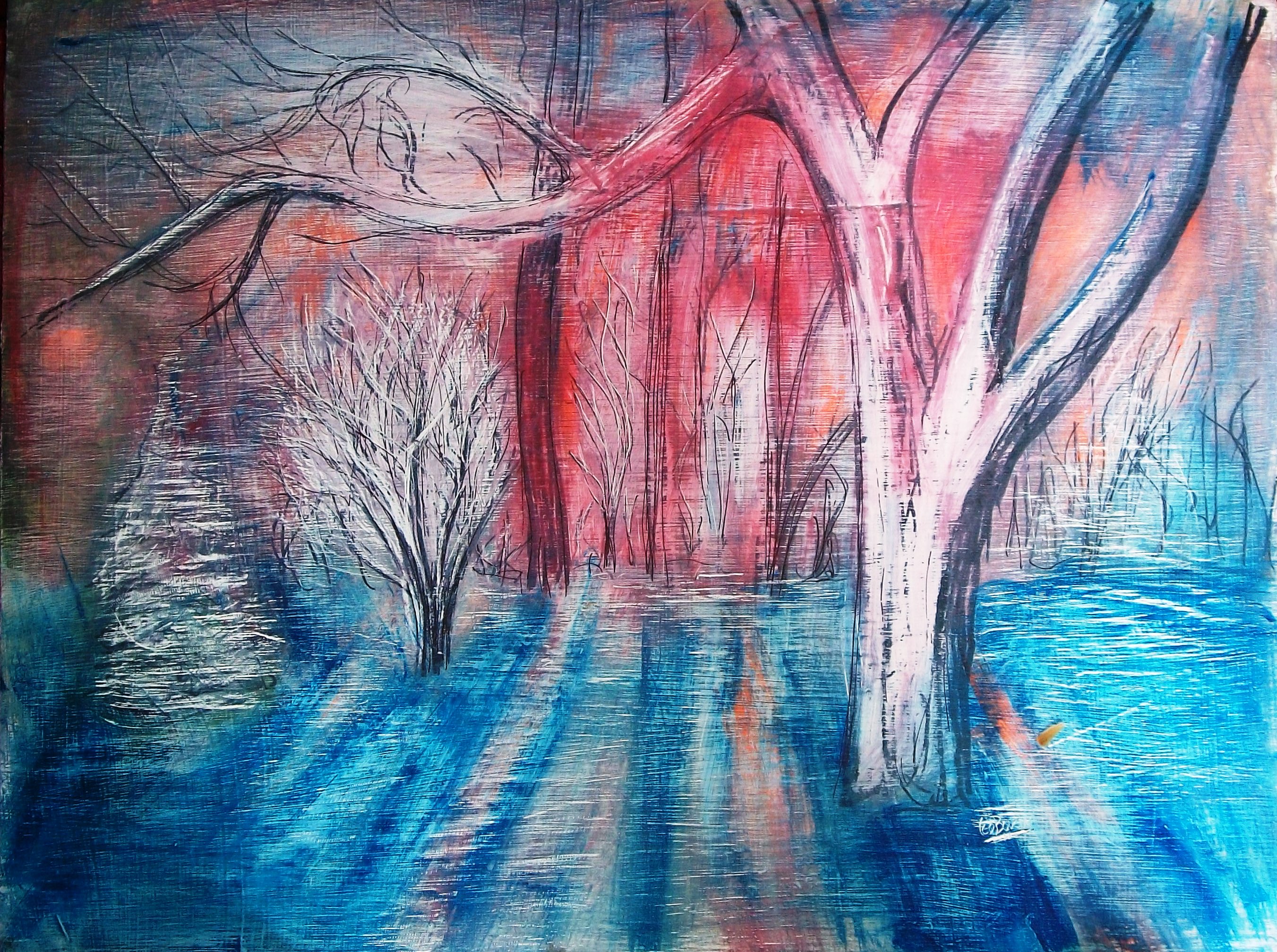
I love this painting by my dad, Leo Boucher. He painted it onto wood, which explains some of the interesting texture. Stark but colorful and beautiful. (Used with permission; all rights reserved.)
The paradox of feasting while calling to mind the martyrs of days past continues as we celebrate the life of Thomas Becket on the fifth day of Christmas. He was named Archbishop of Canterbury in 1162 by King Henry II, to whom he was a chief minister. Henry hoped that by appointing Thomas as archbishop he would gain control of the church, but Thomas was as zealous for the church as he had been for the state. The king became increasingly incensed over his exclusion from church affairs, so only two years after his appointment, Thomas escaped to France for safety.
Thomas returned to England in 1170, and shortly after, the row intensified even more, with King Henry saying,
“Who will rid me of this troublesome priest?”
With that utterance, four of his knights decided that they’d heard an order to kill Thomas. They did so as Thomas was taking the service of vespers at Canterbury Cathedral.
Thomas was
said to be unafraid in the face of death, echoing Jesus’ words to his disciples
from Matthew’s gospel:
Do not be afraid of those who kill the body but cannot kill the soul. Rather, be afraid of the One who can destroy both soul and body in hell. Are not two sparrows sold for a penny? Yet not one of them will fall to the ground outside your Father’s care. And even the very hairs of your head are all numbered. So don’t be afraid; you are worth more than many sparrows. (Matthew 10:28–31).
Here Jesus instructs the twelve as he sends them out to preach the kingdom of God, heal diseases, and drive out demons. We may lose our bodies in this world, he says, but we need to guard against the one who can kill the body and the soul.
Today, let’s join together to pray for those around the world who endure false accusations or bodily harm because of their faith. Lord, have mercy.
A stark picture fitting for today’s topic. By Leo Boucher. Used with permission; all rights reserved.
The Christmas season is for celebrating, but it doesn’t shy
away from the horrors of this world, such as the slaughter of “holy innocents.”
The day marks the killing of all the boys in Bethlehem under two by Herod, a jealous
and volatile king:
…an angel of the Lord appeared to Joseph in a dream. ‘Get up,’ he said, ‘take the child and his mother and escape to Egypt. Stay there until I tell you, for Herod is going to search for the child to kill him’… When Herod realised that he had been outwitted by the Magi, he was furious, and he gave orders to kill all the boys in Bethlehem and its vicinity who were two years old and under (Matthew 2:13; 16a).
This
massacre of around thirty boys (for Bethlehem was a small village) wasn’t
outside of Herod’s character, for Herod also had his wife and her mother
killed, as well as three of his sons. And when he was dying, he ordered that
all the notable men of Jerusalem be killed in the hippodrome.
Herod may
have been a powerful king, but his plans to eliminate Jesus were foiled. For Joseph
again was warned in a dream, and he obeyed the angel’s direction, trekking into
safe territory in Egypt.
But why did
those sweet little boys have to die? Why all those mothers weeping for their
slain children? We just don’t know, for it is wrapped up in the fall of
humanity and the problem of evil. But we can stand on God’s promises that he
will comfort the comfortless and bring hope to the hopeless. And we know that
he too grieves at the loss of children so young.
Heavenly Father, we don’t understand why you sometimes allow innocent people to die. Strengthen our faith and help us to know more about your character, and comfort all those who mourn today.
By Leo Boucher. Used with permission; all rights reserved.
This morning, one of the participants in the Woman Alive book club Facebook group posted this comment:
“If people want to mark the 12 days of Christmas how do they keep the spirit alive when other people think it’s over? I’m back to work this morning and I’ve already seen one post of Facebook about getting the decorations down!”
Celebrating the full twelve days of Christmas is something I’ve
become more keen about doing in recent years. I confess I don’t observe the
season of Advent properly – for I put up the Christmas tree far earlier than I
should (my excuse is that putting up the tree and decorations takes a long
time). But I do love celebrating the twelve days, marking the full season and
not “getting back to normal” as seems to be the tradition these days shortly
after Christmas day.
One simple thing we do for the twelve days of Christmas in our family is eating our dinner in the dining room, table laden with candles, including the Advent wreath fully ablaze. We can see the Christmas tree in the living room as we eat, and it feels festive and fun.
Another idea is to pray along with the #FollowtheStar prayers produced by the Church of England, which you can find here.
Do you mark the twelve days of Christmas? Why or why not?
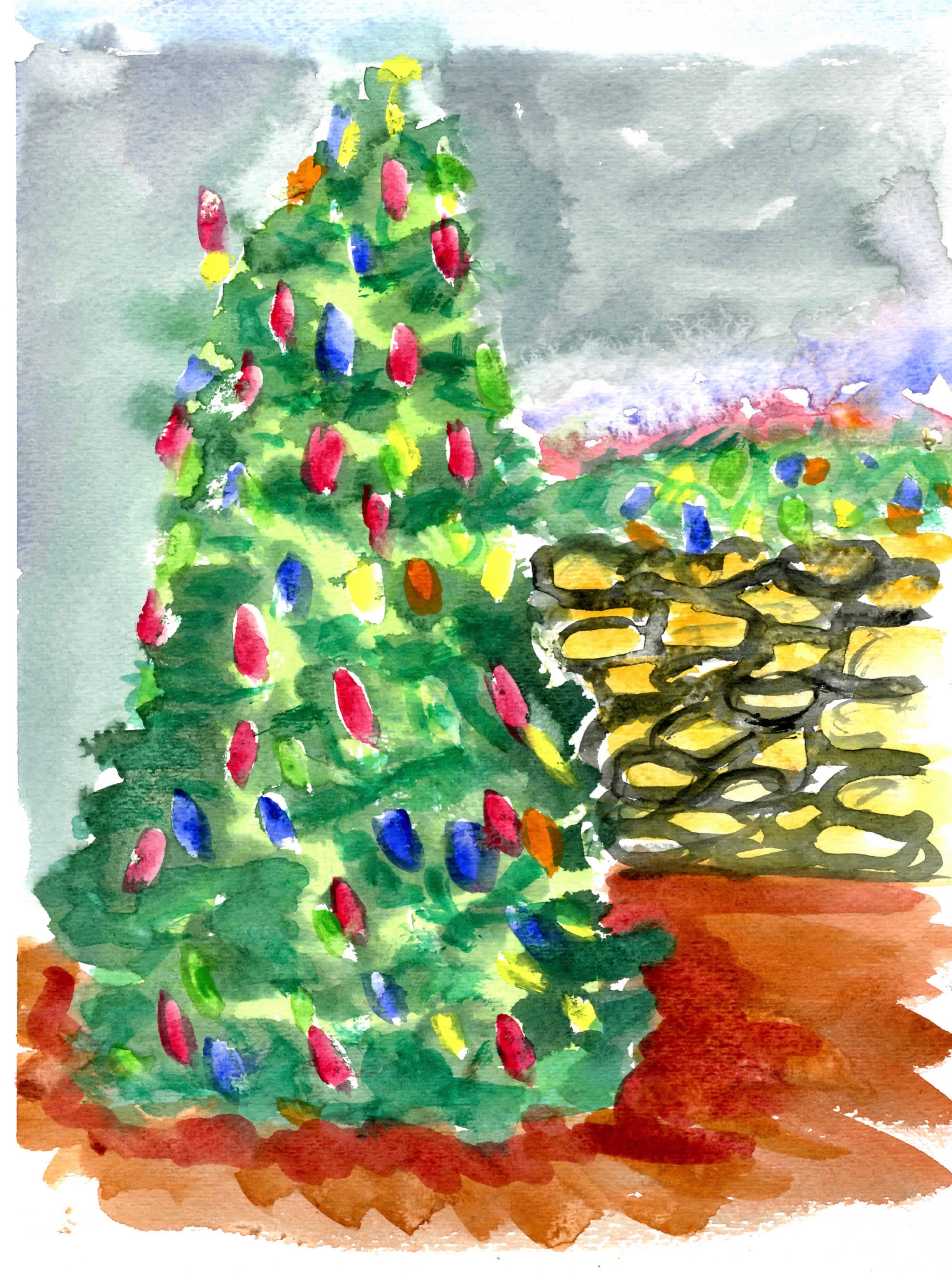
By Leo Boucher. Used with permission; all rights reserved.
Happy second day of Christmas!
I love this painting by my dad, for it evokes Christmases in the family home growing up in Minnesota, where my parents still live, and where they celebrated on Christmas Eve with all the family (except us).
That “except us” is the poignant bit, isn’t it. Christmas is a wonderful holiday for family celebrations, but often not everyone is gathered around the tree, for whatever reason. Maybe they’ve moved far away, like I did, or a rift between siblings turned into a war that now fractures the family, or someone has to work in healthcare or in the church, or maybe they have died, and we miss them achingly… Christmas will never be picture perfect, because life this side of heaven isn’t picture perfect.
But we can have glimpses of wonder and joy, those moments of
unity and fun that drop deeply into our memories and make us long for unbroken
moments of sweet communion. May you experience more than a handful of these today
and during this Christmas season.
In a matter of hours we enter the Christmas season! I love these twelve days when the baking is done, the presents all wrapped and distributed, and we can enjoy time as a family relaxing in front of the tree – or the telly (Call the Midwife, anyone?). We’ve made it through the shortest day, and now journey to the light as we embrace the Light of the world, who has come to distill our darkness.
May you know joy and peace during the Christmas season; may
you be renewed in body and spirit as you stop to wonder and marvel at the God
who became Man and lived among us.
By Leo Boucher. Used with permission; all rights reserved.
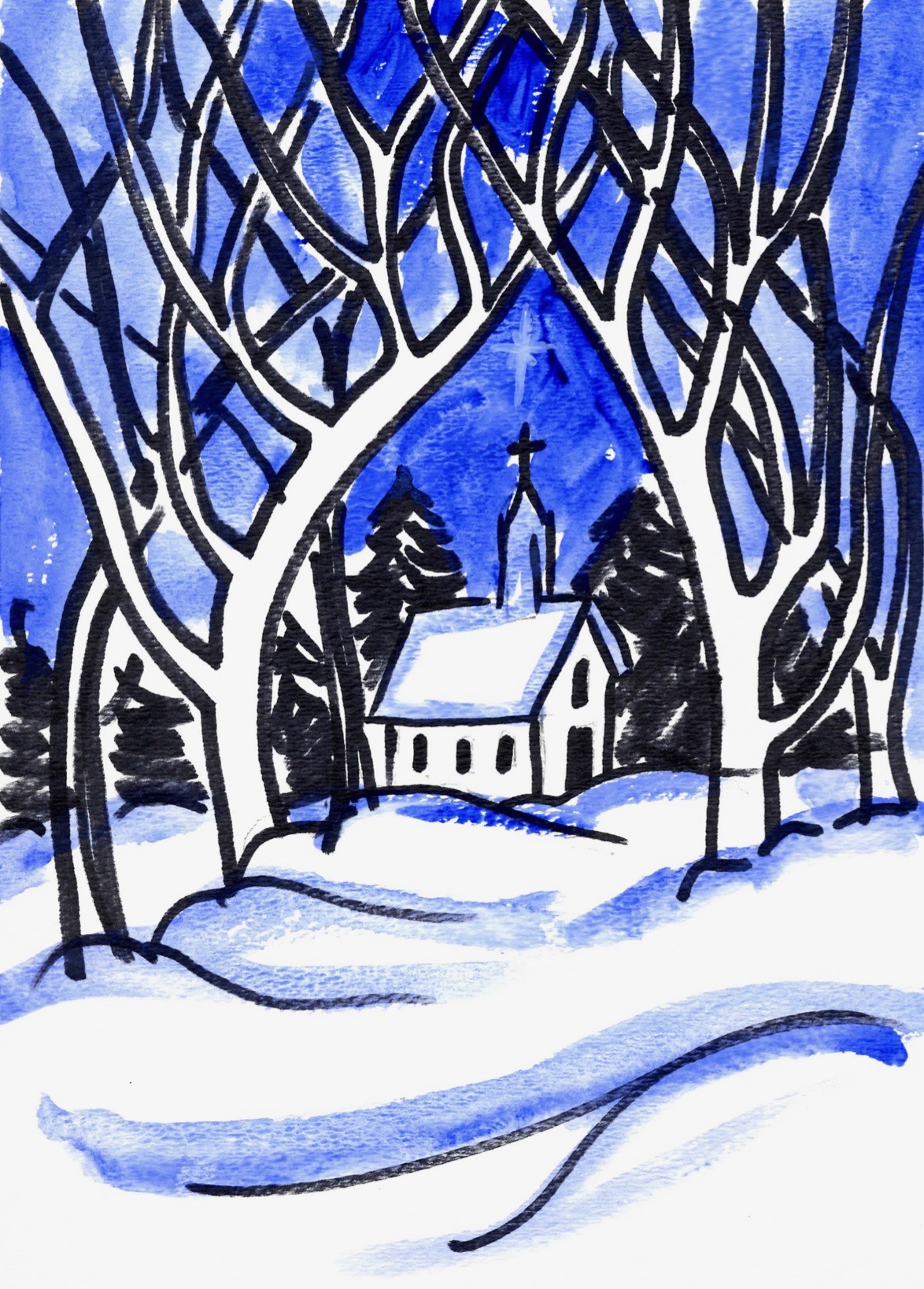
We’re in the third week of Advent, but soon and very soon we’ll have the fourth week and then boom, in quick succession, Christmas Eve and Christmas Day. The twelve days of Christmas will commence. And many of us will go to church to celebrate. I love this picture of a sweet little church framed by trees and cushioned by snow, painted by my father. It’s an idyllic picture of what we imagine church should be like – all soft edges, coziness, and safety.
But, of course, life doesn’t always follow art. Church can be an experience of disappointment, weariness, hurt, anger, criticism, and pain. If you’re human and you’ve gone to church for a length of time, I’m guessing you can relate to that list of feelings and experiences, and add your own.
But church can be joy and communion; peace and fellowship; wonder and relating. Jesus came to earth as a baby to usher in a new kingdom, where we are filled with his presence and can find union not only with him but others – and we can find this in church, of all places.
As we wait for his coming again, may we glimpse what church can be here on earth. Even if for a slender moment.
Father God, you sent your Son to earth as a baby, that he might live as one of us. How you must ache for the pain you see your children wrapped in. Thank you that you want to relieve us from this heartache. Help us to turn to you for comfort and help. And please bring unity and peace to our places of worship, bringing healing and release where there has been hurt and betrayal. May we sense your calming presence in our lives this day. Amen.
Happy Thanksgiving week! I love the holiday of US Thanksgiving, not least because the holiday itself is probably the least commercialized celebration (not, of course, the day after though…). We usually go to the service at St. Paul’s Cathedral (for anyone interested, it’s at 11am and I do recommend it) on the day itself, and sometimes have our big feast that day too. But as it’s just another Thursday in November here in Britain, with people working and at school, we often celebrate at the weekend. And usually that’s the weekend after the holiday, but this year we’re marking the day today, as I’m speaking next Saturday. And unlike most years, when we gather many around our table, we’re only hosting family this year because I’ve been traveling so much. Which means I even have time to go to the gym this morning and to post this recipe for you!
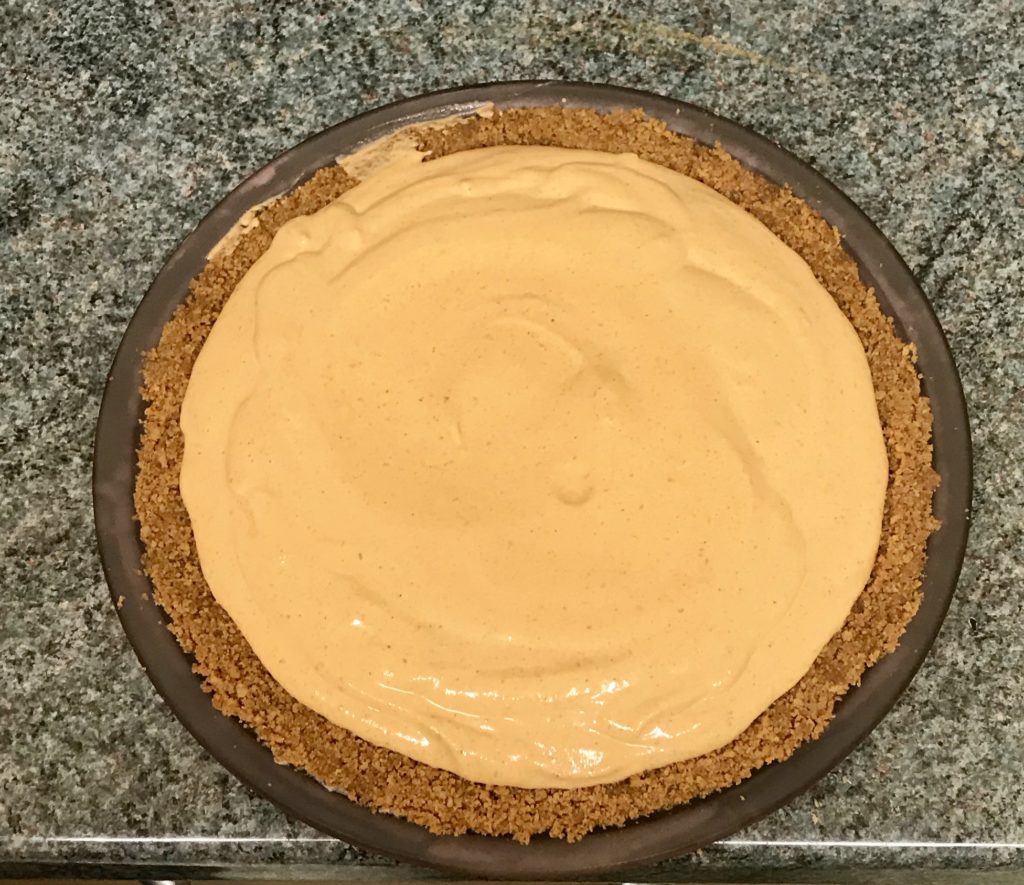
One of my favorites about turkey day is this frosty pumpkin pie, which has become a regular at our table. I’ve found that most guests who haven’t grown up eating pumpkin-flavored this and that don’t always care for the taste of pumpkin, so adding the ice cream softens the flavor and makes it more palatable. And it’s just good!
I give you our Frosty Pumpkin Pie, with love from our table to yours. Enjoy!
The frosty pumpkin pie, just created, pre freezing and without whipped cream on top…
This recipe and others, such as my cranberry stuffing, appear in Finding Myself in Britain. You can also read about my and Nicholas’ experience at the US Ambassador’s residence one year! Available in the UK from Christian bookshops, or online from Eden and Amazon. Available Stateside from Amazon.
What does it feel like to unpack – at last – the boxes and settle into making a house a home? Why do we long for Home? Where is Home? And when we’ve found Home, why yet can it still be a place of pain as well as joy? Liz Carter poses these questions and others in her searching contribution to the “There’s No Place Like Home” guest blog series. I’m so grateful for the depth of her thinking and the grace-filled answers she points to. Grab a cuppa and enjoy.
Home is a funny word, isn’t it?
It immediately conjures a variety of images and feelings, all unique to us in our own experience. For me, Home is both sweet and bitter, because I’ve never had a long-term experience of what ‘home’ actually means. My dad was a vicar, and I spent my childhood and teens moving around the country. The longest I’ve lived in one house is five years. I went and married a vicar, too, you see, although he wasn’t a vicar at the time – I thought that there might be a possibility of finally settling somewhere, bringing up a family in a community and getting to know people in that way you can when you are somewhere for a long time. Yet God had other plans.
In some senses, I’m more than OK with this. I find that after a few years in one home, I start getting itchy feet, because I’ve only ever known this somewhat nomadic existence. I don’t really know what it’s like to have that ‘settled’ feeling people talk of, that sense of knowing where home is. I’m hoping very much to know it a little better now my husband is in his first incumbency, and a longer stay is possible. I’m already getting glimpses of what it must be like; of community who know and love one another, who have supported one another for many, many years. It’s an enticing and comforting feeling, dancing in the edges of this ocean of Home, this hope for longevity. It’s also just a little scary, because my life has, in a metaphorical sense, been a life lived out of boxes – and now I’ve finally unpacked them all.
I’ve been thinking a lot about what the word Home means while writing my new book, Catching Contentment (published this week!). Because I’ve always lived out on the edges, struggling to feel like a full part of a place and a community, I’ve wondered what it is like to be inside. I wonder if my search for home is tied to my longing to know and be known, and to be in the place where my soul is at rest. I think we are all seeking this peace which cannot be understood but which can sometimes be glimpsed in captivating impressions of that which our heart is longing for. We’re all searching for that place where we can finally unpack our boxes and be still, be known and be rested. We sense that in this world, we are strangers, living on the edge, and that there is so much more to come.
The writer of Psalm 84 knew this. He was outlawed to the desert, so far from the place his soul called home – the temple. He paints such a poignant picture of longing for that place, of his desperation to be back there, the place his heart rests. His soul ‘yearns, even faints, for the courts of the Lord.’ (v2) ‘Better is one day in your courts than a thousand elsewhere,’ he goes on to say. These lines catch at my soul, because I sense that yearning, too, that ache to be in the presence of the Lord, which is better by far. I live with long-term illness, and spend most of the time severely uncomfortable in my own body, because of the pain and fatigue I experience from day to day. I sometimes dream of how it will one day be, of a place where I will be free, where I will run on beaches and breathe without difficulty. I dream of a home where I will be fully who I am created to be, but it’s more than that. It’s a dream of a home where I am finally in the presence of a God who longs to flood me with all that ‘home’ really is; with all the riches of knowing him, at last, face to face.
I know that one day, I will stand in his presence and I will, at last, be home. But as for now, I am waiting. I am homesick. And yet God doesn’t want us to be wishing away our lives, waiting for our true home, but longs to give us alluring glimpses of that home in the painful present we live in. In that Psalm, the writer talked about the valley of tears, the place he was waiting in as he longed for home. But he didn’t talk about it as something to be put up with or wished away, but as a ‘place of springs’ where the pilgrim will go from strength to strength (v7-9). It’s clear that in his painful present, the writer has discovered something of the riches of who God is, and how God dwells with us in our pain and darkness.
Photo: rawpixel on Unsplash
What is Home, then? Home is where we find ourselves, now, in this moment. Home is where we dig into the treasures of God, and find out who we are and who he is. Home is a place of peace, of rest, even within the depths of despair. And Home is a place of yearning for the Home we know, in our deepest and wildest places, we belong.
Liz Carter is an author and blogger who likes to write about life in all its messy, painful, joyous reality. She likes Cadbury’s and turquoise, in equal measure, and lives in the UK with her husband, a church leader, and two crazy teens.
She is the author of Catching Contentment: How to be Holy Satisfied (IVP), which digs into the lived experience of a life in pain, and what contentment could mean in difficult circumstances. Watch her book trailer here and find her online here.
♥
This post is part of my series on finding home, with many wonderful guest writers; other entries can be found here. It links up to the themes of home that I explore in my book, Finding Myself in Britain: Our Search for Faith, Home and True Identity. Available in the UK from lovely Christian bookshops, or online from Eden and Amazon. Only available Stateside from Amazon.





 What does it feel like to unpack – at last – the boxes and settle into making a house a home? Why do we long for Home? Where is Home? And when we’ve found Home, why yet can it still be a place of pain as well as joy? Liz Carter poses these questions and others in her searching contribution to the “There’s No Place Like Home” guest blog series. I’m so grateful for the depth of her thinking and the grace-filled answers she points to. Grab a cuppa and enjoy.
 The writer of Psalm 84 knew this. He was outlawed to the desert, so far from the place his soul called home – the temple. He paints such a poignant picture of longing for that place, of his desperation to be back there, the place his heart rests. His soul ‘yearns, even faints, for the courts of the Lord.’ (v2) ‘Better is one day in your courts than a thousand elsewhere,’ he goes on to say. These lines catch at my soul, because I sense that yearning, too, that ache to be in the presence of the Lord, which is better by far. I live with long-term illness, and spend most of the time severely uncomfortable in my own body, because of the pain and fatigue I experience from day to day. I sometimes dream of how it will one day be, of a place where I will be free, where I will run on beaches and breathe without difficulty. I dream of a home where I will be fully who I am created to be, but it’s more than that. It’s a dream of a home where I am finally in the presence of a God who longs to flood me with all that ‘home’ really is; with all the riches of knowing him, at last, face to face.
 Liz Carter is an author and blogger who likes to write about life in all its messy, painful, joyous reality. She likes Cadbury’s and turquoise, in equal measure, and lives in the UK with her husband, a church leader, and two crazy teens.