The interview of Prince Harry and Meghan Markle after they got engaged captured me, the memories flooding back of my engagement to my own English prince (using that term loosely). We too recounted our love story, clasping our hands and sharing with smiles the thrill of how we met, eager to share the details that were crystalized in our minds. In those early heady days, me moving to England felt like an adventure of grand proportions – especially because of the safety net my fiancé and I constructed of us planning to live in England some five to seven years and then heading over the Atlantic. Two decades later, however, we’re still here!
Our experiences haven’t been all spring sunshine and roses, for at times the rain has soaked us and the whipping wind has chilled us….
I love hearing from readers of Finding Myself in Britain; it’s a privilege and a joy to hear the stories they share. Such as Karen Morton, who got in touch with me recently. She embraced a new adventure at 70, marrying an Englishman and moving to the Lake District! I loved hearing of her art project to engage with people in her village – just brilliant how she has used her creativity and artistic gifts to give back to the community, and make new friends. She opened her email to me saying, “I feel like I have a new friend!” I feel the same, as I introduce her to you. Don’t miss her amazing portraits, toward the bottom of the interview.
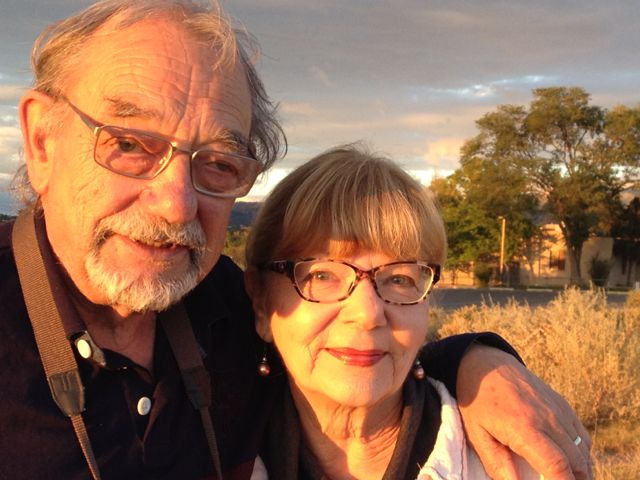
This is me with my husband, fellow artist, Lou Morton.
I came to live in England three years ago – a new love and a new life – at the age of 70! It’s never too late to start over! I met my husband, a fellow artist, when I was here on a painting trip in 2011. I would never have imagined that I would have a whole new country just a few years later.
I had the experience of saying good-bye to my house and property in the Colorado mountains and walking away from most of my “stuff”, chanting all the while, “It’s just stuff… it’s just stuff… it’s just stuff.” I already lived a distance from my two daughters and grandchildren so things are not that different. They love visiting me here. Now I feel like a four-year-old with my nose pressed against the window, delighting in every new thing I see.
Playing my dulcimer at the local pub with other local musicians:
I’ve had so many surprises here, such as it stays green! Having grown up in Michigan and spent the last 30 years in the mountains of Colorado where there was snow on the ground 9 months of the year, I was delighted to find that it rarely snows here. Furthermore, the grass stays green even in winter, making the rolling hills of the Lake District where I live now very beautiful all year, even with grey skies. I’ve even learned to love the many colors of grey that contrast so nicely with the green. I’m also surprised at how long it stays light in the summertime, and how dark the winter is – never having realized how far north these islands are.
Another surprise was how warmly I’m received as an American. As soon as I open my mouth it’s obvious, of course! For the first time in my life, I have an accent! But whether it’s someone I meet in a shop or people I meet in the village, their eyes seem to light up when they learn my nationality.
I play the hammered dulcimer and was surprised to discover many opportunities to play it, joining in with local musicians. I’m learning lots of new songs – the English, Scottish and Irish folk songs sound particularly good on this instrument.
Maybe it’s my age, but learning to drive on the left (as opposed to “wrong”) side of the road has been a challenge to me. I was dismayed to learn that I had to take both a written and a practical driving test to get a British driver’s license. (My American license was good for only one year after becoming a resident.) I took some lessons from a very brave driving instructor in the village. At first I had a hard time figuring out where the left side of the car was and kept running up on the curb or cutting corners! Learning to shift with my left hand was a challenge too. The roads are so narrow and instead of a nice shoulder, you have stone walls or hedges inches away from your left-hand mirror. But I’m quite at home behind the wheel now.
Being interested in linguistics, I have kept an on-going lexicon of words and phrases that are different – 17 pages long so far. When I first arrived I told my husband I was going on a walk to explore the village. He said, “Fine, but make sure you stay on the pavement.” Why, I wondered, not knowing that is what they call sidewalks. I thought he wanted me to walk down the middle of the streets!
People kept asking me if I was alright. Even people I didn’t know, like shop keepers. Did I look faint or ill? Then I figured out it was just their way of saying, “How ya doing?”
There are some very funny expressions too, like “She’s all fur coat and no knickers!”
I nearly drove off the road when at a construction area there was a large sign saying, “Cats’ eyes removed.” Why would anyone do that?! Found out that is what they call lane reflectors.
People’s eyes widened in surprise when I said that the uniform of many old men where I came from was a cowboy hat, jeans and suspenders. “Suspenders” are what they call garter belts here! Quite a funny image, actually!
Last year, in an effort to get to know people in my village here in the Lake District, I gave myself the goal of painting one hundred 12 X 12 inches oil paint portraits of neighbors. The response was delightful. I ended up with 123 such portraits. Each person agreed to sit for me for 2 hours. I was convinced to turn it into a book with a brief write-up about each person. I had an exhibition of all 123 paintings in the village hall the day after Boxing Day and people could then take their portraits home. Now I’m working on a sequel: “100 Dogs of Holme”. What fun! People love talking about their dogs.
Here I am doing a portrait demo for the children at the local primary school as part of my “Faces of Holme” book. This is the head teacher, Angela Anderson.This is my portrait of our vicar, Graham Burrows.Some of the accumulated portraits on the wall of my studio.
I’m interviewing each dog for the parallel book to the one I wrote of the people in the village, with a little write-up about the dog to go with each portrait. Their responses have been hilarious. Dogs seem to bring out humor in people as they view their lives from the point of view of their dogs. Some of my questions are: “What is your heritage and how did you come to live with this pack? What is your occupation? What is the worst trouble you have been in? Do you know any tricks? What do your people not know about you? What is your advice to young pups?”
The question about the worst trouble they’ve been in has the funniest answers. A large golden retriever managed to get himself totally inside of a dead sheep while his elderly owners had him out on a beach walk far from home. Then there is the standard poodle who ate a £20 note! It was the daughter’s first pay from her first job so it was important to them. They waited 2 days and out it came! They put on rubber gloves, washed it off and sent it away and got a new note! The dogs’ occupations have included, among others, director of security for a garage, lady-in-waiting, children’s entertainer, interior decorator, therapist, building supervisor, personal trainer, ball player, gardener’s helper and psychiatric nurse!
This is the guy who got inside the dead sheep!
I have found that the church is the warm, beating heart of the village. Whenever I “put myself in God’s way” there I feel a peacefulness and serenity that helps me know I made the right decision in changing my life to live here. Unfamiliar hymns and slight differences in familiar prayers make me stop and pay attention and thoughtfully prepared sermons allow me to really reflect on the messages. The warmth of friendship I feel there is comforting as well.
I would tell people making a major change like this to try to stop looking over their shoulders to think about what they left behind. Instead, live in the present and try to see the world with new eyes. And start writing your book right now!
God showers us with his extravagant love – poured out, pressed down, overflowing. His love changes us, for because we are loved, we can love. We don’t have to be stingy or miserly in showing love or even in sharing our physical possessions.
May we all show love today, whether we are pleased or shattered by recent political events. Love binds us together.
This morning we find ourselves in Britain after an historic vote. You can probably guess which way I voted! Whatever our views, God remains with us. He’ll never leave.
I share a drawing by my daughter, sent to me this morning by her teacher, on what it means to be British. He says he has no idea where her inspiration comes from! The boy is wearing England football kit and sings the national anthem, and the sandwiches include black pudding. I don’t think she has anything to represent Wales or Northern Ireland though.
May we be united. May we be marked by love. May we remember that God will never leave us.
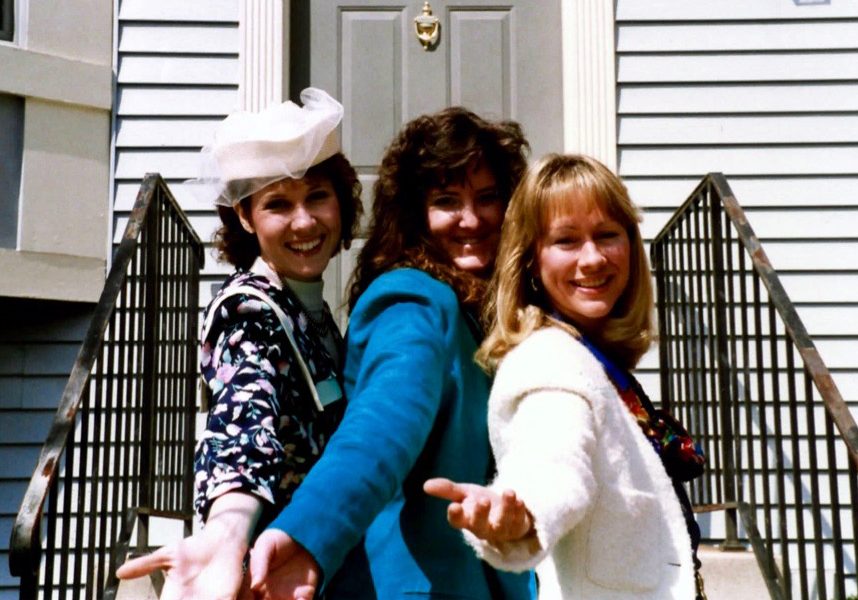
Me in the middle in 1991 with big hair, and with the special women with whom I lived.
Twenty-five years ago – what were you doing? I was in my twenties and living in Virginia with two wonderful women as I faced a turning point in my life, although I didn’t know it at the time. Having just broken off an engagement to be married, I felt the shattering of my hopes for marriage and a family.
The pain of the broken dreams opened up a bigger question: Who am I? Why was I trying to find my identity in things outside of God, such as romantic relationships, my work, friendships, or even my involvement in church? The question propelled me on an adventure with God as I started to hear the still, small voice of the Lord and the words of the Bible came alive. God the Trinity was awakening me through his word; the Word in me was coming alive.
Those were amazing years of growth as each morning I was eager to awaken early to read the Bible and pray. I was taking the Scriptures and eating them, as in Jeremiah 15:16. And the words – the Word – tasted sweet, as sweet as honey. The words were my food and sustenance; the power of the Word to sustain me.
Those years provided a necessary foundation to my life with God, but of course the story doesn’t end there. The Word continues to work in my life, as I found myself in Britain.
In 1991, I never would have dreamed that I’d make a home in Britain. That’d I’d be a vicar’s wife – I probably didn’t even know what a vicar was! Or that my two amazing children would speak with English accents and a regular part of my day would involve beseeching them not to drop their t’s. That I’d learn about cricket and what the majority of people in the world call football. And how to make a proper cup of tea.
In 1991, I was working for the deep thinker and also deeply humorous man, Os Guinness. Later when I was engaged to Nicholas, Os warned me that in my move to England the little things might all add up to a big thing – such as with language and words. And he was right. At first I would flail around in my conversations, knowing that it wasn’t a “parking lot” but not remembering that it’s a “car park,” or not knowing what nappies were. For a person who worked with words, I was humbled to feel misunderstood and to misunderstand.
But God the Word was with me through Jesus dwelling within and the Holy Spirit’s gentle comfort, and I got through those early days of feeling numb and silenced. What were challenges, such as not communicating easily, became the means of relying more intensely on God. As he met me, my faith grew.
I started to understand a theme of the kingdom of God – that in losing ourselves, we find ourselves. Just as I’ve found myself in Britain. And I mean that in both senses of the word – finding myself here geographically and also finding who I am in terms of my identity in Christ.
For here I’ve found myself as a citizen of heaven and a citizen of the world. I’ve deepened in my vocation as a writer and editor – one who loves words and the Word and who shares them with others.
Life with God is an adventure. His Word in us calms us, showers us with love, and calls forth in us our buried dreams. May we share his words with those whom we meet.
In closing, some questions to ponder.
Are you willing to lose your life to find it?
When in your life did times of sacrifice bring great gifts and growth?
How have the power of words – those written, those spoken, and ultimately the Word – shaped your life and your faith?
This is part of a talk I gave at the 25th anniversary celebrations for the Books Alive bookshop in Hove on 17 June. The theme of losing yourself to find it is a major one in my book Finding Myself in Britain: Our Search for Faith, Home & True Identity, which you can find here.
June. I find this time of year poignant, for sometimes the ache of separation from loved ones in the States feels exacerbated in the summer. My social-media feeds burst with photos of graduations, picnics, and the last days of school. And sunshine.
The contrast can seem strong, for my kids have another six weeks of school so there’s no counting down the days for them. And although I probably now ascribe to an all-year view of education in terms of continuity and learning, I also remember the long summers I enjoyed in Minnesota. So long that I even had the opportunity to get bored. Something that my kids, as we cram in family holidays and a trip to Minnesota with Christian camps, have hardly the chance to do.
But if I was in America now, no doubt I would have a long list of things I missed from June in the UK, such as long evenings, Wimbledon on the BBC (no adverts!), perfect Pimms, weather that can change from sunshine to rain to sunshine to rain again (as it has today), and never being overheated.
And I’m reminded again of how through giving thanks, our outlook can change. The above quotation actually comes from the chapter in Finding Myself in Britain on Harvest and Thanksgiving, but it can easily apply to the good ole summertime as well. For as I made my list of just a few things to give thanks for here on this island, my mood lifted and I look forward in hope.
What do you most like about June? What would you miss if you lived in a different country?
I need to take my own advice. This morning I read the words above from Finding Myself in Britain and reminded myself of the need for rest, worship, and play in contrast to work, work, work. I love the freelance life, but I can say “yes” to too many things, meaning that I have too many deadlines and the rhythms of life get out of whack. For instance, my daughter says, “No more writing books,” to me, as the family has borne the brunt of me writing, under pressure, the 2017 BRF Lent book (to be published this autumn). I enjoyed the process but haven’t spent enough time focusing on a healthy rhythm of life that includes rest, worship, and play.
What do you do to rest? A friend shared her mother’s adage that I’ve been pondering: “A change can bring about rest.” Just as we might need to break out of an exercise rut, with our bodies too accustomed to the same routine we do again and again, so our souls can receive an infusion of life when we embrace something new.
But the niggle I have with her mom’s phrase is that we’ll use it as an excuse not to embrace the meaning of rest, where we acknowledge that God is God and we are not and that we can switch off, slow down, not produce, and be still. For me, time on my own by a body of water brings about a deep sense of peace and rest as I hear the roar of the waves of the gentle lapping of the lake. Yet we can’t put all of our rest-eggs into a holiday basket, so we need to build into our lives regular, shorter, periods of rest. Oh – hey – how about a weekly Sabbath!?
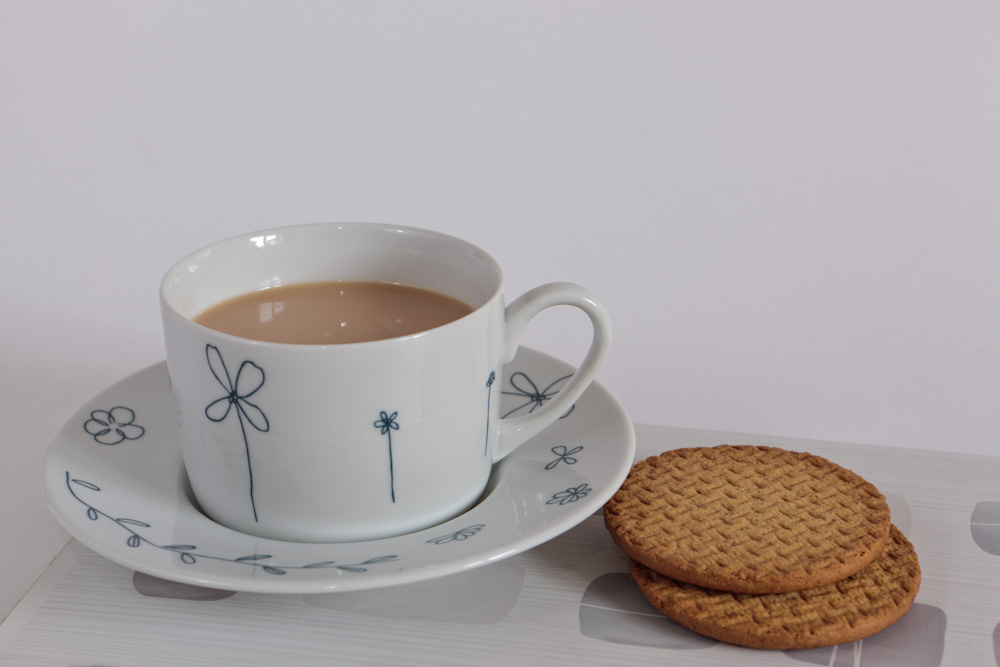
This morning, my primary-school-aged daughter made herself her first cup of tea. On her own, without asking for help. Minor burns were suffered by the tea-maker, but thankfully nothing major.
I thought maybe she’d not catch the tea-bug, but perhaps living in a tea-saturated society, she can’t but help love the nation’s favo(u)rite drink. I even enjoyed some tea today – chai, naturally – but it’s not something I drink every day. Although lately I’ve been drinking a lovely peppermint/licorice mix. Some people hate licorice, I know. I’m not one of them.
I have a chapter on tea in my book, Finding Myself in Britain, for tea played an important role in the first date Nicholas and I shared. I certainly didn’t know how to brew a proper cuppa!
I love author Julie Klassen’s blog on tea that she shared last autumn, in which she shares what she learned from a tea-making class at the national Jane Austen society gathering, from A Social History of Tea, and from my book! Do have a read – with a cup of tea?
You can buy Finding Myself in Britain: Our Search for Faith, Home & True Identity (Authentic Media, 2015). from Christian bookshops, from me, or online at Eden,Amazon UK or Amazon US.
Freedom within the boundaries – an amazing thought. I never dreamed my home would be England for this many years, but here we are coming up to two decades and it is home.
Where are your boundary lines? Where is home?
I address these paradoxes in Finding Myself in Britain: Our Search for Faith, Home & True Identity (Authentic Media, 2015). You can buy it from Christian bookshops, from me, or online at Eden,Amazon UK or Amazon US.
Ouch, I commented, when a friend shared a poem by the British poet Brian Bilston, “America is a Gun.” (It’s posted on his public Facebook page here.) My reaction was visceral, for guns bring forth so many emotions from Americans. I’ve shot a gun before – at a target, mind – but that fact might shock some of my British friends. Yet having lived away from the States for so many years, hearing the news reports of shooting after shooting, I now wonder why we can’t get some laws passed to stop the senseless deaths. And I know that some of my American gun-supporting friends and relatives won’t agree with that statement.
But when I read Brian’s poem yesterday morning, I didn’t know the background about Jeb Bush’s tweet, showing his monogrammed gun with the statement, “America.” That’s what’s behind the poem, and as Brian said on his Facebook page:
I LOVE America – and all the Americans I’ve met. This was written in response to Jeb Bush’s gun tweet… These are crass symbols, many of which were posted on Twitter last night – in humour – by nationals from those countries in response to Jed Bush’s America tweet. I can understand how this might be misinterpreted without that background.
A writer and poet heard my Ouch and it niggled her all day. She wrote this lovely poem in response, for which I’m profoundly grateful:
What is America to you? And/or, what is your home country?
Keren Dibbens-Wyatt is a Christian mystic, writer and contemplative-creative with a passion for prayer and the edification of women. She longs to draw others into deeper relationships with the Lord through all she does. Keren suffers with M.E. and struggle with much of life, due to very limited energy and mobility – but God is always in this with her. Keren lives in Tunbridge Wells, Kent, in the U.K. You can connect with Keren at her website: http://www.kerendibbenswyatt.com.



 Those years provided a necessary foundation to my life with God, but of course the story doesn’t end there. The Word continues to work in my life, as I found myself in Britain.
 I started to understand a theme of the kingdom of God – that in losing ourselves, we find ourselves. Just as I’ve found myself in Britain. And I mean that in both senses of the word – finding myself here geographically and also finding who I am in terms of my identity in Christ.