Category: 7 Ways to Pray Blog Series

  • “Learning to Trust Ancient Ways of Praying” by Kathleen McAnear Smith: 7 Ways to Pray blog series

    I’m humbled by Kathleen’s wonderful post about how she’s come to pray with the ancient practices I outline in my book, 7 Ways to Pray. When writing I prayed so much that it would be a means of introducing some of these time-tested practices to people who might not only not have heard of them, but were suspicious of them. What a gift that God has used my book in her life in this way! Whether you’ve prayed in some of these ways for years or are not sure about them, I believe you’ll appreciate hearing more from her.
    My particular Christian denomination used to pride itself on not—no, never—using set prayers. We wouldn’t touch traditional, handed-down-through-the-centuries prayers with anything but disdain. We were smug about it; superiorly smug in our thinking that prayer was just something you did off the top of your head. We were sure we knew all anyone needed to know about prayer.

    Due to travel and relocating overseas I eventually changed denominations, but I happily managed to carry some of that attitude with me. Not for me were the stuffy old ways of prayer, I thought. I’ve had to work hard at staying closed-minded about the beautiful traditions of the ancient church, but denominational prejudice reigned well into my fifties.

    That all changed on an unmentionable birthday when I blessed myself with attending a workshop on prayer. Truthfully, I didn’t pay much attention to the topic, I just wanted to hear the speaker, Amy Boucher Pye. She started the morning with an introduction to the concept of lectio divina. “Lectio what?” I said, remembering childhood teaching about the repetition of words that would put you to sleep. It turned out that not only did I stay awake, but as Amy introduced this new-to-me way of prayer something was coming alive in my spirit. I even acknowledged quietly to myself that often I had used Scripture to prove a point in discussion, just not considered the Word as a basis of praying.

    Deciding to learn more, I attended one of Amy’s online retreats on lament. This was the year I lost a very precious relative and I was beside myself trying to figure out how to pray. Amy’s teaching on lament became art form powerfully pulling me closer to the King of Kings.  She draws you in to the world, the history, and the creativity of prayer. In her book, 7 Ways to Pray Amy introduces the ancient ways in a way that intrigues and you just want to know more and experience more. I was astounded that God really did know what to do with my grief, my anger.

    Yet, as I read this 7 Ways to Pray, I wondered “How can I trust these forms of prayer? What really is a lectio divina? Examen? Who is Ignatius? Won’t I just get bogged down in dark ages faith?” I pondered all this even as I was beginning to see changes in my prayer life. I needed assurance that while I had been taught to disregard tradition from the early days of my childhood, I was heading in a direction that pleased God. It’s hard to stand on tradition when you don’t believe in it.

    In 7 Ways to Pray Amy faces these issues head on with clear guidance as to what prayer does in your life. Amy writes that prayer is meant to bring you closer to Jesus, and that when we pray, we see the “collaboration” and “uniting of our desires with the Holy Spirit”. This seems to be the test of a good prayer. In learning these ancient ways of prayer, you notice if you are coming closer to Jesus.

    As you look at each chapter you are invited to see what draws you closer to your Lord. Creativity? Understanding of the Word of God? As someone who has never journeyed this way before, I found Amy’s writing to be a trusted friend as she shares her own experience of stepping into the ways of saints past who inspire the future. She writes to clarify, to enable the journey of others, not cloak in unrelatable mystery. I suggest you take 7 Ways to Pray and use it as a workbook. This is not a book to sit on a shelf. It’s to be used actively. Get your pencil, get your highlighters out and take note of what sparks your imagination. Write in the margins. Stick tabs on paragraphs that jump out at you. Have a go with one chapter, then the prayer in a next chapter. You will meet prayers that have been developed over the ages right down to this this age and see what happens.

    While “top-of-your-head prayers” will always pop into daily life, I’m glad I’ve given myself the gift not only of the book 7 Ways to Pray, but the time in which to explore the ancient ways of prayer that Amy has made accessible even to a know-it-all like me.

    Kathleen McAnear Smith just launched her website Global Grandmas. She is using what she learned in 7 Ways to Pray to enjoy the adventure of praying for her grandchildren as well as the wider family. Her book Beyond Broken Families encourages prayer for healing 21st century family life. This past year she was appointed as a Director of Families in Global Transition.

    Order 7 Ways to Pray here, including in the US, UK, and Australia. You’ll also find lots of resources for small groups – videos and a leader’s guide – here.
  • ‘Under a Wing and From a Prayer” by Juliet Mitchell: 7 Ways to Pray blog series

    Welcome back to the 7 Ways to Pray blog series! I welcome Juliet Mitchell, who shares a beautiful picture of being safe and secure under God’s wings – whatever happens. Enjoy!

    In 2019 my husband and I decided on a joint 50th birthday journey to New Zealand to visit my brother and cousins. My husband suggested that we take not only our daughter who has learning difficulties but my elderly father too, so that he could see his son. What a journey! We were kept safe despite a near car collision and a landslide that demolished the road we travelled on just an hour before we arrived.

    The prayer practice I used then, and have since reading some of Amy’s book, is lectio divina. This is a 4-step practice of choosing a Bible passage to read, meditating on the passage or a word from the passage, praying asking the Holy Spirit to speak and lastly, listening to hear what the Holy Spirit has to say to us from God’s word. The passage I had dwelt on was from psalm 91:

    ‘He will cover you with His feathers, under His wings you will find refuge.’ Psalm 91:4

    The Lord had shown me in a picture that even the tiniest feather from one of His mighty wings was enough to keep me safe. Enough to cover me, for His wings were huge, immense and powerful. To be in awe of! We were safe.

    Fast-forward a year later to March 2020 and our lands and nations were facing a new threat as well as restriction on life. Nobody was able to make plans to travel to see distant family, certainly not with vulnerable and elderly family members. The Lord knew Coronavirus was coming, and I believe He had enabled our journey the year before. An opportunity to let each other know we loved one another. 

    Our second trip, just recently taken, saw us fly to Spain to visit elderly and poorly family we’d not seen for nearly three years. Again, I was reminded of:

    ‘Under His wings you will find refuge.’ (Psalm 91:4)

    We were kept safe. We flew home a day before the region we were staying in closed to UK travelers, due to the advancing nature of the Omicron variant of Coronavirus. An opportunity again to let those we love know just that. 

    Perhaps I received this picture from this scripture for these two occasions as the Lord in His tender mercy kept safe our family. However, as I dwell again in prayer in this verse, I feel I should stay right beneath even the tiniest feather of His huge wings. Under a wing that more than covers me and those He has given me to love. 

    Juliet Mitchell is a wife and parent-carer who enjoys writing poems and short stories, usually to entertain her daughter. You can find her on Facebook.

    Order 7 Ways to Pray here, including in the US, UK, and Australia. You’ll also find lots of resources for small groups – videos and a leader’s guide – here.

  • ‘Practicing God’s Presence: God in my everything’ by Ruth O’Reilly-Smith: 7 Ways to Pray blog series

    Reading Ruth’s blogpost makes me smile. I love hearing her story of noticing God at work through his creation, as the robin darted to and fro during her daily walk. Practicing God’s presence can be achieved simply by noticing. I trust you’ll enjoy Ruth’s post – and do check out her lovely new book too (details in her bio).

    I’d just finished my radio show for the day and as is my habit, I headed out the studios and down the lane for a brisk walk to the telephone pole and back before tucking into my lunch and preparing for the next day’s guests. As I made my way to the lane through the car park, I spotted a robin. I love that bird and seeing him there made me smile. “Thank you Lord for letting me see him.”

    The broadcast studios are in a beautiful country setting with wide, expansive views and on this particular day, the sun was streaming down as I picked up my pace. The lane is lined with a hedge on either side and within in a few short meters I spotted the robin again. He darted out and hopped on the road in front of me. I laughed out loud and pointed, “I see you!” and then, he was gone, back into the hedge. I lifted my head to the horizon, closed my eyes for a moment and felt the warmth of the early afternoon sun sink deep into my skin. I breathed in and felt a sense of wonder. “I love you my Lord. I worship you. Thank you God that I get to do this. Thank you for helping me today. Thank you for my guests. Thank you for the listeners. Jesus please heal Mary and intervene on Steve’s behalf. Thank you for making a way for Marion to hear that song today. Forgive me Lord for being short with my colleague. I’m sorry. I worship you. ”

    Out darts the robin from the hedge again. “That’s you Lord! I see you!” I laugh again. “That’s you Holy Spirit. That’s you! I see you. Thank you my God.” I laugh again. I’m smiling big now. I sense the presence of God all around me, like all of creation is singing His praise. The robin darts out of the hedge and hops on the road ahead of me a few more times before disappearing altogether. I feel a lightness within me. I know I am seen by my Maker. I am loved.

    I go for a walk most days after my show. It’s an opportunity for me to process the last few hours and gives me a chance to encounter God in creation, but it doesn’t always result in the experience I’ve just described. It’s often far more mundane, but I am intentional about using the opportunity to reflect on the show and speak to God about the things on my mind and in my heart.

    The story of the robin illustrates the way I’ve learnt to pray in recent years though and perhaps it’s something you can try. I’ve become deliberate about including God in everything. I choose to be intentionally aware of His goodness, strive to be vocal in my gratitude and am forthcoming with my foibles. This is how I’ve come to ‘pray continually’ as the Apostle Paul urges us to do in 1 Thessalonians 5:16–18. I used to think people who prayed for a parking space or asked God what clothes they should wear were weird, but I do that now, and I think it’s wonderful. Maybe I’m just weird, but these seemingly insignificant moments make me aware of bringing God into my every waking moment.

    In what ways can you intentionally invite Jesus into the everyday moments of your life? I start my day with a time of stillness where I read my Bible and give the day to the One who made it. I ask God to help me stay close and be aware of him throughout. And then, I look for him in everything. Be on the lookout for your Maker today and acknowledge him with a thankful heart – that’s prayer.

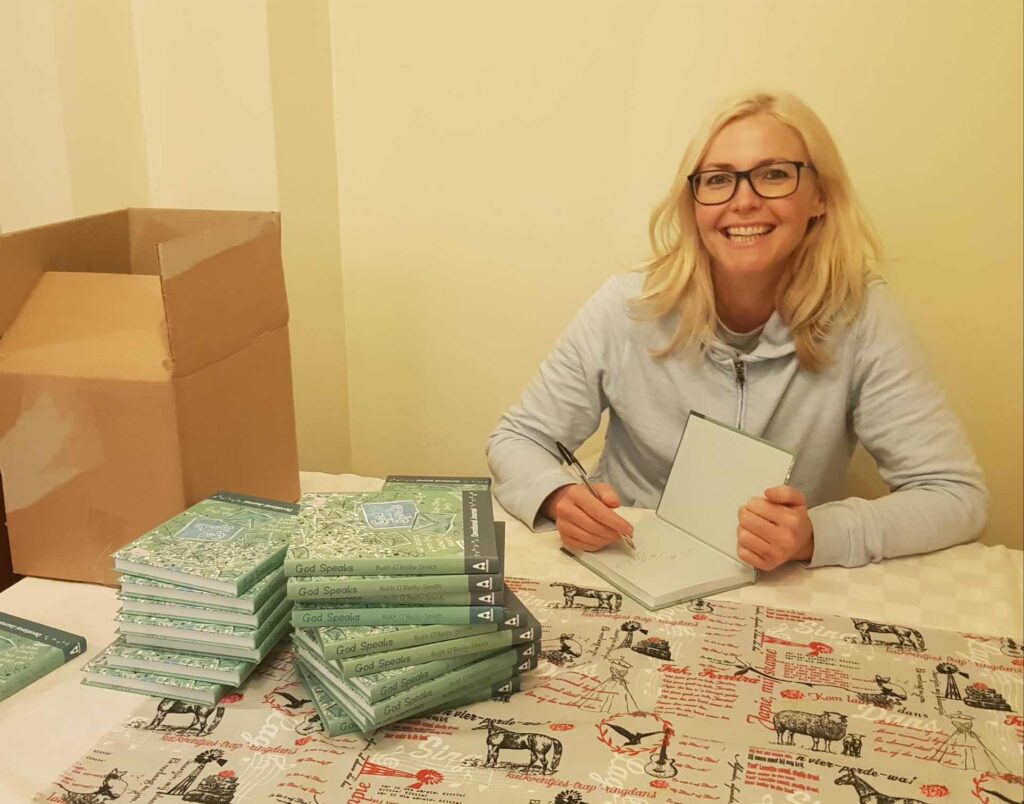
    Ruth O’Reilly-Smith was born in South Africa and has lived in the UK since 1999. Here she met and married her husband and they have twin boy and girl. Ruth started as radio broadcaster in 1995 and currently hosts a weekday radio show called, This Is My Story on UCB2, which is part of United Christian Broadcasters, a global Christian media charity. Ruth also enjoys writing and wrote for the Our Daily Bread Ministries publication for a number of years. She’s author of God Speaks – 40 Letters From The Father’s Heart, published by Authentic Media. You can read more of Ruth on her website, which is also where she posts regular Bible study blogs. Ruth’s Christian faith is central to all she does and her heart is to communicate God’s love in as tangible a way as possible. Find her at her website, on Twitter, and on Instagram.

    Order 7 Ways to Pray here, including in the US, UK, and Australia. You’ll also find lots of resources for small groups – videos and a leader’s guide – here.
  • ‘Lament as a Means of Survival’ by Claire Musters: 7 Ways to Pray blog series

    The experience of heart-wrenching trials has pushed Claire even closer to God, especially as she has rediscovered the prayer of lament. She shares movingly and gives a helpful example of how to pray this way, based on Psalm 13. You won’t want to miss this.

    Guttural cries of ‘Why Lord?’, heart-wrenching pain, endless tears, physical exhaustion.

    These are all a regular part of my days right now, as I watch one of those dearest to me struggle in ways I almost cannot bear. Suffering (whether your own or of one close to you) can rend you speechless, spiralling into the abyss of a dark unknown, even as you cry out to God for rescue, for a glimmer of hope… for anything that shows he is at work.

    Unfamiliar territory

    I have to confess lament was not something I practised regularly until around five years ago. I come from an evangelical church that is not big on tradition, and does not follow a traditional church calendar. But it was when my sister’s marriage fell apart and my mum’s health began to deteriorate rapidly that the emotional turmoil inside of me needed an outlet. In the midst of this, a dear young mum in our church died, leaving a husband and three small children. All of a sudden I was grieving privately in my family but also publicly with my church family. As my husband and I tried to lead our congregation through it (he as the pastor, me the worship pastor) I felt suffocated, alone and with no way of releasing the pain within. When I gathered the worship team who would be playing that first Sunday after her death, I realised that we had no language to express what we needed to as a community, but also as individuals.

    A God-given language

    During that season, I was drawn back to the Psalms, gently reminded by God that so many are songs of lament, and that I had utilised them once before. In an incredibly painful time in my marriage, I had opened Psalm 38 and the words had leapt off the page to me, as they seemed to describe exactly what I was experiencing then: ‘My wounds fester and are loathsome because of my sinful folly. I am bowed down and brought very low; all day long I go about mourning… I am feeble and utterly crushed; I groan in anguish of heart’ (Psalm 38:5–6,8).

    Back then, it was a revelation of my own sinfulness and the resulting pain that caused me to lament. But in more recent years, it has been a cry from deep in my soul that has been almost unstoppable. It has become a way I have desperately tried to remain connected to God through circumstances that have threatened to engulf me or those I dearly love. Some days it can sometimes feel like all hope is lost – and yet lament is the bridge that helps me find my way back to God when he seems distant or hidden.

    I don’t relish the experiences that have revealed how vital lament is to me, but I do cherish the renewed understanding that God has given us permission to vent all our anger, frustration, anguish, as well as our questions, through the examples in the Psalms and Lamentations – as well as of Jesus himself.

    Faith and intimacy

    I am walking a particularly painful path right now – and it has seemed relentless for the last few years. My mum passed away just before Covid, and almost immediately we were swept into working hard to keep our church community feel connected during the lockdowns, and now we are in the midst of an excruciatingly painful situation in our immediate family.

    When my mum died, God spoke to me so clearly through John 11 – revealing an image of Jesus weeping alongside me. That has been a real comfort at times, but in other moments the sense of loss and pain has been overwhelming. In those times, I have come to view lament as part of my survival kit – an absolutely necessity to stop me from going under.

    Lamenting with the Psalms

    The pandemic has brought suffering to so many families, and this life is full of troubles (as well as joys). If you don’t regularly practise lament, I encourage you gently to try finding a psalm that seems to echo the cry of your heart and turn it into a prayer.

    Here is an example of the way in which I use particular psalms as launchpads for my own prayers – I hope it is helpful to you, but of course do feel free to find your own individual way of lamenting before God.

    Psalm 13, with my accompanying prayers:

    How long, Lord? Will you forget me for ever?
        How long will you hide your face from me?

    God I can’t see you at work in this situation. It feels like I am having to cope on my own. I know you are there – please reveal yourself to me. Show me you haven’t forgotten us.

    How long must I wrestle with my thoughts
        and day after day have sorrow in my heart?
        How long will my enemy triumph over me?

    This all feels relentless, and it does feel like the devil is having a field day. I am finding it hard to keep batting away the discouragement, and my own depression. How long is this going to go on for Lord?

    Look on me and answer, Lord my God.
        Give light to my eyes, or I will sleep in death,
    and my enemy will say, ‘I have overcome him,’
        and my foes will rejoice when I fall.

    We need you to move – we need release! Come and act, move so that those around will know that you are God. And bring me your discernment and wisdom to know what to do – and your energy. I am so tired Lord…

    But I trust in your unfailing love;
        my heart rejoices in your salvation.
    I will sing the Lord’s praise,
        for he has been good to me.

    I do trust you Lord, however hard that is to say at times – and I do know that you are good and that your character cannot change. I also choose to worship you, singing songs of thanks, because I know they stir my heart and do me good. Thank you for the salvation you have brought me, thank you for the way you have led me in the past – and thank you for the way you have upheld my family. I know that you love them more than I do – and trust that you have a hope and a future for each one of us.

    Claire Musters is a writer, speaker, editor and author of several books. You can follow her at @CMusters on Twitter and on Facebook or visit her website. Her most recent book, Grace-Filled Marriage (Authentic Media), was written with her husband and is available to buy from clairemusters.com – it is also part of the Big Church Read initiative (see thebigchurchread.co.uk/grace-filled-marriage/ for videos, reading plan and discussion questions). The devotional she wrote while her mum was dying, Every Day Insights: Disappointment and loss (30 readings and reflections to help bring comfort and hope), can also be bought direct from Claire, as can all her books – contact Claire on cmusters@Icloud.com for more details (including special Christmas offers).

    Order 7 Ways to Pray here, including in the US, UK, and Australia. You’ll also find lots of resources for small groups – videos and a leader’s guide – here.
  • ‘More Than a Prayer List’ by Anne Le Tissier: 7 Ways to Pray blog series

    Anne shares vulnerably about getting overwhelmed by her prayer lists – while having nothing against this way of praying. She is a woman of prayer who has much to offer. She encourages us to keep in tune with God and look to him for how we pray. I welcome you to read on. . .

    It was Mum I missed most when we moved away from our small island home of Guernsey to London’s vast metropolis. Prior to the advent of email, texts and Facetime, she and I kept in touch through snail-mail and a fortnightly 59 minute, 59 second landline call. This was our special weekend perk; free calls for up to an hour before the charges kicked in. A vital and deeply special point of contact.

    To make best use of that time we kept lists of the things we wanted to ask or tell one another, taking turns to work through our points. ‘Anything else on your list?’ we’d say as the minutes drained away, invariably running out before we could enjoy free-flow conversation.

    But when Mum came to visit, we relished simply being together. Listening, talking or enjoying silent companionship with our favourite brew, engaging at a deeper level… This precious principle still nurtures my relationship with God.

    In contrast, when I started following Jesus, I was advised to keep a prayer list. But my personal needs alongside family, friends, church, charities and mission organisations, not least educational bodies, health agencies, governments and worldwide issues, fast outgrew a list. In fact, they could have filled a shelf of notebooks! And whether I prayed for ten minutes or an hour a day, it was impossible to pray about everything, even over the course of a week.

    I have nothing against prayer lists. They’re a helpful prompt and focus my attention on needs aside of my own. I still keep a shorter list and receive a couple of prayer diaries for certain people and situations God has specifically laid on my heart. But God never expected us to be pray for everyone and everything we hear about. Nor did He intend for prayer to be a ‘to-do’ list; a task that leaves us feeling guilty, ashamed or an underrate Christian if we fail to pray through the endless needs bombarding us. Prayer is so much more than just asking. Like my relationship with Mum, prayer is God’s gift to help us enjoy His presence and engage at a deeper level.

    Just being with God in prayer is key, whether through enjoying a pot of tea or stomping up hills and along river banks or strolling through bustling streets. Loving and being loved by God in meaningful, transformative relationship is about being in prayer rather than doing it. Of sitting or walking with God to seek and to hear His heart. Taking time to nurture the infinite pleasure of dwelling—remaining, settling—in the awareness of His presence.

    Amy’s book, 7 Ways to Pray, is a perfect companion to develop and enrich this encounter with God; helping us to prayerfully meet Him through His Word, through lament, through the practice of examen or the mindful awareness of His presence through the day.

    Asking in Jesus’ name, wrestling in prayer and interceding for others are vital, but how tiresome a task these prayers might be if not birthed from a heartfelt relationship. One of sharing and listening. Of pondering what has been said. Of thanks and adoration. Of laughing and crying. Of honesty. Transparency. And relishing times available for silent companionship; assured, at peace and infused with the pleasure of each other’s company.

    So, please don’t ditch your prayer lists, but ask God what He has entrusted you to pray for, and try balancing that time with space to just be with Him in prayer.

    Anne Le Tissier loves to disciple others in their ongoing walk with God as an author, preacher and conference speaker. She has written six books, contributed to a seventh, but also writes daily Bible reading notes, blogs and magazine articles. Anne also enjoys growing her own veg, chatting to her chickens and sharing quality time over meals with friends. You can find out more about her work or connect with her on social media through her website www.anneletissier.com

    Order 7 Ways to Pray here, including in the US, UK, and Australia. You’ll also find lots of resources for small groups – videos and a leader’s guide – here.
  • ‘Meeting with God through the Bible’ by Lynne Cole: 7 Ways to Pray blog series

    What a moving post by Lynne! I love how she shares her experiment with one of the prayer exercises in 7 Ways to Pray, and the difference that it’s been making as she meets with God. Maybe you could give this practice a go?

    I’m a busy mum to 5 children – the youngest of which are twins who are nearly 3 years old. As well as being a wife and mother, I am also launching my own business. Finding time to breathe let alone finding time to be with God is almost impossible. So when I saw that Amy Boucher Pye had a launch team for a book she had written about different ways to pray, it stirred something inside me. Even though I didn’t really have the time I knew I needed to read the book … and I wasn’t disappointed.

    I read through the first chapter soaking up her words. Amy not only opened my mind, but she opened my eyes and my heart too. I received some wonderful ideas on how I could read through the Bible and pray at the same time. Amy writes about how we can meet God in a tangible way as we pray with the Bible.

    “God always makes himself known to us, and a primary way he reveals himself is through his Word. When we pray with the Bible, God infuses the experience with his Spirit.” 

    7 Ways to Pray, page 11

    How I met with God

    In using Amy’s suggestion of re-writing scripture, I decided to set myself a challenge. For the month of October I developed Bible based affirmations about how God saw me and what His heart was for me. My hope was to use these Bible affirmations to change a mindset I had which was doing me no good. I needed to see myself as God sees me.

    One of the affirmations I wrote was on being brave. I used the Bible verse Isaiah 41:10:

    “Fear not, for I am with you; be not dismayed, for I am your God; I will strengthen you, I will help you, I will uphold you with my righteous right hand.”

    Using Amy’s technique, I personalised it and re-wrote it in my own words what I believed God was saying to me:

    Lynne, do not be afraid for I am by your side. I am your God and you do not need to be scared. I will provide you with the strength you need and I will be here to help you. Lynne, you will no longer feel invalidated because I am here to encourage you and lift you up. You are not alone. You are brave.

    As a result of Amy’s suggestion on making the Bible verses personal to ourselves, it has really helped me to view God in a different way. Most importantly it is helping me to change my mindset on how I view myself.

    Why not have a go at personalising a Bible verse and re-write in your own words what you feel God is saying to you.

    Lynne Cole is a wife and a stay-at-home mother to 5 children. She is currently setting up a business in arts and craft called Lumina Creations. She also blogs in the (very little) free time that she has. She believes that a broken past does not mean a broken future and that we are all beautiful despite what we have been through. Through her creations and her writing, her desire is to bring hope and encouragement to others and shed some light into the darkness that is experienced.

    Come visit her at her blog for Beautifully Broke or Lumnia Creations and on Facebook for Beautifully Broke or Lumnia Creations.

    Order 7 Ways to Pray here, including in the US, UK, and Australia. You’ll also find lots of resources for small groups – videos and a leader’s guide – here.

  • ‘Let us pray’ by Matt McChlery: 7 Ways to Pray blog series

    Sometimes we get hung up on the mechanics of prayer – are we doing it right and what if we can’t find the right words to say. Matt assures us that God loves to hear from us, whatever words we use. I think you’ll be encouraged by his post, so please read on…

    Just before lockdown here in the UK, a young lady I know bravely shared about some mental health challenges she had been facing. She didn’t go to church (I knew her through a secular job I used to do). So, I thought this was an opportunity to not only offer some support, but also a chance to share something of Jesus with her.

    I simply asked if I could pray for her.

    Her response completely took me by surprise. It was clear that she had no idea what I was talking about, what prayer was or why I would be offering to do some weird thing on behalf of someone else. She just didn’t understand.

    It was a little awkward, so I didn’t push it. I still prayed for her on my own as I intended to anyway; it just didn’t provide the opening I was hoping for.

    Another story I would like to share is one when my wife and I were newly married, just over ten years ago now.

    A lady from my work had come to our wedding and had since met Jesus and joined our church. We had just started a small Bible study in our home, and she was attending regularly. One thing we liked to do was to invite others in the group to pray if they wanted to so that it wasn’t just my wife and me talking the whole time.

    In the first few sessions some of the others prayed, but my friend from work remained silent. Some time later, we discovered that she felt unable to pray because she said she could not think of the big or ‘posh’ words that some of the others were using. She also felt nervous that she might say the wrong thing.

    We explained that prayer is like having a conversation with God – a chat. You don’t have to use big or grand words. It doesn’t have to be something written down in a big heavy book somewhere for it to ‘qualify’ as an actual prayer. We also encouraged her that God knew her heart and even if she thought she may have said something wrong, she should not worry about it. God is bigger than our mistakes. He loves us and wants to talk to us. He desires relationship more than perfection.

    Over time with a bit of encouragement and support, this lady began to pray in our Bible study group. Her prayers were simple, yet heartfelt. She stumbled over her words and said ‘Umm’ a lot. But she was praying – communicating with God.

    Those humble, awkward prayers taught me something.

    Firstly, some of the people we encounter may have no idea about the overwhelming possibility we have to communicate with God. They may have no concept of God, let alone any idea about prayer. We need to be prepared to show the love of God to them and to pray for them anyway.

    If they do have some idea about prayer, they may have some misunderstandings that get in the way of them engaging.

    Secondly, with a bit of understanding of what prayer is and is not, we can learn how to do it. I don’t mean we will all one day be able to pray grandiose prayers filled with thousands of words, most of which need a dictionary near by to make any sense of.

    No.

    Jesus tells us:

    And when you pray, do not be like the hypocrites, for they love to pray standing in the synagogues and on the street corners to be seen by others. Truly I tell you, they have received their reward in full. But when you pray, go into your room, close the door and pray to your Father, who is unseen. Then your Father, who sees what is done in secret, will reward you. And when you pray, do not keep on babbling like pagans, for they think they will be heard because of their many words. Do not be like them, for your Father knows what you need before you ask him. (Matthew 6:5-8, NIV)

    We can learn how to pray.

    We can learn how to listen and how to respond.

    We can learn how to talk with God and be ourselves whilst doing it.

    The best way of learning is by doing. Don’t worry if you think you can’t find the ‘right’ words. Don’t worry if you stumble and say ‘Umm’ a lot.

    Right where you are now as you read these words, turn your attention towards God. What would you like to talk to Him about?

    Come, let us pray…

    Matt McChlery is an author, songwriter and an Overseer (elder) at his local church based in Wisbech, northeast Cambridgeshire, UK. He has written numerous songs for the church that can be found on digital streaming platforms and has penned three books, including the much-anticipated memoir about his journey through non-Hodgkin Lymphoma called Standing in the Storm: Living with faith and cancer (Instant Apostle), which will be released in May 2022. Find out more at www.mattmcchlery.com

    Order 7 Ways to Pray here, including in the US, UK, and Australia. You’ll also find lots of resources for small groups – videos and a leader’s guide – here.
  • “Now or Never: Desperately Depending on God in Prayer” by Ruth Clemence: 7 Ways to Pray blog series

    How can we turn to God when we face challenges of many kinds? Ruth writes powerfully out of the depth of painful experiences through which she clung onto God, perhaps sometimes by her fingertips. I’m so grateful for how she’s shared and trust you’ll benefit from her grace-filled words.

    Prayer is serious business with God. The cancer I had 10 years ago made a comeback at the end of 2020. It had already been an immensely challenging year, with Covid-19, the birth of my second child, and the death of a close family member.  Prayer became deadly serious to me – as in, ‘Lord, I don’t want to die’. Those life or death, now or never moments cause us to cry out to God from the depths of our heart. Prayer in this season of life has been…

    …desperate. In rushed and hushed breaths, alone and frightened, I groaned to God out loud and silently. In moments of intense pain, I went from not wanting to die to understanding how so much pain could make you not want to live.

    …dangerous. A prayer I prayed before the diagnosis was ‘I want to know the Father’s heart’. That was a dangerous prayer. Suffering was not the chrysalis of change I would have chosen to cocoon myself in. I wanted to become the butterfly without the struggle. That is one of the many reasons of suffering; it often brings forth beauty and growth in our walk with God that we would never bring about on our own. To know God’s heart is to know suffering.

    …deep. I don’t mean lengthy and profound, although prayers may look like that at times. By deep, I mean searching the depths of the heart. Do we really believe and trust God in all circumstances? Suffering chisels away the parts in our life that we think we have control over. Although suffering leaves its painful marks, we can know God is shaping us into his likeness with his own nail-scarred hands.

    …dependent. I prayed many times for God to meet me in a tangible way – ‘now or never Lord’. At times, I have looked in amazement and, regretfully, envy, as others share of how God has met them in a powerful encounter. From my hospital bed, with high dose chemotherapy pumping around my body, I longingly craved God’s palpable touch saying, ‘if not now, then when?’ Although I experienced mercy upon mercy daily, I still wanted what felt like the bigger miracle. God did not answer me the way I wanted him to in that moment.

    Two months later, I was in another hospital bed sharing a room with a kind older lady who was experiencing her own cancer relapse. I felt a strong desire to share the love of God with her. She was on the phone to her friend for over an hour. I knew I had to say something to her. It was now or never. Did she know Jesus in her time of need and the comfort he gives? I prayed, ‘Lord, if you want me to speak to this lady, you are going to have to provide the bridge.’ I was asking God for a window of opportunity to share the gospel.

    After her phone call she said, ‘That was my friend. I forgot that she goes to church on Sundays.’ There was the bridge and an immediate answer to prayer. We spoke about God together, although it felt as if I stumbled through the gospel. God showed up powerfully to me through a dependent cry to him for this dear lady. In every moment, big or small, we need to depend on Jesus. Maybe the greatest miracle in prayer, besides the astounding reality that we can come before God with everything, is how he knows what we need in the time that we need it.

    Ruth Clemence is a follower of Jesus, a wife to Joel, mother to two young children, a writer and a blogger. She loves to write about the hope of the gospel in the ups and downs of daily life. Through experiencing cancer as a 19-year-old and relapsing 10 years later, she has a heart to share the hope of Jesus with others who may be going through a time that seems hopeless.

    Order 7 Ways to Pray here, including in the US, UK, and Australia. You’ll also find lots of resources for small groups – videos and a leader’s guide – here.
  • “Pray Without Ceasing” by Gayl Wright: 7 Ways to Pray blog series

    How can we pray all the time? Gayl‘s post bursts with ideas of how to keep the conversation with God going throughout the day. I think you‘ll enjoy and benefit from reading her thoughts…

    Rejoice always, pray without ceasing, in everything give thanks;
    for this is the will of God for you in Christ Jesus.

    1 Thessalonians 5:16-18 NASB

    How often do you pray? Do you think about prayer throughout the day? Or do you forget until you finally take a break? Is it possible to pray at any time during the day no matter what you are doing? In 1 Thessalonians 5, we are told that it is God’s will for us to pray without ceasing. How do we do that?

    One of my friends tells me that she never says Amen. In other words, she has a constant dialogue, an open conversation with God. I like that idea, though I still use the word amen at times as it gives closure to a particular prayer.

    How are we to pray without ceasing or follow the other commands in that passage to rejoice always and give thanks in everything? Notice that it says, “…for this is God’s will for you in Christ Jesus.” That makes all the difference. He has given us His Spirit to be with us always.

    GOD’S PRESENCE WITH US

    Where can I go from your Spirit?
    Where can I flee from your presence?
    If I go up to the heavens, you are there;
        if I make my bed in the depths, you are there.
     If I rise on the wings of the dawn,
        if I settle on the far side of the sea,
     even there your hand will guide me,
        your right hand will hold me fast.

    Psalm 139:7-10

    Because God’s presence is with us all the time, we can talk to Him anytime of the day no matter where we are or what we are doing. Knowing that He is with me gives me a great sense of security and peace.

    It’s easy to remember to pray when there are problems and we don’t know what to do. But what about giving thanks for even ordinary things as we go through our days?

    In chapter 3 of Amy’s book, 7 Ways to Pray, she suggests that when we first wake in the morning to place our hands on our heart and “affirm, Jesus lives within me.”  She has similar suggestions for activities throughout the day.

    My days can get rather busy at times and I neglect my special time of reading the Bible and praying. But that doesn’t mean all is lost. I can pray as I prepare meals, clean floors or during most any other household chore. If there is an emergency I can breathe a quick prayer for wisdom and calmness.

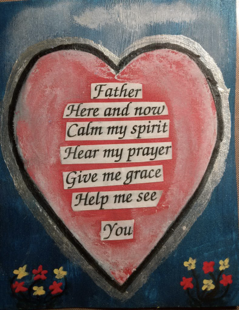
    Father, here and now, calm my spirit, hear my prayer, give me grace, help me see you.

    A couple of years ago I set alarms on my phone to remind me to pause during the day to acknowledge God’s presence with me. I discontinued it for a while, but I’ve started it up again. When I hear the familiar alarm on my phone, I stop and think about the presence of God with me. Then I often say a one sentence prayer thanking Him for life, for beauty or for anything else that comes to mind.

    When possible, I set aside a longer time to pause, rest, and pray. Some days I sit on my front porch or walk around outside enjoying the beauty of creation. It gives me time to forget the chores calling my name and relax. I marvel at the vastness of creation and realize that although I am so small in comparison, God loves me, and nothing can take that away. 

    PRAYING WITH OR WITHOUT WORDS

    Praying doesn’t have to be done in a specific way. Sometimes I don’t have words, but I know the Holy Spirit will help me. God knows our hearts and shares our burdens. Sometimes when my day seems overwhelming and things are hard, I write a poem that is like a prayer of lament. It is a way to put words to the aching in my heart.

    Burdens heavy on my heart
    pierce me like a poisoned dart.
    Lord, be near me.

    My weeping eyes seek after you;
    I don’t know what to do.
    Lord, be near me.

    Breaking through my anxious tears
    Your light of peace calms my fears.
    Lord, be near me.

    Full of hope my hands I raise,
    Voicing love and joyful praise.
    Lord, be near me.
    ~gsw~


    Each morning after reading a Psalm, I often write a poem in response which can also be a form of prayer.

    You are gracious, God
    Full of compassion and love
    Your mercy abounds

    You are so patient
    Full of truth, strength and goodness
    Your comfort calms me
    ~gsw~

    The main thing is to keep the communication going between myself and God. Just knowing that He hears anytime is a comfort.

    With the Holy Spirit’s help, may we all be intentional to acknowledge God’s presence with us throughout the day. May we rejoice and praise Him for all His wonderful works.

    Lord, I call on you; hurry to help me. Listen to my voice when I call on you.
    May my prayer be set before you as incense, the raising of my hands as the evening offering.

    Psalm 141:1-2 (CSB)

    Gayl Wright lives in a log home on a hill in Sunset, SC. She and her husband, Steve, raised 7 kids and have 14 grandkids. Some have chronic illnesses and one son is with Jesus. She was a church pianist for many years, and she also homeschooled her kids. Gayl loves to crochet, compose poems, write, art journal and spend time in nature. She is a seeker of truth, looking for beauty in ordinary things. Her desire in life is to glorify God and encourage others. Currently she serves as a volunteer as Content and SEO Coordinator for Chronic Joy®. Check out her blog Words, Photos and Art.

    Order 7 Ways to Pray here, including in the US, UK, and Australia. You’ll also find lots of resources for small groups – videos and a leader’s guide – here.
  • “Prayer is like . . .” by Amy Young: 7 Ways to Pray blog series

    So often we wish for clear instructions. If you do this, that will happen. Or a, b, and c will definitely lead to d. But life isn’t like that – as we see with Amy Young’s delightful post. I love American football and I don’t love baseball, but I appreciate her wonderful illustration. Enjoy! (And Go Broncos! Go Vikings!)

    Although I’m grateful for the Lord’s prayer, I wish that the disciples would have asked Jesus another question. In addition to asking Jesus to teach them to pray, I wish they’d also asked Jesus, “How does prayer work?”

    You’ve also probably wondered how prayer works. In my imagination (see Chapter 6 of 7 Ways to Pray), I see a group of us around the table enjoying a meal with Jesus. The conversation weaves around and in a lull I ask Jesus my question: “How does prayer work?”

    Since I’m at the table with Jesus and he is earthy and relatable, I believe he would use sports and parts of modern life in his answer. (If there’s one thing to know about Amy Boucher Pye and me, it’s that we love American football. If you hear loud cheers (or groans) for the Vikings or Broncos, chances are it’s one of us.) Jesus smiles at my question about prayer, leans back, and begins to tell a parable.

    I lean in and this is what Jesus shares.

    Prayer doesn’t work like a vending machine where you insert coin after coin, select D6, and wait expectantly for the candy bar you selected to pop out of the bottom of the machine, virtually guaranteed of the outcome.

    Instead, prayer is like a baseball player who steps up to the plate, bat in hand ready to take his turn at bat. He never knows exactly what will happen, but he knows the rules of the game well enough to know what could happen. He could strike out or he could be walked to first base . . . or better yet, he might get on base with a hit. That same batter doesn’t know when he steps up to the plate the duration, will this be a short at bat that will end disappointingly after only one pitch? Or is he about to engage in a long at-bat in which the exchange between the pitcher and the batter almost seems like a battle?

    Sometimes the batter won’t have to do much and he gets on base and is able to score a run for his team. Other times his turn ends in frustration, even anger at a poor call by the ump. And he stomps off indignity after being treated so unjustly!

    His at-bat could result in getting to first base, which of course is exciting, or he could hit a double or even a homerun. On rare occasions the batter finds himself at a crucial point in the game as he steps up to the plate and the outcome of his at-bat can really affect the game’s outcome.

    It’s not that prayer is a game between you and God or that God is the umpire judging the pitcher and the batter. Instead, prayer is an endeavor that involves the dance between the predicable and the wild. It embodies hope and longing, and the risk that unlike a vending machine, there are no guarantees. Prayer teems with anticipation, the collective holding of the breath of everyone watching, the longing for what could be, and the eruption in celebration when the crack of the bat is heard throughout the ball park.

    You’re not guaranteed a specific result when you bat in a baseball game, but you are guaranteed that something will happen. So it is with prayer; mystery, skill, effort, beauty, and even love mingle together as you take your turn and offer your prayer.

    Jesus looks me full in the eye as he says “and offer your prayer.” He knows in my younger years I played on a youth softball team and wasn’t very good at batting. If prayer is like that, Lord help us, Lord help me, we’re in trouble.

    Jesus continues:

    Amy, when you only think of baseball on the major league level, sure, you see the sport at its highest level, but you don’t see it as its richest. There are little leagues, company teams, and far more who play for the love of the game than because it is their job and they’re professionals. I’m not asking you to be an all-star; I’m inviting you into a relationship.

    I reflect on the conversation as the meal comes to an end. In truth, I offer some of my prayers easily but others with weariness because I’ve been praying them for years. Thrillingly I’ve experienced answers to prayers that go far beyond what I could have imagined. I’ve been confused, frustrated, disappointed, delighted, in awe, and humbled by my prayers and the responses from God. While I wish at times prayer was more like a vending machine, in truth, I don’t actually prayer to be like that because then I’d be in control.

    So, the next time someone asks you, “How does prayer work?”

    You can smile and tell them, “Prayer works like a baseball player who steps up to the plate, bat in hand ready to take his or her turn at bat, never sure exactly what will happen, but willing to take a swing all the same.”

    Lord, help me to be such a baseball player. Amen and amen.

    Amy Young: Life enthusiast. Author. Sports lover. Jesus follower. Equipper of cross-cultural worker. Amy is the founder of Global Trellis, co-founder of Velvet Ashes, hosts reading challenges at The Messy Middle, and is the author of 5 books for Great Commission cross-cultural workers.

    Order 7 Ways to Pray here, including in the US, UK, and Australia. You’ll also find lots of resources for small groups – videos and a leader’s guide – here.