I’m like an addict when it comes to books. Compelled to read, understand, savor, wrangle with, be moved by, learn to live from these silent companions who speak so loudly.
I read dead people. Death is a good barometer for determining true canon, I think, as is overcoming death. Jesus’ own example speaks to such. That doesn’t mean that works by the living aren’t worthy of our attention, but works which continue to speak to us long after the author is gone do so because of their humanity and transcendence. Their words hold power, wisdom and insight, regardless of time or circumstance.
I studied the Romantics because they seemed to live this crazy, revolutionary life and so I thought that quiet ol’ me could taste that vicariously. It worked. But I didn’t expect that particular group of writers to whet my appetite for what CS Lewis coined from the German sensucht, or the longing we all have for our eternal home, for the holiness of God. The Romantic poet William Blake is particularly poignant. I love how he looks the fallen world straight in the eye, how he acknowledges evil and the complexity of human nature, but still threads everything through with the divine.
I’ve been honored and deeply touched to receive many amazing stories of God’s grace from believing readers from all backgrounds and walks. I’ve also received questions and concerns from seekers and sceptics. They remind me how our God is not a fragile God. He graciously withstands our scrutiny; even welcomes it. The answering of some questions only begets more, and that’s the thrill and dignity of the mystery.
My recent book, Holy is the Day: Living in the Gift of the Present, grew organically out of my “leap with faith” in attempting to enter an all more entrusting relationship with God. The experience has given me an entirely deeper understanding and respect for the definition of the only work there truly is, to “believe in the One He has sent.” Sometimes the “work” is merely the default of doing all we can do in that moment. I wanted to explore seeking to trust in all sorts of life’s circumstances, and how that holds the power to challenge and renew our vision, to reshape our priorities and relationships.
I love to read everything. I tend to gorge myself on authors, reading all their work at once. I’m reading Anne Rice’s Of Love and Evil because I’m interested in how she reconciles being a new creation in Christ with her longstanding relationship to the supernatural. I’ve been enjoying Marilynne Robinson’s novels, and I’m on a huge Annie Dillard kick now. She fearlessly yokes together the consumerist reality of the fallen world with the persistent presence of the glory of God. The kind of “terrible beauty” at work all around us, if I am to return to Blake (and Yeats).
I recently reread Charlotte Bronte’s Jane Eyre, initially for a collaborative project but then I ended up slipping into savouring it all over again. I love how Jane cuts through hypocrisy in both faith and love with a sort of passionate composure. Now she’s a girl I could have a cuppa with!
Carolyn Weber is a believer, wife, mother, author and professor. She detailed her leap of faith in Surprised by Oxford. She lives in London, Ontario, Canada with her husband and four children. You can connect with her online here.
“See, this has touched your lips; your guilt is taken away and your sin atoned for.” Isaiah 6:7
Crucifix, Henri Matisse, Vatican Museum
I love how the Old Testament foreshadows the New. Isaiah has confessed that he is a man of unclean lips and declares that he’s ruined; finished. But God sends a messenger to bring release from his sins. As the God of flame sends a red-hot coal to touch Isaiah’s lips, his sin is atoned for. He is now fit to be God’s conduit of his message. His prophet.
God was sending his message to his people, the Israelites, calling them to repent. Years later he would send his own Son to be his message, again calling his people to repent, turn from their sins, and embrace the overflowing life he wants to bestow on us all.
The cross of Jesus is a place of exchange where we can continue to bring the sins we commit and those committed against us. As we nail them to the cross or leave them at the feet of Jesus, we will find release. In their place, the Lord will bestow on us his love, mercy, grace, peace and joy.
Perhaps you could construct a cross out of twigs or boards. Take some time to ask God to reveal to you anything that you might need to be free of – a false name you have taken on, or burdens of wrongs you’ve done or those done against you. Write them out and pin in – or hammer – them to the cross, knowing that through the power of Jesus’ atoning blood, you are free. Free from the sins or the false names, you can open your hands to receive God’s gifts.
Prayer: Lord Jesus, thank you for your amazing sacrifice, that I might live with joy and freedom. Amen.
I woke early this morning, with Scotland on my mind. Would I now not be able to talk about the UK, with it instead being the DK – a Divided Kingdom? What would the result be?
I switched on my computer, hurriedly turning to the BBC website, surprised by my tears. I’m grateful the union is staying together, although I know many hearts are broken today, the thought of going it alone quashed.
The flurry of the past weeks has left me thinking about what it means to be British. I hold a British passport, but I’d never introduce myself as a Brit. The Yankee-Doodle blood just runs too deeply. But I love this country with its quirks and hang-ups and treasures. Facing a fractured union made me realize that all the more.
I find the whole question of national identity interesting. If you’re Scottish, Welsh or Irish, you’d introduce yourself according to your country (yes?). But what about the English? If that’s you, do you say you’re English or British? Does a remnant of historical embarrassment over being the ruling people keep the English from owning their identity?
And why don’t we have better holidays in the UK than generic Bank Holidays? Okay, I know each country wouldn’t want to celebrate the other’s saint’s days (fancy St David’s Day, any non-Welsh?). Could we get behind a favorite person from history – Shakespeare? I know that celebrating a monarch simply won’t go down for republicans. (And don’t say you don’t like to celebrate – I saw you at the London Olympics and Silver Jubilee…)
Chime in and tell me what you think, especially if you come from one of the countries of the United Kingdom. Who are you?
“Then one of the seraphim flew to me with a live coal in his hand.” Isaiah 6:6
Firefighters monitor the fire line during a prescribed burn. Taken by Brady Smith. Credit: USDA Forest Service, Coconino National Forest.
Our usual reaction to a forest fire is negative as we think of wildlife killed, flames raging out of control, damage done. But a controlled burn is a technique in forest management, when a fire is set in a prescribed area to burn off the leaves and undergrowth that would result in a hotter fire later. These fires are cleansing and help the germination of certain types of trees.
I wonder what Isaiah thought when he saw the seraphim approach him with a burning-hot coal. Fear, as we might feel when we hear of a forest fire? And yet this coal, touched to Isaiah’s lips, brings cleansing. The God who is flame burns away the dross in Isaiah’s heart, so that his lips are clean.
As I look back over my life, I see times of cleansing fire as allowed by God. Though I prayed and committed myself to the Lord, I didn’t receive the answers I so desperately longed for. The result was confusion and pain. And yet as the days and months passed and I continued to look to God for love, affirmation, and direction, I could (eventually) see how his holy fire was burning away my impurities and redirecting my desires.
Are you going through a controlled burn? If so, may the Lord strengthen you as he brings purity.
Prayer: Father of light, may we see your burning in our life as a thing of cleansing. We submit to you. Amen.
Only in America, or so they say. A friend is roadtripping and posted a photo of a heart attack on a plate: a bacon cheeseburger with a huge side of fries. Doesn’t sound too unusual, until you hear that the bun is made of two glazed doughnuts. Seriously. Yep, that’s about 1500 calories in one sitting – if you can manage it.
Only in America – school drills for lockdowns? I heard from a friend that her daughter found the lockdown drills during the first week of school scary. “Lockdown drills?” I asked. Her older daughter said, “You know, if a robber comes into the school.” Oh, that kind of lockdown. I know that the right to bear arms is part of the American identity, but seriously? My heart aches for the reasons behind these new drills. Tornado drills in Minnesota were bad enough for my imagination – I’d picture the wind shattering the glass, us kids rolled into little balls in the hallways. The thought of an armed shooter terrorizing sweet school kids tears me up.
Photo: Curtis Palmer, Creative Commons
I do miss America. I miss my family and friends. I miss the free and easy can-do spirit. I miss chatting at the check-out line without feeling silently judged for speaking. I miss not being the only crazy Yank hooting during a group exercise class. I miss wide spaces and roads you can drive on without feeling the oncoming traffic is heading right for you, the lanes being so narrow. I miss Superbowl parties and fireworks on the Fourth of July. I miss Target and cheap gas and pelting showers and once in awhile, Kraft macaroni and cheese.
But the two examples above show that my home country isn’t perfect. No country is; we live in a fallen world and no society can claim it’s a utopia. I can laugh at the outrageous burger and pray for miracles to keep the kids safe, and remember that “only in America” has its highlights and lowlights.
“Woe to me!” I cried. “I am ruined! For I am a man of unclean lips.” Isaiah 6:5
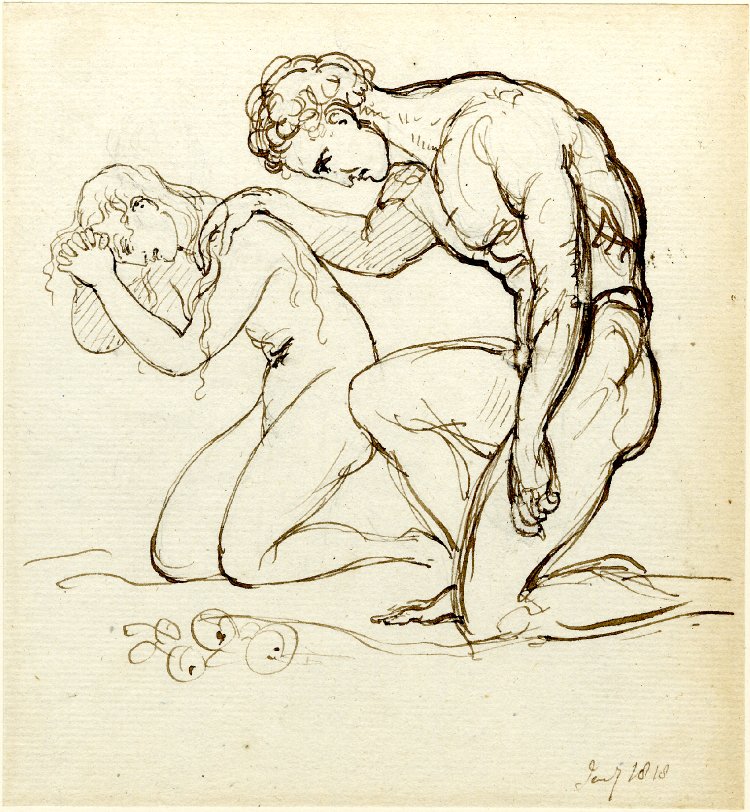
“Adam and Eve” by George Hayter – British Museum (public domain)
My kids are still young enough that when they have done something wrong, they usually confess straight away. They (thankfully) haven’t yet learned how to hide their shame or guilt. But at some point they will probably acquire this practice, whether as a coping strategy in the tough world or for more self-interested reasons. May the Lord help my husband and me to train them in keeping a pure heart.
Isaiah, when faced with the holiness of God, comprehends immediately the depth of his sin. He had been warning the Israelites about their transgressions, but here before the holy God he sees that neither is he worthy. Isaiah knows what God has been saying about the sins of his people, for he has been the conduit of his message. Surely, he thinks, he is ruined.
Jesus later told the Pharisees that “the things that come out of a person’s mouth come from the heart, and these defile them” (Matthew 15:18). Likewise Isaiah realizes, as he looks on the holiness of God, that out of his lips come the impurities of his heart. But as we will see next week, God sends him help for his redemption – just as he has for us.
Have you experienced an utter realization of the depth of your sin? If so, how did you respond? And how did God?
Prayer: Heavenly Father, we repent for the sins of our heart and our mouths. Live in and through us, that our words would be as sweet as honey.
How did you first get in to writing professionally? I’m a newbie to the craft, though I have been journaling for years… I have several ideas floating around in my head, but am unsure how to get them from mere ideas to something other people would want to read.
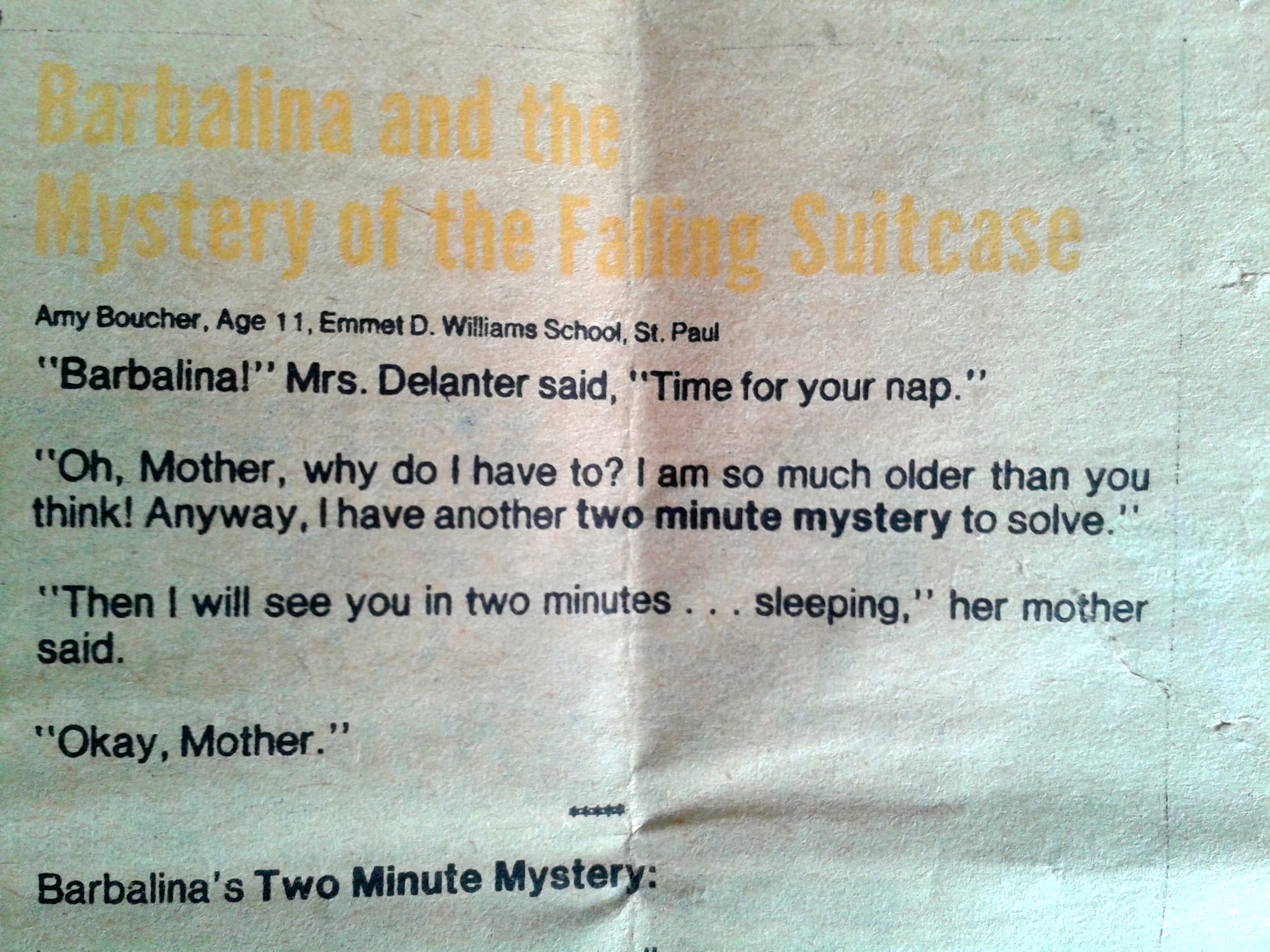
My first story, published in the Minneapolis Star. There’s more to this story than I’m telling here though…
Hello newbie writer friend! Thanks for asking how I got into this writing world. My first story was published in the Minneapolis paper when I was in fourth grade, but my writing journey has been long and filled with some heartbreak but lots of encouragement too. For decades I was afraid to write, instead surrounding myself with writers as I acted as their editor. I don’t regret my editing career, and indeed love my one-day-a-week freelance work with Authentic Media. I learned what great writing is; what is happening in the industry; how to write to meet a felt need (argh; do you dislike that language as much as I do?); and so on and so on and so on.
But how did I move from editor to writer? Through heartbreak, initially. I was the UK editor for one of the largest Christian publishers out there. It was my dream job; I was working with amazing authors – the late Rob Lacey, Adrian Plass, Michele Guinness, Conrad Gempf, to name a few. Then the big conglomerate pulled the plug on UK commissioning and they eliminated my job. I thought my world was ending.
But it was the kick on the rear I needed to pursue my writing dream. God provided freelance editorial work, which paid the bills while I explored writing. I was chuffed to get a monthly column with Christian Marketplace for six years, a now-defunct trade journal for Christian publishing, and to start up the Woman Alivebook club, which I’ve run for eight years now and love to bits. I got my first commission for devotional writing with New Daylight (Bible Reading notes – I write for BRF, CWR, Living Light and Scripture Union), which is one of my great passions. And much later on, I branched out into writing on the Christian life in Woman Alive and Libertimagazine. More on my first book when I sign the contract, hopefully in this month!
Some of the Bible reading notes I’ve written in. These are aimed just at women, but I write for both sexes too.
Everyone’s writing journey is different, but here are some tips as you start your journey.
Write, write, write. Writing is hard work, and the best writing is rewriting, rewriting, rewriting. Ernest Hemingway said in an 1958 interview with the Paris Review that he rewrote the ending of Farewell to Arms thirty-nine times before he was satisfied. The interviewer asked if there was a technical problem; “What was it that stumped you?” He replied, “Getting the words right.”
November is coming up soon, which for writers means Nanowrimo. Do it! I’ve “won” twice and failed once (and no, I didn’t write novels – I wrote whatever came into my head). For me the experience of committing to write 1667 words a day, even if they are crap, was transformative. I found the process (finally) banished my inner editor to the basement. She might knock and scream at the door, but I can more easily ignore her when I’m writing, writing, writing. (She comes in handy later at the all-important rewriting stage, of course.)
Write what only you can. Your unique voice is what will set you apart. Read/watch Neil Gaiman’s “Make Good Art” speech for this point especially. (You can find it free online, but why not splash out for a gorgeous print book, in which the typography itself is a work of art and adds to the engagement with the content.) As he says, “The urge, starting out, is to copy. And that’s not a bad thing. Most of us only find our own voices after we’ve sounded like a lot of other people. But the one thing that you have that nobody else has is you. Your voice, your mind, your story, your vision.”
As a Christian, I find the way God created us all so uniquely, and yet in his image, exciting and mind-blowing. Christ-in-me will result in art that’s different from Christ-in-you, but the universals come through.
Don’t fear failure. Well, you will fear failure, at least I do, but write anyway. Try to develop a thick skin. Not everyone is going to like your type of writing, but hopefully you’ll find your tribe, your clan, who will love to hear what you have to say. Whole websites are devoted to the rejections writers have faced – famous ones included.
Early on when I started to move from editor to writer, I pitched a series of columns for a well-known magazine. Because I was in the industry, I knew the editor and they responded to my initial pitch enthusiastically. I duly cranked out three sample columns and waited with baited breath. The response that came back was crushing, not least because the editor said no; they also said my pieces would fit better in an American magazine that I felt was twee! I nursed my wounds for a bit and then moved on to the writing assignments I did have, which at first were book related (such as book reviews, which I still love writing).
I’ll write about my rejections on the book front later, but know that editors and publishers don’t have super powers to let them know that this piece of writing or that is going to be a big hit. Yes, okay, some things are key, such as great writing, great content, and a huge platform. But books can come out of nowhere and surprise us.
Build your platform. Lots of people address this vital issue in their blogs, so I won’t spend much time here. (Agent blogs are great resources – try Steve Laube,Books & Such,Chip MacGregor.) Discoverability is today’s challenge – how can your readers find you in a crowded marketplace? As an author you need to get out there with social media and in real life, speaking and connecting. In terms of social media, my biggest advice is make it real – people soon tire of authors only selling their wares, who aren’t interested in having a meaningful and two-sided conversation.
Love, love, love running this book club. I get review books for free, get to share my opinions about them, engage with authors and readers, spread the word about great writing… What could be better?
Engage with the pros. Take your craft seriously. You can find a lot of free resources online, but nothing beats one-to-one engagement with an industry pro or a writers’ conference. In the UK, I recommend you join ACW, as mentioned above, which holds regular writers’ days, has an active Facebook group, and a regular magazine. Writers’ Essentials is another resource for courses and a place to hire a wise editor.
Hire an editor, you say? Yes, indeed. I hired a fabulous friend to help me with my failed book project. She helped me see what I couldn’t see, especially in terms of structure and voice. Her help was invaluable, and even though that book won’t see the light of day, I don’t regret the investment for a minute. (And yes, I write that as a professional editor myself with some twenty-five years experience!)
So newbie writer, my friend, I hope this helps. Write, write, and write some more. I trust you will find your voice; I trust you will make the world a better place for having crafted your words into prose, poetry, fiction or other format. Let me know how it goes!
“Holy, holy, holy is the Lord Almighty; the whole earth is full of his glory.” Isaiah 6:3
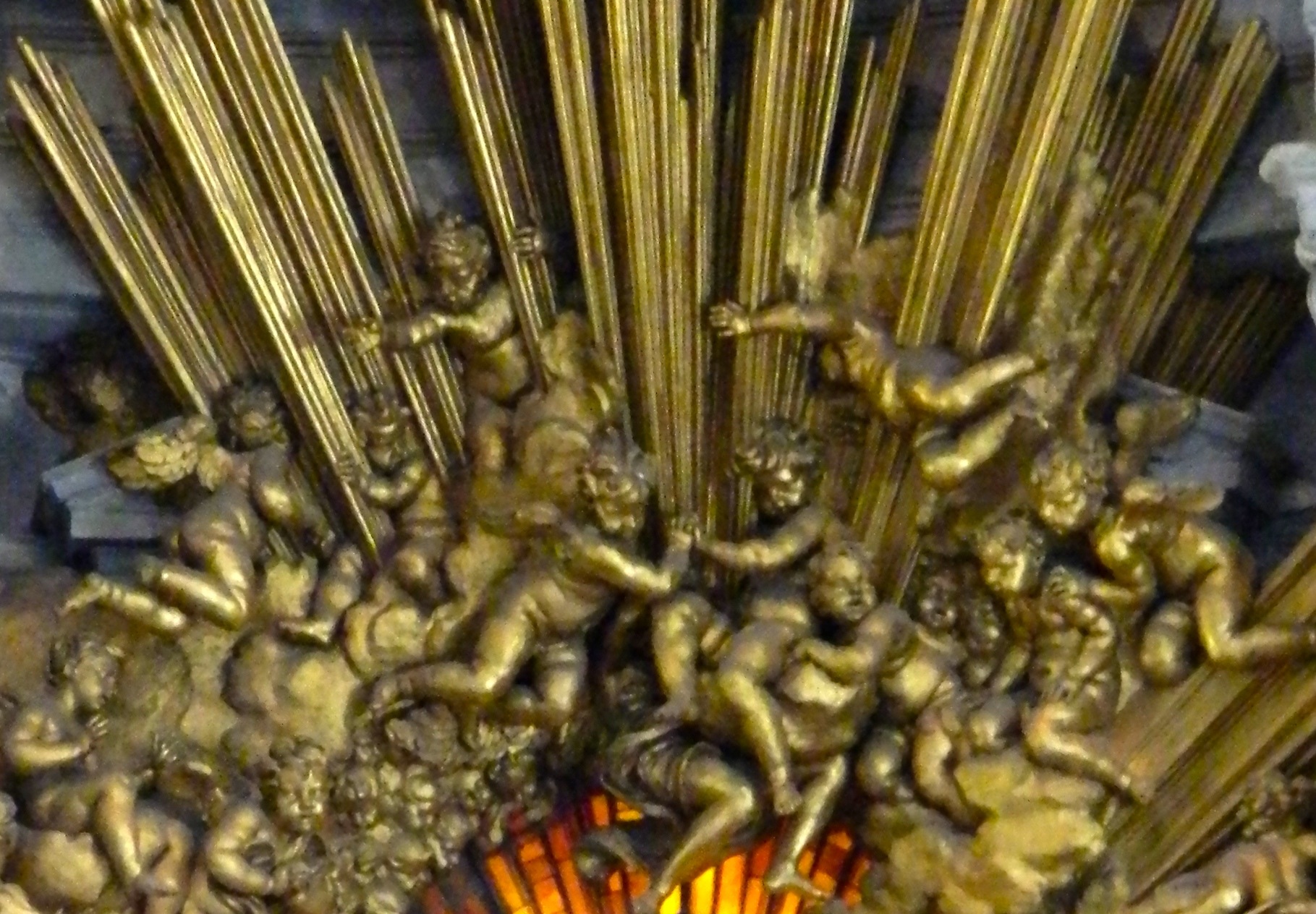
Not six-winged, but not a cuddly rendition of an angel either… This one found in a church in Rome.
The six-winged creatures in Isaiah’s vision aren’t the cuddly angles that grace today’s greeting cards and posters. No, these that Isaiah sees are solid and huge, for when they speak the walls and foundations reverberate and the temple fills with smoke. They cry out, “Holy, holy, holy!” Why three times? Because Hebrew, the original language, has no superlative such as we have in English: “holy,” “holier” and “holiest.” And although a double emphasis is sometimes employed in Hebrew, a triple repetition is more rare. God deserves the top praise.
The vision that Isaiah sees is similar to that glimpsed by Jesus’ disciple John on the island of Patmos. There the six-winged creature had “eyes all around, even under its wings” and never ceased to say, “‘Holy, holy, holy is the Lord God Almighty,’ who was, and is, and is to come” (Revelation 4:8).
These creatures have a rightful fear of the Lord, which is a concept that has fallen out of favor today. But a healthy fear implies awe, reverence, a hatred of evil and a desire for holiness and purity to reign. It doesn’t preclude intimacy with God. Rather, we can develop a deeper relationship with him when we love what he loves and weep with him over the sin in this world – and in our hearts.
May we continue to grow in a rightful fear and deep praise for our superlative God.
Prayer: Lord, you are holy, holy, holy! May our praises echo those of the six-winged creatures forever crying, holy.
Photo captured on a sunset-hunting expedition with an artistic visitor.
Sometimes, hospitality hurts. We extend ourselves and welcome people into our homes, anticipating times of engaging conversation and laughter. But afterwards, we find ourselves drained in body, mind, and spirit. We become tempted to pull up the drawbridge and keep our castle for ourselves for a time.
The PyesAreUs have just come through a time of intense hospitality. Each weekend through the spring and summer, we hosted various groups of friends and family. As we’ve been gifted with the use of such a large and wonderful vicarage, we’ve always had the policy of saying “yes” when people want to stay. So this spring we said yes, and yes. And yes and yes and yes some more. Until we weren’t sure how we would cope. In fact, NicTheVic and I had just agreed that we’d not have anymore visitors when I opened up a social-networking site and glimpsed a request from one of my favorite people – someone I hadn’t seen in years. How could we pass up the opportunity of hosting them? “The speech bubble is still over my head,” I thought, musing over the decision NicTheVic and I had agreed. “I hope he sees the irony…”
Don’t get me wrong, we loved hosting (especially if you’re one of our guests as you read this!); what we struggled with was the timing of the many visits. Mainly: Why did they bunch themselves up together in an unrelenting cluster?
We were given an out at the end of the summer, and though hesitant, I took it. The friends who were to arrive just days after the kids and I dragged our jetlagged bodies home from two weeks in the States got in touch to say that the family they were visiting were all struck with the flu. The violent vomiting and diarrhea kind. Our friends had been exposed, so they said they’d understand if we wanted them to find an alternative place to stay.
Normally I would shrug off fears of sickness, but knowing how tired we were, and not being able to face tidying up the house again while so foggy in mind and body, and contemplating packing up PyelotBoy for his camp the day they’d arrive, and with the thought of body fluids being expelled so unpleasantly, I accepted their offer not to stay. Yes, I felt guilty. And yes, I labored over the decision. But it was right to say no, not least because they were able to extend their stay where they were, avoiding a huge hotel bill.
Sparklers and panache.
I’m learning we don’t always have to say yes.
But the joys of serving and welcoming weary visitors outweighs the challenges. Reflecting on our summer of hospitality, I’ve jotted down a few things to celebrate.
Serving shapes our character. I’m selfish. I like doing what I want to do, when I want to do it. But hosting guests gives us an opportunity to put the needs of others before ourselves. We seek to make them comfortable; we give them the big piece of dessert; we seek to make stimulating conversation. We’re reminded that it’s not all about us.
We receive, even when we give. Providing hospitality isn’t something we do to gain in return, but without fail, we will receive from our guests. The gift might be intangible: a particular insight about a problem we face; the love expressed in ways individual to them; affirming words; acts of service (is a night of babysitting tangible or intangible?). Or they might give us things: items from our home country that we can’t source locally; a family heirloom; a work of art; a beautiful scarf.
Children learn by watching. NicTheVic and I hope that our modeling of welcome will rub off on our kids. CutiePyeGirl is positively energized by the prospect of guests, asking what they are like when she hears they are coming and counting down the days if we’re welcoming someone really special, like grandparents. PyelotBoy, being an introvert, is more reticent, but when the guests arrive he realizes that it’s pretty great to chat and talk and get to know them – especially if they like sport.
Memories last forever. When I think back over the season of hospitality, what stand out are the memories. Like singing the Star Spangled Banner on the Fourth of July with sparklers. Drinking Pimms and watching ArtistMan create a painting within minutes while laughing with his wife. The glories of a British BBQ without rain. Walks and talks and catching up on life and love and hopes and dreams and fears.
Have you ever hosted until you hurt? How did you respond afterwards? What joys and challenges do you find with hospitality?
Above him were seraphim, each with six wings: With two wings they covered their faces, with two they covered their feet, and with two they were flying. Isaiah 6:2
St. Peter’s Basilica, Vatican City
Our view of God can swing from one extreme to another. At one end, we might so favor intimacy with him that we speak only of “Jesus as my best friend,” or similar. But at the other end, we might see the triune God as so other that he is distant and not approachable.
In the prophet Isaiah’s vision, the curtain opens and he sees God on his throne. So majestic is he that even just the train of his robe fills the temple. And around him are these seraphim, which are creatures with six wings. As Matthew Henry, the seventeenth-century biblical commentator, says, they are known as “burners,” for they “burn in love to God, and zeal for his glory against sin.” God, who is known as a holy flame elsewhere in the Bible (see for example Hebrews 12:29), is surrounded by creatures who would burn as flames. And even though they have not been marred by sin, they deem themselves unworthy to gaze upon the Lord. These creatures – to whom humans fall in awe – yet bow before God.
I’m grateful that we can run to God as Abba, our Father. Never would I want to relinquish an intimate relationship with him. But neither do I want to lose a sense of reverence and wonder over the hugeness of our God – he who defines holiness.
Prayer: Holy and living God, reveal your holiness to me, that I might cultivate a healthy sense of awe over your wonder and majesty.
 I’m like an addict when it comes to books. Compelled to read, understand, savor, wrangle with, be moved by, learn to live from these silent companions who speak so loudly.
 My recent book, Holy is the Day: Living in the Gift of the Present, grew organically out of my “leap with faith” in attempting to enter an all more entrusting relationship with God. The experience has given me an entirely deeper understanding and respect for the definition of the only work there truly is, to “believe in the One He has sent.” Sometimes the “work” is merely the default of doing all we can do in that moment. I wanted to explore seeking to trust in all sorts of life’s circumstances, and how that holds the power to challenge and renew our vision, to reshape our priorities and relationships.