Author: Amy Boucher Pye

  • Devotional of the week: Old versus new (8 in Ephesians series)

    So I tell you this, and insist on it in the Lord, that you must no longer live as the Gentiles do, in the futility of their thinking. They are darkened in their understanding and separated from the life of God because of the ignorance that is in them due to the hardening of their hearts. Having lost all sensitivity, they have given themselves over to sensuality so as to indulge in every kind of impurity, and they are full of greed. That, however, is not the way of life you learned… You were taught, with regard to your former way of life, to put off your old self, which is being corrupted by its deceitful desires; to be made new in the attitude of your minds; and to put on the new self, created to be like God in true righteousness and holiness. (Ephesians 4:17–20, 22–24)

    Photo: Prayitno on flickr
    Photo: Prayitno on flickr

    When I started a job as a acquisitions/commissioning editor in London, I was overwhelmed by the many new things to learn. Some were obvious, such as the names of colleagues, a different computer system, unfamiliar publications. Some, however, lurked below the surface, such as the working culture, personalities and relationships, expectations and emotions. I returned home those early days utterly exhausted. But before long, my new editorial life felt comfortable and familiar.

    Here Paul is urging his readers to leave their old lives of sin behind. Though the new converts were still living next to the Gentiles, they were not to mimic their actions or their hardness of heart. Instead, they were to put on their new self, in which they would reflect God’s righteousness and holiness.

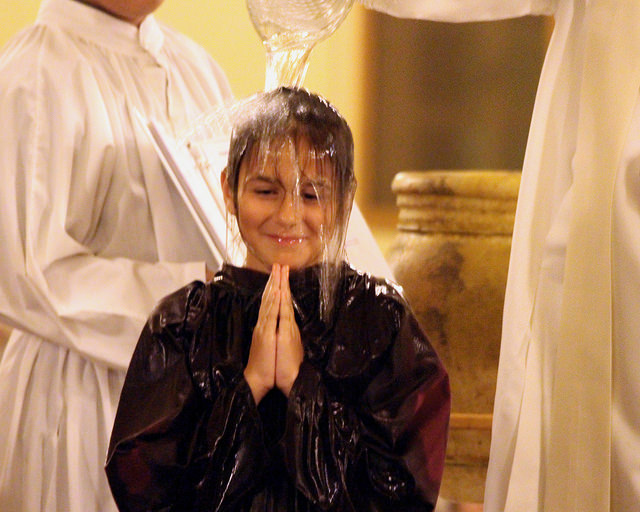
    Paul speaks of the old and new selves throughout his letters. To name a few: Romans 6:6: “…our old self was crucified with him…”; Colossians 3:9: “Do not lie to each other, since you have taken off your old self…”; Romans 13:14: “Clothe yourselves with the Lord Jesus Christ.” Employing this baptismal language, he yearns that the new believers would commit themselves fully to the ways of Christ, leaving greed and impurity behind.

    What do we need to leave behind from our old selves? A not-too-edifying television drama? A spirit of complaining? A lack of thankfulness? Join me in asking the Lord to illuminate those areas where we are corrupted, that our minds and hearts may be renewed.

    Prayer: Lord, we want to be made clean and holy. Help us to embrace the new life you are forming in us.

  • Finding Ourselves Through Change – Children and Schools

    Trigger warning – a post about children and transitions.

    Photo: David Schott, flickr
    Photo: David Schott, flickr

    Today is PyelotBoy’s last day of primary school. When I think back to me changing from elementary school to junior high, my memories are fuzzy. I know I was nervous about moving from class to class throughout the day instead of staying in one familiar classroom, but I had the comfort of nearly all of my classmates moving to the same school (the now defunct Capitol View in St. Paul, Minnesota).

    Whereas for PyelotBoy, the move to secondary school seems massive. Although half of his classmates are going to the same school, they morph from 60 in their year group to 180. And unlike in the States where we have middle school or junior high, and then high school, for many here, their secondary school will be their home until university.

    I only started to realize the import of finding the right secondary school as my kids got older and I’d hear the buzz on that day when secondary schools announce who gets their places each year. (The school where PyelotBoy is going had 1100 applications for 180 places.) Then it was our turn to traipse between open evenings and tutoring sessions and entrance exams. We’re pleased with the school he’ll be going to – another attached to the Church of England – but as we experience the leaving events for him at his primary school, I ponder the meaning of leaving.

    I know the job of a parent is to release our children to the big and often scary world, teaching them to cope and hopefully thrive as we keep on letting them go. But it’s difficult. And the emotion can come through the individual moments, such as letting them travel to school on their own or allowing them more electronic devices. We know this is our mission, but sometimes we just want to freeze time.

    Parents face these moments of their kids growing up continually. A friend on a social-media site mentioned how hard the transition to a bigger car seat was for her, for it signaled her baby growing up. For another it was when her child moved to a child-facing-front stroller. For me, I remember the strong feelings of loss when I realized that my son was hearing things at school that I had no control over. Or the poignant feelings that arise when I listen to recordings we made with the children years ago, when their voices sound so strikingly different.

    So to the adage carpe diem – seize the day – I would add treasure the moments. We can’t freeze time, but we can be present, giving thanks for the gifts we receive, whether it’s our own children or grandchildren or those whom we are close to in the community.

    Any pointers or stories on how you’ve handled big transitions in your life, or the life of your children?

  • Devotional of the week: The bond of peace (7 in Ephesians series)

    Original artwork by Beverley Grace.
    Original artwork by Beverley Grace.

    As a prisoner for the Lord, then, I urge you to live a life worthy of the calling you have received. Be completely humble and gentle; be patient, bearing with one another in love. Make every effort to keep the unity of the Spirit through the bond of peace. There is one body and one Spirit, just as you were called to one hope when you were called; one Lord, one faith, one baptism; one God and Father of all, who is over all and through all and in all. (Ephesians 4:1–6)

    Up until this week’s text, Paul has not given correction or made demands on his readers. Then in just a few lines, he lays out a series of directives for right living. Because Christ has made his home within us and we are rooted in his love, we are able to live in a way that brings glory to him. Namely being humble, gentle, and patient, putting up with others in love and seeking to keep unity.

    Today these attributes are counter-cultural. Humbleness can be seen as weakness, as an invitation for others to run riot over us. Gentleness can disappear like a vapor in the rough and tumble of life, as we rush from one important matter to the next. Patience wears thin when we have too many demands and feel inadequate. Selfishness often supersedes loving each other. And unity breaks down at the first whiff of conflict.

    And yet, this is what we are called to and what we are equipped for with Christ at our center. We were made for others, and only experience the true riches of Christ when we live in community. Here we work out our faith, sometimes with fear and trembling. If we pause in the heat of the moment, reflecting that Christ lives within, we can apportion his grace to make us gentle and loving as we put our fellows before ourselves.

    As you seek the one God and Father, the one Lord and the one Spirit, may you have hope and faith in him who is over, through and in all.

    For reflection: “Do nothing out of selfish ambition or vain conceit, but in humility consider others better than yourselves. Each of you should look not only to your own interests, but also to the interests of others” (Philippians 2:3–4).

  • Devotional of the week: My heart, Christ’s home (6 in Ephesians series)

    For tDSCN2807his reason I kneel before the Father, from whom every family in heaven and on earth derives its name. I pray that out of his glorious riches he may strengthen you with power through his Spirit in your inner being, so that Christ may dwell in your hearts through faith. And I pray that you, being rooted and established in love, may have power, together with all the Lord’s people, to grasp how wide and long and high and deep is the love of Christ, and to know this love that surpasses knowledge—that you may be filled to the measure of all the fullness of God. Ephesians 3:14–19

    This must be one of the most inspiring passages of Paul’s letter, showing how Christ takes residence in the believer, making his home in our inner being. It is Trinitarian, for Paul prays that the Father would strengthen his children through his Spirit so that Christ may dwell in us. Christ lives in us, and we live in Christ. He changes our outlook, attitudes, and emotions, making us more like him. We then yearn for justice and mercy; we pray for those who wrong us; we can rest and be at peace.

    Why and how? All though love. Love that is wide, long, high, and deep, beyond our knowing. Some commentators dismiss these geographical descriptions as a mere poetical flourish, but I think they give a rich image of the all-surpassing vastness of God’s love. John Stott tells of the ancient commentators who saw these dimensions illustrated on the cross of Christ: “For its upright pole reached down into the earth and pointed up to heaven, while its crossbar carried the arms of Jesus, stretched out as if to invite and welcome the world” (John Stott, God’s New Society, IVP, p. 137). As he says, it may be fanciful, but it is true.

    With Christ dwelling within, we are rooted and established in his love – rooted, as if a tree or a vine, and established, as if the foundation of a well-built building. May this love permeate your being today.

    Prayer: “Now to him who is able to do immeasurably more than all we ask or imagine, according to his power that is at work within us, to him be glory in the church and in Christ Jesus throughout all generations, for ever and ever! Amen” (Ephesians 3:20–21).

  • Warning: Change Ahead – Encouragement for Writers

    Photo: R/DV/RS, Flickr
    Photo: R/DV/RS, Flickr

    The only constant is change. 

    That’s how I started off a recent blog, in which I announced the demise of my freelance editorial commissioning job with Authentic Media, which also happens to be the publisher of my first book. So this will most likely be my first and last book with them, which is a shame, for they have invested much into launching my book – and me as an author. I’ve loved the journey thus far.

    I wasn’t too surprised when I heard the news that Authentic was focusing in on the products that produced the greatest revenue – Bibles, children’s books, and DVDs – for I know that adult Christian books are expensive to develop, and that the market continues to shrink. Great Christian books that used to sell into bookshops in the thousands now may only sell in the hundreds. It’s just not financially feasible.

    Traditional Christian publishing keeps shrinking in the UK, and Stateside they are fighting their own battles. Family Christian Bookstores are in administration, fighting to put forward a plan that would keep them open. Currently it looks like they might be sold off to a company that would dismantle them – which would be bad news for publishers, authors, and readers. (You can read more about this on US literary agent’s Chip MacGregor’s blog.)

    We in the UK went through a similar upheaval… Read the rest at the Association of Christian Writers’ blog.

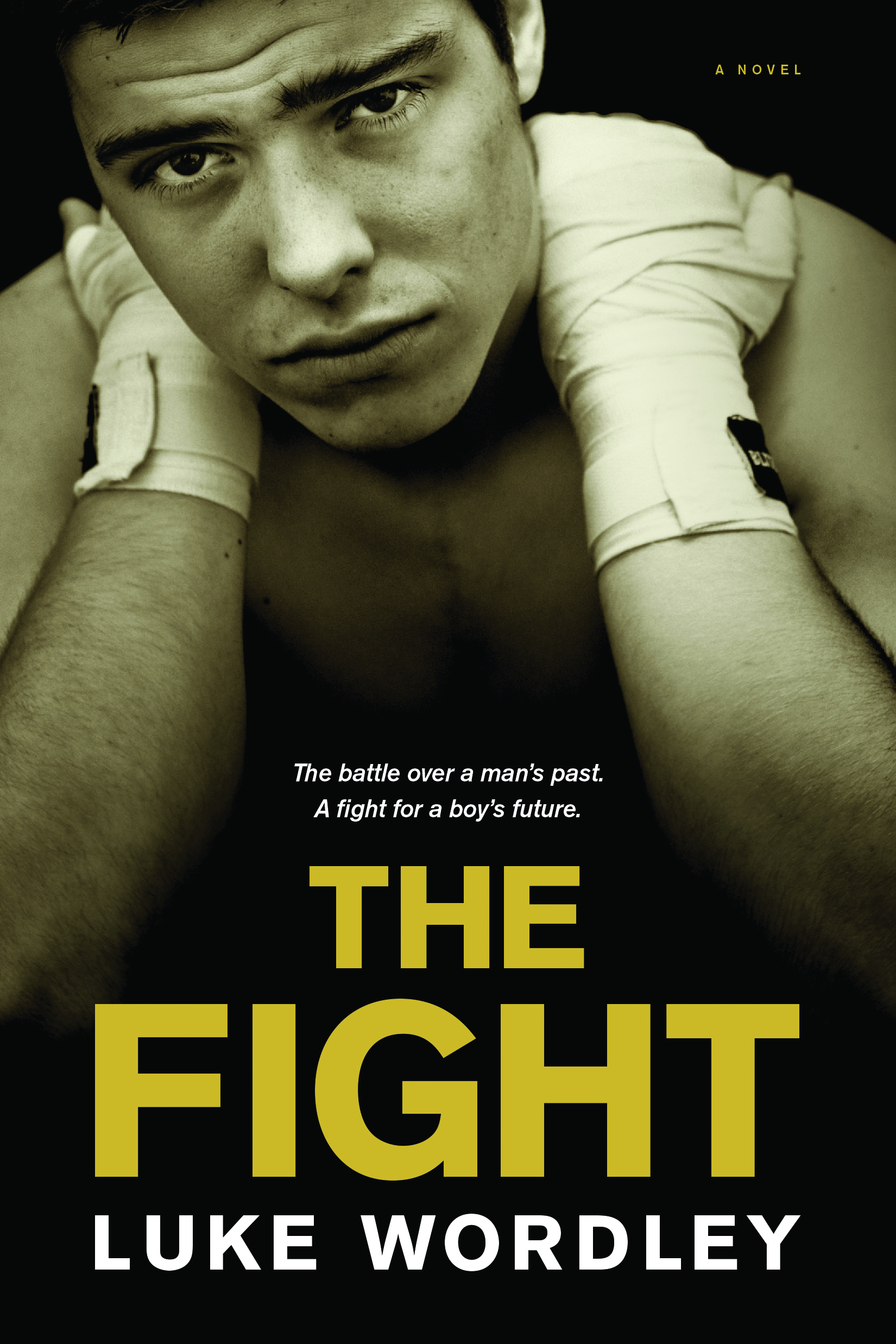
  • Review: The Fight by Luke Wordley

    A review I wrote last year for the Woman Alive book club. An unlikely book that grabbed my attention…

    978-1-4143-8949-3As a book reviewer, I receive loads of books to consider. Some books catch my eye – title, subject or author – and I request them from the publisher. Some are sent to me, unbidden; those self-published, I have to admit, I can usually spot in the first couple of seconds. And yes, I tend to be biased against self-published books, for they usually lack that added extra that a publisher gives in terms of editing, design, publication quality and so on.

    Luke Wordley is reversing the image of self-published books. When some time ago he sent me a copy of The Fight, I glanced at it, liking the arresting cover and the quality feel of the book. But I wasn’t grabbed by the subject – it’s about boxing, after all – so I left it to languish in my stacks of review books. In the months that followed, I heard some buzz about it through publishing contacts, and was happy to publish Catherine Campbell’s review that she posted in our Facebook group.

    Then I heard that Tyndale, one of the big US Christian publishers, had taken it on. More requests came for me to review the book, and I nearly didn’t, but on a whim I started to read. And captured I was; this book certainly carves out a new model for self-published books to aspire to.

    So yes, it’s about boxing, and yes, you might think only men would be interested. But give it a try if you want some stretching British fiction. A disaffected young man – mourning the loss of his father and witnessing his mother’s descent into alcoholism – increasingly gets himself into trouble with fighting anyone he comes across. But a Christian social worker doesn’t give up on him, persuading a Christian boxing coach to manage him. The story follows Sam, the young lad, and Jerry, the manager, through their ups and downs and journeys of faith. One to read.

    The Fight, Luke Wordley (Tyndale, ISBN 978-1414389493)

  • Devotional of the week: Heirs together (5 in Ephesians series)

    Photo: Carla Vasquez, flickr
    Photo: Carla Vasquez, flickr

    In reading this, then, you will be able to understand my insight into the mystery of Christ, which was not made known to people in other generations as it has now been revealed by the Spirit to God’s holy apostles and prophets. This mystery is that through the gospel the Gentiles are heirs together with Israel, members together of one body, and sharers together in the promise in Christ Jesus… Although I am less than the least of all the Lord’s people, this grace was given me: to preach to the Gentiles the boundless riches of Christ, and to make plain to everyone the administration of this mystery, which for ages past was kept hidden in God, who created all things. (Ephesians 3:4–6, 8–9)

    Years ago I was visiting a pastor and his family, and I remember my surprise when he remarked at how much he enjoyed his church council meetings. His voice was filled with delight as he marveled over the creative ways God was using his body of believers. Too often, however, this is not the case. You can probably recall acrimonious church meetings as clearly as I can, when words are used as weapons and people’s character is called into question or even maligned. How God must weep at these divisions and strife.

    In contrast, Paul preaches God’s peace and grace in his letter. He has moved from speaking of Christ’s work of individual salvation and his work of reconciliation to God’s formation of the Church, which is equally for all, whatever one’s race. In verse 6 Paul stresses this aspect of unity with his repetition of the word together: Gentiles are heirs together with Israel; together they are members of one body; together they share in the promise of Christ.

    That the Gentiles were equal with their fellow Jewish believers was a surprise, for the newcomers would not have expected this level of equality. But through Christ all divisions cease and Paul is pointing the way for a new order. He is making known what was once hidden, administering the grace of God to the least in his Kingdom.

    This week, join me in praying for peace and unity among believers, that we would be God’s sweet fragrance in the world, inviting them back to their Creator.

    For reflection: “Just as a body, though one, has many parts, but all its many parts form one body, so it is with Christ” (1 Corinthians 12:12).

  • Life in Publishing: Changes and a Big Reveal

    The only constant is change, and nowhere is that more true than in Christian publishing. My newsflash: In a couple of weeks, my freelance contract with Authentic Media for commissioning/acquiring great Christian titles is coming to an end as they narrow their focus primarily to children’s books, Bibles, and DVDs.

    image001When Rob Bootes from Koorong, Authentic’s Australian parent company, came to me four years ago asking if I wanted to join the team, I said no – being an editor was in the past, I thought, for I wanted to be a writer. A few months later he got in touch with a different proposal, and on a whim I said yes to one day a week consulting as a commissioning editor/publisher – for three months! Crazy me; I so got the timing wrong. It’s been a fab four years as I’ve worked on such amazing books as, in the early days, How to Like Paul Again by Conrad Gempf and Am I Beautiful? by Chine Mbubaegbu, and more recently Digging for Diamonds by Cathy Madavan and the forthcoming The Only Way is Ethics series by Sean Doherty.

    I’ve seen in these four years that I don’t have to approach my life-with-words in a black-and-while either/or way; it can be a both/and prospect of being a writer and an editor – the two roles feed each other creatively. Although I’m sad to say goodbye from an editorial point of view, I’m thrilled that my association with Authentic will continue with me as an author.

    For as many of you know, Authentic are publishing my first book this autumn – woo hoo! Here with my Big Reveal (well, some of you have seen this already), is my fabulous wonderful cover. I hope you love it as much as I do. Writing for Authentic has been a dream process, as it’s been a team effort with Steve Mitchell, Kate Beaton, Lawrie Stenhouse, Liz Williams, and Becky Fawcett on the Authentic side, and Jennie Pollock as my freelance editor. (Liz and Malcolm Down are no longer with Authentic either, as the narrowing of the focus included the elimination of their jobs too.)

    findingmyself_cover_vivianhansenSteve Mitchell, managing director, believed in me as an author, and last autumn took a punt in signing me up for my first book. (I recount my Tangled Writing Journey [yes, it deserves capital letters] here if you’d like to read the background.) With his over twenty years in Christian retail, and with my over two decades’ experience as an editor, we worked together to come up with what we hope will be a cracking good read. I wanted to write a devotional or a memoir; he suggested instead that I focus on my unique angle. Write, he said, about being an American in the UK, and while doing so I should incorporate my story and the spiritual insights I’ve gleaned with my cultural observations about this small island. There’s even a chapter about plumbing.

    My publisher likes to say that Finding Myself in Britain: Our Search for Faith, Home & True Identity is a bit like Michele Guinness meets Bill Bryson. I love that characterization, not least because Michele is one of my heroes, a magnificent writer and speaker who humbled me with her foreword. Here’s a bit of what she says:

    There were moments when Amy’s honesty and pain choked me, others when she made me laugh out loud. From toilets to tea and tennis, drizzle to driving, reserve to religious observance, sarcasm to self-deprecation, queuing to cricket, not to mention language, class, and vicarage oddities, it’s all there – the British foibles that make other nations think us bizarre… Yet in Amy’s gentle hands it’s a revelation – funny, challenging, surprising, chastening, and cheering.

    Yes, I’m excited about finally being a Proper Author who has written a book. Look for the finished product in October, from bookshops or from here at my website (or at the big online retailer for pre-pub orders). I owe so much not only to the Authentic team but to my editorial friends and encouragers.

    So although I’ll no longer be commissioning for Authentic, I’ll work with them on the launch and marketing of Finding Myself in Britain. I think back to a decade ago, when I went through what felt like a massive redundancy when Zondervan eliminated my editorial job. At the time my world was rocked, for so much of my identity was intertwined with my role. I’ve now seen how the Lord has worked through the years, honing me as he’s helped me pursue my deep desires such as writing. And how he’s even “enlarged my territories” (if I can use the Jabez language without anyone cringing too much). I trust that he’ll use this present change for my growth and flourishing – but I am making sure I take the time to grieve the passing of the season, as is right and proper to do.

    Yet I also know that losing my contractual freelance work might just be the boot-to-bum that I need to pursue some other dreams – such as a master’s in Christian spirituality. Watch this space!

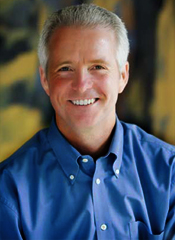
  • Interview with John Ortberg

    An interview that originally appeared in the Woman Alive book club, where I talk all things books with prominent Christian authors.

    john_ortbergSoul Keeping was very moving to me to write, particularly because it gave me a chance to reflect on Dallas Willard during the final days of his life. I hope that through reading it, people will realize the wonder and mystery of what it means to have a soul and learn how to care for it well.

    The book of Dallas Willard that impacted me most was The Spirit of the Disciplines, and I’d recommend that for folks to read. But my quick warning would always be that Dallas’ material is very dense. And, at least for me, I often have to read it through several times to be able to absorb it—kind of like osmosis.

    There’s no particular story behind the long titles of my books [If You Want to Walk on Water You’ve Got to Get Out of the Boat or Everyone’s Normal Till You Get to Know Them] other than I have a mind that tends to think in thoughts that can only be expressed in long titles. And, there’s something that I like about combining the thoughtfulness and substance of deep thinkers like Dallas Willard with a spirit of fun, joy and delight that can make it accessible to people. So I try to aim for that.

    Another Christian classic that is great for our soul in a hurried world is Richard Foster’s book, The Celebration of Discipline. If someone’s looking for a work that’s shorter and more easily applied, The Practice of the Presence of God by Brother Lawrence remains an absolute classic.

    Nancy and I read together separately. We actually tried reading together back when we were dating and first married, but both of us are teachers and we would tend to start teaching each other, and that’s not great for a marriage. But we do love to read the same books and then talk about them on our own, and we do that for spiritual books from folks like Henri Nouwen to fiction and biography, and Nancy’s favorite adventure sagas.

    I am always reading a book about Abraham Lincoln. Lincoln is one of my favorite characters. I like history and biography immensely. I also loved the most recent third volume about the life of Winston Churchill, which was begun by William Manchester before he died. I also read The Fault in our Stars, and even though I’m not a young teen, I thought it was quite well written.

    John Ortberg is the senior pastor at Menlo Park Presbyterian Church in California. He has written books on spiritual formation including The Life You’ve Always Wanted, Know Doubt, The Me I Want to Be and Who Is This Man?. He is married to Nancy, and they have three grown children.

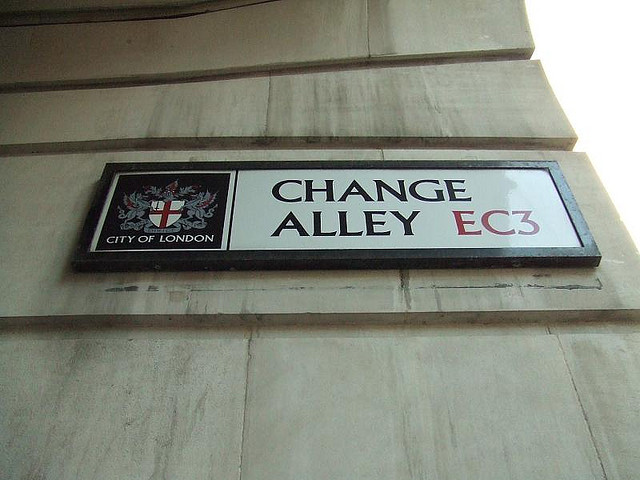
  • Devotional of the week: Change agents (4 in Ephesians series)

    Photo: Matt Brown, flickr
    Photo: Matt Brown, flickr

    [Christ Jesus] came and preached peace to you who were far away and peace to those who were near. For through him we both have access to the Father by one Spirit. Consequently, you are no longer foreigners and strangers, but fellow citizens with God’s people and also members of his household, built on the foundation of the apostles and prophets, with Christ Jesus himself as the chief cornerstone. And in him you too are being built together to become a dwelling in which God lives by his Spirit. (Ephesians 2:17–22)

    Many years ago I was transplanted to my husband’s country, the UK. All of the sudden I felt helpless, disorientated, and like a little child. Even going to the post office was a trial, as I tried to remember which were the correct words or how much money the coins denoted. I was a foreigner and a stranger, and didn’t feel that I belonged. But two women who had experience of both countries befriended me, assisting me in the process of assimilation. They were God’s agents, preaching peace and helping me to look outside of my culture shock to God’s greater purposes.

    Paul in his letter also acts as an agent of change and peace. He moves from his emphasis on individual salvation, as we saw last week, to the divisions that had existed between Jewish believers and the new converts, the Gentiles. Whereas alienation once reigned, now Christ had smashed the dividing wall of hostility, ushering in unity and peace. Those who were warring with each other now could have enriching relations.

    Through Christ we also have access to the Father through the Spirit, and therefore we are citizens and members of his household. No longer are we foreigners or strangers, for now we belong to the household of God. We know that he welcomes us and will hear us.

    Christ has dismantled the wall of division, and he also has become the chief cornerstone of the building that is the people of God. Through him we too are part of this dwelling, interconnected and dependent on him and those around us. How can you be an agent of peace this day?

    Prayer: Lord, we celebrate your ascension, rejoicing that you have not left us, but live in and through us. Dwell in us, we pray.