Author: Amy Boucher Pye

  • Finding Happily Ever After in Britain

    The interview of Prince Harry and Meghan Markle after they got engaged captured me, the memories flooding back of my engagement to my own English prince (using that term loosely). We too recounted our love story, clasping our hands and sharing with smiles the thrill of how we met, eager to share the details that were crystalized in our minds. In those early heady days, me moving to England felt like an adventure of grand proportions – especially because of the safety net my fiancé and I constructed of us planning to live in England some five to seven years and then heading over the Atlantic. Two decades later, however, we’re still here!

    Our experiences haven’t been all spring sunshine and roses, for at times the rain has soaked us and the whipping wind has chilled us….

    Read the rest at Eden.co.uk.

  • Devotional of the week: Think on these (12 in Fruit of the Spirit series)

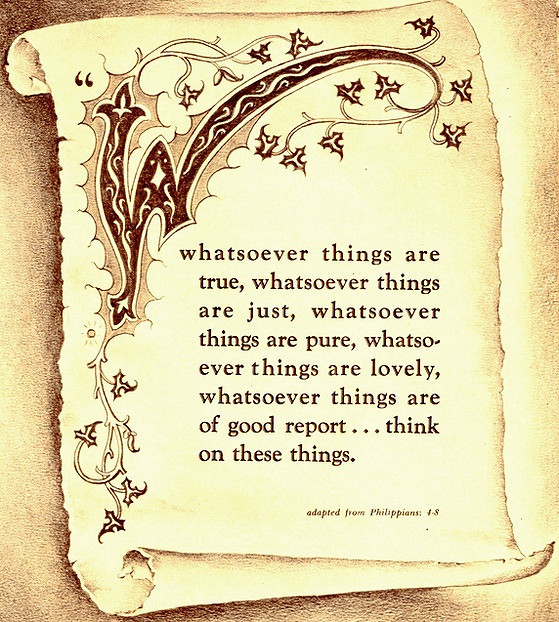
    Finally, brothers and sisters, whatever is true, whatever is noble, whatever is right, whatever is pure, whatever is lovely, whatever is admirable—if anything is excellent or praiseworthy—think about such things. (Philippians 4:1–9)

    As Paul reaches the end of his letter, this series of standalone statements feels like he’s trying to remember everything he wants to share with them: you two women, stop fighting (perhaps their disagreement was part of the bigger issue of disunity); rejoice in the Lord; be anxious about nothing; wrap yourselves in peace; think on what is good and lovely and excellent; put my teaching into practice.

    The sense of fruit in this passage comes in verse 17, when Paul says he yearns for more of the spiritual benefits to be credited to their account. As they fulfill the staccato-like statements that he lists in quick succession, they will bear fruit.

    Bearing fruit takes the training of our minds, hearts and bodies. Sometimes we need to flee the pack-like mentality, even if it feels difficult. Once I was faced with this when my book club chose to read 50 Shades of Grey (I had left early; in their defense, they said it was a joke). Although I didn’t want to appear narrow minded, I said I wanted to heed the injunction, “whatever is good, lovely, pure and so on, think on these things,” and so would pass on that book. I didn’t want my imagination filled with the book’s degrading sexual acts and attitudes, even if that meant appearing strict to my friends.

    The verses above are good ones to set to memory, which we can then call to mind in times of quiet or anxiety. I find when I’m unable to sleep, especially if my mind is racing all over the place, I recite some passages of Scripture. It’s a way of setting God’s truth into our hearts and minds.

    What pure and noble things can you think on today?

    Prayer: Lord, you are good, pure, true, noble, right, lovely, admirable, excellent, and praiseworthy. We worship you. Amen.

  • Five Minute Friday: Inclusion and embrace

    The royal wedding is just over a week away, when an American will again enter the royal family – this time, I trust, with a strong welcome. Prince Harry and Meghan Markle seem to be representing both cultures in their celebration. For instance, the invitations were printed on English card with American ink. Their wedding cake is being made by a Californian who lives in London. A gospel choir will be singing at the wedding. I wonder how many more American influences we’ll see?

    I see the blending of the cultures giving a richness and depth, as Nicholas and I have experienced in our own lives. At times it’s difficult – such as when Thanksgiving is just another day here – but with some intentionality, both cultures can be honored and embraced.

    Have you included a cultural practice from another land into your life?

    This post is part of the weekly Five Minute Friday link-up. You can find today’s prompt here.

    If you’d like to read more of my adventures in the UK, I’ve written Finding Myself in Britain. It even won two awards!

  • Watercolor Wednesday: Roses to delight

    By Leo Boucher. Used with permission; all rights reserved.

    This Sunday, America and some other countries (for example South Africa, I believe) will celebrate Mother’s Day. Not Mothering Sunday, the fourth Sunday in Lent that is observed in the UK, but the holiday that falls on the second Sunday in May, as I explain in Finding Myself in Britain. Mother’s Day was first celebrated in 1908, in honor of the founder’s mother, but she became disillusioned when in the 1920s the holiday became over-commercialized.

    Mother’s Day can be hard for me, because I’m not able to celebrate my mother in person, and because my family here in England can easily forget the holiday, without any of the cultural reminders to help them. Yes, as some people say, every day is Mother’s (or Father’s) day – why do we need another day? For me, marking the day in May feels special, and like I’m not being asked to lose my Americanness while living in Britain.

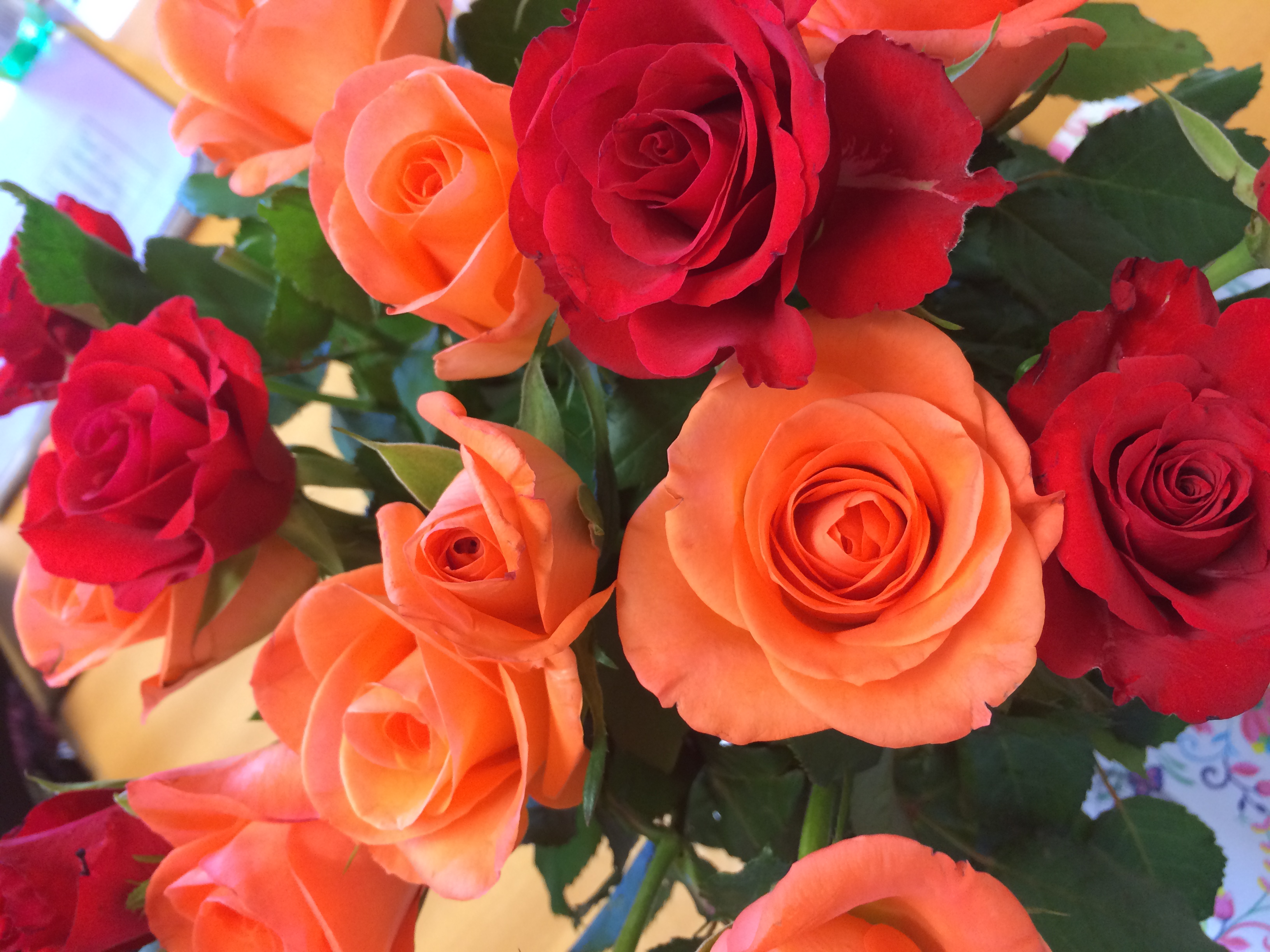
    This year we celebrated last Sunday, a week early because of conflicting events on the actual holiday. My son giving me chocolate and my daughter some lovely roses (photo above). I was delighted to be reminded of a painting my dad created for one of the senior art classes he teaches, which reflects the roses I have before me. A reminder of God’s beauty in creation, given in love by a family member.

    Do you love giving or receiving roses? Why?

  • Devotional of the week: Love in action (11 in Fruit of the Spirit series)

    …this is my prayer: that your love may abound more and more in knowledge and depth of insight, so that you may be able to discern what is best and may be pure and blameless for the day of Christ, filled with the fruit of righteousness that comes through Jesus Christ. (Philippians 1:1–11)

    The apostle Paul probably wrote the letter to the Philippians either from prison in Rome or Ephesus. He’s sharing his love and appreciation for their partnership in the gospel, but he’s also, as with his letter to the Galatians, warning them against false teachers (the Judaizers we spoke of last week). He packs a lot into his opening paragraphs, signaling what he wants to communicate.

    Read through verses 9 to 11 again, Paul’s prayer of intercession. He’s concerned about the unity of the church, and the love he speaks of here probably refers to the love between fellow believers. This love, imbued with the wisdom that comes from God, sets them apart and makes them holy – filled with the fruit of righteousness bestowed by God through his Son.

    A couple of years ago I was asked to speak on the topic of restoring confidence in the church. At first I struggled with the subject. Although I knew that although the church is God’s bride and chosen vessel for bringing about his kingdom, I also had heard many stories of brokenness, disunity, and pain related to the church. And yet when I asked for stories of the church being a light and a help on social media, I heard of so much redemption. People experiencing health difficulties or relational breakdowns, and the church stepping in with help and love. The same comment was repeated, “I don’t know how I would have survived without my church.”

    Those acts of love in action are Christians bearing the fruit of righteousness. Whether it’s driving someone to a hospital appointment or taking the time to sit and cry with them in their bereavement, we’ll never know the true impact of these acts of mercy.

    How might you bear fruit today?

    Prayer: Lord God, spark in me the love for members of my church. Forgive me when I’ve held a grudge and become bitter; help me to let go. Amen.

  • Tina Brown on Transatlantica: There’s No Place Like Home

    I read Tina Brown’s Vanity Fair Diaries with some fascination and yet a sense of repellence. I’ll share more in the next post, in which I explore the writing of her diaries and her views on publishing, but as it’s Friday, the day on which I shared the “There’s No Place Like Home” series, I thought it appropriate to look at her thoughts as a Brit living in America on finding home.

    She left the UK for New York City when she was thirty-one, to edit Vanity Fair. Controversy has seemed to follow her, whether related to her marriage to then Sunday Times editor Harold Evans or for being named as editor of this prominent magazine when young and from out of the country.

    As one who has lived away from England for thirty-four years, she’s given thought this subject of home. I have interspersed my comments on  extracts from her book, The Vanity Fair Diaries, in italic. I haven’t included page numbers because I read from an electronic version of a pre-published book.

    Like many people who have moved to a new country, we long for bits of our old one combined with the joys of the new:

    My ideal place to live would be Transatlantica, an island that combined English irony, country lanes in summer, the National Theatre, and a real pot of tea they never seem to be able to make here, with American openness, lack of class barriers, willingness to give away money to good causes, and the view of Manhattan from the Rainbow Room at the top of Rockefeller Center.

    I agree with her about American openness and the lack of class barriers and a tradition of philanthropy. I’d add to the American list, an optimism and sunny outlook, the sheer sense of space that vast swathes of land afford, and the friendliness of the people. To the UK side of things, I’m not too bothered by tea (shhhh), and I still don’t understand irony, but yes please to the beauty of the countryside, the National Trust, the wealth of friendships infused with loyalty, and sticky toffee pudding.

    Here, time is to be spent, like money; time is to be killed, time is to be forgotten. Everything is a race against time. Trying to beat it is the pressure at your throat. I dream of London’s manageable scale, its compactness, its conversation. America is too big, too rich, too driven. America needs editing.

    I wonder if her reflections here are related to her high-power job and life in New York City. But her words, “America needs editing” make me take pause – are we too bold, brash, and in your face?

    The soulless, anonymous America of shopping malls and strip malls, of chain stores, Dunkin’ Donuts, Walmarts, Drug Fairs . . . whenever I roam those aisles I feel dispossessed yet enclosed by them. I wonder if my tight little European soul will ever expand enough to fit. I fear it won’t but that it will never shrink back down enough to fit England again. My home is now Transatlantica. That place between England and America is the only world where I can be happy now.

    Having grown up in the land of shopping malls, I miss their convenience here in England, and the cost of the goods. At first, everything felt so small; when I’d go back to the States for a visit, I’d be overwhelmed by, for example, the number of salad dressings on offer at the supermarket. The openness of the people can be mirrored in the openness of the land, and I don’t feel spite for the chain stores and strip malls, as much as I do much enjoy browsing in quaint shops. She speaks of the lack of class barriers, but her sniffinesss over this type of store reveals a patronizing tone.

    I sometimes feel there’s a bravery, even nobility, to people who leave their own country for some other dream. It makes you so vulnerable. There is a bit of my own expatriate heart that’s frozen, not here, not there, a lonely thing.

    Yes, I agree to the feeling of displacement, and sometimes the loneliness, but here is where I would lean on my Christian faith – and the hope of heaven – to find comfort and meaning. Knowing that I will be united with my loved ones for eternity helps me when I’m missing out on birthdays, meals together, and so on.
    I think I may have left London for good. But that doesn’t mean I’ll ever absorb America. Fenimore Cooper will never mean anything to me. But it doesn’t mean I’ll ever go back… I’m turned off by much about England now.

    I can understand her almost point of pride that an author like Fenimore Cooper won’t mean anything to her, just as Enid Blyton won’t to me. But I am not turned off by England or America. Yes, both are lacking in many ways, but both are rich and wonderful too.

    I feel how wildly foreign we Brits really are to Americans and how the gap is widening all the time. They see us as Masterpiece Theatre, to be briefly appreciated before zapping the channel to something more relevant.

    I resonate with this – do my friends picture Ye Olde England in their minds when they think of me living in a Victorian vicarage? Wondering if we have tea and scones everyday? And her reflection was written before Downton Abbey so took off. I suppose we long for the ideas of a place that have been cultivated in our imaginations – Pemberley in Derbyshire, but without women only finding a way through marriage or the vast difference between the classes.

    It’s strange to live between two cultures in my head. When I left Thatcher’s England I had a jaded vision of its future—the widening schism between the classes and the coming of a new, moneyed yahooism, nihilistic and coarse, not meritocratic and aspirational as it is here. I don’t know the names and the faces of the new England to really judge if that’s true. Here I can penetrate into the subtext of what I see, but I don’t know enough about American history or politics yet to be able to contextualize it against the past as I can at home. Here I live in a permanent red-hot present, fascinated, appalled, thrilled, amused, enraged—but never ultimately touched, because in the end I am always a spectator and a foreigner.

    How does one overcome the feeling of being a permanent spectator and foreigner? I’ll always be known as “the American,” – recently when out to dinner with friends, they were talking about several other Americans in this way.

    Maggie’s quote about Dennis Thatcher: “Home is where you go when you have nothing better to do.” …Mrs. Thatcher was not being dismissive about home—quite the contrary. She was talking about its place in the minds of grown-up children who have left it: “We are a very close family even though we do our own thing. That is what family life is about. This [home] is where you come to with your problems. This is from where you go, to do whatever you wish. And sometimes if something happens and we don’t see the family as often as we would wish, and they go off, I say: “˜Well, look, home is where you come when you haven’t anything better to do. We are always there.’ ”

    What do you think of Tina Brown’s musings, and especially this last paragraph about home being the place in one’s memories?

    The full series on finding home, with many wonderful guest writers, can be found here. It links up to the themes of home that I explore in my book, Finding Myself in Britain: Our Search for Faith, Home and True Identity. Available in the UK from lovely Christian bookshops, or online from Eden and Amazon. Only available Stateside from Amazon.

  • Watercolor Wednesday: Selby Avenue in St. Paul

    By Leo Boucher. Used with permission; all rights reserved.

    It’s another dreary day in Londontown, so I thought some bright colors might bring some cheer with today’s art by my dad. This is a scene from Selby Avenue in St. Paul, Minnesota. I love the welcoming lights inside, beckoning people in from what looks like a crisp and cold day outside.

    Would you stop there for a coffee and a chat?

  • Devotional of the week: Walk in the light (10 in Fruit of the Spirit series)

    Photo: Angie Trenz, flickr

    For you were once darkness, but now you are light in the Lord. Live as children of light (for the fruit of the light consists in all goodness, righteousness and truth) and find out what pleases the Lord. (Ephesians 5:1–14)

    One night when I was walking home after some meetings in Central London, I felt a strong nudge not to take the shortcut down the darkened side road. Not knowing if that feeling was from God or a passing fear flitting into my consciousness, I decided to go the long route anyway. I can’t tell you whether I was saved from a horrible act in the darkness, for I got home safely, locked the door, and breathed a sigh of relief. While passing that side street, however, I glimpsed a group of unfamiliar young men some ways down.

    The dark can be scary because bad things can happen to us there; darkness in the Bible is used as a symbol of the unholy trinity of the world, the flesh, and the devil. Here Paul is writing to the church at Ephesus, urging them to live in the light. His letter isn’t motivated by the need to correct a specific heresy or sin, but rather to spark their imaginations into the ways of God’s kingdom of grace and truth.

    Again the recurring theme of the old self and the new comes through. Once we lived in darkness; now we live in the life of God. Does Paul say we live in the light? No, he actually says we are light in the Lord. Now that’s a mind-blowing concept. We’ve left our old life behind – the one shrouded in darkness and sin – and now we reflect Jesus’ transforming light.

    One of my friends was mired in the occult until one day two Christians shared the good news with her. She wrote a big “SAVED” in her diary, saying that afterwards people commented on the light that shone through her eyes. May it be so with us.

    For reflection: Jesus: “I am the light of the world. Whoever follows me will never walk in darkness, but will have the light of life” (John 8:12).

  • Five Minute Friday: Which Way to Turn?

    Whether you turn to the right or to the left, your ears will hear a voice behind you, saying, ‘This is the way; walk in it.’ (Isaiah 30:21)

    For years I’ve loved this verse out of Isaiah. I should put some more time into studying its background and historical context, for I fear that in the years I’ve clung to it, I may have taken it out of context. Easily done. With that proviso, here’s the freedom I see in it.

    So often Christians think of “God’s will for our life” in a strict sense of one way forward. One right choice. One person to marry or one career to choose or one best friend to make. But living like that is so constricting, and eliminates our freedom and creativity. Does a good parent make all of the choices for their child? No! They delight in seeing the child find their own way (with their loving guidance, of course) and express their own passions and interests as they step forward in life.

    Which brings us to this verse. When I learned it, the NIV said, if I’m remembering right, “When you turn to the right or to the left,” which I took to mean, when you make the considered and informed decision to go this way or that, the Lord will continue to direct your path. The entails us walking and moving forward and making decisions – not waiting for him to tell us what to do or which way to go. The key is to turn to the Lord for wisdom, for we see in the preceding verses that the Lord will be gracious when we cry for help: “As soon as he hears, he will answer you” (v. 19)  And although we face hard times, we will gain understanding and wisdom (v. 20).

    I hope I’m not slaughtering the interpretation and application of this passage from Scripture – do chime in with your wisdom and let me know what you think.

    Over to you – how you sense God’s freedom in how you live your life, whether you turn to the left or to the right?

    This post is part of the weekly Five Minute Friday link-up. You can find today’s prompt here.

  • Watercolor Wednesday: God the Master Artist

    By Leo Boucher. All rights reserved.

    My daughter and I have been sorting through her stuff so that I can build a new desk bed in her room. When flipping through the piles of paper, I came across this watercolor by my dad that I don’t remember seeing. What a treasure! I love the swathes of colors, evoking memories of gorgeous sunrises and sunsets. God, the master painter.

    What treasures have you unearthed lately?