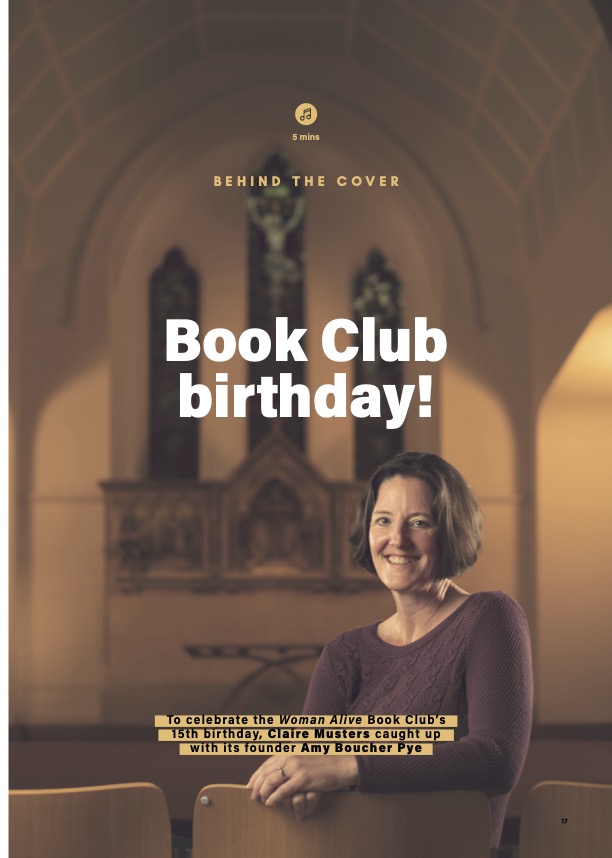
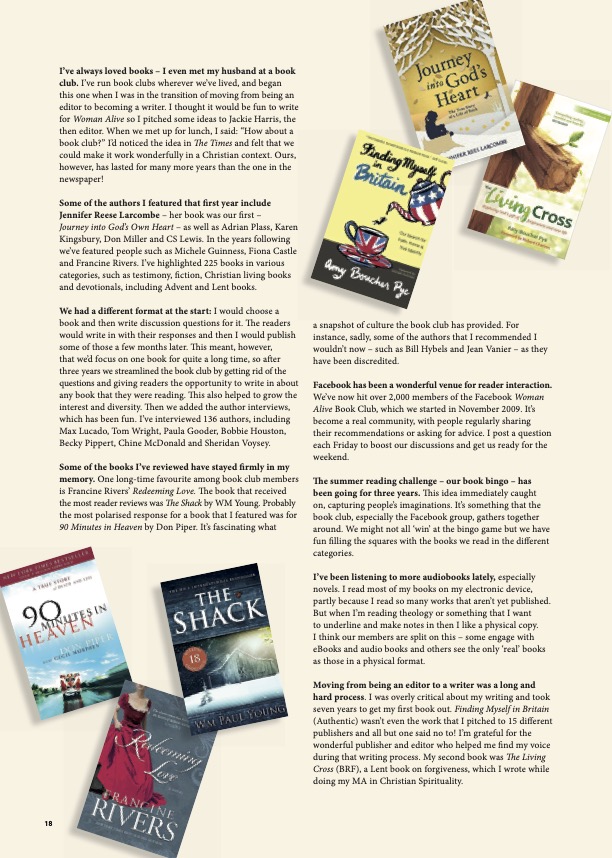
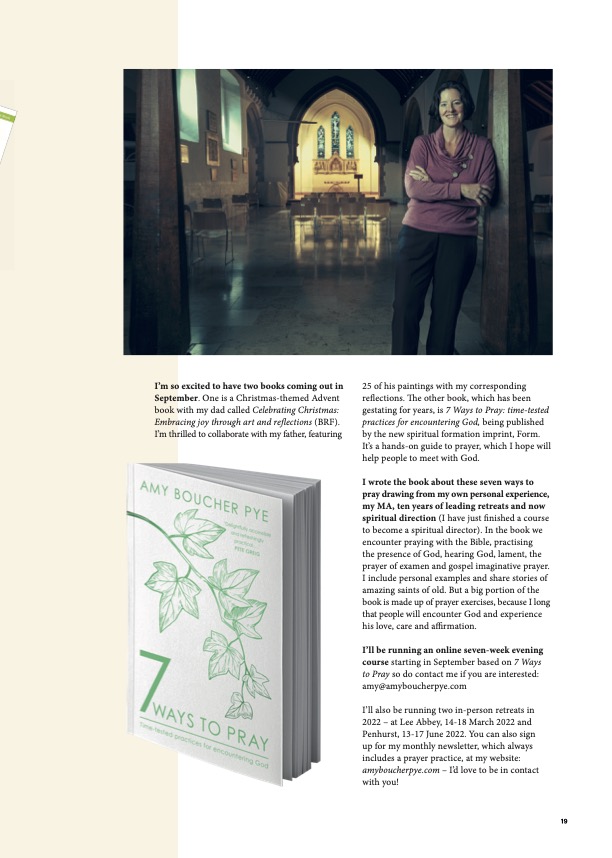
I can hardly believe that I’ve been running the Woman Alive book club for 15 years! The lovely Claire Musters interviewed me about all things books, including the two I have coming out this autumn. The feature is normally reserved for subscribers, but with permission I share here. Read on!
So many books… so little time. I can’t imagine life without books, and I spend a lot of time reading, reviewing, and creating books. In 2016 I read for the Woman Alive Book Club, for my local book club, for my MA studies, and for research for the book I wrote, The Living Cross, on the theme of forgiveness (and thus not as many books for pleasure as I’d have loved to have read). I’ve winnowed my list down to eight books to recommend to you – two that I endorsed, two for the Woman Alive Book Club, two I read for my local book club, and two related to my master’s studies.
Two Stellar Books I Got to Put my Name To
Barefoot by Sharon Garlough Brown
The third installment in The Sensible Shoes series by Sharon Garlough Brown is another winner of a novel. None of the four women who feature in it are perfect – some battle with bitterness and anger; others with perfectionism and control. But all are beloved children of God, and all are seeking to live in the transforming presence of God. The author doesn’t shy away from having the characters encounter real-life strife and hardship, which is true-to-life but wrenching too.
Sometimes in a series subsequent books can feel like they spiral downward in terms of quality, but not here. I won’t say too much about the plot of Barefoot, so as not to give anything away, but it gripped me and wrenched me.
My endorsement: Prepare to be encouraged, inspired, stretched, and wrung out by Barefoot. This enriching novel embodies God’s transforming presence in the lives of four imperfect but beloved friends. Don’t miss it.
What Falls From the Sky by Esther Emery
A heartfelt memoir about living without the internet for a year that I gobbled up in a day. Reader, read it! You won’t be sorry. I won’t say a whole lot about it now, for I’ll be featuring it in the Woman Alive Book Club in 2017. Here’s my endorsement:
What started for Esther as an experiment of whittling down turned into a journey of abundance. I was riveted from the first page, and when I reached the last I felt I had gained a new friend. Profound and gentle, compelling and engaging, Esther’s story will spur you on to love and live better.
Two Books I Featured in the Woman Alive Book Club
Land of Silence by Tessa Afshar
When I started Land of Silence, I was glad I didn’t know more than my vague sense of it being biblical fiction, for I think that the publisher gives away too much in its promotional materials about which biblical story it describes.
So in the spirit of not giving sharing too much of the plot, the story centers on Elianna, a young woman who is the daughter of a weaver. She and her family face many trials, which in her bitter disappointment only deepens her legalistic view of God. She can’t believe that good things will ever come to her or to her family, and the many horrible things only intensify her mistrust of God, until one day…
I connected with Elianna emotionally, weeping at times over the incredible disappointments and trials that she faced. She’s a feisty character with a big heart who acts in misguided ways at times, but ultimately the reader sees God redeeming the years the locusts ate. The author brings alive this period in biblical history, especially how it must have felt to be a Jewish person under the Roman authorities.
Present over Perfect by Shauna Niequist
Shauna Niequist embraced change at a soul level when she was on the brink of crashing and burning from too much travel and work. Although she was a wife and a mother of two young boys, yet she kept saying “yes” to the many opportunities that came along. Her yeses to speaking at those events meant less time at home – less time to be and rest and receive love.
On the verge of collapse, she learned out of necessity to say “no.” It became for her “the scalpel I wielded as I remade my life, slicing through the tender tissue of what needed to go and what I wanted to remain.” And with her nos became a new opening in her life, as she started to embrace the ancient spiritual practices of the Christian faith such as Ignatius’s prayer of examen (praying through the events of the day in the evening) and lectio divina (praying with a text from Scripture). As she slowed down, she started to breathe and live and understand that her worth not came from producing but from being the beloved.
This may not be your struggle; Present over Perfect will speak most, perhaps, to those in their thirties who are juggling many aspects of life. But we all can use the reminder that our worth comes from God and his love, and not because we serve or meet the needs and expectations of others.
Two Books We Discussed in my Local Book Club
A Man Called Ove by Fredrik Backman
A delightfully quirky novel. The main character, Ove, is proper – to a fault. He see things in black and white and likes things to run well.
The reader finds themselves on a journey of discovery with this novel. I love how we don’t find out the back story right away, but rather that unfolds slowly. (Don’t watch the previews for the movie adaptation for I think they give far too much away.)
I won’t say too much to spoil the story, but I very much enjoyed it. It made me think about the role of community, and why we don’t know our neighbors anymore.
Wonder by R J Palacio
At the request of my daughter and her friends, we started a junior book club, and this was the first book they read and discussed (after we, their mothers, had so enjoyed it for our book club). It features Auggie, a ten-year-old boy born with a facial deformity, and his journey of entering mainstream school. I loved the various viewpoints the author presents through switching up the narrators. As a sister to my brother who has had special needs, I ached when I read his sister Via’s thoughts and feelings, which rang true. One for kids and adults.
Two Books in Christian Spirituality
The journey of studying for an MA is delightful, stretching, and harder than I anticipated. Critical, analytical thinking is not my place of happiness, which is ironic, considering that I spent many years editing books in the realm of ideas. But I love the subject matter of Christian spirituality, and am gaining so much from being exposed to some of the giants who document these so-called unmediated (direct) experiences of God. Here are two books I recommend if you’d like to have a taste of these writers.
The Essential Writings of Christian Spirituality, edited by Bernard McGinn
Bernard McGinn is seen as a leading scholar in the field of Christian spirituality. He’s writing the volumes that underpin our course in his series, The Presence of God, and has put together this approachable volume that is a wonderful one-stop shop for exposure to these writers. It’s an anthology with his short introductions to the writers and themes, and could be used devotionally.
Entering Teresa of Avila’s Interior Castle by Gillian T.W. Ahlgren
I loved getting to know Teresa of Avila a bit through writing two essays on her and her Interior Castle. The best companion I found was Gillian Ahlgren, who not only is an academic but one who leads retreats. I love that she’s a strong thinker but a practitioner too – she wants people to engage with the readers for their spiritual transformation.
I loved her Entering Teresa of Avila’s Interior Castle, for it’s a clear introduction to the various dwelling places in Teresa’s Castle that explores issues of the self and personhood in relation to God’s presence in one’s life. I found her exploration helpful in the two aspects I looked at, which were how Teresa experienced visions (and what they meant) and how she understood her locutions – that is, how she evaluated how she heard God.
I’ve long admired Tanya Marlow’s “What I’m Into” posts. She humbly points to another blogger as the originator of these monthly missives about what they are reading, writing, watching, and doing. But I don’t know the other(s) so I’m going to point to her as my inspiration. Looking back over the month just gone provides a wonderful way to remember what I’ve been thinking and experiencing, hopefully with an attitude of thanks. And to share with you some fun finds.
This is a long post – I don’t recommend as spiritually healthy this level of activity without rest – so do skim and scroll down, and if you make it to the end, I have some recipe recommendations for you. Blonde brownies, no less.
Finding Myself in Britain
Hey y’all, I’m a published author. I say that not with gloating but with wonder, for my journey to publication – book publication, that is – was a long and arduous one. (I write about the stinging words batting me down here, and my tangled writing journey here.) I could see myself as a writer, but not so much as an author.
My publishing mentor has been wonderful in helping me make the transition. When I was redesigning my website, he said I needed to lose the “editor” from my bio and go with “author and speaker.” I did so with his encouragement, feeling some of that imposter syndrome. Then recently I looked at the bio on the back of my book and realized with a jolt that “editor” was there – and now that felt odd!
I have great joy in seeing Finding Myself in Britain reviewed and purchased, some of both happened in March. I gulped early in the month when I received an email from my publisher saying that the Church Times – the Church Times I say! – had reviewed my book. Holy Toledo, my heart was pounding as I read the review. I was humbled and amazed – here’s an excerpt from the 4 March 2016 edition:
“…Full of perceptive comments about the habits we fall into and the assumptions we make. Her tone is warm and self-deprecating,… A helpful reminder of what it is like to be a stranger in a foreign land, and an effortless read that will, no doubt, bring entertainment and comfort to many who have ever lived as expats.”
Some informative and fun blog posts on topics related to my book happened this month. Don’t miss my interview with visionary publisherSteve Mitchell. He has great advice for writers.
I love how I can blog about tea and it never fails to incite a response on Facebook. Here’s the post about CutiePyeGirl as she made her first cuppa, and here’s the Facebook discussion. What do you think about tea? Love it or loathe it?
I continue to adore the “There’s No Place Like Home” series. Wow; such a wealth of riches from people writing about what home means to them. Don’t miss this month’s contributions from Catherine Campbell, who writes about pondering what home means while way up in the skies, Amy Young, who writes about finding home while in transition, Claire Musters, who addresses the challenges of making a home when its in continual use for ministry matters, and Shaneen Clarke, who pens a love song for London. All of the posts in the series can be found here.
Reader Reviews
I love reading reviews and emails from readers, and was so touched when a fellow clergy spouse emailed me after reading my book. I won’t share from her email, but later she kindly posted a review online:
On reading Amy’s most enjoyable book at the beginning of this year, I came to chapter 10 and was challenged to have a party. You see, I, like Amy, have a January birthday, which can be a depressing month to celebrate in for various reasons, and I couldn’t remember the last time I’d invited friends to a tea party! I used some of the ideas Amy mentions, everything went really well, and everyone enjoyed themselves. So thank you Amy for being the trigger, through your book, to me having a very happy afternoon with my friends.
PS There are a lot of good things to read about in all the other chapters too! Eunice
I was chuffed when one of the readers of the Woman Alive book club posted this review in our Facebook group:
Whilst reading this book, I felt very much as though Amy was sat in a café talking to me. I laughed at the funny moments, like when she used an ancient tea bag for her new English boyfriend. There were hurtful moments too, such as when she was made fun of at a public dinner over the way she pronounced words.
Amy has confidently written down her heartfelt emotions before moving to Britain, and after. Culture shock arrives at unexpected moments, and so she shares her experiences and explores how to deal with these times.
Amy is a journalist who likes to study the background of a subject and unexpected stories weave cleverly through the book – this includes Harvest Festival, Thanksgiving and the Pilgrim Fathers. She writes pithily about Black Friday.
Living in a different culture can be extremely difficult, however hard one tries to ‘fit in’. At the end of her tether one day, Amy said to an American visitor: “All of life is Lent.” She then goes on to explain how through the years, she and Nicholas have created a life together of ‘old’ and ‘new’ where they can grow together. Amy points out how God ‘holds our hands to let us know he is with us, and helps us turn our aches and longings into the solid hope of heaven, giving us an eternal perspective’. Deep thoughts arising from deep longings.
I like the way this book is divided into logical sections for ease of reading. If you are: planning to live in another culture, marry someone from another country or even stay in your own culture but be in Christian service where you meet and greet peoples from all walks of life, then do read this book. You will feel encouraged. Carol Bye
And having reviews by people in the book trade humble me down to my socks. This one is from a former sales representative of STL, Tim Alban. It’s the first review he wrote after leaving STL in 2009!
Growing up near a US Air Force base, especially with a Grandmother who rented a house to service families who wanted to live off base, I’ve long had Americans as a part of my life. I have American friends, and like friends from other English speaking countries, I am fascinated by what we have in common and also what divides us.
My perception of Amy’s book was that it would be a Christian version of a Bill Bryson book but whilst there are certainly parallels there is much more to Finding Myself in Britain than that.
The first thing that struck me from Amy’s book was that even though, I have other friends who have transplanted themselves one way or another across the Atlantic, I had underestimated the practical and emotional upheaval involved; Amy writes openly and honestly about the depth of the decision making involved in her move to Great Britain, her decision to stay and her determination to make it work.
Amy is equally open about the benefits of her life as an Anglo-American – including writing about the her appreciation of our history and how she and her husband Nicholas make their respective cultures an everyday part of family life.
Another eye-opener for me was Amy’s glimpses into the demands, challenges and joys of vicarage life and the expectations sometimes placed on the spouses of the clergy.
Amy’s faith in God seasons her writing as does her do her descriptions of her church life; although I am not currently part of a church family, I appreciated reading about an Anglican church calendar I grew up with but had moved away from.
Finding Myself in Britain is a candid, entertaining, thought-provoking read and I am please to recommend it. Tim Alban
Devotional Writing
I was thrilled to have my second article published in Our Daily Bread in March – my first was published in February on one of the days I spend in Central London for my master’s. It felt surreal, as I was off social media for much of the day, to go online in the library at Heythrop College and open some lovely emails from readers around the world. Later I heard from my parents that they’d received several phone calls from people who were reading their daily devotional and were surprised to glimpse my name at the bottom – including our next door neighbors, from whom I took piano lessons for years, and my mom’s uncle in his 80s!
My second article looks at the theme from Hebrews 11 of strangers and foreigners, which I relate to my early experiences in the UK. I loved hearing from the daughter of one of my roommates when we were at Bethel University, who now is a mission partner in the Philippines. My friend’s daughter is now far from her tropical home while at Bethel, and she wrote of how one of her professors said that the Our Daily Bread reading (which I wrote) reminded him of her that day. We both thought it was amazing (“a really cool connection and awesome” in her words) that the words of her mom’s roommate while at Bethel were recommended to her by a Bethel prof!
The Living Cross: Exploring God’s Gift of Forgiveness and New Life
A sneak peek at a small part of the cover! Designed by the wonderful artist who designed Finding Myself in Britain, Vivian Hansen.
Writing my second book has been a big focus for me in 2016 thus far. I had to plan carefully to get the first draft finished, for time was more limited than I would have preferred. (See, writers, how using the passive tense I tried to move the responsibility right away from me?)
I’ve really enjoyed the writing, especially after a writing friend encouraged me to be present in the project. When I stepped back from the pressure, I remembered that I love writing Bible-based reflections (!). The theme of forgiveness is deep and rich, and I look forward to sharing the book with you later in the year. It’s the BRF Lent book for 2017.
By the grace of God and a lot of time writing (I even had sore wrists!), I finished the draft and sent it to the publisher on time. My editor gave me a seal of approval (thank you, Lord) as well as some changes to incorporate before I sent it off to my dozen or so early readers. I’ve heard from two so far, who have made some wonderful suggestions. And they’ve picked up some of the crazy mistakes I am prone to make, such as ‘lauded over’ instead of ‘lorded over’ and this query: ‘strife and amenity? do you mean enmity?’ Funny how I routinely get that kind of stuff wrong. Oh, and one Paul Sunday and another Cannan. Oops!
Jesus’ Last Words
I loved writing a month of Bible reading notes for Inspiring Women Every Day (CWR) for September 2016 on John 14-17, which is often known as the Last Discourse. It’s Jesus preparing his disciples for life after his death, and has some of my favorite bits in Scripture, such as him praying, “I in them and you in me.” Hearing from readers who enjoy this devotional or others makes me pleased and grateful.
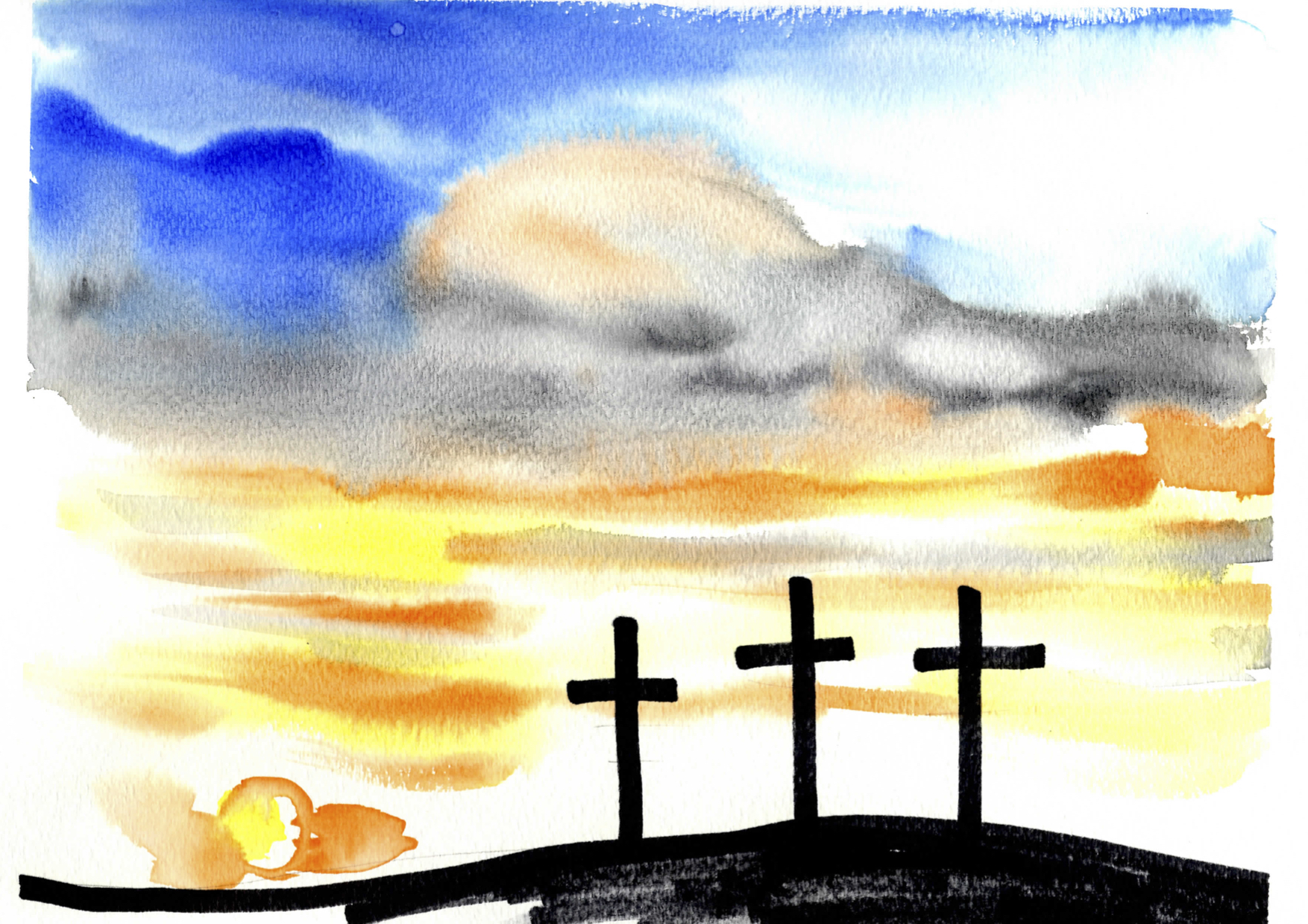
Watercolor by Leo Boucher.
Lenten/Easter poetry
As part of my Lenten discipline I decided, rather on the spur of the moment, to write a Bible-based poem each day based in the gospel of John. I found it such a wonderful exercise, as writing the poems made me slow down and digest the words. I was touched by this message from a friend:
I am so enjoying your Lenten poems. Poetry may be your best gift. A great tragedy that poetry has waned as a literary art. What can be done to revive it?
I skipped ahead in the gospel to the events of Good Friday, so soon will be heading back to part of the Last Discourse to continue.
Also on the blog I finished up the Pilgrim devotional series, which I had run for 11 weeks, and look forward to figuring out what to feature next.
Speaking
I led my first quiet day for BRF (the Bible Reading Fellowship, publisher of my Lent book), and although it was a lot of work, I really enjoyed the day. We held it at our church, which turned out to be a wonderful venue, especially for those people who hadn’t been able to attend quiet days in the past when the venues weren’t accessible via public transport. We have Victoria Park right across the street so people could spread out during the quiet times, or they could find a nook to enjoy in the church or the vicarage garden. As one of the participants say, the bright sunshine was the icing on the cake for the day.
Photo: Ineke Huizing, flickr
The theme was living water, which I so enjoyed exploring from Creation to Moses to Jesus to Revelation. Putting together the prayer activities was fun too, such as people writing on a piece of acetate something they wanted to give to God, which then they’d see the water dissolve.
I penned a short poem during the day:
And I loved receiving comments from the participants, some of which were hugely moving as to how God worked in their lives. Praise him! One of the participants gave me permission to share this poem, which she wrote on the day. She said, “I don’t usually write like this so it’s come as a bit of a surprise.”
Two days after the quiet day I went down to the New Forest to speak at a women’s breakfast at Poulner Baptist Chapel on the theme, “There’s No Place Like Home.” What a wonderful group of women; I thoroughly enjoyed myself – especially as I got to have dinner with a dear friend the night before, and another lovely friend took me to the New Forest for the breakfast. She knows how much I hate to drive.
I had forgotten how I came in touch with Anne, the woman at the church who invited me to speak. She had written in to Woman Alive after buying a book that one of our readers had recommended. The content wasn’t exactly edifying, and I felt bad that I hadn’t done a better job of vetting the reviews. I apologized by way of sending her a copy of my book. We struck up a friendship and that’s how the invitation came about – God’s redemption at work!
The lovely original chapel – Poulner Baptist Chapel in the New Forest.
I’m looking forward to other upcoming speaking engagements, including the silver anniversary celebrations at Books Alive in Hove in June and being the keynote speaker (wow and wow) at the BRF/Woman Alive day in June – yahoo! It’s 25 June and more details are here if you’d like to join us. Please do! We have some fabulous speakers and Jennifer Rees Larcombe is heading up the prayer ministry team.
And of course I’m keenly anticipating leading the week’s retreat in Spain at El Palmeral, the place for a gorgeous retreat/holiday in Elche, near Alicante. The title is “Adventures with God,” including a trip to the beach, and some spaces are available for 25 to 29 April. Do come – it’s an amazing place for rest and renewal and fun.
The grounds include a labyrinth.
Master’s in Christian Spirituality
I’m loving the master’s I’m doing in Christian spirituality at Heythrop College, University of London. The lecturer, Eddie Howells, has been superb. He has a way of taking people’s contributions and synthesizing them while affirming the person. Such a gift. I will miss his lectures as I’ve now finished the lecture portion of both modules I’m taking from him.
This month I’ve been reading Teresa of Avila, John of the Cross, and Meister Eckhart, among others. The course is “History of Christian Mysticism to the Reformation,” so it’s been a whole lot of reading, from Augustine to Origen to Bernard of Clairvaux to the Beguines. I need to take some time to try to make some more links and ponder. The so-called apophatic, or negative, theology, I found challenging in particular. Writers such as Dionysius write in this fashion, where they state a negation (what God isn’t), followed by another negation, and so on. It starts to boggle the mind.
For my end-of-year essay for my Intro to Spirituality course I’ve chosen to write about John Cassian from the 400s. He wrote a couple of so-called conferences on prayer that I want to explore, which he wrote for the monks in his care. He was one of the first to emphasize unceasing prayer, so could be called a precursor to Brother Lawrence.
On study methods – I found out, after I’ve enjoyed two of the four modules, that I shouldn’t take notes with a laptop. Oh dear! Back to pen and paper next year. Looks like our brains process information differently.
I had a hard time selecting a book to highlight for the June Woman Alive book club, trying several and tossing them aside when I wasn’t gripped by their content or structure. I won’t mention which ones they were! I landed then on The Wired Soul by Tricia McCary Rhodes, reading it and enjoying it, before I realized that it wouldn’t be published for several months and thus I couldn’t feature it in June. Back to the drawing board. Then I remembered Land of Silence by Tessa Afshar, which gripped me from the beginning. It’s fiction set in the biblical times and I really enjoyed it – review coming in the June book club, along with an interview of author Claire Dunn.
I also finished The Girl from the Train by Irma Joubert, fiction based in Poland and South Africa around the time of World War 2. I’ve posted some questions for readers to discuss in the Woman Alive book club Facebook group if you’d like to join in.
As I was writing the June book club, I started to do the math and realized that July will mark 10 years of the book club! How fun to celebrate this anniversary of books and more books. I’m publishing reader reviews of what the book club has meant to them or a favorite book they’ve read, so if you’d like to contribute please do. Also I’ll be featuring an interview with the inimitable Michele Guinness on her novel Grace.
For my local book club we read and discussed The Husband’s Secret by Liane Moriaty. I enjoyed it after I was about a third of the way through, for the novel has so many characters that I couldn’t keep them all straight at first. I thought because of the many themes in the book we’d have lots to discuss, but our discussion didn’t take off as it often can. A fun book to read but not great to discuss? When finding some discussion questions for the evening I came across one book club that takes the task of preparation so seriously that she even prepared a power point!
We love that technology can keep us connected with people who move from London. Previously one of our members was in New York City – she’d join by Skype as her kids started to arrive home from school. Now we have a friend who has moved back to Japan, and she somehow amazingly manages to get up around 4.30am to join in.
I’m excited for the next one we’re reading, All the Light We Cannot See, which has won the Pulitzer Prize and has been super highly recommended to me.
In the Kitchen
Blonde brownies: We were seeing friends on Holy Saturday and I ran out of Ghirardelli brownie mix, and had to find something to make with the ingredients we had at home as I didn’t want to shop on Good Friday. Decided to make blonde brownies, but underestimated the time they’d need to cook. The recipe I used called for 20-25 minutes of baking; I had them in there about a half hour but later when I tried to cut them I realized they were still way underdone. I shoved them back into the oven for another 10 minutes. They were gooey but good.
I made another batch for the Easter Sunday tea party at church (that sounds so English), this time with the 4 eggs the recipe called for instead of the 3 I used the day before, and cooked them about 45-50 minutes so they were moist but not dripping. The 4 eggs made them more into a cake. Three eggs is definitely better. Here’s a similar recipe to what I used.
Homestyle Macaroni and Cheese: I had a hankering for mac-and-cheese, and didn’t want to pay the equivalent of $5 for a box of the Kraft fake stuff. So I made a batch with this recipe. I found it called for far too little pasta – the sauce was overflowing so I added almost twice as much pasta as it said. Not sure I’d make it again. Note for translation – 7 ounces is about 200 grams.
A friend made this lemon cream cake to celebrate her husband’s birthday – looks amazing.
At my local book club we enjoyed this Nigella recipe for flourless brownies. They were to die for.
A highlight from February
Having my parents visit for the half-term break was brilliant. The three of us went very early on Valentine’s Day to a self-service interview booth for me to be interviewed by BBC Radio Berkshire.
So tell me, please. What are you reading, thinking, learning, and enjoying?
Reviews of two books for this season, as published last year in the Woman Alive book club.
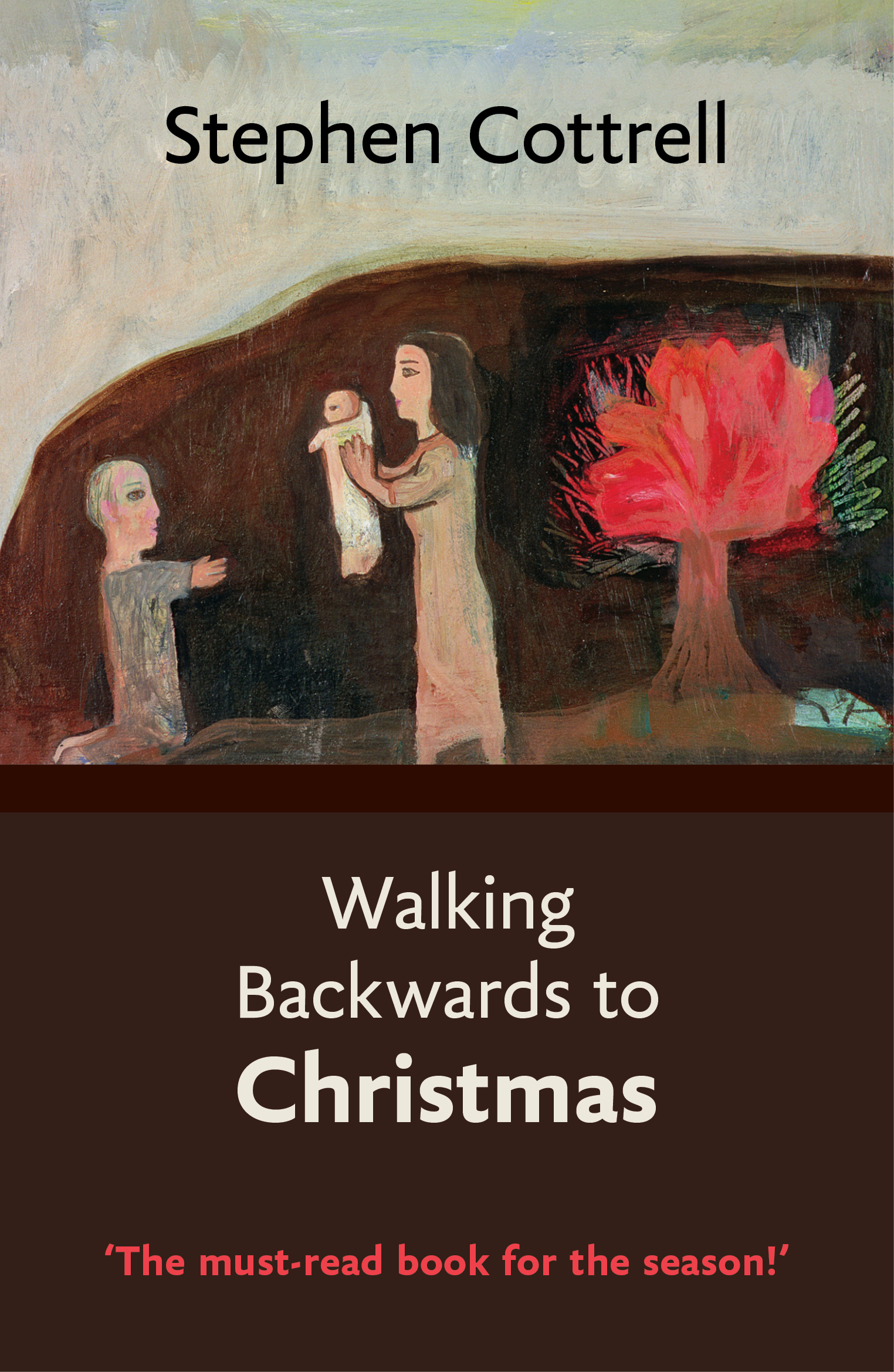
I wasn’t sure I’d like Walking Backwards to Christmas when I picked it up. I’ve read a fair number of first-person narratives from biblical characters over the past few years as this genre has gained in popularity. Sometimes the books work; sometimes, not so much. But in the hands of Bishop Stephen Cottrell, these narratives sing. I highly recommend reading this during Advent or the Christmas season.
He moves through the Christmas story backwards, as it were, starting with Anna in the temple, moving to Rachel, a mother of one of the slaughtered first-born sons, then to (among others) Herod, the innkeeper’s wife, Joseph, Elizabeth, and Mary, and finally to two prominent Old Testament figures, Isaiah and Moses. I found their stories moving and thought-provoking, impressed that the author imagined such different characters and voices in each chapter.
What’s refreshing is that he addresses the dark components of the story; for instance, the chapter by Rachel is piercing in her mother’s grief. Or Anna’s decades-long loneliness as a widow, which slowly is eclipsed by her love of God. Or the power-mongering of Herod; or the strife between Joseph and Mary over the questionable pregnancy. All stories worth considering, but not often addressed in seeker-friendly carol or candelight services.
Perhaps this season you’d like to escape with a Christmas novella, cozied up with some mulled hot liquid, snuggled by the fire. If so, I’d recommend Liz Curtis Higgs’ A Wreath of Snow. She’s one of the few Americans who can pull off writing novels set in the UK; this one showcases Scotland in Victorian times. (Her secret? Research like crazy. When I interviewed her here in 2011, she said she had 800 books just about Scotland!)
Margaret Campbell is a young woman with a painful history. She flees the family home on Christmas Eve, determined to go back to her flat in Edinburgh. But her train journey is unexpectedly halted, including a surprising meeting with the gentleman seated across the aisle. The story has romance, but it doesn’t shy away from hard topics such as bitterness, grudges, and the need for forgiveness. I especially enjoyed how the prompts of the Holy Spirit were portrayed – not too “out there,” and clearly as something that the person could heed or ignore.
Two to make time for in the busyness of Advent and Christmas, lest we lose the true meaning of the season.
Walking Backwards to Christmas, Stephen Cottrell (SPCK, ISBN978-0281071470)
A Wreath of Snow, Liz Curtis Higgs (WaterBrook Multnomah, ISBN 978-1400072170)
A flash-back review from the early days of the Woman Alive book club. I love Adrian Plass’s writings; they don’t lose their humor or punch.
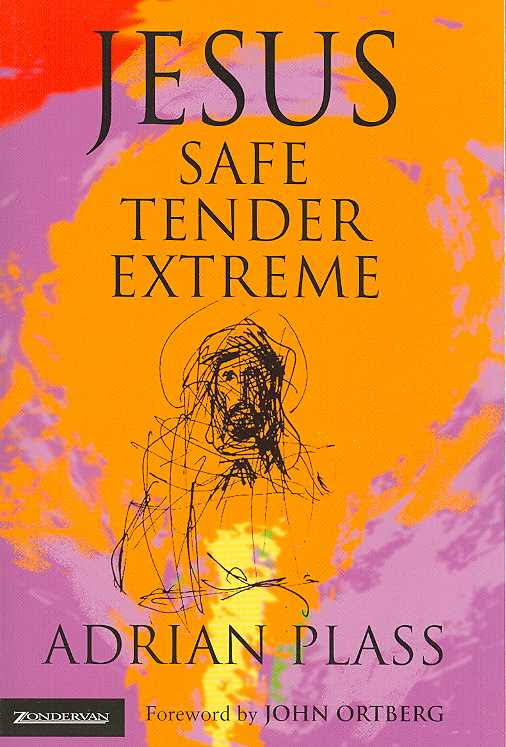
Adrian Plass is a Christian speaker and writer who has been loved over the years for his humor and honesty. Telling stories of personal vulnerability seems to be his job. As he says in the introduction to Jesus – Safe, Tender, Extreme, “I am not a teacher in any orthodox sense. I am not a theologian. I am not a preacher; I cannot preach to save my life. I am simply allowed to be a man with a broom, sweeping away the rubbish that prevents others from passing further in and further up, and I tend to do this by talking about what Jesus does and doesn’t do in my life. He is safe, he is tender and he is extreme. This book is soaked with those things.”
Some who have read this book have commented that it reveals a more mature and wise writer. In it he is profound and deep, but also laugh-out-loud funny. You may not agree with him about everything – like his views on healing or the Bible – but you won’t lack things to consider and discuss if you read it.
Adrian wrote this book in the light of eternity, as his mother-in-law lay dying in the next room. How did this affect you? And how did you react to his description of cancer as a ‘ravening fungoid monster’ (p. 21)?
Do you feel so safe in the love of Jesus that you are free from any of the agoraphobia that Adrian speaks of on page 28? Are you able to pop out “to explore what’s going on down the road”? How does Adrian and Bridget’s encounter with the couple at the coffee shop illustrate this concept (pp. 93ff)? And how does this safety allow and even compel us to embrace truth?
Adrian says on page 69 that “there is not a single incident in the lives of his followers that [Jesus] does not inhabit and monitor and have ultimate control over, even at those times when darkness and distress are all that we are able to see and feel.” Do you believe this? In your times of darkness, have you found this to be true?
In several places in the book, and especially throughout chapter 5, Adrian speaks of God “defaulting to compassion” and us “defaulting to praise” (also p. 44 and 73). Do you really believe that at the heart of God lies compassion and tenderness? If not, why? Could you move in that direction? How would your life be different if you did?
In the story “Closed Wounds,” Adrian in his dialogue with God hears that “the scar is a sign of health” (p. 178). Do you agree with what seems to be a contradiction in terms? Why or why not?
On page 194 Adrian says that “safety and extreme obedience overlap, and the place where they come together is in the concept of ultimate trust in Jesus, even in the midst of apparent failure.” He goes on to talk about how Western Christians fall apart when “God lets them down.” What did you think of the questions Adrian wanted to ask Janet on pp. 197-98? Do you agree or disagree with his conclusions? How have you reacted to God in the tough times of your life?
Some of the extreme encounters Adrian recounts are filled with the everyday stuff of life, like waiting at the supermarket queue (pp. 239ff). Did this surprise you? When have you experienced the thrill of extreme obedience amid your daily life?
My View
Okay, I have a confession to make. I was Adrian’s editor for many years, and indeed was his editor for this book. So I can’t confess to any objectivity. Quite simply, I think the book is wonderful and profound and funny and moving.
When the manuscript first crossed my desk I wasn’t sure about the inclusion of the stories. They weren’t what we were expecting, and I didn’t know how they would fit with the prose. But as I reread the book for this column, I was most profoundly touched by the stories. I hooted at the thought of Adrian collapsing the piece of non-furniture at Blands Warehouse, and was so glad that he stayed and confessed. When he told of his train ride with the tipsy blokes who wanted to talk about Jesus, I wondered what I would have done. And I felt sad about him not telling Dorothy about Jesus, but could relate to that strange part of ourselves that makes such a rash decision and later regrets it. And so on.
One of Adrian’s points that has stuck with me is that God defaults to compassion; this is God’s nature and there is no other. Do we – do I – really live like I believe this? Or do I put a false veneer over God? And in my life, can I follow Jesus and too default to compassion – instead of pride, irritation or selfishness? Ask my husband. Some days yes, some days no!
Views of Woman Alive Book Club readers
I decided to read Jesus – Safe, Tender, Extreme by Adrian Plass as I had read short articles by him but had never read any of his books. The experience for me has been very profound. I felt from the moment that I bought the book that I should start reading it straight away. I had been going through a low time in my spiritual life to the point that I was questioning whether I actually had any real faith. I believe God has used this book to bring me back to Him and to confront me with His deep and enduring love as shown in His son Jesus. I found it difficult to put the book down and felt it was being used to bring me back to the assurance that Jesus truly cares about each one of us and loves us, warts and all. Sometimes I had tears of laughter rolling down my face and sometimes I had tears of joy and relief as the reality of Jesus’ love overwhelmed me. I felt I must write to say thank you for recommending this book as it has definitely been used by God to inspire me and give me confidence that Jesus will always be with me no matter what the situation may be. -Jo Richards, Enfield, Middlesex
I found the book very interesting. One can agree with cancer as a ravenous fungoid monster, but cures are being found and lives extended. I think I feel safe in the love of Jesus, most of the time. Problems do test it. That’s what it’s all about. God’s word sets us free from sin and worry. The author deals with doubt and abandonment, something everyone feels at some time. -Muriel Moore, Turnditch, Derbyshire
Jesus – Safe, Tender, Extreme by Adrian Plass (Zondervan, ISBN 0310268990)
I’ve been remiss in posting reviews. Here is one originally published in the March 2015 Woman Alive book club.
Reading the latest offering from a familiar writer can feel a bit like catching up with an old friend. In the Woman Alive book club in late 2006 we discussed Blue Like Jazz (review posted here), Don Miller’s breakout hit that was turned into a movie. In Scary Close Don continues to share his emotions and thoughts openly, as if inviting the reader over to dinner and a long chat.
He recounts his move to marriage, a long journey as he used to be a serial dater; one who would obsess over winning a girlfriend and then, once he caught her, he’d lose interest, break her heart, and move on to the next. He’s been open about his “father wounds,” stemming from his dad leaving his family when Don was a young boy; surely some of this fear of commitment had roots in those early traumas.
Scary Close shows flashes of insight and brilliance; I love his strong images, such as how he describes his new-girlfriend-later-wife, “She’d no sooner end a relationship than she’d cut down an old-growth tree. In the heat of that argument I realized I was only a sapling in the forest of this woman’s life… If I was going to win her heart, I’d have to plant myself in the forest and slowly grow the rings that earn loyalty…” (pp. 4-5).
But I tried to ascertain what unsettled me, and after a while I realized that it feels as if Don’s Christian faith has been shoved to a corner. He speaks of working through deep issues such as identity, the need to perform and impress, trust and intimacy, by looking to psychology for the answers. Now I’m not wanting to discredit psychology; of course the Lord works through the social sciences to aid and bring healing. But it feels like these manmade systems have taken precedence in shaping who he is. Even Don saying that he’s not been to church in five years made me take pause; has his journey of questioning moved him away from the God of answers, the God who wants his all?
Of course we as readers aren’t really invited to dinner with a writer; we don’t know what’s going on in their heart and mind, so my conjectures are just that – unproven propositions. I’d be happy to be wrong.
Read it for the evocative language and probing questions about intimacy and relationships, but read it asking for what’s not said as much as what is.
Scary Close: Dropping the Act and Finding True Intimacy by Don Miller (Thomas Nelson, ISBN 978-0785213185)
An interview that originally appeared in the Woman Alive book club, where I talk all things books with prominent Christian authors.
Soul Keeping was very moving to me to write, particularly because it gave me a chance to reflect on Dallas Willard during the final days of his life. I hope that through reading it, people will realize the wonder and mystery of what it means to have a soul and learn how to care for it well.
The book of Dallas Willard that impacted me most was The Spirit of the Disciplines, and I’d recommend that for folks to read. But my quick warning would always be that Dallas’ material is very dense. And, at least for me, I often have to read it through several times to be able to absorb it—kind of like osmosis.
There’s no particular story behind the long titles of my books [If You Want to Walk on Water You’ve Got to Get Out of the Boat or Everyone’s Normal Till You Get to Know Them] other than I have a mind that tends to think in thoughts that can only be expressed in long titles. And, there’s something that I like about combining the thoughtfulness and substance of deep thinkers like Dallas Willard with a spirit of fun, joy and delight that can make it accessible to people. So I try to aim for that.
Another Christian classic that is great for our soul in a hurried world is Richard Foster’s book, The Celebration of Discipline. If someone’s looking for a work that’s shorter and more easily applied, The Practice of the Presence of God by Brother Lawrence remains an absolute classic.
Nancy and I read together separately. We actually tried reading together back when we were dating and first married, but both of us are teachers and we would tend to start teaching each other, and that’s not great for a marriage. But we do love to read the same books and then talk about them on our own, and we do that for spiritual books from folks like Henri Nouwen to fiction and biography, and Nancy’s favorite adventure sagas.
I am always reading a book about Abraham Lincoln. Lincoln is one of my favorite characters. I like history and biography immensely. I also loved the most recent third volume about the life of Winston Churchill, which was begun by William Manchester before he died. I also read The Fault in our Stars, and even though I’m not a young teen, I thought it was quite well written.
John Ortberg is the senior pastor at Menlo Park Presbyterian Church in California. He has written books on spiritual formation including The Life You’ve Always Wanted,Know Doubt, The Me I Want to Be and Who Is This Man?. He is married to Nancy, and they have three grown children.
 So many books… so little time. I can’t imagine life without books, and I spend a lot of time reading, reviewing, and creating books. In 2016 I read for the Woman Alive Book Club, for my local book club, for my MA studies, and for research for the book I wrote,
  Barefoot by Sharon Garlough Brown
 What Falls From the Sky by Esther Emery
 Land of Silence by Tessa Afshar
 Present over Perfect by Shauna Niequist
 A Man Called Ove by Fredrik Backman
 Wonder by R J Palacio
 The Essential Writings of Christian Spirituality, edited by Bernard McGinn
 Entering Teresa of Avila’s Interior Castle by Gillian T.W. Ahlgren