Tag: suffering

  • Weekly devotional: ‘I believe; help my unbelief’ (11 in Jesus’ miracles series)

    When they came to the crowd, a man approached Jesus and knelt before him. “Lord, have mercy on my son,” he said. “He has seizures and is suffering greatly. He often falls into the fire or into the water. I brought him to your disciples, but they could not heal him.” “You unbelieving and perverse generation,” Jesus replied, “how long shall I stay with you? How long shall I put up with you? Bring the boy here to me.” Jesus rebuked the demon, and it came out of the boy, and he was healed from that moment. (Matthew 17:14–18)

    IMG_0020A desperate father seeks the help of Jesus’ disciples but meets with frustration. We don’t know what the disciples were doing for the boy, but Jesus sees immediately their lack of faith. And this faithlessness is what Matthew wants to highlight in his gospel, for he again gives a sparse account in comparison with the other synoptic gospels.

    I can feel this father’s pain, for it has been the burden of my own father (and mother). My brother has suffered from epilepsy since he was just three years old, and although my parents have sought healing from the Lord, my brother still has this disease. Why God heals at times and at other times does not is one of the biggest mysteries of our faith. I can only put it down to the fall of humanity, when our first parents chose their own way and thus sin, disease, and death entered the universe.

    So in terms of my brother and this story, I believe that he is not demon-possessed but afflicted by our fallen nature. We ask God to heal and desire that he would do so. But when he does not we continue to ask him to increase our faith. And to give us the wisdom to know when to accept that healing may not come this side of heaven.

    How about you? Have you pleaded with the Lord for something but your cries seemed to fall on deaf ears? May your trust in him continue to grow, and may he give you wisdom and understanding.

    Prayer: Father God, we don’t always understand. Enlarge our grasp of your truth and your love, and give us your peace.
  • Devotional of the week – Redemptive suffering (4 in John 15-16 series)

    “They will treat you this way because of my name, for they do not know the One who sent me.” John 15:21

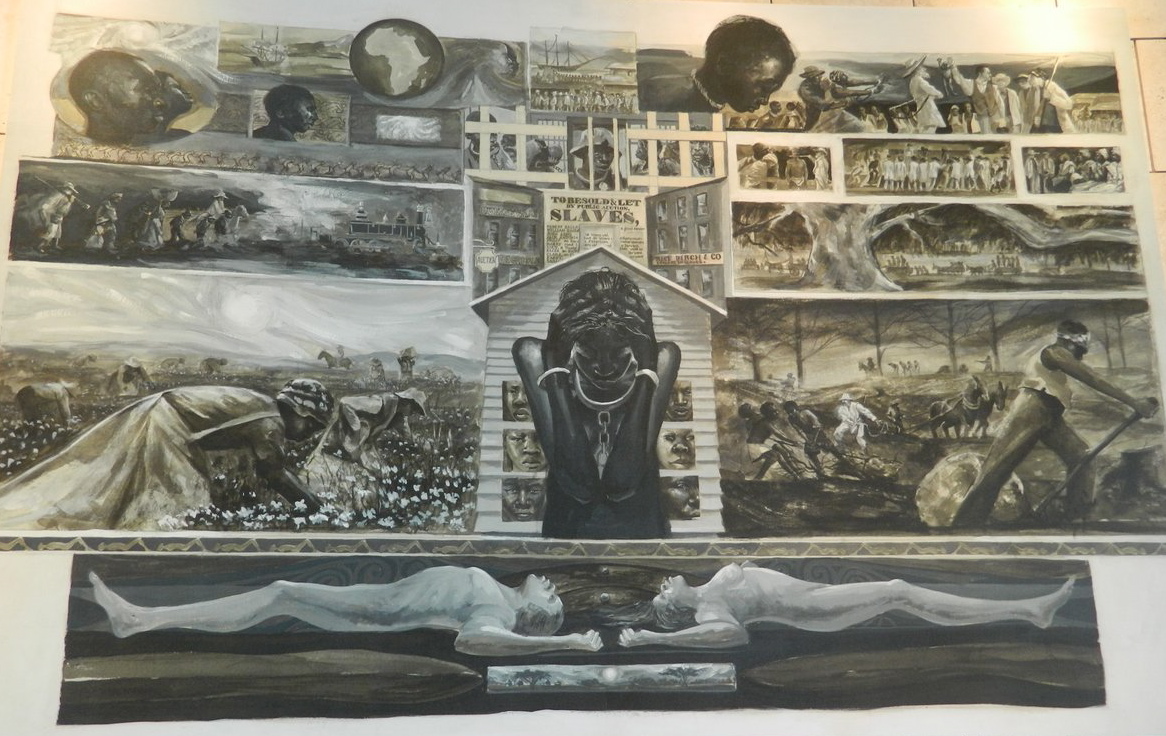
    Painting displayed in the National Underground Railroad Freedom Center in Cincinnati, Ohio
    Painting displayed in the National Underground Railroad Freedom Center in Cincinnati, Ohio

    In the West we currently enjoy religious freedom, and take for granted the ability to meet with other believers to pray and worship together. This freedom is not enjoyed by many brothers and sisters around the world, such as in China or in the United Arab Emirates. For instance, Christians in North Korea are tortured for their faith. Chinese believers from the house churches were barred from traveling to Lausanne III in 2010, the largest Christian gathering in history. Or in the UAE, Christian expatriates are allowed to worship in their own churches, but legally may not share their faith with locals.

    This section of John’s gospel must provide precious sustenance to these believers. They are misunderstood, misaligned, maltreated, and perhaps even tortured or killed because of the name of Jesus. But they can cling to the promise that God’s Holy Spirit is with them, purifying them and speaking through them.

    What can we learn from the suffering church? Many things, no doubt, but one that stands out is the strength of their commitment. Can we too live as though our whole lives depend on our belief and trust in God? Do we focus on the essentials of our faith and let the minor concerns drop? Do we believe in the power of God to bring real change and renewal?

    May the example of the persecuted church inspire and convict us this day.

    Prayer: Lord Jesus, you were persecuted, and so are many around the world. Redeem their suffering for your glory.

  • Devotional of the week: Strength in Persecution (1 in John 15-16 series)

    If the world hates you, keep in mind that it hated me first. John 15:18

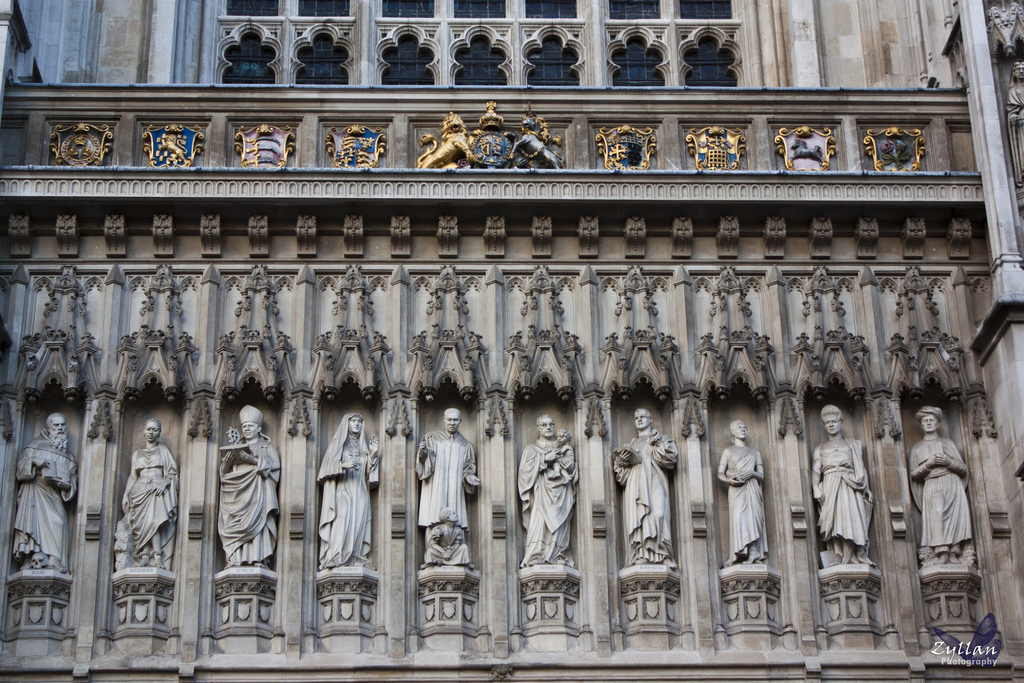
    Photo: "Londres: The ten Christian Martyrs in Westminster Abbey" by Zyllan Fotografía on Flickr
    Photo: “Londres: The ten Christian Martyrs in Westminster Abbey,” Zyllan Fotografía, Flickr

    If we come to Christ as a new convert, we often enjoy a lovely honeymoon period. So to hear these words of Jesus can be a shock and a surprise – is this what we signed up for?

    Some background is helpful as we delve into our passage for the next weeks, which is John 15:18-16:4. Jesus and his friends have finished their last meal together, and Judas has left, intent on betrayal. Jesus and the now-eleven disciples make their way to the Mount of Olives, where Jesus will later be arrested. In what is called the Final Discourse, Jesus teaches the disciples and prays with them.

    After telling his followers how to abide and live in him, Jesus says how they will suffer persecution because the world persecuted him first. We should not be surprised by this mistreatment, for the light of Jesus in us will make visible the evil in the world. Living for Christ might entail something seemingly trivial, such as opposing gambling at our local school. Or something more serious, such as not allowing a co-worker to fudge the truth. Or perhaps we may even be called to stand in solidarity with sisters and brothers around the world who are being tortured for their beliefs.

    Whatever level of persecution we face, we know that Jesus through his Holy Spirit will give us strength. We can count on him.

    Prayer: Lord Jesus, you suffered a horrific death so that I might live in freedom. Help me to live freely today, this week, this month, this year.

  • Review: A favorite novel by Elizabeth Goudge

    9781598568417oI first read The Scent of Water in my late twenties, when I was longing for a husband. Little did I know that I would marry an Englishman when I was thirty and be transported to the setting of this novel. Or that the quick “yes” I said to moving to his country would become an act of obedience when I was missing family, friends, and good plumbing. I couldn’t know that this novel was in some way preparing me, for one of its main themes is obedience.

    Elizabeth Goudge wrote during and after the Second World War, when the country was reeling from hardship and loss of life. Her yearnings for a simpler time – for a pastoral idyll without machines or motorcars – are apparent in the novel, for the main character, Mary, moves from chaotic London to the quiet Chilterns to live in the cottage she inherited from her namesake cousin. This uprooting provides the setting for Mary’s growth, not only spiritually but in learning how to love and be loved.

    When I reread the novel for the third or fourth time recently, again I was struck by the author’s startling insights, such as the corrosive effect of sin on a person; how when we strengthen our will and follow God, ignoring our emotions, we grow and flourish; the masks we don and why; how faith can flourish through suffering; the importance of wonder and gratitude. Some of her writing is a bit clunky or rooted in its time – for instance, I cringed when she said that a character could “run like a Red Indian.” But the truths she conveys are worth the sometimes awkward characterizations or phrases.

    This time of reading, I was touched most by the author’s descriptions of the depression suffered by Cousin Mary, the woman from whom Mary inherited the cottage, and whom she got to know through her journals. Cousin Mary would have long periods of falling into the blackness of despair, when she would fear losing her reason forever. She wrote in her journal of meeting an odd old man who came to tea and gave her advice that changed her life forever: “‘My dear,’ he said, ‘love, your God, is a trinity. There are three necessary prayers and they have three words each. They are these, “Lord have mercy. Thee I adore. Into Thy Hands.” Not difficult to remember. If in times of distress you hold to these you will do well’” (pp. 94-95).

    I was glad to learn that this prayer was first uttered by Thomas Traherne, the seventeenth-century English clergyman and poet. Lately I’ve benefited by praying this trinity to the Trinity, especially at night if I can’t sleep.

    Why not pick up one of Elizabeth Goudge’s books? She will challenge you even as she transports you to a gentler time of village life in England.


    The Scent of Water by Elizabeth Goudge (Hendrickson, ISBN 978-1598568417). This is a recent version published in the States; I have to admit I found it a bit jarring to have the text Americanized!


  • Devotional of the week: Hebrews 11:32–40 (7 in series)

    Delayed gratification

    These were all commended for their faith, yet none of them received what had been promised, since God had planned something better for us so that only together with us would they be made perfect. (Hebrews 11:32–40)


    Suffering because of skin color. A statue to commemorate the people sold as slaves in Zanzibar, at what is now an Anglican Cathedral but used to be the site of a slave market.
    Suffering because of skin color. A statue to commemorate the people sold as slaves in Zanzibar, at what is now an Anglican Cathedral but used to be the site of a slave market.

    The writer to the Hebrews wraps up his discussion of the heroes of faith in this hodgepodge list of people, triumphs, and tragedies. Through faith they did some amazing feats, such as shutting the mouths of lions and quenching the fury of flames. But they also faced torture, chains, imprisonment, persecution, and mistreatment. And horrible deaths: by stoning, being sawn in two, by the sword.

    Not exactly a list of experiences we’re eager to embrace. Nor to advertise to people who are curious about the Christian faith. “Yes, become a Christian and you too could endure ridicule and maltreatment!” Sometimes instead we highlight only the amazing promises of God – that he will never leave us, that when we walk through the river the waves will not submerge us, that he loves us with an everlasting love.

    But because we live in a fallen world, which is not as God intended it, we may experience house fires and breast cancer. We may lose our jobs or our spouses to a roving eye and hand. God doesn’t cause these horrible experiences, but he allows them. Why? We just don’t know. At these times, perhaps more than ever, we need to cling to God’s faith-building promises while sinking back into his everlasting arms. And to know that God has something better for us planned, such as our home in heaven.

    None of these heroes – Abraham and Moses nor Gideon and David – received what they had been promised. But they welcomed it from a distance. May we who have the gift of the triune God – Father, Son, and Holy Spirit – live in a manner worthy of our callings. May God increase in us our faith, that we too may be heroes who welcome God’s promises, perhaps also at a distance.


    For prayer and reflection: “God wants you to understand that it is a life of faith, not a life of emotional enjoyment of his blessings…. Faith by its very nature must be tested and true.” Oswald Chambers


  • When life changes in a moment… why?

    A couple of weeks ago I posted about my family’s near accident, giving thanks that they walked away unscathed. The post has been in the back of my mind as I think about mothers losing children through car accidents or disease; about sisters living life without their brothers; about families disrupted from a cycle of seemingly neverending surgeries. Just last night I heard about a friend who seems to be following Job’s journey rather too closely lately. Battles at his church left him bruised but not broken; disease left him scarred but not out for the count; now there’s another ghastly wrinkle I don’t even want to hint at it. Why, God?

    WhyIt just doesn’t seem fair. Sometimes we witness what appears to be a miracle of saving grace, but at other times the split second matters and life changes in an instant, ushering in tears, anguish, questions, and pain. Does God intervene in the one instant yet hold back his hand at the other? If we say that he’s involved in those miracles, does that mean he’s also involved in the accidents and disease and personal losses?

    I saw a friend over the summer whose sibling died a few months ago, in the prime of her life. When I questioned him whether he asks the “why” questions, he said he didn’t. He believes in the fall of the world, and so why are we surprised when bad stuff happens? The world is not as God made it; sin entered in and so people die and governments are corrupt and people fail each other and lie, cheat, and steal.

    I believe that, but if it was my sister dying, I’m guessing I would ask why. Yet I think of another friend whose spouse and child died in the space of a decade, and who faced/faces physical challenges with another child. When talking about her journey and God, she said, “Where else do I have to go but to him?”

    That comment made me stop and ponder.

    One who thought about the why’s and why nots died a decade ago, Rob Lacey. I still miss him. I called him my “dream author,” for he delivered great content on time that sold. And he was just such fun to work with (on The Word on the Street and The Liberator). We talked about his next book as “the health story.” But we didn’t know then that his wife Sandra and friend Steve would be writing it after he went to perform in glory.

    Rob with his lovely colleague Elin Kelly, signing books at Spring Harvest, 2004
    Rob with his lovely colleague Elin Kelly, signing books at Spring Harvest, 2004

    Rob’s poem “Why Me?” comes on page 196 of their book, People Like Us, and I include it here with Sandra Harnisch-Lacey’s gracious permission. He wrote it after he had an all-clear of no cancer in October 2002. (None of us knew that the cancer would come back three years later.)


    Why Me?

     
    Thanks, Emmanuel. Thank God with us. I’m well!
     
    But why me? Not him? Why me? Not them?
     
    It’s not ’cos I memorised the whole of Job.
    O wore an anointed prayer shawl.
    Or a special hospital robe.
    It’s not ’cos we cried ‘Mercy’! a million times.
    It’s not ’cos I wrote a hundred prayers with rhymes.
    It’s not ’cos my wife deserves me.
    Puts the sign ‘reserved’ on me.
    It’s not ’cos my son needs me.
    Twin tower workers were parents too.
    It’s not ’cos we’ve hung on.
    It’s just that God pulled us through.
     
    So is it ‘because I’m worth it’?
    Well, I am, I’m worth everything to God.
    But so was Jacqueline du Pré,
    So was Eva Cassidy.
     
    So why? And when?
    Was it already planned right back then?
    Or did God shuffle and shift?
    And watch all our prayers lift up past his eyes?
    And did he hear our cries?
    And did they all add up to Abraham- or Moses-size?
    When they dared to do diplomacy with God?
    Did we, together, negotiate with God?
    We’ll never see the subplots,
    The alternative scenes,
    Until we get to heaven, read the script
    And work out what it means.
    There’s no recipe for what God gives free.
    There’s no ace to play for grace.
     
    It’s not that I toughed it out with cameras up my nether regions,
    Tubes pushed through my back,
    Needles in my failing veins,
    Platinum pumped through every track.
    It’s none of that.
    It’s not that I kept a certain attitude,
    When interviewed.
    I’m no more clued than you.
    I could’ve interceded for the lion with my name on it,
    Been compliant with my giant.
    I could’ve driven into Jerusalem on a clapped-out Robin Reliant.
    And still, it might have been,
    That I would die.
    And we might have no idea why.
    Would that have been God’s will?
    Or is it God’s plan never to fill an empty grave?
    Or does He save each one of us?
    So how come some still die?
    And why this?
    Why that?
    And with answers so shy
    What’s the point in asking ‘why’?
     
    So I won’t try to work out why.
    I won’t sweat to work it through.
    For now, Rob, just face it,
    God’s mercy is focused down on you.
    So leave your questions lying there
    You might pick them up again.
    Leave your lopsided, left heavy, rational, rigorous brain
    Just give God his fame.
    The always different, ever the same.
    Live up your voice and yell…
    Thank Emmanuel, thank God with us. I’m well.

    Rob Lacey, October 2002


    With Rob, I’ll put the “why’s” aside and focus on God’s great mercy, which he pours out on our lives, day by day. Sometimes he allows bad stuff to happen, but he never stops loving us or rooting for us.

    With Rob, I’ll give God his fame, the One who is always different but ever the same.

    How about you?

  • With a little help from my friends…

    Some of the high-school friends after finishing the London MoonWalk in May 2011.
    Some of the high-school friends after finishing the London MoonWalk in May 2011.

    Some of my closest friendships were forged in the fire of grief. When I was nineteen, I arrived home late from a classical concert. Wondering why the light was on downstairs, I went down and was surprised to see my mom. Her eyes were red from crying and I immediately said, “Did Grandpa die?”

    “No,” she said, “It’s Sue. She was killed in a car accident.”

    In a flash, my world was changed forever. I started screaming out, “Why? Why? Why?” My mom tried to comfort me, but I was in shock. Coming to terms with why God would allow one of my closest high-school friends die so young, with so much life in front of her, would consume me in the days and years to come.

    Why does God allow suffering? I haven’t found easy answers, and no doubt never will know fully this side of heaven. But as I queried theologians and wise friends in the faith, I saw that I had to go back to Genesis 3 and the Fall, when Adam and Eve followed the crafty serpent and disobeyed God. With this act, the world was altered and sin entered in. Now bad things would happen to good people. People would die in car accidents and from disease. Unjust rulers would steal from their subjects. Hurricanes and earthquakes would wipe out thousands. Our world is fractured.

    But God hasn’t given us up for lost. In his most gracious act, he gave us his son to pay the price for that first act of sin and disobedience. He is ushering in a new kingdom and a new earth. He is redeeming what was lost.

    The tragedy of the death of Sue Weavers that night in October 1986 was huge for me and my circle of high-school friends. In our grief we turned to each other, trying to make sense of the gaping hole in our lives. We met up, sometimes laughing and sometimes crying. Over the years the friendships have lasted. Indeed, one of us commented recently that her friend noticed a deep graciousness between us. Borne out of suffering and pain, no doubt.

    Two summers ago our friendship witnessed a new level of grief – the pain of a mother whose son, at twenty, was killed in a car accident. It seems surreal that one of us can now say to her son’s friends that she knows what they are feeling. That she has endured the early loss of a friend and mate. That she prays they will find hope in God the Father, Son, and Holy Spirit. And that their friendships will last and deepen and bear the fruit that ours have in the years after Sue’s untimely death.

    In this life we will have trouble – so said Jesus to his disciples (John 16:33). But as he says, in him we will have peace as well. I so wish Sue hadn’t died in Duluth, Minnesota, all those years ago. But I’m forever grateful for my circle of friends who would jump off Tower Bridge if I asked.

    How about you? Can you think of some of your favorite friends? How have they made an impact in your life? Comment below – I’d love to hear.