I believe today’s contribution to our forgiveness series will resonate with so many people. I can certainly relate to that having a stream of thoughts and accusations running through my mind of things I shouldn’t have said or done. How can we forgive ourselves? Read on…
Ten years ago, as summer faded into autumn, I experienced a season of overwhelming depression that upended every aspect of my life. It altered my very thoughts and feelings, and made my internal and external world feel utterly shaken. Overcoming this all-consuming illness was a difficult journey, where everything felt uncertain. Hope was hard to find, yet never truly lost.
I now live daily aware, grateful for the changes that have occurred in me having experienced that season and in so many ways stronger, having been broken and restored. Yet still, at times, I remember. In moments of vulnerability, forgiving my past self is not easy. Unexpected things will trigger off a memory. I am reminded of things I said or did whilst ill and waves of guilt and remorse can still come flooding back into my consciousness. This usually happens when I least expect it and I still struggle to reconcile these memories with the person I am now. I cannot erase them, or forget. If I am absolutely honest, I am still working on how to completely forgive myself.
 I love the beauty and grace of butterflies but they also represent for me a powerful metaphor for the journey we take, in life and faith. Like a caterpillar, we need to go through a process of change, in order to be renewed and transformed. This often means experiencing times that are ‘dark,’ where we need to enter a ‘chrysalis’ season, where change feels slow or even halted entirely and progress seems slow.
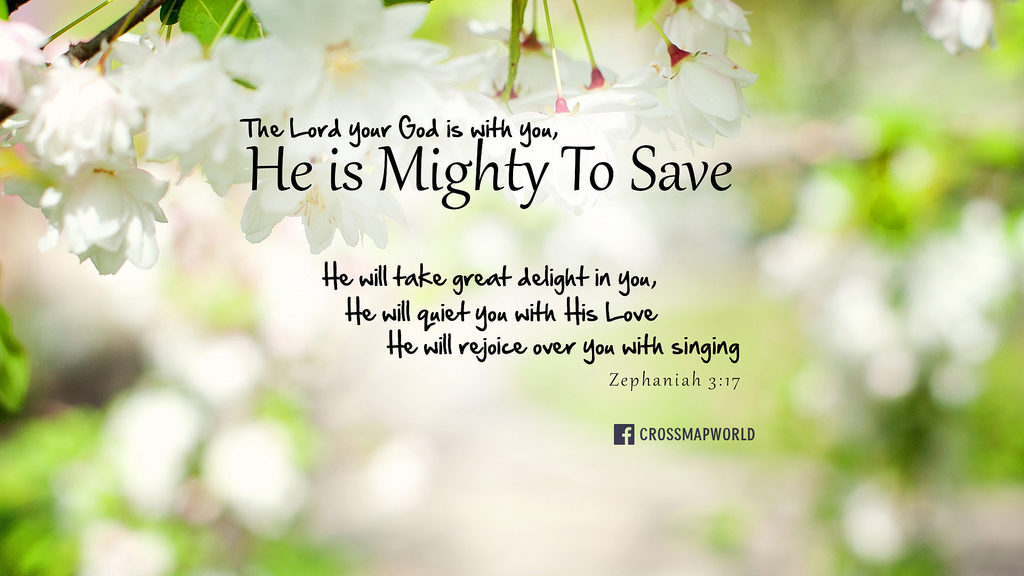
I was recently struck by a verse someone shared with me from Zephaniah. In looking at it in context, we see a book that seems so full of doom, yet is ultimately about a God of redemption. Zephaniah 3:17 says, in the NIV translation, ‘The Lord your God is with you, the Mighty Warrior who saves. He will take great delight in you; in his love he will no longer rebuke you, but will rejoice over you with singing.’ It is interesting that in the Good News translation the phrase ‘new life’ is used rather than the word ‘rebuke.’ God will rebuke you no longer, but gives you a fresh start, a clean slate.
 Yet how often do we still rebuke ourselves? We berate ourselves for our actions, whether consciously or subconsciously. How can we truly say we live in freedom through Christ, yet continue to hold ourselves in contempt for something we said or did in the past? I think this is partly human nature but I also believe that forgiveness is a choice, an action. We can choose to hold on to the guilt that binds us and reproach ourselves or we can surrender it to God and ask him to help us forgive ourselves. We can make a conscious decision to let go of long-held feelings of shame or regret. When we recall our past behaviour we can strive to replace these with a real understanding of the truth – that we are loved by God and he rejoices over us, our past forgiven.
When we place our hope in God, we can trust that he will keep on transforming us, replacing our disgrace with his grace. There will still be ‘caterpillar’ days or ‘chrysalis’ seasons where we feel we aren’t moving anywhere or we repeat the mistakes of the past. In these times God is still gently honing us, teaching us through the seasons where daily life and faith is a struggle and we feel so very far from becoming the ‘butterfly’ God created us to one day be. Even when we have moved on in our life, there will be vulnerable moments when we feel those feelings afresh. Memories will remain, though with time they will intrude on our thinking less often. It is one thing to know that God forgives us but to truly forgive ourselves can be so very hard to do, to fully embrace the freedom God has for us – no guilt, no shame, our sins forgotten.
 Part of my recovery from that season of my life involved reclaiming hope and believing afresh that I am forgiven and restored. I continue to daily place my trust in God, to refine me. If we have truly changed, like a caterpillar who has entered the chrysalis, the fact is we cannot change back. The echoes of past transgressions can be silenced by choosing to let them go, giving them over to God, when they threaten to darken our present. We can take a stand, refusing to let the memory of the past define us today or prevent us from being the person God is daily transforming us into – perhaps not yet a butterfly but no longer a caterpillar.
 Claire Daniel is author of 80 Creative Prayer Ideas and Prayer Journey into Parenthood and lives in Water Orton, Birmingham, with her husband and their two busy boys. She is passionate about prayer, supporting parents on their journey into parenthood and encouraging others to explore different ways of praying and meeting with God in every season of life. She provides support to groups, churches and organisations seeking to use creative prayer ideas in ministry or develop new ways to pray. She leads workshops on creative prayer and speaks about prayer and the journey of parenthood and faith at conferences, churches, and retreats.
http://www.clairedaniel.org.uk/
www.facebook.com/creativeprayer
www.facebook.com/parenthoodprayerjourney
Twitter: @Creative_Prayer