Tag: sabbath

  • Weekly Devotional: Best Feast Ever (14 in Sabbath and Rest series)

    Then the angel said to me, “Write this: Blessed are those who are invited to the wedding supper of the Lamb!” Revelation 19:1–9 (NIV)

    Think of all of the planning that can go into a wedding. Months or even years before the big event, special clothes are purchased, the venues secured, the ceremony planned, the feasting arranged. In fact, so fully can people get caught up with the wedding plans that they forget to focus on what follows – a covenant life together.

    In our final devotional on Sabbath and rest, we turn to the revelation received by the aging disciple John on the island of Patmos. The vision John sees nears its climax as the angel of the Lord pulls back the curtain and reveals the great preparations in heaven for the wedding of the Lamb. God’s plans and years of redeeming actions come together in the union between bridegroom and bride, that is, between the true and living God and we his people, his church.

    Blessed are we who are invited to this feast. As we seek to be like the wise virgins, keeping oil in our lamp while we wait for the bridegroom (Matthew 25:1–13), we prepare ourselves in the finest linen, as created out of our acts of mercy and love.

    As you reflect on the meaning of Sabbath, rest and celebration, take some time in prayer, asking God through his Holy Spirit to bring alive this passage from Revelation. Hear the cries of “Hallelujah!” ringing forth from the great multitude in heaven – those saints from ages gone by and the loved ones who have just died. Hear too the roar of the rushing waters and peals of thunder as the cries resound, “Our God reigns!” See the fine linen, bright and clean, as you feel the everlasting love of the One who is the beginning and the end and everything in between. Come, Lord Jesus.

    For reflection: “The Spirit and the bride say, “Come!” And let the one who hears say, “Come!” Let … the one who wishes take the free gift of the water of life” (Revelation 22:17).

  • Weekly Devotional: Love Births Unity (13 in Sabbath and Rest series)

    May God “give you the same attitude of mind toward each other that Christ Jesus had, so that with one mind and one voice you may glorify … God.” Romans 14—15:13 (NIV)

    The Apostle Paul’s letters should be read as conversations between two parties. Often we may read them statically, not thinking about what those who received the missives would be saying or doing. As Conrad Gempf shows us in How to Like Paul Again (Authentic, 2013), Paul encourages the freewheeling Corinthians to embrace a stronger sense of rules but wants the rule-bound Galatians to enjoy more freedom.

    Here in his letter to the church at Rome, he instructs the newly formed group of Jewish and Gentile believers. Their different backgrounds and the new covenant brought about by Jesus’ death and resurrection – with its impact on how the believers interpret the Old Testament laws – result in conflict and disagreement. Paul asks for grace and love on both sides; for the unity that flows from Christ living in them to pervade their actions and relationships. He reiterates how all are one in Christ, for Christ serves the Jewish people and brings hope for the Gentiles.

    And so however we interpret the shades of Sabbath, we can do so loving and supporting one another. We might yearn for new believers in the faith to see joining us at church not as a leisure option that can be easily cast off for family get-togethers or days out, but as a key faith-building exercise. We can hold our tongues, not spewing forth judgmental words on our friends but praying for them. And we can receive the Lord’s grace and affirmation when we’ve too strongly interpreted the laws, when our actions become restrictive to the point of closing off the Holy Spirit. As often we might move from one extreme to the other, we seek God’s guidance and wisdom as our corrective and joy.

    For reflection: “If any of you lacks wisdom, you should ask God, who gives generously to all without finding fault, and it will be given to you” (James 1:5).

  • Weekly Devotional: Sabbath Feast (12 in Sabbath and Rest series)

    “Blessed is the one who will eat at the feast in the kingdom of God.” Luke 14:1–23 (NIV)

    When I was speaking at a women’s day a couple of years ago, I led the group in an imaginative prayer exercise about how God is the architect of our homes. In our mind’s eye we moved from room to room in the homes we pictured, each one beautifully different and unique – just like those assembled. For one of the women, the room that stood out most strongly to her was the dining room. In it she saw a massive table, heaving with good food for a feast. She said through tears how this image spoke to her deeply, for she holds a great sense of love for those who do not know the Lord.

    I love this week’s reading, because although Jesus has again to put the Pharisees right about healing on the Sabbath, correcting their desire for rules over compassion, he also moves into two discussions of banquets. In the first he tells the guests how to behave – not to choose the best seats to later avoid suffering embarrassment when someone more important arrives. In the second, he shares the parable about how even though people are invited to the greatest feast of all, they find reasons not to attend – things more important than sharing his table.

    For me, the banqueting table on earth can be a foretaste of heaven. There we will enjoy the richest of food without suffering indigestion or unwanted weight gain; there we will enjoy fulfilling conversations with people who know us deeply and completely; there we will bask in the never-changing love of the God who made us and loves us. May our exercise of the Sabbath, and those we welcome to our table, be a means of ushering in the kingdom of heaven here on earth.

    For reflection: “Let him lead me to the banquet hall, and let his banner over me be love” (Song of Solomon 2:4).

  • Weekly Devotional: Lord of the Sabbath (11 in Sabbath and Rest series)

    “The Sabbath was made for man, not man for the Sabbath. So the Son of Man is Lord even of the Sabbath.” Mark 2:23—3:6 (NIV)

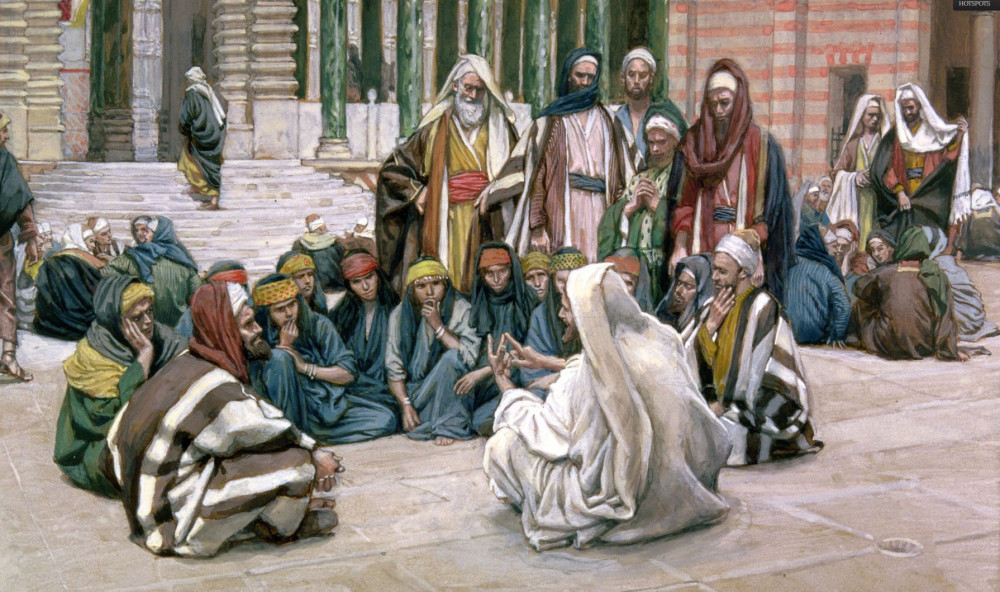
    The Sabbath stories we read this week reveal how Jesus bursts through the rules and regulations of the teachers of the law. Over generations they had added layer upon layer of commands to those revealed by the Lord, so much so that their laws kept them from recognizing the needs of people. While they view Sabbath as a negative space – the time not to do things – Jesus sees it as a time for life and living.

    Jesus smashes their restrictive, self-imposed rules. Citing the Old Testament, he says how King David ate the consecrated bread when there was a need – so the disciples picking the grains on the holy day are not doing wrong. And he renders his critics silent with his question about whether it is lawful to do evil or good on the Sabbath.

    In this discussion of law and freedom, I’m not advocating we chuck out the commandments given to God’s people in the Old Testament. Rather, that we ask the Lord to shine his light on how we hold fast to his rules – are we, out of fear, being too rigid and literal in our interpretation? Or out of sloth or indifference are we not keeping to God’s way of living?

    A personal example to consider: I try not to shop on Sunday, especially because my husband feels strongly about this topic. But one Sunday I was back in America with my family, and my sister and I wanted to find one more perfect gift to bless my mother on her birthday. After church we dashed into a nearby department store and found just the ring to give to her. I felt conflicted, but was grateful for the grace of the Lord who loves us and helps us to share his love.

    Prayer: Father God, you made the Sabbath for us, and you are Lord over it. May you help me to embody your life and love each day. Amen.

  • Weekly Devotional: Generation after Generation (8 in Sabbath and Rest series)

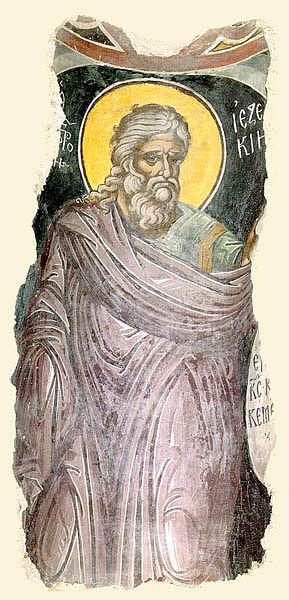
    The prophet Ezekiel, Pantokrator monastery, Mt Athos, 1535/1536

    “I gave them my Sabbaths as a sign between us, so they would know that I the Lord made them holy.” Ezekiel 20:1–44 (NIV)

    We might read the Old Testament despairing that God’s people turn from him again and again. They follow the desires of their own hearts instead of aligning themselves with his plans; they lust after other gods, seeking fleeting pleasures; they lack the faith and belief that the Lord will follow through on his word.

    This passage in Ezekiel outlines three generations of God’s people rebelling against him – those who lived in Egypt in the time of the exodus from Pharaoh, those who wandered in the desert with Moses, and their children. Each generation followed their own ways, turning from the Lord, and in each case, the Lord saves them – for the glory of his name amongst their neighbors. Ezekiel cites these generations as he speaks to the current generation of God’s people, asking them if they too will follow the detestable practices of their ancestors, or if they will turn to the Lord in purity and holiness.

    The Lord through Ezekiel highlights again and again how the generations ignored the Sabbath. Instead of keeping the day holy and being an example to those around them, they acquiesced to the culture. No longer were they set apart, following the wisdom of God’s cycle of time and rest, as they blended in with those who followed pagan practices.

    We too often fail the Lord, getting wrapped up in our lives and ignoring his gentle prompts and prods. But unlike the Israelites as a whole, we have the gift of the Holy Spirit living in us, helping us to repent and softening our hard hearts. If we ask the Lord to turn our minds, hearts and actions to him as we bring him glory, I believe that’s a prayer he delights to answer.

    Prayer: Father, Son and Holy Spirit, I feel I fail you often. And yet you run toward me with open arms. Help me to love and serve you this day. Amen.


  • Weekly Devotional: Be Still (5 in Sabbath and Rest series)

    “Be still, and know that I am God; I will be exalted among the nations, I will be exalted in the earth.” Psalm 46 (NIV)

    When we face trials of many kinds, often our temptation is to talk. To ask advice of those around us; to process the meaning of the situation before us; to wonder and lament and perhaps complain a bit. We need to feel we are seen and heard.

    Our loving Lord always sees us and hears us. He welcomes us to converse with him and others when we find ourselves in tough (and happy) situations. But as we see in the psalm we are reading today, at times God also tells us to cease on the chattering front and to be still. Biblical commentators believe the “Be still” in verse 10 probably means “Enough!” The Lord will speak and we must listen.

    For the Lord is God and we are not. He made us and formed us, and has the power to still the marauding nations and to make the wars to cease. He can and does intervene in our lives, supremely through his Word, Jesus Christ, coming to earth to bear our sins. And through his Holy Spirit, who lives in and through us, bringing us comfort, healing, affirmation, and love.

    The next time you face a trial, why not stop and be still? Wait on the Lord, putting your hand on your heart as you acknowledge that Another lives inside you. As you ask for peace to flow like a river, know that the Lord is your refuge and strength, the One who is ever-present and who will never leave you. As you wait in the silence, open your heart and mind to hear the gentle words the Holy Spirit may impart to you. You might want to jot them down, so that you can chew them over and test them out.

    Lord, when it feels the mountains are shifting around me, I need your reassurance that all will be well. Send me, I pray, the peace that passes all understanding. Amen.


  • Weekly Devotional: Right Paths (4 in Sabbath and Rest series)

    A lovely local path for me is next to a brook. An oasis of peace in a suburban area.

    He guides me along the right paths for his name’s sake. Psalm 23 (NIV)

    Have you noticed that sometimes we put a huge amount of effort and energy into a project, but it never moves past the planning stage? While other times something just barrels into existence, without much of our insight or care? A Christian writer friend noted this principle as she reviewed the past year. Seven projects that she had cultivated had all fallen flat, but three were birthed without much advocacy from her.

    I thought about this Christian writer as I read through Psalm 23 recently, for I realized that God’s guiding us along the right paths can mean that we spin fewer plates. If we trust him and his word, including his admonition to take a Sabbath rest, we trust that he’ll lead us the right way for the other six days, whether through our paid employment, volunteer work, caring for children or grandchildren or loving our neighbors.

    Another Christian writer friend faces a change in her working circumstances as one of her regular sources of income comes to an end. Can she trust the Lord to lead her by the quiet waters as she considers the way forward, knowing that the true refreshment to her soul lies only in him? And that he will be faithful and will lead her to the right projects for his glory and praise – and her well-being?

    We all face the challenge of which words we’ll believe – the quiet whisper of the Good Shepherd as he beckons us to follow him, or the fear that can bubble up in our soul, or the skeptical views that colleagues or family members might cast our way when we announce our purposes and plans. May we hear and heed the still, small voice today.

    Prayer: Lord Jesus Christ, I want to believe that you will lead and guide me, but sometimes I struggle. Give me faith and help me to believe. Amen.

  • Weekly Devotional: Rule Number Four (3 in Sabbath and Rest series)

    Remember the Sabbath day by keeping it holy. Six days you shall labor and do all your work, but the seventh day is a sabbath to the Lord your God. Exodus 20:8–11 (NIV)

    God gave Moses the law as his best plan for his people – not only to bring himself glory, but for the good of his children. That is, he designed his commandments for our benefit. After the first three commands to honor the Lord God above all else, he moves to the fourth – to keep the Sabbath holy.

    The Lord here writes in stone the principle that he has embodied from right back at creation – that six days are for work (work being good and coming before the fall of humanity), and the seventh day for rest. He rested, and he wants his people to follow his lead. He wants them to remember his deeds and set apart the day as holy.

    The fourth commandment sheds more light on the Sabbath principle, designating that all observe it – daughters and sons, servants and free, citizens and foreigners. To take the day off requires preparation, just as the people in the desert had to gather extra manna on the day before. The Lord wants his people to learn how to plan ahead, so that later they can reap the rewards.

    In the West, we’ve largely lost the culture of keeping Sunday special. Shops are open, enticing us to browse and buy, and children’s activities encroach more and more, meaning that parents have to decide between, say, their child going to a birthday party or attending church. To observe the day – to fill it with soul-feeding activities – requires us to stand against the cultural winds. We might need to find a creative approach to celebrating Sabbath, including taking off a day other than Sunday (which is especially true for those who work on a Sunday, such as ministers or health-care professionals).

    How can you plan for this week’s Sabbath?

    Prayer: Lord God, help me to understand how you designed this command from so many years ago for my flourishing. Amen.

  • Weekly Devotional: Bread from Heaven (2 in Sabbath and Rest series)

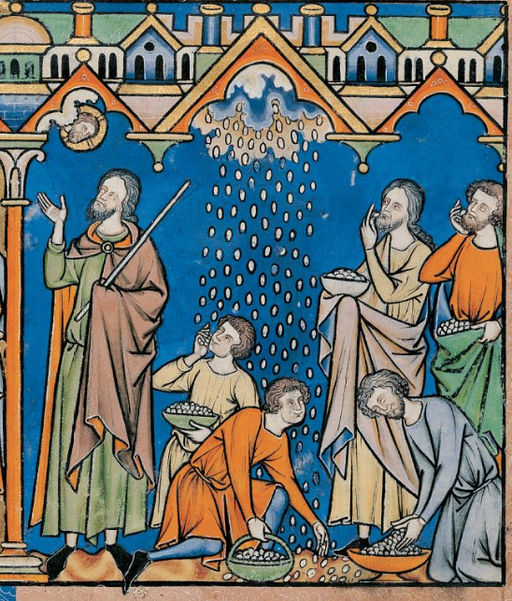
    Manna reigning from heaven on the Israelites, circa 1250, Maciejowski Bible

    “Bear in mind that the Lord has given you the Sabbath; that is why on the sixth day he gives you bread for two days.” Exodus 16:1–30 (NIV)

    The Lord God rescued his people from slavery in Egypt with dramatic measures as he sent down the plagues on the hard-hearted Pharaoh and he parted the Red Sea for the Israelites to escape the Egyptian army. But the people of God had a short memory, for as they wandered in the desert, fueled by hunger, they began to despair, saying, “Oh, if only we had stayed in Egypt.”

    The Lord, not tiring of their complaints, devises a solution – he sends quails and sweet-tasting bread from heaven to feed them. Their only work is to gather the riches set before them, enough daily bread for the day. And for the celebration of the Sabbath, the Lord instructs them to gather on the sixth day enough for two days.

    We see in the Lord’s provision and instruction his love for his people. Not only is he establishing a seven-day week (some biblical commentators believe the Egyptians held to a ten-day week), but he provides a day of rest for all classes of society – including the servants and slaves. He knows their limitations and provide them with a way of living that will help them to thrive. But do they listen? No – some gather too much during the week, and the bread turns moldy. Others go out on the seventh day, looking for food but not finding any.

    How are we like the Israelites? Do we understand how God gives us not only bread to eat but meat to feast on? Do we stop and rest, acknowledging that he is God and we are not? May today we ask Jesus, the living bread, to fill us with his sustenance and help us order our lives according to God’s wisdom and plans.

    For reflection: Read through the story again, this time imagining you are a slave girl in the story. How does the shift in perspective shed light on the narrative?


  • Weekly Devotional: God Rested (1 in Sabbath and Rest series)

    Time for a new devotional series! I unintentionally took most of the Easter season off from posting – I think with my work on my MA studies along with the usual deadlines and lovely family life, I’ve been exerting more than I realized. I have about three more months of intensive work on the MA, and then – Lord willin’ and the creek don’t rise – I’ll be done.

    It seems fitting on many levels, not least for my own personal season, to explore the theme of Sabbath and rest. It can be a forgotten or overlooked command, but God wants us to switch off for our own good. Join me for this week’s introduction and first engagement with Scripture.
    “Come to me, all you who are weary and burdened, and I will give you rest. Take my yoke upon you and learn from me, for I am gentle and humble in heart, and you will find rest for your souls. For my yoke is easy and my burden is light” (Matthew 11:28–30). So says Jesus, our friend and our example, the One who not only redeems us but gives us life.

    After the fall of humanity in the Garden of Eden, sin and disease came into our world. Now we find it hard to rest, forever tempted by the distractions of our devices, the pain of unfulfilled hopes and dreams, the physical ailments that plague us. We wake too early in the morning, longing for sweet sleep, or find we can’t switch off our minds at night. We need the rest Jesus promises.

    Part of achieving this rest flows out of our own planning and preparation as we approach the Sabbath. During this series over the next months, we’ll see how God created the Sabbath as a gift to us, as a means of giving us a rhythm of work and rest, for he knows we are his fragile human creation. As we set aside as holy one day for worship of the Lord and the enjoyment of his gifts and people, we begin to realize just how we need this time to renew and recharge. We are not machines that can keep on running; we need to stop and acknowledge our smallness in comparison with his greatness. He is God and we are not.

    And as with Jesus’ words above, as we accept God’s command to rest, we see that it’s a gentle yoke and a light burden. The benefits are great as we learn to feast and switch off and enjoy true recreation – that is, the renewal of our souls and minds and bodies. We see rest as a life-giving gift.

    I pray your love of the Sabbath will increase ever more as we engage together in a journey through God’s word, seeing how he created us and formed us, and how much he loves and adores us. May this pattern of living be one that gives you life.

    Then God blessed the seventh day and made it holy, because on it he rested from all the work of creating that he had done. Genesis 1—2:1–3 (NIV)

    Many of us associate the word Sabbath with a killjoy list of restrictions: no shopping, no work, no, no, no. But what if we saw the Sabbath as a thing of joy as we imitate our Creator and find rest for our bodies, minds and souls?

    Reading the creation account may sound all-too-familiar, but as you do so today, think about the story from God’s point of view – well, as much as you can, being his created one. God, in the beginning, forms the heavens and the earth. Then the light and dark; the skies and the earth and waters and dry land; the plants and vegetation; the sun and the moon and the stars, the living creatures, the livestock. And he sees that it is good. Then he makes humanity in his image, giving them authority over the earth and animals, and he sees that it is very good.

    As this story reveals, being the Creator is part of God’s nature; it flows in and out of him. And we are the pinnacle of his creation, formed in his image, called to create and collaborate with him. We are to rule over all the creatures, whether in the air, sea or land, and to cultivate the vegetation for food.

    Made in God’s image, bearing his mandate, we are also called to rest as he rested. Had Adam and Eve not disobeyed the Lord in the Garden of Eden, I’m guessing our ability and desire to rest would come naturally. But with the consequences of the fall of humanity, we live in an imperfect world. And now we can struggle to switch off and find true Sabbath rest. May we, with the help of the Holy Spirit, find a spacious place to rest today.

    Prayer: Creator God, you have made me in your image. Help me to reclaim the ability to find your peace and release as I rest in your love. Amen.