
Tag: Romans 6

  • Weekly Devotional: Our new self (5 in Romans series)

    For we know that our old self was crucified with him so that the body ruled by sin might be done away with, that we should no longer be slaves to sin – because anyone who has died has been set free from sin. Romans 6:1–23 (NIV)

    The apostle Paul speaks often in his letters about the old self and the new self, as we see here in Romans. It’s not surprising, for his conversion was so radical – one day he was persecuting the new church to the point of death, and the next he was blinded while traveling to Damascus as he encountered the risen Jesus. He turned from a murderous antagonist to the gospel to one of its biggest proponents.

    Paul tells the Roman church that no longer do they need to be slaves to their old life of sin, but now, empowered by the Holy Spirit, they can live out of the new self. No longer do they have to be at the mercy of sin and wickedness, for they live united with the resurrected Jesus.

    We might read this and lose heart, thinking that we never will win the battle with the besetting sin we face, whatever it may be. But God transforms our character day by day as we seek to live for him, and often we may not even be aware of the subtle changes that are happening within us. For example, I remember years ago in my weekly small group when we each named how we noticed God working in and through the members of the group. I was surprised and heartened to hear some of the lovely things people said about everyone.

    We can be encouraged to know that no longer are we tied to the things of sin, but that Jesus dwelling within us makes all things new. We who have been baptized into Christ Jesus live a new life.

    For reflection: “You were taught … to put off your old self … to be made new in the attitude of your minds; and to put on the new self, created to be like God in true righteousness” (Ephesians 4:22–24, abridged).
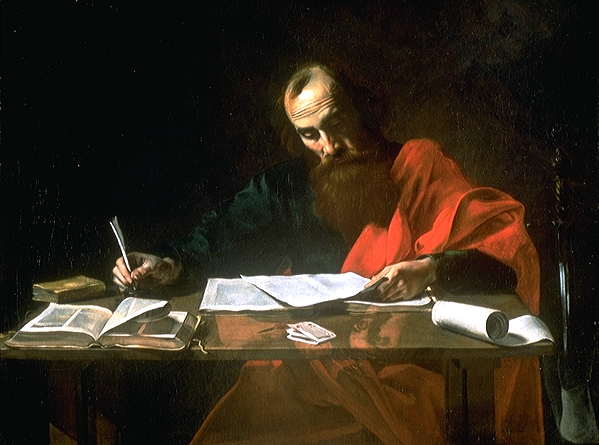
  • Devotional of the week: Holiness (8 in Fruit of the Spirit series)

    Photo: Paul Writing His Epistles by Valentin de Boulogne – Blaffer Foundation Collection, Houston, TX, Public Domain

    But now that you have been set free from sin and have become slaves of God, the benefit you reap leads to holiness, and the result is eternal life. (Romans 6:1–23)

    I wonder what it was like for Paul on his missionary journeys. He must have felt the pain of separation with the huge gulfs of geography between the new churches springing up; he was unable to visit them all and he certainly didn’t have the immediate updates we enjoy from friends and family across the world with our video chats and social-media updates. But Paul knew the secret weapon for true change in his new charges – Christ dwelling in them.

    Paul strongly urges the church at Rome to live out of the new self; that which is inhabited by the Holy Spirit. He longs, as he says in verse 1, that they would not harbor the secret desire to sin because they hold to God’s assurances of forgiveness (St Augustine’s, “Lord, grant me chastity, but not yet”). Nor should they be slaves to sin – ruled by what they crave. But rather he desires that they would offer themselves – their souls and our bodies – to God as instruments of grace. Living lives transformed.

    Paul uses the word for fruit in verse 22 (above). When we die to sin and don the clothes of Christ, we reap the fruit of holiness, which leads to eternal life. Holiness, our robes washed pure and clean. Holiness, desiring God’s will and living in his ways. Holiness, ushering in the life of the kingdom of God.

    We all have our own domains that we can either submit to the Lord or keep tightly within our grasp. When we relinquish our rights, whether in the big questions such as where we’ll live, or in the smaller but daily issues such as will we bless or will we curse, we bear the fruit that the Lord grows in us. May this life be seen in us today.

    For reflection: “Take my life, and let it be consecrated, Lord, to thee; take my moments and my days, let them flow in ceaseless praise” (Frances Ridley Havergal).