Tag: review

  • Review: Feeling Empty, Being Filled, The Book of Ruth

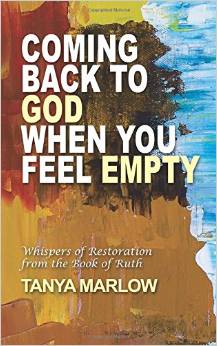
    Unknown“In 2010, I gained a baby, and lost the ability to walk more than twenty metres.” So begins Tanya Marlow in this thought-provoking look at the book of Ruth. She interweaves her story of life with myalgic encephalomyelitis (ME – or chronic fatigue syndrome, as it’s commonly known Stateside) with that of two women from centuries past – Naomi and Ruth.

    When we look at this biblical account, usually we focus on Ruth – the young widow who commits to her mother-in-law, making her home in a foreign land, such the depth of her love. We skip over the bitter old woman, Naomi, who is reeling from loss and is definitely disappointed with God. But Tanya explores – gently – how we mirror Naomi, and yet how God showers us with his love. (And she doesn’t miss out on gleaning encouragements from Ruth’s story either.)

    Coming Back to God When You Feel Empty is a short but satisfying read, currently free when you sign up to Tanya’s website. Read it for the poetic language; read it for the insights this story from old can shine into our lives today; read it for the emphasis on prayer and a God who loves us.

    Coming Back to God When You Feel Empty: Whispers of Restoration from the Book of Ruth by Tanya Marlow (CreateSpace, 2015).

  • Review: Austen-Inspired Fiction

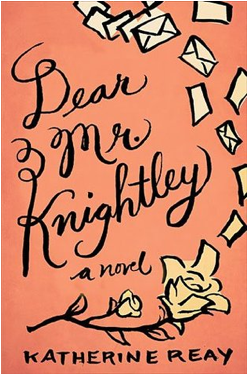
    I just finished Katherine Reay’s latest engaging novel, and before I add my review, I thought I’d better post my thoughts on her first book, which was published originally in Woman Alive.
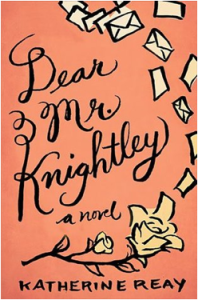
    529FF670-E4E0-465F-A6FD-69F7FE055D41When I finished this novel, I sighed in satisfaction and thought about turning back to the beginning, reading in the light of the plot twist at the end. Before doing so, I posted in our Woman Alive Facebook group about my delight with this book, but what happened next left me feeling ambivalent. In fact, I felt similar to that first time I visited New York City, when I bought a watch from a man outside the Statue of Liberty who had watches hanging all along the inside of his coat. (Of course it only worked for a day; how gullible was I as a naive young woman from the Midwest!) For one of the regular Facebook members, Angie Pollard, said:

    I love Dear Mr Knightley – though didn’t think I would when I started reading it… I presume you’ve read the classic Daddy Long Legs by Jean Webster, which it parallels and is one of my ‘go-to’ books. Time for a re-read of both!

    No, I hadn’t heard of Daddy Long Legs; this was news to me. From being so pleased with the fresh and original plot twist in Dear Mr. Knightley, now I felt like I had bought a knock-off Gucci watch that would die an early death. (And I’m sorry if you’ve read Daddy Long Legs so now you know the plot of Dear Mr. Knightley.) I’ve been mulling over my reaction, wondering why a new novel based on an older version troubles me. Maybe it has something to do with how the protagonist, Sam, hid behind characters from literature (mainly those of Jane Austen and Charlotte Bronte), spouting off their words when she felt trapped or scared. She – who as a child had experienced an abusive, broken family and grew up in the foster-care system – hadn’t found her voice and so employed the voices of others. Was the author of this novel doing the same by lifting the plot from a classic?

    I remain undecided. That issue aside, Dear Mr. Knightley delighted me. I loved Sam’s references to Lizzie Bennet and others, and I was moved by her journey to love as she learned to trust and shed her fears of exposure and rejection. She also finds her calling and her voice as a journalist, moving from one whose features were wooden and unpublishable to a passionate teller of hidden stories of children at risk. The novel even has a touch of romance.

    What do you think? Knock-off or inspired update?

    A Tale of Two Sisters

    19167656More Austen-inspired fiction from Katherine Reay. I don’t know if the bones of this novel emerged from another classic, such as with Dear Mr Knightley; I somehow hope not. But either way, I was captivated by this story of two sisters. Their mother died of cancer a decade or so previously, splitting the sisters and their father, with Lizzy moving to New York City and Jane staying on the West Coast. Lizzy poured herself into her chef career while Jane – ten years older – took the marriage/family/work balancing act route. But when Jane is diagnosed with breast cancer, Elizabeth loses her cooking genius. She realizes she needs to go back to Seattle and Portland and reconnect with her sister – and all that she ran from.

    Strong, evocative writing; I especially enjoyed delving into the sisters’ relationship – how can two different people with so much history become friends? How can they come to understand the other enough to forgive – and in the process, find out more of who they are and who they have been created to be? The novel addresses bigger questions of what are we living for; what fuels our passion; how can we love and live with those closest to us without scratching their eyes out on the one hand or distancing ourselves emotionally on the other.

    I figured out how the novel would end, but that didn’t put me off enjoying it. One to read with a cuppa.

    Dear Mr. Knightley, Katherine Reay (Thomas Nelson, ISBN 978-1401689681) and Lizzy & Jane: A Novel, Katherine Reay (Thomas Nelson, 978-1401689735)
  • Review – two novels of two clergy spouses

    As we head into summer, are you thinking about reading more novels? Here are two that I found satisfying. Both have protagonists who find their identity through staying within what they discerned were God’s boundary lines for their lives (see Psalm 16). Interestingly, both include women married to clergymen, though I hadn’t anticipated that…

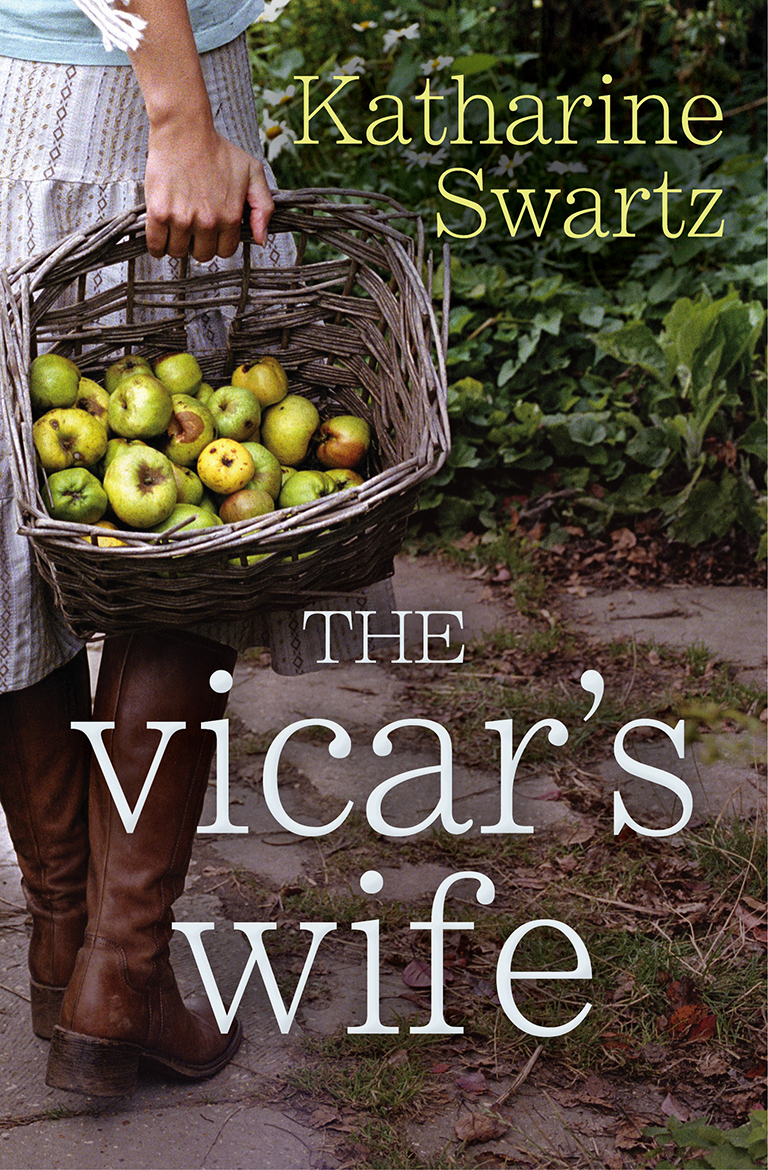
    9781782640707I was grabbed by The Vicar’s Wife, which of course is hardly surprising as like the title of the book I’m a VW; like the protagonist I moved from the States to the UK for my English husband; like her I’ve experienced the sense of loss, homelessness, culture shock… and the ways God can use those challenges to shape and mold me. Some of the scenes I felt I had lived, such as feeling like an outsider at the school gate, or the way adjusting to a new culture can seemingly sap all of one’s energy. But you don’t have to be a foreigner or a VW to enjoy this gentle story of two women separated by several decades and how they came to terms with the dramatic changes in their lives. It’s an enjoyable read, and I only wished the role of God and faith hadn’t been quite so buried.

    All for a SongAll for a Song is mainly set in the Roaring Twenties, as remembered in the present day by an octogenarian trapped in her body after a stroke renders her speechless and mostly immobile. Dorothy Lynn Dunbar’s life as a young woman was set out for her – following her father’s untimely death, she would marry the young preacher who came to take his place. She loved Brent Logan, but she also yearned to see the world – and make her music. When she has the opportunity to sing for the groundbreaking evangelist Aimee Semple McPherson, she surprises everyone in her small rural town by following her dream. It’s a moving coming-of-age story, exploring how Dorothy Lynn finds her place in the world, and how she ultimately finds contentment and joy.

    What are you reading? 

    The Vicar’s Wife, Katharine Swartz (Lion, ISBN 978-1782640707)

    All for a Song, Allison Pittman (Tyndale, ISBN 978-1414366807)

  • Review – memoir of life in Afghanistan

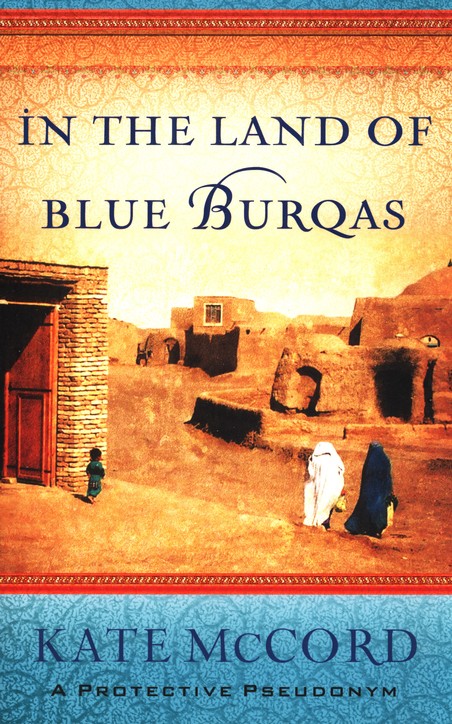
    408143_1_ftcI came across this gripping memoir through a review in the Woman Alive Book Club, and was grateful for the recommendation. In the Land of the Blue Burqas tells the stories of an American woman who spent five years in Afghanistan, working for an NGO with the goal of helping Afghan women. She recounts her experiences in a winsome manner; when reading I felt like she was sharing the stories over a cup of tea – even though she used a pseudonym to protect herself and her friends. I could sense her love and respect for the Afghan people she met.

    What struck me most was the hidden world of Afghanistan, namely the world of women. They live behind walls, closed in. In public they walk silently, not making eye contact with men. Nor would any man enter another family’s aouli (family compound) unannounced. If he visited, he would be served in an outer courtyard by a young girl or boy; the woman would have been given time to hide inside. But women move freely from one aouli to another, joining in with the lives of their women neighbours and forming a deep sense of community. The author experienced this strong friendship as she sipped their tea and ate the nuts and treats offered.

    Kate McCord found out that for women, the worst day of their life was when they married. Brides would be young – twelve or thirteen – and the marriages arranged. As one woman said, “My husband is a good man; he only hit me a little at first when we married.” But men said their best day was when they marred their first wife (many have more than one). The author learned more about women in Afghanistan than many men knew.

    I also appreciated how strongly she held to her Christian beliefs, sharing them graciously without forcing them on anyone. She learned the local language and sought to find out about Islam. When issues of faith came up, which was nearly every encounter, she sought a creative way of putting things, often by telling a Bible story that would lead to an unexpected ending. It would blow away the hearer’s preconceptions – if they allowed.

    When the security in her town disintegrated, she was forced to leave. She left her home, fruit trees, dog and the friends she had grown to love. But the stories of these beautiful people she will have as a gift forever.

    Jump into the rickshaw and enter this fascinating world.

    In the Land of the Blue Burqas, Kate McCord (Moody, ISBN 978-0802408143)

  • Review of a quirky memoir

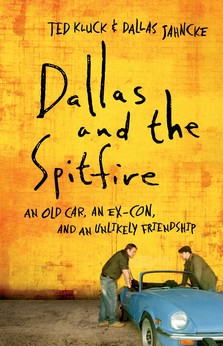
    A year or so ago I read nearly twenty books for a feature article in the Christian publishing trade magazine. That’s a lot of reading, even for a self-confessed bibliophile such as me. In the midst of all those words, the ones that stood out to me were those in Dallas and the Spitfire, the story of an unlikely friendship. Why? Because the author’s unique voice came through so clearly. His writing style is easy and engaging, and his footnotes are a fun place where he lets rip with wisecracks and asides. More importantly, the content is encouraging and thought provoking. For me the only negative was the shameless copying of the typeface/artwork of the similar hit book of a few years ago, Same Kind of Different as Me (although I tried to read that book and didn’t get very far, whereas I lapped up this one).

    dallasSFThe main author here is Ted Kluck, a freelance writer in his mid-thirties who lives in Michigan in the States and inhabits a Christian Reformed subculture. He meets Dallas, a young guy in his early twenties who has experienced more of life than many have who are twice his age. But not all of what he’s lived through has brought life. His father introduced him to drinking at the tender age of eight, and he lost his virginity at ten. He became a hardened drug addict, living a precarious life on the edge, fuelled by the desire and need to fund his habit. His actions led him to jail, and then eventually into a Bible-based rehab program. It was here when he first met Dallas.

    Their friendship is that of father to son, mentor to mentoree, friend to friend. Men seem to communicate best shoulder to shoulder, so their shared project of restoring an old European car gives them the excuse to hang out and do life together. Ted helps Dallas in his first year as a Christian as he navigates the strange waters of a fundamentalist Bible college, survives heartbreak over a romantic relationship, and manages to stay clean and off of drugs. Dallas in turn helps Ted, a neophyte when it comes to car restoration, to bring life to the old British Spitfire. And more than just car repair, he brings joy, hope, and the reminder through his changed life that our God is really able to do more than we could ask or imagine.

    A great read. My eyes admittedly glazed over at all the car descriptions and a few of Ted’s sideabout ramblings, but overall the story of the two’s friendship made for compelling and even compulsive reading.

    Dallas and the Spitfire: An Old Car, An Ex-Con and an Unlikely Friendship, Ted Kluck and Dallas Jahncke (Bethany, ISBN 978-0764209611)

  • Review of Cross Roads, follow-up to The Shack

    My review from the Woman Alive book club, originally published in February 2013, shortly after the release of the follow-up to the massive hit, The Shack.

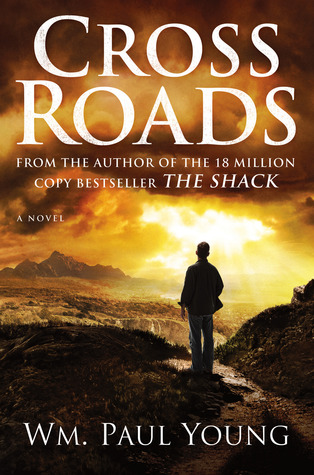
    Many anticipated Cross Roads, Wm Paul Young’s novel following his huge success with The Shack. Me? Not so much. I reviewed The Shack in the Woman Alive book club in 2008, and although it had more reader reviews than any other book in our half-dozen years of the book club, I didn’t love it. Some of his theology concerned me (bordering on universalism), and I thought the opening fifty pages was wrought with purple prose. And yet I couldn’t discount the way God used The Shack to bring grace and healing into the lives of many. So when Cross Roads arrived through the post, I thought, “Hmm.” I wasn’t keen to drop everything and read it. But some of our Facebook group wanted me to do so, and thus here I am.

    15789399Again the opening pages scream with adverbs and adjectives as the author is at pains to set the scene. Because this book was published traditionally, and not self-published as The Shack was initially, I hoped the publishers would have reigned in the prose. An example: “He had been birthed in an explosion of life, an inner expanding universe coalescing in its own internal solar systems and galaxies with unimagined symmetry and elegance” (p.4). But eventually the descriptions eased as the action got going, and I didn’t have to force myself to continue reading.

    The author has a fantastic imagination, and I enjoyed the worlds we traversed as Tony, the protagonist, lies in a coma, given one chance by Jesus and the Holy Spirit to physically heal one person. Tony slides into the head of another person (this is all on the dust jacket – I won’t give away too much!) and starts to see the world through their eyes. Compassion, empathy, grace, and mercy become real to him as he moves away from his self-centred focus. The reader too gains empathy for him, the once crusty businessman whose aim had been only to win, as we learn why he erected the towering walls of protection.

    Should you read Cross Roads? I don’t know if you should, but I think many will, especially those who loved The Shack. If you can make it past the early plodding pages, you’ll enter an imaginary world that may enlarge your view of God and your fellow men and women. Like me, you might find yourself irritated by certain quirks of the author (for instance, I wasn’t convinced by his CS Lewis character, and I found the idea that members of the Trinity could be sarcastic as falling outside of God’s character). But yes, it’s worth reading for a glimpse of what the soul could look like, and the relational view of God in his three persons, who always wants to interact with us.

    Have you read it? If so, what did you think?

    Cross Roads, Wm Paul Young (Hodder, ISBN 978-1444745979)