So many books… so little time – because of scrolling? We all fall prey to distractions and interruptions, don’t we. After being humbled in 2024 when I realized that I only read 22 books that year, I was more intentional in 2025, reading 43 books (but still down from the 60-something I used to read).
One reason for adding to the list is the number of classic novels I listened to via the Sleepy Bookshelf app, in which Elizabeth the narrator puts on a welcoming and gentle voice and lolls you to sleep. I enjoyed The Enchanted April, Emma, The Secret Garden, and others because of this wonderful podcast. Highly recommend if you struggle to fall back asleep – and sleep headphones will help you stay quiet if you share a bed.
In scanning the books I read, I see a lot of 2.5 and 3.5 starts out of 5. I won’t share those with you, but offer 5 fiction titles and 1 non-fiction for you to enjoy. In no particular order…
The Maid’s Secret by Nita Prose
Utterly delightful. This is the third in the Maid series, and I marvelled at how a third book could rival the first. But it does. In fact, I think it might even be better.
There’s a back and forth timeswap aspect with Molly’s current mystery and her gran’s backstory. That’s all I’ll say as the uncovering of both work together wonderfully.
I finished it last night with a pleased sigh of contentment. I’ve listened to all three, and the narrator does so well with the voices. Feels a familiar sound…
I love that there’s never any mention of Molly’s neurodiversity, but as the reader/listener we figure it out. A massive ‘show, don’t tell’ by the author.
The Names by Florence Knapp
A fascinating novel, which traces the lives of a family through the naming of the son via three different names. It took me a bit to get into this format – I wondered how tiresome this might become – but soon was captivated (especially when I learned that the author jumped ahead in seven-year segments, which kept the story moving).
Interesting to ponder how life can differ according to what name you’re given…
TW: the novel refers to domestic abuse.
This Must Be the Place by Maggie O’Farrell
A stunning book with so many different first-person points of view, alternating by chapter. I’d start off the chapter with a new character wondering who in the world they were and how they would fit – suspense held, waiting to see…. It’s an effective device for keeping the reader’s interest. I really enjoyed the chapter at the back explaining how the author had been going through a building project while writing, and how the physical moving around of her space somehow unlocked a different level of creativity. Along with her toddler child removing, while she was writing, all of the post-it notes she had arranged with the novel’s structure. Which made her throw out the conventional ways novels appear, leading to her chapter of photos of items up for auction (which I didn’t think worked and wanted to skip over but I made myself read).
Haunting, lyrical, engaging, lovely… everything you might hope for from a Maggie O’Farrell novel. I picked this up at a charity shop but it’s one I won’t part with right away. I read it too fast and will allow a slower, more luxurious read in a few years (including looking up the words I didn’t know the meaning of!).
I recognize I haven’t said anything about the book itself – its characters, the plot, etc. It hops around from Ireland to the States to South America to England and in between, but she holds it all together around one main character… Intrigued? Read it!
Wish You Well by David Baldacci
An engaging novel, set in the late 1930s. What a change for the young children when their family suffers a car accident, killing their novelist father and putting their mother into a coma. They move to their grandmother’s home in the mountains of Virginia, a harsh location to exist in.
I appreciated the emotional coming of age for Lou, the young daughter, as she and her younger brother leave New York City for a farming-in-Appalachia experience. Ups and downs and perhaps too tidy of an ending but I didn’t mind…
Compelling writing. Love that it was based on oral storytelling within the author’s family.
We All Want Impossible Things by Catherine Newman
A wrenching story of friendship, charting the last months of lifelong friends as one succumbs to cancer. Full of highs and lows; the coping mechanisms of grief when the simply unfathomable becomes reality.
I loved Ash, the protagonist, and Edie, in them seeing reflections of my own lifelong friendship with Kristen. The shared jokes over the decades; the way the friends see so many parts of each other – many that others miss.
I loved nearly everything about this book. The only niggle was really big though, the idea that a mother who had devoted herself to her child could remove herself from him for the last weeks of her life. This pushed believability too much; I just couldn’t buy it.
Other than that, a really lovely read. Five stars.
Everything Sad Is Untrue: (A True Story) by Daniel Nayeri
I so enjoyed listening to this book, especially because the author narrated it. I loved hearing his inflection on words – the way he said his home country, Iran, or how he voiced the words in Farsi. It’s an engaging account of his memories of leaving his beloved home and world as a young boy and becoming a refugee – one with a patchwork of memories. What is true? That’s a question he raises more than once, and it’s worth pondering in our own lives.
His stories, whether in Oklahoma where they found refuge or in the land of honey and jasmine, captured me. Themes of home, identity, family, personhood, and hospitality abound, among others. There are, sadly, stories of domestic abuse too. Highly recommend.
I stayed up way too late last night reading. Sound familiar? I was finishing off the massive bestseller Where the Crawdads Sing by Delia Owens, which lives up to the hype. It took me awhile to get into the story, as it jumps backwards and forwards in time, but once I was in the world of the North Carolina marsh, I was hooked. I’m so looking forward to discussing it with my local book club.
What else? This year I’ve read 51 books – 20 fewer than last year, which I think was because in 2018 I was still recovering from the exertions of doing my MA in Christian spirituality the year before, and therefore reading to recuperate.
As I look over my list, I see holes in the categories of weightier
books that I want to read but haven’t yet made the time or effort to do so. A
good reminder for me to plan times into the schedule for this type of reading,
or it won’t happen.
I always enjoy recommending books to the Woman Alive book
club, which you can find here. I
recommended 16 books throughout 2019, including those by Eugene Peterson,
Shawn
Smucker, Gemma
Simmonds, Alia
Joy, Pete
Greig, and Amy Scott
Robinson. I highlighted books to help you in your Christian journey (such
as this fine
one on how to go on retreat), some good novels (I gave top marks to Brunch at the
Bittersweet Café), a few memoirs, and Lent and Advent
books. If you subscribe, you’ll also be able to read the interviews with people
such as Sharon Garlough Brown, author of the beloved “Sensible Shoes” series, and
Revd David Adam, former vicar of Holy Island.
I won’t laboriously go through the full list of over fifty that I read, but instead point to a few from several categories:
4 books for which I gave commendations,
2 books published by Christian publishers that I didn’t highlight in the Woman Alive book club but which are worth your time,
2 general-market memoirs, and
5 general-market novels that I gave top marks.
As I look over the stars I awarded, see only two books
receiving 5-out-of-5 stars and only one novel that I dismissed with just 1
star. Scroll to the bottom to see which one that was and disagree with me if
you’d like!
Four books I loved commending
Remember Me by Sharon Garlough Brown. The sequel to Sharon’s latest, Shades of Light (see below), which explores mental health, spiritual formation, and Vincent Van Gogh. I loved being able to see the Van Gogh exhibition at the Tate in London this summer with Sharon and her family; a huge privilege. We were the first to enter that day, and she shot to the end of the exhibition, with me trailing behind her. What an inspired move – we had whole rooms to ourselves for the first forty-five minutes or so.
About this book I said: I’ve already read Remember Me more than once, and as with all of Sharon Brown’s novels, I’ll savor it again. Through her true-to-life characters and powerful story she interweaves themes of suffering, lament, and mental health with beauty, hope, and resurrection. When I finished it, my faith in our living, loving God was strengthened and renewed.
Image of the Invisible by Amy Scott Robinson. You’ve already heard me rave about Amy’s Advent book! Here’s my endorsement:
What a stunning gift this book is! Open it day by day as you ponder the God who reveals himself as a burning bush, weaver, gardener, shepherd, king, and, of course, baby. Amy Robinson helps us to unwrap the images of the invisible, the God who became flesh. Her book is a masterpiece of metaphor, a creative unlocking of what we might have missed. Through her creative, thought-provoking, deep and winsome writing, she leads us to the God who makes himself known.
Walking Back to Happiness by Penelope Swithinbank. A memoir with a difference. Here is my endorsement:
I unknowingly finished Walking Back to Happiness on Penelope and Kim’s forty-second wedding anniversary. That’s fitting, for as she so movingly recounts, their great walk across France helped them journey back to a loving and fruitful partnership. Poignant and constructive, it’s one to enjoy and ponder – perhaps from the comfort of your home!
Face to Face by Jen Baker. Jen’s faith never fails to inspire me. Here’s my blurb for her latest:
How can we see God face to face? Jen Baker looks to the
story of Moses, and how he, with all of his faults and foibles, was led into
the presence of God and became a world changer. With deep vulnerability Jen
shares stories of how she too encounters the living Lord. You’ll find her a
trustworthy and inspiring guide, one who models radical faith.
Two books by Christian publishers
Shades of Light by Sharon Garlough Brown. I loved Sharon’s “Sensible Shoes” series of novels that bring to life the spiritual disciplines, and looked forward to reading her new book in a new series. I was surprised but heartened by her addressing mental-health issues through a modern-day character’s engagement with Vincent Van Gogh. I believe this story will touch many deeply.
Here’s Sharon in her own words, from an excerpt from an interview with her that I organized for Woman Alive, the July issue:
People close to me have been deeply impacted by depression and anxiety,
and I’m concerned that we in the church haven’t done a great job in caring for
them with compassion. I know too many
people who have been wounded by the message, “If you just had more faith,” or
“If you just read more Scripture,” or “If you just trusted Jesus more, then you
shouldn’t struggle with mental illness. Don’t you know anxiety is a sin?” Mental
illness is already isolating, and to layer guilt and shame on top of it only
exacerbates the pain.
My prayer is
that the afflicted will be comforted through Wren’s story and that they will
feel as if they have been seen, known, and heard. But it’s not just the
mentally ill who are suffering. It’s also those who love them. I hope the
co-sufferers—the ones who long to help, support, or “fix” and who feel helpless
and discouraged—will also be comforted by the story of Wren’s mother, Jamie.
And I hope the church is challenged to help break the stigma and offer love and
advocacy in tangible, life-giving ways.
The Butterfly Train by Sue Mills. Sue’s book has been out for a few years, but it’s not dated. I gobbled it up in one sitting, gripped by the story. I’ve met the lovely Sue in her capacity as a worship leader, and as I started to read I could hardly believe that this was her story. Her path as a teenager is not something I would have guessed, for God has transformed her utterly. One to read for an example of how God brings true change and release. I think you will find it inspiring.
Two general-market memoirs
Hard Pushed by Leah Hazard. What a wonderful memoir by a midwife, a mixture of her early days in the profession along with her reflections after working for a few years. Her care for the patient comes across clearly in her engaging stories. Gritty and heartbreaking at times, but without the gratuitous language of This is Going to Hurt. I hope her book will do as well as Adam Kay’s, but fear it won’t – after all, will as many men read about women having babies as a book of memories by a male junior doctor?
I highly recommend this account, which makes me all the more
grateful for the NHS but alarmed for its future.
All That Remains by Sue Black. A fascinating look at death – and life – from the point of view of a forensic anthropologist. Sue Black shares from her career in examining the human body after death in order to help the living. She’s been involved in major crises, such as that in Kosovo, trying to identify those who died in horrific conditions.
Some of the chapters had me gripped, and I learned a lot,
but some of the chapters I skimmed through or skipped, as the detail seemed too
great. I did persevere to the end though and appreciated her views on death. We
need to talk about death more in our culture, and her voice is an important one
to add to the discussion.
Five general-market novels
Ordinary Grace by William Kent Krueger. When I was visiting my parents in St. Paul, Minnesota, over the summer, I read an interview with the author about his latest book. Sufficiently intrigued by this Minnesota author, I thereafter bought a copy of this novel of this, his first foray into literary fiction, which has won awards. It didn’t disappoint. What a haunting, lyrical, and ultimately redemptive story. One to savor and ponder.
I’m glad I didn’t know any of the major plotlines, as I
enjoyed the freshness of reading without too much guessing ahead (although at
the end I did). Which is why I’m not saying much about it here.
I’m currently now two-thirds of the way through listening to
This Tender Land, the novel he was interviewed about over the summer. I
was fascinated by the note at the beginning by the author. He relayed how stifled
he’d been by trying to write a novel after the praise for Ordinary Grace. He
wrote the book he thought he should write and submitted it to the publisher.
But he never could get rid of the niggling sense that it wasn’t right, so he
pulled that novel out of publication. With the pressure off, he then was able
to write This Tender Land, which is equally gorgeous, lyrical, and
thought provoking.
Flight of the Maidens by Jane Gardam. An enjoyable read while I was in Paris. I really enjoyed the snapshot into the lives of three young women after the Second World War in England. The book takes place at a pivotal time in their lives, the last summer before they go to university. The novel has themes of friendship, identity, loss, and hope. Beautiful!
A Single Thread by Tracy Chevalier. I’ve read many of Tracey Chevalier’s books, and so approached her new one with the expectation for good writing backed up by strong historical research. This one didn’t disappoint.
I warmed to Violet, the late-thirties protagonist between
the wars whose family and future was decimated by World War I, with her older
brother and fiancé both killed in action and a surviving mother marked by
bitterness. Violet escapes her mother’s oppressive house in Southampton to go
work in Winchester as a typist, where she starts to build her life. Her faith
rocked by all of the loss, she starts to find solace in Winchester Cathedral.
And community in the broderers, those who craft the kneelers and other
needlepoint articles.
The novel focuses on the broderers and bellringers, two
parts of the Cathedral community which are often overlooked. I enjoyed how the
author brought these art-creators to life, but sometimes I skimmed through the
longer descriptions.
As I neared the end of the book, I wondered how Chevalier
would tie up the relationships. I guessed the main action of the ending, which
sadly seemed predictable from a modern novelist. Still, a book I would
recommend.
Convenience Store Woman by Sayaka Murata. One of the joys of being part of a local book club is how it introduces one to books you’d probably not come across otherwise. This is one of those. It’s a quirky novel translated from the Japanese. I felt intrigued by the protagonist, Keiko, who feels most at home at her job in a convenience store. One to enjoy for its different look at life.
My Name is Leon by Kit de Waal. A sweet and poignant story of a ten-year-old boy who is put into care, written from his point of view, which adds to the sadness of the situation. But ultimately heartening.
And the one to which I gave only one star? Scoop by Evelyn Waugh. I wanted to like it, but I just couldn’t.
Enjoyed this and want some more recommendations from previous years? Here’s my list for 2018, 2017 (warning – long!), 2016 (8 great reads), and 2015 (another long list, including some I commissioned).
A few books on my to-be-read pile. I just enjoyed my birthday, receiving a few of these as gifts. Hooray!
It’s time for my annual round-up of books I read in the past year. You can find my offerings for 2017 (warning – long!), 2016 (8 great reads), and 2015 (another long list, including some I commissioned).
Reviewing the books we read in the year just gone can be
like a practice of examen. This spiritual exercise, as encouraged by Ignatius
of Loyola, helps us to look back over the day as we sense the movements of our
soul. Did I turn toward or away from God at various points of the day? Why?
In looking back over the 70 books I read in 2018, I see some trends. I endorsed six books (including the Bible – how cool is that!?), read 42 books published by Christian publishers, of which 8 were fiction and 34 nonfiction (prayer, theology, memoir, etc); read 28 books published by general-market publishers, of which 25 were fiction and 3 nonfiction.
That tells me that I read far too much commercial women’s fiction! Not that those books are bad in and of themselves, but as I reviewed the list I felt I escaped too much through this kind of fiction. In 2018 #myoneword was replenish; I was recovering from Too Much Work, but instead of embracing truly creative ventures, I read the equivalent of a lot of cotton candy (UK: candy floss). My notes to myself on the books reflect my dissatisfaction: “liked, but figured out the ending too soon” (Letters to Iris by Elizabeth Noble) or “meh, but good subject” (The Curious Heart of Ailsa Rae by Stephanie Butland) or “another Eleanor wannabe; didn’t warm to the protagonist” (The Cactus by Sarah Haywood).
Part of the reason for reading so many of these novels was escapism, but another factor was that I accessed them through NetGalley, the website that offers books to book reviewers; thus I felt compelled to read the books that I had requested. Because of the exercise of looking back to what I read in 2018, now in 2019 I am being choosier about the books I request through NetGalley.
On to the lists! I give you six books I was honored to
endorse, six top picks published by Christian publishers, six top
general-market books, and six general-market mentions.
6 wonderful books I endorsed
80 Reflective Prayer Ideas by Claire Daniel (BRF). I’ll let an excerpt from my foreword share my thoughts about this lovely book:
I warmly recommend Claire’s 80 Reflective Prayer Ideas, a book that I hope many people will embrace. She provides a variety of ways to engage our senses with themes that are firmly rooted in the Bible as she leads us to reflect on God’s word, nature, the church community, our journey of faith and our personal walk with God. She starts each exercise with a passage from the Bible as she helps us ponder its meaning and how its truth might apply to us before leading us into a conversation with God. Feeling the soil in between our fingers while planting seeds or hearing the pop of the bubble wrap or smelling the coffee or tea will help us to enter more fully into the experience of meeting with God, being present and receptive to how he speaks into our lives….
I’m
grateful for how Claire helps us to foster an encounter with God through the
living Christ and the empowering Spirit. May 80 Reflective Prayer Ideas be used by God to plant and grow many
seeds that will bear fruit in his name.
Journey with Me by Catherine Campbell (IVP). A year-long devotional by a wonderful author. What I particularly love about Catherine’s writing is how she delves deeply into the Bible. She looks at stories both in the Old Testament and the New, not ignoring one over the other. Her strong trust in God shines through these pages and will lead the reader to trust God more too. She wrote this devotional day by day throughout a year, and the passing of time is reflected in the pages in a way that reflects God’s truth. My endorsement:
This year-long journey, as walked daily by Catherine Campbell,
reverberates with the presence of God. Join her deep explorations into God’s
Word and find God’s encouragement and wisdom.
Note there is a Facebook group you can join to discuss the day’s
reading – just get in touch with Catherine on Facebook and she will add you.
The Making of Us by Sheridan Voysey (Thomas Nelson, coming in March). So many people have loved Sheridan’s books and writing (and speaking and broadcasting) over the years. I know his book Resurrection Year has touched people deeply regarding the broken dreams they’ve had to face, and how to find God in the midst of the disappointment. Here’s his next book which is a similar melding of memoir with theology. My endorsement comes from the following:
Having faced a broken dream with
courage, Sheridan Voysey set off on pilgrimage, searching to find his calling.
What he discovered – amid blisters, aching muscles and broken nights of sleep –
was a truth deeper than which project to tackle next. What he found was his
identity as a child of God; that glorious knowledge of his place in the world,
which informs everything from his career choices to how he treats his wife and
the person serving him in the corner shop. He invites us to join him on
pilgrimage, walking in the ancient Celtic way while pondering deep truths.
Whether or not you can strap on your walking boots, you’ll find Sheridan a warm
and winsome companion with whom to delve into the matters of identity, calling,
and hearing God’s voice. One to savor, ponder, and share with others. I loved
it!
Brave by Debbie Duncan (Monarch). Debbie has been busy writing as well as settling into life in a new city, and she turns next to penning some children’s books. Here’s my endorsement for her book Brave:
Debbie Duncan is an ordinary woman following an extraordinary
God. She and her family have faced illness, bereavement and other hardships
that seem staggering from the sidelines. How has she coped? Through being brave
and resilient, with the help of the Holy Spirit. In Brave she shares stories and tips from her extraordinary journey,
which will encourage and strengthen your faith in God.
Grenfell Hope by Gaby Doherty (SPCK). I was honored to help connect Gaby with her publisher after seeing some of her posts on social media and thinking she should extend them into a book. Her stories of being part of the Grenfell Tower community after the horrific fire in the summer of 2017 were wrenching but yet filled with hope. My endorsement:
From her bedroom window, Gaby Doherty watched,
horrified, as Grenfell Tower burned. Although stunned, she sprang into action
in her community, sharing with others the grief, outrage and pain caused by the
fire. Grenfell Hope contains not only
her heartfelt account but gives voice to those often overlooked or misrepresented
in the media. She shares stories of hope and transformation as ordinary people
unite in extraordinary ways. And she reveals how neighbours bear each
other’s burdens in Christ and how God reveals his presence in times of great
pain. Don’t miss this previously untold story.
NLT Anglicised Bible (SPCK) How chuffed was I to give an endorsement for none other than God’s word! I know, the cheek. He doesn’t need my endorsement. But I was happy to commend the NLT Anglicised version of the Bible. I used the NLT regularly when writing for Our Daily Journey, and found it engaging and easy to read. Here’s my endorsement:
If you’ve read one Bible
translation for some time, I recommend trying the new Anglicised NLT for a
refreshing change. It’s an easy read with trusted scholarship supporting it.
6 winsome Christian books
Five of the six of these books I featured in the Woman Alive book club – it’s a wonderful community based around the reading and discussing of books. Do join our Facebook group if you fancy.
Love, Henri by Henri Nouwen (Hodder). I adored this compilation of letters by Henri Nouwen, selected from the 16,000 he wrote. His love is so evident in them. Read my full review here.
As Kingfishers Catch Fire by Eugene Peterson (Hodder). I found it so moving to read this book of sermons by a well-loved pastor after learning that he was close to death. As I read this book on a plane to Singapore, it sparked an interesting discussion with a man who had recently relinquished his Mormon faith. Read the full review here.
The Woman of Easter by Liz Curtis Higgs (Waterbrook). The subtitle gives a good idea of what Liz engages with in this thought-provoking and encouraging book: “Encounter the Savior with Mary of Bethany, Mary of Nazareth, and Mary Magdalene.” I simply love Liz’s writing. She’s compelling, warm, and sassy – in a good way. As a writer, I also love her scholarship. When I was researching Mary and Martha for leading a retreat, I found loads of inspiring insights and wisdom in this book. I warmly recommended this book.
Book Girl by Sarah Clarkson (Tyndale). A book about books and the wonders of reading, including many thought-provoking lists of books to read. Full review here.
Once We Were Strangers by Shawn Smucker (Revell). The story of a man in Pennsylvania who learned to love his neighbor when he became friends with a Syrian refugee. Warming, encouraging, and gently convicting. Full review here.
Everything Happens for a Reason and Other Lies I’ve Loved by Kate Bowler (SPCK). Yes, I cried while reading Kate’s book about life with terminal cancer, but I also felt she kept the reader a bit at a distance. Many people LOVED this book – it was on Bill Gates’s summer reading list, for instance. Did you read it, and if so, what did you think? Full review here.
6 top general-market reads
Purple Hibiscus by Chimamanda Ngozi Adichie (Fourth Estate). After I read Chimamanda Adichie’s magnificent Half of a Yellow Sun, I bought a copy of Purple Hibiscus, an earlier novel by her. Yet it sat unread for many years until my local book club decided to read it. Again I was transported to Nigeria by Adichie’s vivid writing – I could smell the heady scent of the flowers and feel the sweat running down my back as the hot African sun beat down on me. Our book club found so much to discuss in this book, including the dysfunction of Kambili, the protagonist’s family home versus the freedom she felt at her aunt’s house, how the book acts as a coming-of-age story of Kambili, how religion can be used to oppress, and many other subjects. I recommend this book, especially if you can discuss it with some friends.
The Invention of Wings by Sue Monk Kidd (Tinder Press). Another book by an author I’ve enjoyed – I loved her The Secret Life of Bees, which I’ve read a couple of times. The characters and setting of The Invention of Wings captured me, and I didn’t want to leave them or it. Sarah Grimke is an outsider in her family, one of many children who is given a slave for her 11th birthday. She refuses ownership, thinking that her daddy will approve. But the legal document she drafts appears outside her door, torn in two. For years she thought her mama tore up the document, but it was her father. This incident represents the coming-of-age journey Sarah and the other characters travel throughout this novel.
I didn’t realize how much of the narrative is based on history. The story came alive in the author’s hands, for she writes poetry in prose. I found it a fully enjoyable read, and I especially appreciated the detailed author’s notes at the end.
So Brave, Young and Handsome by Leif Enger (Quercus). A novel that recounts the journey of a stymied author who tasted success with his first book but whose inkwell has run dry. His home is Minnesota (my home growing up) and the year is 1915. His journey includes a getaway, a rodeo, a Western shoot-out, the river, and the making of boats. Not sold yet? It’s also a journey of discovery and longing, and the filling of his coffers. I enjoyed this book – Leif Enger’s prose pulses with poetry – but with the protagonist a male and all of the main characters also men, I felt a distance from them.
Summer at the Comfort Food Café: I adored this. A strongly painted protagonist in the first person, Laura, is trying to rebuild her life two years after her husband dies unexpectedly at the age of 35, with a teenaged daughter full of angst and pain and a preteen son torn between grief and wanting to play. They upend their life in Manchester for a summer in Dorset on the coast, with Laura working at the Comfort Food Café for Cherie, a bright and welcoming character full of quirks.
I loved the journey of all of the characters as they are
embraced by this community on the coast. I could picture the seaside and the
café, and also Laura’s slow awakening from the numbing experience of grief. A
perfect summertime read – engaging and easy to read, but with plenty to ponder.
Sunshine at the Comfort Food Café: The second I’ve read in Debbie Johnson’s Comfort Food Café series, and I enjoyed it as much as I did the first. It’s chick-lit, but she doesn’t hesitate to tackle tough issues, such as the protagonist Willow caring for her mum who has Alzheimer’s. The characters are quirky and engaging, and I cheered them throughout the story. Definitely a feel-good read, but one that doesn’t leave you feeling empty afterward. Having said that, the denouement was remarkably similar to the other one I read…
The Other Us by Fiona Harper (HQ).What would life be like if… We all wonder about that question at times. What if I’d married? What if I’d not married? What if I’d married him? The protagonist Maggie finds out in this story of her
jumping between alternative realities. That’s the only sci-fi part of the
novel, that she knows she won’t stay living in each of the scenarios for very
long – and that she can’t control switching between them. I could just about
handle this level of suspending disbelief.
Ultimately, the book is a study in what love is. True love,
that is, not the heady moments of first-love intrigue, but the sacrificial and
self-giving love that is not often vaunted in society today. Maggie through
switching her lives finds out what it means to love in this way.
A bit mind-bending at times, with one or two hard to
reconcile products of this type of plot, but ultimately a book to ponder. I loved
conversing with the author about the what-if’s in the plot – she was gracious
to chat with me about it.
6 special mentions
A list of some books I read and didn’t make the top list, but I thought I should mention as they have been around in the cultural conversation lately. Did you read any of them? If yes, what did you think?
The Keeper of Lost Things by Ruth Hogan (Two Roads).An enjoyable novel, but not one that I’ll remember in time. I liked the idea of Anthony finding and cataloging lost things, but the level of lost things seemed to push the believability factor – a hair clip, for instance, or a lost glove. Laura was his PA whose inheritance of the lost things – and his house – gives her a new life and purpose, which was redemptive. And Sunshine, the neighbor girl, shone. But the introduction of the ghosts was unnecessary, and the parallel story of Bomber and Eunice confusing.
Three Things about Elsie by Joanna Cannon (The Borough Press). Again, not a book that will stay with me for a long time. I liked Florence, and enjoyed hearing about her life as an octogenarian in the residential care home. But I figured out one of the main plot devices early on, which reduced some of the reading enjoyment for me.
Educated by Tara Westover (Windmill Books). We had a good discussion about this memoir of a girl’s growing up in the reclusive Idaho Mormon community in my book club. I was glad I read it, but I didn’t rave about it. I wondered if the author should have waited a few decades to write her memoir rather than do it when she was so young.
The Handmaid’s Tale by Margaret Atwood (Vintage Classics).I generally don’t like to read the book after I’ve seen the film adaptation, but as our book club chose this one, I gave it a go. I did have Elisabeth Moss in my head as Offred, but Margaret Atwood’s strong writing filled out my imagination in this harrowing story of oppression.
The Guernsey Literary and Potato Peel Society by Mary Ann Shaffer and Annie Barrows (Bloomsbury). I read this book years ago when it first came out, and read it again when it was selected for my book club. I enjoyed reading it again, especially as the setting was a beach in Spain. The film was lovely too, even though I understand it wasn’t glorious Guernsey but rather Dorset!
Thank you for making it to the end of my books-in-2018! If you have not yet read my own books, of course I would love it if you could. Reviews are the life-blood of authors too; we are so grateful when you spread the word.
Finding Myself in Britain: Our Search for Faith, Home & True Identity(Authentic Media) My through-the-year look at life in the UK from an American’s point of view, from Harvest to Wimbledon, with themes of faith, identity, and home woven in. Won several awards!
The Living Cross: Exploring God’s Gift of Forgiveness and New Life (BRF) If you are on the lookout for a book for Lent, my daily guide is a biblical engagement equally from the Old Testament and the New on the theme of forgiveness, complete with prayer activities and questions for reflection.
For me, 2017 was to be a year of jubilee. For several reasons, it didn’t turn out that way, not least because I powered on with my MA in Christian spirituality, sometimes appearing as a crazed woman while juggling other writing and speaking engagements along with reading the assigned academic articles and writing the coursework, end of year essays, and the dissertation over the summer. I missed out on family holidays and sometimes sported a haunted look as I tried to be present to those whom I was with while inside wondering how I was going to reach the next deadline. I’ve decided to take a year-of-jubilee-observed in 2018, and after a few more deadlines for the middle of this month, I will well and truly have some breathing space and a fallow period. Hooray!
Art credit: @marviadavidson. I highly recommend Marvia for your lettering needs.
One thing that didn’t suffer in 2017, however, was reading. I was pleased when putting together this account to learn that I had read 58 books not related to my MA. (I didn’t know how many I read throughout the year because I kept track not with a spreadsheet but by mostly remembering to jot down a short review in Evernote after reading the book.) A nice surprise to know that I have indeed been reading.
How did I read so many books? One reason was the need to switch off my brain from the heavy academic stuff I engaged in, so I gobbled up some novels. Another was, of course, the lovely gig I have of running the Woman Alive book club, meaning I highlight fabulous Christian books each month, including interviewing authors. Reading transports me to another world and can fill me with wonder. I do have to discipline myself to stop scrolling and start reading, but when I do, I don’t regret it. And I can’t imagine falling asleep each night before having some time to read.
I want to warn you now that this is a Very Long Post, so you have full permission to scan and skim and skip to the end. Do bookmark it if you find it helpful.
Onto the books!
Books I Endorsed
What a joy to be asked to give an endorsement to these fine books! I don’t take this honor for granted. I’ve ordered the list according to the books’ release date.
Wild Spirit of the Living God: Prayer Poems for the Journey, Russ Parker
These aren’t poems to peruse, but words that will grab your heart and lead you to worship the awe-inducing Father, the risen and life-giving Christ, and the wild and wonderful Spirit. Russ gives us poems that will spark our imaginations and fill our hearts with wonder and love. A resource to use individually and with others – I know I’ll take it on retreat with me. Don’t miss this faith-building gift.
Praying the Bible with Luther, Michael Parsons (BRF, July 2017)
As featured in the October Woman Alive book club.
Michael Parsons proves a wise and gentle guide to reading the word of God not only with our head but with our hearts. His passion for the Bible and Luther is infectious. He introduces Luther’s love of the Bible and how we can pray with the reformer using God’s word as our text and guide. Praying with the Bible can become an instinctive and living experience, in which we grow in our faith.
I find it interesting to note that the way of praying with the Bible highlighted here is lectio divina – the ancient four-part practice that was birthed in the (Catholic) monasteries. That Luther would pray according to this form reveals the influence of his decade as a monk – he didn’t leave all of those practices behind. Parsons’ book is practical and encouraging, giving a hands-on means to introduce another way of praying into our lives.
The Dog Who Thought His Name Was No, Judy Moore (CWR, October 2017)
With humour and depth, Judy Moore shares real-life stories that bring the Bible to life. I loved this little gem by an engaging storyteller, and hope many people will pick it up for fun and encouragement.
The title comes from the story Judy shares of a dog who hears the word No said to him so many times that he starts to answer to it as if it were his name. As she observes, what we are called can shape our identity. She unpacks some of the names we might have taken on, and contrasts these God’s view of us.
Those Who Wait: Finding God In Disappointment, Doubt, And Delay Tanya Marlow (Malcolm Down Publishing, October 2017)
I’m often skittish about biblical narratives, for I want to know what the writer imagined and what she found in the text. No worries here, for Tanya Marlow mines the riches of the biblical stories with respect and great craft. She also includes a helpful theological guide with the narrative, which answered my questions about what was in the biblical account, and what wasn’t.
What’s the book about? Waiting – it’s something we run from as we choose to scroll on our smartphones or tick the next item off of our to-do list. But we can’t escape it, whether we’re longing for a partner, baby, job, good health, and so on, and so on. What shall we do during the waiting? How can God redeem it? These are the questions Tanya explores in her engaging look at four biblical characters who had to wait. She brings their stories to life, all the while imbuing hope and strength in those of us who wait. Which is everyone, I reckon. Don’t miss her creative engagement on this universal theme; you’ll be encouraged and strengthened.
I’ve found great joy in seeing Tanya’s book make such a lovely entrance in the world. She is bed-bound with severe ME, and pours her experience and wisdom into her writing. She’s an encouragement to so many people, including me.
An Extra Mile, Sharon Garlough Brown (IVP, February 2018)
I loved being able to endorse the last book in the Sensible Shoes series of novels, which I’ve adored, and which many in the Woman Alive book club have read and discussed. Sharon manages to bring alive the spiritual disciplines in a novel form – a remarkable feat. Here’s my blurb:
I finished reading An Extra Mile at exactly midnight with a tear and a sigh. Sharon Garlough Brown has done it again! I loved this final book in the series, and especially enjoyed seeing the transformation of the characters who now feel like friends. In this book we experience grief up close and too personal—I wept with the friends at their losses. But I cheered with them too when they found meaning and hope in the God who loves them. How I will miss these women and their spiritual journeys…
And I got to endorse the series as a whole:
The characters in the Sensible Shoes series have become friends. Sharon Garlough Brown has created them to feel like real people—which is why so many of us readers love her books. We laugh; we cry; we puzzle at their actions; we see ourselves in them. And more importantly, we see how a loving God can conform them to his likeness – he can change them. And, therefore, us.
I wholeheartedly recommend this series and want to say please, please, read the books with expectancy and joy. Not only will you see yourself in them, but you’ll be surprised at how God can use them in your own journey of faith. They are, quite simply, the best books on spiritual formation I’ve seen in a long time.
The Mirror that Speaks Back: Looking at, Listening to and Reflecting Your Worth in Jesus, Anne LeTissier (BRF, February 2018)
My very first foreword! I was chuffed. Here are a few edited excerpts from it:
As Anne LeTissier writes so wisely and so well, we don’t need to be beholden to the lies and false proclamations we are bombarded by through social media, advertising and peers. We can turn to the truth of God’s word and his still, small voice, in which he affirms the truth of who we are in him…
Anne shares deeply of herself and her story as she points us to our solid foundation in God. She is a lovely companion in The Mirror that Speaks Back to walk alongside us as we examine some hard but necessary things. She points us to look to God for his truth and his ways, where we will find hope and healing. Be encouraged during this journey, knowing that God is in the transforming business.
The Power of a Promise, Jen Baker (Authentic Media, April 2018)
I’ve enjoyed watching Jen Baker blossom this year, including engaging in a bunch of writing. In this book she shares movingly from her journey of learning to cling to God’s promises as rooted in his word. Leaving a good job, her family and her country, she responded to God’s invitation to live fully dependent on him. How he’s taught her to follow him – including one time whether or not she should buy a certain pair of socks – I found truly inspiring. Her stories of God’s provision and her increased faith as rooted in the stories of the Bible will spur you on to love and good deeds, creating your own legacy of faith. Need a boost to your faith? Read this book.
No More Friendly Fire: When Gift before Gender Wages Peace in the Church, Helen and Tim Roberts (sometime in 2018)
Helen and Tim Roberts herald a resounding call to end the gender wars in the church by following God’s plan for partnership between men and women in sharing God’s love and truth. Delving into the Bible and their own stories of leadership, they make a winsome case for unity in a combined purpose. Read this book to be bolstered in your faith – and perhaps empowered for ministry!
General Fiction
I turned to many general fiction books as an escape from the heavy academic reading, and also received many of these (especially those in the Meh category) as review copies via NetGalley. These are ordered according to my level of enjoyment.
Eleanor Oliphant is Completely Fine, Gail Honeyman
What a fantastic novel! Probably the best I read – and reread! – in 2017. The characters stuck with me for at least a day after I finished, and I really enjoyed rereading it, for I gobbled it up the first time around. It’s a story about quirkiness and loneliness, and what it means to love and live. I can’t recommend it highly enough.
How to Stop Time, Matt Haig
I wasn’t sure if I’d like this book, as I’m not one normally to go for things like time travel. But this isn’t a fantasy book, if you allow for the protagonist being able to age very, very slowly – a device the novel hangs on. And I did enjoy it. What I liked best was how it through the likeable protagonist brought to life so many different periods of time, from modern-day London to Shakespeare’s Globe and lots in between.
If like me you’re not one for science fiction, don’t be put off by the thought of time travel to keep you from reading this book. I’ll recommend it to my local book club as it’s one for discussion.
Big Little Lies, Liane Moriarty
This one had me up too late at night. Far too late. At first when reading I was stumped as to where it was set, for the mothers were ‘mums’ but their kids were in ‘kindergarten.’ Ah – Australia!
A book ultimately about friendship, with themes of the lies we tell and the relationships we navigate. The picture of the school-gate friendships (and the frenemies) was painted all too realistically.
The denouement left me breathless. A gripping novel with much to discuss. I also enjoyed the miniseries, set in California.
Still Me, Jojo Moyes
I won an early copy of the third in Jojo Moyes trilogy, and gobbled it up one weekend, to the detriment of chores and family facetime. I read it acknowledging the pain that Me Before You has brought to those living with various disabilities; I got drawn into Jojo’s characters unthinkingly and rather enjoy Louisa Clark, even though I wish the author had handled things differently in the first book. (Read Ros Bayes’s blog which raises the issues well.)
This novel explores Louisa in New York City, and I loved as an American-in-London how the author painted the whole new country experience. I only had a few quibbles with her characterization of things American; on the whole it was a delightful romp with an optimistic character.
A Boy Made of Blocks, Keith Stuart
What an uplifting story, drawn so well and inspired from real life. The journey of a father getting to know his son – and himself. Don’t miss this life-affirming novel that charts a family living with autism.
My Name is Lucy Barton, Elizabeth Strout
Most in my local book club didn’t love this look at mother-daughter relations from the vantage point of a daughter in hospital, but I enjoyed it, perhaps because the flashbacks take the reader to Wisconsin, next door to Minnesota where I grew up. I also enjoyed the look at a writer’s life. Still, not for everyone.
The Vanishing Act of Audrey Wilde, Eve Chase
A story of four sisters in the fifties with one hot summer in the English countryside, alongside the story of a modern-day family in the same house. The narrative revolves around the missing girl from the fifties and her young cousin who looks just like her. It’s a coming-of-age account along with the loss of innocence, as the sisters grow apart and return to each other in crisis. The modern story revolves around a new marriage after the first wife died and in particular the distraught teen who struggles to have a new mum.
I almost gave up on this book but persevered. I found the denouement interesting but it’s not the greatest book out there. Seems like these two period historical books are all the rage now. The challenge when reading is to try to figure out how the two periods will relate to each other.
General Fiction in the Meh (not-so-great) Category
The Art of Hiding, Amanda Prowse
A wrenching story of loss and rebuilding life. Of searching through the dross to see what foundations were – and weren’t – there. It wasn’t a pleasant read, and at times I skimmed through it, because it felt such a downer. I’m glad I finished it though, and was glad for the real-life growth of the protagonist.
The Break, Marian Keyes
A long novel that seemed to go on forever. A bit depressing – it’s one of the spate of many domestic reads that are a downer. Ugh.
A man decides he wants six months off of his marriage. How will the wife handle it? A deep descent into marriage and Irish family life, with angst, joy, pain and love. Not my favorite read of the year but interesting to descend into the protagonist’s mind and heart.
The Betrayals, Fiona Neill
What happens when the lives of a close-knit group of friends and their children overlap again and again in almost unthinkable ways? The result is The Betrayals, the title of which should have warned me that this would not be a happy-go-lucky holiday read. I finished it, slightly depressed by the plot, having found the layers of relationships hard to accept. I found its exploration of memory (including false) interesting, and it’s narration of OCD from the viewpoint of one of the children rather harrowing. Well written but not one to pick up if you want a light escape.
The Scandal, Fredrick Backman
A novel by the author of Ove set in a hockey-obsessed small town in Canada. It made for uncomfortable reading, exploring the lies that we believe as promoted by group-think. I thought the author did a good job of drawing the individual characters, but I didn’t find it a pleasant read. It’s so different from Ove – didn’t have the lightness and humor, and addressed such a different subject matter. Called Beartown in North America.
The House of Hidden Mothers, Meera Syal
I loved being transported to India and back to London, but this novel felt bloated and too considered with pushing issues in the story.
The Trouble with Goats and Sheep, Joanna Cannon
This one appealed especially to those who lived through that scorching summer in England, 1976. I wasn’t one of those, and didn’t like it too much. I loved learning all of the things that Tanya Marlow saw in it in her review though.
Small Great Things, Jodi Picoult
One my local book club is reading. Maybe I will have enjoyed it more after the discussion? Not my favorite, so I look forward to hearing the wisdom the others gleaned.
Jane Austen-inspired fiction
2017 marked the hundredth anniversary of Jane Austen’s death, with many fangirl books published as a celebration. I gobbled up four of them, and have long intended to write a blog on them, which I will do in February. Here are the four I read.
Eligible, Curtis Sittenfeld
An update of Pride and Prejudice. Didn’t quite work.
Jane of Austin, Hilary Manton Lodge
Loosely based on Sense and Sensibility. Did work.
True Love at the Lonely Hearts Bookshop, Annie Darling
Fun and enjoyable.
The Austen Escape, Katherine Reay
A good read.
Fiction for Youngin’s Which Is Suitable for Adults
I’ve found it a joy to see my daughter and her friends enjoying their junior book club. Some ten to fifteen girls (and sometimes boys) who are mostly 11 years old (with older and younger siblings welcome) read a book and discuss it. We have a wonderful mum who does a great job of coming up with questions and activities for them to engage with – although we’re going to spread out the leading in 2018. I confess I didn’t read along very much, except for the two below.
The lovely Alice at her book launch.
Ink, Alice Broadway
Simply wonderful! This book though is right on the edge of being a bit too advanced for the 11-year-olds, mainly because of the central conceit of the book – a young woman in a world where all of one’s life/deeds are tattooed on one’s skin. So there are characters who are inkers and the harder one is the flayers – those who remove the skin after the person dies and puts them into the Skin Books.
I adored this book, not least because the author is part of my online writing group, and I got to see the behind-the-scenes glimpse of its birth and triumphal entry into the world. I look forward to the second in the series.
Emil’s Clever Pig,Astrid Lindgren
By the author of Pippy Longstocking. Imaginatively delightful.
Christian Fiction
A discussion that rages online among readers and writers is should fiction be “Christian”? I take an opposing view to many, as I don’t have much time for books that tack on God in a quest to reach a Christian-fiction reading market as well as the general market. I prefer the stories in which faith isn’t cringey but integral to the story and the characters’ development.
A Fragile Hope, Cynthia Ruchti (Abingdon, 2017)
As featured in the June 2017 Woman Alive book club.
Cynthia Ruchti writes stories to inspire hope, but doesn’t shy away from problems or real-life failings. Her characters feel real, so I was looking forward to reading her latest, A Fragile Hope. It’s the story of a long journey for a couple who face a life-altering situation. Without giving away the plot, the husband is a writer who enjoys big book deals and the praise of readers. But at home he ignores his wife, and she slowly withers away. The life-altering occurrence could be the catalyst for him to move from being self-absorbed to loving and other-focused.
The book didn’t disappoint me but it wasn’t my favourite of hers (that would probably still be They Almost Always Come Home). Her writing is strong with believable characters, but I didn’t warm to the main protagonist (the husband) and felt the ending was a bit inevitable. That didn’t stop me from crying when I read it, however! I should also mention that Julia Wilson, an active member of the Woman Alive Facebook group, posted a review of this book there. To her it was ‘The most beautiful book ever’ and one that soothed her soul. A good reminder that not all books will speak in the same way to all people.
The Second Bride, Katharine Swartz (Lion, 2017)
As featured in the June 2017 Woman Alive book club.
Another favourite writer in the Woman Alive Facebook group is Katharine Swartz. The third in her ‘Tales from Goswell’ series, The Second Bride has the plot device of switching between the 1860s and the present day. In her stories of Ellen and Sara, the author explores the complexities of second marriages and the relationships that have gone before, including the betrayals that often occur and the sides people take.
It’s a harrowing book at times, particularly when we encounter the terrible conditions in which the Victorian women lived. The relational challenges of the modern times too can be difficult to read – a young girl cutting herself at the age of ten was particularly wrenching. But it’s good to explore the hard and the good in fiction, especially when, as with Cynthia Ruchti’s books, the redemption element is so strong (it’s present, but fainter, in Katharine Swartz’s Goswell series).
The Sweet Smell of Magnolias and Memories, Celeste Fletcher McHale (Nelson, 2017)
As featured in the July Woman Alive book club.
This novel falls into a favourite category – modern-day fiction set in the American South. I found the plot a bit predictable, but even though I knew my emotions were being manipulated, I shed a few tears at the end. The protagonist is Jacey, a woman who meets a man while she and a few others were stranded on a rooftop during a flood. Yes, this novel uses outside circumstances such as natural disasters to bring about the action – which can feel unbelievable at times.
What I appreciated, though, was Jacey’s friendship with her headstrong and opinionated friend, Georgie, an A&E (US: ER) nurse. I liked the snapshot of trust, forgiveness and fun in their relationship. The story charts not only Jacey’s transformation, but Georgie’s too, and the author doesn’t shy away from some tough issues.
The Captain’s Daughter,Jennifer Delamere (Bethany House, 2017)
As featured in the July 2017 Woman Alive book club.
Reading this on moved me out of my comfort zone, for historical fiction isn’t always my favourite. I chose it partly because it’s the first in a series set in Victorian London, which for us in Britain could be more interesting than, say, Texas. I didn’t expect the various plot turns, for the author interweaves historical people and events in her story in unusual ways. We meet three sisters who live in an orphanage founded by George Muller before focusing on how one of them, Rosalyn, ends up working in a London theatre on a Gilbert and Sullivan production. Although I enjoyed the female protagonist, I thought she seemed a bit naïve, especially in contrast to her pioneering and tough sister. I enjoyed the glimpse at theatre life and especially appreciated how Rosalyn’s faith fuelled her actions. Note that as the author is American, you might find some of her language jarring for a novel set in England, with things such as sidewalks, silverware and shoes being on the other foot.
Deadly Encounter, DiAnn Mills (Tyndale, 2016)
I featured an interview with this author in the July 2017 Woman Alive book club.
I felt I should read this Christian thriller, as suspense is not my favorite category of fiction. Yes, the plot was action-packed, but I didn’t fall head over heels in love. Those who enjoy suspense will like it, though.
Nashville DreamsandNashville Sweetheart, Rachel Hauck (Nelson)
I polished off these two books by lovely author Rachel Hauck that were satisfying. They were a wee bit dated technology-wise (the PA using a Pilot, for example), but were a fun look into life in NasVegas, as she calls it. I love the TV show Nashville! And these books have a strong faith theme, which I appreciated too.
Perennials, Julie Cantrell (Nelson, 2017)
I was disappointed with this book. The storyline was good; I liked the protagonist; I was moved by the central conflict between her and her sister; I found the Southern (America) setting engaging. So why so disappointed? Mainly because I kept wondering why this novel was being published by a publisher who normally publishes so-called ‘Christian’ books. For me, as one who reads a lot of these books, I felt the spiritual input was syncretistic at best – a Buddhist prayer wheel featured but scarce mention of Jesus. If a general publisher had produced this book I wouldn’t have been bothered. But for Thomas Nelson, part of HarperCollins Christian Publishing, I only have one question – why?
Ascension of Larks, Rachel Linden (Nelson, 2017)
Well written, but another novel that makes me wonder why a Christian publisher puts this out – I kept wondering, where’s the redemptive story line? The protagonists don’t seem to be Christians at all. God is only mentioned by the minister in the story.
Maggie is a likable character. She has to make a sacrifice when her best friend dies, the man she loves, but who is married to her other best friend. I’m glad I read it but would probably give it a 3 out of 5. Not one I’ll remember in a year or two.
Christian Fiction Appearing in the 2018 Woman Alive Book Club
Luther and Katharina, Jody Hedlund
I’m featuring an interview with this author in January 2018.
With the five hundredth anniversary of the Reformation, many books were published on the topic, including some fictionalized accounts. I enjoyed this look at Luther and the nun who became his wife. The story’s action kept me reading and I liked both of the main characters.
The Space Between Words, Michèle Phoenix (Nelson, 2017)
I am featuring an interview with this author in March 2018.
A novel that explores Paris just after the recent terror attacks. Some mind-blowing plot twists kept me surprised in this one. She’s a good writer, whose books I’ve enjoyed in the past.
The Masterpiece, Francine Rivers (Tyndale, 2018)
Full review appearing in the Woman Alive book club, March 2018.
Francine Rivers is a master at creating a fictional world in which the characters journey towards God through Jesus Christ. Her latest, The Masterpiece, features two people who both suffered major trauma when they were young. How each character dealt with that trauma has affected who they are as adults, and how they see the world.
The Secret Life of Sarah Hollenbeck, Bethany Turner (Revell, 2018)
Full review appearing in the Woman Alive book club, March 2018.
A novel charting the life of a romance novelist – think steamy shades of gray – after she becomes a Christian.
The Writing Desk, Rachel Hauck (Zondervan, 2017)
I love the way Rachel Hauck draws us in to her story. It took me some time to figure out who was who, as the story alternated between the Gilded Age in New York City and the modern day, with four points of view. But that’s part of the fun of reading – figuring out the characters and how the girl is going to get the guy in the end. Or in this case, the girls getting the guys. A longer review to come later in the spring or early summer.
True to You by Becky Wade (Bethany House, 2017)
A contemporary romance, which I enjoyed very much. It’s the start of a trilogy by this popular author. A longer review to come later in the spring or early summer.
General Nonfiction
Driving Over Lemons, Chris Stewart
A look at life in Spain by an English expat. I enjoyed this sort of travelogue especially because of the joy of many weeks spent in Spain leading retreats at the gorgeous El Palmeral, led by an English couple who have immersed themselves into their Spanish village.
My Life in Houses, Margaret Forster
A lovely look into the life of this writer through the houses she’d lived in, and how they helped her foster the work of the imagination.
84, Charing Cross Road, Helene Haff
A reread for my local book club of this gorgeous epistolary work of an American writing to a London bookseller. I watched the movie version too, which I really enjoyed.
Christian Nonfiction
The Magnificent Story: Uncovering a Gospel of Beauty, Goodness & Truth, James Bryan Smith (IVP, 2017)
As featured in the September 2017 Woman Alive book club.
I came across James Bryan Smith’s devotional book Hidden in Christ in 2013, and recommended it widely. I love how he brings Colossians 3:1-17 alive, and how he embraces a view of the Christian life as one of abundance and joy as we live in the kingdom of God. Thus I was excited to see that he has another book out, called The Magnificent Story. In it he charts how we as Christians live by stories – and the Story – even if we’re not always aware of this propensity. What he hopes is to persuade people – not just in their minds but in their hearts – that the most magnificent story to live by is one that is beautiful, good and true. In short, the story of God’s love poured out for us as recounted in the Bible, history and as exhibited in people.
In exploring God’s – and as given by him, ours – magnificent story, Smith looks at the Trinity and how God invites us to participate in this mystery; the incarnation, death and resurrection of Jesus; and what we believe the Bible says about the end times. The lens through which he explores these themes are three ‘transcendentals’ which exist now and into eternity – beauty, goodness and truth. He shows how all things that are good are beautiful, and how truth is woven into reality. Beauty may stop us in our tracks – for instance, a stunning sunset that paints the sky with shades of reds, oranges and pinks can take our breath away. But we’re left wanting more, and in the end, only God will satisfy. For beauty points us to something greater – that is, God.
I benefitted from reading this book, and think it could be helpful for bolstering our Christian faith especially when read and discussed in a small-group context (there are exercises after each chapter and a small-group guide at the end). My two little quibbles were first, whether a critique about evangelicals applied more specifically to his context Stateside rather than in the UK (that is, those who emphasize salvation as praying a four-point prayer, and manage their goodness through how many wrongs they’ve done versus rights). And second, I felt he could have quoted others less, as the many quotations became distracting. But on the whole, one to pick up for encouragement and strengthening as we resume our more regular activities.
A Nearly Infallible History of the Reformation, Nick Page (Hodder, 2017)
As featured in the October Woman Alive book club.
Books celebrating or debunking Martin Luther and other reformers flooded into bookshops for the 500th anniversary of the Reformation. But did Martin Luther really nail his Ninety-Five Theses to the door of the Wittenberg Church against what he saw as excesses and wrongs of the Catholic Church on 31 October 1517? Nick Page, self-defined unlicensed historian, says no. Luther wrote the Ninety-Five Theses and they formed an important part of the societal and ecclesial change of the Reformation, but Luther nailing them to the church door is a story that Page reckons one of Luther’s follower’s created.
The way Page debunks myths such as this was one reason I thoroughly enjoyed his A Nearly Infallible History of the Reformation, filled as it is with asides and colourful accounts of this important time in history. While sharing the overall picture of the societal and church forces behind the reforms, he fills out the sometimes sketchy understanding we may have of the people behind the changes. For instance, did you know that Luther had quite the potty-mouth, even to the end of his life? Or that people so resented John Calvin that as he walked by underneath their windows they emptied their chamber pots on his head? The reformers ushered in massive changes, but they were everyday saints.
It’s an entertaining and informative read. Don’t miss it, not least for the Top Reformers cards (with scores for hat quality and abusiveness, among others) and gems such as this: ‘My name is Inigo Lopez de Loyola. Prepare to die (to yourself).’
31 Proverbs to Light Your Path, Liz Curtis Higgs (WaterBrook, 2017)
At the start of a new year, we might decide we’re going to make many changes through a raft of resolutions. But true change often happens by a small series of steps, applied faithfully. Spiritual growth, as Liz Curtis Higgs knows, can come slowly but surely. Which is why she’s put together this book of small but mighty words from God’s Scriptures to help us grow and flourish. Even 31 days of engaging with the book of Proverbs can help to shift our outlook from being inward-focused to fixing our gaze on Jesus, and on others.
I love how Liz looks to some thirty translations of the Bible to unpack the meaning of the Proverbs she selected, which she examines word by word, along with sharing engaging stories from her own life. Her love of the Bible shines through as she highlights God’s love and mercy.
At the beginning of the year, it’s appropriate to consider her chapter on Proverbs 19:21: “Many are the plans in a person’s heart, but it is the Lord’s purpose that prevails.” I can relate to her story of having a 27-page document that outlines her plans for the next two years. Okay, so maybe I don’t have so many pages in mine, but I cringe when people observe, “Oh, you’re so busy!” Yes, I have been, and I don’t wear it as a badge of honour. As Liz says, a too-busy schedule says, “I can’t say no” or “My priorities are out of whack.” As I’ve mentioned, my hope and plan for 2018 is not to be so busy as I set aside time for resting and enjoying my family and friends – and God.
Part of learning to say no to requests and becoming less busy is learning to collaborate with God as we relinquish our plans and seek his purpose for our lives. He’s not a killjoy who doesn’t want us to pursue what we love; I’ve found that I’m most alive and fulfilled when I’m following my passions as I sense his loving lead. As Liz observes, “God isn’t capricious, pushing us around for His amusement. Everything He does is according to His will – His ‘good, pleasing and perfect will’ … We can say with the psalmist, ‘I trust in you, Lord’” (p. 109).
A great book if you’d like to kickstart your prayer life this year, through embarking on a month of engaging with God’s wisdom. Liz Curtis Higgs is funny and vulnerable, and her interweaving of stories will help you apply the truths of Scripture to your life.
Utmost Ongoing: Reflections on the Legacy of Oswald Chambers(Discovery House, 2017)
As featured in the November Woman Alive book club.
The most read devotional writer of all time seems to be overlooked in his own country but adored in others. I’m one of the many Americans who for years has read Oswald Chambers’ My Utmost for His Highest regularly, soaking in his words that reveal God’s good character and love for his children – and his demand that they commit their all to him. I’ve often puzzled why Chambers’ works aren’t as much-loved here in Britain as they are in my country of birth. A case of a prophet being ignored in his own country? Or perhaps we Americans just have a special fondness for this Scotsman who so committed his life to God’s service.
Whatever the case, the centenary of Chambers’ death on 15 November 2017 was a time to remember this man (and his wife!) and his writing. I hope that his influence will continue. New print editions of Utmost are being released in addition to the online format that can be found at utmost.org. Also published is a book of essays that reveal the influence of this best-selling devotional in the lives of nearly thirty individuals – including me.
I write in Utmost Ongoing about how reading Chambers’ devotional helped me in my twenties to discern the still, small voice of God. I thought I had been hearing God’s call to move halfway across the country to marry a man and work with a wonderful Christian organization there. I even announced to my current place of employment my intention to move, but these plans fell spectacularly flat during one weekend visit to that city. I was crushed, not merely for the failed dreams, but mostly that I didn’t know who I was listening to. Was it God, or just me? How could I have got it so wrong?
I had to tune in my ear to “the tiniest whisper of the Spirit,” as Chambers says. For “God always educates us down to the scruple… He does not come with a voice like thunder; His voice is so gentle that is it easy to ignore it” (May 13, Utmost). And so began my journey to listening for and discerning God’s gentle and loving voice. My loving Father wasn’t bellowing out commands for how he wanted me to live, but nudging me lovingly into a journey of walking next to him, hand in hand. To this day, I continue to weigh up the “God impressions” I sense in my soul.
I warmly recommend both the devotional and Utmost Ongoing. The latter is filled with stories about how Chambers has affected the lives of prominent writers, artists and speakers. I enjoyed hearing how his words – complied by his wife after his unexpected death – have resonated with them as they speak of his call to be “broken bread and poured-out wine” for God.
Mrs. Oswald Chambers, Michelle Ule (Baker, 2017)
I’ve loved My Utmost for His Highest for many years, and recently was honored to join the Oswald Chambers Publications Association, so naturally I wanted to read up on not only this great man – but the great woman whose story hasn’t been strongly known. I’m grateful for Michelle Ule’s biography, which outlines Biddy Chambers’ contribution to the world through her editorial work.
After Oswald Chambers died at the early age of 43, his widow felt the commission by God to transcribe her careful shorthand notes from many of his talks. Throughout the rest of her life, she turned the talks into many books and articles – the most prized being My Utmost.
Ule’s biography tells the unknown story of Biddy and her work and life. I enjoyed it, but at times it felt like a list of all of the research the author had conducted. Still, worth reading for the encouragement we can find in a life lived for God’s glory, and one who didn’t seek the limelight (Biddy’s name doesn’t appear on any of Oswald’s books).
I’ll Push You: A Journey of 500 miles, Two Best Friends and One Wheelchair, Patrick Gray and Justin Skeesuck (Tyndale, 2017)
As featured in the June 2017 Woman Alive book club.
Books about walking the 500-mile Camino de Santiago pilgrimage in Spain seem to be popular today – I interviewed in the Woman Alive book club Tony Collins, who chronicled his journey in Taking My God for a Walk.
There’s something intriguing about pushing oneself to the limit physically while seeking God and meeting fellow pilgrims on the way. Although I didn’t set out to read another book about the Camino, when I picked up I’ll Push You, I was captured by the audacity of the adventure. Two men travel the ancient paths together, but the twist is that one is confined to a wheelchair.
Justin Skeesuck and Patrick Gray have been best friends since they were kids. Over the years they have shared dreams and practical jokes, and when both got married and had families, their friendship continued to be an important part of their lives. Especially when Justin’s progressive neuromuscular disease started to render him immovable, with him first losing the feeling in his legs and then later in his arms and hands. But his can-do spirit leads him to embrace the good things in life instead of wallowing in what he can no longer do.
When Justin watched a television programme on pilgrims walking the Camino, he shared his dream to experience this with Patrick. His friend replied without hesitation, “I’ll push you.” And so began their crazy journey over mountains, through deserts and across fields in a specially designed wheelchair. Early on they encountered a Basque farmer who, when he learned of their journey, exclaimed, “The impossible is possible!” That utterance became their slogan.
I admire their courage and spirit, but as I read, I wondered about their wives and families left at home. Especially when we learned that Patrick was a bit of a workaholic, and how even when at home would be chained to his smartphone instead of being fully present.
As I read, I couldn’t shake off some questions: Was this an escape from the grind of daily life? Although they would be lauded as heroes if they completed the journey, what about the heroics of those staying at home and keeping the families going? Had they elevated their friendship above their marriage vows?
With those provisos, I did enjoy hearing the ways the friends grew and matured through the adversities they faced, and especially how both grew to receive help from others. As Patrick remarked, “Tears stream down my face as the journey finally forces me to fully embrace the help of others – just as Justin’s diseases has forced him to do in so much of his life.” Wisdom worth applying to our lives – especially if we tend to be self-sufficient.
One to share with the men in your life.
At Home in the World, Tsh Oxenreider (Nelson, 2016)
As featured in the May 2017 Woman Alive book club.
Home – it’s an evocative word. We search for home, long for it, and spend a lifetime making it. The theme pulses through my first book, Finding Myself in Britain – a subject I didn’t expect to emerge so strongly. I guess my need to make a home in a country other than the one I was familiar with pushed me to consider what it meant to have a home. And to ponder who is our ultimate Home.
Which is why I had probably higher hopes for this book than other readers might have. Although Tsh Oxenreider writes on the theme of home, she doesn’t quite hit the sweet spot for me. I also wanted to love Jen Pollock Michel’s new book, Keeping Place: Reflections on the Meaning of Home (IVP), but its dense exploration of the theme didn’t hold my attention.
Tsh recounts her family’s year of adventure in travelling around the world. Not many families with three children aged four to ten sell their house and strap on backpacks while heading to a dizzying number of countries. They start in China, overwhelmed by sensory input and jetlag, and move steadily West, through countries including Thailand, Australia, Uganda, Croatia and Turkey, where they had lived for some years previously, then take their final stop in the author’s beloved England before returning home to America. That is, whatever home meant as they didn’t have a home to return to.
Although the author ponders what it means to long for home alongside a parallel wanderlust to explore the world, I wished for more of her thoughts on this subject. And I especially wanted to hear more of her spiritual background and her search for faith and our Homemaker; we hear snippets here and there about how she and her husband are between churches, considering a switch to Anglicanism, and how she sees a spiritual director in Thailand, but I felt she could have delved into this this theme more.
Where her narrative shines, however, is the evocative picture she creates of the sights, sounds and smells of the countries they visit. The reader can feel the warmth of the Ugandans who welcome them sacrificially or the drenching spray of the Victoria Falls in Zimbabwe. I found especially moving her recounting of going back to the little town in Turkey where she met her fellow-American husband. Hers is a book to read if you’d like to engage in some armchair travels.
Books for the Liturgical Season: Advent and Lent
In Touch with God, Michael Green & Rosemary Green (SPCK, 2017)
Review appeared in the December Woman Alive book club.
Often today we seem to skip over the Old Testament stories in favour of the promises fulfilled in the New Testament. But we are poorer for that approach, not least because we miss out on the prayers of those in the Hebrew Bible. In Touch with God explores 25 of these prayers, including a handful from the story of Jesus’ incarnation. Starting with Abraham and moving through well-known heroes of the faith such as Moses, David, Elijah and King David, it also covers some lesser-known figures such as Hezekiah, Jehoshaphat and Habakkuk. Throughout the authors call us to gaze at our amazing God as we marvel at the scope and scale of his grand love story for his people. I think you’ll find it meaty while being easy to digest, and I warmly recommend it.
Keeping Advent & Christmas, Leigh Hatts (DLT, 2017)
Review appeared in the December Woman Alive book club.
I found this more of a reference book than one designed to increase personal devotion. It shares the cultural and church traditions from Stir Up Sunday before the start of Advent through to the official end of the Christmas season, Candlemas on 2 February. Although I was raised in the Roman Catholic church, I wasn’t familiar with many of the traditions or saints’ days the author highlights, such as the O Clavis David antiphon on 20 December (words from Isaiah and Common Worship about the key of David – how Jesus will free the captives from prison) or St Agnes’ Day on 21 January. It’s a book which gives the history behind the traditional ways to observe the church seasons, which we can incorporate into our observance of Advent and Christmas for a richer experience of the coming of Jesus into our world.
The Way of the Carmelites: A Prayer Journey through Lent, James McCaffrey, OCD (SPCK, 2017) Lenten Healing: 40 Days to Set You Free from Sin,Ken Kniepmann (Ave Maria Press, 2018)
Two contrasting Lent books that I review in the February 2018 Woman Alive book club issue. My favorite was The Way of the Carmelites. Loved it!
40 Stories of Hope, Catherine Butcher, editor (CWR, 2017)
Full interview in the February 2018 issue of Woman Alive. A book compiled by Catherine Butcher to allow prisoners, prison chaplains and ex-offenders to tell their stories as part of Prison Hope (prisonhope.org.uk) and HOPE’s year of mission in 2018 (hopetogether.org.uk). She compiled and edited the stories and added Bible readings from Mark’s Gospel, short thoughts, prayers, and inspirational quotations. As she says, “Lent books can be fairly highbrow. 40 Stories of Hope is very different.”
Christian Spirituality: Many Books and Articles Not Listed
In 2017 I had two modules (US: classes) for my MA at Heythrop College, one with the unwieldy title of “Patterns of Spiritual Growth and Personal Transformation” and the other “Spiritual Direction in the Tradition of Ignatius of Loyola,” which I suppose is equally unwieldy but it puts a firm picture in your mind of what I studied, whereas the former does not. Both modules I enjoyed, but I especially engaged with Ignatius and his approach to life with God. I wrote papers on Julian of Norwich, lectio divina, Ignatian gospel contemplation, and the Ignatian prayer of examen. My dissertation focused on participation with God through union with Christ from John Calvin’s point of view.
In the coming months, I’ll be writing about topics related to my MA. There’s so much to unpack and wonder over, and I’m excited to share what I’ve been learning with you.
Thank you!
Thank you for making it to the end of my books-in-2017! My own books follow, which of course I would love you to read in 2018 if you haven’t yet!
Finding Myself in Britain: Our Search for Faith, Home & True Identity, Amy Boucher Pye (Authentic Media, 2015)
My through-the-year look at life in the UK from an American’s point of view, from Harvest to Wimbledon, with themes of faith, identity, and home woven in. Won several awards!
The Living Cross: Exploring God’s Gift of Forgiveness and New Life, Amy Boucher Pye (BRF, 2016)
If you are on the lookout for a book for Lent, my daily guide is a biblical engagement equally from the Old Testament and the New on the theme of forgiveness, complete with spiritual activities and prayers.
So many books… so little time. I can’t imagine life without books, and I spend a lot of time reading, reviewing, and creating books. In 2016 I read for the Woman Alive Book Club, for my local book club, for my MA studies, and for research for the book I wrote, The Living Cross, on the theme of forgiveness (and thus not as many books for pleasure as I’d have loved to have read). I’ve winnowed my list down to eight books to recommend to you – two that I endorsed, two for the Woman Alive Book Club, two I read for my local book club, and two related to my master’s studies.
Two Stellar Books I Got to Put my Name To
Barefoot by Sharon Garlough Brown
The third installment in The Sensible Shoes series by Sharon Garlough Brown is another winner of a novel. None of the four women who feature in it are perfect – some battle with bitterness and anger; others with perfectionism and control. But all are beloved children of God, and all are seeking to live in the transforming presence of God. The author doesn’t shy away from having the characters encounter real-life strife and hardship, which is true-to-life but wrenching too.
Sometimes in a series subsequent books can feel like they spiral downward in terms of quality, but not here. I won’t say too much about the plot of Barefoot, so as not to give anything away, but it gripped me and wrenched me.
My endorsement: Prepare to be encouraged, inspired, stretched, and wrung out by Barefoot. This enriching novel embodies God’s transforming presence in the lives of four imperfect but beloved friends. Don’t miss it.
What Falls From the Sky by Esther Emery
A heartfelt memoir about living without the internet for a year that I gobbled up in a day. Reader, read it! You won’t be sorry. I won’t say a whole lot about it now, for I’ll be featuring it in the Woman Alive Book Club in 2017. Here’s my endorsement:
What started for Esther as an experiment of whittling down turned into a journey of abundance. I was riveted from the first page, and when I reached the last I felt I had gained a new friend. Profound and gentle, compelling and engaging, Esther’s story will spur you on to love and live better.
Two Books I Featured in the Woman Alive Book Club
Land of Silence by Tessa Afshar
When I started Land of Silence, I was glad I didn’t know more than my vague sense of it being biblical fiction, for I think that the publisher gives away too much in its promotional materials about which biblical story it describes.
So in the spirit of not giving sharing too much of the plot, the story centers on Elianna, a young woman who is the daughter of a weaver. She and her family face many trials, which in her bitter disappointment only deepens her legalistic view of God. She can’t believe that good things will ever come to her or to her family, and the many horrible things only intensify her mistrust of God, until one day…
I connected with Elianna emotionally, weeping at times over the incredible disappointments and trials that she faced. She’s a feisty character with a big heart who acts in misguided ways at times, but ultimately the reader sees God redeeming the years the locusts ate. The author brings alive this period in biblical history, especially how it must have felt to be a Jewish person under the Roman authorities.
Present over Perfect by Shauna Niequist
Shauna Niequist embraced change at a soul level when she was on the brink of crashing and burning from too much travel and work. Although she was a wife and a mother of two young boys, yet she kept saying “yes” to the many opportunities that came along. Her yeses to speaking at those events meant less time at home – less time to be and rest and receive love.
On the verge of collapse, she learned out of necessity to say “no.” It became for her “the scalpel I wielded as I remade my life, slicing through the tender tissue of what needed to go and what I wanted to remain.” And with her nos became a new opening in her life, as she started to embrace the ancient spiritual practices of the Christian faith such as Ignatius’s prayer of examen (praying through the events of the day in the evening) and lectio divina (praying with a text from Scripture). As she slowed down, she started to breathe and live and understand that her worth not came from producing but from being the beloved.
This may not be your struggle; Present over Perfect will speak most, perhaps, to those in their thirties who are juggling many aspects of life. But we all can use the reminder that our worth comes from God and his love, and not because we serve or meet the needs and expectations of others.
Two Books We Discussed in my Local Book Club
A Man Called Ove by Fredrik Backman
A delightfully quirky novel. The main character, Ove, is proper – to a fault. He see things in black and white and likes things to run well.
The reader finds themselves on a journey of discovery with this novel. I love how we don’t find out the back story right away, but rather that unfolds slowly. (Don’t watch the previews for the movie adaptation for I think they give far too much away.)
I won’t say too much to spoil the story, but I very much enjoyed it. It made me think about the role of community, and why we don’t know our neighbors anymore.
Wonder by R J Palacio
At the request of my daughter and her friends, we started a junior book club, and this was the first book they read and discussed (after we, their mothers, had so enjoyed it for our book club). It features Auggie, a ten-year-old boy born with a facial deformity, and his journey of entering mainstream school. I loved the various viewpoints the author presents through switching up the narrators. As a sister to my brother who has had special needs, I ached when I read his sister Via’s thoughts and feelings, which rang true. One for kids and adults.
Two Books in Christian Spirituality
The journey of studying for an MA is delightful, stretching, and harder than I anticipated. Critical, analytical thinking is not my place of happiness, which is ironic, considering that I spent many years editing books in the realm of ideas. But I love the subject matter of Christian spirituality, and am gaining so much from being exposed to some of the giants who document these so-called unmediated (direct) experiences of God. Here are two books I recommend if you’d like to have a taste of these writers.
The Essential Writings of Christian Spirituality, edited by Bernard McGinn
Bernard McGinn is seen as a leading scholar in the field of Christian spirituality. He’s writing the volumes that underpin our course in his series, The Presence of God, and has put together this approachable volume that is a wonderful one-stop shop for exposure to these writers. It’s an anthology with his short introductions to the writers and themes, and could be used devotionally.
Entering Teresa of Avila’s Interior Castle by Gillian T.W. Ahlgren
I loved getting to know Teresa of Avila a bit through writing two essays on her and her Interior Castle. The best companion I found was Gillian Ahlgren, who not only is an academic but one who leads retreats. I love that she’s a strong thinker but a practitioner too – she wants people to engage with the readers for their spiritual transformation.
I loved her Entering Teresa of Avila’s Interior Castle, for it’s a clear introduction to the various dwelling places in Teresa’s Castle that explores issues of the self and personhood in relation to God’s presence in one’s life. I found her exploration helpful in the two aspects I looked at, which were how Teresa experienced visions (and what they meant) and how she understood her locutions – that is, how she evaluated how she heard God.
An oft-repeated piece of advice for writers is short and sweet: “Read.” As writers we need to immerse ourselves in words, and usually this has been our bent from birth. We are those who as children got told off for reading with our friends on a playdate (yes that was me), or for not engaging with the family on car journeys because we had our nose in a book (me again, before I starting suffering from travel sickness). We read the back of a cereal box as we eat or scan the junk mail when we’re waiting for the microwave to finish. Reading often comes to writers as second nature.
Why read? As we lose ourselves in a book, we chew and swallow and digest the writing, which imparts richness to our writing. Although all of this reading might mean that our early attempts to put pen to paper or fingers to keyboard sound like we’re parroting our favorite authors, for we haven’t yet developed our voice. But as the words get inside us, and as we continue to hone our writing, the writings of others help us to find our voice. Read the rest at the ACW blog…
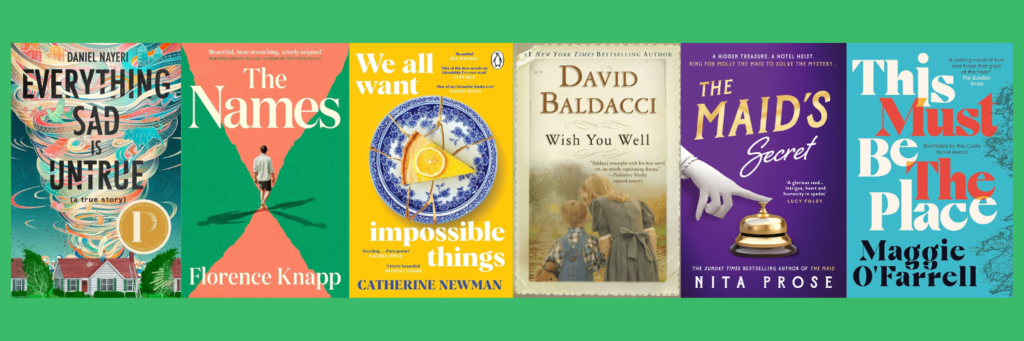

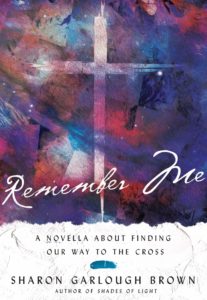
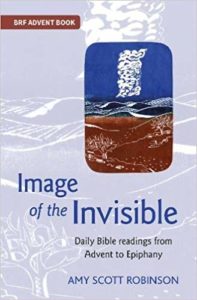
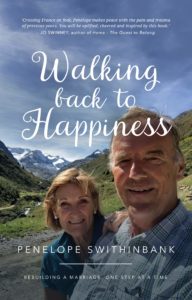
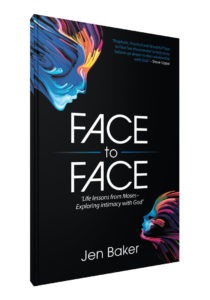
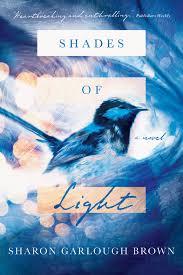
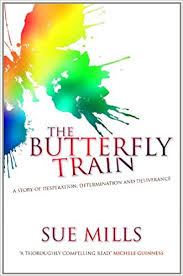


 For me, 2017 was to be a year of jubilee. For several reasons, it didn’t turn out that way, not least because I powered on with my MA in Christian spirituality, sometimes appearing as a crazed woman while juggling other writing and speaking engagements along with reading the assigned academic articles and writing the coursework, end of year essays, and the dissertation over the summer. I missed out on family holidays and sometimes sported a haunted look as I tried to be present to those whom I was with while inside wondering how I was going to reach the next deadline. I’ve decided to take a year-of-jubilee-observed in 2018, and after a few more deadlines for the middle of this month, I will well and truly have some breathing space and a fallow period. Hooray!
 Wild Spirit of the Living God: Prayer Poems for the Journey, Russ Parker
 Praying the Bible with Luther, Michael Parsons (BRF, July 2017)
 The Dog Who Thought His Name Was No, Judy Moore (CWR, October 2017)
 Those Who Wait: Finding God In Disappointment, Doubt, And Delay Tanya Marlow (Malcolm Down Publishing, October 2017)
 An Extra Mile, Sharon Garlough Brown (IVP, February 2018)
 The characters in the Sensible Shoes series have become friends. Sharon Garlough Brown has created them to feel like real people—which is why so many of us readers love her books. We laugh; we cry; we puzzle at their actions; we see ourselves in them. And more importantly, we see how a loving God can conform them to his likeness – he can change them. And, therefore, us.
 The Mirror that Speaks Back: Looking at, Listening to and Reflecting Your Worth in Jesus, Anne LeTissier (BRF, February 2018)
 Eleanor Oliphant is Completely Fine, Gail Honeyman
 Big Little Lies, Liane Moriarty
 Still Me, Jojo Moyes
 The Vanishing Act of Audrey Wilde, Eve Chase
 General Fiction in the Meh (not-so-great) Category
 Jane Austen-inspired fiction
 A Fragile Hope, Cynthia Ruchti (Abingdon, 2017)
 The Second Bride, Katharine Swartz (Lion, 2017)
 The Sweet Smell of Magnolias and Memories, Celeste Fletcher McHale (Nelson, 2017)
 The Captain’s Daughter, Jennifer Delamere (Bethany House, 2017)
 Deadly Encounter, DiAnn Mills (Tyndale, 2016)
 Perennials, Julie Cantrell (Nelson, 2017)
 Ascension of Larks, Rachel Linden (Nelson, 2017)
 Christian Fiction Appearing in the 2018 Woman Alive Book Club
 General Nonfiction
 The Magnificent Story: Uncovering a Gospel of Beauty, Goodness & Truth, James Bryan Smith (IVP, 2017)
 A Nearly Infallible History of the Reformation, Nick Page (Hodder, 2017)
 31 Proverbs to Light Your Path, Liz Curtis Higgs (WaterBrook, 2017)
 Utmost Ongoing: Reflections on the Legacy of Oswald Chambers (Discovery House, 2017)
 Mrs. Oswald Chambers, Michelle Ule (Baker, 2017)
 I’ll Push You: A Journey of 500 miles, Two Best Friends and One Wheelchair, Patrick Gray and Justin Skeesuck (Tyndale, 2017)
 At Home in the World, Tsh Oxenreider (Nelson, 2016)
 In Touch with God, Michael Green & Rosemary Green (SPCK, 2017)
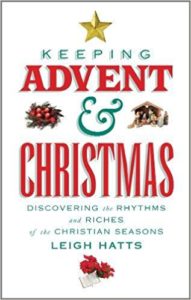 Keeping Advent & Christmas, Leigh Hatts (DLT, 2017)
 The Way of the Carmelites: A Prayer Journey through Lent, James McCaffrey, OCD (SPCK, 2017)
 Finding Myself in Britain: Our Search for Faith, Home & True Identity, Amy Boucher Pye (Authentic Media, 2015)
 The Living Cross: Exploring God’s Gift of Forgiveness and New Life, Amy Boucher Pye (BRF, 2016)
 So many books… so little time. I can’t imagine life without books, and I spend a lot of time reading, reviewing, and creating books. In 2016 I read for the Woman Alive Book Club, for my local book club, for my MA studies, and for research for the book I wrote,
  Barefoot by Sharon Garlough Brown
 What Falls From the Sky by Esther Emery
 Land of Silence by Tessa Afshar
 Present over Perfect by Shauna Niequist
 A Man Called Ove by Fredrik Backman
 Wonder by R J Palacio
 The Essential Writings of Christian Spirituality, edited by Bernard McGinn
 Entering Teresa of Avila’s Interior Castle by Gillian T.W. Ahlgren