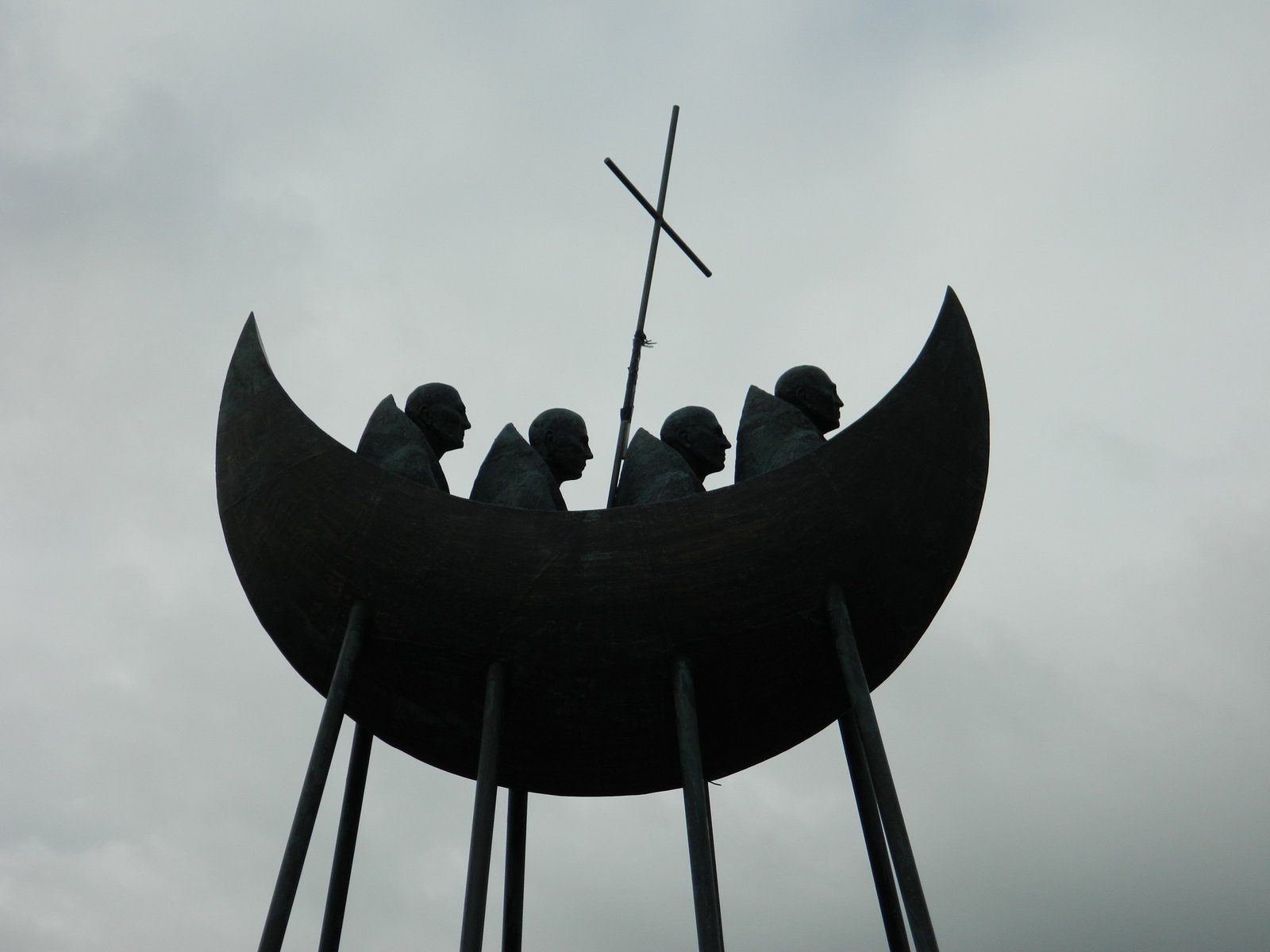
New year; new devotional series! Welcome as we delve into what it means to be a pilgrim, which is part of our calling as disciples of Christ. As pilgrims we live within the tension of “already, but not yet,” for although we have our redemption through Jesus’ sacrificial death on the cross, we do not yet inhabit our heavenly bodies. The reminders of our fallen nature surround us – the unrest of disaffected youth, spats between siblings, our own pride and arrogance. And yet… We see glimpses of God’s glory every day: An awe-inspiring sunset. A grieving parent who reaches out to the friends of her dead son. A smile between strangers.
Living within the tension of being redeemed from our sins yet still sinful reminds us of our pilgrim status. We are always journeying to either life or death, the new self or the old self. God through his Son and Spirit reaches out to us, calling us to be empowered by his grace, truth and love. Our journey involves responding, stepping forth each day as we claim our status as God’s beloved and God’s pilgrim.
Scripture is filled with examples of pilgrims. Often the heroes of our faith embarked on a physical journey, leaving the familiar to follow God’s call. One example in the Old Testament is the Israelites’ exile and journey to the Promised Land – and all the wandering in between. Before that was Abram who was called to leave his people and his place. In the New Testament, Jesus himself exemplifies the life of the pilgrim, not least through being born just after his traveling parents found shelter in a cave.
We’ll explore the concept of pilgrimage through some of the biblical characters who were living in a state of “already but not yet.” Although pilgrimage is usually the act of going to a special or holy place, sometimes it involves setting off across the world to an unknown destination. Perhaps, even, never to return to one’s original home. And ultimately we as Christians are all journeying to that home that will set the gold standard for what home means – heaven.

The Lord had said to Abram, “Go from your country, your people and your father’s household to the land I will show you. I will make you into a great nation, and I will bless you; I will make your name great, and you will be a blessing. I will bless those who bless you, and whoever curses you I will curse; and all peoples on earth will be blessed through you.” So Abram went, as the Lord had told him… (Genesis 12:1–4).
This week’s text is one of the early instances in the Bible of God’s covenants with his people. God gives Abram and Sarai a big task. Namely, to renounce their ties to their families, land, and inheritance, while trusting that God will bless them.
Humanly, what God is asking seems incredible, especially as we learn in Genesis 11:30 that Sarai is barren. Thus for Abram and Sarai, becoming pilgrims entails a huge amount of faith. For not only does Abram not have an heir, but by leaving his family he will be leaving behind his earthly inheritance. He won’t be caring for elderly parents or passing on the household goods to the next generation. And from the point of view of his new countrypeople, his identity will be that of foreigner and stranger.
Reading on in Genesis, we see that Abraham and Sarah heed God’s call, and in turn God fulfills his promise to make Abraham’s name great and to give him as many descendants as there are stars. God’s blessings more than overcome the sacrifices he required of Abraham and Sarah. But he did ask them to step out in faith.
God might not be asking us to leave our home and land. But even if we stay in the village or city in which we were born, he seeks in us a pliable heart; a willingness to follow him. Whether we stay or go, we can live the paradox highlighted by Jim Elliot, the missionary murdered in 1956, in his journal:
“He is no fool who gives what he cannot keep to gain what he cannot lose.”
For reflection: “Let us hold unswervingly to the hope we profess, for he who promised is faithful” (Hebrews 10:23).