Tag: new self

  • Devotional of the week: A royal diadem

    “The nations will see your vindication, and all kings your glory; you will be called by a new name that the mouth of the Lord will bestow. You will be a crown of splendor in the Lord’s hand, a royal diadem in the hand of your God. No longer will they call you Deserted, or name your land Desolate. But you will be called Hephzibah,and your land Beulah; for the Lord will take delight in you, and your land will be married. As a young man marries a young woman, so will your Builder marry you; as a bridegroom rejoices over his bride, so will your God rejoice over you” (Isaiah 62:2–5 NIV).

    Photo credit: found on flickr by archer11.
    Photo credit: found on flickr by archer11.

    We might feel uncomfortable applying the language of the prophet Isaiah to our lives, and men in particular might struggle to call themselves a royal diadem or the bride of Christ. But as CS Lewis said, God is so masculine that we are all feminine in response to him. And so male or female, we can ask God to reveal how his loving words from centuries ago can speak into our spirits and souls today.

    Being a crown of splendor in the Lord’s hand makes me think of Jesus on the cross, wearing his crown of thorns. He who could take the place of the righteous king yet endured pain for our sakes. So that we too can be sons and daughters of the King, wearing a jewel-encrusted crown as bestowed by our heavenly Father.

    No longer do we have to endure desolate lives of emptiness. For God reassures his people that he dwells with us and delights in us. He who has created us – the Builder – who has set our foundations into place, will rejoice over us even as a bridegroom on his wedding day.

    Living out of the new self entails embracing our identity as the beloved. Our new name reflects joy, rejoicing, delight, and love. What name could you claim today?

    For reflection: “‘Come, I will show you the bride, the wife of the Lamb’… It shone with the glory of God, and its brilliance was like that of a very precious jewel, like a jasper, clear as crystal” (Revelation 21:9, 11).


  • Devotional of the week: Are we one or the other?

    When pride comes, then comes disgrace, but with humility comes wisdom… Whoever derides their neighbour has no sense, but the one who has understanding holds their tongue. A gossip betrays a confidence, but a trustworthy person keeps a secret… A wicked person earns deceptive wages, but the one who sows righteousness reaps a sure reward. Truly the righteous attain life, but whoever pursues evil finds death… A generous person will prosper; whoever refreshes others will be refreshed… Whoever brings ruin on their family will inherit only wind, and the fool will be servant to the wise. (Proverbs 11:2, 12–13, 18–19, 25, 29)


    "Tension" by erix! as found on flickr.
    “Tension” by erix! as found on flickr.

    In this chapter of Proverbs the sage gives a contrasting picture between the wicked and the wise. The former fall into pride and disgrace, while the latter find refreshment and righteousness. Those who seek evil will experience ruin, deception, betrayal, and ultimately death. Whereas the righteous will be humble, prosperous, and will find life.

    Reading these sayings of opposites can lead us to think that we are one or the other – wicked or wise. We can despair that we will always be beholden to our sin nature and we’ll never find victory over temptation or addictions. Or we can puff ourselves up, thinking with pride that we have this spiritual life sussed and conquered – we have arrived. Whereas the truth probably lies in the tension of the “already but not yet.” As Christians we’ve been redeemed by Jesus’ sacrifice but we’re not yet fully transformed. We still fall into sinful patterns of behaving. Yet as we live empowered by the Holy Spirit, we can enjoy more freedom and more grace to become increasingly like the righteous whom we see in these proverbs.

    Humility; holding one’s tongue; wisdom; keeping confidences; sowing righteousness; pursuing life; displaying generosity; bringing refreshment… all characteristics of the new self. Why not join me in asking God to help us live out these qualities this day, this month, and this year?

    Prayer: Triune God, I know that on my own I quickly fall into patterns of the old self. Come and live in and through me, that I might reveal your love, generosity and grace to those whom I meet.


  • Devotional of the week – The New Self

    photo by vividBreeze, as found on flickr
    photo by vividBreeze, as found on flickr

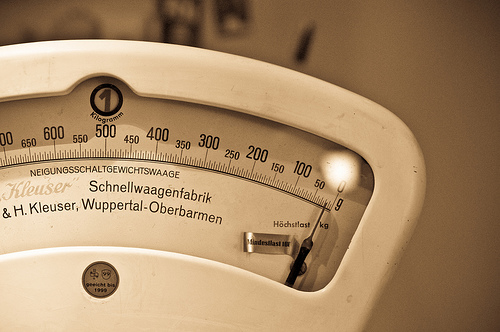
    January strikes a cold note in the hearts of many. After the excesses of December with its celebrations and feasts, the new year dawns and we wonder if we’d rather just stay under the covers. We drag ourselves to what in an image-obsessed culture might be the ultimate reality check – the scale – and see what sort of havoc our overindulgence has wreaked. “It’s time for new resolutions!” we cry, horrified at the number appearing below us.Our biblical readings to start 2014 fit well with new beginnings, for we will examine the theme of our old and new selves – how at conversion we leave behind the old and embrace the new identity that is being formed in Christ. Of course, we could explore this theme at any time of the year, for the new birth is foundational to our lives as redeemed people. But looking at it now may help us to infuse any New Year’s resolutions with the riches of spiritual depth we find in the Bible. For as we shed the old self and put on the new, living empowered by the triune God, we are able to leave behind our former ways of life, perhaps those invaded by bitterness, anger, hurt or rage. When we put on our new self, our lives will show forth the fruits of the Spirit – love, joy, peace, patience, kindness, goodness, faithfulness, gentleness and self-control.

    Our readings come from the Old Testament and the New, starting at the beginning in the Garden of Eden, where the choices of our first parents effected the need for a New Adam – namely Jesus Christ. We move through some of the prophets and see how they called the Israelites to have a new name and a new heart. Then we engage with Jesus and the teachings of the early church. The apostle Paul especially writes on the new birth and life that we can enjoy after we submit ourselves to God. He who was changed so radically on the road to Damascus writes with a passion and urgency that exceeds any bland New Year’s resolution. For if we put to death what used to cling to our earthly nature, we will move forward in the freedom of light and life.

    Dead in Adam; alive in Christ

    “You will not certainly die,” the serpent said to the woman. “For God knows that when you eat from it your eyes will be opened, and you will be like God, knowing good and evil.” When the woman saw that the fruit of the tree was good for food and pleasing to the eye, and also desirable for gaining wisdom, she took some and ate it. She also gave some to her husband, who was with her, and he ate it. Then the eyes of both of them were opened, and they realized they were naked. (Genesis 3:4–7, NIV)

    Adam and Eve. Photo by Svetlana Byaka, as found on flikr
    Adam and Eve. Photo by Svetlana Byaka, as found on flikr

    As I deliberated about where to start our thematic look at old self/new self, I realized the obvious, that our best jumping-off point is at the fall of humanity. For here in the Garden of Eden is where we first experienced the need for a new self. When Adam and Eve disobeyed God’s instructions, instead following the serpent’s tempting invitation to come and eat, they introduced sin into the world and into our hearts. No longer would we walk freely, without shame. Now men would be governed by the need to work and women would pine for their husbands.

    But the triune God in his graciousness doesn’t leave us in the garden, hopeless and helpless. He covers their (and our) shame not only practically – with garments of skin – but spiritually through Jesus’ death on the cross. We are born fallen through the effects of our first parents’ disobedience, but we can be redeemed by the New Adam who was the perfect sacrifice. As the Apostle Paul said in his first letter to the Corinthians, “For as in Adam all die, so in Christ all will be made alive” (1 Corinthians 15:22).

    We may be making resolutions as we’ve entered 2014. But true and lasting change comes through living in Christ. As he dwells in us through his Holy Spirit, he will help us to leave behind our sinful patterns of behavior and travel a more fruitful path of new life.

    Prayer: Father, Son and Holy Spirit, we dedicate our lives in 2014 to your glory. Help us to shed the old and embrace the new. (We wouldn’t mind losing a few pounds/kilos too.)

  • Devotional of the week: Philippians 2:6–8

    Human and Divine

    “Who, being in very nature God, did not consider equality with God something to be used to his own advantage; rather, he made himself nothing by taking the very nature of a servant, being made in human likeness. And being found in appearance as a man, he humbled himself by becoming obedient to death—even death on a cross! ” Philippians 2:6–8


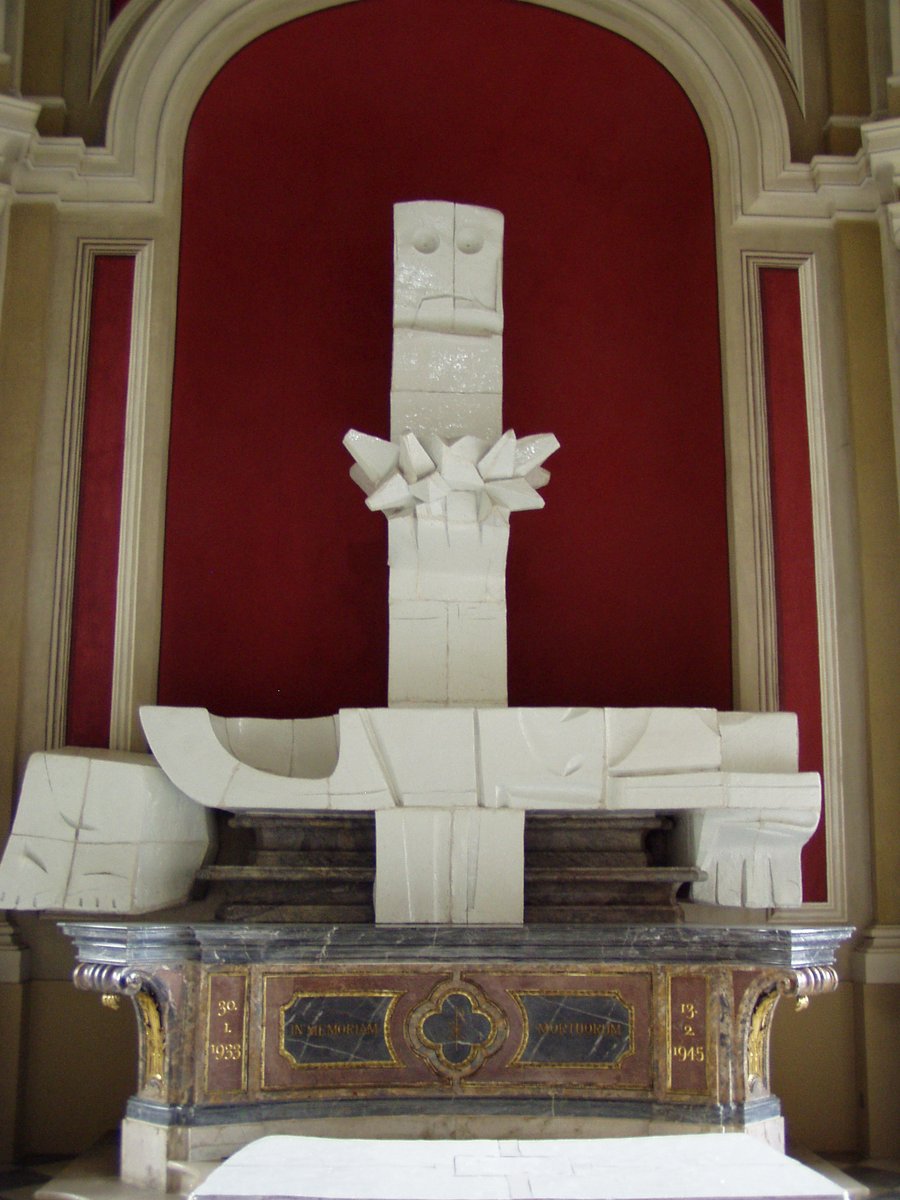
    I love this modern sculpture of the human Jesus, held by his mother. From a cathedral in Germany - wish I took better notes back then! Think in Dresden.
    I love this modern sculpture of the human Jesus, held by his mother. From a cathedral in Germany – wish I took better notes back then! Think it was in Dresden.

    We have come to one of the most well-known and well-loved passages from Paul’s letters, the humiliation and exaltation of Christ. Over the centuries, scholars have debated whether Paul based this part of his letter on an hymn of the early church. We can’t be sure, but we know that Paul longs that the church at Philippi would die to their own agendas and squabbles so that they could have the same mindset as Christ.

    As Paul sits in chains, probably wondering if he’ll be executed, he emphasizes to the church at Philippi the saving and freeing work of Jesus. Though Jesus was of the same nature as God – they were of the same divine substance – he humbled himself and became a man. That Jesus became fully human while still being fully God meant that he could become a bridge between us and God; he lowered himself so that we could have union with God.

    We’ll never be able to humble ourselves as much as Jesus did. But because he emptied himself, as we grow in his likeness, we too can grow in humility and servanthood. Our old self, marked by pride and ambition, recedes in the background as we increasingly exude gentleness and humility.

    Ponder the deep sacrifice Jesus made in taking human form.


    Lord Jesus Christ, you emptied yourself so that I might be free. May I share this freedom with others. Amen.

  • Living in shame, or living free

    I returned home from our wonderful week in Northumberland, feeling spent from a summer and autumn filled with good things: Our family’s five weeks in the States. Leading a meaningful and sun-filled retreat in Spain. A trip to the States to play with my high-school friends at the lake where they filmed Dirty Dancing and to celebrate family birthdays. And most recently our jaunt up to the wilds of the Northeast of England, venturing into the rugged coast and atmospheric castles.

    Photo by cod_gabriel as found on flickr
    Photo by cod_gabriel as found on flickr

    Although I knew I was facing a first-world problem of exhaustion from too much fun and travel, I was wiped out. And so I wasted more time than I like to admit early this week watching episode after episode of Scandal, a drama based in my former home of Washington, DC. The storylines gripped me and I loved seeing the beautiful buildings of my former stomping grounds. But watching so many episodes when I should have been spending my time with more fruitful pursuits – gardening or decluttering would have been more fulfilling – left me with another shame hangover.

    Shame hangover – such a descriptive term, which Brené Brown employs in her acclaimed TED talks and book Daring Greatly. I spoke last week of my shame hangover related to my flapping mouth and unholy moments while at Holy Island, which many of you responded to with forgiving love and sometimes a knowing, “I’ve been there.”

    Shame can stick to us like a new set of clothes, ones we don that can become sealed into our skin. So familiar they can become that we don’t know how to operate without them. And so like Eustace Scrubb in CS Lewis’ The Voyage of the Dawn Treader, we need to remove them with God’s help, in a sometimes painful manner. Eustace, you may recall, had been turned into a dragon through his dragony greed and selfishness. He meets a lion (Aslan), who asks him to undress. Eustace peels off a few layers of dragon – of selfishness and pride – but remains a dragon. The only way to undragon is for Aslan to bring about a deeper cure – one that sinks deep to his heart and hurts greatly, but brings about a new person.

    I’ve been thinking lately about the old self and the new, for not only at our conversion do we shed our old self with its sinful practices and take on the new self. This process of putting on the new self is continual, as the apostle Paul writes to the church at Ephesus: “You were taught, with regard to your former way of life, to put off your old self, which is being corrupted by its deceitful desires; to be made new in the attitude of your minds; and to put on the new self, created to be like God in the true righteousness and holiness.” (4:22-24)

    His verbs are active in the Greek – we put off our old self and put on the new. Our new clothes are no longer the rags of shame, but the royal robes of daughters and sons. Indeed, we are clothed with Jesus himself. But we don’t always wear our new robes. We slink back to the rags, perhaps through exhaustion or weariness. When we tire of the shame hangover, we can release it over to God, asking for forgiveness and for him to fill us with his Holy Spirit, that we might be empowered to live the forgiven life.

    So as I get back to a structured routine, one not filled with countless episodes of spin-doctors, I come before God and ask him to help me wear his richly colored robes as I shed the ragged shame-inducing garments. Here’s to being forgiven!

     
    The New Name
     
    I will give you a new name
    Known only to you
    Contented will you be
    At peace; in rest; whole.
     
    I will give you a new name
    Complete; without needs
    Fulfilled; affirmed; fully clothed
    Named by my love.
     
    I have given you a new name
    Walk into it; accept it
    Wear it as a royal robe
    Adorned you are by my love.
     
    I have given you a new name
    Beloved you are
    Most precious to me
    Cherished; adored; redeemed.
     
    I have given you a new name
    My daughter in whom I delight
    With my presence, filled
    A vase reflecting my beauty.
     
    With your new name, go forth
    Embodying peace, joy and love
    For with you I walk, in front and behind
    Never to leave you, I promise; always here.
     
    © 2012 Amy Boucher Pye 
  • Becoming ourselves – Agnes Sanford

    I love hearing about heroes of the faith, especially those who might be overlooked today. One is Agnes Sanford, a pioneer in the healing-prayer movement in the twentieth century. Before she died at the age of eighty-four in 1982, Newsweek magazine hailed her as one of six people who shaped religious thought in the twentieth century. But before God used her so powerfully, she had to work through a painful journey of self-discovery and acceptance.

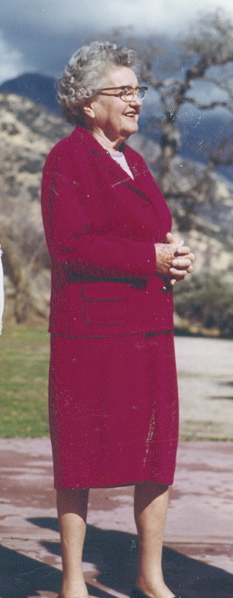
    Agnes Sanford photoAgnes grew up in China, the daughter of missionaries. Her struggle to release her true self came when she was living in the States, married to a pastor. Her husband Ted had been raised in a clergy household, and Agnes loved his parents, especially his mother. At first, Agnes modeled the role of minister’s wife on her mother-in-law, but doing so brought forth a crisis of identity:

    I had determined to make myself exactly like Ted’s mother, whom I adored. I would then be, I felt, the kind of wife that he liked. Therefore, I completely denied my original nature and devoted every moment to fruitless endeavor. And so I reached the depths because I was doing violence to my own soul. (Sealed Orders, p. 106).

    She thought she should be the perfect host and companion to Ted in his ministry. But in doing so, she was denying the deeply creative part of herself that wanted to give birth to new life, whether through writing, prayer, painting, or other artistic ventures. The false self was keeping her true self from thriving:

    My wounds were too deep to be healed so easily. And what were those wounds? If anyone had asked me at the time, I would have said, first of all, that the real part of me was simply not living, the creative one who longed, not only for children, but also for the children of the mind to be brought forth.

    The basic trouble was that I had forgotten whence I came, and I did not know the sealed orders with which I had been sent to this earth. I sensed my thwarted creativity. I wanted to be a writer, and I could not, for all of my time and thought and attention was upon being a wife and mother.

    … At this time I came very near to the deepest depths and could easily have drowned in them…. I could no longer see beauty. And when one can no longer see beauty, one can no longer see God. (pp. 101-102)

    After a long struggle, Agnes sought counsel with a neighboring minister, knowing she needed to find a way out of the strangling depression. He brought clarity where she had been covered by a suffocating cloud:

    “Don’t you see you have been trying to be a square peg in a round hole? To make yourself into something you are not?”

    … “But nobody will like me if I am myself!” I cried. “Not Ted nor his family nor the parish nor anybody!”

    “They won’t have you, unless you let yourself be yourself,” said Hollis. (p. 111)

    With this, Agnes began to throw off the cloak of the ill-fitting clothes. Ted’s mother may have been created to fulfill the role of the “perfect minister’s wife,” but that garment didn’t fit Agnes. She would only be the best wife for Ted – and his parish – when she was living out of her redeemed self, that creative person whom God had called her to be.

    God sent his healing, but he wanted her to be involved as well: “I find that God will heal us up to the point of our being able to think and to pray and to reason, and from then on, while He still helps us, we must nevertheless fight the battles of life ourselves. I was becoming a new person: the original person whom I was born to be. And this was the exact opposite of the person whom I had tried for some six years to make myself – a perfect minister’s wife.” (p. 118)

    As Agnes stepped into her new clothes, she became that person. A writer, a painter, a woman devoted to prayer for people and the earth. And the world will never be the same because she flung off her rags and put on her royal robe, tailored just for her.

    Do you have a new set of clothes just waiting for you to don?