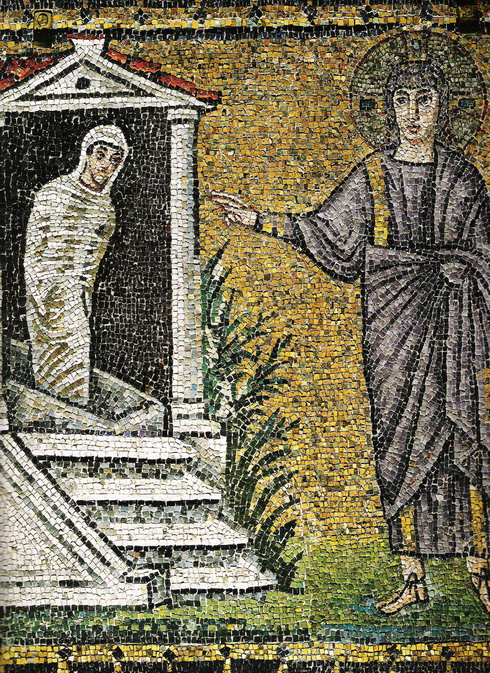
Sixth century mosaic of the Raising of Lazarus, church of Sant’Apollinare Nuovo, Ravenna, Italy.
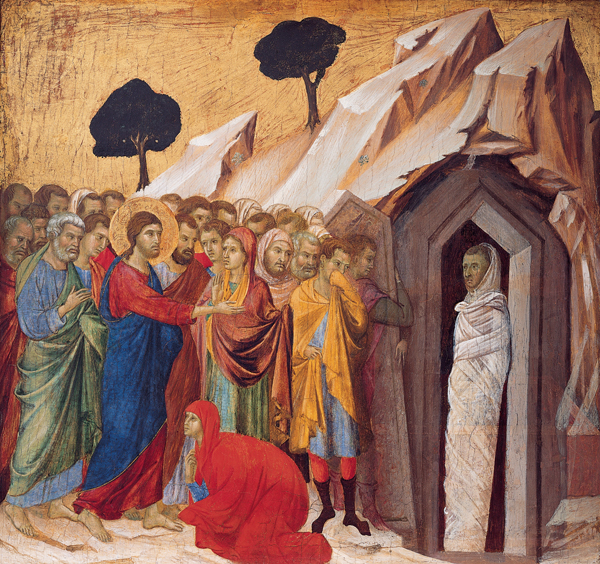
The amazing raising of Lazarus from the dead – the “dead man came out” – I love that. And yet it was another sign for the religious leaders to keep their plotting and planning, for they see their power slipping away. But Jesus exemplifies true power.
The Raising of Lazarus’ by Duccio di Buoninsegna, 1310–11
Jesus knew Lazarus was unwell and yet he stayed where he was until he had died. We know how the story turns out, but imagine Mary and Martha and their fear and confusion. As unmarried women, they would have suffered in many ways with their brother dying, not least the obvious of missing him.
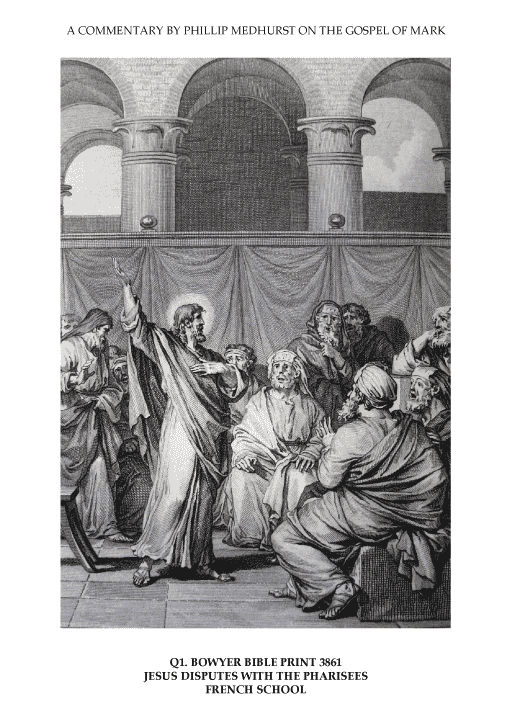
Jesus disputes with the Pharisees. French School. In the Bowyer Bible in Bolton Museum, England. Print 3861. From “An Illustrated Commentary on the Gospel of Mark” by Phillip Medhurst.
Jesus speaks; Jesus heals; they pick up stones to kill him. We see the pattern again and again in John’s gospel – a sobering reminder of how Jesus is the fragrance of life to one and to another the stench of death.
The words of Jesus. I’m loving spending time each day in John’s gospel, soaking in the words of Jesus. Today we think about the Good Shepherd and the sheep and the thieves who come to destroy. And how we as sheep listen to the Shepherd, for we know his voice. May you hear his voice today.
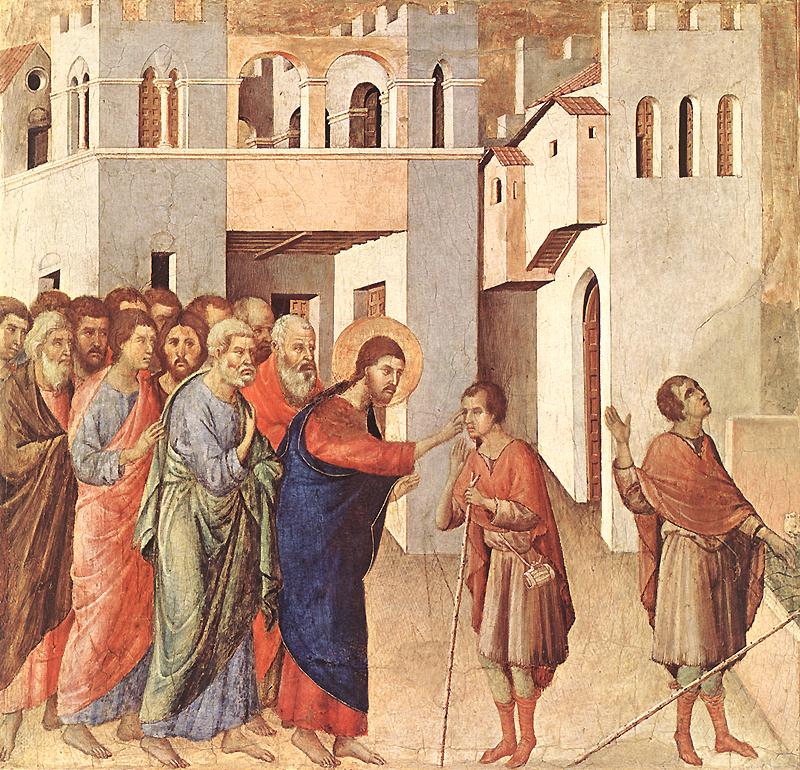
Such controversy the teachers of the law got embroiled in over whether the man born blind was actually healed by Jesus. The man knew; his parents didn’t like to say; the religious leaders grew more incensed as Jesus exposed their spiritual blindness.
Christ and the pauper. Healing of the blind man. 2009. Canvas, oil. 100 x 55. Artist A.N. Mironov.
Jesus had compassion on those who were limited physically, as we see in his healing the man blind from birth. He doesn’t hold back his grace or love; nor does he amend his answers to the teachers of the law to suit them – as we will see even more tomorrow.
“I was blind but I washed.” What a testimony of God’s love.
So much opposition Jesus faced. The teachers of the law misunderstood him, and as time went along, they grew more and more entrenched against him. Several of his key statements about himself come in chapter 8 – that he’s the light of the world, and that he’ll set us free. Freedom! Let’s claim it today.
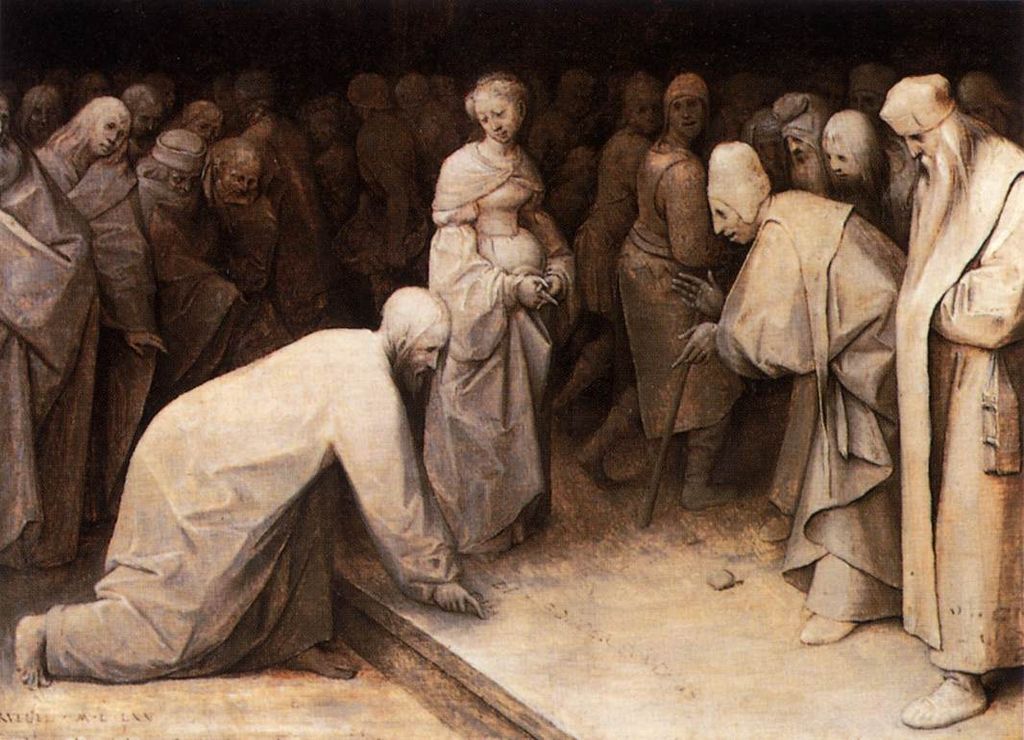
“Christ and the Woman Taken in Adultery,” Pieter Brueghel the Elder, public domain
Not everyone thought this moving story of who has the right to throw stones should be included in the Bible. For centuries it wasn’t, partly, historians think, because of a reticence over including such a story that concerns illicit sex (and note how the teachers of the law didn’t bring the man caught in the act of adultery to be judged). Most biblical commentators agree that the story should be part of the canon of the Bible, although some wonder if it was perhaps written by Luke and not John. Either way, it’s a powerful reminder that God is God and we are not.
‘The Judgment of the Sanhedrin: He is Guilty!’ by Nikolai Ge, public domain
I knew that Jesus was persecuted, but spending more time in John’s gospel as I write these poems brings home the thread of attack and bitterness coming from the chief priests and teachers of the law. Have you experienced this sense of being defensive and on edge when your authority is questioned?